This essay offers a historicized overview of the consolidation of contemporary human rights as the dominant lingua franca for social justice projects today and applies it to the debate over human rights in North Korea. Highlighting what the rights framework renders legible as well as what it consigns to unintelligibility, it examines the antinomies of contemporary human rights as an ethico-political discourse that strives to reassert the dominance of the global North over the global South.
Relentlessly presentist in its assignment of blame and politically harnessed to a regime-change agenda, the human rights framing of North Korea has enabled human rights advocates, typically “beneficiaries of past injustice,” to assume a moralizing, implicitly violent posture toward a “regime” commonsensically understood to be “evil.” Cordoning off North Korea’s alleged crimes for discrete consideration while turning a willfully blind eye to the violence of sanctions, “humanitarian” intervention, and the withholding of humanitarian and developmental aid, the North Korean human rights project has allowed a spectrum of political actors—U.S. soft-power institutions, thinly renovated Cold War defense organizations, hawks of both neoconservative and liberal varieties, conservative evangelicals, anticommunist Koreans in South Korea and the diaspora, and North Korean defectors—to join together in common cause.
This thematic issue, by contrast, enables a range of critical perspectives—from U.S.– and South Korea–based scholars, policy analysts, and social justice advocates—to attend to what has hovered outside or been marginalized within the dominant human rights framing of North Korea as a narrowly inculpatory, normative structure. This article is adapted and revised from the introduction to a two-part thematic issue of Critical Asian Studies on “Reframing North Korean Human Rights” (December 2013 and March 2014).
I. Victors’ Justice?
In February 2014, upon completing a several-month investigation into “human rights in the Democratic People’s Republic of Korea [DPRK, or North Korea]”—an investigation initiated in the sixtieth anniversary year of the 1953 Korean War Armistice Agreement that halted combat but did not end the war—the three-member Commission of Inquiry (COI) established by the United Nations Human Rights Council (UNHRC) concluded that North Korea had committed crimes against humanity. Such “unspeakable atrocities,” in the framing account of Commission chair Michael Kirby, “reveal a totalitarian State [without] parallel in the contemporary world.”1 Analogies to the “dark abyss” of North Korea, the Australian jurist maintained, could be found only in the brutality of the Third Reich, South African apartheid, and the Khmer Rouge regime.2 Reproduced in news reports around the world, Kirby’s markedly ahistorical examples may have succeeded in inflaming global public opinion yet they failed to contextualize the issue of North Korean human rights in a way that might generate peaceful structural resolution. Indeed, insofar as the 372-page COI report singularly identified the North Korea government as the problem—both as “a remaining and shameful scourge that afflicts the world today,” in Kirby’s jingoistic phrase, and as the primary obstacle to peace in Korea—the Commission gave new life to the vision of regime change that has animated post-9/11 North Korean human rights campaigns. By recommending that North Korea and its high officials be brought up before the Hague-based International Criminal Court (ICC), it continued the hostilities of the unresolved Korean War “by means purporting to be judicial.”3 The urgent question of a long-deferred peace relative to the Korean peninsula, which the Commission incoherently addressed, bedeviled its conclusions, rendering its findings partial, its recommendations in some instances uneasily one-sided, and its premise of impartiality suspect.4 Moreover, that the COI proceedings and report aligned the United Nations with the United States, South Korea, Japan, and Great Britain while singling out North Korea and, to a far lesser degree, China, for blame performed an unsettling restaging of the Korean War on the agonistic terrain of human rights, suggesting an encrypted “victor’s justice” with regard to an unending war that up to now has had no clear winners.5
By overlooking the roots of North Korean militarism and underdevelopment in the unending Korean War, by failing to offer a “systematic and widespread” account of “crimes against humanity” that critically assessed the impact of unresolved war on the entire peninsula and in the greater region, and by assuming the neutrality of the United Nations, the United States, South Korea, Great Britain, and Japan relative to North Korea, the Commission thereby offered an inculpatory account of North Korean human rights that obscured rather than illuminated the complex consequences of unresolved interventionist war.6 Indeed, the footnote status accorded to the Korean War’s historical and ongoing violence within today’s dominant international human rights framework speaks to the limitations of available “post-Cold War” structures of recognition when it comes to the unsettled, in many cases active, legacies of the asymmetrical wars waged by the United States and its allies throughout the Cold War. Justice, with regard to the ongoing Korean War, as Kim Dong-choon, a former standing commissioner of South Korea’s Truth and Reconciliation Commission (TRCK), has maintained, cannot be had in the present. Instead, as he has soberingly argued, “dignity for all” and meaningful peace are conceivable “only after the unification of North and South Korea.”7 Implicit in this future prospect for broad structural reckoning is precisely what the TRCK (2005-2010), constrained in its mandate by the U.S.-ROK “security” alliance, could not compel, and what the ICC, for reasons of Realpolitik, is similarly not empowered to address: namely, U.S. accountability.8
In this regard, the Commission’s principal recommendation that North Korea be referred to the ICC for its perpetration of “crimes against humanity” should be critically evaluated against the attenuation, in our historical moment, of “crimes of aggression,” or “crimes against peace.” Crucial, here, is not only the legal limbo of the unresolved Korean War, but also, the repeated efforts by North Korea as well as scholars and activists in South Korea and the United States to emphasize the right to peace as the foremost priority on the Korean peninsula and to render the war’s consequences visible within a human rights framework. To the extent that North Korea’s grievances with regard to the unending Korean War are referenced at all in the COI report, they are framed as baseless propaganda wielded by the North Korean state to justify its human rights violations against the North Korean people.
Riven by contestatory claims, unsettled truths about “North Korean human rights,” as we thus can begin to see, are invariably entangled with competing truths about the Korean War. More to the point, justification for “international” intervention under UN auspices on the Korean peninsula at mid-century functions as a necessary premise for today’s interventionist human rights posture toward North Korea. Indeed, in its conclusions, the COI report incomprehensibly identifies the “responsibility” of the “international community” in delivering “an effective response” to North Korea’s human rights violations “because of the unresolved legacy of the Korean War.”9
It bears recalling: if the stated rationale for U.S. and UN intervention in Korea was that North Korea, on June 25, 1950, aggressed the “border” of the 38th parallel—a demarcation line, to be clear, rather than an international boundary drafted by the United States in 1945 with zero Korean input—this studiously reactive account of the war’s origins fails to account for the indiscriminate aggression that followed. The brutal U.S. occupation of the North and its massive aerial bombing campaigns, perpetrated under the cover of the United Nations Command, would generate a swath of ruin impossible to justify as self-defense on the part of the United States. When all was said and done, North Korea’s major cities and towns would be reduced to rubble, its civilian infrastructure smashed, and an estimated twelve to fifteen percent of its population killed. As historian Bruce Cumings has pointed out: “Why is it aggression when Koreans cross the 38th parallel, but imaginary when Americans do the same thing?”10
As Cumings’s critique begins to intimate, the persistent legal illegibility of aggressive war, a crime “predominately committed by the political and military authorities of the major powers,” point less to a breakdown in a global system of rule of law than they do to the workings of an imperial model of global governance that rescripts geopolitical terrain through superior military force and makes recourse to legitimation from “reactive, politically unaccountable institutions (such as courts of law).”11 By definition legibus solutus, or beyond the law, imperial sovereignty, to some degree, could be said to throw the system of international law into “legal incoherence.”12 As jurist Danilo Zolo has pointed out, “[i]mperial power is incompatible both with the general character of law and with the formal equality of subjects in the international legal order.”13 It is revealing, along these lines, that crimes against peace, which were prioritized as “the supreme international crime,” indeed placed, in seriousness, above crimes against humanity and war crimes at the Nuremberg and Tokyo Tribunals and enshrined as crimes of aggression in the Rome Statute of the ICC, are functionally little more than a dead letter in international law.14
We might also think of what Walter Benjamin referred to as the “lawmaking character of violence.”15 Effectively immune to prosecution for crimes of aggression, the United States has wielded the lesser category of crimes against humanity, a legal classification dormant for the duration of the Cold War, against the sovereignty of small postcolonial states. Since the fall of the socialist bloc, we have been repeatedly witness to the unfurling of a spectacular dramaturgy staged around the vanquished that takes the sequence of U.S. interventionist war followed by criminal proceedings under a highly selective interpretation of jus in bello, namely, war crimes, crimes against humanity, and the crime of genocide. In this era, the international criminal tribunal, with its fractured and uneven system of justice, has served as a vital mechanism for the consolidation of what Neda Atanasoski refers to as a “postsocialist imperialist” world order in which international legal mechanisms have been monopolized by the United States and its allies and harnessed to a dubious “global ethic of humanitarianism,” which is itself inextricably linked to a regime of U.S. perpetual warfare.16
As an intended prelude to a juridical process, whether via the ICC (doubtful given the likelihood of China’s and possibly Russia’s veto) or the establishment of an international criminal tribunal along the lines of those set up for the former Yugoslavia and Rwanda, the COI proceedings and report on North Korean human rights thus must be understood within the context of “a dual-standard system of international criminal justice…in which a justice ‘made to measure’ for the major world powers and their victorious leaders operates alongside a separate justice for the defeated and the downtrodden.”17 Indeed, prior to recommending that North Korea be referred to the ICC for its alleged commission of crimes against humanity, the Commission, in late 2013, held a series of carefully orchestrated hearings in four sites: namely, Seoul, Tokyo, London, and Washington, DC. Again, the unsettled past (and present) of the Korean War served as prologue. That South Korea, Japan, Great Britain, and the United States not only equipped and financed the COI proceedings but also were allied parties or participants in the Korean War hovered as illegible context for the work and mandate of the Commission, even as this unresolved structure of enmity everywhere informed and, one could argue, contaminated the Commission’s informational base, procedures, and findings.18 Occasionally referenced but nowhere analyzed in the COI report for its profound structural impact on human security both north and south of the DMZ, the irresolution of the Korean War was, for the most part, topically confined to a short perfunctory section in the report dedicated to historical and political context. This glaring failure to wrestle with the human costs of the unending Korean War and to prioritize the right to peace on the Korean peninsula haunted the Commission’s one-sided findings with regard to chronic North Korean hunger, separated families, and war abductees. Far from tackling the consequences of unresolved war head-on, the report displaced and minimized its significance.
Insofar as the COI human rights report rehearsed a narrative familiar in its details to “those who know North Korea well,” as historian Charles Armstrong stated to Vice News, it thereby reified, rather than challenged, a structure of enmity whose consequences must be understood as grave human rights matters meriting critical scrutiny in their own right.19 Although the report, in its synopsis of Korean history, offered a cursory overview of the Korean War that cited the research of “Bruce Cummings [sic]” and gestured toward “wounds inflicted by the Korean War [which] were deep and are still felt…on both sides of the border [sic],” it nonetheless doggedly restricted its investigation of state criminality to North Korea, and in a few instances, to China—a narrow nation-based investigation inadequate to the task of examining the structural consequences and human costs of unending war as itself a crime against humanity and, even more seriously, a crime against peace.20 When discussion of the war’s consequences surfaced, the latter were unintelligibly framed as human rights violations on the part of North Korea alone. In its final recommendations, for instance, the COI report singularly calls on North Korea to “[a]llow separated families to unite,” without addressing the root causes of their separation, much less the UN role in fomenting the state of division, peacelessness, and human tragedy that prevails on the Korean peninsula.21
With its focus on “widespread and systematic attack directed against any civilian population,” the COI report conceivably could and arguably should have offered some structural reckoning with the profound human costs of unabated war that extended across the DMZ and outward to the larger Asia-Pacific region, including the system of U.S. and UN sanctions reaching back over six decades; the ongoing U.S. military presence south of the DMZ (against the 1953 Armistice recommendation); massive U.S. joint and trilateral military exercises with South Korea and Japan, some that simulate nuclear strikes against North Korea and practice the takeover and occupation of North Korea; regional nuclear proliferation and ambitions; South Korean National Intelligence Service (NIS) cyber-warfare against “North Korea” that tilted domestic election results; the National Security Law and redbaiting in South Korea; the undemocratic militarization of Jeju, Okinawa, Guam, and Hawai‘i under the resurgent sign of a U.S. military pivot to Asia and the Pacific in response to a “North Korean threat”; and so forth.
Incongruously, the Commission closes its 372-page report with a recommendation impossible to square with its reiteration of near-singular North Korean culpability: “the United Nations and the states that were parties to the Korean War should take steps to convene a high-level political conference…and, if agreed, ratify a final peaceful settlement of the war that commits all parties to the principles of the Charter of the United Nations, including respect for human rights and fundamental freedoms.”22 If recalling the 1953 Armistice Agreement’s recommendation that a “political conference of a higher level of both sides [the United States and North Korea/China] be held by representatives appointed respectively to settle through negotiation the questions of the withdrawal of all foreign forces from Korea [and] the peaceful settlement of the Korean question,” the COI report, in all other respects, failed to locate the issue of North Korean human rights within a structure of persistent enmity that has adversely impacted the human rights of the peoples of not only North Korea but also South Korea and the larger Asia-Pacific region.23
Instead, the COI report identified North Korea’s “instrumental” use of the “fear of invasion and infiltration”—what the Commission held to be North Korea’s cynical orchestration of a “state of emergency” (apparently not to be conflated with the indisputable fact that the war is far from over)—to explain how the North Korean state has justified and carried out its “harsh governmental rule and its accompanying human rights violations.”24 Although the report elsewhere makes brief mention of the fact that the United States has tied food aid to nuclear concessions, it described food shortages in North Korea as being irrationally “blamed on a hostile outside world” by North Korean authorities.25 Here, we would do well to take stock of analysis of the root causes of North Korea’s persistent food insecurity by David Austin, head of Mercy Corps’ humanitarian aid program to North Korea—a perspective, one would hope, not facilely dismissible as the propagandistic construction of the North Korean government:
The food security situation is a symptom of the greater problem,…which is technically that the U.S. is still at war with North Korea. And so there are sanctions on North Korea. They are not allowed to get fuel; there’s no fertilizer. And so the greater political situation has a tremendous effect on the lives of the ordinary people who are not privileged to be a part of that broader solution. They’re ordinary farmers, and they’re suffering the consequences of the non-solution to the political questions. …[U]ntil there is engagement, there’s not going to be greater solutions.26
On the conspicuous narrowness of COI’s data culture, particularly with regard to the complexity of North Korea’s food security issues, Hazel Smith observes: “[w]hat is most striking about the [UNHRC] reporting on the DPRK is the almost complete absence of reference to relevant data from other UN agencies, donor governments, and nongovernmental organizations (NGOs), to the extent that the…reporting seems unaware of the existence of reports on the DPRK from within the UN system itself.”27 Instead, the Commission appears to have relied heavily on an extremely dated account from Médecins Sans Frontières from 1998 and the testimony of former USAID administrator and current co-chairman of the conservative U.S. Committee for Human Rights in North Korea, Andrew Natsios, despite the wealth of much more discerning, rigorous scholarship and firsthand knowledge of North Korea’s food situation that has emerged in the past decade. In this regard, the Commission’s ascription of blame to the DPRK for food violations, as Smith further argues, “demonstrates a securitization of evidence and analysis through a heavy reliance on assumptions [about North Korean state-level culpability for food-related human rights violations] and a filtering of information through those assumptions,” even as “the weight of [other] UN agency reporting contradicts” those very premises.28
The COI report, it should be noted, concedes the political bias of the data culture on which it based its findings and recommendations: “The Commission is conscious of the fact that most victims and witnesses cooperating with the Commission had an overall unfavourable opinion of the DPRK’s authorities.”29 This was uncomfortably apparent in a peculiar exchange between Commission chair Kirby and a North Korean defector residing in the United States. During the October 30, 2013 public hearing in Washington, DC, Kirby repeatedly pressed Jo Jin-hye to comment upon North Korea’s hostile stance toward the COI investigation: “Now are you aware that the government of North Korea says that the type of testimony that you have given to the Commission of Inquiry today is false and that you are a defector and a person who should not be believed because you are defaming North Korea?”30 The leading nature of this question notwithstanding, Jo offered up a response that symptomatically attested to the structure of enmity and the geopolitics of unresolved war underpinning—and to no small degree compromising—the proceedings: “I am well aware. I know who my enemy and my friend are.”31
Although the Commission conducted roughly 240 confidential interviews and held four sets of public hearings, the solicited testimony of seasoned political actors long at the helm of a well-funded, transnational “North Korean human rights” industry aimed at North Korean regime-change or regime-collapse loomed large within the 372-page COI report. In particular, the report relied heavily for its framing on testimony from prominent North Korean defectors like Kang Chol-hwan, Ahn Myong-chol, Shin Dong-hyuk, Kim Hyuk, and Kim Young-soon, and the “expertise” of unabashedly right-wing South Korean, American, and Japanese “North Korean human rights” advocates like Kim Young-hwan, Andrew Natsios, Victor Cha, and Ishimaru Jiro. The insight of this cadre of “witnesses and experts” into North Korea appears frequently in the COI report, furnishing its narrative contours. In other words, despite the Commission’s assertion that all testimonies were carefully vetted for reliability and Kirby’s strained assurances that such testimonies represent “authentic voices,” the 372-page COI report troublingly allocates outsized representational value to the words and views of ultimately only a handful of institutionalized actors whose relationship to U.S. and South Korean intelligence, U.S. soft-power institutions, thinly renovated Cold War defense organizations, hawks of neoconservative and liberal varieties, conservative evangelicals, and anticommunist Koreans in South Korea and the diaspora goes completely unquestioned.32 It treats their testimony, moreover, as primary data, ascribing a false positivism to sources that “divulge their secrets at some distance in time and space from the ongoing developments inside the target they are reporting on.”33
Although the COI report offers a perfunctory account of its own methodological underpinnings, we should remark what goes unsaid: namely, the interoperability of the technologies of North Korean human rights, namely defector testimony and satellite imagery, and the technologies of war. Indeed, North Korean human rights testimony is morphologically indistinguishable from what the CIA and military intelligence agencies call “human intelligence” (Humint). As former CIA Inspector General Frederick Hitz points out: “Where it has no physical presence, the [CIA] has historically relied for humint primarily on defectors, detainees, legal travelers, opposition groups and foreign government liaison services.” That the COI report gives extensive space to defector testimony without weighing the perils of an over-reliance on this sort of informational base raises the question of the empirical nature of the North Korean human rights project. Donald MacIntyre, former Seoul bureau chief for Time magazine, observes:
North Koreans who have left their country have provided some of the best information that we have. But you can’t go to North Korea and check what they tell you. An example arose in 2004 when the BBC ran a documentary alleging that North Korea was using political prisoners as guinea pigs in chemical weapons tests. The issue is now part of the human rights agenda on North Korea. …The problem has become worse…as a result of the Japanese and Korean media’s practice of paying defectors for interviews. Paying for interviews creates an incentive to pad, or create, stories that will boost your own market value. …Bad news about evil North Korea sells.34
In his memoir The Aquariums of Pyongyang (2001), co-authored with the French anti-communist Pierre Rigoulot, Kang Chol-hwan, a major COI witness, states that Japanese and South Korean media paid him so handsomely “for opening [his] mouth” about North Korea that he “occasionally felt [he] was trading [his] experience for a story…no longer entirely [his] own.”35
Yet the question today goes beyond whether “authentic voices” like Kang’s represent the truth of North Korea. Rather, in light of the fact that approximately 26,000 North Koreans resettled in South Korea both during and after the 1990s’ North Korean famine, we might more pointedly ask whether the testimony of North Korean defectors and migrants featured in the COI report bears a sufficiently representative relationship to the diversity of views and experiences of this significant minority population. On this point, in a South Korean civil society organizational response to the COI findings, People’s Solidarity for Participatory Democracy (PSPD) highlights one of the report’s major shortcomings: “North Korean human rights issues should not be limited to the situation inside the DPRK [but should] cover human rights concerns of all North Korean people, their separated families, and relatives,” including “DPRK defectors living in the ROK.”36 It is, above all, the complexity of allegiance and nuance of perspective within this demographic that merit careful regard. Not only does this post-famine wave of migrants constitute a critical new phase in the separated-family phenomenon, with phone calls and remittances flowing, often in circuitous ways, across the DMZ, but also, the South Korean state’s past instrumentalization of North Korean defectors toward anti-communist Cold War ends, plausible when they were few and far between, is no longer a broadly applicable strategy. Moreover, that North Korean migrants face crippling labor and educational discrimination, social stigma, and diminished life chances in South Korea complicates a human rights narrative that assigns all blame to North Korea—indeed calls for other interpretive approaches which possess more explanatory power.37
Ultimately, little in the COI findings departs from a well-honed human rights narrative about North Korea, an account of neo-Orientalist sadism, depravity, and inhumanity that took shape after the collapse of the socialist bloc but crystallized in the wake of George W. Bush’s infamous designation of North Korea as part of an “axis of evil.” Even as the COI report, in its details, offers information that lends itself to multiple interpretations, the Commission’s findings, in keeping with a familiar “demonization script” toward North Korea, rehearse the standard postulates of North Korean human rights campaigns.38 These are worth restating insofar as they form the contours of a globally dominant narrative about North Korea: to wit, North Korea is unsurpassingly “evil.” The defector is the voice and representative of the North Korean people. Satellite images reveal the truth about North Korea.
“North Korean human rights” singularly denotes those abuses, violations, and crimes perpetrated by the North Korean state (and in a few instances, China). It does not compass those abuses, violations, and crimes committed by other states or organizations against the North Korean people. Relative to North Korea, human rights and humanitarianism are, by and large, separate, non-intersecting tracks.39 The politicized withholding of food aid by donor nations, even if it adversely impacts, to the point of death, the North Korean people, is not itself a human rights violation.40 Six decades of U.S. and UN sanctions and of unending war are simply business as usual and not themselves human rights violations; any argument to the contrary is the stuff of North Korean propaganda. The violation of the right to peace and the commission of the crime of aggression are the least consequential of human rights in the international human rights regime. The Korean War is a mere footnote.
II. Shadow Archive of North Korean Human Rights
In December 1951, the Civil Rights Congress presented a petition titled We Charge Genocide to the United Nations. Submitted as the Korean War was raging, this document, as with other black radical human rights petitions addressed to the United Nations during the Cold War, tested the interpretive limits of the legal instruments of the emergent international human rights regime. Specifically, the petition insisted that the U.S. “record of mass slayings on the basis of race, of lives deliberately warped and distorted by the willful creation of conditions making for premature death, poverty and disease” be recognized as a violation of the 1948 Genocide Convention—a convention that had entered into force earlier that year but that the United States would ratify only in 1988, long after its brutal hot war counterinsurgencies in Asia had cooled.41
Principally aimed at making Jim Crow legible as a crime within the supranational framework of human rights, this petition posited the two-front nature of U.S. genocidal violence—violence instrumentally motivated at home and abroad by a desire for “economic profit and political control.”42 Linking mass violence perpetrated with impunity in the imperial center to that furiously unleashed on millions in the periphery—here implying a homology between police brutality in the United States and the U.S. “police action” in Korea—We Charge Genocide maintained that the roots of the devastating U.S. war in Korea could be found in the racist logic of American capitalism. Salvaged from history’s dustbin, this account of U.S. aggression in Korea has a place within a shadow archive of North Korean human rights—an archive whose unredressed grievances lurk uneasily below the smooth surface of dominant North Korean human rights narratives today.43
Attempting to indict U.S. criminality on the world stage, the Civil Rights Congress petition sought to place both Jim Crow and the U.S. war in Korea squarely under the innovative legal rubric of genocide and in so doing to indict racist and imperialist violence within the framework of universal human rights law:
We, Negro petitioners whose communities have been laid waste, whose homes have been burned and looted, whose children have been killed, whose women have been raped, have noted with peculiar horror that the genocidal doctrines and actions of the American white supremacists have already been exported to the colored people of Asia. We solemnly warn that a nation which practices genocide against its own nationals may not be long deterred, if it has the power, from genocide elsewhere.44
 Paul Robeson and members of the Civil Rights Congress submitting We Charge Genocide to the United Nations Secretariat, New York, December 17, 1951, Daily Worker/Daily World Photographs Collection, Tamiment Library, New York University. Paul Robeson and members of the Civil Rights Congress submitting We Charge Genocide to the United Nations Secretariat, New York, December 17, 1951, Daily Worker/Daily World Photographs Collection, Tamiment Library, New York University.
|
In highlighting the devaluation of nonwhite life—life subjected to collateralization under U.S. sovereignty—this 1951 petition offered analysis along critical human rights lines that neither peddled in a politics of pity and rescue nor reinscribed the inequality of the world system. Instead, it gestured toward a humanism that had yet to assert its fullest political possibility—what Aimé Césaire would in 1955 call “a humanism made to the measure of the world.”45 During a juncture in which the United States was waging an “appallingly dirty” war in Korea that would leave roughly 4 million dead, this petition strove to expose the inhumanity of U.S. capitalist democracy.46 Arguing that “[w]hite supremacy at home makes for colored massacres abroad” insofar as both evince “contempt for human life in a colored skin,” We Charge Genocide contested the immunity enjoyed by the lyncher and the bomber. “Jellied gasoline in Korea and the lynchers’ faggot at home,” the petition stated, “are connected in more ways than that both result in death by fire. The lyncher…cannot murder unpunished and unrebuked without so encouraging the [bomber] that the peace of the world and the lives of millions are endangered.”47 That the Civil Rights Congress, which openly opposed the U.S. war against North Korea, would be labeled subversive by the U.S. federal government, hounded by the House un-American Activities Committee (HUAC), audited by the IRS, infiltrated by the FBI, and mercilessly red-baited until its remaining members voted to disband in the mid 1950s only partly suffices to explain why its charge of two-front genocide was, and continues to be, unintelligible as a human rights claim.48 Rather, detectable in its struggle to make the charge of genocide stick to the greatest military power in the global community—and to criminalize U.S. wars of aggression and its asymmetrical wars in a consequential way—was a hint of the “something rotten” at the heart of the emergent international human rights regime.
 Pyongyang, North Korea, in the aftermath of an air raid by U.S. planes in fall 1950. A total of 420,000 bombs eventually would be dropped on a city that then boasted approximately 400,000 residents. Pyongyang, North Korea, in the aftermath of an air raid by U.S. planes in fall 1950. A total of 420,000 bombs eventually would be dropped on a city that then boasted approximately 400,000 residents. |
As Césaire would trenchantly comment in Discours sur le colonialisme (1955), “capitalist society…is incapable of establishing a concept of the rights of all men”—and further noted that it degrades humans by subjecting them to “thingification.”49 Césaire’s critique begins to alert us to a “major deficiency in the doctrinal analysis of international law,” namely, “that no systematic undertaking is…offered of the influence of colonialism in the development of the basic conceptual framework of the subject.”50 Indeed, the very “edifice of international law embed[s] relations of imperialist domination.”51 It is thus no coincidence that the various human rights vernaculars—anticolonial, race radical, communitarian, Third World—that flashed up during the Cold War with visions of “a humanism made to the measure of the world,” have today been relegated to the status of “rebellious specters” in the dominant paradigm of international human rights.52 That the liberal model of rights has prevailed in this era of advanced global capitalism “as the privileged ideological frame through which excessive cruelty [is] conceived and interpreted” has meant the neutralization, as Randall Williams has argued, of “other epistemic forms and political practices.”53
On the institutional consolidation of the human rights movement in the late Cold War period, historian Samuel Moyn observes that its emergence as a “new, moralized” policy regime was catalyzed by “the reception of Soviet and later East European dissidents by politicians, journalists, and intellectuals” in the West, giving rise to a narrow notion of internationalism based on individual rights.54 Human rights are thus central to a U.S. triumphalist narrative of global socialist declension. For neoconservatives, human rights, “understood as anticommunism by another name,” energized a U.S. foreign policy that systematically aimed to quash any vestige of socialism around the world and to erode Third World self-determination, despite the fact that “the master principle of collective self-determination” rhetorically inflamed the imagination of the nascent human rights regime at mid century.55
This is to point out that human rights critique, brandished as an incriminating tool, may have been wielded by capitalist and socialist states alike in a mutual tu quoque calling-out of abuses throughout the Cold War. As that era waned, however, the international human rights regime tilted fatally and collusively toward U.S. unilateralism.
How we think of human rights today, in other words, is conditioned by the “ascendance of the US over the past two decades to the position of global hegemon, secured by its relative monopoly over the capacity for mass destruction.”56 Nowhere is this more apparent than in the demotion, in our era, of Third World self-determination, with its “basis in collectivity and sovereignty,” from its former status “as the first and most important threshold right.”57 In the contemporary moment, the liberal human rights frame appears as the “consensual real,” a self-evident vehicle for social justice concerns.58 Yet with their near-exclusive focus on pain and suffering in the present and exculpatory stance toward their own violence—violence now branded as “emancipatory”—human rights as an “moral discourse” supposedly divorced from politics has functioned to evacuate historical and geopolitical contexts, and indeed to imply the obscenity of explanatory frames other than the most immediate.59 Legacies of past U.S. interventions, superficially acknowledged as “anti-Americanism,” might occasion cursory regard from U.S.–based human rights activists who otherwise decry and assiduously catalog the rights violations of long-standing enemies of the United States. Mobilized in this way as a jargon of power deployed across uneven geopolitical terrain, today’s discourse of universal human rights renders illegible or “rogue” rights-based interpretations of the structural violence perpetrated by imperial nations.
As a ruling idea that obscures the brutality of the imperial past and disavows the violence of the imperial present, human rights enact a temporal claim on modernity. Of human rights as decontextualizing ideology, Costas Douzinas states: “[t]he specific political situation that led to the abuses, the colonial history and the conflicts that matured into civil war, the economics that allowed the famine to develop, all these are irrelevant from the perspective of the moralist.”60 In other words, despite their profound structural effects, the seismic deformations wrought by colonialism, the world-altering predations of capitalism, the unresolved Cold War counterinsurgencies, and the militarized asymmetry of the post–Cold War world are pushed to the background—if they factor in at all—of the “universal” human rights framework. When marshaled against the states in the global South, human rights critique amnestically wipes the slate of colonialism clean, adopting a conveniently presentist perspective. As John Feffer states, “In determining causality, this framework has proven unhelpful.”61 Fixated on spectacles of pain and suffering in the now, crises in some instances of their own making, human rights campaigns thus accord mere footnote status to unsettled histories of colonial violence. This is no oversight. In the contemporary human rights frame, which assumes the centrifugality of a rights-based tradition cultivated in imperial centers, Frantz Fanon’s decolonizing insight, “it will take centuries to humanize this world which the imperialist forces have reduced to the animal level,” is unrecognizable not only as a human rights critique but also as an urgent, unfinished project of the present.62
Identified in the human rights frame as “one of the worst examples of a failed experiment in social engineering in the twentieth-century”—a pariah without parallel—North Korea is regarded as lacking a meaningful rights paradigm of its own.63 Rarely does the human rights framing of North Korea expand to acknowledge the country’s realization of economic and social rights during its “Golden Age,” an era from the 1960s to early 1970s—according to Stephen Linton of the Eugene Bell Foundation—characterized by “a public distribution system that provided citizens with a food and clothing ration, housing, education, and medical care free of charge.”64
Nor does today’s dominant human rights frame recognize that North Korea’s leadership seriously endeavored “to fix the systematic problems that accelerated the food crisis in the early 1990s,” much less concede that “anecdotal evidence” over the past fifteen years, even according to some longtime Korea watchers, appears to point to “a lessening of repression.”65 Instead, as an inculpatory discourse, human rights critiques of North Korea have served hegemonic interests, cordoning off the North Korean state’s alleged crimes for discrete consideration, while turning a willfully blind eye to the violence of human rights as well as the brutality of the world economic system. Rights-based approaches to North Korea, in other words, have promoted violence in the name of human rights—justifying war, occupation, sanctions, the withholding of humanitarian and developmental aid, and neoliberal marketization—while indicting what is singularly presented as North Korea’s repellant violence.66
This unilateral framing of North Korea has enabled the United States, in its position as global rescuer, to attempt to extend its imperium over North Korea while exempting its past and present exercise of “sovereignty as terror” toward the North Korean people from the very standards it applies to the North Korean state.67 Rife with troubling implications, the twenty-first-century U.S. adoption of a rights frame toward North Korea has not signaled simply a shift in conceptual categories—with what would once have been regarded as “domestic problems” now construed as “actionable offenses in the international arena.”68 Rather, it has placed soft and hard interventionist options, with their predictably devastating consequences, firmly on the table.
This antinomy between the ends of the North Korean human rights project, or regime change in the service of the individual rights of the North Korean people, and the violent means of human rights, which bears the potential to harm, if not to kill, the imperiled subjects that rights campaigns purportedly wish to save, bespeaks a discomfiting political truth about human rights as a tool of unilateral U.S. power. This project’s ideological trappings are nowhere more evident than in the stark dissonance between human rights and human security approaches to North Korea. Both profess concern for the North Korean people yet only the human rights camp has consistently argued against food aid while advocating for fortified sanctions, military intervention, and even advance plans for refugee camps to house fleeing North Koreans after an externally triggered regime collapse. Arguing that “humanitarian concern” toward North Korea inadvertently “undermin[es] our national security,” U.S. Congressman Ed Royce, a major author of human rights legislation aimed at North Korea, referenced Kim Duk Hong, a defector who declared that extending food aid to North Korea “is the same as providing funding for North Korea’s nuclear program.” During the George W. Bush administration, Kim Duk Hong tellingly advocated: “If we really want to destroy Kim Jong Il, we should be brave. We shouldn’t be afraid of war.”
It bears reflecting on what the dominant rights-based approach to North Korea has epistemically foreclosed.69 As a geopolitical construct that has naturalized contemporary perceptions of North Korea, facilitating the appearance of global consensus, the human rights frame may have assumed institutional form in the wake of world-altering calamities confronting North Korea at the Cold War’s end: the collapse of the socialist bloc, the devastating 1990s’ famine, and the surge of thousands of North Koreans across the border into China and eventually South Korea. Yet these crises alone cannot account for the character of the North Korean human rights project. Rather, in its embrace of transnational interventionist politics, the North Korean human rights agenda tellingly located itself “against, rather than within, an engagement framework” during an optimistic juncture of thawed inter-Korean relations.70 In doing so, it revealed the prospect of U.S. intervention to be its animating spirit.
III. Jargon of North Korean Human Rights
If presented by its advocates as “an unqualified good,” human rights in our era have in fact frequently functioned as a hegemonic interpretive lens and discursive framework of power—keyed to the prospect of unilateral military violence—whereby the “evils” of North Korea and other “rogue nations” and “outposts of tyranny” can be marked for elimination.71 In 2000, Hazel Smith critically observed that “the dominant approach [to North Korea] remains heavily coloured by a security perspective which is…curiously old-fashioned in its reliance upon the use and potential of military force.”72 After 9/11, with North Korea demonized as part of the axis of evil, the proclivity to securitize human rights relative to North Korea has in no way abated. Human rights were transformed during the George W. Bush era into a defining U.S. policy instrument toward North Korea. This era would moreover spawn a coalitional spectrum of anticommunist, neoconservative, evangelical, and defector-based NGOs in both the United States and South Korea.73
Indeed, the past decade has been witness to the consolidation of a U.S.–funded transnational advocacy, propaganda, and intelligence network under the elastic banner of North Korean human rights. Tellingly, the two primary ways ofknowing North Korea within today’s implicitly militarized human rights frame are through forms of intelligence whose reliability is far from assured—specifically, defector testimony and satellite imagery, referred to as human intelligence (Humint) and imagery intelligence (Imint), respectively, in intelligence circles. Both forms of “evidence,” we might be reminded, were central to then-Secretary of State Colin Powell’s supposedly airtight case for U.S. intervention in Iraq, which he delivered before the UN Security Council in 2003.
Capturing the Bush imprint on North Korean human rights as a politics and critique aimed at North Korea’s collapse, the phrase “axis of evil” is worth scrutinizing for what it reveals about the jargon of North Korean human rights as a unilateral discourse and vocabulary of imperial domination. Coined by Bush speechwriter David Frum to justify preemptive U.S. attack against longstanding U.S. foes, the original phrase “axis of hatred” was altered to “axis of evil” to reflect Bush’s just-folks variety of “theological” rhetoric.74 The evangelical cast to this idiom of power cannot be facilely dismissed. As a moralizing take on North Korea, the phrase made no pretense as to evidentiary basis. Rather, it performatively sought to elicit belief. In a 2009 presentation before the Senate, in which he referred to North Korea as “Holocaust Now,” Sam Brownback, the leading Congressional hawk on U.S. North Korea policy, conceded the epistemological indeterminacy of the North Korean human rights enterprise. “[P]erhaps all of the evils of Camp 22 and these other camps are fictions,” he startlingly admitted before calling on the United States to give North Korea’s leadership “a stark choice: transparency or extinction.”75 Echoing South Korean intelligence assessments of defector testimony, which have held that “absence of proof does not mean the absence of reality,” Brownback’s dogmatic belief in evil also speaks volumes about the preemptive militarized logic of the North Korean human rights project—in essence, a willingness to extract “transparency” from North Korea at the barrel of a gun. His either/or logic, moreover, excludes the possibility of a third term—a complex middle ground unaccounted for in his default equation of North Korea with evil.76
 Satellite imagery that Colin Powell furnished as evidence of Iraq’s possession of WMDs at the United Nations on February 5, 2003 Satellite imagery that Colin Powell furnished as evidence of Iraq’s possession of WMDs at the United Nations on February 5, 2003 |
Indeed, axiomatic to North Korean human rights campaigns is what today more generally passes as common sense: North Korea’s association with an inhumanity and atrociousness so total and thoroughgoing, so totalitarian, that these attributes defy evidentiary analysis. Absence of evidence confirms what therefore must be sinisterly true about North Korea—that it is “the most repressive regime extant, scoring at the absolute bottom on all standard measures with respect to regime type, political and civil liberties, and human rights,” that “[i]t is a living hell on earth where citizens have no rights”; that it is “the worst human rights situation in the world today”; that it is the “world’s worst persecutor.”77 In the vivid yet empty jargon of North Korean human rights, these superlative claims, which solicit our belief, serve as the murky epistemological basis of the interventionist rights-based agenda toward North Korea. They are expressed in the range of analogies deployed by campaigns mounted to rescue the people of North Korea from evil. Alluding to “what we all know to be true” about North Korea, the language of North Korean human rights enacts a relational stance—a Manichean posture between us as the universal benchmark for the human and the North Korean “regime” as the global standard of inhumanity. Its pariah status implied in the metaphors in which it is routinely cast, North Korea figures in rights campaigns as a negative space, in effect a terra nullius, impossible to comprehend in autochthonous terms. If illegible or impenetrable, it invites the imposition of phantasmic meanings: carceral (prison, gulag, concentration camp), apocalyptic (hell on earth, place of darkness), Christian irredentist (Jerusalem of the East, land of the gospel), historical (antebellum slavery, the Third Reich, Khmer Rouge), and quasi-scientific (black hole). The violence-to-come suggested by these teleological and eschatological terms, oriented toward North Korea’s “liberation” or “salvation,” raises the question of whether recognition of humanity in these human rights frameworks holds out “the promise…of liberating the flesh [and] redeeming one’s suffering” or rather of “intensifying it.”78 Yet the implicit violence of affect that darkens the fiat lux imperative of North Korean human rights campaigners—today’s “emissar[ies] of light” and “gang of virtue”—might give us some pause.79
As a condensed figuration of the evil, danger, and wanton disregard for life human rights activists ascribe to North Korea, the “hidden” yet paradoxically hyper-visible gulag—captured in what they claim are unassailable satellite images —facilitates the rescripting of imperialist narratives of the past along securitized lines, authorizing intervention in the name of a safer world. Not simply, in these accounts, a state like any other with its own carceral system, North Korea is deemed to be the “world’s largest prison camp” or, in the words of Mark Palmer, cofounder of the National Endowment for Democracy (NED), the “larger gulag which is North Korea.”80North Korea, in the demagogic assessment of Liberty in North Korea (LiNK) cofounder Adrian Hong, is a “staggering system entirely built and mastered for the express purpose of propagating human suffering.”81
Not simply, this is to say, a neutral analytic or mimetic representational technology by way of which the violence of North Korea can be recognized, censured, and archived, human rights mystify the structural violence that produces and conditions the “geopolitical divide between first and third worlds.”82 They affirm the prerogatives of the global North, leaving its neoconservative, neoimperial, and neoliberal underpinnings, not to mention legacies of violence, unexamined. Perversely identifying with figures they regard as victims rather than with those they condemn as “perpetrators of social injustice,” today’s global human rights advocates are themselves typically “beneficiaries of past injustice.”83 Insofar as the injustice in question—slavery, settler colonialism, native genocide, Jim Crow, imperial wars, CIA-engineered coups, political purges—is “now regarded as past,” even if its benefits continue to accrue, human rights activists of brutally enriched imperial and sub-imperial nations have not seen fit to “disgorge their unjust gains” in any systematic way.84
Unsettling today’s dominant framework of North Korean human rights is the violence of the unresolved Korean War. If limited and “forgotten” from the perspective of Americans, the Korean War was total and searingly unforgettable from the perspective of Koreans who directly bore its consequences. As early as 1952, journalist I.F. Stone observed that the Korean War rehabilitated a U.S. economy geared, as a result of World War II, toward total war. Seized as opportunity, this devastating war permitted “the Truman Administration to get authorization from a fiscally conservative Congress to solve the world liquidity crisis.”85 On top of tripling U.S. defense spending, it furnished a rationale for the bilateral linking of “client states in Asia to the US.”86 Indeed, General James Van Fleet, commanding officer of U.S. and UN forces in Korea, described the war as “a blessing” and remarked, “There had to be a Korea either here or some place in the world.”87
“Central to [the] ideological enterprise” of human rights, however, “is the scripting of Washington as an outsider to [the] horrors [of human rights], an exterior power watching from afar” rather than an actor in any way central to the catastrophe.88 Self-fashioned not as a beneficiary or perpetrator of violence but rather as an innocent observer ab extra, the human rights advocate “presume[s] to speak on behalf of those who cannot speak for themselves, even define[s] the interests of those [she or he] speak[s] for (as if people are unable to do this for themselves).”89 Staged across geopolitical lines—colonial periphery/global South and imperial center/global North—the human rights narrative strips historical context away, offering a notably partial account, in both senses of the word. Yet, in this regard, the human rights narrative of North Korea draws on earlier modes of colonial narration that feature encounters between unequal forms of humanity. Here, we might recall Wayne Booth’s theory of unreliable narration, which he elaborates in a study of the rhetoric of fiction, for what it reveals about the perspectival limitations of geopolitical modes of narration that privilege imperial perspectives toward violence in the colonial periphery: “the reflector, in becoming inconscient about his own motives and about the reality about him, becomes a vicious agent in the story.”90 It is precisely “his viciousness and his unconscious distortions” that render the account mediated by this narrator unreliable.91 Complicit in the spectacle of suffering before him, the narrator who at first appears to be a dispassionate observer “becomes involved in the action so deeply” that he risks “producing…catastrophe.”92 In this way understood as a perceptual problematic, U.S.–based human rights politics toward North Korea not only must disavow the counterrevolutionary nature of prior U.S. intervention in the Korean War, “a civil and revolutionary war, a people’s war,” but also, invert the militarized legacies and illiberal consequences of U.S. involvement in the Korean peninsula as cause for potential further interventionist action.93
In Songhwan (2003)—a documentary that follows South Korean grassroots solidarity efforts for the repatriation of long-term unconverted communist prisoners, who had been incarcerated and tortured in South Korea for their alleged spying activities, to North Korea—South Korean filmmaker Kim Dong-won records his journalist colleague Ishimaru Jiro’s rightward political transformation into a budding activist focused on North Korea human rights. Conceding that he himself “couldn’t survive where [he couldn’t] make films freely,” Kim remarks that Ishimaru nonetheless “downplay[s] the fact that North Korea has been at war with America for the past 50 years” and that “[w]ars limit the human rights of North Koreans, and aggravate…the food shortage.”94 In Kim’s structural account, which refuses the seductive immediacy of the human rights narrative frame, the political incarceration of prisoners who withstood decades-long efforts to brutalize them into renouncing North Korea is akin to the isolation imposed on North Korea as a result of over half a century of aggressive U.S. policy. As Kim puts it: “By refusing to sign a nonaggression pact, the US must also share the blame. The US’s economic sanctions and threats of war against the North remind me of the conversion scheme against the prisoners. Just as the scheme failed to break the prisoners, American threats will fail to break the North.”
IV. Parlous Refuge
Human rights campaigns of the global North are structured by a geopolitical imaginary that reproduces and naturalizes a divided-world system: “Danger there, safety here. Victims there, saviors here. Tyranny there, freedom here.”95 Specific to the discourse of North Korean human rights, this list might be extended. WMDs, nuclear proliferation, over-the-top defense spending? There. Domestic surveillance, class stratification, labor exploitation, political imprisonment, militarized borders, sexual trafficking, religious intolerance, hunger and immiseration? There. Geared therefore toward regime change—a supersession, by whatever means, of the vile “there” with a kinder, gentler “here”—human rights campaigns against North Korea have colluded in a remarkably homogeneous, neoliberal vision of its future. In human rights schema, not only are North Korea’s liberation and salvation synonymous with free-market principles, but also those advocating for its freedom verge upon asserting a proprietary right, if not a shareholder’s stake, in its post-collapse future. In this regard, advocates figure, in the framework of North Korean human rights, as beneficiaries of future violence.
In a speech delivered to U.S. and South Korean business leaders in 2003, then-U.S. Defense Secretary Donald Rumsfeld hailed the prospect of a future in which “freedom will come to the people [of North Korea] and light up that oppressed land with hope and promise.”96 The fact that Rumsfeld had also notoriously insisted on the viability of a hypothetical two-front U.S. military campaign against Iraq and North Korea suggests that he envisioned “hope and promise” to be the liberal fruits of an illiberal war.97 In serial calls for regime change in North Korea, LiNK cofounder Adrian Hong has also glibly pitched the vast growth potential of a post-collapse North Korea brightened by capitalism and annexed to U.S. financial interests: “With the right inputs, a North Korea free of the Kim regime would bring about…opportunities for economic development, investment, and trade.”98 That neoliberal designs for North Korean reconstruction animate calls for regime change should alert us to the risk-based nature of the human rights project aimed at North Korea. In her appearance in the now-classic North Korean human rights documentary Seoul Train (2004), Suzanne Scholte—president of the hard-right Defense Forum Foundation, an organization that brings North Korean defectors to Washington, D.C.— critiqued South Korea’s pro-engagement policy toward North Korea: “[The] South Korean government is afraid of a regime collapse but that’s wrong to fear that. They should be welcoming it and they should be planning for it.”99 Recognizing that engineered regime collapse would have grave humanitarian consequences on average North Koreans, the very people deemed to be “the most suffering…on earth” by U.S.–based human rights advocates, South Korean scholars have cautioned against the hubris of the interventionist human rights vision.100 It is nonetheless revealing that within the political economy of North Korean human rights, the human dimension factors as an oversight.
 U.S. Defense Secretary Donald Rumsfeld points to a satellite image of the Korean peninsula at night in a 2005 Pentagon press briefing U.S. Defense Secretary Donald Rumsfeld points to a satellite image of the Korean peninsula at night in a 2005 Pentagon press briefing |
If utopian in its stated aims to save North Korean humanity, the North Korean human rights project reveals its darker, dystopian side in the apocalyptic scenarios it envisions as a means toward that emancipatory goal. North Korean human rights advocacy is strikingly riddled with the neoliberal rhetoric of financialization, interest, and speculation—so much so that when weighing in on the post-regime collapse scenario, the human rights advocate, gripped by market-fever, is scarcely distinguishable from a speculator. As Naomi Klein has pointed out, destruction, in the form of “countries smashed to rubble, whether by so-called Acts of God or by Acts of Bush,” represents glistening possibility—a paradise—to the disaster capitalist: “where there is destruction there is reconstruction, a chance to grab hold of ‘the terrible barrenness,’…and fill it with the most perfect, beautiful plans.”101
In sounding a death knell for socialism, the hegemonic human rights project is “as much a brief for capitalism as human rights.”102 It scarcely acknowledges the fact that “even as capitalism has declared victory, it has grossly failed in its destructive effects on a vast number of the world’s people.”103 Running as a continuous thread in North Korean human rights discourse is the teleological presumption that the Korean peninsula must be unified “under a peaceful, politically free, market-oriented system.”104The North Korean Freedom Act of 2003 explicitly stipulated funding for “entities that promote market economies.”105Signed by Bush into law, the North Korean Human Rights Act of 2004, the successor to the 2003 bill, retained this highly political provision, authorizing the U.S. president “to provide grants to private, non-profit organizations that promote…the development of a market economy in North Korea.”106Declaring North Korea to be “the most closed society on Earth,” Brownback, a driving force behind both major human rights bills, asserted in ringing tones that “a brighter, fuller, free, and open Korean Peninsula is in our ultimate national interest.”107 The irony is inescapable: the most voluble condemnation of the North Korean government’s supposed resistance to marketization comes from the very human rights camp that has agitated for a fortified sanctions regime against the country, thereby restricting its access to capital. This not only stands to harm the “ordinary” North Koreans whom such measures purport to help but also effectively announces to the international community that North Korea is closed for business.108 It is hard to avoid the conclusion that subtending the push for “human rights” in North Korea is less concern for the actual people of North Korea than an external desire to open it, in lieu of the North Korean government, for investment.
The neoliberal euphoria of North Korean human rights is most troublingly evident in the degraded place of the human within the vision of post-collapse reconstruction conjured by advocates. The rehabilitated “human” of the North Korean human rights project may have been rescued from a “space of darkness,” extracted from the familiar web of social relations that structured her or his life in North Korea. Once deracinated, however, this subject is precariously situated in the neoliberal economic order.109 Poorly served in such a setting by abstract assurances of universal humanity, the “liberated” subject of North Korean human rights campaigns must navigate a perilous landscape whose operative logic is “possessive individualism, property rights, market economies, and financial deregulation.”110 In this regard, as David Harvey contends, the project of human rights may champion its “concern for the individual” yet it does so at the expense of “any social democratic concern for equality, democracy, and social solidarities.”111 In its “insistence upon the individual as the foundational element in political-economic life,” North Korean human rights offer the dubious freedom of the market as a foil to the unfreedom of the North Korean state.112
As an anticipatory account of North Korea’s “inevitable” absorption by the South, the North Korean defector memoir—a geopolitical genre heavily subsidized by both U.S. and South Korean governments—frames the trajectory from North Korea to South Korea, via China and other third-party countries, as an emancipatory journey from “hell” to “loud, luminous paradise.”113 Central to the redemptive arc of such memoirs is the conversion of the benighted North Korean to “liberal personhood.”114 Yet the resettlement of thousands of North Koreans in South Korea in the wake of North Korea’s devastating 1990s famine—with roughly 26,000 now below the DMZ—has challenged the monopoly that subsidized anticommunist defector accounts have had on representing North Korea.115 Promoted by the U.S. Congress–funded NED as a “second,” implicitly more legitimate “North Korean” culture—and thus as a counter to official North Korean self-representations—defector narratives are structured as progressive narratives of emancipation.116 Yet challenging the developmental narrative arc that would posit North Korea as a space of inhumanity and South Korea as a liberating sanctuary is the inequality, discrimination, and alienation confronting resettled North Koreans, as degraded human capital, in the South. As South Korean activist and scholar Lee Daehoon has pointed out, South Korean prejudice against resettled North Koreans challenges “the myth of ethnic homogeneity” and is, moreover, of a continuum with racism against labor migrants from Southeast and South Asian countries who “represent what the South Korean nation does not want to be: nonwhite, poor, non-Christian, [and] out of place.”117 We might inquire: is market freedom, with its production of historically specific forms of humanity—namely, at-risk subjectivities subordinated to the market as an ostensible “ethic…for all human action”—the vision of liberation particular to the North Korean human rights project?118 “We risked our lives to come here,” states a North Korean defector in the 2011 South Korean independent film The Journals of Musan (Musanilgi), only to be “work[ed] to death, making just five dollars an hour.”119 At the end of Dance Town (2010), another recent South Korean independent film, North Korean defector Ri Jeong-Rim stands on the northern banks of Seoul’s Han River facing southward toward the Gangnam district as she sobs with grief and loneliness. Depicted as having fled to South Korea out of fear of prosecution for having watched smuggled porn, this character makes faltering steps toward assimilation including dating a South Korean police officer who rapes her in an alley. Albeit described in human rights discourse as “heaven,” South Korea in these films, which highlight the anomie of capitalist dystopian spaces, appears as a “parlous refuge” at best.120
Human rights discourse “exhorts us, always, to identify with victims whose suffering it graphically depicts,” yet the typical victim is rarely the detritus of neoliberal capitalism and the empathy of human rights is no substitute for political solidarity across a divided-world system.121 Pointing out that “[a]t no point in human history has there been a greater gap between the North and the South, between the poor and the rich in the developed world,” Douzinas argues that charity, so central to the humanitarian and human rights campaigns of advanced capitalist societies, is “part of a risk-aversion strategy,” an “insurance policy” against restitutory claims from the global South.122 Such campaigns rarely, if ever, address the “simple and undoubted fact” that the states in which they are based are often “the main cause, through colonialism, imperialism and exported neoliberal capitalism, of the huge disparities between the North and the South.”123 Yet risk also inheres in the human rights project. Even as human rights campaigns might “save” select individuals, transporting the war orphan, the dissident, the informant, the trafficked woman, and the refugee to what are in theory safer shores, with their implicit emphasis on “free market individualism,” these initiatives seldom account for, much less strive to mitigate, the perils of neoliberalism that await the uprooted subjects of human rights “rescue.”124
Offering critical reflection on the dominant discursive frame of North Korean human rights as a modality of asymmetrical power, “Reframing North Korean Human Rights,” a two-part thematic issue of Critical Asian Studies, attends to what has hovered as disavowed, marginalized, seemingly obsolete, or epiphenomenal in the shadows of the North Korean human rights project, not the least of which is the right to peace. Furnishing a multifaceted account of North Korean human rights from U.S.–, U.K.–, and South Korea–based scholars, policy analysts, and social justice advocates, this issue illuminates the strictures of North Korean human rights—as an amnestic posture toward imperial violence; a lethal politicized agenda gussied up as a moral mission; a geopolitical language and structure of post–9/11 U.S. unilateralism; and an ideological mode of perception, conversion, subject-formation, and historiography. Working beyond these limitations, a number of the essays in this issue inquire into modes of understanding and engaging North Korea in addition to human rights practices that have been sidelined by the dominant, regime-change–oriented North Korean human rights project.
Christine Hong is an assistant professor of literature at UC Santa Cruz and an executive board member of the Korea Policy Institute. She is co-editor with Hazel Smith of the Critical Asian Studies double issue on “Reframing North Korean Human Rights” (45:4 (2013) and 46:1 (2014)).
Recommended Citation: Christine Hong, “War by Other Means: The Violence of North Korean Human Rights”, The Asia-Pacific Journal, Vol. 12, Issue 13, No. 2, March 31, 2014.
References
America’s overcrowded prisons: One nation, behind bars. 2013. The Economist. 17 August. Available here (accessed 11 September 2013).
Amnesty International concerns in the Democratic People’s Republic of Korea. 1985. New York: Amnesty International. May.
Armstrong, Charles. 2003. The North Korean revolution: 1945–1950. Ithaca, N.Y., and London: Cornell University Press.
Atanasoski, Neda. 2013. Humanitarian violence: The U.S. deployment of diversity. Minneapolis and London: University of Minnesota Press.
Becker, Olivia. 2014. The UN’s report on North Korean atrocities surprised no one. Vice News. February 18. Available here (accessed 20 February 2014).
Benjamin, Walter. 1986. Critique of violence. Reflections: Essays, aphorisms, autobiographical writings. Ed. Peter Demetz. Trans. Edmund Jephcott. New York: Schocken Books.
Booth, Wayne. 1961. The rhetoric of fiction. Chicago and London: University of Chicago Press.
Brown, Wendy. 2004. “The most we can hope for…”: Human rights and the politics of fatalism. The South Atlantic Quarterly 103 (2/3): 451–63.
Brownback, Sam. 2008. North Korea. Senate Hearing. S3498 Congressional Record. 29 April. Available here (accessed 15 November 2011).
Césaire, Aimé. 2000. Discourse on colonialism. Trans. Joan Pinkham. New York: Monthly Review Press.
Civil Rights Congress. 1951. We charge genocide: The historic petition to the United Nations for relief from a crime of the United States government against the Negro people. New York: Civil Rights Congress.
Charter of the United Nations. 1945. Available here (accessed 10 March 2014).
Commission of Inquiry on Human Rights in the Democratic People’s Republic of Korea, United Nations Human Rights Council. 2014. Report of the detailed findings of the commission of inquiry on human rights in the Democratic People’s Republic of Korea. February 7.
Conrad, Joseph. 2006. Heart of darkness. Ed. Paul B. Armstrong. New York: W.W. Norton.
The crime of aggression. N.d. Coalition for the International Criminal Court. Available here (accessed 24 March 2014).
Cumings, Bruce. 1990. The origins of the Korean War: The roaring of the cataract, 1947–1950. Vol. 2. Princeton, N.J.: Princeton University Press.
———. 2010. The Korean War: A history. New York: Modern Library-Random House.
Douzinas, Costas. 2007. Human rights and empire: The political philosophy of cosmopolitanism. New York: Routledge.
Em, Henry, and Christine Hong. Coda: A conversation with Kim Dong-choon. Unpublished interview.
Fanon, Frantz. 2004. The wretched of the earth. Trans. Richard Philcox. New York: Grove.
Feffer, John. 2004. The forgotten lessons of Helsinki: Human rights and U.S. –North Korean relations. World Policy Journal 21 (3): 31–39.
———. 2006. North Korea and the politics of famine. Foreign Policy in Focus. 18 September.
Frank, Ruediger. 2006. The political economy of sanctions against North Korea. Asian Perspective. 30 (3): 5–36.
Frum, David. 2003. The right man: An inside account of the Bush White House. New York: Random House.
Haggard, Stephan, and Marcus Noland. 2011. Witness to transformation: Refugee insights into North Korea. Washington, D.C.: Peter G. Peterson Institute for International Economics.
———. 2011. The logic and illogic of food aid. 38 North: Informed Analysis of North Korea. 13 April. Available here (accessed 13 April 2011).
Hartman, Saidiya. 1997. Scenes of subjection: Terror, slavery, and self-making in nineteenth-century America. New York, Oxford: Oxford University Press.
Harvey, David. 2005. A brief history of neoliberalism. New York: Oxford University Press.
Hauben, Ronda. 2013. The role of the UN in the Unending Korean War: “United Nations Command” as camouflage. Global Research. 21 September. Available here (accessed 24 March 2014).
Hitz, Frederick P. 2007. Human source intelligence. Handbook of intelligence studies. Ed. Loch K. Johnson. Abdington, UK, and New York: Routledge.
Hong, Adrian. 2011. How to free North Korea: The time to topple the criminal government in Pyongyang is now. Here’s how to do it. Foreign Policy. 19 December. Available here (accessed 16 February 2012).
Hong, Christine. 2011. When applies fall far from the tree: A case for humanitarian aid to North Korea. Interview with David Austin. KoreAm. September.
Horn, Eva. 2003. Knowing the enemy: The epistemology of secret intelligence. Trans. Sara Ogger. Grey Room 11: 58–85.
H.R. 4011. 2004. North Korean Human Rights Act of 2004. 108th Congress. Available at here (accessed 9 October 2007).
The Journals of Musan (Musanilgi). 2011. Dir. Park Jungbum. Fine Cut.
Kang, Chol-Hwan, and Pierre Rigoulot. 2001. The aquariums of Pyongyang: Ten years in the North Korean gulag. Trans. Yair Reiner. New York: Basic Books/Perseus Books.
Kirby, Michael. 2014. Statement to the 25th session of the Human Rights Council, Geneva. 17 March. Available here (accessed 20 March 2014).
Kim, Yong-sam. 1995. Political prisoners’ camps in North Korea: The testimony of An Myong-chol, an ex-guard at a political prisoners’ camp in North Korea. Seoul: Center for the Advancement of North Korean Human Rights.
Klein, Naomi. 2005. The rise of disaster capitalism. The Nation. 14 April. Available here (accessed 28 January 2012).
Korean War Armistice Agreement. 1953. July 27. Available here (accessed 13 July 2013).
Lankov, Andrei. 2013. How human rights in North Korea are gradually improving. NK News. 12 September. Available here (accessed 18 September 2013).
Lee, Daehoon. 2012. Security, nationalism, and anti–North Koreanism in South Korea. Paper delivered at Seoul National University conference entitled “Configuration of Peacelessness on the Korean Peninsula: Dialogue between Humanities and Social Science.” Seoul. 25 July.
Lin, Chun. 2006. The transformation of Chinese socialism. Durham, N.C., and London: Duke University Press.
Lindqvist, Sven. 2001. A history of bombing. Trans. Linda Haverty Rugg. New York: New Press.
MacIntyre, Donald. 2006. U.S. media and the Korean peninsula. Korea witness: 135 years of war, crisis, and news in the land of the morning calm. Ed. Donald Kirk and Choe Sang Hun. EunHaeng NaMu Publishing.
Mattei, Ugo, and Laura Nader. 2008. Plunder: When the rule of law is illegal. Malden, MA: Blackwell.
McCormack, Gavan. 2006. Criminal states: Soprano vs. baritone—North Korea and the US. The Asia-Pacific Journal: Japan Focus. Available here (accessed 9 September 2009).
Meister, Robert. 2011. After evil: A politics of human rights. New York: Columbia University Press.
Melamed, Jodi. 2011. Represent and destroy: Rationalizing violence in the new racial capitalism. Minneapolis and London: University of Minnesota Press.
Miéville, China. 2006. Between equal rights: A Marxist theory of international law. Chicago: Haymarket Books.
Minnesota Lawyers International Human Rights Committee and Asia Watch. 1988. Human rights in the Democratic People’s Republic of Korea (North Korea). Minneapolis: Minnesota Lawyers International Human Rights Committee.
Moon, Katherine. 2008. Beyond demonization: A new strategy for human rights in North Korea.” Current History. September: 263–68.
Moon, Ruth. 2008. World’s worst persecutor: Will U.S. diplomatic shift and Graham visit help Christians? Christianity Today: A Magazine of Evangelical Conviction. December. Available here (accessed on 6 April 2010).
Moses, A. Dirk. 2010. Raphael Lemkin, culture, and the concept of genocide. In Donald Bloxham and A. Dirk Moses, eds. The Oxford handbook on genocide studies. Oxford: Oxford University Press, 19–41.
Moyn, Samuel. 2010. The last utopia: Human rights in history. Cambridge, Mass., and London: Belknap/Harvard University Press.
Mutua, Makau. 2002. Human rights: A political and cultural critique. Philadelphia: University of Pennsylvania Press.
N Korea calls Rumsfeld “psychopath.” 2003. BBC News. 27 September. Available here (accessed 7 March 2012).
Obama, Barack. 2013. Remarks by the President at 60th Anniversary of the Korean War Armistice. July 27. Available here (accessed on 28 July 2013).
Palat, Ravi Arvind. 2004. Capitalist restructuring and the Pacific Rim. London and New York: RoutledgeCurzon.
People’s Solidarity for Participatory Democracy (PSPD). 2014. Written statement on United Nations Commission of Inquiry report on human rights in the Democratic People’s Republic of Korea. 17 February. Available here (accessed 17 February 2014).
Puar, Jasbir. 2007. Terrorist assemblages: Homonationalism in queer times. Durham, N.C., and London: Duke University Press.
Repatriation (Songhwan). 2003. Dir. Kim Dong-won. PURN Productions.
S. 1903. 2003. North Korean Freedom Act of 2003. 108th Congress. Available here (accessed 9 October 2007).
S. Hrg. 2003 (Hidden). The hidden gulag: Putting human rights on the North Korean policy agenda. Hearing before the Subcommittee on East Asian and Pacific Affairs of the Committee on Foreign Relations of the U.S. Senate. S. Hrg. 108–404. 4 November.
S. Hrg. 2003(Life). Life inside North Korea. Hearing before the Subcommittee on East Asian and Pacific Affairs of the Committee on Foreign Relations of the U.S. Senate. S. Hrg. 108-131. 5 June.
Scarlatiou, Greg. 2013. Are human rights really improving in North Korea? NK News. 20 September. Available here (accessed 21 September 2013).
Scholte, Suzanne. 2009. Advancing human rights at the Capitol. Working paper. Available here (accessed 10 January 2012).
———. 2011. Remarks before House Committee on Foreign Affairs, Subcommittee on Africa, Global Health, and Human Rights. 20 September. Available here (accessed 16 February 2012).
Seoul Train. 2004. Seoul train. Dir. Jim Butterworth et al. Incite Productions.
Sharlet, Jeff. 2006. God’s senator: Who would Jesus vote for? Meet Sam Brownback. Rolling Stone. 9 February: 50–54, 56–57, 74.
Smith, Hazel. 2000. Bad, mad, sad, or rational actor? Why the “securitization” paradigm makes for poor policy analysis of north Korea. International Affairs 76 (3): 593–617.
———. 2014. Crimes against humanity? Unpacking the North Korean human rights debate. Critical Asian Studies 46 (1).
Stone, I.F. 1952. The hidden history of the Korean War. New York: Monthly Review Press.
Weingartner, Erich. 2013. Reconciling the human factor: Understanding the North Korean human rights/humanitarian divide. 38 North: Informed Analysis of North Korea. May 28. Available here (accessed 28 May 2013).
Williams, Randall. 2010. The divided world: Human rights and its violence. Minneapolis: University of Minnesota.
———. 2011. The ballot and the bullet: Anti-juridical praxis from Malcolm X and Nelson Mandela to the Bolivarian Revolution. Radical Philosophy Review 14 (1): 1–23.
Yu, Chong-ae. 2004. U.S.’s “North Korean Freedom Act of 2003.” Unpublished seminar paper. Available here (accessed 8 January 2013).
Zolo, Danilo. 2009. Victor’s justice: From Nuremberg to Baghdad. Trans. M.W. Weir. London and New York: Verso.
Notes
1 Kirby 2014.
2 Ibid.
3 Zolo 2009, 28.
4 We should be reminded, here, that the United Nations played a vital role in fomenting the Korean War and crystallizing the structure of division that has prevailed on the Korean peninsula since the United Nations “legitimat[ed] an election in the South of Korea in May 1948 which was boycotted by many Koreans and from which all North Koreans and many South Koreans were excluded” and sanctioned U.S. military command in South Korea by permitting it to “wear the hat,” which it still dons today, of the “United Nations Command.” See Hauben 2013.
5 In remarks before an audience of American veterans on the occasion of the sixtieth anniversary of the signing of the 1953 Armistice Agreement, President Obama declared: “[The Korean] war was no tie. Korea was a victory. When 50 million South Koreans live in freedom—a vibrant democracy, one of the world’s most dynamic economies, in stark contrast to the repression and poverty of the North—that’s a victory; that’s your legacy.” See Obama 2013.
6 An account that “blam[es] the government of the DPRK as the only perpetrator of human rights violations…is a narrow approach” the South Korean NGO People’s Solidarity for Participatory Democracy (PSPD) cautioned in a public response to the COI report endorsed by numerous South Korean civil society and human rights organizations, and it “raises concerns on politicising public discourses on North Korean human rights.” See People’s Solidarity for Participatory Democracy statement 2014.
7 Em and Hong, n.d.
8 On the “unique position of the crime of aggression within the Rome Statute,” the NGO, the Coalition for the International Criminal Court, writes: “In a compromise reached during the negotiation of the Rome Statute in 1998, Article 5 of the Rome Statute lists the crime of aggression as one of the core crimes under the Court’s jurisdiction. However, in contrast to the other three crimes (genocide, crimes against humanity and war crimes), the Court remained unable to exercise jurisdiction over the crime of aggression as the Statute did not define the crime or set out jurisdictional conditions.” See The crime of aggression, n.d.
9 Commission of Inquiry Report 2014, 366, emphasis added.
10 Cumings 2010, 23.
11 Mattei and Nader 143, 2008; Zolo 2009, 31.
12 Ibid., 41.
13 Zolo 2009, 123.
14 Charter of the United Nations 1945.
15 Benjamin 1986, 283.
16 Atanasoski 2013, 27.
17 Zolo 2009, 30.
18 The COI report states: “The authorities of the Republic of Korea, Japan, the United Kingdom of Great Britain and Northern Ireland, and the United States of America provided operational and substantive support for the conduct of the public hearings, including by facilitating the identification and hiring of a venue, assisting in the provision of the services of professional interpreters and providing video-recording and transcripts of the proceedings.” See Commission of Inquiry Report 2014, 10.
19 Becker 2014.
20 Commission of Inquiry Report 2014, 27.
21 Ibid., 368.
22 Kirby 2014; Commission of Inquiry 2014, 372, emphasis added.
23 Korean War Armistice Agreement 1953.
24 Commission of Inquiry Report 2014, 26.
25 Ibid.
26 Hong 2011.
27 Smith 2014, 135.
28 Ibid., 134.
29 It bears remarking the obvious—namely, that a more balanced perspective might have been had not only were North Korea to have agreed to participate in the proceedings but also had the Commission sought out a broader spectrum of views. Commission of Inquiry Report 2014, 15.
30 Ibid., 35.
31 Ibid., 38.
32 Kirby 2014.
33 Hitz 2007, 127.
34 MacIntyre 2006, 406. This rumor about the “gruesome medical testing of chemical and biological weapons…on persons with disabilities” appears as the most extreme allegation of mistreatment of people with disabilities in the COI report. Yet, here, it is worth pointing out the incoherence of the report, which elsewhere notes that, despite the “widespread prejudice against people with disabilities,” North Korea has taken legal measures to ensure their human rights, including passing a domestic law “promising free medical care and special education for persons with disabilities” in 2003 and signing the Convention on the Rights of Persons with Disabilities in 2013, as well as establishing the Korean Federation for the Protection of Disabled People in 1998 and sending a North Korean athlete to the 2012 Paralympics. The report further makes nodding mention of North Korea’s construction of “11 special boarding schools for hearing-impaired children and vision-impaired children” as early as 1959, during the period of North Korean reconstruction. See Commission of Inquiry Report 2014, 93, 91, 92.
35 Kang and Rigoulot 2001, 224.
36 People’s Solidarity for Participatory Democracy 2014.
37 At moments, atypical views on the part of defectors momentarily surface in the transcriptions for the COI hearings, though they do not translate into Commission’s findings; for example, at the same October 30, 2013 hearing in Washington, DC, “Mrs. X,” a North Korean defector living in the United States, inadvertently commented on the limitations of the COI’s reliance on defector testimony: “Well, people can say many different things about North Korea depending on what they saw there. Some people might say, ‘I saw cell phones in North Korea’ or some people [might] say, ‘They seem to be doing okay there’ depending on what they saw…. Even in the United States, there are homeless people but you don’t call the United States the country of the homeless.” Commission of Inquiry Public Hearing 2013, 73.
38 On the “demonization script” toward North Korea, see MacIntyre 2006, 407.
39 Of the “human rights/humanitarian divide” relative to North Korea, Erich Weingartner writes: “For human rights activists, the main problem in North Korea lies with a dictatorial government ruled by the Kim family dynasty, which has imposed its iron will on a disenfranchised population.” Ultimately, for human rights activists, the “human rights deficit is considered to be so extreme in North Korea that the only solution is regime change [which] is unlikely to evolve through internal reform.” See Weingartner 2013.
40 As Stephan Haggard and Marcus Noland have pointed out: “Like genocide, food aid requires alacrity; waiting for evidence of starvation means you are already too late.” See Haggard and Noland, The logic and illogic of food aid 2011.
41 Civil Rights Congress 1951, xi.
42 Ibid., 7.
43 The formal name for North Korea is the Democratic People’s Republic of Korea—hereafter, in this introduction, “North Korea.”
44 Civil Rights Congress 1951, 7.
45 Césaire 2000, 73.
46 Cumings 2010, xviii.
47 Civil Rights Congress 1951, 7.
48 In its framing of U.S. involvement in the Korean War as illegal violence against “the people of Asia,” the Civil Rights Congress would not be alone. On the obliterating U.S. air campaign against North Korea, historian Bruce Cumings, among others, has pointed out that the Genocide Convention “was approved in 1948 and entered into force in 1951—just as the USAF [U.S. Air Force] was inflicting genocide, under this definition and under the aegis of the United Nations Command, on the citizens of North Korea.” See Cumings 2010, 161, emphasis added
49 Césaire 2000, 37, 42. In a similar vein, jurist Joseph Hornung states, “International law exists only for the powerful. Up to now they have shown no consideration for the weak. The other peoples, who make up three-quarters of humanity, have no recourse against injustice.” As quoted in Lindqvist 2001, 19.
50 Miéville 2006, 225, emphasis added. As scholars have increasingly noted, colonialism as a historical pattern of destruction is the reference for Raphael Lemkin’s conceptualization of genocide. Lemkin theorized the Holocaust not in exclusive or exceptional terms but as a form of colonialism internal to Europe. As A. Dirk Moses writes, “Genocide for Lemkin…was a special form of foreign conquest, occupation, and often warfare. It was necessarily imperial and colonial in nature.” Yet “cultural genocide”—what Lemkin had in earlier scholarship identified as “vandalism”—was stripped from the final draft of the 1948 Convention in no small part for fear of its utility in prosecuting the brutality of colonialism. See Moses 2010, 26. Highlighting Amnesty International’s disqualification of Nelson Mandela from its “prisoner of conscience” category, Randall Williams offers an illuminating discussion of the fateful cleavage between Amnesty International and decolonization struggles in the 1960s. See Williams 2010, 1–23.
51 Miéville 2006, 271.
52 Williams 2010, xvii. I borrow the term “race radical” from Jodi Melamed’s definition of the term: “race radicalism…refers to points of resistance to official anti-racisms” of the U.S. state, and it “originated in the forceful anticolonial and leftist antiracist movements of the 1930s and 1940s.” See Melamed 2011, xvii, emphasis in original.
53 Williams 2010, xvii.
54 Moyn 2010, 8.
55 Ibid., 157, 86.
56 Williams 2011, 9.
57 Moyn 2010, 107, 98.
58 Melamed 2011, xiv.
59 Brown 2004, 453. Wendy Brown observes that human rights activism might “generally present…itself as something of an antipolitics—a pure defense of the innocent and the powerless against power, a pure defense of the individual against immense and potentially cruel or despotic machineries of culture, state, war, ethnic conflict, tribalism, patriarchy, and other mobilizations or instantiations of collective power against individuals.” See Brown 2004, 453.
63 Armstrong 2003, 3.
64 Prepared statement of Stephen Linton, Chairman of the Eugene Bell foundation, S. Hrg. 2003 (Life), 37. The Eugene Bell Foundation is a humanitarian organization that has worked in rural North Korea since 1995. John Feffer similarly notes that “For several decades, the Democratic People’s Republic of Korea (DPRK) prided itself on meeting the food needs of its population, although it has little arable land. Like many socialist countries, North Korea emphasized this success—along with high literacy rates, an equitable health care system, and guaranteed jobs for all—as proof that it upheld human rights, that its record in fact exceeded that of Western countries.” See Feffer 2006, 1.
65 Feffer 2006, 16; Lankov 2013. The response of Greg Scarlatiou, executive director of the U.S. Committee on Human Rights in North Korea, to Andrei Lankov’s article is instructive. Whereas Lankov reads intelligence reports of a decrease in overall prison population in North Korea as a sign of progress, Scarlatiou interprets the same reports as a likely “staggeringly high rate of death in detention.” See Lankov 2013 and Scarlatiou 2013.
66 Encapsulated in the “twenty-first-century doctrine of humanitarian intervention—the “Responsibility to Protect” (R2P)—…proposes a new nomos of the Earth that would repudiate past violence (which always appears as something cyclical and uncontained) by endorsing exceptional violence—that of rescue and occupation.” See Meister 2011, ix.
67 Martti Koskenniemi quoted in Miéville 2006, 255. As Gavan McCormack has observed: “Unlike the US, North Korea has not committed aggressive war (at least in the past half century), overthrown any democratically elected government, threatened any neighbor with nuclear weapons, or attempted to justify the practices of torture and assassination.” Though North Korea “plainly runs roughshod over the rights of its citizens,” according to McCormack, the “major, ongoing, and unapologized [for]” crimes of the United States merit at the very least commensurate critical scrutiny. See McCormack 2006.
68 Feffer 2006, 7. As John Feffer has remarked, by subscribing to a narrative of deliberate malice on the part of the North Korean government, “the human rights framework did little to help us understand the sources of the famine” that North Korea experienced in the mid-to-late 1990s. See Feffer 2006, 23.
69 Drawing, in part, on South Korean intelligence reports based on North Korean defector testimony, the mid to late 1980s’ country reports put out by international human rights organizations offered slender, at times openly speculative accounts of the North Korean human rights landscape, with North Korea’s imprisonment of the Spanish-language translator Ali Lameda looming large. These reports notwithstanding, North Korean human rights emerged as an institutionalized transnational force to be reckoned with in the wake of George W. Bush’s “axis of evil” speech. See Amnesty International concerns in the Democratic People’s Republic of Korea 1985, and Minnesota Lawyers International Human Rights Committee and Asia Watch 1988.
70 Feffer 2004, 37.
71 Mutua 2002, 1.
72 Smith 2000, 593.
73 Describing the Values Action Team (VAT) as a “cell” of leaders from the religious right that helped to drive the North Korean human rights agenda during the Bush era, Jeff Sharlet, in his portrait of Sam Brownback for Rolling Stone, states: “One victory for the group [VAT] was Brownback’s North Korea Human Rights Act, which establishes a confrontational stance toward the dictatorial regime and shifts funds for humanitarian aid from the United Nations to Christian organizations.” Sean Woo—Brownback’s former general counsel and now the chief of staff of the Helsinki Commission—calls this a process of “privatizing democracy.” See Sharlet 2006, 56.
74 Frum 2003, 236.
75 Brownback 2008, emphasis added. We might note the same logic at play in David Hawk’s assertion during a 2003 Senate hearing on North Korean human rights: “Until such time as onsite verifications are allowed, the refugee testimonies, as are presented in the report, retain their credence and authority.” See S. Hrg. 2003 (Life).
76 Kim 1995, 9.
77 Haggard and Noland 2011, Witness to transformation, 101; Scholte 2009; Moon (Ruth) 2008.
78 Hartman 1997, 5.
79 Conrad 2006, 24, 36.
80 Seoul Train 2004; S. Hrg. 2003 (Hidden). The Economist, commenting on the U.S. prison population, observes: “The land of the Free has 5 percent of the world’s population, but 25 percent of its prisoners. See America’s overcrowded prisons 2013.
81 Hong 2011, emphasis added.
82 Williams 2010, 29.
83 Meister 2011, viii, 24.
84 Ibid.
85 Palat 2004, 13.
86 Ibid., 17.
87 As quoted in Stone 1952, 348.
88 Williams 2010, 66.
89 Harvey 2005, 177.
90 Booth 1961, 347, emphasis in original.
91 Ibid.
92 Booth 1961, 344.
93 Cumings 1990, 772.
94 Repatriation 2003.
95 Williams 2010, 29.
96 Quoted in N Korea calls Rumsfeld “psychopath” 2003.
97 As Lindqvist succinctly contends, “No state of emergency could exist that would give someone the right to destroy entire countries and their inhabitants,” and here he cites the Indian jurist Nagendra Singh: “It would indeed be arrogant for any single nation to argue that to save humanity from bondage it was thought necessary to destroy humanity itself.” See Lindqvist 2001, 144.
98 Hong 2011.
99 Seoul Train 2004. See Chung Byung-ho’s countervailing commentary in the same film.
100 Scholte 2011.
101 Klein 2005. The “reconstruction business” that attends externally engineered regime collapse, according to Ugo Mattei and Laura Nader, “often hir[es] more or less gullible human rights activists” to furnish “a rhetorical argument for more ‘intervention,’ which sometimes is the province of justice-motivated individuals attempting to restore peace, order, and the rule of law.” See Mattei and Nader 2008, 127.
102 Brown 2004, 456
103 Lin 2006, 13.
104 S. 1903 2003.
105 Ibid.
106 H.R. 4011 2004.
107 S. Hrg. 2003 (Life), 1, 3.
108 On the destabilizing intention behind sanctions against North Korea, Ruediger Frank points out that “[f]rom the outset, it is clear that the sender of sanctions deliberately inflicts damage on the innocent, hoping that their pain will translate into resistance against their leaders.” He also observes the deleterious impact sanctions have on foreign investment in North Korea: “As many foreign businesspeople have complained, the sanctions [against North Korea] have damaged their businesses.” Frank also remarks, “North Korea needs hard currency” for the most basic of provisions, including food for the people. See Frank 2006, 15, 30.
109 See Frank 2006, 41.
110 Melamed 2011, xvii.
111 Harvey 2005, 176.
112 Ibid. On the market as a foil for the state, see Puar 2007, 26.
113 Kang and Rigoulot 2001, 199.
114 Atanasoski 2013, 5.
115 As John Feffer writes, “With the increase in the flow of people out of the country, news of what was going on in North Korea was no longer restricted to a handful of defectors vetted by the South Korean government.” See Feffer 2004, 33.
116 As Chong-ae Yu documents in her account of the transnational political interests behind the North Korean Freedom Act of 2003 and the instrumental role of U.S. state funding of these interests, NED not only has supported the “two most active South Korean NGOs involved in North Korean human rights issues, Citizens’ Alliance for North Korean Human Rights…and the Network for North Korean Democracy and Human Rights,” but also, through its sponsorship of South Korean organizations and individuals on the issue of North Korean human rights abuses, was instrumental in internationalizing the North Korean human rights movement. See Yu 2004.
117 Lee 2012.
118 Harvey 2005, 165.
119 Park 2011.
120 Ibid., 171.
121 Meister 2011, 34.
122 Douzinas 2007, 71, 73.
123 Ibid., 75.
124 Meister 2011, 236.
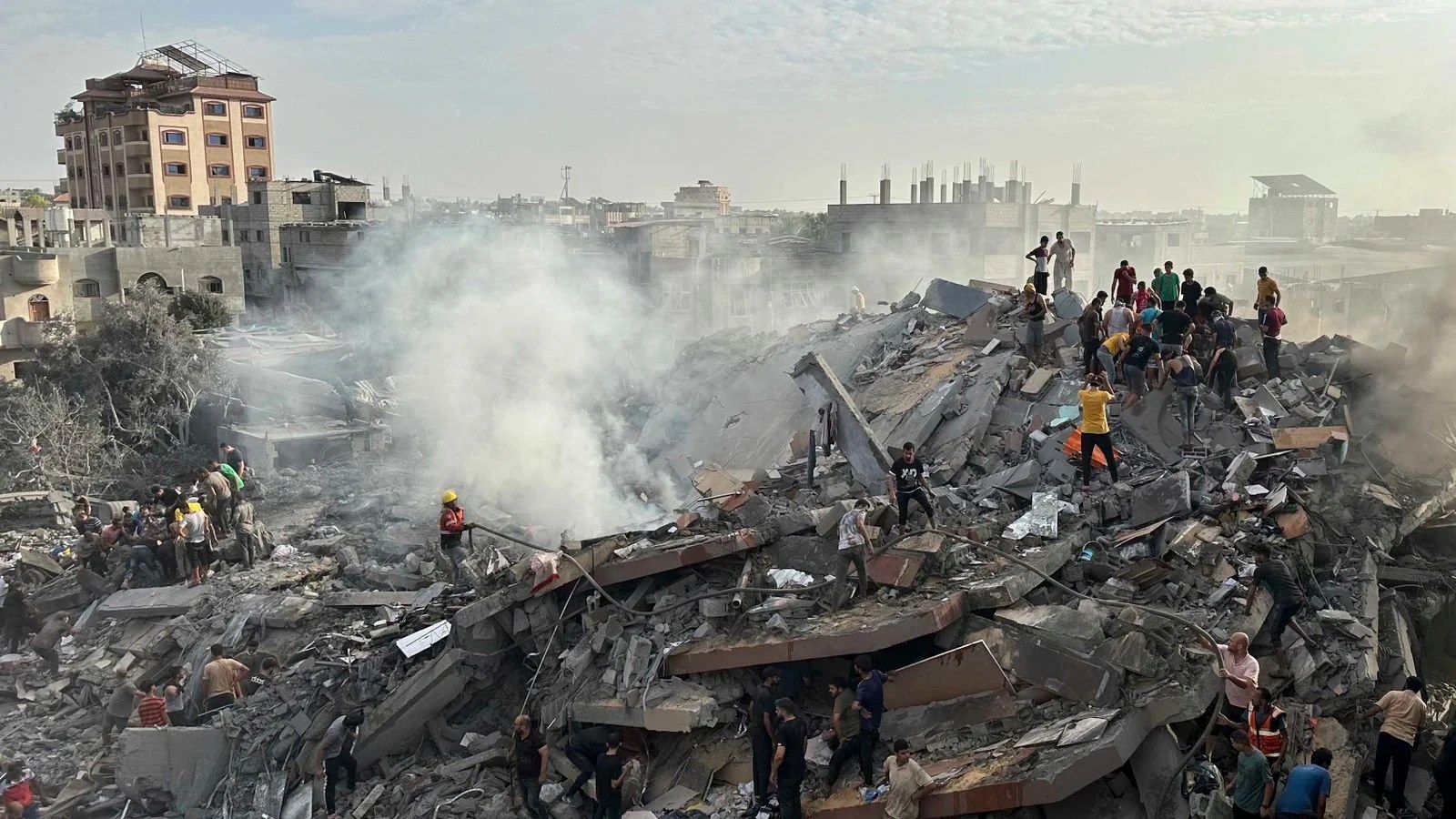
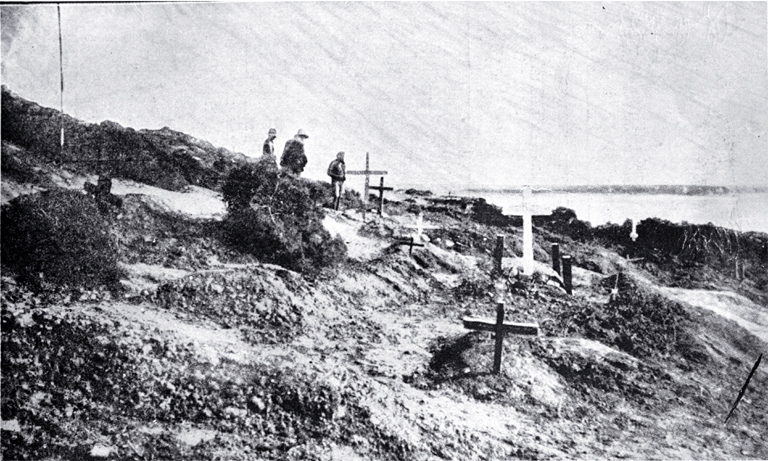
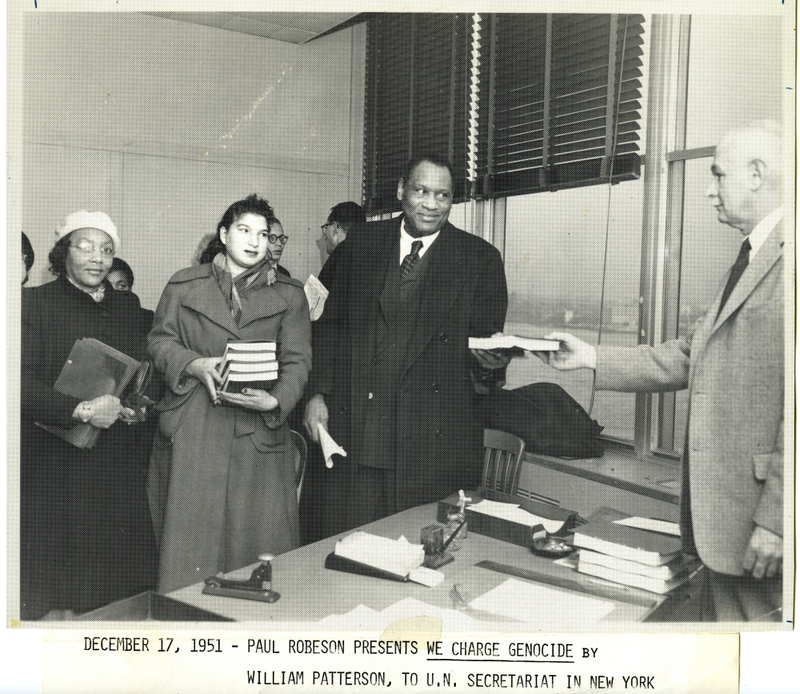

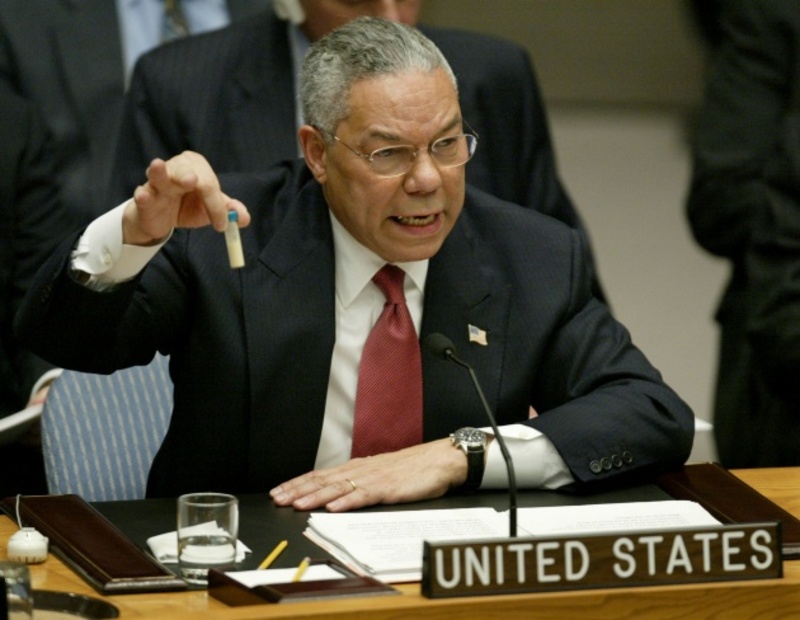
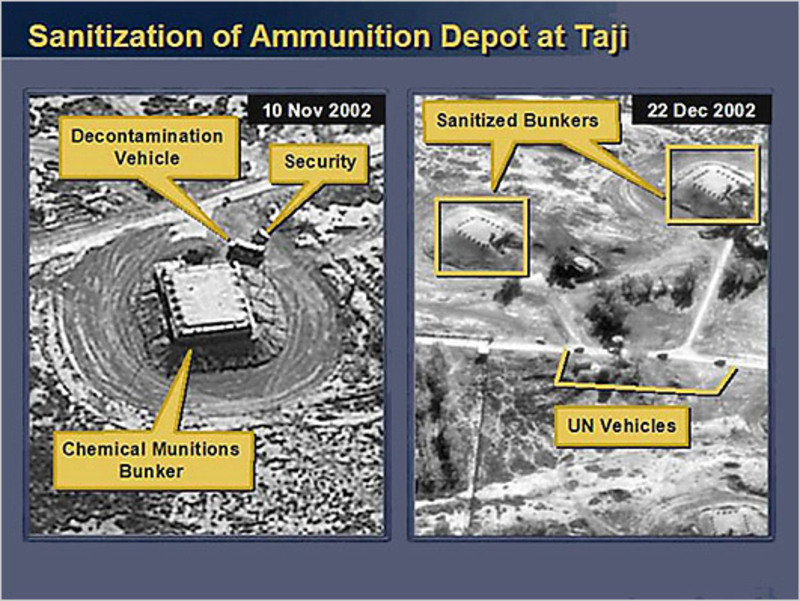
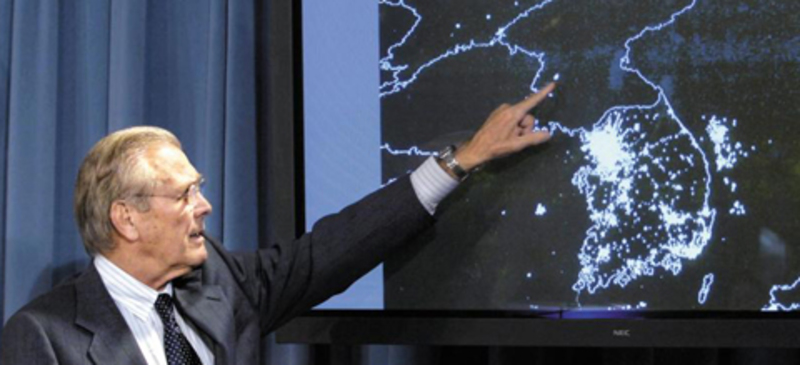
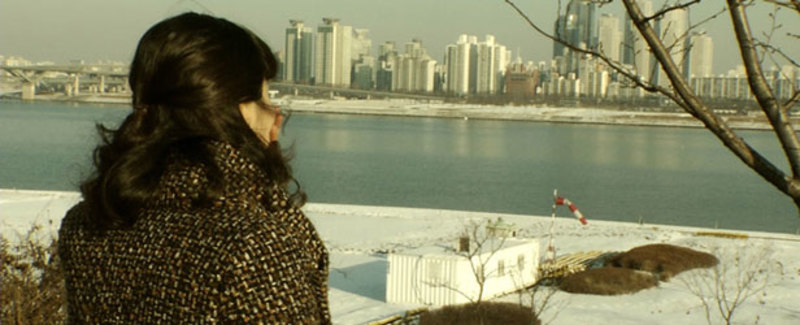




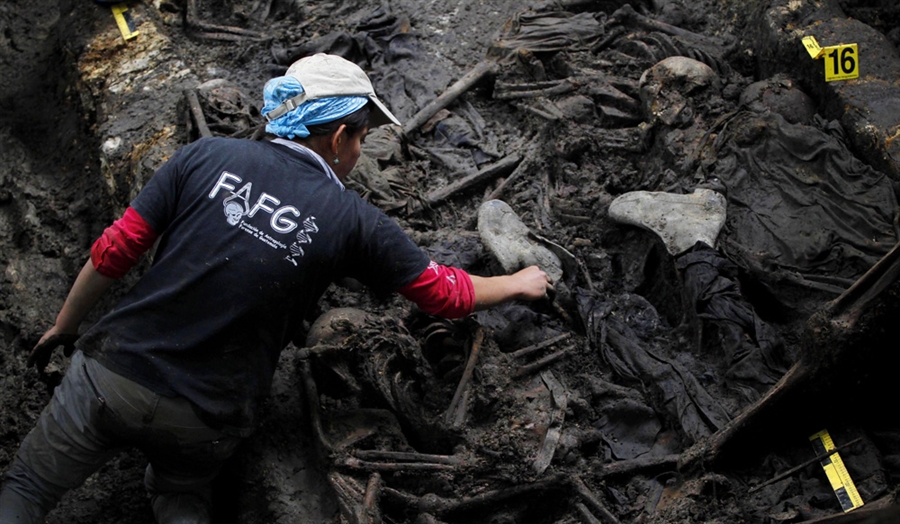
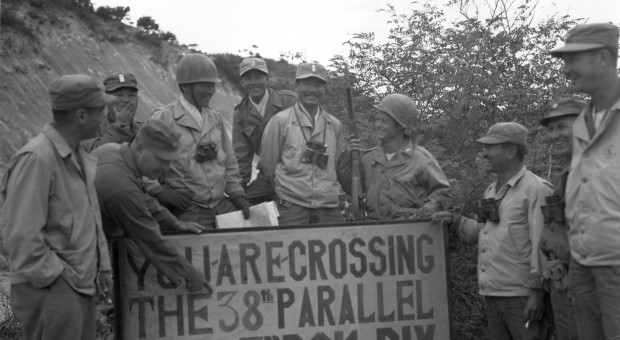











 On Genocide