…[T]hat insurgent horror was knit to him closer than a wife, closer than an eye; lay caged in his flesh, where he heard it mutter and felt it struggle to be born….” ― Robert Louis Stevenson, The Strange Case of Dr Jekyll and Mr Hyde
It is hard not to feel a bit optimistic watching Chris “Chippy” Hipkins present as a pragmatic but determinedly progressive leader on Big Hairy News, but we have been here before. NZ Labour are like Lucy in Peanuts repeatedly pulling away the football at the last minute, with the proviso that in this analogy NZ Labour are also Charlie Brown. They believe their own lies more than the electorate does. Like other “centre-left” parties in the Western “democracies”, they are a collective human embodiment of the fallacy called an “argument to moderation”. For decades the right have been pushing extremist policies with no concern for public opinion, and the tepid “centre-left” response actually normalises the right-wing shift. Worse still that right-wing is often a faction within the supposedly leftist party. Our own neoliberal turn in the 1984-90 Labour government is an anti-democratic case in point, as is Clintonism, Blairism and Starmerism.
Currently the UK is finding that the Labour Party it voted for is extremely right-wing. Can we be headed the same way? All things being equal we might be quite relieved to have Chippy back as PM with his ability to come across as something other than a sociopath, a fascist, and a grifter – a skill which Luxon, Seymour, and Peters all seem to lack. All things being equal we might be slightly reassured that on BHN he rejected neoliberalism and claimed to more inclined towards Keynesianism. But things aren’t equal. They never have been and they are even less so now. The golden age of Keynesianism wasn’t just an outcome of Keynesianism. It occurred when parties like NZ Labour (Te Rōpū Reipa o Aotearoa) were full of socialists pushing for socialist policies. Now we face a massive international turn to the extreme right which is playing out in our own country.
Many people foresaw the direction which UK Labour was taking after Jeremy Corbyn’s ouster and it became common for critics to refer to the new leader as “Keith” Starmer. This jeering (for example this parody song Pasokeithication) turned out to be far more insightful and prescient than any of the paid political commentators could manage. Now that Starmer is in Downing St. it is striking that the people who best predicted his policies were those who loathed and mocked him. It is a measure of the current state of politics.
The rules of the game are changing, and short of a massive shift in Labour Party politics the best we can hope for is Dr Chippy adding the odd bandaid and sending a few more ambulances to the bottom of the cliff. At worst though Hipkins (or his replacement) will be the thuggish Mr Keith rather than the boyishly ebullient Dr Chippy so beloved by middle New Zealand. Mr Keith will exploit the accelerating shitshow and clusterfuck that this coalition is becoming to empower a continued swing rightward. There is also a threat to Te Pāti Māori and the Greens (Te Rōpū Kākāriki) as there is also a move to solidify duopoly politics as a form of bifurcated fascism. Already Mr Keith has reared his ugly head in response to Green MP Tamatha Paul stating that she had been told by some constituents that a police presence makes them feel less safe.
Mr Keith’s response was to say: “Tamatha Paul’s comments were ill-informed, were unwise, and in fact were stupid. I don’t think responsible Members of Parliament should be undermining the police in that way.” This betrays a lot about his instincts and whom he identifies with. He is both punching left and punching down. It is not a straightforward political calculation either as there was a huge opportunity to score from the Coalition’s outraged spittle-flecked gammon responses while appearing to be the voice of reason. Luxon called her “insane” for reporting the words of her constituents and there is ample room to attack him profitably for this without being seen as an enemy of the police. Hipkins instead chose to give a free-pass to his political enemies and attacked his allies. It shows his authoritarian instincts and shows that his idea of the “public” is an ideological construct that excludes vast swathes of the public who have to live in a different world than he will acknowledge. By rejecting criticism as “undermining” he betrays the childish magical thinking of the elite who believe that dysfunction doesn’t exist if you don’t talk about it. He evinces an increasingly decadent form of groupthink (which I discuss below) that is international in scope.
The Global Context
Politics in the Western world (particularly in the Anglosphere) has clearly become co-ordinated. This emanates from a cluster of think-tanks, astroturfing organisations and para-governmental lobby groups (such as ALEC in the US that has drafted much legislations). The most evident symptom is the transnational political communications industry with its migratory talking points such as the millennial’s smashed avocado canard (which became a right-wing politician’s favourite despite originally being used ironically as a satire on boomer conservatism). Increasingly “communications” has become a key concern in policy decisions. This mimics the existing situation in the US where each high level politician is effectively a product to be marketedi and thus must put such considerations foremost in all propositions.
One of the symptoms of the creeping fascism that has taken hold in the West is that the techniques of political campaigning have become a perennial tool of governance.ii In the old days a politician only had to lie to the plebs for a month or so to secure years of tenure where they answered to no one but the civil service. Ideally the public would barely know what the ruler did in that time, let alone need to be brainwashediii into violently demanding that the ruler do it harder.
The reason our politics have turned fascist rather than merely authoritarian is precisely because of the need to maintain a pretence of democracy under the guise of an imposed form of populism. The techniques of mass manipulation have been refined to a science which I will refer to here as “shitfuckery”. In the 1950s national security states were built on bipartisan anti-communist shitfuckery. In the 1980s neoliberal states were built on bipartisan anti-socialist anti-worker shitfuckery. Now we are facing a market-fascist technofeudal state being built on bipartisan socailly reactionary shitfuckery. Previous bouts of shitfuckery acted to constrain the state against unwanted democratic influence, but this bout is evidently the beginning of a process intended to dismantle much of the state in favour of more direct oligarchic control not dissimilar to that seen in dystopian cyberpunk narratives.
This may feel very distant from Aotearoa or may feel very close depending on what you are focussing on at any given moment. On the one hand we have Blackrock, and Marc Andreessen’s a16z, and Citizen Thiel, and Brookfield, and a “bipartisan” push for more Public-Private Partnerships, and concern about a billionaire remaking NZMe into an even more right-wing organisation, and the Regulatory Standards Bill, mass public sector layoffs, Atlas Network apparatchik David Seymour’s unexplained power and impunity despite being an incredibly unpopular politician whose party won only 8% of the party vote, and the push for a “NZ DOGE”. On the other hand someone could argue that adding all of these things together comes far short of adding up to revolutionary change. The question is, just how much should we be concerned?
There are four things that we can tell from the foregoing list. The first is that this country is clearly hooked into a global movement. The second is that there is a clear direction of travel to the right. The third is that this is not constrained to an ideology of conservatism or anything that might be considered centre-right. There are multiple strains in this global movement but they are all extreme right teleologies sharing a fascist ethos. The fourth thing is that people are not taking this even remotely seriously enough. At the electoral level politics is governed by a paradigm that has been subverted because the political right are consciously acting to change the parameters of the Overton window while the political “left” are led by mostly right-wing individuals.
Paris Marx featured Aotearoa as an early adopter in the recent spate of global DOGE-style politics:
After the election, Musk congratulated National leader Christopher Luxon, writing on Twitter/X, “Congratulations and thank goodness!”
Luxon’s government is the most conservative to run New Zealand in decades, in part because of the outsized influence ACT leader David Seymour has played, despite his party holding only 11 seats. In February, Seymour was asked whether New Zealand needed a DOGE of its own. “We do have a Ministry for Regulation that is doing what some people in America are talking about,” he responded.
After taking power, Seymour formed the Ministry for Regulation with the goal of cutting regulations across government. He said that would be necessary to increase economic growth and productivity, and more recently scolded his fellow citizens to “get past their squeamishness about privatization.” But Seymour’s Ministry wasn’t just about pushing right-wing economic policy; it was also a power grab to ensure his goals can be realized.
The Rat-shit Parties and the Ratchet System
There is a calculated move by multiple actors to change the political landscape. If they make radical change then only radical repeal can counter. Hence one of the greatest dangers we face is not from those who identify as being on the right, but from those who pose as the left, but are incapable of being genuinely of the left. Throughout the Anglosphere and beyond there is a co-ordinated ongoing project to ban all genuine left-wing thought from electoral politics. The right-wing ratchet of politics is rapidly approaching a market fascist apotheosis that will unleash genuine nightmares if we cannot break this cycle. In Aotearoa we should currently be most on guard for a complete right-wing takeover of the Labour Party in the mould of Starmer in the UK. Rather than being moderated by Te Pāti Māori and the Green Party, the resulting coalition would be a trap designed to destroy the coalition partners by forcing them to alienate their electoral base.
The very concept of the left is being subsumed in a new paradigm wherein the moderate arm of an increasingly kleptocratic anti-democratic elitist oligarchy is labelled “left”. The basis of the thinking is that if your proposals for general welfare are not Swiftian solutions based on your belief that unsuccessful people are better off being humanely converted into fertiliser, you must be a bleeding-heart lefty with a weird soft-spot for the peons. In this discourse Thatcher and Reagan become moderates, if not centrists, and such historically disparate conservative German chancellors as Merkel and Bismark are recast as being centre-leftists. This creates a system in which people are trapped into supporting the right against both their interests and their will.
A political duopoly is of the utmost importance in such systems. The US is the exemplary model where two parties with ever more right-wing politics maintain an artificially balanced political landscape by actively avoiding any organically popular policies. One party foments populist fascist fervour, while the other (the rat-shit party) takes the principled stance of tutting while creeping fascism takes over the country. A shocking insight into the profundity of the problem can be gained by watching Jamaal Bowman (who was primaried and ousted by the Dems for being against genocide) talking to Briahna Joy Gray. Taken with other materiali it becomes clear that at that level of politics there is an interlocking multiply-redundant system of control that works as both direct coercion and as effective mind control. Bowman, a victim of this system, defends it and indeed seems to have internalised it as a dominant part of his self-identification. Like Winston Smith he has come to love his torturer and exult in his own persecution.
The Democrats offer no alternative to creeping fascism – only occasions of partial and temporary respite. Their leadership consciously undermines progressive reforms on which they base their appeal, such as Biden cynically normalising relations with Cuba just hours before leaving office, or putting forward progressive legislation and then applying no pressure to the “rotating villain” who is predictably able to block the legislation.ii It is the overtly hateful and hurtful rhetoric and policies of the Republican Party that generates votes for both sides. Meanwhile some element of the Democrat leadership seems always to persuade the Party that the only response must be to also embrace hate, but slightly less enthusiastically.
The duopoly system works by one party openly campaigning as right-wing while another campaigns as “centre-left”, but is controlled by people who knowingly or unknowingly have very right-wing politics. Hipkins is be just such a creature.
I was inspired to write this article in response to a recent piece published by 1/200 is entitled “Chris Hipkins is a Pathetic Loser”. The anonymous author of this piece doesn’t tell us if she thinks being a “pathetic loser” is a bad thing in a Labour leader, but the article is actually quite critical of Hipkins. The acerbic wit and lines such as that suggesting that Hipkins might be a “piece of white bread made sentient by a witch” reveal the identity of the unnamed author, who can be none other than a grudge-laden Jacinda Ardern. Clearly Ardern has finally seen through this sausage-roll eating everyman bullshit which is just a persona to hide a man whose ambition makes him a slave to established power.
I may possibly be mistaken about Jacinda Ardern embracing communism and submitting articles to such a disreputable site as 1/200, but it is almost certainly true that she, like Hipkins, would not have thought of herself as right-wing in any sense. Ardern seemed to want to be a democratic leader, and I think that says something about our political culture that her understanding of actual democracy was reminiscent of Marie Antoinette’s understanding of actual hunger.iii Her response to right-wing flak and reactionary opposition to reform was to try to use executive power to push reforms through without trying to develop a popular mandate. As a “communications” graduate it probably seemed totally natural to separate her paternalistic policy decisions from the opinions of the unwashed masses. For Ardern campaigning seemed to be an instrument to gain power by seeming slightly more credible when making almost exactly the same promises as the opponent. It makes sense in the same way that if in a quiz tiebreaker your opponent has guessed that Mt Everest is 858 metres high, you will win by saying it its 859 metres high. The lesser evil is still evil, and being very slightly less shit means you are still shit. After Obama’s 2008 presidential campaign, Western “democracy” has become ever more lost in a politics of marketing sentiments with little pretence of having a coherent political ideology.
Keith Hipkins is at best an inheritor of Ardern’s narrow and manipulative elitism. The Chippy persona might be in some sense real, but I don’t think it means anything in the rooms where decisions are made. The wishes of the electorate are to be assuaged, not obeyed – not even heeded. Instead Hipkins will reliably turn to the high priesthood of late-stage capitalism and piously obey their instructions on whom to throw into a volcano to avert the wrath of the Almighty and Vengeful Economy. (After all, why would anyone question the orthodox authorities when the entire planet and everyone on it is doing so incredibly fucking well?)
The danger that Keith Hipkins poses comes from the intensification in recent years of the ratchet mechanism. In the past the right side of politics has shifted the goalposts, while the rat-shit side simply failed to undo right-wing policies and has slow-walked progressive reform. When Ardern was not attempting reform by decree she was burying other reforms in Byzantine processes that were doomed to a slow fizzling death. This despite gaining the unprecedented mandate of an outright majority of the party vote in the 2020 election. Hipkins then made a bold point of his “bonfire of the policies” which drastically reduced the already negligible progressive impact of what could and should have been a transformative government.
Events in the UK, though, have shown that a new game is afoot. It is a pokemonesque evolution of the neoliberal turns of Rogernomics, Blairism, and Clintonism.iv For a long time the abysmal policy failures of the right and the centre-right have been used to discredit a governing party implementing those policies in such a way that the opposing “centre-left” can move to the right. Both the tribal partisanship and the focus on individual personalities create space for successor governments to adopt the same ideological and policy positions as their vanquished political enemies with a few token changes. The most obvious example of this is the Tony Blair-led Labour government that came to power in 1997. That government’s neoliberal governance is often seen as the greatest victory of Margaret Thatcher in establishing the neoliberal dictum of TINA (There Is No Alternative) as a bipartisan orthodoxy. The electorate has different ideas, but as the events of Jeremy Corbyn’s Labour leadership show there is a powerful establishment consciousness that TINA must be enforced and that only a safe pair of hands can be allowed to steer the ship of state.
Starmer is just such a safe pair of hands, but his government is taking things far further than someone like Blair. His government has embraced the ridiculous under-regulated profiteering in the privatised water and energy sectors; they have cut benefits including a massive cut in funding for the disabled; and they are now contemplating a DOGE-like attack on public sector jobs which they are referring to as “Project Chainsaw” in reference to market fascists Javier Milei and Elon Musk.
Squawkbox examined the moment in Westminster when Wes Streeting taunted the opposition:
‘We’re doing things Tories only talked about’, says red Tory health secretary – before going on to list cuts and warmongering.
Right-wing Labour Health Secretary Wes Streeting has ‘said the quiet part out loud’ and admitted that Starmer’s Labour is worse than the Tories and mounting an assault on the state and social security that British people depend on – and going further than the Tories ever dared.
And, in a sign of how removed the red Tories are from the real lives and experience of ordinary people, he didn’t seem even to realise what he was giving away, instead boasting about it and claiming this was ‘change’ that people had voted for:
The UK Labour government is pursuing many policies that are to the right of its hated Conservative predecessors while chucking a bone of overdue tax-reform to the electorate, and that should worry us in Aotearoa. This only happens because of a long-term programme of elite-capture of the “centre-left” that bears some examination.
Keir Starmer was groomed to play as a Labour politician despite having the thinnest of left-wing credentials. Part of the way political leaders are retrofitted to appeal to the plebs is a process of salting the mine. This term comes from the olden days when people would use shotguns and other methods to embed gold pellets into the walls of unproductive gold mines to convince credulous would-be buyers to part with their money. For a future politician you salt the mine with union, human rights, community and antiwar work. Thus people like Starmer, Obama and John Kerry are not fallen lefties (of whom there are plenty), but right-wing authoritarians for whom left-ish rhetoric is merely the means to the end of gaining power.
Western centre-left parties are following in the footsteps of the US Democratic Party by becoming more “broad church” and “big tent” ideologically. This is not a new phenomenon (as students of British Labour history well know) but now such parties no longer have the skeletal structure of an espoused social democrat ideology. They avoid referring to themselves as socialists and they would never think of socialism as an answer to problems. They have become amorphous blobs, like political slime moulds, without any defining shape or character apart from “in” or “out”. In these parties it is very easy for moneyed and/or security state interests to implant or co-opt those who they consider to be the best leadership for a potential governing party.
Like the most brainless of little birds, the party faithful will accept the cuckoos in their midst even as they savagely attack and evict the genuine offspring of the original movement. Some of these cuckoos probably don’t even realise what they are. They are part of the generalised fascist drift of our age. They don’t understand the concept of having principles. They come through backgrounds such as student politics where they learn to lock away and cut the blood-flow to those human traits that might cause one to lose a debate or a grade. Principles are just another dead weight like self-doubt, indiscreet honesty, and intellectual curiosity. The trick is not to lie, but to learn to believe whatever fits the format in question. The answer is that Mt Everest is 859 metres in height and giving it even one more metre is an unprofessional extravagance.
Moral, ideological and intellectual flexibility are ideal traits for success in a political party hierarchy. A party representative must represent the party. To do so without losing votes for the party they must unhesitatingly represent the views of the party as their own views. The shortest distance between two points is a straight line and thus in time the candidate in question comes to simply believe what the party tells them to believe. Any matters of principle will tend to arise from residual convictions held before joining the party. Those may or may not be profound and devout among those with an activist or union background, but those who come through student politics tend to have ideological flexibility and to see this flexibility as a moderating virtue. In other circumstances this flexibility might be a desirable trait, but it is destroying democracy because such amenable people are primed to be pushed by vested interests, by stultifying orthodoxies, and by incremental corruption.
Those parties that grew from working-class activism are very distant from their roots. Institutional and cultural changes have almost destroyed the educated working class that once provided a significant voice in politics. Party faithful for Aotearoa’s Labour Party are firmly in the middle class, including a large number of socially-conscious business owners. They are not a great bulwark against elite-capture of the party leadership. Without the direct personal stake in the welfare of the poor they don’t have the same instinctive aversion for shills in the same way that hippos don’t have an instinctive aversion for snakes. They are used to a world made benevolent for their ilk and will proudly look for the best in people, especially if they are on the same team.
The shills are not all elected officials, they can be advisors (such as those who are apparently the real power in the UK Labour government), or they can be external “experts” who incant the nostrums that fill and fatten the fatuous brains of the politicians. By nature, as non-experts, our elected representatives are giant vessels for received wisdom which they get from the extremely biased sources that they gravitate to. The result is a form of extreme collective stupidity sometimes referred to as “groupthink”. The main characteristic of groupthink is that it creates a safe space for irrational and baseless beliefs, if not extreme idiocy. Groupthink makes wisdom out of blatant fallacies, and it is the reason that the uneducated public has so often proven in polls to have better policy instincts than their leaders.
The concept of groupthink is only half of the story. The concept was first applied to politics as a form of apologism that assumes the best of intentions among decision makers. It was embraced by architects of the “tragedy” and “blunder” of the American War in Viet Nam to excuse their own brutal actions. On one hand this is a sickening response to a decade of brutal genocide that saw millions die in acts of horrific violence, and on the other hand it is an arrogantly privileged view from an elite that could never imagine that they might not really have been in charge. They created a myth of a scam with no scammer. In reality such “leaders” were and are easy marks for ruthless manipulators. Worse still they are impervious to any experts who question orthodoxy or suggest radical reform (however desperately it is needed). Being so replete with received wisdom and faith in the tenets of leadershipping (and, to be fair, generally overworked and overstretched) elected leaders are not at home to deep critical inquiry. As Jamaal Bowman exemplifies, they cocoon themselves in beliefs and pseudo-knowledge that is needed for them to function within the system in which they are embedded.
The Litmus Test
Do you think I am overstating things? Because I am not. Consider the example of reactions to the Gaza Holocaust. Admittedly NZ Labour has been a mixed bag, but they are not in power and who knows how they would run things if they were. Perhaps we could get some clue from the example of Australia’s Labor government. Their Prime Minister Anthony Albanese is not just a namesake of the redoubtable Francesca Albanese, but is himself a former pro-Palestine stalwart. As Crikey tells it: “Albanese was once one of Labor’s most outspoken MPs on the situation in the Middle East and arguably one of Labor’s most prominent pro-Palestine advocates.” Yet his centre-left government has been more anti-Palestine than our National-led coalition government (which includes David Seymour who is a pro-genocide fascist maniac). Aotearoa voted for a ceasefire at the UN in September while Australia abstained.
We have witnessed the inaction of Western officialdom to the urgent need to act to stop the slaughter in Palestine despite clear public sentiment against Israel’s actions. For most normal people it is quite achievable to condemn and oppose Israel’s violence without qualification regardless of where they stand on Hamas or any other issues. Not so with the our social betters. Political, non-governmental and corporate leadershippers have been obtuse, callous, arrogant, cowardly and sometimes brutal in service of ignorance and death. Corporate leaders chose genocide over profits. Bureaucrats choose genocide over following the law. Academic administrators choose genocide over learning. NGO leaders choose genocide over reputation. Politicians choose genocide over winning elections.
The unanimity is striking and worth taking a moment to contemplate. It is as if they are part of a CABAL or cult with a secret oath. It is as if no one is allowed to run an organisation if the security state doesn’t have material to blackmail them with.
There may be some truth to notions of global kompromat given what we know about the US approach to getting support for its genocide in Iraq, but the scale and scope of this compliance betrays a much broader disciplinary mechanism: a shared global but largely exclusive worldview. An elite groupthink. This is why I make snide references to “leadershipping”. I am referring to an ideology from the world of CEO-worship that has slipped into our political culture. It suggests that there is a discipline of leadership that is a form of expertise superior to that of people who actually understand the particulars of an issue. It is often wrapped up in the language of do-gooding NGO jargon, but it is at heart an elitist, authoritarian, anti-intellectual discourse. It is quite literally a fascist trait that has wrapped itself in a skin of paternal/maternal benevolence. It is also as ridiculous as it is dangerous. It has all of the flaws of technocracy but instead of giving power to narrow-minded nerds who vastly over-estimate their own competence, it gives the same power to baby-kissing buffoons and pillocks of the community who have perfected the art of failing upwards.
I could go into much more detail about the extraordinary failure to act appropriately displayed with frightening unanimity by our leadershippers. My expectations of these people have slipped lower than ever. It is hard to even believe their willingness to apologise for mass murder; their willingness to crush those who give so much of themselves in this heartbreaking helpless effort to force an end to this horror; their willingness to twist and ignore the words of experts and even the orders of the highest court on the fucking planet.
People have been trying to point out for decades that lesser-evilism in US politics leads to pre-destined endpoint of pure evil. The same is true of incremental compromise on an individual level. Compromise is compounding and it makes governments very dangerous. If you want to know how evil comes out of banality, it is through those habits of minor compromise that add up. A process of eliminating the uncompromising and conditioning the compromised ensures that in time institutions are populated with potential monsters. They await the time that they are asked to aid in the slaughter of innocents and they will click their heels and shout “Jawohl, mein Führer!”
A key mechanism behind the creation of groupthink is an incremental intellectual compromise that is conjoined with the more obvious moral compromise. The reason that I emphasised received wisdom earlier is that there is an intellectual authoritarianism common to political leaders. High status individuals are, unsurprisingly, prone to the belief that status is an indication of merit. They have this pious faith despite some fairly obvious signs that our civilisation is decadent and incapable of even addressing existential threats of it own making. Worse still, expertise in our times is decreasingly determined by the problematic academic hierarchy and more influenced by late-stage capitalist institutions. Editors and publishers push certain individuals and even create “rockstar” intellectuals. Conjoined with the desires of the security state and the influence of plutocrat dominated think-tanks, it should surprise no one that the “authorities” thus promoted are usually bigoted and reactionary and often childish and highly emotional people whose ideas come from places of personal resentment. The ethos of merit is also a self-reinforcing dysfunction because these “intellectuals” have often succeeded in some area of scholarship but are promoted as experts on totally unrelated areas on the basis that they have big IQs.
Having myself studied the acknowledged intellectual dysfunction of the US political leaders waging genocide in Indochina, it has long been clear to me that the problem did not end in 1975. Instead the very institutions that produced that dysfunction have proliferated and are clearly deployed consciously to shape the collective mind of leaders. Politicians, journalists, academics and bureaucrats are exposed to the “real world” in curated experiences such as ride-alongs or embedding. They become psychologically reliant on and subordinate to the professional who is given direct control over them, especially if there are safety concerns. For them the world is thus turned into a Potemkin village. We now have a system where all manner of interests are incentivised to control the beliefs and perceptions of leaders and have developed a lot of ways of doing so.
The cliché is “those who can make you believe absurdities can make you commit atrocities.” There is no shortage of absurdity in the world of supposed expertise. The discipline of economics has supplied a string of ideologues (stretching back to Malthus) who leverage relatively narrow empirical work to create massive sweeping constructions of dramatically bad political theory. Economics has came to function with massive over-reach, influencing policy in ways that have no valid basis. Moreover the neoliberal diktat is of late only plausibly linked (if that) to economic orthodoxy, yet it is treated by political leaders as some immutable Law that cannot be traduced: Thou mayst be tempted by the wailing of the children that hunger, but thou must gird thine loins and stuff parsley in thine ears. If thou dost feed the children The Economy will become wroth and He will smite one thousand and thirty-three for each one child that is fed by thine hand.
The atrocity is that real avoidable suffering on a very large scale comes from following policy prescriptions that come from specious and often ludicrous claims of necessity. Harry Robson published an article in Watchdog reminding us that the government of Aotearoa used to work hard to ensure that there was full employment. They weren’t all leftists, they just did their job according to the actual mandate given to them. Comparing Aotearoa with Finland Gary Payinda asks “why can’t we have nice things too?” “You can’t really call it socialism because they are a very market-based capitalist society.” In reality their government still has a residual belief in the public good, while ours are either hostile to the public good or credulously allow fake economic arguments to persuade them to continue a project of immiseration and vast inequality that worsens the material conditions of all but a fraction of a percent of the population.vi
ITSE: It’s the Stupid Economics!
Neoliberalism will not be undone by NZ Labour. Dr Chippy might claim to be more Keynesian than neoliberal but he doesn’t really grasp what that would mean. He would not, for example, contemplate fundamentally changing the Reserve Bank Act. The NZ Labour Party is not a home for free-thinkers. Hipkins is not the only potential Keith. Keithness is endemic. Take Barbara Edmonds talking about PPPs. On Big Hairy News she defended PPPs as sometimes desirable even though they are inherently more expensive. Her reasoning is that the country must maintain “fiscal headroom” which is doubly fallacious because she takes a strong stance against using PPPs for critical infrastructure, so she is saying we have to spend extra on non-critical infrastructure adding an unnecessary fiscal commitment for the future (i.e. a self-perpetuating “fiscal headroom” problem) rather than simply raise the revenue.
“Headroom” is the word of the day in the UK. Chancellor Rachel Reeves thrice boasted of her headroom creating plan in her spring statement. The Shadow Chancellor’s response to the statement invoked no less than 4 headrooms. Reeves replied with, “What the markets should see is that, when I have been tested with a deterioration in the headroom, we have restored that headroom in full. That is one of the choices that I made. He says that it is a sliver of a headroom. Well, it is 50% more headroom than I inherited from the Conservative party. When I was left with a sliver of headroom, I rebuilt it after the last Government eroded it.” All of this took me back to the grimmest days of the 1980’s, not because of the impending austerity, but because Reeves’s answer has clearly exceeded Max Headroom. I am not going to apologise for that last sentence, so let’s just move on to the fact that the UK news media are also pretty keen on the word “headroom” at the moment. The sudden rise and apparently crucial status of a word indicates that it is employed as a “thought-terminating cliché”. Edmonds use of the term is not reassuring and it is worth noting that the very concept of “headroom” is absolutely antithetical to the Keynesianism that her Party leader pretended to espouse.
“Headroom” is just another in a 50 year-tradition of economic concepts being used selectively to reject governing according to the will of the public. We live in a completely Freidmanite world – conquered by stealth and perfidy – where the government cannot act in favour of the poor because that is deemed to contravene market forces, but it can favour the rich because it is supposed that market forces will correct any economically harmful activities. Apparently that means that we don’t have to worry about politics being totally corrupt because the market will always stop it from being corrupt. It is all just a scam being made credible by economists. In reality no economic theory can provide policy prescriptions or prohibitions without context. Governance is bigger than economics. In fact, as I suggested earlier, economics is bigger than economics. Sermonising about economistic pieties such as “fiscal headroom” is merely a thought-control technique to justify unjustifiable schemes against the public interest, of which PPPs are a mere sub-category.
Edmonds’s other PPP defence was a dismal response to Pat Brittendon questioning whether it is possible for PPPs to provide cheaper outcomes when they always add the expense of a profit margin. She answered, “Some would say it is possible and because PPPs are actually found quite commonly around the world, but also it comes down to that risk threshold and that affordability threshold which is agreed to a negotiate at right at the beginning. So if the risk is low enough then yes it will be cheaper for the private sector because they won’t have the risk of basically having to pay out more at a later date. So I’m assuming that’s where it would be cheaper however the major thing for us again get it right from the start and when the negotiations have to be really really good.” I do not know about you, dear reader, but that sort of answer makes me utterly furious, not least because people like Edmonds actually seem to think that this sort of nonsense makes them the adults in the room.
Economist Craig Renney has a sobering “bluffer’s guide” to PPPs and concludes “There might at the very edges be a good case for a PPP, but it would be very rare. Great financial cases for PPPs would be even rarer.” What he implies, but does not state outright, is that there is an inherently antagonistic relationship here. The transfer of risk, which is a major justification for PPPs given by both Labour and National Parties, is something that the private corporations will do everything they can to avoid. It doesn’t take a genius to work out that private companies take government contracts to avoid risk, not take it on. It is worse than that because PPPs create a whole new level of risk because there is the intrinsic risk that the private enterprise will succeed in creating unearned income from the deal. Renney emphasises the Byzantine complexity of these arrangements and it is worth remembering that you cannot rely on good faith from these actors. While a hypothetical case can be made for that unique alignment of the planets that makes a PPP worthwhile, the practical history of PPPs reveals a litany of disaster for governments. Their Private Partners in this (for example the Compass Group) do not suffer the reputational damage that one should expect after profiting handsomely from failure.
There are three reasons why private enterprises are repeatedly allowed to effectively steal from the public with support from elected officials. The first is corruption, which includes perfectly legal acts done to show donation-worthiness to the “business community”. The second is an ideological project to increase inequality, destroy public services, and create a plutocratic feudal society with social-Darwinist pretensions. The third is the stupidity displayed perfectly by Edmonds when she said “PPPs are actually found quite commonly around the world….” This is groupthink. She is responding to a plain argument against PPPs with an argument from moderation. It may seem arrogant to go against the conventional “wisdom” of Western governments, the IMF, the World Bank, The Economist, ad very much nauseum; but the real arrogance is to fob people off with half-arsed defences of this bullshit.
Mr Keith is a Liberal Zionist
The Keithness of NZ Labour is most easily seen in the party’s liberal Zionism. Liberal Zionistsi support a project of injustice by selectively opposing the most obvious injustices and artificially separating those offences from the very enterprise that brings them about. There are two very important aspects of liberal Zionism that are apposite. One is that liberal Zionists will never devote serious energy to stopping the things they decry that are done in the name of Zionism. Every salient atrocity instead brings them to a fervour of #NotAllZionists hand-wringing and an Olympic-speed sprint to distance themselves from Netanyahu and his right-wing buddies. The second thing to note is that they constantly shift ever more into endorsing the very things they claim to oppose. At times of crisis they become full-throated pro-genocide cheerleaders. For example, every single person the world over who has endorsed Israel’s “right to defend itself” by unleashing violence on Gaza knew that masses of innocents would die or were already dying. Israel has no such right. It is this combination of ignorance, incurious stupidity, and the sheer evil of choosing to make apologies for the massacre of innocents that typifies the actual fascism of Western governments.
Israel has been doing things that liberal Zionists claim to abhor from its inception. The situation since 1967 has grown increasingly stark. If liberal Zionists were what they pretend to be every joule of their energy would be devoted to ending the genocidal creeping annexation of East Jerusalem and the West Bank, and the genocidal siege and slaughter inflicted on Gaza. Instead they contend that the features of the Zionist project are bugs. Every liberal Zionist the world over now supports the illegal settler movement in some form when they used to play at opposing it. Aotearoa is no exception. In 2015 Dr Vacy Vlazna discussed our much vaunted draft UNSC resolution on illegal settlements:
NZ normalises Israeli atrocities by falsely presenting Israel and Palestine as equal perpetrators and equal victims and by pushing the demand that Palestine gives up its endeavour for justice in the International Criminal Court thus letting Israel off scot-free for its monstrous war crimes and crimes against humanity.
While NZ demands that Israel freezes its rapacious settlement expansion…, it absurdly promotes the farce of negotiations that expand settlements. There is no demand by NZ that the zionist infiltrators leave the present settlements that have illegally expropriated half of the remaining Palestinian West Bank.
NZ obediently keeps up the pretence of a two state solution when Netanyahu has repeatedly ruled out Palestinian sovereignty.
The reaction to the injustice is not to act to prohibit the act, it is an attempt to regulate it. This is the equivalent of abolishing prosecutions for murder and replacing them with a regulatory framework seeking to place a limit on how many murders a perpetrator commits and to ensure that murders are hygienic. While not enforced by any material means, if these regulations are not obeyed the murderers could face the tepid prospect of additional unenforced regulations being imposed. Regulating something like this normalises it, and since the limitations are ignored such moves only benefit the genocidal project.
The neoliberal state is another abomination that has been embedded and strengthened by pseudo-opposition. The rat-shit “centre-left” equivocates between those who would crush the poor, exploit them for obscene gains, and send them broken to an early grave; and those who suggest that we not do those things. Since there is a power imbalance between exploiter and exploited that equivocation is effective endorsement. The welfare of the people is seen as a luxury to be attended when propitious circumstances allow, while more generally the rat-shit leaders act according to the dictates of the market fascism (because that is what The Economy needs).
Liberal Zionists showed their true colours in October of 2023. It wasn’t the first time. Every time that a pretext is there to do so liberal Zionists endorse Israeli violence and at some discretionary time later decry the inevitable results of the thing they endorsed. So too of neoliberalism. Economic shocks have been used to push radical destructive reforms. However on both counts there is now a sense that what once had to be sold as abnormal is now to be cemented in place as the permanent state of things. We know that even as mass-murder and ethnic cleansing accelerates in Palestine no major party in most Western countries is going to break with liberal Zionism and the pompous pseudo-humanitarian performance of pushing a “two-state solution” (as if that was not an effective endorsement for genocide). There are worrying signs that a similar uniformity is taking hold in the face of radical attacks on the public good.
“Welfare liberals” are falling in line with market-fascist thinking. The distinction between a “welfare” and “classical” liberals has always been a falsehood. From the outset the ideology that came to be known as “liberalism” was freighted with two hideous incurable tumours – the primacy of property rights and a religious belief in The Economy as an entity. I have made reference already to human sacrifice and this is no exaggeration. When the Great Famine broke out in Ireland the Tories liberalised the grain trade, but it did not help. When the Whigs gained power in Westminster in 1846 they decided to go much harder and cancelled government relief efforts to help starving Irish people altogether, relying on the market completely. A measure of just how successful the approach was is the fact that Ireland still has a lower population than it did in 1841. This is because they sacrificed hundreds of thousands of lives to save the economy but this actually left the economy completely wrecked.
Far from The Great Famine being an occasion for ideological reform, the British government shifted this brutal form of genocide to India, where on multiple occasions they banned the provision of relief to people suffering famine caused largely by the British Empire’s commodity-hungry and resource-extracting economic policies. Tens of millions died slow painful helpless deaths in a series of events spanning decades. The same people who murdered these millions cited free-trade for the sake of the economy but had no hesitation in preventing Indian commerce from competing fairly with British rivals.
While privileged liberal ideologues indulge themselves by rejoicing in the moral superiority of their negative liberty, it has always been the case that liberalism is selective in offering its bounty of freedom. The British and US empires have been prolific in incarcerating, torturing and killing those who exercise their freedom of speech if it threatens imperial “interests”. We see in such instances that the enemies of Western benevolence are “militants” and “terrorists”, whose “terrorism” may in fact be such dire acts as pamphleting, teaching children, organising a strike, or wearing glasses. Freedom of speech exists so long as your speech doesn’t threaten the existing power structure, and now that the Western hegemony has become ideologically fragile we see that the news media have lost their sense of flexible loyalty and have become rigid regime propaganda. Speech is becoming more openly policed. This may currently seem like a Palestine exception, but will clearly be applied to other issues immanently. “Antisemitism” has been a very useful and powerful tool to overcome residual human rights sentiments, but other pretexts are available including “grooming”, “woke”, “radicalism”, and the old faithful “terrorism”.
Liberalism has always offered freedom for me and an agonising death of starvation for thee. Friedrich Hayek even made a point in The Road to Serfdom of arguing that freedom necessarily includes the freedom to starve to death in a gutter. This book is beyond problematic and anyone who looks beyond its reductionist premise will find that every page drips with evil. It is a work of fanatical utopianism that airily espouses a system of suffering imposed by state coercion of actual people in defence of abstract “freedom”.
Welfare liberals have been lured though decades of indoctrination to view left-wing causes as indulgences and products of their own superior benevolence. They have no intellectual equipment to oppose market fascists if times of crisis are invoked. They are voting again and again to cause excess deaths and suffering by cutting welfare and public health services. The effects of this on the marginalised are real. The libs are opposed to “austerity” as such, but their argument from moderation is that we must have “fiscal prudence” (aka austerity) so that we can heal our poor wounded and bleeding economy. Once the economy recovers then the poor will once more benefit from their bounteous welfare charity (as long as we have headroom, naturally).
There are numerous problems with the idea that you have to restrict government services at times of crisis. We are always in times of crisis or recovery from crisis. Part of the manner in which economic governance has been hijacked from serving the public good is the sense of a permanent state of exception. Historically successful progressive reform has taken place without regard for the economic problems of the time. It happens when people decide that a more just world is necessary. Despite orthodox wisdom, these changes have massively benefited the economy while the belt-tightening impulses of liberals simply feed a vicious circle of dysfunction and inefficiency in the state and community sectors.
The Road to Terfdom
Where welfare liberals have succeeded is in extending the selective privileges of negative liberty to people who aren’t straight white men or able to pass as such. Identity politics is by no means unimportant and is not secondary, but liberal identity politics tends to favour the interests of those who are already comparatively privileged in terms of wealth and social capital. Another big problem that people have found in recent years is elite capture of identity politics.ii That said, even this top-down beneficence can have a profound effect in changing the day-to-day lives of marginalised people, giving them breathing room to be who they are and for their voices to be heard. Elite capture aside, the liberal rhetoric on this subject is actually true. The real problem is that these freedoms are not based on solidarity and genuine empowerment and thus they are all too easily reversed.
Any student of history who has thought about the topic will know that years of liberal progress can be undone in months or weeks. When it suits the state or the ruling class a given group will quickly become targets. Communal violence or persecution based on ethnic, religious, sectarian, caste or class identity arises almost instantly when desired. Examples include the persecution of Chinese in numerous Western settler colonies when their labour was made undesirable by economic factors; the drastic loss in status and material wealth of women after the Great War; and innumerable examples of selective or general anti-migrant sentiments arising just at the exact right time to provide a populist pretext for the state’s economically motivated crack-down on certain types of migrants. All of these things can happen without needing so much as a change in government, let alone regime, and they are starting to happen now.
The clouds of reaction loom darkly on the near horizon. The sudden reversal in women’s reproductive rights in the US is an opening shot. The global attack on trans rights is rapidly and predictably expanding into a broader fascist attack all forms of gender diversity including cis-people’s wrights to reject narrow gender norms. The powerful voices for “libertarian” ideals all seem by coincidence to be white supremacists and their “libertarian” ideals don’t seem to be any impediment to their open espousal imposing a form of serfdom on the vast majority of the population. The Venn diagram of market fascists, Christo-fascists, race fascists, male-supremacist fascists grows ever closer to a circle. The diversity that exists in their ranks is only one Night of the Long Knives away from extinction. Even if some bloody consolidation doesn’t happen, it is inevitable that the white male father will be crowned once again to stand alongside the bourgeoisie as assumed norms and assumed authority figures. This elevation, however, is a divide-and-rule strategy by a narrow elite who actually thinks of the average bourgeois white male as an insignificant bug. In late-stage capitalism the rulers are not bourgeois, they are an aristocracy cos-playing as self-made.
There is no need for a coup to bring about this fascist transformation. The so-called centre-left is happy to institute policies that further marginalise minorities and women by following economic policy prescriptions that deepen existing inequalities. The enthusiasm with which the UK Labour government is pursuing the same sort of policies as our ACT-led coalition, Javier Milei, and Musk’s DOGE shows that the centre-left is not to be trusted, or at least not their leadership. The main threat to the UK government’s massive attack on the poor, the vulnerable, and the state sector is opposition from their own party.
Starmer and his ilk were never a credible electoral force. They won by default due to a string of ostentatiously terrible Tory governments making dramatically bad decisions. There has been a trend of this sort of thing. Our ridiculous ferry and school lunch incompetence stories are tepid versions of the grandiose incompetence displayed by the likes of Trump, Bolsonaro and Milei. Despite everything the UK electorate clearly didn’t trust Starmer. Labour won a massive landslide in seats taking two-thirds of the parliament, but they only had 34% of the popular votes. Given the poor turnout they won this huge landslide with only one out of every five registered voters casting a vote for them – and many of those votes would be for anti-Starmer Labour candidates. Labour did much much better under the “unelectable” Jeremy Corbyn.
Like Biden’s victory it is only the antipathy towards the other option that has led to these unpopular leaders gaining their position. In the case of UK Labour it is clear that this fact is overtly being used as an opportunity to inflict a massive programme of neoliberal attacks against the public interest. Elected or not, this is deeply undemocratic. The risible landslide ensures that the UK government can largely ignore the public and the left-wing within their own ranks. They may concede the odd fight, but by the time the electorate get to choose another government these decisions will be well entrenched (and electors might not have much else to choose from anyway). On Double Down News George Monbiot makes many of the same points I have made, adding that Labour are running to the right of every Tory government except Liz Truss, and that by doing so they are paving the way for the rise of an openly far-right political movement under Nigel Farage’s Reform Party.
It is clear that there is a new phenomenon abroad, a new variant on the duopoly that supercharges the anti-democratic politics created by culture war which makes people choose the unpalatable rat-shit “centre-left” option because the alternative is a monster who only appeals to the delusional and the hateful. An interesting test case may be Canada’s Mark Carney. Despite his dubious establishment background Carney has progressive rhetoric, but this may just be the salting of a worked-out neoliberal mine. Carney ended a corporate carbon tax as soon as he became PM and cancelled slow-walked plans to increase Capital Gains Tax. It all seems depressingly familiar. In this case, the monster who differentiates Carney and gives him room to move right is Trump more than his actual opponent Pierre Poilievre. It will be interesting to see, assuming Carney wins, whether Trump’s hostility will create space for further neoliberal attacks on, say, Canada’s health system. I would be a lot less surprised by that than by a former reserve bank governor actually following through on his espoused progressive ideals.
So far, the more the Coalition here in Aotearoa reveals itself to be a collection of idiots, lunatics, charlatans and fanatics the more Hipkins shows his Mr Keith side. His endorsement of the attack on Tamatha Paul should be put in the context of a long relentless dirty politics campaign against left-wing Green Party parliamentarians. In an MMP environment it may seem counterproductive on the surface to allow, let alone endorse, attacks on the caucus members of such a close ally. On another level there is a clear (if totally disgusting) rationale in that Labour’s leadership knows that a sizeable chunk of National voters will vote for them in the right circumstances, such as a disastrous pandemic or calamitous coalition government. But even if that is strictly true it is only a pretextual rationale because Labour could run as a left-wing party rather than trying to be the more credible and less cruel conservative alternative. Their electoral calculus is not neutral, it is bound by neoliberal TINA assumptions.
How to Tell Four Lies in Only Two Assertions
On the “NZ Leftist Collective” podcast Samah Huriwai-Seger let it be known that she did not consider the Labour Party to be on the left. This provoked both disbelief and indignation from fellow panellists. Eventually the spluttering died down and some arguments were made around ways in which Labour policies have benefited people (including the “working for families” tax credit, which was fantastic apart from the tiny detail that it deliberately excluded the poorest children in the country).
There were two reactions to Huriwai-Seger that were very telling. One was that all four other panellists (one being Labour MP Kieran McAnulty) made a point of saying that Labour wasn’t National. ACT or NZ First. This sounds very much like the political style of US Democrats and UK Labour, a fact which should send chills down the spine. Another was Craig Renney’s answer to Huriwai-Seger’s contention that Hipkins gave a “green light” to Israel’s genocide in Gaza. Renney pointed out that he had been in rooms full of Labour Party faithful who were unanimously opposed to the genocide. This is a completely fallacious understanding of the way party politics works. After all, if you were in a room full of UK Labour members 6 months ago you would have been very hard-pressed to find any who supported benefit cuts to disabled people let alone the entire package of right-wing measures that is at the very core of the current government. Renney’s thinking has no allowance for the elite capture of political leadership when that is perhaps the most important thing shaping policy, governance, and even ideology in our time.
The question of Hipkins giving a “green light” to genocide when he was Prime Minister is beautifully illustrative. On the surface Huriwai-Seger might seem to have been reading a lot into Hipkins making the blandest of prevarications. In reality the conventionality of Hipkins response shows the power of groupthink to be violently immoral and deceptive in an offhand way. Asked directly about a “cutting of food, fuel, water and electricity” Hipkins answers that Israel “has a right to defend itself” but “there are international norms” of proportionality and “I’m not going to make a judgement on the specifics”. In a few short words he manages an incredible amount of lying.
The first lie is that Israel has a “right to defend itself”. It cannot claim self-defence against resistance forces as an occupying power. I covered this fully when the Gaza Holocaust first began.
The second lie is that this is a question of “norms” rather than laws. Sieges for a legitimate military purpose are legal, but it is illegal to trap civilians or blockade food. This sort of blockade is also prohibited under clause (c) of Article ii of the United Nations Convention on the Prevention and Punishment of the Crime of Genocide.
The third lie is the implication that this is not also a blatant violation of the Fourth Geneva Convention which obliges the occupant to ensure the welfare of the occupied. This is where a simple negation can hide Byzantine doublethink. Hipkins must have been given official advice on more than one occasion that Israel is the occupying power, yet it doesn’t seem to penetrate his smug-shrouded skull to think what this means in moral and legal terms. Huriwai-Seger references the fact that for people “who see themselves in Palestinians” this is a “green light for explicit genocidal intent”. I raise this here because even though Hipkins is clearly aware that Israel has an ongoing control over the movement of people and goods in and out of Gaza (including on the border with Egypt), Hipkins acts as if they are not committing blatantly cruel immoral and illegal act against a helpless population of non-combatants. The implications are that Hipkins doesn’t really think of Palestinians as being worthy of the same moral calculus that he would use for Westerners (including Israelis) and that he believes that International Humanitarian Law is actually just a bunch of fuzzy “norms” that for some reason makes no provision to prohibit this form of mass atrocity.
The fourth lie is the old complexity canard hidden in hidden in Hipkins’ refusal to judge “specifics”. We have seen a lot of this during the last 18 months. No matter how blatant and clear-cut the situation becomes people trot out old clichés of a complicated and intractable age-old conflict. In fact, there are no possible “specifics” that can justify inaction when someone announces that they are about to commit a crime. Hipkins had a clear moral and legaliii obligation to denounce Israel’s genocidal rhetoric and the actions taken to enact those threats. To plead that this is premature judgement is the same as saying that one cannot consider an obvious crime to be a crime until someone has been convicted of it. This is the equivalent of saying that no one can ever be an accessory to a crime because the perpetrator enjoys the presumption of innocence so it is impossible to be an accessory until a conviction has been entered.
The fact that Hipkins is so egregiously deceptive and immoral in so few words shows the power of orthodoxy. His groupthink-captured mind is so immersed in a world of political compromise and politically-compromised intelligence that there is no actual bottom line. For anyone who is capable of putting aside racially-informed prefigurations, what he was confronted with when was a stark and alarming intent to inflict suffering and death on defenceless people. It had none of the usual camouflage. It was right there and people were already suffering and dying as it was put to him, and yet he found room to prevaricate.
One of the dangers is that “centre-left” political leaders see themselves as the adults in the room, but this prejudices them against understanding what is really going on. They are conservative and authoritarian in their choice of who to trust as sources of information. For example, Kieran McAnulty, on the same podcast I have mentioned, found out for the very first time that “defund the police” is not a call for abolishing the police. The slogan actually cohered after more than a decade of growing and uncontroversial awareness that the police have increasingly been used inappropriately to deal with problems arising from the underfunding of needed social services. It might be a bit of a stretch to go from that one piece of data, but it was noticeable that he was the only one on the panel of 5 to whom this was news. With exceptions for some specific causes, most Labour parliamentarians are not activists. As such they take the nonsense that is spread in mainstream circles as authoritative while tending to view those who have more knowledge and clarity as being emotional and overly partial. Increasingly on many topics they live in an information bubble that is controlled by fascist billionaires and, whatever their personal inclinations, that means they will default to fascist positions and then defend them against those they see as extremists.
As things stand, the rise of Mister Keith in this country seems like an inevitability. The economic mismanagement of the coalition and the terrible situation they are creating will be the ready excuse for continued austerity and continued attacks on the coherence of the public sector. The thing that might stop Chippy from going full Keith is the power of the Greens and Te Pāti Māori.
Through no fault of their own Te Pāti Māori are less of a threat to the right simply because in our media and political ecosystem every move they make that energises progress also creates and equal and opposite reactionary excitement. On the other hand the campaign against the Greens is a clear fixation. The dirty politics that has long festered in this country has evolved into a more establishment-wide attack on the party that is becoming akin to the anti-Corbyn campaign. It is the fact that left-wing ideals have won control of the leadership of the party (rather than merely its members and voters) that has made it a target. In the past the party has been reliably neoliberal, with the party’s left-wing always disadvantaged by the politics of working with neoliberal-dominated Labour.
Two-Faced Fascism
The new fascism that we face does not require a single Party nor a single Leader, but it must be able to exert the same level of control in its ability to foreclose on genuine democratic left-wing politics. As I have mentioned there is an existing international model of duopoly that exploits the ostensible diversity of a having a “liberal” and a “conservative” wing fighting like Lilliputians over egg prices as camouflage for actual uniformity.
On 1/200 podcast recently Oliver reiterated a point made some time ago that this fascist shift is in response to a crisis in imperial hegemony and late-stage capitalism. As he points out, it is an alternative to a New Deal style reform or (I would add) the mollifying reforms that ended the uprisings of 1967-68. I believe that this time of crisis has been long foreseen and this fascist response has been in the pipeline for around 30 years. There is a neo-Malthusian, neo-feudal, neo-aristocratic, racist, market-fascist synthesis that is currently directing world events with a power vastly disproportionate to the political appeal to sane people. Because people are fixated with the rise of far-right populism they have been slow to recognise the hegemony of far-right ideas among the most elevated Western circles. As such many powerful, but not ultra-elite, people are adherents to and servants of a project that they do not understand.
All of the problems that face us have clear socialist solutions, but they can only be undertaken by rejection of the tumours of liberalism – economism and the selective fetishisation of property rights. From an ultra-elite perspective the problem with this is that it is democratising. Once people take control of economic functions to avert crisis, then they will have a very clear and compelling path forward to use that same control to create justice. They are clearly determined to allow crises to continue accelerating to the point of no return. It is no exaggeration to state that these people are pressing towards a future in which they are overlords in a world of slaves.
The danger that the leftist Greens present is that the public is increasingly hungry for radical answers because the status quo is looking more and more frightening. Right-wing radicalism is embraced by the establishment proudly. Yet another important point raised by Samah Huriwai-Seger was that despite a long relationship the Greens have never had a cabinet position in a Labour-led government. In contrast Winston Peters has been Deputy PM and foreign minister under both Labour and National. In the current Coalition the minor parties both have 3 cabinet posts. In both cases they have pushed radical measures and have created massive headaches for the government. Labour’s leaders may or may not believe the rationales they use to explain keeping the Greens out of government, but the reality is that the establishment simply doesn’t trust people who are not ideologically captured. For example, who could imagine Chlöe Swarbrick answering a question about PPP in the way that Barbara Edmonds did?iv
As business-as-usual answers become ever less credible, the power of socialist ideas becomes hard to suppress with the normal bullying superiority of privileged rhetoric. The ideological divide is becoming ever more clear. The centre cannot hold. The right are racing to end all possible expressions of democratic politics while rapidly creating a mass-movement of violent fascists from the discontents that they themselves are creating. The left has only truth and clarity on its side. Socialist answers are not abstractions. A socialist answer to a problem is to fix the problem, not to leave the problem because of a superstitious notion that acting directly to fix the problem will actually somehow make the problem worse.
The establishment has been playing a game of whack-a-mole for decades in which it attacks any potentially transformative democratic politics with increasingly tired economic nostrums and irrelevant anti-communist screeching. None of it ever made sense, but as long as bad times could be relied on to be followed by better times it was a saleable bad-deal – like a high-interest car loan for an overpriced vehicle that you are buying for status rather than utility. Now we are starting to realise that a decent bus service is actually more important in the grand scheme of things. The establishment reaction is that if we don’t want to work our lives away to pay for a late model Ford Ranger, then we should die in a gutter as a salutary economic lesson. The crisis we face is not one of limits to growth it is one of limits to excess. Human productive power is so great that it far exceeds that required to maximise health and happiness. Once we start solving crises through direct socialised means we will inevitably address the injustices of inequality, and that will mean the end of the current world order.
The centre is collapsing on multiple fronts. The death/unmasking of liberal Zionism is the paradigm of our political moment. I highly recommend the bookPalestine Hijacked by Thomas Suarez which shows that fascism became the driving ideology of Zionism in the 1920s and has secretly remained so since. If you go back a decade or two, right-wing expansionary settlers were considered a fringe of Israel’s political landscape and yet their project was underwritten by the state. Now Ben Gvir and Smotrich are at the centre of power, but also their “left-wing” opponents will never go back to the pretence of seeking peace with Palestinians under a two-state solution. The liberal Zionists have embraced ethnic cleansing and annexation and the smattering who can’t swallow that reality have had to turn against Zionism altogether. The same is true of liberals in the rest of the world. They have supported oligarchic capitalism on delusory grounds for so long that now the fascist pivot has come they are simply embracing it. They are establishment loyalists who believe that following the rules of “liberal democracy” must be safeguarded against the any socialist notions that might take hold amongst the credulous public. Liberal democracy, as Walter Lippmann wrote over 100 years ago, must be safeguarded against the will of the public by an elite who employ the “manufacture of consent”.
For all of these reasons duopoly politics is essential. The duopoly is the new Fascist Party. The UK experience shows us that the only impediment to a “centre-left” party leading a radically far-right government is a genuine alternative with a parliamentary voice to strengthen the remnants of the left within the governing party. It may be that the end of this fascist turn only comes when polities like the UK and Canada end first-past-the-post voting and the US either stops being insane or stops being so relevant.
In Australia, where the duopoly is constrained by minor parties and independents, the duopoly have passed bipartisan (actually tripartisanv) legislation vastly increasing political spending limits so that they can flood selected seats with money to get rid of such roadblocks. The tolerance for extreme right-wing minor party politics and the intolerance for any real left-wing politics is the same on both sides of the Tasman.
Certain people in NZ Labour will be looking to take down the Greens and TPM wherever possible. By undermining the ability of their partners to achieve position themselves on the left, they also weaken their electoral support. Right-wing politics is fed by two things: rich people’s money and poor people’s sense of futility. Clearly we need to grow support for the left-wing of both of Labour’s potential coalition partners.
Things Change
Samah Huriwai-Seger suggests that we might need a new left-wing worker’s party, but I think that the history of New Labour and the Alliance in this country shows hard limits in this approach. Without the extra constituency that a “green” or Māori party have to differentiate them they are easily smothered by Labour. Moreover we don’t need to follow the failed tactics of the past because we are not necessarily caught in the same trap that existed then.
A few years ago I would have considered NZ Labour to be an irredeemable shitlib smugfest of people madly in love with repeating the mistakes of the past. I would have considered an Aotearoan Jeremy Corbyn an impossibility because no sensible left-wing person would be part of NZ Labour. But things change. Labour voters, Labour members, and even most of the Labour caucus is not going to be wildly enthusiastic about repeating what is going on in the UK under Starmer’s Labour.
Under Jeremy Corbyn the Labour Party became the largest party in Europe by membership. When the Labour leadership started using the undemocratic constitution of the party to over-ride the membership there was a mass exodus. This is understandable, but it was very frustrating to watch. Once the right-wing had showed its hand it was the perfect opportunity for a movement to organise the rank-and-file against the takeover of the party. It might seem hard when the putative left-wing Momentum movement in Labour had been subverted, but doing something that might have seemed futile at the time may have paid off. Starmer is unmasked for what he is. The antisemitism ruse is played out. Ordinary people abhor the Israel’s genocide and want action from their government. The US empire and its bullshit capitalism looks ever more alarming as Trump and his collection of fascists attack friends and enemies alike. If there had been a co-ordinated leftist movement to contest the heart of British Labour it might be looking well-positioned right now to change the government.
I don’t know whether Chris Hipkins is redeemable, but I believe that people like McAnulty and Edmonds genuinely want to be of the left. I think that people in NZ Labour can understand the need for genuine transformational politics. More importantly, though, I think that they can finally be brought to understand that the reason the Clark and Ardern governments were not transformational was that they never tried to be transformational. Loyalists can point to various things they did that benefitted people greatly, but the figures on things like housing and inequality show the underlying malaise. Labour members are as hungry for change as anyone else, the trick is to persuade them to stop deferring to failed leadershippers and to start relying on knowledge rather than authority.
A lot of people are starting to see an emergence of fascism in response to crisis, but another way of looking at it is that an extant fascism is unmasking itself because its liberal capitalist outer shell is cracked. It may be a terrible time, but it is a time of clarity and a time when there is greater hope for change than there has been for years.
For better or worse there can be no armed revolution, our only choice is to use the institutions of liberal governance and make them into the democratic instruments that they purport to be. That must be a movement fighting on a thousand different fronts. Amongst many other things that means that Labour Party members have to end the elite capture of their party. They need to purge the establishment leaders and those creepy fucks who are linked to the security state. They can’t allow rule by advisors and they can’t keep accepting pragmatism as an excuse for right-wing governance. They need to stop worshipping Chippy. If he is not replaced or forced to change then he will be the next Starmer. If he is prevented from instituting austerity by coalition partners then his job will be to destroy those partners. Does he even know this himself? I doubt he does, but we do and that is more important. We shouldn’t continue letting the elite perspective persuade us that what we see isn’t real.
Can this happen before the next election? Maybe not. But every moment that passes makes our choice clearer. It is a choice of socialism or fascism (and there is no appetite for authoritarian “socialism”). This moment of clarity means that the disagreements of the left begin to look less important at exactly the same time that establishment liberal solutions reach a low point in public credibility. That means that there is a potential to penetrate through the media miasma. People don’t want Mr Keith and they do not need to accept him.
TIFA.
There is a fucking alternative.
iI want to note here that I am using this language as a familiar framework, but I do think that strictly speaking there can be forms of Zionism in the broadest sense that do not support or seek to justify any offences against Palestinians. When I use “liberal Zionism” I include Zionists of the left (if they can be called that), but I do want to acknowledge that there are a few radically pro-Palestinian Zionists out there who want a democratic homeland with no exclusive rights for Jews. I believe we should emphasise being pro-Palestinian over being anti-Zionist. I understand it makes little difference at this time, hence my adoption of standard anti-Zionist terminology, but there may come a time when having the clarity to remember that the fight is for Palestinian justice, safety and human rights, not against an abstract.
iiPlease readElite Capture: How the Powerful Took Over Identity Politics (And Everything Else) by Olúfẹ́mi O. Táíwò.
iiiUnder the Genocide Convention. This is putatively not enforceable because it is not in our genocide legislation, but I would argue that an obligation does not have to be judicially enforceable to be an obligation and that our growing tendency to believe otherwise (such as with UNSC resolutions that do not authorise force being labelled “non-binding”) is a sign of the metastasis of fascism in global politics. Moreover, as Craig Mokhiber has pointed out with regard to Yemen’s attacks on shipping, the obligation to act against genocide is jus cogens and thus is legally binding without specific legislation.
ivI feel like I am tempting fate here, but it really isn’t about individuals. In a different political culture with different expectations Edmonds would not have answered the way she did either.
vThe “centre-right” party in Australia is a coalition of Liberal and National parties, with the latter being very right-wing indeed.
iThere are two follow-up pieces first with a very frank Kshama Sawant, then a lengthy but sometimes revealing livestream in which Bowman and Cori Bush’s new podcast on Zeteo.
iiThis is discussed in the livestream referenced in note iii.
iiiI know it’s actually apocryphal. Fuck off please.
ivYou are allowed to take a moment here to imagine political leaders as battling Pokemon. It is therapeutic.
vOut of 57 British Prime Ministers Starmer is the 30th to be Oxford educated.
viAlong with the economic losses created by straitjacketing the government and by the economic effects of inequality, even the rich lose access to public services. Where they exist, the private replacements such as private healthcare, are plagued by antagonistic incentives to make profit where possible. The rich also lose freedoms and quality of life as these criminogenic policies create safety issues. They do not even save in taxes because the long-term costs generated by poverty are greater than the savings.
iIn other countries party structures place their emphasis on balancing appeal to local party members, local voters, and the party hierarchy. In the US the appeal is to party leadership, to donors, and to voters, but the major parties do not have a party membership so the representational mandate element is already reduced making the process far more of a sales pitch for the individual rather than a selected individual chosen to sell the party.
iiIn this, like many other things, fascism is a distorted mirror of the left. True left-wing governance involves a constant discourse with a thinking and involved public, a burden which “left-wing” governments have often proven to be disinclined to bear. Fascism, on the other had, seeks to empower its policies by a continual mobilisation of the public through brainwashing, by which I mean propaganda, by which I mean “public relations”, by which I mean “communications”.
iiiI use the term brainwashing advisedly having myself studied Brainwashing 101 at a journalism school. That said, I did fail the first hurdle of brainwashing school, to wit the very first lesson in which we were meant to be brainwashed into believing that our brainwashing was not brainwashing and was in fact a crucial yet trivial service called “communications”. The reasoning was that the brainwashing techniques we were to be taught would not be used for brainwashing due to our professional ethics. These ethics were taken to be universal for absolutely everyone and backed by a rigid ethos sufficiently strong to survive in a world which runs on [checks notes] massive near universal corruption. Many of the successful brainwashing graduates probably went into harmless communications roles, but lets face it, people like Christopher Luxon do not get elected without the help of expert brainwashers.
Aotearoa (New Zealand) has a lot of serious problems. Neoliberal reforms have been imposed against the will of the people here and it is only our pride and our racially informed sense of kinship with imperial power that keeps us from recognising that we are a neocolony – a privileged neocolony perhaps, but a neocolony nonetheless.
Recent decades have been an affront to our sovereignty and our progressive and socialist history. We were the first country with a 40 hour working week, the first to allow women to vote, the second to have a comprehensive public health system, and the first welfare state. It cuts against the grain, therefore, that in 30 years we have gone from a country with no poverty or unemployment and near the worst income inequality in the OECD (7th worst in 2014). With relatively low wages and one of the highest costs of living in the world, neoliberalism is ripping apart our social fabric. We have a housing crisis that is worse than those hitting the US, UK, Australia and Canada, but it is even more of a shock because 30 years ago the idea of homelessness and of people begging in the streets was simply alien to us.
Make no mistake, neoliberalism has fucked this country, and I do blame the US and the UK along with those traitor scum politicians who serve the empire and not their own people. But in one key respect, neoliberalism was pushing against an open door. Neoliberalism seeks to shrink the social support offered by the state but it also seeks to grow the coercive powers of the state – the police and the prisons. The latter harmonises much more easily with traditional Aotearoan values. We are a punitive people. We are not ruled by fear of malefactors to the extent that the US seems to be, but we still have a strong attraction to “law-and-order”.
Our prison population has traditionally been high, but as incarceration rates have grown in other countries we have kept our place in the leading pack (excluding the US which is in a league of its own). We imprison people at nearly twice the rate of Canada; 45% higher than England and Wales and 30% higher than Australia.
The punitive culture in Aotearoa is partly the product of settler-colonial relations. The nature of colonialism is to obliterate autonomy. In Aotearoa the British achieved this in the same manner in which they did in India. First is the process of dividing the locals, using diplomatic trickery, and co-opting collaborators. The second is military conquest, which is only achievable because of native forces. The third is the realm of police, judges, truancy officers, land surveyors, bureaucrats, and lawyers. It is a telling part of our history that the reputed “last gasp” of the decades-long New Zealand Wars was when a column of 120 armed men was sent to arrest a leader, Hone Toia, who refused to pay a dog tax. The judge who imprisoned Hone Toia made it clear that he was demonstrating the reach and power of the government.
The story thereafter will be familiar to other settler colonial societies, Compulsory schooling became the mechanism for literally beating and torturing the language and culture from Māori children. There was a school-to-borstal pipeline, particularly for Māori boys. This was the beginning of a self-sustaining circle of institutional racism. The result is that even though Māori are only 15% of the total population, they make up more than 50% of the prison population. Even Al Jazeera has made a documentary about the “Locked-Up Warriors” of our country.
However, at the risk of weakening the sense of crisis (which is very real in absolute terms) I feel obliged to point out that in proportion to indigenous populations Aotearoa actually has a lower indigenous incarceration rate than Australia and Canada. Australian aboriginals are the most imprisoned people in the world, ahead of US African-Americans. None of this should detract from the significance of Māori imprisonment here, where indigenous people make up a much larger part of the total population.
The prison is clearly being used as an ongoing tool of colonial control, even if it is only the momentum of the past that keeps it so. Yet I would argue that treating this as a race issue alone will not help. The racism of the system show that it is an unjust system, but getting rid of the race element will not fix the injustice. We have a massive social problem with Māori incarceration, but if we fix the racism inherent in the system will it really fix a system that is so open to racism? Where would that leave us with regards to class and poverty? In this day and age can do we really think we can address a racial disparity if we don’t also address inequality?
Native Affairs
Māori TV is a gift to all Aotearoans because it is our only public service mandated TV broadcaster. They produce some very good television – albeit at the cheap end of the spectrum. Yet I was sceptical of the Native Affairsepisode on “Locking Up Māori”. I had the strange feeling that they would acknowledge the role of racism and poverty but then circle back around to the normal mindless position of showing stories of individual prisoners finding redemption with the help of guitar-toting redeemers.
Well, colour me un-fucking-surprised.
Of course, there is something to be said for reminding people that structural and personal racism are real factors behind imprisonment rates. When Marama Fox recently dared to use the term “racism” as a cause of Māori incarceration in The Spinoff’s “Great Debate”, the audience guffawed in incredulity. Clearly some people out there need a bit of educating. Therefore it might seem like a good deed to highlight the structural racism and social drivers that lead to high rate among Māori, but viewers of Native Affairs are probably not the ones that need telling. If you are not familiar with Native Affairs, it is just what it sounds like – a current affairs programme dealing with issues relating to Māori. The name is an ironic reference to the Ministry of Native Affairs – an historic institution of racial paternalism, land theft, and ethnocide.
Marama Fox (Māori Party Co-Leader) was quite expressive in the “Great Debate”
Given their viewership, it is less significant that Native Affairs addressed structural issues, so neglected in the mainstream, than that they took that as a starting point for a narrative that herded people back into alignment with mainstream thinking – like a sheepdog ensuring our wayward brains don’t wander too far from safe pastures.
First they identified the empirically proven drivers of incarceration as being poverty and poor education. Crucially they assert, without the same evidential backing, that “in Aotearoa cultural disconnection is a third factor.” They may or may not be correct in this. As I will discuss later it is not whether the latter is true or not that is at issue, but rather the way in which adding the element of cultural alienation sets up a narrative centred on the individual offender. It is a path back to old habits of thinking; the modern equivalent of the 19th century Samaritan’s self-righteous efforts to save the souls of the benighted sinners who have fallen from the Godly path of lawfulness.
Soon after this introduction the programme also broaches the subject of structural racism in the justice system. Māori are more likely to be stopped by police. Under the same circumstances they are more likely to be charged. If convicted they receive harsher sentences and are more likely to be imprisoned. Cumulatively it is this layered racism that is probably the biggest factor in Māori imprisonment.
So if poverty, under-education, and racism among police and judiciary are the best known significant drivers of Māori imprisonment then a documentary should surely focus on changing social policy, ending structural and personal racism in education, reforming the police and judiciary. The prisoners (referred to constantly in the programme as “these people”) are not the real authors of their fate in this regard. Yet instead of having the intellect and the guts to embrace what the statistics tell us, the participants cleave to facile moralism – depicting the narratives of each prisoner as being driven by transgression and the consequences that follow from it.
The social science shows clearly that focusing on changing prisoners is stupid. It tells us unambiguously that we are not being honest about what acts do or do not deserve punishment and why we expect prisoners to embrace guilt, remorse, and the need to change themselves. People are married to the fictional reductionism of crime stories in books, TV, and cinema. Through constant sensationalism in the news people are made overly fearful of the capacity for violence among convicted criminals, feeling safer if they think that people are being locked away. This is a heuristic error that vastly exaggerates the ability of any prison system to enact what is called “specific incapacitation” by isolating the offenders from society. It also fails to account for the ability of the prison system to engender violence.
Native Affairs should have shown the efforts to reform those in authority, and highlighted where such efforts do not exist. The onus should have been on police, politicians, teachers and judges. We should have seen them struggling to overcome their racism and their moral and intellectual failings. Exemplars should have described their journey of overcoming their unthinking abuse. In the documentary we meet the victim of a cruel self-righteous and almost certainly racist judge. This judge ruined a young man’s life. He caused immense harm and pain. but where was that judge or one like him talking about their journey to redemption – complete with guilt and remorse for destroying futures, for ripping apart social bonds, and for wasting inordinate amounts of taxpayers money?
I am aware that our prejudices are deep. It is easy to see a tattoo-covered ill-spoken prisoner as a wrongdoer, but few people can envision the judge as being a dangerous and vicious parasite, profiting from suffering that they help perpetuate. Yet if you strip away our personal fears and our social prejudices; if you judge the judges on the fruits of their actions rather than their benevolent rhetoric and evinced good intentions, it is authorities such as these that need fixing, not our prison population. So, dear reader, I am going to walk you through some things. I am going to show you that incarceration and criminality are not strongly linked; and I am going to help you learn to fear and loathe the genteel. Regardless of the existence of individual dangerous prisoners, collectively those in prison are the victims of violent injustice, not the other way around.
Lipstick on a Pig
On the surface, The Opportunities Party has an admirably progressive criminal justice policy. They aim to reduce our prison population to half the projected number in 2027. There are two problems with this: arrogance and reductionism. The arrogance comes from presenting evidence already widely understood and proclaiming that other politicians are too stupid to get it. The reductionism is in reducing a complete socio-political problem to a single track of statistics without any sort of critical self-awareness. I don’t want to be unfair to TOP, who do link criminal justice to broader issues of poverty and inequality, but even that is a very narrow way of looking at a much more profound questions of guilt and innocence; justice and injustice; transgression and obedience. The weakness of their position is easily demonstrated with a question: if it is so stupid and counterproductive to lock up 10,000 people, why do you want to keep 6000 people in prison?
TOP are trying to solve a “problem” without asking why it arose initially. Why are we so punitive? I have suggested that some of it comes from our colonial past, but it has a contemporary and historical scaffolding that exists independently of that. We blame our populist right-wing politicians fear-mongering at election time andemotive pressure groups like the Sensible Sentencing Trust; we blame talkback radio and racist muddle-Nu Zillind, but it takes two to tango.
Our politics are not shaped by one side of a political divide, they are shaped by the way our political discourse divides issues into two vested camps and creates a static establishment orthodoxy that serves both.
While Hegel, followed by Marx and Engels, proposed that social forces create a dynamic “dialectic”, it is far more common in our time for “opposing” ideologies to become entwined in mutually sustaining inertia. Arrayed against the self-righteous sadists who demand that convicts must suffer are an equally facile bunch of liberal journalists, left-liberal politicians and NGO do-gooders who (by choice or by constraint) are mainly about looking as saintly as possible without really rocking the boat.
Our problems run much deeper than the attitudes of right-wing people. The rituals that surround our criminal justice system should be a clue that something is wrong. Rationality does not need to don special robes and use dead languages to give itself gravity. The system itself is not a measured and enlightened social institution, it is a quasi-religious instrument of authority. On close examination it maintains a strange irrational pretence of omniscience and still functions as if the court and the judges within it were touched with divine power.
Fixing our criminal justice system will require much more that a white-hatted technocrat Sheriff riding in on his high-horse to tell all us dumbshit yokels how to live our lives. The problem with people like Gareth Morgan is that their disdain for the intellects of others makes them incredibly naïve about social institutions. Just because a given institution purports to serve a given function that does not mean that that is it’s sole function, or main function, or even a real function. Some social institutions do the opposite of their pretended function. To put it another way, Gareth Morgan wants to put “evidence-based” lipstick on a pig that he is too stupid to smell.
Controlling and Punishing Social Inferiors
Our institutions have multiple historical roots but the tendency to echo the past (even when we can see clearly how inhumane and unjust the past was) has to be explained in contemporary terms. We are not so different than our cruel, stupid, superstitious and hypocritical forebears and much that we think of as the cast is actually still as much with us as it has ever been.
To begin with there is the religious and pseudo-religious moral impulse to view matters of criminality as an expression of sin – a form of moral transgression. This comes from the belief that the law is a moral framework and even when it fails to be so obedience to the law is a moral imperative in itself. This is an authoritarian viewpoint that is not actually morally sound. It is an irrational impulse and you do not have to delve too far into history to see that morality and obedience to the law are distinct and may be at complete odds with each other. By consensus we now recognise many laws from different places and times as immoral – for example, race and gender legislation that make chattels of racial groups, wives and daughters; apartheid laws; or the Third Reich’s racial laws.
Then there are the politicians, bureaucrats and social workers who see their jobs as being the imposition of their will on the behaviour of others. At base any attempt to change an individual or group of individuals is an attempt to to control those persons through the exercise of one’s own will. This may be both a personal inclination that attracts people into positions of such power and a situational product of our institutions of power. Our society hands people in these situations hammers and instructs them to treat certain individuals as nails. For example, social workers may as a group lobby for social change, but their day-to-day hour-to-hour activity is to try and change individual people however futile that may ultimately be in the bigger picture. By contrast, some politicians have a clear pre-disposed inclination to enjoy exercising power over others. Bill English was recently asked what cause he would take to the streets to march for, and he responded that he would march for the right to govern us. This is just a small glimpse into the state of derangement that veteran senior politicians fall into. They do not see governance as the exercise of shaping institutions in order to allow the will of the people to rule, but rather see governance as creating and using institutions to control and “govern” the people. To them that is what governing is, and they see no contradiction between that and what they refer to as “democracy”.
These contemporary controlling impulses find rich and fertile soil to flourish in our inherited criminal justice system. Centuries of penal reform have changed the sharp brutality of sadistic 18th century barbarism, into the duller grinding inhumanity of today. The criminal justice system that we have today may be the most gleamingly polished turd in human history, but underneath it is still an inherited institution of class warfare (repurposed to serve also as an instrument of racial oppression).
When the historian George Rudéexamined early 19th century English “criminal justice” system, he found an institution devoted to perpetuating the social order of class and ethnic division, not an institution of “justice”. This was occurring at a time that saw an increasing conflation of poverty and criminality. The enclosure of common land and the loss of small-holdings, along with agricultural reform and industrialisation, had seen a growth of poverty in England and a breakdown in the medieval “Poor Laws”. Not coincidentally, this era saw the creation of the first professional police force. Many of the lower classes were transported first to North America and then to Australia and there was not a great deal of distinction between committing a criminal act and being criminalised and punished due purely to indigence.
The end of the transportation era saw the rise of a three-part system of prisons, debtor’s prisons, and workhouses. The workhouses were cruel and exploitative. The clear, if irrational, ideological foundation was that the poor must be made to suffer if they were to receive sustenance. The moralism of the era demanded that they redeem themselves through suffering, tinged by Calvinist beliefs that poverty was a sign of sinfulness and God’s disfavour.
Trapped in the “Safety Net”
Social reformers worked to end this inhumanity, and seemingly they succeeded. Yet they did not succeed as well as they might have hoped. Decades after the abolition of workhouses George Orwell lived the “down and out” life in England and what he found was a new form of cruelty and a new way of trapping people in poverty. Those who sought shelter and nourishment were forced to prove that they were not merely lazy scroungers living the high life at the expense of their betters. Thus they were forced to remain imprisoned in locked cells for their shelter and then forced by law to walk many hours to get shelter for another night. Needless to say they could not work and could not have social or family connections. With no way of earning money their attire, and particularly footwear, was appallingly poor for those who had to spend each and ever day walking and exposed to the elements:
“One could not, in fact, invent a more futile routine than walking from prison to prison, spending perhaps eighteen hours a day in the cell and on the road. There must be at the least several tens of thousands of tramps in England. Each day they expend innumerable foot-pounds of energy – enough to plough thousands of acres, build miles of road, put up dozens of houses – in mere, useless walking. Each day they waste between them possibly ten years of time in staring at cell walls.”
It was an expensive and self-defeating exercise. The sadism of it was less newsworthy (or Dickensworthy) than the workhouses, but was it really much better? Things may have improved now, but maybe not as much as people think. In many ways we are slipping back. Poverty and its effects are intensifying and incidents of people trapped in implacable cycles of futility and suffering are on the increase.
We have never gotten over the idea that those who need help can and should be controlled. We think it acceptable that unemployed beneficiaries should be drug tested (and sanctioned for failing) and an overzealous campaign against “contamination” has seen many people lose tenancy in social housing due to traces of methamphetamine being found. Effectively that means that the less fortunate in society have a greater degree of state control in their lives than the more fortunate.
Many people undoubtedly think that it is beneficial for the unfortunate to have the guiding hand of a benevolent state to guard them from their own self-destructive impulses. It is for their own good, after all. In reality that is as much of a self-righteous delusion as the Victorian missionary’s belief in reforming the sinner. There is an increasing recognition that the neoliberal state systematically produces homelessness and that forcing special conditions on recipients of housing or other welfare acts to reproduce the vicious circle enforced on tramps in Orwell’s time.
One response to the structural injustice created by neoliberalism is the movement known as Housing First. Even PM Bill English proudly claims credit for “Housing First” initiatives. Unfortunately English is about as capable of grasping the essence of Housing First as Vlad the Impaler would be capable of grasping Nonviolent Communication. In theory, though not as it is widely practised, Housing First is supposed to provide unconditional tenure. Yet under 3 terms of National Party government, with English as leader or deputy, the government’s own social housing agency has been going in the opposite direction.
Neoliberalism reproduces the trap enforced on Orwell and his down-and-out compatriots, but with a much greater masquerade of benevolence. It actively encourages the underlying cause of social ills through deregulation, austerity, erosion of worker conditions and the devaluation of labour in relation to capital. Neoliberalism helps poverty, precarity and socio-economic exclusion to flourish, encouraging the disease but making a show of treating the symptoms. The long walks and the cold cells of 1930s England are replaced by the equally futile system of grants and supplements, constantly exposing people to a capricious and arbitrary system where they must pointlessly engage in a bureaucratic struggle to gain the money and service required to live in a system that is designed to give minimal support. The basic “safety net” support is insufficient in itself and yet is still contingent on conditions and impositions that can be extremely difficult for destitute people to live up to.
On the Native Affairs programme they revealed that the Howard League works to get inmates their driver’s licenses. This is a crucial and worthy effort, but it is a piecemeal step. The need for drivers license is a symptom of poverty, social exclusion and racism in the education system. It is not the only barrier affecting inmates and if they have to keep reaching out for help over each thing the process itself becomes demoralising and debilitating.
We have begun to have real conversations about the reality facing those on benefits today, and with luck that will continue, but for the last 40 years the gravitational pull has been to become ever more and more aligned with the US. By withdrawing support from the most needy due to infringements of a pseudo-moral code of behaviour we risk following the US footsteps of creating a criminalised underclass, a “school-to-prison pipeline” and a racial caste system. In many aspects the US is already in a Dickensian state. For example Eric Garner, who was killed by NYPD, was a career criminal who lived by breaking the law – he sold loose untaxed cigarettes and lived off the meagre profit margin. He wasn’t selling them at the time of his killing. He wasn’t even on his normal turf and was doing nothing wrong, but a cop recognised him from his own neighbourhood. Garner got angry at being harassed when minding his own business, and the police reacted with brutal and escalating violence that intensified when Garner was struggling for his life.
It feels as if we are not far away from the point where we too will tolerate the life and death of our own Eric Garner, seeing both the “criminal” and the poor person as somehow less human, lot worthy of a right to a dignified life and ultimately not even worthy of a guaranteed right to life of any sort. In the NZ Herald Paul Little has recently asked how Dickensian we have become:
Under the so-called three strikes law, Raven Campbell, a prison inmate who pinched a guard on the buttocks – his third offence – was sentenced, as that law required him to be, to the maximum term of seven years jail.
Social housing agency Tamaki Housing issued an eviction notice to the five children of Mabel Pe just weeks after her death. They were given three weeks to vacate the home where they had lived for 10 years.
Housing New Zealand issued an eviction notice to a family of seven, including two blind children, after their grandmother died. [3 of the children also suffer PTSD after losing a mother to cancer and a father to suicide shortly thereafter.]
In the last quarter of 2016, the number of people applying to Work and Income for hardship grants to buy food was 112,000 – an increase of 14 per cent over the equivalent period in the previous year.
Wendy Shoebridge, who was discovered dead in her home the day after she was told she faced charges over benefit fraud, was later found not to have committed any fraud, according to evidence presented at the inquest into her death.
We are seeing the rise of conditions of ever greater social division, a restructure in the relations of capital to labour and a massive upward redistribution of wealth. The transformation is akin to that of the mid-19th century, described by Karl Polanyi asThe Great Transformation, and the response of our welfare and criminal justice systems is the same. It is not to ameliorate the conditions of those who are suffering the most under the change, but to preserve the social order. In effect this usually means inflicting greater suffering, hence the rising prison populations and the growing precariousness of those on benefits. If we don’t face up to those facts, how can we hope to make things better with our evidence-based culturally-sensitive “progressive reforms”. Quite apart from the fact that much of the “reform” only seeks to get incarceration rates back to where they were decades ago we cannot hope to effect positive change if we do not face up to the in-built malevolence and injustice in the system.
Crime Rates and Imprisonment Rates are not the Same Thing
To return to Native Affairs:Almost immediately after having established that Māori are imprisoned at rates disproportionate to their offending, without skipping a beat the narrator of “Locking Up Māori” reverts to the mindless conflation of imprisonment and crime rates, almost as if the journalist is incapable of processing the meaning of what is coming out of her own mouth.
The disconnect between crime and punishment is something that we as a society are not dealing with at all. It is far greater than the disparity in offending rates and imprisonment rate between Māori and Pākehā because there is also a massive class dimension that reinforces the racial dimension. Everything about our notions of crime is freighted with class disparity.
To begin with there is a much larger problem of prejudicial enforcement than merely who gets stopped by police more when driving or walking. Whole sectors of society are virtually invisible to law enforcement when it comes to certain sorts of crime. Most notably, bourgeois and wealthy people can reliably get away with committing drug offences. Many politicians have used illegal drugs, but few of those oppose prohibition. They are not volunteering to be punished themselves, but they are happy for others to be punished for doing the same thing they were not punished for.
The system is incorrigibly unequal and unjust. Ironically, many prisoners are victims in childhood or adolescence of serious criminal offences against them. Many, as we now know, were abused while in state care. Repeated offences of sexual abuse and severe physical abuse against vulnerable children in one’s care are amongst the most serious crimes we can imagine, yet those who perpetrated such heinous offences are afforded effective impunity while the victims often end up imprisoned for far less grave crimes.
Our need to see certain infractors punished is shaped far more by our sense of social order and hierarchy than it is by legally defined criminality. Researcher Emily Baxter conducted research for a project she called “We Are All Criminals”. In interviews with people she draws out the crimes they have committed and maybe spared little thought for because they suffered no consequences. She then gets them to reflect on how their lives might have been different had they been apprehended and reflect on the role that class and race play in making the difference between what might have been a youthful adventure for them, but could be the start of a descent into social exclusion for others.
The fact is that we are all criminals. Only a miniscule number of people have not committed crimes that individually or cumulatively could bring about a custodial sentence. If you think you are one of the rare innocents, then you probably need to interrogate you memory more vigorously.
There are also crimes which are hard to detect and prosecute. Nobody disputes that rape is a very serious crime, but the great majority of rapists a will never see the inside of a court, let alone a prison. We accept that reality because we cannot change it, yet it is hard to say how it can be just to imprison a minor thief or a cannabis user when rapists walk free far more often than not.
Further still there is the massive disparity in prosecution and even in the legal status of equivalent crimes that corresponds with differences in socio-economic status and power. The most obvious example at the moment is the disparity between those who commit tax evasion and those who commit benefit fraud. Tax evasion costs the government 33 times as much as benefit fraud, but the response is the inverse of what should be rational. Academic Lisa Marriott gives us these points:
We investigate a higher rate of welfare recipients than taxpayers. Around 5 percent of welfare recipients are investigated in an average year, compared to around 0.01 percent of taxpayers.
We have greater numbers of criminal prosecutions of welfare fraudsters than tax evaders. In a typical year, there are 600–900 prosecutions of welfare fraudsters and 60–80 prosecutions of tax evaders.
A higher proportion of prison sentences are given to welfare fraudsters, for a lower level of offending, compared to tax evaders. For an average level of offending of $76,000, 67 percent of welfare fraudsters received a prison sentence. For an average level of offending of $229,000, 18 percent of tax evaders received a prison sentence.
Marriott also compares two cases: “To summarise: welfare fraud of $3.4 million, where all was repaid (and more[$6.7 million was paid]), resulted in 10 years in prison — while white-collar crime of $4.3 million, where none was repaid, resulted in less than two years in prison.”
Another disparity is in the treatment of employers who steal from employees and vice versa. “Theft as a servant” is considered very serious because it is a breach of trust. Stealing from your employees, though, is a different story. I guess the logic is that because employees don’t have a choice to entrust their wages to their employer there is no breach of trust when the employer steals from them. Wage theft is commonplace in Aotearoa yet criminal penalties such as imprisonment, home detention or even community service are unknown. There is a push to impose criminal penalties such as prison on offenders, but not because we treat all other thieves in this manner, but because the offending is now reaching such a level of exploitation that it is linked with enslavement – yes enslavement, another thing we could not have imagined happening here even ten years ago.
Stealing hundreds of thousands from people poorer than you, who have no choice but to trust you, and whose labour is the source of your own wealth isn’t even treated as criminal. That is how fucked and how biased the system is.
And then there are those who more or less get to decide for themselves what the law is and whether or not they are allowed to steal from others without penalty. Meteria Turei, co-leader of the Green Party, bravely admitted to having lied about having flatmates in order not to lose some of the benefit she received while she was a single mother studying law. This was to raise awareness of poverty and precarity. She was hounded by the media relentlessly and felt compelled to resign just a week and a half after Andrew Little’s resignation (another party leader resigned the next week, by the way, just to keep the journalists on their toes). People asked why Turei had to go for taking a small amount so that she could afford to raise a child, while our wealthy PM Bill English took much more by deception. A “fact-check” assured people that Turei was naughty, because she broke the law, while English did not. Simon Wilson then he “sense-checked” the fact-checkers comparing the crimes of Metiria Turei with the perfectly legal acts of PM Bill English who claimed hundreds of thousands of dollars as a member of Parliament in order to cover the cost of living in a place he clearly did not live. Some of Wilson’s conclusions:
Bill English must have known that he and his family did not live in Southland. But the system allowed him to pretend that they did, and he took advantage of that.
He got away with it by arguing that his lawyers had told him it was OK.
When he was found out, the system continued to protect him.
In fact, as Wilson further explains, the legality of the acts was not actually tested strongly: “He denied he had broken the law and the auditor general agreed. She appears to have been particularly persuaded by the fact he had relied on legal advice that his position was tenable.”
But wait, there’s more! Because ultimately the most criminally guilty people in the world don’t just go free, they are rewarded for their crimes. The worst criminal bankers on Wall St and in the City of London are not jailed, they are paid handsomely to retire, to stay on, or to work in government. Corporations can become a law unto themselves, causing thousands of deaths in Third World countries though pollution or using government forces to massacred those who stand between them and profit. From the days of United Fruit in Guatemala, to Shell’s involvement in the slaughter of people in the Niger Delta. No criminal charges.
Nor are there charges for murders carried out by the CIA, let alone other crimes. The whole existence of the clandestine action arms of agencies such as the CIA is based on lawbreaking. One old pre-digital estimate suggested that the CIA was committing crimes at a rate of 80,000 per day, dwarfing any non-governmental organised crime outfit. With computerised surveillance there is a near unlimited potential for individual crimes to be happening a dizzying speed.
Then there are the mass murderers. Since the death of Stalin, those with the most blood on their hands have mostly been Western political leaders. Johnson, Nixon, Kissinger – even Ford and Carter – Brzezinski, Reagan, Thatcher, Bush(es), Clinton, Blair. It is estimated that 20 million have been killed due to US-led aggression since World War II, frequently with crucial UK participation. They also have high levels of involvement in other acts of mass-murder. They backed the slaughter of 1 million in Indonesia and the subsequent genocide in East Timor. They gave diplomatic cover to the genocide in East Pakistan (now Bangladesh). They trained and backed those carrying out the genocide in Guatemala. Third world dictators cannot even compare in terms of the number of dead they have caused. Yet Henry Kissinger, perhaps the biggest murderer of them all, is a fêted elder statesman, treated like a rockstar guru by the political elite. These people are by any reasoned standard more despicable and fearful than the very worst of our prison population.
So, when you see the stats that show that social forces such as racism and poverty are the main causes of imprisonment, do not immediately think, yeah, but people need to be held accountable for their actions. The worst people in the world are not held accountable for their actions. Normal people are not held accountable in the way that those who fall foul of the criminal justice system are. It is a capricious system full of racial and class prejudice and rampant injustice
Argument from Consequences
As mentioned, the Native Affairs programme that fulfilled my low expectations of journalistic endeavour included “cultural disconnection” as an unproven third factor driving Māori incarceration. How much it is true that “cultural disconnection” causes imprisonment is definitely an interesting topic, but in the programme it becomes the central factor – the focus of the programmes call to action. Without seeming to be aware of what they were doing, the makers of the programme use the topic of “cultural disconnection” to leave poverty and poor education as background factors in a narrative driven by notions of individual reform.
There is certainly something quite powerful in the question by one prisoner who asked why it took coming to prison for him to find out about his own identity. The colonial system literally stole the sense of self from many Māori and it is heartbreaking that it might take imprisonment for some of those to benefit from reconnecting. But now the viewers have been taken back into their comfort zone, the place where no one can see the forest because they are too busy looking at all the trees. Unlike those factors of class and race which allow for the actions of others to be a cause of imprisonment, “cultural disconnection” can only be interpreted as a cause of criminality in the prisoner themselves. The notion leads us back to the belief that it is still their criminal transgression that drives their fate and what we really need to do is to help them to stop being so angry and naughty.
It is as if the journalists are programmed by cliché. They will always find a way back into the comfort of tinkering reformism that maximises the sense of doing good but minimises any real clash with the status quo. In this case, cultural disconnection brings the focus right back to criminal acts by prisoners. It is actually a little bit ridiculous, because as wonderful as it may be for Māori inmates to connect with tikanga Māori, it is not why they are in prison and nor should they be penalised if they do not want to embrace Māoritanga. When you get right down to it, they are suggesting that you can fix a racist system by getting the victims of racism to change, not the racists. There is an obvious parallel here to those who think that the way to prevent rape is for the potential victims to alter their appearance and behaviour.
Yet people seem to find it impossible to let go of the notion that prisoners have personal responsibility for their fate. To be reformed they must go through the ritual of penitence and agree that it is they that must transform. It is true that, apart from those wrongly accused, they must have contributed at least one “wilful” criminal act to find themselves behind bars, but between the disparities in policing and sentencing we can see that in most ways the criminal act is not the greatest factor contributing to the imprisonment.
It is tempting at this point to separate violent from non-violent offenders. Then, in pragmatic terms, we could abolish drug prohibition and end custodial sentences for non-violent crime. That would lower prison populations and instantly curb the worst injustices coming out of the racial biases of the criminal justice system. But as much as I feel that drug prohibition is morally insupportable (and that too is a conversation that needs to be dealt with in full) I also think that blunting the worst excesses of an unjust system still leaves an unjust system.
The fact is that even in committing a criminal act an offender is acting as a product of circumstances beyond their control. People resist understanding this, but it is abundantly clear in the statistics. In violent offending, the unchosen circumstances of birth and upbringing are clear predictors. Growing up exposed to and especially victim to violence does not always mean that a person will become violent, but it is such a strong statistical association that it cannot be ignored. And there are other factors such as sensory deprivation in infancy, exposure to lead and other toxins, traumatic brain injury or other neurological conditions. The more we study the factors that influence behaviour the more we must admit that we are all products of circumstances that we do not control.
It is not just the social sciences that problematise our punitive understanding of criminality. While many philosophers still try to justify the existence of free will, neuroscientists are increasingly able to pinpoint the chemical processes of decision-making. If someone spikes you with a drug it will affect your decision-making. If someone controls the information you receive, it will affect your decision making. If you are abused as a child, it will affect your decision-making. Free will is a delusion. Even our current understanding of physics suggests that the universe is shaped by stochastic (individually random and unpredictable) subatomic events. Because these shape the real world and ultimately affect our lives it is impossible to reconcile the nature of the universe with free will.
Free will was an excusable explanation for a complex phenomenon in the same way that explaining lightning as bolts cast by a god was excusable before the process was properly understood. It makes sense that we would feel that free will exists even without proof, but it is a religious concept not a rational concept. Basing criminal justice decisions of the concept of free will ultimately makes no more sense than treating criminality as demonic possession. Yet the concept of free will underpins our notions of criminal culpability.
We cling on to a model of individual guilt and just punishment because it works so well with our emotions and social conventions. When bad things happen we want a sense of reciprocity and we also want to feel protected from those who might threaten us. On the more sinister side, we also have a tendency to persecute those who are perceived as alien, defective, diseased, or just a burden to our social collective. This is nothing to do with justice. On the contrary, it is one of the ways our evolution has sowed within us conflicts between compassion and brutality; xenophobia and solidarity; inclusion and exclusion.
Our sense of reciprocity, however, is perhaps the greatest impediment to a more enlightened approach because this innate tendency is bolstered and magnified by the narratives in which we constantly immerse our consciousnesses. I refer here to books, film, TV and so forth. In our stories transgressions seldom go unpunished, guilt is seldom in doubt to the reader or viewer, and there is almost always the implication that somehow the punishment ends the narrative arc, tying up the story with a nice little bow. However, this is not just true in fictional narratives, it is also the structure used almost exclusively in news reporting and documentary.
In reality neither safety nor reciprocity can be achieved through the criminal justice system and social exclusion is both undesirable and harmful. Despite this, they are powerful desires and the reason we cling to the idea of free-will is that without free-will we cannot have individual criminal culpability. Without that sense of culpability, we cannot package reciprocity, safety and social exclusion as a function of “justice”.
We cling to the idea of wilful individual responsibility when logic and evidence both tell us it is a delusion. We do not want to deal with the consequences of not having the ability to pronounce guilt because it would deprive us of our ability to see the criminal justice system as having inherently positive outcomes.
Ritual Sacrifice
There is something disturbing about the way we as a society created a sudden and new official Truth once a judge or jury has pronounced guilt. Suddenly doubt is officially banished, facts are certain.
There is a time between the verdict and the sentencing when the convict becomes a species of outlaw. Their penalty and path back to citizenship is undetermined and actions which are not crimes may affect their penalty as much, or more, than the actually criminal act(s). This outlaw status, by some mysterious rationale, becomes retroactive. Everyone has a right to deny charges against them without penalty, but once they are found guilty a magic time machine allows judges to reward “early guilty pleas” because the special powers they have make everything fair (and apparently there is no contradiction at all in discriminating in favour of those who admit guilt because it is not the same as discriminating against those who maintain their innocence).
It is just as problematic that once guilt is established there is an expectation that the convict must now align themselves with the official Truth and make a ritual obeisance before the court by admitting guilt and expressing remorse. This is not a rehabilitative process and it is not a parole hearing, this is part of the sentencing, so it is actually quite difficult to say, in terms of justice, why remorse at the time of sentencing is so important. The practical effect of coercing a show of remorse from a convict is that it forces that person, and often their supporters, to readjust their narrative and to reify the Truth established by the court.
One of the strangest parts of the ritual, from my perspective at least, is the breadth which judges give themselves in rendering judgements. At this point in the proceedings there can be no objections or arguments. It is pure soliloquy. It is quite normal for judges to tell those found guilty what their motives were, what they were thinking, and what they feel currently, as if the judge were some form of omniscient telepath.
As with everything here, I do not have to delve deep into the past to find exemplars. A case I find problematic is that of Gustav Sanft who killed his 2 year-old daughter. At sentencing just a few days ago as I write his wife pleaded: “I know people want to see Gustav punished for this accident, I see it everyday in him that he punishes himself. All I can ask is have mercy on Gustav. Our babies need their daddy at home, that is where he belongs.” The judge, however, decided that Sanft was not experiencing real remorse but rather “self-pity”. He sentenced him to 4 years and 4 months imprisonment.
The judge said: “Your denial you pulled the trigger is something you have latched onto, perhaps to help explain to yourself, and others, the terrible consequences of that morning.” This leaves us with two unpalatable options. One is that the judge, despite feeling at liberty to characterise the mental states of others, is so ignorant that he is unaware of the effect of adrenaline on short-term memory. If Sanft did pull the trigger there is no reason at all to expect that he would remember doing so. The other option is that the judge doesn’t actually care what Sanft believes. Either way, the emphasis on this detail is disturbing. The prosecution did not rely on his having pulled the trigger and the jury’s verdict does not confirm the fact.
If Sanft were more calculating and cold-blooded he might simply have told the judge what he thought the judge wanted to hear. Ultimately he cannot be considered more guilty of the original crime because he refuses to admit to something he may not even remember. I cannot say what sentence might have been given if Sanft had admitted the act, but the judge himself has made it seem that a very important factor in sentencing is submission to the judgement of the court. It is hard not to feel that what is required of Sanft is not completely different to an auto-da-fé – the public penance required and coerced from those condemned by the Inquisition which reinforced to onlookers the righteousness and honesty of the convictions and subsequent punishments.
Michel Foucault opens Disclipline et Punir with the horrifying theatrical spectacle of the public execution by torture of an attempted regicide. Foucault made the case that the theatrics of power did not disappear with penological reform, they just became more regular and less overtly objectionable. In that much, at least, he is correct. Much of this ritualised display is a show of power designed to maintain and reproduce the power that is exercised.
The Disconnect
We understand that the outcomes of our criminal justice system are measurably and demonstrably bad. The individual stories of those caught in the system, though most people are blissfully ignorant of them, can be extremely harrowing. People’s punishment may lead to much greater suffering than the crime they committed. In most cases the family of prisoners suffer despite not having committed a crime, and the cost to the taxpayer is excessive – stealing from the sort of spending that might be genuinely helpful to people.
We acknowledge these harms yet we seem to think that the basic system doesn’t need fixing. It has been more than 250 years since Cesare Beccaria wrote On Crimes and Punishments, and yet in many ways we have not yet lived up to his vision of a humane system in which punishments served rational utilitarian purposes. Perhaps it is an impossibility; punishment and humane rationality may not be not reconcilable.
We need to end the vestiges of noxious feudalism within our court system, but to do that we may have to go further. We need to end the fictions of guilt and innocence and the even more dangerous fiction that we can safely create an absolute Truth and justly act as if doubt does not persist. We need to move beyond our primitive senses of vengeance and reciprocity and recognise that punishment is never just.
We need to abolish prisons. It may be that some people must be specifically prevented from harming others, but in the vast majority of cases we know that imprisoning some people is not a way to prevent harm.
Even in a case of “preventive detention”, which aims at the specific incapacitation of those who are deemed an unavoidable danger to others, we have seen recently that the criminal justice system may enable crime instead of preventing it. In another NZ case that was in the headlines just days ago, a man who had been sentenced to preventive detention after having been convicted of raping (on separate occasions) a woman and a girl was found to have subsequently raped three cellmates. One was repeatedly raped for a week. Another was knocked unconscious and then raped. The man threatened to kill his victims and told them he had nothing to lose because he was a “lifer” due to his preventive detention sentence. In other words the attempt at incapacitation seems to have actually become a factor leading to the violence.
The double-bunking that facilitated these rapes was introduced under Minister Judith Collins who dismissed concerns over rape, then later made a prison rape joke (as did the PM of the time John Key). These details reveal that the most “law and order” minded people are ultimately, if unconsciously, concerned about social order, not justice. The very reason that they are so assured in their “tough on crime” stances is that they have a Manichean view of Us “good” people and Them “bad” people. Such people often commit crimes, quite serious ones, but they don’t consider themselves to be criminals. Criminals are the racial and class Other. The baddies from the cop shows.
Prisons are a mechanisms of social control, one of the ways that the neoliberal state is keeping lower class people in their place as the system begins to fail them. You might think that if we get rid of prisons, change the court system, and if we stop singling out some as the officially Guilty, then we will have a sense of broad impunity that will lead to a lawless orgy. It is a challenge, true. Yet we are almost all criminals, and we accept as a matter of course that those who have committed the most heinous acts must continue to live among us. Some, particularly rapists, will never even have to talk to a policeman. So may be acquitted because of reasonable doubt rather than innocence. Some will have been convicted, but apart from a very small number who die in prison, those people will still be part of society. Prisons can’t change that. They can and do make things worse in a number of ways.
The problems of the criminal justice system, and the politics and power behind the discourse of criminal justice, are absolutely pervasive. I can almost take exemplars from the headlines of any day on which I am which I write on the issue, and indeed I did so. There is no cherry-picking here, this gross injustice is the daily reality of our society and it needs to change.
This has been my idiosyncratic argument for abolition; born of my frustration at the half-arsed bullshit that journalists keep spouting; born of my frustration at all the things never talked about, the assumptions and the complacency. I hope it adds new dimensions, but I should also point out to readers that there are far more developed views out there. Abolitionism has a very long history with many renowned proponents such as Emma Goldman, Nils Christie, Ruth Morris and Angela Davis. I urge readers to engage with the prison abolition movement, includingPeople Against Prisons Aotearoa. The costs of not abolishing prisons are growing.
In response to my recent article on US imperial wars some people objected to my characterisation of the US empire. I wrote: “In global terms the US has never been more powerful” and some were quick to point out that the US empire is very weak. To those people I want to say that we are both right, but the weaknesses of the US empire do not generally affect its functioning. One day these weakness will become very, very important, but we cannot predict when that will be. In the meantime, critics of US empire undermine themselves by their focus on weakness, which often leads to millenarian predictions of immanent collapse.
To explain, I will begin by giving shape to the empire’s dynamic of power and weakness. There is nothing new in suggesting that empires can become victims of their own success. “Imperial overreach” is a common enough term and it is clearly worrying at least one imperialist (Zbigniew Brzezinski, whom I will discuss further at a later point). However, while the established language of “stretch”, “overextension” and “centrifugal forces” evoke 2 dimensions, I want to suggest that we visualise the empire in 3 dimensions.
2-dimensional metaphors of imperium are cartographic in origin. They reflect the logistical, strategic and tactical concerns of an empire of military, bureaucratic and economic control. The irony is that the imperial quest to conquer and tame geography is also a process of transcending geography with institutions and communications which erase differences and distances. Geography is still important in many respects, but I think we need to visualise the totality of empire in an abstract way, because in some important ways it has become a post-geographic empire wherein many important connections exist without physical proximity. This changes some facts of empire, even if others remain the same.
For example, the British had to worry about the “agency problem” in India which could be epitomised by, say, an East Indian company employee marrying a local woman and setting up in business with his new in-laws. This was very common, and the response from the Empire was to create a segregationist and anti-miscegenation racial discourse (and to ship young British women to India in bulk consignments). In contrast, the US can send agents to any country without such worry due to transnationalisation and global mobility. Though there is still a bias towards people of European descent, diplomats, spies, contractors, investors, missionaries, and garrisoning troops are ever more likely to be people of colour. Far from needing to keep its people separate, the US empire is benefiting from its ability to send agents who have ethnic origins and family ties to the neocolony in question. Meanwhile comprador oligarchs (especially in the Western hemisphere) are educated in the US and may have residences and business concerns in the US. The nationality on your birth certificate might limit your power at the highest levels (unless Trump and the “birthers” are correct), but there is still an international imperial elite including many non-US nationals who wield great power.
My proposal for an abstract 3-dimensional model of imperial power is a foam of conjoined bubbles. Each bubble represents a discrete institution of imperial power relations has the properties which we associate with metaphorical bubble such as a price bubble.
Imperial power relations are bubbles because the empire is a structure which puts power into the hands of the few. As Antonio Gramsci famously observed there must be “Consent” to domination, and as Gandhi noted: “We in India may in moment realize that one hundred thousand Englishmen need not frighten three hundred million human beings.” This sets up a dynamic that necessarily inclines towards an increasing but individually unsustainable concentration of power with the necessary increase of coercive power being a threat to the “hegemony” that maintains the consent of the governed.
Not every aspect of imperial power replicates the dynamics of an economic bubble, but I think that enough do to make the generalisation valid. In the resulting imperial spume each bubble; such as petrochemical hegemony, financial hegemony, or entertainment media hegemony, must individually expand or die, but the conjoined bubbles can artificially prevent a bubble burst, or may at other times simply fill the space so that the imperial mass continues with little diminishment. But as the bubbles continue a general trend of expansion there will be an increasing number of bubbles large enough that the bursting will set off a chain reaction. Theoretically there will come a point where the increasingly dominant and powerful empire will be susceptible to complete collapse from the tiniest pin-prick.
The problem is that the system is too complex for us to predict. We don’t know where we are at. The empire has responsive institutions, so vulnerabilities that are predictable are compensated for. This itself feeds the processes of inflation. To use another analogy, perhaps the future will bring a giant iceberg of imperial weakness which is foreseen, but cannot be avoided. It is possible, but the empire is constantly steering among icebergs. I think it is more likely that one day an unforeseen fault will cause a cascade failure, destroying the ability to steer. After that we can spend all the time we want arguing whether it was the unforeseen fault or the giant and obvious iceberg which is to blame (or praise) for the empire’s collapse.
Because of this unpredictability, the weaknesses of the US empire are significant potentialities, but they have little relevance in actuality. For those who oppose empire there is little to be gained fro focussing on imperial weakness.
I count myself among those who has a bias towards perceiving the inherent weakness, contradiction and self-defeat built into imperial expansion. We do not want to think of the empire as a “success” in any terms. We do not want to think that the mass-murderers of Washington DC might go to their graves believing that they have been on the side of the angels. We do not even really want to admit war and genocide can be used successfully to advance the interests of US empire. We want people to understand that nobody truly benefits from the cruel crimes of empire.
I do not want to believe that the US empire “wins” all the time, but I know that that is the real nature of empire. With very few exceptions it will always leverage from its superior power and will win every conflict eventually. Every time the US empire seems to be handed a defeat, it is only a matter of time before it becomes a US victory. In 1950 the US was worried about an independent Viet Nam becoming an industrialised socialist regional hegemon. Now Viet Nam is a poor neoliberal source of cheap labour that has signed the TPP and lets US warships use Cam Ranh bay and Haiphong harbour. The Phillippines evicted the US military in 1992, to much acclaim, but they were back a decade later and have been increasing their presence ever since (including announcing of 5 new bases in recent months).
They are also hard to stop when they decide to go to war. 3 years ago, after protest had prevented US bombing of Syria, I wrote “Though apparently thwarted in its efforts to justify action against Syria, the US is likely to continue looking for cracks in the wall of opposition and will exploit any opportunity to act, relying on its well established impunity.” Sure enough, in time the US began bombing Syria, having found a completely different rationale that coincidently meant they needed to bomb the country they had wanted to bomb for unrelated reasons just months before.
In Latin America, just a few years ago it seemed that the tide had turned decisively and enduringly against Usanian dominance, but now: Dilma Rouseff has been ousted; Venezuela is nearing collapse under the strain of US economic warfare and sabotage; Mauricio Macri plunged Argentina back into the deepest depths of neoliberalism; post-coup Honduras is rife with right-wing death squads; Rafael Correa will not be standing in the upcoming Ecuadoran election; and the historic peace-deal in Colombia has actually given a platform and relevance to mass-murderer Alvaro “I did it because it was a necessity” Uribe who is leading the right-wing campaign against peace (50 years of killing is apparently not enough).
In Europe, NATO has expanded to Russia’s borders in numerous places. India is now clearly in the US camp, a factor that should not be underestimated. Under AFRICOM (established 2002) the US military is now deeply entrenched and highly active throughout most of Africa. US military capabilities on the borders of rivals and enemies become ever more menacing with deployments such as the THAAD missiles in ROK, and ABM missiles in Romania and Poland.
The US remains the largest arms exporter and provider of military “aid”, but there has been a qualitative shift that increases the dependency of its clients. US weapons systems, and the insistence on “interoperability” amongst allies and clients, are now such that many military activities require US contractor or military personnel for maintenance. This gives the an unprecedented lever of control that supplements the military aid and training programmes that ensure that officers in the neocolonies are loyal to the empire. In direct terms the US can also, under circumstances decided by itself, take control of the massive and well armed forces of the Republic of Korea (ROK). Moreover, though its sidekick the UK has dropped from 2nd to 5th in military spending, it is now the second biggest arms dealer in the world.
The US has been proliferating missile defence systems which are designed to prevent retaliation from Russia after a massive US nuclear attack. This alone is causing dangerous instability, but the US is also trying to blur the lines between nuclear and conventional weapons to make them more “thinkable. Complementing this is a very expensive nuclear modernisation programme that includes many smaller “tactical” munitions.
In conventional terms the US also has excessive and peerless firepower. The US has 10 massive “supercarriers” currently in service. There total displacement is close enough to be called a megaton (1,000,000 tons). In contrast, adding all other countries aircraft carriers together you get under 200,000 tons of displacement (one fifth of the US strength). Total US naval size is 4 times that of its nearest rival (Russia): quote “the U.S. war fleet displaces nearly as much as all other warships in the world’s navies, combined.” Given that is also has the highest nuclear and conventional payloads, and the greatest technological sophistication, it is fair to say that the US Navy is considerably more powerful than all other navies combined.
In military terms the US is unquestionably a greater power now that it was in the past, and it is the greatest military power in world history.
The US has also gone from strength to strength in being able to impose economic control and in coercing and bribing governments into signing over economic sovereignty to the empire’s corporate arm. Once again it seems that the US empire never has to concede defeat, it merely bides its time and finds a new way forward when checked. The anti-globalisation movement in the late 1990s seemed spell the end of the march of neoliberalism. Indeed the Doha round of WTO negotiations, which started in 2002 and still continue, were hijacked by notions of development and welfare. Undeterred, the US has turned to bilateral and regional multilateral deals which further US hegemony and neoliberal governance. Now it gets to exploit the synergies that result from having its fingers in so many pies. The TPPA and TTIP, for example, also function to isolate China and Russia. We may still be holding a good fight against the TPPA, but the fact that the US could muscle in on someone else’s trade deal and then pervert in entirely to their own cause and then get the government’s concerned to sign the deal. Now many believe that TTIP is dead in the water. I would caution that there was a period when the TPPA also seemed dead (some say it is now), but stalled is not the same as dead.
The forces wanting these agreements are not going anywhere and no one is actually dismantling the process to this point. With the TPPA in particular, even if ratification becomes indefinitely delayed popular outrage, we don’t have a realistic way of getting the deal off the table altogether. This is a ratchet system, it can only go one way and it moves that way every time public pressure is relaxed or confounded.
Even if we defeat TPPA and TTIP, then there is already the Trade in Services Agreement (TiSA) which “imposes unprecedented restrictions on SOEs and will force majority owned SOEs to operate like private sector businesses.” As George Monbiot writes: “TTIP has been booed off the stage but another treaty, whose probable impacts are almost identical, is waiting in the wings. And this one is more advanced, wanting only final approval. If this happens before Britain leaves the EU, we are likely to be stuck with it for 20 years.”
We seem to have no means of reversing the progressive loss of economic sovereignty. Each individual country knows that they will be hammered if they take the first step. Thus in those periods where a country might be lucky enough to have a government that has a level of benevolent intent, they are constrained to trying to beautify our prison cells with some flowers and maybe (if we are really lucky) a comfortable vermin-free mattress. They provide insufficient and, above all, precarious well-being in a world where inequality has become a rampant cancer, as dangerous as it is obscene and surreal. Billionaires now own over $US7 trillion in wealth.
The empire can think up new ways of robbing and enslaving the people of the world because it owns our governments, it owns our bureaucrats, it owns our spooks, it owns our generals. As for multinational corporate interests (and their legions of lawyers and lobbyists and PR hacks), well the empire owns them and they own the empire (or is that the other way around?)
At the launch of a left-wing think tank author and academic Nick Srnicek said: “Neoliberalism is dead, and we have an opening to produce something new.” He is right, but wrong. His diagnosis is no different from what was said by people like him after the Asian Financial crisis 20 years ago. We must build intellectually robust counterarguments to neoliberalism, but we should realise it does not actually need to be intellectually valid to continue. You cannot kill that which does not live. Likewise, it is wrong to think that the rise of right-wing populism means an end to neoliberalism. It is a scam, and you don’t have to believe in the lies to perpetuate them or use them. Srnicek thinks that Trump is anti-neoliberal, which is what a lot of Argentinians thought about Mauricio Macri. Macri (who laid off 100,000 public sector workers in his first 3 months and deregulated labour laws for the benefit of employers) has just announced an end to energy subsidies which will cause a 400% rise in gas prices. Combined with Macri’s earlier move to raise wholesale electricity prices this will mean increases in power bills of up to 700%.
I think it is great, wonderful and necessary that we use the term “neoliberalism” as a catch-all term. It helps us draw links between the policies of our own governments and the international trends, and now people are grasping the fact that it has an authoritarian side. But I would caution against treating it as deriving its coherence from an ideology. As David Harvey pointed out in A Brief History of Neoliberalism neoliberals do not play by the rules they espouse.
Neoliberalism isn’t really particularly neo, it is just a new bottle for the old sour wine of market fundamentalism (as Fred Block explains in this interview). In practical terms, for example, Herbert Hoover was indistinguishable from a neoliberal except that he was less slick. In reality, the final nail in the intellectual coffin of market fundamentalism came before neoliberialism even existed. It was the work of economic historian Karl Polanyi whose unrefuted 1944 book The Great Transformation showed that market fundamentalism always was a bunch of crap going right back to its first policy applications in the 19th century. Polanyi also found exactly the same double standards in 19th century British laissez-faire that Harvey found in its modern incarnation, quoting a US Treasury Secretary who complained that the British Empire’s policy was “do as we say, don’t do as we do”.
Thus, neoliberalism always was an undead ideology of Zombie Economics. Personally I find it hard to believe that people take something like Friedrich Hayek’s The Road to Serfdom seriously but clearly, like Ayn Rand, he is tapping into the hidden desire for absolution that obviously afflicts the wealthy and the bourgeois. It must be something like that, because it is a really pathetic book. First Churchill and then Thatcher had tens of thousands of copies distributed free to the Conservative Party faithful like it was the Tory Bible, or Little Red Book.
The thing about zombies is that, however shambling, they are hard to stop. There have been few sour notes in the orchestrated global advance of neoliberal imperialism. There have been thorns in the sides of the US – nation-states that just won’t play ball – but the empire has the time and expanse to quarantine such naughty countries until such time as they can crushed. People call the US weak, but they are destroying Syria now at no real cost to themselves. Syria was on a list, as was Libya. People point to Libya and call the intervention a failure, but Libya is fucked and it hasn’t hurt the empire in any way. Mission accomplished, surely? And then there is Iraq. Iraq, which would be an incredibly rich nation without intervention, is barely holding together. It is so divided that any powerful outsider (not just the US) can destabilise it. This is a clear win for the US, and they used the Iraq invasion to give $US19 billion of Iraq’s money to US contractors like Halliburton. Iraq now spends billions in oil money each year to buy US weapons and is completely dependent on US support to keep its government in one piece.
Picture: power supply in Iraq embodying the “logic” of neoliberalism
After what the US has done to Iraq, no one should think that Iraqis want the US there, but people still call the 20-year genocide a “failure” and a “tragic error”. It is an evil master-stroke, not a mistake. The empire is only threatened by such action in that eventually it may over-reach, so each success carries the germ of potential disaster. As I mentioned at the beginning though increased power and increased fragility go hand in hand. Maybe a collapse of the empire will come, but until that time the empire’s power is an actuality, but its weakness is only a potential.
People who develop the habit of announcing the immanent demise, or even just the weakness of the US will eventually find themselves in the same position as those cultists who have to sheepishly keep pushing back the date of the apocalypse as each predicted end-time passes without the end actually happening. Historians Joyce and Gabriel Kolko spent decades emphasising US weakness in foreign policy, beginning during the US war in Indochina. At each point, over the decades of writing, it seemed valid to highlight this supposed weakness, but if you trace their work through time that aspect of the work becomes ridiculous, which in turn brings into question their very understanding of the empire. Sun Tzu advised: “When you are strong, appear weak”, and US officials love nothing more than whingeing about their vulnerability and impotence. The Kolkos let themselves be misdirected. They let their desire for a more just world lead them astray.
The empire’s weaknesses are its contradictions, which is another way of saying what I wrote in the title: more power is more weakness. But the potential weakness only affects the empire in the here-and-now inasmuch as it causes imperialists to become circumspect and modest. That is not happening. We know it is not because there is an exception to the rule, and that is Zbigniew Brzezinski. He wrote an article this year calling for caution and realignment. However, he is claiming that the US empire is already dead (which could be seen as disingenuous) and that a global realignment has to occur in which Russia and/or China are incorporated. He is basically advocating a global carve-up of the world and his can even be read as an appeal to take substantive control of China and Russia in order to dominate parts of the globe through them (in the same manner that occupied post-WWII Japan was used as a sub-hegemon in East Asia).
Brzezinski is clearly not being 100% honest either. He makes a transparently fake denunciation of “the current inclination of the Saudi government still to foster Wahhabi fanaticism”. Once the obvious lie is removed he is clearly saying that SA (which used to just buy US weapons and not use them) should continue in its new-found warmongering role.
Perhaps Brzezinski is genuinely worried about continued unipolar expansion, and that is what makes him an exception, but his answer is to a problem of empire is more imperialism: a controlled US dominated delegation of power to subordinates: “the United States must take the lead in realigning the global power architecture”. Nevertheless Mike Whitney seized on Brzezinski’s article with glee at the arch-imperialist giving up on empire, and I think he represents a broader tendency to want to see the empire as crumbling. But even if one imperialist did give up on empire, it isn’t much to get excited about it. Moreover, if “giving up on empire” comes in the form of saying that the US should create an new New-World-Order, then I would hate to see what expansionism looks like.
Besides all of that, none of this is new for Brzezinski, and a veteran like Mike Whitney should have remembered that this echoes Brzezinski’s stance from 2006, especially since Whitney quoted him in 2007: “American power may be greater in 2006 than in 1991, (but) the country’s capacity to mobilize, inspire, point in a shared direction and thus shape global realities has significantly declined. Fifteen years after its coronation as global leader, America is becoming a fearful and lonely democracy in a politically antagonistic world.” In fact Brzezinski had much the same stance in 2000 when he published The Geostrategic Triad advocating “The progressive inclusion of Russia in the expanding Transatlantic”. He wanted the US to rule in conjunction with partners dominated by it. The details in his latest article are different (China promoted, Europe demoted, Russia matured), but the essence is the same, a unilateral imperialism that calls itself multilateral and pretends to be pragmatic by being thoroughly overtly repugnant in the name of realism.Having seen many excited tweets about Brzezinski’s putative turn against empire, I think it is a good case study on which to end. It shows how we fool ourselves, seeking the easiest signs of hope and progress when the outlook is actually daunting and scary. We cannot see what lies ahead. We could be on the cusp of something great or something horrific or a long hard slow battle which we might not win. At the moment we have little control over such things. Any attempt to take a shortcut because of some will-o-the-wisp is counterproductive. We have been dealt a crappy hand, but that is what we have to live with because the masses are unreachable and will remain so until dissidents can offer a coherent comprehensive alternative to empire. That is why Srnicek was correct in his prescription, even if his diagnosis was a bit off.
To paraphrase Gramsci, what we need is accuracy of the intellect and sufficiency of the will, in that order.
In Part 1 I asserted that there is a new globalised Fascist movement that has gradually, in fits and starts, insinuated itself as a new normal in Western regimes and in many “developing” regimes. A central claim of the article is that the differences between old Fascism and new Fascism are almost entirely due to the fact that the original Fascism was a nationalistic creed with imperialist ambitions, while the new Fascism is an imperialist ideology and mode of governance.
I also distinguish between the banal Fascism of governance and the dramatic Fascism of rhetoric. Fascists campaign as radical revolutionaries, but rule in a way that secures and bolsters the existing social order against mass discontent.
There is an inversion of the historic pattern in this new Fascism. This inversion of old Fascism parallels Sheldon Wolin’s conception of “inverted totalitarianism”. Old Fascism harnessed mass political engagement during a time of crisis and channelled it into an ultimately reactionary political project. The new Fascism has harnessed mass disengagement but the crisis it has brought by its own success has led to the same populist right-wing explosion that was the vanguard of the old Fascism. We can now see – particularly in the US – that this is a matter of sequence, not essence. The mass embrace of combative right-wing populism is becoming ever more common, and it completes the circle so that the symmetry with old Fascism is revealed.
A major difference between old and new Fascism is that the biopolitical paradigm of control in the new Fascism is neoliberal and expresses itself the state violence of police, courts and the “corrections” complex and through the discipline imposed on persons as consumers and workers. It lacks the paternalistic aspect of old Fascist corporatism and nationalism. This too is changing. Authoritarian political rhetoric and the actions of police and intelligence agencies have brought the new Fascism into much closer alignment with the old.
In writing this article I have been beset by two serious problems. The first is that each new day brings new revelations. For someone who is as slow in writing as I am, it feels almost farcical because I am constantly being overtaken by events. Internationally the manifestations of overt Fascism (such as the hundreds of neofascists who just marched behind Swastika banners in Helsinki) are dwarfed in significance by mass expressions of Fascistic xenophobic violence, mass support for crypto-fascist “right-wing populism”, yet more militarism, and increasingly remarkable and yet unremarkable government suppression (such as the Republic of Korea’s latest crack down which has seen, among many other things, more than 1000 cops sent to arrest a union leader hiding in a monastery).
The second serious problem is that boiled frogs are notoriously slippery, especially in metaphorical terms. In seeking to shine light on their sad state, I suddenly find them transformed into fish – fish who do not know they are wet. Immersed in a new Fascism, they cannot see the medium in which they swim. It is only by taking them out of the Fascist context that you can show the Fascist wetness of things and people that lie within. For example, the US started putting prisoners into Guantánamo 14 years ago. The institution was deliberately public – a display of power designed to incite fear and hatred, much like a public execution. At the same time, the public and overt nature of the Guantánamo prison complex was designed to establish a new norm. It established a state of exception – a zone where power was exercised without the constraints which are said to legitimise power. 14 years ago this state of exception seemed an exceptional response to exceptional and immediate circumstances. It was a dramatic departure from the norm. Now, 14 years later it is completely normalised. If events occur that provide a pretext to start sending more “terrorists” to Guantánamo we will only be surprised for about 3 seconds, and opposition will be seriously blunted by 14 years of inertia. As things stand, the continued imprisonment of inmates who have no rights at all is still a public statement. It says that power does not need legitimacy because the exercise of power legitimises itself.
Immersed in transparent Fascism, people are curiously incurious, accepting half-baked question-begging snippets of factoid-based analyticule. World-shaking historical events are placed in frames a thousand times too small to contain the full picture. I have previously written that the sheer scale of the refugee crisis is indicative of a subterranean Holocaust. Yet consumers of news media are given misdirection instead of analysis and are made to feel that the entire mass migration of tens of millions is somehow due to ISIS (the equally unexplained Instant State of Insane Salafists). The refugee crisis has been transformed by heightened fear and militarism into an even greater phenomenon, a type of post-simulation, post-Baudrillard mass violence: we may have already slipped into a secret sub rosa subterranean sub-real World War. There will be no precise and knowable beginning to this new World War, but it feels like the imprecise and unknowable beginning has already begun.
So bear with me as I list the 8 Signs that You are Living in a Fascist Regime, try to feel the wetness in which you are swimming and pity the fool author who bites off more than he can chew.
1 – Antifascists
In the Spanish Civil War there were International Brigades of volunteers who fought against the Fascist-led right-wing rebel coalition. Around one quarter of those volunteers came from Germany and Italy – countries that were overtly allied with the rebels – despite the fact that this would mark them as traitors. Perhaps more to the point the advent of the Civil War pushed the Spanish Republican side into a revolution. The rise of Fascism made the liberals and social democrats much less relevant and it empowered the innately antifascist Anarchists and Spain’s predominantly anti-Stalinist Communists.
When faced with movements of repressive authoritarianism, close-minded tribalism, moral expediency and vast inequality many people will respond by gravitating to libertarian, pluralistic, principled and inclusive ideals. Fascism changes the calculus so that when once people might have been inclined to think that society could not afford to be idealistic, they come instead to see that society can not afford not to be idealistic. Creeping Fascism has prompted a countervailing creeping antifascism. The upshot of the gradual advent of Fascism is that some people have become antifascists without even knowing it.
Of course, there is also overt self-conscious antifascist activism occurring. Antifascist or “Anti-Fascist” or “Antifa” groups are growing and becoming more active in Germany, the UK, Greece, Australia, Croatia, Portugal, Italy, Russia, France, Spain and Quebec to name a few. These tend to be counter-movements to extremist right-wing activists. Such antifascists have often historically fought street battles of varying intensity, but the frequency and distribution of such activities has slowly crept up. Even Bristol in the south of England has seen street violence between the Bristol Antifascists and the Bristol United Patriots. Such antifascists often greatly outnumber the more publicised growing right-wing formations such as Pegida and the English Defence League. Of late, however, that gap is closing.
The self-avowed antifascists are really only the tip of the iceberg of a broader and more significant generalised antifascist mood across the breadth of left-wing activism. This is an essentially and existentially antifascist movement, but even the activists don’t necessarily think of it in those terms. It started to evolve under an Anarchist renaissance in opposition to “globalisation” in the 90s. The thing about these Anarchists is that, like their Spanish antecedents, they largely rejected all of those organisational and tactical practices which were embraced by their antagonists. That meant a rejection hierarchy and dogma.
Consciously or unconsciously the anarchistic approach has come to permeate political dissent in the Anglosphere. Political scientist James Martel sees anarchist principles as central to the practices of internet freedom activists, antiwar activists, the Occupy and Black Lives Matter movements, and more. We should bear in mind that during the Cold War era left-wing dissent in the West was decidedly dominated by authoritarianism and dogma. I am not saying that such dissent cannot be antifascist, nor that Stalin wasn’t antifascist because he was authoritarian. What I am suggesting is that when Fascism becomes visible people start to react with a more organic antifascist impulse. This is intrinsically pure antifascism, and it is on the rise.
What differs now from, say, battles between anarchist antifascists and avowed neo-Nazis in the 1980s is that this is all much more directly connected to mainstream politics. The right-wing extremists may still be socially excluded and marginal to public opinion, but they are ideologically aligned with centres of power that use “dogwhistle” tactics to validate fascist politics without openly declaring themselves as Fascists. This is even more striking in countries where avowed antifascists take action against their own governing regimes, policies or parties. Such countries include Switzerland, Ukraine, Hungary, Latvia, Lithuania and Estonia, Turkey, and India.
Of course, this is only a selection of countries with antifascist activism. One I have not mentioned is the US, where avowed antifascists are rare, though there are some local and national organisations. In a way this can partly be put down to not seeing the forest of Fascism because there are so many trees blocking the view. Right-wing extremism is so pluralistic in the US that it resembles a bizarre menagerie. At the same time the political terminology of “right”, “left”, “conservative”, “liberal”, “socialist” and “libertarian” have all become empty signifiers meaning nothing more that “yay!” or “booo!” depending on the speaker. There is also the confusion that local, state and federal government agents practice and license right-wing extremism on one hand, but ostentatiously oppose it at other times. This is slippery Fascism – hard to oppose because it is so mercurial.
The US provides a lesson for all antifascists to learn – it is counterproductive to distinguish between the violent right-wing authoritarians who have swastika tattoos and the right-wing authoritarians who believe in guns or God or country or the uniform that they wear. What I expect to see, however, is that as the gobbets of Fascism increasingly clump together into a more obviously conjoined mass, those who have knowingly or unknowingly opposed aspects of Fascism during its rise will also consolidate both ideology and networks.
Whichever way you look at it, both activism that overtly opposes Fascism and activism that tacitly but coherently opposes what Fascism stands for is on the rise. It is a sure sign that there is a widespread Fascism which is prompting this phenomenon.
2 The Leader Principle
Like a South Park joke Amy Goodman recently inadvertently referred to the Canadian “presidential race”. It was also a Freudian slip. In the past 30 years it seems that every parliamentary democracy to have moved towards presidential style politics. In many countries the idea that a political party or ideology is tied to the personal qualities of a leader was once viewed with great suspicion. The reason for this is precisely because this style of politics is inescapably demagogic and fascistic.
In parliamentary democracies, strong party leaders have always been an asset, but electoral campaigning has traditionally been about getting a mandate for a party’s political platform and getting a mandate for a given parliamentarian to represent an electorate. That is the entire basis for the democratic pretensions of parliamentary systems – the basis on which the government claims to govern with the consent of the governed. In contrast, electing a single person as a “leader”, whether they be a Prime Minister or a President, is unavoidably undemocratic and presidential systems base their democratic claims on limiting or balancing executive power. More on that later.
To return to the fact that parliamentary systems are adopting a presidential campaigning style; the most striking example must be India. For those unfamiliar with India’s PM, if you do a web search for “Narendra Modi cult of personality” you will probably quite a surprise about the way things are in the “world’s largest democracy”. You will read that he had a TV channel in his name – or rather NaMo – when he was still Chief Minister of Gujarat; that NaMo is now available as an app; that his 2014 campaign created a “Mao-like personality cult” (which I believe may be even more serious even than riding a Mao-style bicycle); and perhaps most disturbing of all, in the style of the late Kim Jong Il, soon after his election he opposed moves to devote a chapter of school history textbooks in Gujarat to his heroism on the grounds that “the life story of living individuals should not be included”. Apparently this “humility” has only served to increase Modi’s popularity. But NaMo need not have worried because the political mass movement from which he sprung, the Rashtriya Swayamsevak Sangh or RSS, sees “nothing bad” in a personality cult (and if millions of militaristic uniformed ideologues with a history of violence see “nothing bad” it is probably advisable to think carefully before disagreeing aloud.)
Not only have elections become increasingly akin to popularity contests controlled by marketing firms, but numerous countries are moving to consolidate more power in the hands of a single leader. In Turkey President Recep Tayyip Erdoğan has been trying to extend the executive power of the President. Previously executive power was largely vested with the Prime Minister and Cabinet, leaving President as a largely symbolic head of state. Erdoğan’s Islamist AKP was once the electoral alternative to the established fascistic old guard of corporatist militarist US client rulers (who were part of the Third Wave discussed previously). The AKP had planned to extend the powers of the President, but the electorate didn’t want to play along and so the Turks had to have a second election. As Rosa Burç wrote the elections were the “last exit before the bridge” to “an authoritarian presidential system.” The AKP put up barriers to prevent that exit and the bridge was crossed. The AKP regained a parliamentary majority and three days later Erdoğan put forward his plan to rewrite the constitution.
Elevating one leader above the normal party-political processes is not only authoritarian in its essence, it also fits the anti-political pretensions of Fascism. Moreover, along with the trend towards this “presidential” style, there is a widespread tendency to extend greater and greater political control to the executive power. This happened globally in the first few years after 2001, not just in the West but in the developing world, the BRICS countries and East Asia. Now that those changes have been around for a while governments are entrenching them by normalising the use of executive power which was originally implemented as a crisis measure. This follows a model established by Egypt and Israel who both implemented “Emergency Laws” 70 years ago and have not deactivated them since. For all of us now, a state of extraordinary crisis is the new normal. When governments are not yelling and screaming about the current emergency, they are still using the emergency powers. If challenged they will simply start yelling and screaming about the current emergency because, even more than at the height of the Cold War, normality to these people is defined as being a state of extraordinary crisis and immanent existential threat.
The best example of this is the US because on paper the executive should be limited. Naturally, any executive is going to have a lot of power simply from the immediacy of the office and the inevitable leeway that comes from choosing just how to enact the will of the representatives, but in the US case there are many putative “checks and balances”. Individual states have a great deal of sovereignty. At the federal level the most fundamental powers – legislating, taxing, spending, declaring war and signing treaties – are all in the hands of the houses of congress. Implementing policy is dependent on the disbursement of funds and often on the passage of legislation, so any administration is dependent on Congress. Further the executive can be constrained by the courts which have taken on the role of a watchdog ruling on the constitutionality of policies and laws.
There has always been a tension in US politics because various administrations have attempted, with differing degrees of success, to govern in the style of a fixed-term dictatorship. In the 1960s and 1970s Congress started to fight to regain the exercise of power that it is afforded in the US Constitution. Both Houses of Congress, separately and jointly, formed committees such as the “Church Committee” and passed legislation such as the War Powers Act of 1973. This was in response to the seemingly uncontrollable executive power which was then referred to as the “Imperial Presidency”.
According to Digital History the attempts to rein in executive power had mixed results: “The War Powers Act has never been invoked. Campaign financing reform has not curbed the ability of special interests to curry favor with politicians or the capacity of the very rich to outspend opponents.” Well given that Congressional failure to make decisions on war has become a bad joke repeated like an annoying sitcom catchphrase, and given the insanely expensive Pandemonium that is the current 23.8 month-long campaign for the 2016 elections, it is clear that they are vastly understating the failure.
On the other side of the ledger, Digital History claims that “Congress has had somewhat more success in reining in the FBI and the CIA.” Really? There was certainly a period during which these agencies kept a low profile, but if they retain any circumspection in certain areas, they more than compensate by shameless excesses in others. The FBI went from the COINTELPRO-esque “Green Scare” repression to a post-9/11 incarnation where it seems that the main activitity of the Bureau has been to create terror plots in order to foil them and throw their own patsies into supermax prisons for inhuman and cruel confinement for breathtakingly long periods. As for the CIA, a key constraint placed on their activities were the executive orders issued by Ford, Carter and Reagan which prohibited political assassinations. Now, by contrast, the CIA maintains weaponised drones and kills frequently and overtly as a matter of “routine”. Worse still, perhaps, is the fact that the CIA and FBI are only small parts of a gigantic intelligence industry that is beyond oversight. Dana Priest and William Arkin’s landmark investigation “Top Secret America” is a disturbing look at an unstoppable many-headed monster. This is all the more alarming because the 2010 revelations cry out for action, yet no action is forthcoming or even talked about.
After 2001 executive power was extended by legislation such as the Patriot Act. George W. Bush also set a precedent by using “signing statements” as de facto, if limited, rule by decree. This was all magnified by “Unitary Executive theory” which holds that the President is at the apex all Federal executive authority. This is not from the Constitution, rather proponents argue that it is a true because they say so, which is true to the authoritarian spirit of the whole thing anyway. As Garrett Epps wrote: “In any crisis, it allows power to flow to the President; as crisis recedes, future Presidents tend not to give it back.” Obama has done exactly that. By not abdicating any of the powers accumulated by Bush he has entrenched and strengthened the Imperial Presidency to the point where it no longer needs to justify itself and it becomes invisible – especially to younger people.
Theoretically Congress could still exert authority over the President, but we have to look beyond appearances. Congress itself is beholden to other powers and can only act against the President when acting with their assent. There are still institutions that subject the Presidency to checks and balances – Wall St, the military-industrial-media complex, the imperial think-tanks, the NRA and so forth. For more on those institutions see section 8 below.
3 Idiocracy (WARNING: Contains Nuts)
Fascism has always had a strong anti-intellectual strain. A key demagogic tactic is to play on popular prejudice in a way that actively rejects critical engagement. Neocons share with the Nazis and other old-style Fascists an intellectual argument against intellect. Leo Strauss, in particular, devoted much scholarship to the ways in which exposure to complexity might dangerously overheat the brains of plebs. His acolyte Alan Bloom wrote the book The Closing of the American Mind in which he explained that if you don’t restrict, constrain and direct the learning of students to the things that Alan Bloom thinks are worthy, the very openness of the education system itself will cause a feedback loop of bottomless relativism which will actually cause the young to become close-minded.
It is possible that Strauss and Bloom were actually trying to subvert and spoil growing anti-intellectual trends. Strauss, a Jewish exile from Nazi Germany, feared the coming of a single world government. He advocated camouflaging meaning within a web of lies, even to the extent of living a life of lies. He advocated moral simplicity and a Manichaean clarity where good-guys wear white hats and bad guys wear black. He knew that this was consonant with Nazi philosophy so he was either being subversive or he wanted to make sure that the next time he was on the side of the persecutors not the persecuted (and if that was the case, why didn’t he just move to Israel). Likewise, Allan Bloom, as a gay Jew, had every reason to subvert the old-fashioned patriarchal Anglo-Saxon protestant dominated canon of “Great Books”.
Regardless of the intents of Straussian neocons, we may judge them on the fruits of their labours – they were fools. But they are just one tributary feeding into a veritable Mississippi of moronic mentality in the US. Other sources include televangelists who want you to send money in exchange for various unlikely miracles such as God paying back the loan with interest; advertisers who want you to send money in exchange for various unlikely miracles such as their product making you wealthy and sexually attractive; and politicians who want you to vote for them (and send money) in exchange for various unlikely miracles such as them not helping to destroy the human species.
The old fashioned Fascists reasoned their way to unreason through a philosophy rejecting materialism. A lot of today’s most influential opinion leaders would consider all philosophy to be derp and don’t believe in thinking anything that takes more than 140 characters (of which up to half may need to be set aside for hashtags). Likewise the neocons believe in keeping things simple for the masses. For them, people must be led by a sophisticated elite, but if intellectualism is suspect why would we want to be led by intellectuals – what we need is government of the idiots, by the idiots, for the idiots. The new Fascism offers that – at least in part.
One could say that the new Fascism Trumps the old Fascism in its capacity for unadulterated anti-intellectualism. Donald Trump doesn’t even bother to try and make sense. He is not necessarily innately stupid, but whatever his intellectual limitations may or may not be, he simply does not try to reason out his stances. He has absolutely no incentive to try to make sense of things, it would only get in the way of his success in making money, in being a celebrity, and in politics. He has no reason to reason.
Trump is also the beneficiary of many years of the boiling frogs mechanism discussed in the first part of this article. George W. Bush was careful to always distinguish between Islamist terrorists and peaceful Muslims, but his actions and his unspoken messages said something else. Under Obama the environment has remained extremely favourable to the growth of Islamophobia such that now Trump can lie through his teeth in saying and reiterating that he saw thousands of Arabs celebrating the attacks of September 11 2001.
Trump’s simplistic and hateful populism has prompted some people to use the f-word (here, here, here, here, here, for examples). Chip Berlet countered that he is not a Fascist, but rather a “nativist right-wing populist”. Without wanting to devote too much time to Berlet’s argument, the first thing that should be noted is that Fascists generally are “nativist right-wing populists” and that Berlet is simply begging the question because he does not define Fascism.
Second to Trump in the polls was Ben Carson. Andy Borowitz has pointed out that he is smashing stereotypes such as the tired old cliché view that neurosurgeons are intelligent. He claims that the pyramids in Egypt were built by Joseph to store grain. Why he advances this 1500 year-old pseudo-biblical hypothesis is anyone’s guess. I assume that he is predisposed to believe any contention that has a biblical reference no matter how unlikely it is and how extraneous to faith. He is also said to be struggling to wrap his head around the most simple facts of foreign policy, which led him to claim on live TV that “the Chinese are there” in Syria.
The fact is that revelations of Ben Carson’s diminished intellectual capacity have come hand-in-hand with his rise in popularity. I think it is fair to say that the US is leading the charge into mass stupidity, but even there they have reached peak Carson. Like Wile E. Coyote he is in temporary defiance of gravity but will soon plummet to the depths of becoming a pop-culture reference – a meme which conveys a certain type of blithe and unselfconscious naïve idiocy.
The most important thing to note about Trump and Carson is that doing, saying and believing stupid things has not in any way prevented them from being successful. On the contrary, it has been the key to their success. It would be hard to demonstrate, but I genuinely believe that Carson needed both his religiosity and his cluelessness to succeed. As a poor black young man scepticism, social consciousness, or even just showing up his academic superiors would have earned ire and exclusion, leaving him as just another angry individual with wasted potential. By destroying or suppressing intellectual potential outside of his chosen field Carson has been made into an intellectual monstrosity – like a jigsaw of a normal mind with 2 thirds or more of the normal pieces taken away. On a purely human level this makes him a bizarre twisted thing, but he is twisted in the right way to allow him to have succeeded.
Trump is the product of a far more widely evidenced type of protective stupidity – that of gangsters, used-car salesmen, politicians and journalists. This is the protective stupidity of someone who does horrible things, often visiting harm to others in a very personal manner. Such people adopt a callous and officious obtuseness which is their armour against any questions of morality and ethics. They internalise these things so that they don’t have to answer their own consciences either. The degree to which such people believe their own lies is moot. The only thing that makes Trump outstanding is not that obtuseness and bullshitting are weapons in his political/commercial/celebrity arsenal, but the fact that they form the foundation of all that he has done.
Once again, the key to understanding outstanding anti-intellectual figures like Trump and Carson is to understand the context of a progressive dumbing down of entire societies. Miseducation is spreading. In 2003 it was found that the more you watched Fox News, the more likely you were to believe falsehoods about Iraq. This was not caused by Fox overtly lying, but rather by their coverage being constructed in a way that would seem to be utterly nonsensical if these lies weren’t true. For example, you would not devote hours and hours of coverage to the links between Saddam and Al Qaeda if they were fictitious. The only way that would makes sense was if you had a deliberate co-ordinated plan to deceive people but did not want to be caught in an outright liAe. Similarly, the vast majority of consumers of Western news media will currently believe that refugees were responsible for the Paris terror attacks that happened recently. The media coverage of political moves to restrict refugee entry in response to Paris makes no sense unless refugees carried out the attacks. Thus it can be concluded that there is a conscious effort to deceive. People did not need to switch to being ignorant Fox viewers, because Fox News came to them.
Trump and Carson have responded to the Paris attacks in a way that prominent US Muslims have described as “beyond terrifying”. They make a connection to Nazism for the simple reason that the analogy is too apt to ignore. It isn’t just Trump and Carson either. Jeb Bush is calling for a “Christianity test” on Syrian refugees. People are still taking them seriously. Trump may never become President of the US, but he is creating a space in the political landscape. Someone slightly less comical but equally antagonistic to evidence-based reason could fill that space in future times, but even in the absence of that new Leader he has added to a vortex of unthought which sucks public discourse into a vapid vacuum.
This entire section has featured the US because it is a large slow-moving target when it comes to accusations of ignorance and stupidity. A town in North Carolina rejected a solar power farm in the belief that it would “suck up all the energy from the sun”.In 2012 I posted a piece entitled “Polls Show: Israelis Racist Hateful Baby Killers, “Americans” Stupider than Frog Spawn”. I wrote, “If a Martian were to make judgements on the peoples of the Earth based on their responses to polled questions, that Martian might possibly conclude that the average US citizen has an intellectual ability somewhat below that of a concussed baboon and that the average Israeli would like to see all Palestinians strangled at birth.” My point was that the average person from these countries was probably not well represented by the extreme results, but that the polls reflected growing trends. Sadly I was right.
But the growing interlinked hate and stupidity is by no means contained in the US and Israel. Writing of the current “Age of Stupidity” Andrew Levine opines: “The U.S. hasn’t gotten smarter, but it is no longer the outlier it used to be.
“Everyone knows that British bombs in Syria will serve no useful military purpose; that their effect is mainly symbolic. And yet they bomb – putting the British people at greater risk.
“This is stupid indeed, but David Cameron is downright sagacious compared to François Hollande. With the National Front breathing down his neck, Hollande has affected a stance as vengeful – and dumb — as Bush and Cheney’s after 9/11.”
Anti-intellectualism is pre-condition of many of the aspects of Fascism that I will continue to enumerate. The violence, the chauvinism and the hypocrisy all require a type of willful stupidity to exist. Sometimes the stupidity is internalised and intrinsic to the individual Fascist, but it is often a deliberate construct. The bizarre claim by Binyamin Netanyahu that the Grand Mufti of Jerusalem persuaded Hitler to kill all the Jews is, like the Tory attacks on Corbyn in the UK, calculated to impress a certain section of the Zionists who are impervious to simple logic and common sense. ISIS followers believe that they will fight a battle against the “Romans” in small town in northern Syria as part of the end-of-days showdown against the Antichrist. This is used to recruit people, but it only works because they are willing to accept a particular interpretation of a sentence in the Hadith as being worth killing and dying for. Perhaps that is what makes ISIS most scary – they are idiots like us.
3b More Idiocracy
As amusing and alarming as the foregoing idiocy may be, it may actually be less of a problem than the degradation of those institutions that are meant to reflect the pinnacles of intellect and knowledge.
Tertiary education, for example, has always been dominated by the ruling class and by bourgeois perspectives. If universities are often associated with activism and dissent it is certainly not because rich kids are more idealistic and dedicated than others, it is because the knowledge that is incidentally gleaned in their process of “education” tends to create discontent. The very nature of the universe itself is anti-establishment. To paraphrase Steven Colbert, “truth has a well-known left-wing bias”. Of course, the knowledge aspect of tertiary education is on the decline. For some reason it is universally accepted that the tax payer and the student should pay their own money to become exploitable “human capital” that someone else can profit from. We demand that universities provide what employers want even though the employers aren’t paying for it. Instead of tertiary education, wherein students learn about things, we have a tertiary training model, where students learn to do things.
In addition the university is a strictly hierarchical structure. It is all very open and free until suddenly it isn’t. There is no one who will tell you outright not to say certain things, but wrong thought is treated by double-standards of nit-picking, obtuseness, bullying and petty lies. If you don’t take the hint the system will eventually turn on you and you will suddenly realise that at key points it is purely authoritarian, 100% opaque, completely immune to appeal or interrogation. This is referred to as “traditional independence”. You don’t have to take my embittered and biased word for it because Steven Salaita, who was unfairly fired for his political beliefs, researched the whole subject and wrote this book and gives a one hour talk on his findings here.
Universities are also, and more importantly, dominated by junk merchants (who directly exchange “scholarly” product for money from those who benefit) and fanatics of ideological orthodoxy (who may be difficult to distinguish because their official pieties also serve vested interests). Furthermore there is a great gray area where as prospective employers, as sponsors, as investors, and as “partners” certain industries and interests influence tertiary institutions. Education is further degraded by the clearly deleterious influence of industries such as the pharmaceutical, petrochemical, arms, mining, biotech/agribusiness, PR/marketing, media, and finance along with an equally if not more destructive involvement from the military.
Beyond the university system there are also the “think tanks”, where money talks, power yells and Orwellian ideology screams out of loudspeakers. This is a whole issue in itself, worthy of entire articles like this, or this. Because they provide pundits and commentary for news media, think tanks have effectively become a type of ideological priesthood. Rather than describe them all in general terms I offer this case-study on a very respectable UK Islamophobe think tank excerpted from a blog post by ex-diplomat Craig Murray:
“Donald Trump’s remarks have brought appropriate condemnation, but the Henry Jackson Society got there first. In February 2006 Douglas Murray, Associate Director of the Henry Jackson Society, stated :
‘It is late in the day, but Europe still has time to turn around the demographic time-bomb which will soon see a number of our largest cities fall to Muslim majorities. It has to. All immigration into Europe from Muslim countries must stop. […] Conditions for Muslims in Europe must be made harder across the board: Europe must look like a less attractive proposition.‘
“The Henry Jackson Society is the go-to organisation for broadcasters looking for comment on Islamic affairs. I was both pleased and surprised to see the Henry Jackson Society named two days ago in a Guardian article on the mainstreaming of Islamophobia. …
… Guess what? The Guardian Editors have now excised all mention of the Henry Jackson Society from the article on the mainstreaming of Islamophobia. Interesting that, isn’t it?
The Henry Jackson Society seconds staff to the Quilliam Foundation. This extraordinary organisation is a career vehicle for “reformed jihadists” to milk huge salaries and luxury lifestyles from government money, in return for fronting an organisation run by the security services. Quilliam specialises in denouncement of Muslim organisations and talking up the Jihadi threat, offering “expert advice” on the government’s anti-free speech strategy. At the same time, it seeks to maximise the income of its directors. One interesting collaboration to make money was its collaboration with the current head of Pergida UK, and former head of the English Defence League, Stephen Yaxley-Lennon (Alias Tommy Robinson).
“Quilliam have received millions from the taxpayer for their dubious “work”. But their application for Home Office funding to split with Yaxley-Lennon remains an episode beyond belief. Several of Quilliam’s staff are “lent” by the CIA-funded Henry Jackson Society.”
With the idiocy, the spin, the ideological faith-based reasoning, the junk, and the propaganda predominating in the public discourse, where does that leave public intellectuals? There is still room for engaged activist academics to tackles inequality, housing, racism, or neoliberalism in many important ways, but the fundamental areas of international relations, economics, and politics are the realm of the fanatics, the mercenaries and the pseudorealist dullards. More often than not, news media contextualise Western military action by getting comment from a puerile geek who heads a University-based think tank with called the “Center for Strategic Something-or-Other” who thinks the world is a James Bond movie and gets breathless while describing moves “take out” these ISIS forces or those Al Qaeda affiliates.
The most respected intellects in the public realm are now those best at peddling propaganda and blithely trashing intellectual rigour. Niall Ferguson, for example, wrote a 2012 Newsweek cover article that was full of deliberate distortions, that hasn’t lowered his stock. If Noam Chomsky had done something like that we would never hear the end of it, but Niall Ferguson is treated as if he is some form of superior being. His books are also abysmally poor from a scholarly, intellectual and ethical viewpoint except when he is writing about financial history. When writing about finance he is incisive and cynical, but when writing of more general history he simply reproduces old political rhetoric and propaganda. He is like an archeologist who, on excavating a midden, throws away all artifacts and instead collects the ancient, dry, dusty manure into a big heap. Then, for this pile of shit, he is given high accolades, praise, book deals and glowing reviews.
Neocons and other old warmongers like Henry Kissinger are treated increasingly like idols. In France the most notable intellectual of this time is Bernard-Henri Lévy. That alone should be enough to show how low we have sunk. Like Henry Kissinger, “BHL” is widely loathed, but he is accorded the highest status as a public intellectual.
The right-wing fanatics and neoliberal apparatchiks, who promote of greed, selfishness, hate and war, are not balanced by opponents who are given the same stature. Antagonists are effectively crowded out of the mainstream conversation so that the anti-intellectualism of the right-wing pundits spreads discredit over scholarship as a whole. Left-wing public intellectuals thrive amongst the activist minority, but are almost totally excluded from mainstream news media. Instead, news media will not only feature junksters from think-tanks, but will often allow paid PR people and political consultants to act as pundits. It is simply free unregulated political advertising for right-wing and commercial interests.
Meanwhile, a war criminal like Tony Blair can travel to any part of the world and, no matter how much ordinary people hate him, rich people will pay huge sums to hear him speak. They do not line up to pay for ex-leaders who did not wage a war of aggression. They are so enamoured of power that in their magical thinking the very fact that Blair was such a successful mass-murderer imbues his words with mystical sagacity. This reveals much about elite culture and politics that I will return to later.
In the US there is also a rarified zone “inside the beltway”. This Olympus is at the heights of power, but apparently at that altitude something weird happens to your brain and Ronald Reagan looks like a Great Man or even some form of genius. Among the beltway demigods are many neocons like Robert Kagan who are treated as paragons of intellect. Let me be very very clear here: some of these neocons, most likely including Kagan, know exactly what they are doing. Their idiocy is calculated. The past 15 years of ongoing slaughter, destruction and instability in the Middle East, Central Asia and parts of Africa under the rubric of fighting terrorism has seen the US extend its already unparalleled imperial hegemony. Without this death and suffering the US empire, which has voluntarily been constructed out of militarised control of strategic resources and finance, would have shrunk. By their own tacit standards, which are seldom voiced, the neocons have succeeded enormously. But that is not my concern here, because the way they publicly explain themselves is utter nonsense. Their intellectual offerings are much like those of Niall Ferguson, but where his is dusty remnants, theirs is fresh, steaming and pungent.
Accorded the status of intellectual people like BHL, Kagan, or Ferguson can say stunningly stupid things and be praised for their superior minds. However, let us not pretend that this is not pointed. The stupidity must serve the right purpose. It must be pro-war, pro-authoritarian, and pro-neoliberal. Or it could be Islamophobic. Sam Harris, for example, has extremely clever ways of saying extremely stupid things. As Marek Sullivan writes in Counterpunch, Harris uses “‘vaccinated polemicism’—a polemicism that incorporates a moderate dose of self-reflexive critique”. What he does is reject the crude Islamophobic rantings of people like Trump, and having established himself as a creature of reason, he performs a 180-degree turn and affirms them, except now couched in more multisyllabic terms. This “enables him to say one thing while meaning another, to give the impression of reasonableness while endorsing the most noxious ideas of the right.” To extend the metaphor I used for neocons and Ferguson, Sam Harris proves that despite everything they say, you can polish a turd. Many people who don’t like the raw turds offered forth by Trump or Ted Cruz will cheerfully gobble down Harris’ polished turds, which are a much better class of crap.
4 Let Your Fists Do the Talking
The proclivity for using violence is an intrinsic constituent of Fascism. When Fascists eschew violence it is always a tactical decision, because on the whole they are ideologically and psychologically wedded to the idea that if they use violence to advance an agenda it is necessary, natural and morally righteous.
If you have ever found yourself in personal opposition to neonazis or fascistic white supremacists, you will know that they project their own violent tendencies and intentions on those who oppose them ideologically. Fascist ideas are very attractive to people who have what psychologists refer to as “appetitive aggression”. This is fostered by trauma, such as family violence, and in turn prompts not just violent acts but cruelty.
Your average Fascist, however, is not a frontline Brownshirt. They mostly want violence to be inflicted on those they think of as enemies by those who they think of as their protectors. They want the police to be violent to criminals and to those who threaten the social order with activism. They are both thrilled and reassured by displays of military might and by the use of mass armed violence against those who they perceive as potential threats. This, in turn, is part of a tendency that psychologists term “right-wing authoritarianism”.
“Right-wing authoritarians” also believe strongly in following a leader, hence the name. For this reason I want to return to a particularly revealing recent incident described in the headlines of Democracy Now!:
“Trump’s remarks at a rally in Birmingham, Alabama were interrupted by an African-American activist who shouted, “Black lives matter.” Trump shouted, “Get him the hell out of here,” and a group of Trump’s supporters surrounded the activist, Mercutio Southall Jr., kicking and punching him. Trump defended their actions in a Fox News interview Sunday.
Donald Trump: “I don’t know, rough up, he should have been – maybe he should have been roughed up because it was absolutely disgusting what he was doing. … And this was a very obnoxious guy, who was a troublemaker, was looking to make trouble….”
Trump is saying that it is good to beat up people who annoy you and his supporters spontaneously do that to protesters at his rallies. At a more recent rally “supporters yelled ‘Shoot him!‘‘Kick his ass!‘ and even ‘Sieg heil‘—a Nazi salute—as one protester was dragged away.” Others yelled “light the motherfucker on fire”. But Trump and his followers are not that far from the mainstream. When protests have occurred at rallies for the Democrats as well as the Republicans for a number of years attendees have spontaneously surrounded the dissidents and chanted “U S A! U S A!” in a manner that should be chilling. It is not that much of a step to go from an aggressive mass chant to the violence of physical force.
[I have just seen an even more striking incident at a Trump rally where the reviled dissidents were themselves rather midlessly partiotic and joined in the USA! chant]
Part of this is the belief that people raising their voice is discordant and a form of transgressive violence. Any perceived insult to the country or to authority prompts great violent anger. For both the leader and the followers anything seen as insubordination is the equivalent of unpredictable dangerous violence. This is shown again and again by US police who can become violent and agitated if people are not deferential.
The “white male entitlement syndrome” is part of a growing culture of authoritarianism in the US. A key indication was one of those incidents that should have been widely broadcast news, but which the global mainstream media managed to pretend was not newsworthy and that is the “Don’t tase me bro!” incident which became famous through social media. This happened in 2007 when some security guards at the University of Florida decide to detain someone because the did not like the question he posed to John Kerry. He quite rightly resisted being silenced and what followed looked a lot like they deliberately inflicted pain on him for having been defiant. The difference between this and many of the police incidents is that these guards were by no means in a confrontation, they had no possible excuse for being fearful, and they were not forced to exert control over the body of the man. Everything they did was utterly gratuitous. I am not trying to excuse other incidents of police violence, but this is an extremely uncomplicated example of uniformed thuggery by people who seemed to believe that it people who do not show deference to authority should be punished with violent pain. My great fear is that many people cannot really see why this incident is so disturbing and symptomatic.
It is only a short step from a crowd bravely beating a lone protester, to militias attacking peaceful rallies while the police studiously fail to notice. From there violence may easily become deadly. Back to India, Narendra Modi’s ideological wellspring – the RSS – is a militant organisation with many aligned militias. They have a long history of entanglement and involvement in bloody communal violence. This has long been a serious problem, but now violent Hindu nationalism has, to a degree, been endorsed by the state.
The English language Indian website Countercurrents features many stories about Indian fascism. This is a large and complex issue in a large and complex country, however there are two stories that I think will be striking to most readers. One is the fact that Indian tax money is being spent erecting statues to Naturam Godse. Godse was the Hindu nationalist, formerly of the RSS, who killed Mahatma (“Venerable” or “Great Soul”) Mohandis Gandhi. The statues are part of an attempt to rewrite history: to make Gandhi more exclusively Hindu and to elevate Godse. “One BJP MP called him a patriot and other BJP MP said that Godse chose the wrong target, instead of Gandhi; he should have chosen Nehru as his target.”
Alonside Gandhi and his murderer, Modi has also elevated the Sardar (“Chief”) Vallabh Bhai Patel. Patel banned the RSS after Godse killed Gandhi, so it is little wonder that Sandipan Sharma writes: “The utopian dream of the lamb and lion drinking from the same fountain couldn’t have found a more perverse fulfillment.” Combining contradictions within one entity might be fertile for spiritual and philosophical thought, but in politics it always denotes the deliberate confusion of antagonistic values in order to create Orwellian doublethink. War is peace. Modi, like Sam Harris, is polishing turds. He is making violence, hatred and intolerance acceptable to people who want to pretend that they are not complicit in the excesses of the few.
The second striking story of Fascism emanating from India is the natural result of the dogwhistle endorsement of communal violence that is implicit in Modi’s governance. This is the advent of anti-beef militias who attack and sometimes lynch people suspected of eating beef or transporting cattle. These attacks are directed against Muslims in general. Countercurrents details 5 deaths, all of which seem to be prompted by faulty or flimsy information, before adding: “Recently three writers were killed by fascist forces. Dr. Narendra Dabholkar, Govind Pansare and M.M.Kalburgi were killed in cold blood and none of the culprits were arrested so far.”
Central and Eastern Europe have seen the coinciding phenomena of the rehabilitation of old Nazis with the rise of Fascist violence. In Latvia hundreds of Waffen-SS veterans and supporters marched. Earlier, “the last Estonian SS veteran to have been awarded the Nazis Knight’s Cross, Harald Nugiseks, was buried in Estonia with full military honors on Friday 10 January 2014.” In Croatia nationalists demonstrated against an antifascist ceremony chanting the Ustasha slogan “Za dom spremni” (“Ready for the homeland”). The Ustasha ran a Nazi client regime in World War II. They had their own death camps where an estimated 34,000 Jews, 80,000 Roma and 300,000-600,000 Serbs were killed. In Ukraine, though loathed by many Ukrainians, large numbers of West Ukrainians venerate Stepan Bandera whose Organization of Ukrainian Nationalists had dedicated SS units who are estimated to have massacred a total of 500,000 civilians.
Those who embrace the Fascists of the past as heroes tend to minimise their crimes of violence, but they themselves embrace the use of violence as a valid form of political action. Many readers of this article will no doubt be aware of the Odessa Massacre, but given the mainstream silence on the subject it is worth (re)acquainting yourself with the facts to understand what Fascists will do when they are able.
Behind the thugs who commit acts of cruelty are demagogues who spout what may at first seem to be hyperbole. We know from sources such as the Auschwitz doctors interviewed by Robert Jay Lifton that the over-the-top rhetoric of Nazi leaders, which they had almost disregarded when first hearing it, made it much easier to adjust to the new reality of daily participation in mass-murder. For this reason, like a tongue probing a sore (and cliché) tooth, I must return to the topic of Donald Trump: “’We’re fighting a very politically correct war,’ Trump said during a 2 December interview on Fox and Friends. ‘And the other things with the terrorists, you have to take out their families. When you get these terrorists, you have to take out their families! They care about their lives, don’t kid yourselves. They say they don’t care about their lives. But you have to take out their families.’”
Trump, who is ahead in polls by up to 5-27% depending on the poll, defended his openly stated plan to murder innocent people by saying “we have to be much tougher than we’ve been”. But it is the context in which Trump is saying these things that is most disturbing. He fellow candidate (currently second in the polls) Ted Cruz wants to carpet bomb ISIS areas, where millions live, and says “I don’t know if sand can glow in the dark, but we’re going to find out.” The same debate in which Trump said those things saw the moderator ask Carson: “Could you order airstrikes that would kill innocent children by not the scores, but the hundreds and the thousands? Could you wage war as a commander-in-chief?” So now it is normal and accepted that mass-murder is part of the job description of President of the US.
Being a pediatric neurosurgeon, Carson’s response to being accused of not being willing to slaughter kids was fascinating: “…you should see the eyes of … children when I say to them, ‘We’re going to have to open your head up and take out this tumor.’ They’re not happy about it, believe me. And they don’t like me very much at that point. But later on, they love me. …
HUGH HEWITT: So you are OK with the deaths of thousands of innocent children and civilian. It’s like—
DR. BEN CARSON: You got it. You got it.”
Even for a religious person like Carson it seems a stretch to think that those you have killed will look back and love you for it. Carson is combining two techniques of sanitising violent crimes that, while not exclusive to them, were greatly beloved of the Nazis. One is a specific dehumanisation which strips victims of their capacity for suffering. Usually this is done by saying that “life is cheap” for the enemy, but Carson’s childish fantasy works to the same effect. The other is the use of a medical/surgical metaphor for warfare. This enduring mental framework for the grotesqueries of mass violence adjusts the attitude of those on the home front, those in the rear echelon, and those in the front lines carrying out the butchery. We might like to think that we cannot become the new Nazis, but once you accept the basic proposition that killing human beings is an act of sanitisation, or the excision of a disease, then there is no limit to how far you will take that killing.
This brings me to my final point, Jeb Bush, because of the circumstances, is able to make a completely anodyne and banal call for genocidal mass slaughter: “We need a strategy. We need to get the lawyers off the back of the war fighters. Right now, under President Obama, we’ve created this standard that is so high that it’s impossible to be successful in fighting ISIS…. We need to increase our military spending. We need to deal with a no-fly zone in Syria, a safe zone. We need to focus on building a military that is second to none.”
Bush’s word are the most significant of all because, although he is far too unpopular to become POTUS, he is the genuine voice of power. His words could have been uttered by Hilary Clinton without anyone raising an eyebrow. Her own rhetoric is extremely warlike and she is the easy frontrunner when it comes to campaign contributions from weapons manufacturers. Remember that almost every POTUS of the last half century has become significantly more hawkish after each successful election. In that context, what Bush is saying is ominous in the extreme.
5 Might is Right
Fascists believe that by exercise of power and will people can righteously act outside of the boundaries of law. They loathed “criminals”, but when they used the term they meant poor people, minorities, and race/class traitors. Breaking the law for your political beliefs or for self-advancement is not really criminal. “Moral” crimes and material gain are gray areas because the Fascist ideology is really just a cover for a psychology of us and them. The fear and hate directed at them is rationalised and justified by the fact that they are innately criminal. Those prone to this viewpoint are, on one hand, inclined to project their own sense of self onto others they consider respectable, and on the other hand have so conflated the concept of criminals with their phobic negative feelings about them. On both counts it makes it hard for them to view social peers and social superiors as actual criminals, nor view their illegal and transgressive acts as being actual crimes.
Once again our societies have drifted into a place where the fundamental relations of power that were truly important to Fascism are in effect, but the more visible flashing patent-leather declarations of Fascist ideology.
We are now more accepting of the idea that the rich and the powerful are beyond the law. I could mention here the near impunity enjoyed by perpetrators in finance, in oil and mining, in US law enforcement. There are a few scapegoats, but they are the exception. For example Donald Blankenship, CEO of Massey Energy, was prosecuted after 29 men were killed in a mining disaster in 2010. In my own country of Aotearoa when 29 mine workers were killed in the same year, CEO Peter Whittall managed to position himself in the news media (which is a willing tool of the PR industry) as something akin to a heroic rescuer. Whittall did face 12 charges, but they were dropped in what appears to be a deal in exchange for a voluntary payment of $3.4 million. His company was convicted and fined and ordered to compensate victims, but it went bankrupt, paid no fine, and gave only $5000 to each grieving family.
We are thoroughly accustomed to the idea that prosecutions against the rich are dropped because they might be expensive and risky, but we seem utterly oblivious to the hugely disproportionate use of national wealth that goes into prosecuting the poor and then locking them up at the taxpayer’s expense. I was nearly selected to sit on the jury for a couple accused of small-time tax fraud. Between investigation and prosecution it was clear that the expense to the taxpayer would have been at least 10 times the amount that they were accused of defrauding. The prosecution were seeking custodial sentences the costs of which would have also exceeded the amount they defrauded. In a bittersweet epilogue, after the conviction the local community has had to use its resources, including time donated by lawyers, to prevent the female convict from being deported away from her citizen children.
The accused in that instance were not exactly poor. They were petit bourgeois facing the same sort of “justice” that a working-class petty criminal would face. To demonstrate the long arm of the law, the state will entirely disregard cost when it comes to punishing the lower orders. The criminal justice system will wreak havoc on families and communities to remind all ordinary people that they are subject to the rule of law. They are sending a message to the poor. They also send a message to the rich, but it is a very different message. The message is that they will be fine unless they are very unlucky, or they steal from rich people, like Bernie Madoff did, or they paint a large bullseye on your chest and wear a cap saying “I’m an ideal scapegoat”, like Martin Shkrelli did.
Having different rules for the rich and for the poor is nothing new, but as our societies become more authoritarian, it becomes more natural. US law enforcement officers, for example, seem to genuinely believe that if they break the law it is not a crime. Equally, the outpourings of public support for George Zimmerman show that for tens of millions of people in the US right and wrong is a literal matter of black and white. The scary thing is that those who don’t believe that George Zimmerman is a murderer are so profoundly racist, in a deep and often quiet way, that they cannot even be reached by reasoning.
Similarly, when an Auckland businessman chased a 15 year-old tagger and stabbed him to death with a knife, there was a great deal of public support for his claim that it was self-defence. The boy, who was Maori, was portrayed in court as a pothead and an alcoholic. The killer was convicted, but the incident showed how even in Aotearoa, the foul slime of respectable and fearful racism is not far from the surface.
These cases show the way different aspects of society blend into a Fascist whole. Hate for the poor, however tinted by race and class notions, is always a product of uneasy consciences as well as being linked to authoritarianism and chauvinism – call it the discreet guilt of the bourgeoisie.
Times of crisis catalyse fearful privilege and create a fertile medium for Fascism to flourish. One of the symptoms that has come to the fore of late is Aggrieved White Male Entitlement Syndrome. This is a violent reaction, much like that which prompted the formation of proto-Fascist Freikorps militias in Germany after World War I. This happens when those who enjoyed status and security within the system lose their privilege due to systemic change or crisis. Out of egocentricity, and because the myths of society put them in an unrealistically central role, they mistake the symptom of breakdown (their loss of privilege) for the cause. They then blame those who campaign for equality for breaking a system in which they dreamed themselves to be the ruling class.
As I have already written about on another occasion, there is also an imperial version of Aggrieved White Male Entitlement Syndrome. You don’t have to be white or male, you just need to think that you are meant to be the part of the greatest and best country in the world, and when that imperial state no longer accords you secure well-being, your reaction is that other peoples should be attacked. In the most tragicomic fashion this is demonstrated by a recent poll in which 30% of US Republicans supported bombing Agrabah – a fictional country from a Disney cartoon.
This brings me to my next point, that governments and powerful political leaders are not expected to always act lawfully. There is now very little expectation that Western governments will give a cogent legal rationale for military action.
Governments and their agencies have always broken laws, but the open defiance of the international law currently displayed by Western governments and some of their client regimes is precisely comparable to the same open defiance of international law displayed by Hitler. In many respects this was Hitler’s most striking trait.
The evolution of this overt and unapologetic illegality is quite and interesting tale. I call it “How to go from Truman to Hitler in 6 easy steps”:
Create client states as in South Korea and South Vietnam so that you can wage aggressive war against enemies under the pretext of “defending” the states you yourself created.
Wage clandestine aggressive warfare using puppet troops or mercenaries under the command of US “advisors” as occurred in Laos.
Wage secret conventional warfare using your own forces, but doing it “off the books” as in the “secret” bombing of Cambodia.
Lie, blackmail, bully and distort UNSC authorisation to use force as in the 2003 invasion of Iraq. Note that this involved a greats deal of time and effort and was achieved at considerable diplomatic cost. It prompted mass popular unrest and was generally a risky and costly road to waging a war of aggression.
Get a UNSC authorisation to use limited force for a specific purpose and then simply use that as an excuse to wage a war of aggression. If people object, just thumb your nose at them. UNSC 1973 authorised the use of force to protect civilians, but belligerent Western and Arab regimes simply used as the pretext to wage aggressive war which toppled Libya’s government.
Bomb Syria and get all of your friends to bomb Syria. If people point the finger you can say that everyone else is doing it anyway. Congratulations, you are now officially As Bad As Hitler.
The UK claims that its bombing of Syria is legal as “collective self-defence” of Iraq under Article 51 of the UN Charter bolstered by UNSC 2249. But Article 51 provides that “Nothing in the present Charter shall impair the inherent right of individual or collective self-defence if an armed attack occurs against a Member of the United Nations, until the Security Council has taken measures necessary to maintain international peace and security. Measures taken by Members in the exercise of this right of self-defence shall be immediately reported to the Security Council and shall not in any way affect the authority and responsibility of the Security Council under the present Charter to take at any time such action as it deems necessary in order to maintain or restore international peace and security.” The intent is that claims to act in collective self-defence cannot simply be used as a pretext for aggression. The UNSC specifically did not authorise military force in UNSC 2249, therefore it must not accept, as a body, that there is a valid case for collective self-defence. It is perfectly legal for the UK to bomb Iraq at Iraq’s behest, but to bomb Syria on that basis cannot stand because the same logic could be used for any act of aggression where you deemed that one state was being attacked from within another. If that were the case any of the 5 permanent members of the UNSC could wage aggressive war anywhere in the world by citing this pretext and there would be no way to overrule them.
Let me reiterate that the transformation is not such much one of increased illegality, it is that we no longer expect of governments to act within the law. Security Council resolutions were a big deal in 2003, an issue in 2011, and a mere curiosity for “policy wonks” in 2015.
By the same token we are readjusting our expectations of democracy. 2003 was a watershed. A NY Times writer wrote that antiwar demonstrations “are reminders that there may still be two superpowers on the planet: the United States and world public opinion.” Now we know that world public opinion has little power to constrain the US, or the EU, or NATO, or China, or Russia. The people of the world are the superpowerless. They are fooled and they are manipulated. When they do not accept lies they are capable of staging massive, elaborate, sustained and magnificent displays of impotence.
A study based on data from 1981 to 2002 confirmed what most people who concern themselves with the issue already knew: the US is not a democracy. The history of the Trans-Pacific Partnership Agreement (TPP) shows that the US is no exception. Both in polling and through mass action, peoples showed their clear opposition, but the regimes who signed the deal don’t really care. Equally, in this and in so much else, the news media vastly favoured the elite narrative and gave very little time to the popular narrative of opposition.
Not only is the democratic deficit getting worse, but the democratic electoral façade is becoming an ever more bizarre communal ritual that has nothing to do with democracy. To begin with I believe that there is a global pandemic of chronic electoral fraud. This is matched by an elite neoliberal hegemony over political and public opinion polling. We fool ourselves that, like PR companies, polling companies are amoral apolitical mercenaries, but they will not provide loyal service to those on the political left.
If we know that there is no democracy derived from the electoral process, then we are left to wonder what the increasingly elaborate and expensive business of campaigning is all about. The US is subjected to nearly 2 years of Presidential campaigning, but there is clearly no connection between public will and the actual post-election policies of the winner. In part the process is an auction block, with candidates selling policy for contributions. Mostly, though, the US Presidential campaign is an extended orgy of propaganda.
With a cast of thousands, a budget of billions, with focus groups, strategists, spin-mongers and the ever compliant presstitutes, the whole fantasmagoria is a long unrelenting barrage of thought control. It manufactures consent, it manufactures assent, and it manufactures disgusted disaffection and complacency. It gives some the illusion of self-determination, while it drives others away from all political participation. Amongst the array of candidates many will find either someone who they believe in, or someone who they feel must be kept from office, or both. All of the candidates are sheepdogs, herding all the voters together into lines to buy the product, Democracy®. They ride the electoral roller coaster in Democracyland and when it ends they are too dizzy and dazed to know up from down and left from right. Whatever happens after that they are told that they asked for it themselves or, more often, that everyone else voted for it and they must accept the democratic will. You can’t complain if you don’t vote and you can’t complain if you do vote.
To return to the subject of war, we can track the democratic deficit growing alongside the ever more blatant illegality. People hated the Korean War, so they voted for Eisenhower who ended the war. People didn’t want a war in Viet Nam, so they voted for Lyndon Johnson who promised not to send “American boys” but he promptly did exactly what he had promised not to do. Then they voted for Richard Nixon who promised to end the war. That did not work, either. But they had also been taking to the streets and taking direct action. More than 6 years after Nixon had been elected on promising to end the war, Congress finally ended the funding that would have seen the war continue in perpetuity. Now, however, it doesn’t matter if people take to the streets. Congress will never defund a war in the current circumstances. Perpetual war is with us. There are no democratic avenues to constrain the US empire in fomenting one eternal conflict after another.
6 Chauvinism, Extremism and the Death of Empathy
Two important related traits of right-wing authoritarians (or authoritarian “followers”) are aggression and a lack of empathy in general. These traits are greatly intensified by an excessive and exclusive identification with one’s own self-defined collectivities such as ethnicity, race, nation, religion, sect, region, sex, and class. This even extends to rather minor things like school and sporting affiliations, but these may become very serious to the authoritarians.
When you get authoritarian governance mixing with a widespread mass authoritarianism then you will inevitably end up in a Fascistic society. The authoritarian followers do not need to be a majority, they merely need to activated and weaponised by official sanction.
The dog-whistle approach of demagogues has continually fertilised and inflated the extremism of the authoritarian minority and, like the Weimar Germans, we have probably been distracted by the growing pluralist and libertarian tolerance of the majority.
While we are caught up in the good feelings that certain dramatic reforms engender, such as gay marriage, we fail to notice the increase in structural problems, the growing levels of social, political and economic exclusion, the growing corruption of unbridled plutocracy. We fail to notice the anomie, the inequity and the iniquity, but we also fail to notice that large numbers of people don’t share our joy at seeing our fellow human beings gain dignity and freedom. Those people think that gay rights and social disintegration are the same thing. They might or might not think that growing inequality is a threat to society, but they will all screw up their faces at the mere thought of feminists, and they will all be scornfully resentful of “political correctness”.
And now, when crises hit these people and their opinions are no longer quarantined. They live in a world threatened by demons and it shapes their thinking in ways that we might find difficult to grasp and beliefs we might find difficult to take seriously. These beliefs are now supported and promulgated by “mainstream” political leaders, religious leader newspaper editors, and broadcasters.
Carly Fiorina was attacked by some for saying: “Watch a fully formed fetus on the table, its heart beating, its legs kicking while someone says we have to keep it alive to harvest its brain.” But many people are being told, and are receptive to, the message that the fact-checkers are the ones who have it wrong. For example in Breitbart you can read an article entitled “AP Correction Shows Carly Fiorina Is Right About Planned Parenthood and the Media”. If you actually read to the end carefully it does not actually validate Fiorina’s lie, but you actually have to try hard to notice that.
A Timearticle also seems at first to make Fiorina’s claims seem more credible. Twice they state that the video which she referred to has been released, but further down you can read: “There are no images on the full video of any attempt to harvest the brain of the fetus, and there is no sound.” The man who produced the video, Gregg Cunningham, claims to be “confident” that it is of an abortion, but refuses to name any organisation or clinic. In an online update Time was forced to admit that the footage could depict a miscarriage. As for Cunningham: “He said he worked as an intelligence officer at the Pentagon, where he learned the importance of using graphic images in wartime propaganda to establish popular sympathy for victims and anger at enemies.”
To summarise, mainstream people and outlets are promulgating emotive deceptive propaganda that feed extremism and violent reaction. Those who drink from this wellspring of demonisation divide the world into Us and Them.
They may be evil, subhuman, or merely unreachably alien. In many respects the Them is of lesser importance, a mere symptom of the more fundamental sense of Us. The point is that you only empathise and identify with the exclusive group that you understand as being human. You do not accord full humanity to others. From this perspective your understanding of any given Other may include any or all of the following: they are not capable of reason; they do not love their children; they cannot feel the same level of pain, fear or grief; they are inscrutable; they love destruction suffering and violence; they are evil.
The irony is that those who think they are the Us become the closest approximation to their own vision of the demonic Them – capable not only of committing monstrous acts but coming to revel in the suffering of others.
A recent study in the US has shown that students are significantly less empathic and more narcissistic than those 30 years ago. People are apparently confused as to how this could come to be, and the finger of blame often points to technology, violent games, and various aspects of youth culture. This makes me want to scream in outrage because we have wilfully promoted social relations and an orthodox ideology which makes narcissism and lack of empathy an absolute necessity for survival, let alone success, in contemporary Western societies and this disgusting culture has emanated from the US spreading like gangrene into the Anglosphere and then beyond.
From the Baby Boomer “Me Generation”, through the New Age, right up until now we have had more than half a century of an evolving social structure in which self-promotion has become compulsory in ever more varied spheres of life. The effect has been that of a repackaged and rebranded social Darwinism. Under the guise of individual positivity and self-esteem we have created societies where crushing competition is omnipresent. In this world the meek and the modest are kicked in the face, and feeling empathy for others will cause futile counterproductive angst.
This is the context that produces hipsters. For them social success and social inclusion requires an exquisite degree of self-regard while the space that previous generations might have reserved for political engagement is now filled with political correctness and ethical consumerism. This is also the context which produces trolls – people who derive a pleasurable sense of power and superiority from acts of destructive cruelty.
Other results of this need for narcissism include the reactionary impulse to recreate the nurturing tight-knit communities of an imagined yesteryear. In this imagined past the things that might cause anxiety, such as emancipated women or coloured people who are not servile, are (inaccurately) removed. This can be seen in Mad Men where the past is rewritten to make white male privilege seem less problematic, less contested, more natural and, above all, something that is not a source of guilt. That is not altered by a touch of self-reflexiveness or a morality-play type critique of white privilege because it is reaffirming the mythology of white supremacist nostalgia. Interestingly the critiques of Mad Men have themselves been dismissed as anachronistic, meaning that the ordinary perception of the past is in fact a distorted fantasy of white male empowerment.
The fascist nostalgia fuels nativism, racism, sexism, sectarianism, and religious fervour, but there is also a purely negative reaction that rather than trying to recreate fantasy, tries simply to exclude the contemporary notes of discord. In this nothing quite symbolises turning one’s back on humanity the way a gated community does. Gated communities have flourished in the last 40 years in both the developed and the developing world. The fact that they are often occurring where the risks of violent crime are negligible or not lessened by being in a gated community shows that these are the product of a distorted sense of danger and a fear of the disintegration of a fictional safe social order which never existed outside of the imagination.
The death of empathy can make the hegemonic class, ethnicity, gender, sect and/or religion into potential monsters. There is probably no clearer example of a nation losing the capacity for empathy than Israel. Israel has seen increasing levels of callousness and brutality. The anti-African racism in Israel has prompted both alarming words and shocking deeds. Israelis cheer the killing of Palestinians and desecrate their corpses. Religious scholars encourage the killing of children “if there is a good chance they will grow up to be like their evil parents.” A wedding party of Orthodox Israeli Jews danced and cheered to celebrate the death from fire of an 18 month-old Palestinian, brandishing knives and guns and stabbing a photograph of the murdered baby.
I could probably devote thousands upon thousands of words to describing what trollish hatred and violence that is gripping Israel, but instead I want to show how Fascism in one people can encourage Fascism in their enemies. In this instance I could cite the fact that opposition to Israeli crimes often causes anti-Zionists to cross a line from supporting the legitimacy of groups like Hamas and their right to resist occupation to actually becoming partisan advocates and supporters of this reactionary theocratic political organisation. More interesting than that, though, is the way that the real crimes of Zionism feed old-fashioned anti-Semitic conspiracy theories and white supremacist beliefs. People who believe in the impending “white genocide” (and who would probably cheerfully kill their grandmother if she began an intimate relationship with an Arab) seem genuinely concerned for the suffering of Palestinians. Of course, some are obvious shills for Israel, like this one but I don’t think they all are. The existence of these groups in turn feeds Zionist propaganda. The US-based Anti-Defamation League (ADL) decries the scary extremist “White Supremacists”. This is fuel for their long-standing practice of appropriating alarm at the hateful racism of others and using it to delegitimise and attack those who would critique the hateful racism and oppression perpetrated by Israel.
The ADL is increasingly preaching to and collecting from the choir. Since that choir includes numerous billionaires and both the preaching and the singing are in the service of US empire, the ADL doesn’t have to worry too much about their increasingly frayed credibility. It is not easy to practice the legerdemain that equates anti-Zionists like Rania Khalek, Max Blumenthal, Ali Abunimah, or Rania Masri with the Ku Klux Klan or some skinhead thug covered in swastika tattoos, but the Zionists can afford to look foolish.
However, even Israeli elites are starting to see more of an equivalence between their own leaders and the Nazis. The Israeli ambassador to Switzerland responded to new legislation aimed at left-leaning NGO’s in Israel by posting this famous Göring quote to facebook “Voice or no voice, the people can always be brought to the bidding of the leaders. That is easy. All you have to do is tell them they are under attack and denounce the pacifists for lack of patriotism and exposing the country to danger. It works the same in every country.” Meanwhile: “Hebrew University lecturer Dr. Ofer Cassif wrote on Facebook that Justice Minister Shaked is ‘Neo-Nazi scum’ and told Army Radio afterward, ‘I think it’s fair to compare Israel to Germany in the 1930s, and not to the years of genocide.’” Gideon Levy, who is admittedly somewhat of a dissident, wrote a New Year op-ed for Haaretz “2015: The Year of Blatant and Unapologetic Israeli Fascism”.
Israel is not the only Fascist state that feeds off the fascism of others. ISIS was the direct result of the US-led invasion and occupation of of Iraq and it thrives in an ongoing US-led destabilisation/permanent-war/slow-genocide strategy that seems to be aimed at all populous Arab countries. Europeans who join ISIS are motivated by experiencing Western racism and economic exclusion combined with seeing the hypocrisy and cruelty of Western military violence against Islamic peoples.
Former ISIS captive Didier François describes his captors as being far more driven by right-wing ideology and hatred of “democracy” than by religious ideology. “Islamofascism” was originally a purely fictional conceit created by neoconservatives seeking to promote war in the Middle East. [Islamofascism seems to fit a pattern of self-fulfilling prophecies made by US ideological “scholars”. These claims are patently false when made, but become true as the supposedly unintended outcome of US interventions. These notions include the “clash of civilisations”, the “arc of instability” and the “end of Iraq”. All of these conceits claimed that there was endemic conflict in the areas where the world’s most significant oil reserves are found. The claims were full of factual and logical errors when first made, and yet after heavy and violent US intervention they became reflected in actual events. While the “clash of civilisations” thesis is still nonsense, all of these claims are now in some respects reified and played out in violence destruction and misery.]
Predictably “Islamofascism” feeds from Islamophobic fascism. The latest Al Shabaab recruitment video, for example, features Donald Trump. Equally, the response to the existence of this new Islamofascism is an explosion of Christofascism, Amerofascism, Ziofascism, Whiteyfascism, Eurofascism, and Liberofascism. Like the Islamofascists these fascists appeal to an imagined past and seek to “make America/Britain/Eretz Israel/Ukraine/etc. great again”. There is also a utopian “end of history” promise of a future of righteous peace which just needs some military action, some redrawn borders and maybe a little bit of lebensraum.
Even satirical morons Barry Shitpeas and Philomena Cunk remarked that ISIS atrocities functioned to destroy the sense of humanity that was beginning to be extended to the millions of refugees fleeing conflict. Trump and Katie Hopkins thrive on the brutality of ISIS.
ISIS doesn’t just promote fear and loathing, it feeds self-righteous chauvinism. People don’t use the term “master race”, but the savagery of Islamist terrorists along with the facts of poverty, conflict and chaos make people of the US and Europe feel highly superior to the peoples of the former colonies.
Of course, those of you who are reading this article are likely to understand that the conflicts in the Middle East, North Africa and Central Asia are all sparked and fuelled by Western intervention. We know this because if you follow events the evidence cannot be ignored. Many people might not grasp the purpose of these monstrous acts, but Western fingerprints are undeniably all over the masses of murder weapons. As Andre Vltchek wrote of Syria: “The conflict… is so ‘unnecessary’, so bizarre, so obviously triggered by the West and its vile allies and interests.”
Most Westerners, however, do not understand that their own brutal regimes are visiting this suffering on poor nations and peoples. Most Westerners take this as proof of the savagery of those other peoples. Some say it aloud – the Trump followers, the Likudniks, the Daily Mail readers and so forth – and some just think it. The latter, which in the US context would cut right across supposedly vast gulf between “left” and “right”, from those who support John Ellis Bush (“JEB!”), to the Clintonites and the Sandernistas. These folks do not openly proclaim that others are barbarians, they just claim that the USA is the epitome and fount of civilisation, and they feel all the more smug for being too politically correct to say directly what they believe.
Under Hitler, the Germans were also very convinced that they were the embodiment of civilisation. Germans did not look back on their brutal actions in the Herero genocide and think – “we are actually the violent savages, not those we oppress.” Equally, people in the US cannot and do not match the brutal actions of their leaders and soldiers to their notion of who they are. US soldiers raped boys in front of their mothers in Abu Ghraib. It is difficult to think what more it would take to qualify as barbaric. Yet, as Rob Corddry explained on The Daily Show, this does not change the self image of people in the US: “There’s no question that what took place in that prison was horrible, but the Arab world has to realize that the U.S. shouldn’t be judged on the actions of a…well, we shouldn’t be judged on our actions. It’s our principles that matter, our inspiring, abstract notions. Remember: just because torturing prisoners is something we did, doesn’t mean it’s something we would do.”
7 State Repression
The savage empires with their torture and their massacres often fuel the hypocrisy and the exceptionalism by reference to the “freedoms” that they enjoy in the homeland. This too may often be more myth than reality. Thereis a confirmation bias which takes any affirmation of “traditional” freedoms and liberties as being fundamental and any curbs on freedom to be exceptional and not representative. The reason that this seems true to people is that state repression is not aimed at people who do not pose a threat to the state. When the state becomes fragile it may begin imprisoning journalists or comedians who speak heresy, but the ideal response to such people is to do nothing and act positively to ensure that that they are overwhelmed by having at least ten times as many column-inches and twenty times as much airtime devoted to more patriotic opinions and more loyalty to the social order.
There is a lot of truth to the sense of freedom in the developed Western world. There is a virtuous circle where a regime allows more freedoms because the people are contented and unthreatening and those increased freedoms increase the level of contentment which in turn allows even greater liberalisation. Existing alongside this, however, is another source of loyalty and contentment, which is delusion brought about by propaganda. The two work very well together because you can create enough freedom and material well-being in the homeland that it seems intuitively correctwhen you claim to be the standard-bearers of human goodness. Thus when you carry out brutal acts of slaughter against foreign peoples it seems perfectly believable when you blame the victims.
Western ideological governance is not so much carrot-and-stick as carrot-and-stick-and-koolaid.
I will return to the “stick”, later. At this point we should note that the “carrot” helps mask the bitterness of the mind-controlling “koolaid”. The carrot is the Bernie Sanders “bribe” which I referred to in part one of this article. The carrot comes in forms like the US “New Deal” or accommodation reached in Western Europe after 1968 which saved capitalism from itself. The problem with the “carrot” is plutocratic distemper. If elite plutocrats are not actively frightened of the consequences of not providing a carrot they tend to resent giving carrot handouts to the masses. Once the carrot is gone, the “koolaid” of regime loyalty becomes very sickly and increasingly hard to swallow.
Contrary to popular belief, empires do not tend to be very good at doling out carrots. Many people, having taken their patriotic koolaid, think that empires are run for the benefit of the homeland. In fact the very nature of empires is to create a set of imperial interests and power relations which detach an imperial elite from the homeland population. The Roman, the Spanish and the British Empires all developed in such a way that inequality and deprivation gripped both the imperial centre and the conquered periphery. As the homeland population becomes less economically significant, as is happening now with the outsourcing of industrial labour, the imperial elite cheerfully destroys the social structure. This is not just out of unreflexive greed, but also because wealth distribution has a democratising effect and elites do not like democracy. Thus the virtuous circle of carrot-and-koolaid is replaced by a vicious circle of deprivation-and-stick.
I will deal with the increasing levels of inequality and economic injustice in the next section, but it is important to highlight the centrality of class relations. Underneath all of the doling out of carrots regimes are always, at base, structured to favour the interests of a ruling class. There is always discontent and dissent among those who see more clearly or whose place in the social order leaves them out of the carrot party. Because of that there is always the stick. In the best carrot-and-koolaid consuming scenario the stick stays out of sight. It is deniable, but ideally the carrot-and-koolaid munchers sense that it is there. They fear it but cannot confront it. If the stick comes out of hiding it puts them off their carrots, and if they don’t enjoy the carrots they will refuse to swallow the koolaid. For some people the stick is always brandished visibly. They get little carrot and they can’t stomach the koolaid so the stick is used to shut them up. A lot of them will drink the sickening koolaid anyway, just out of despair and because they will probably get even more stick if they don’t.
In these metaphoric terms what we have seen is that Western societies is the withering of the carrots. They are small and rubbery, and some people are getting very few. The koolaid, meanwhile, has doubled in sickly sweet strength – it is more effective to some, but more revolting than ever to others. The stick is brandished and used far more widely.
Civil liberties have been seriously eroded everywhere after 2001. People in the US, for example, might have once expected that at some stage the tide would shift back and liberties would be restored, but instead the very institutions that might provided a countervailing impetus have been eroded or blunted. I don’t feel that I need to go into specific detail on measures such as the UK’s prolific CCTV cameras or the US airport security regime, readers are probably just as familiar with the details as I. The one thing that is universal and unprecedented, though, is electronic surveillance (or data collection if you think there is a meaningful distinction).
We should all understand that our precious Western freedoms have always been contingent. You are most welcome to freely express your opinion in a “free-speech zone” but if you do anything that actually seriously disrupts the ruling class you will be subject to pain of some form. This is generally done in legalistic terms, but false charges are commonplace. Often this is not in pursuit of a criminal conviction but just a way of locking people up, bullying them and hurting them. In the US, for example, when major protests occur police departments regularly have a pre-approved budget of millions to cover settlements from lawsuits stemming from misconduct.
As the carrots dry up, and discontent grows, more and more people will discover what the stick feels like. The importance of the dragnet data collection is that politically active people are more and more likely to face charges relating to conspiracy or intent to commit a crime. Now, when those charges are brought to court the prosecutor will have comparatively easy access to years and decades of texts, comments and phone conversations. The prosecutors will be assisted by excellent speech recognition software and algorithms designed to go through everything you have ever allowed to be digitised, not to mention everything your child has ever told to its favourite talking toy.
Realistically speaking, if warrants are used to make this data presentable to court they will be sought only after intelligence offices, police and/or prosecutors have already had a not-so-legal sneak preview. Because computers have already trawled through everything to find things that fall within predetermined criteria of incriminating material, they will find exactly what they are programmed to find. After that the defence will have to rely on the scepticism, goodwill and propriety of the judge and jury. Scepticism may grow as people become more aware of the problem, but goodwill and propriety are dwindling commodities.
In the developed countries we have become subject to greater surveillance by far than any other population in human history. Thus far this has been of more use in shaping public opinion than in dragging dissidents away in the middle of the night. That should not be much of a comfort. The fine control over “messaging” that the “computational politics” of big data is itself fuelling a type of bland tyranny wherein spin doctors can make the masses accept nearly any outrage – a subject to which I will return in my conclusion.
The degradation of traditional Western liberties does not need to be repeated herein full. In my country, for example, an intelligence agency was caught breaking the law by spying on people so the government just passed a new law to retrospectively make the spying legal. This sort of thing is typical not just in the West, but in all countries where “terrorism” provides plausible cover.
France could perhaps be emblematic of the lunacy of it all because they are clamping down on free speech in order to, supposedly, protect free speech. Whilst the entire world was still rallying for free speech and everyone was declaring “I am Charlie”, Dieudonné M’bala M’bala managed to get himself arrested for posting “I feel like Charlie Coulibaly” to facebook. He was charged with incitement to terrorism because Coulibaly was the surname of one of the Charlie Hebdo shooters. Dieudonné was making a clear point about the hypocrisy, but he did not arrest himself. The French authorities were also making a very clear point – a declaration of what they consider to be protected speech and what they consider to be incitement.
The worst spikes in state repression have been seen in the increase of death sentences and executions in Saudi Arabia, Pakistan and Egypt. Saudi Arabia just put 47 “terrorists” to death in one day and then hung their bodies from gibbets. In the year since lifting an execution moratorium, Pakistan has killed over 200 men, most of whom were labelled as “terrorists”. In Egypt there have been 3 mass death sentences handed down and confirmed in the last 2 years which have left hundreds condemned to die for participation in political activities. Another mass trial of 494 protesters facing the death penalty has been postponed for the 11th time in more than two years.
8 Inequality and “Corporatism”
Some people bandy about the term “corporatism” with considerable ignorance. They simply assume that “corporatism” means rule by big business “corporations” in the US sense of the word. Others like to sneer at the ignorance of such people, but in this case the ignorant are more grounded in the real world than the sophomoric geeks (who should probably stick to arguing about Star Trek or what method of suicide Alan Moore will use if they make another film based on one of his stories). As is so often the case, the ignorant mass opinion is wrong in detail, but broadly makes sense, while the educated opinion is correct in a central aspect but completely oblivious to the larger picture. This is why educated people can be much more twisted and Orwellian in their beliefs. But I digress….
Fascist and postcolonial corporatisms espouse various vertically organised “corporations” as a means of organising and representing the entire populace. This is a highly authoritarian ideal, with each corporation structured hierarchically. It means that a top stratum of society runs everything in the name of various subdivided parts of society, but in effect they become their own separate elite interest. In postcolonial corporatism this meant that the politico-military elites controlled large industrial, extractive and agricultural concerns (often alongside former colonial interests). Whether or not they were the formal owners of enterprise, this politico-military-capitalist would be able to expropriate profits and accumulate capital whilst risk was absorbed by the state.
For Hitler and Mussolini, the former combatants, the ideal was to create a giant army-like machine out of the nation-state, to make it a single organism. Corporatism was the ideology put forward, but as the Parenti quote in part one of this article showed, the reality was a close collaboration of government and capital, with government acting as the muscle of capital against labour. This was not even an invention of the Fascist countries. Despite its liberal ideology opposing such things, the British Empire had built a very close-knit revolving-door sort of relationship between government and the industries of arms, finance, shipping, steel, coal, and oil. Germany and the US had followed in Britain’s footsteps and in some respects Hitler’s empowerment of the industrial elites was a restoration of the central role that they had occupied under the Kaiser.
“Corporatism” is therefore quite a good word for the interpenetration of government and capital we now experience. Like their liberal forebears, neoliberal (anti)praxis is a complete contradiction of the espoused ideals of neoliberalism. Neoliberal globalisation and “liberalisation” is, in fact, the spread of corporatist governance. It is the process of concentrating both capital and political power within a shrinking group of inseparably mixed “private” and “public” elites.
There are many reasons why the rich and powerful feel that the rich and powerful should have all of the power and wealth concentrated in their own hands; why they should be the masters of the universe. Even small business employers tend to be paternalistic at best and at worst hateful of their socioeconomic inferiors. Research shows that wealth has a positive correlation with narcissism and aggression and a negative correlation with empathy. I suspect that there is are even stronger equivalent correlations engendered by one’s position in a political power hierarchy.
Wealth and power are increasingly inseparable. Between speaking fees, directorships and consultancies, those who use power in the right way when they hold office are showered with riches thereafter. They become part of a network of institutions of wealth, power and information/ideology. Within this are think tanks and private institutions that shape or even write government policies like the Council on Foreign Relations;institutions that write legislation like the American Legislative Exchange Council; or they could undertake some of the executive functions of government like the US Federal Reserve or the RAND corporation. These are just examples, of course, but there is interpenetration with lobbying organisations and PR firms. Then there are conspiracy forums such as the Bilderberg Group where the most powerful people in the world meet in secret, but if you suggest that they might actually conspire in these secret meetings (as opposed to merely making small talk) you are tarred as some sort of fantasist.
Within this network are also those enterprises whose business model is reliant on policy, legislation and/or government spending for their revenue. This includes armaments, nuclear and finance industries by their very nature. Other industries choose to pursue a similar path either exclusively or partially. These include mining, oil, agribusiness, food, pharmaceuticals, biotech, aerospace, energy and infrastructure. Other business generate revenue by supplying demand with goods and services or by creating previously non-existent demand through marketing and then filling that demand. Because of their intimate involvement in government these private interests inevitably edge closer and closer to taking the shortest route between point A (collecting taxes) and point B (giving that tax money to executives and shareholders). US government contractors are particularly bold with boondoggles like the f-35 jet, and the insanely corrupt no-bid contracts of the Iraq occupation.
Halliburton subsidiary KBR initially made great wealth from contracts in Viet Nam furnished by Lyndon Johnson (to whom they had given sizeable campaign contributions). In Iraq they were given $39.5 billion in contracts. A 2003 CBS story gives the background:
“The system has been awarding billions of dollars in military contracts to private firms. Among these firms is a Halliburton subsidiary, Kellogg, Brown & Root, which got the oil fire job, and in 1992, authored a study that concluded it would be good to privatize billions of dollars worth of military work. ‘Of course they said it was a terrific idea,’ says Charles Lewis of the Center for Public Integrity, a group that monitors the government for possible corruption. ‘So they helped design the architecture for privatizing a lot of what happens today in the Pentagon when we have military engagements.’
“In 1992, the Department of Defense, under then Secretary of Defense Cheney, commissioned the Halliburton subsidiary to do the study. In 1995, Cheney became the CEO of Halliburton.
“Says Lewis, ‘Why would a defense secretary, former chief of staff to a president and former member of Congress with no business experience become the CEO of a multibillion-dollar oil services company,” asks Lewis. “He was brought in to raise their government contract profile and he did.’
“Halliburton nearly doubled the value of federal contracts it received – from $1.2 to $2.3 billion – during the five years Cheney was its CEO. “I’m not saying it’s illegal,” says Lewis, who points out that many former high-ranking military officers work for firms seeking federal contracts. ‘They set up the system for themselves, and they may be doing it in red, white and blue, but they’re doing quite well.’”
With US interests in particular this is not just an upward redistribution of the wealth of the US masses, it is an appropriation of wealth from everyone on the planet. Almost every nation in the world, including China and Russia, is forced to pay the US some of the money that the US spends on weapons which, in a roundabout fashion, are used to make sure they keep paying. This fiendish system was described in Michael Hudson’s bookSuper Imperialism. In case you are unable to read the book, Hudson has explained the underlying thesis in 84 seconds here.
Not coincidentally the interests that get to feed at the public trough just so happen to be the means of imperial hegemony. To complete the picture one must also include news and entertainment media, but between arms industry ownership of major media, intelligence agency control of news media, and Hollywood dependence on the Pentagon, that too is well within the same network. I have said it before, and I will say it again, this is an “empire complex” and it is nothing new to this world:
“In 1902 John Hobson noted that the British Empire was a drain on the wealth of the majority of the people of Britain and the majority of the capitalist enterprises of Britain. He wrote: ‘Seeing that the Imperialism of the last three decades is clearly condemned as a business policy, in that at enormous expense it has procured a small, bad, unsafe increase of markets, and has jeopardised the entire wealth of the nation in rousing the strong resentment of other nations, we may ask, ‘How is the British nation induced to embark upon such unsound business‘; The only possible answer is that the business interests of the nation as a whole are subordinated to those of certain sectional interests that usurp control of the national resources and use them for their private gain.‘
“But the nature of these ‘certain sectional interests‘ was far from random: shipping, coal, arms, finance, and military contracting. These were the beneficiaries of empire, but they were also the tools. These are strategic industries. They were the British military-industrial complex – the empire complex if you will. None of these interests were separable from the Crown, nor, more to the point, was the reverse the case.”
Those who use political office to advance the empire complex are richly rewarded. Tony Blair, for example, has a net worth of over £60 million. Bill Clinton is worth about $80 million. Part of this comes in astronomical speaking fees. Blair was once paid £364,000 for two 30 minute talks, and Hillary Clinton’s speaking fees average $230,000. Given that large numbers of people think that Blair should be tried as a war criminal, including his current successor as Labour leader, the high speaking fees and the adulation given to Blair by the rich and the cronies seem to indicate that there is a strong disconnection between the culture and beliefs of ordinary people and those of the elite. In one Marie Antoinette moment, for example, Save the Children had to apologise after having caused outrage by giving Blair a “Global Legacy” award. This was reminiscent of the mass anger, that apparently was unforeseeable in Washington DC, when the Bush administration had the brilliant idea of making Henry Kissinger the head of the 9/11 Commission.
The people at the centre of the empire complex are out of touch and no longer capable of smelling the putrid stench of their own corruption. They do not believe that the law applies to them, and though they might choose to be sentimental about some issues, they clearly do not place any value on the lives of ordinary people in normal circumstances. We have seen an evolution from the banal “Realist” excuses for mass-murder put forward by Henry “One Should Not Mistake Covert Action for Missionary Work” Kissinger; through the naïve attempted sincerity of Madeleine “We Think the Price is Worth It” Albright; to the giggling lunacy of Hilary “We Came. We Saw. He died” Clinton. You may think that it is unfair to compare Clinton’s statement about the death of Gaddafi with Albright’s statement about the deaths of 500,000 children, but Gaddafi was not the only Libyan who died. Clinton’s remarks are by far the scariest because they were premeditated and the sick delight she is taking in the news of Gaddafi’s death is all too evident. Normally even the worst dictators at least put on a front of solemn gravity and Clinton’s twisted pleasure reminds me of nothing so much as the smirk on Saddam Hussein’s face in 1979 as he read a list of “enemies of the state” in a council meeting where many named were present. They were all executed within hours.
French economist Thomas Piketty is right in the basic premise of Capital in the 21st Century: inequality is feeding itself. For structural and psychological reasons elitist inequality acts to concentrate wealth at the same time as becoming ever more deranged. I have referred to it as plutocratic distemper. It is not just driven by greed and megalomania, but by creating a psychosocial milieu in which elitism is natural, vast wealth is always a just desert, and democracy is only ever demagoguery and is a threat to “liberal” oligarchic liberty.
I will not go into detail on elitist governance, and the lies they tell themselves and others to justify plutocracy. It could take up a great deal of time and space. The point is that, thanks to technological development which has created ever larger and more immediate areas of effect for wealth and power, there is a vicious circle of inequality. Like the British Raj, the mechanisms by which ordinary people constrain their rulers have been destroyed by the imperialistic nature of political and economic governance. In many respects Fascism and Nazism replicated those same effects by destroying unions and other aspects of democratic governance, but the effect was the same.
Conclusion – The Whole Kit and Caboodle
I wrote at the beginning of this part of this article that events would keep overtaking me, and they have. The new Bundy siege is just one example. Speaking of anti-intellectualism in the USA, DC Comics also put out an annual in which an editor’s note describes some text as “translated from Pakistanian”. In France people report electoral disappointment for the Front National, but the right-wing party won a record number of votes despite the mainstream lurch rightwards after the Paris attacks.
In addition I have given very short shrift to Central and Eastern European fascism in its various overt and covert forms. Some writers see Ukraine as one front in an antifascist war while Syria is another. NATO has become a Fascist coalition, and perhaps discreetly it always has been. In that sense one can tie everything I have written about to interventions in Syria, Libya, Iraq and even back to the bombing of Serbia.
I have also left out the historical continuities between the anti-Comintern Axis powers and the Cold War era anti-Communist alliances led by the US. Unreconstructed Fascist and Nazi personnel were recruited not just for building rockets, but also for counterintelligence, propaganda and even torture expertise. Klaus Barbie, for example, was sent through the notorious “ratline” of Operation Paperclip and was then recruited by US counterintelligence and used as a torturer in Bolivia. Other Fascists were recruited into anti-communist “stay behind” armies, which would become notorious for conducting false-flag terror attacks and were linked, along with Italian intelligence, to the Bologna train station bombing that killed 85 people.
Something else that I have left out is the subject of militarism. In some ways it is difficult to assess. A lot of places have long had a very high bar of militarism and any increase is generally slow enough as to be imperceptible. The most obvious exception is Japan, where the renaissance of militarism is as striking as it is alarming. In contrast, countries like Egypt and Indonesia have the military woven into every strand of society, but this is nothing new. Mass conscription states like Israel and the Koreas are also innately militaristic. In Israel this has grown like a cancer due to the advent of paramilitary settlers and the aforementioned increasing embrace of violence.
The Anglosphere is most definitely more militaristic than it was in the 1970s. In the UK, Australia and Aotearoa the fetishistic honour and obeisance paid to former servicemen has become and obscene form of worship. People have forgotten that the original returned servicemen’s organisations were explicitly antiwar and that the original national commemorations, which began after the Great War of 1914-18, were against all war. Now the “fallen” are glorified in order to promote war.
For my money, though, the US may be the most militaristic society ever in human history. Their fervour exceeds countries where the actual military is omnipresent, like Israel. Israelis may have fantasies of being a cross between Sparta and Masada, but the banal reality of khaki-clad teenagers with their horny sexting and typical acne-ridden idiocy does not allow the depth of militarist delusion that is indulged in the US. In the US it seems as if every enlisted dweeb is an action movie hero and every high-ranking officer is a personal development guru with almost mystical insight and intellect. It is the latter part that is most surprising, in a way, but it indicates that the authoritarian worship of success that is endemic to the US is being translated into a military idiom. The logical outcome of this was already predicted in Paul Verhoeven’s 1997 satire Starship Troopers. Critics were confused by Verhoeven’s depiction of Fascist consumerism in 1997, but as Calum Marsh wrote in 2013, “now people are finally getting the joke”.
I have missed out many many significant fascistic aspects of our time, but I have tried to be consistent in suggesting that it is the whole that must be judged, not various events, institutions or people. It is the context that makes the person a Fascist, not merely their individual traits words or actions. If someone holding political office in a Fascist regime is not actively rejecting the fascistic aspects of the regime that that are involved in that office, then they are a Fascist. That is why I draw the distinction between Jeremy Corbyn and Bernie Sanders.
It is not just political office holders, it is also the academics, journalists, business people and normal workers who embrace fascist ideas. However, ordinary people are far less fascistic than elites, including the content creators of the left and alternative media. For example, Democracy Now! and Brave New Films joined the gushing adulation that is pouring out of “progressives” because Obama cried about the little kiddies when, after 7 years in office, he decided to take executive action to curb the insane gun violence problems in the US. In both cases, however, facebook commenters made it very clear that at least they had not forgotten that this Oscar-worthy performance came from a man who regularly kills children. Are these alternative media people Fascists then? I would say that they have to work much harder to earn the right to categorically deny being Fascists.
Ultimately, though, you may well ask why I choose to make any claim about Fascism at all? It is, after all, only a word. Moreover, most ordinary people will just think that you are a bit unhinged to say that there is a new global Fascism that has slowly taken over the world. Yet we do need a word.
There is a coherent ideological movement rightwards that has spread throughout the globe. It is not entirely new, but it can no longer be labeled as neoliberalism, neocolonialism, Western imperialism, globalisation, or any combination thereof. Nor are variants of “totalitarianism” any good.
Italian Fascism once happily embraced a totalitarian identity. If a regime is helpful enough to enunciate a totalitarian norm, it is very easy to criticise them as being totalitarian. The problem is in deciding whether their practices are actually more totalitarian than those who don’t proudly announce that they are totalitarian. There is no good reason to presuppose that people who overtly embrace totalitarian rhetoric are more totalitarian in practice. That is only the beginning of the problems inherent in using the term “totalitarianism”
For totalitarianism to work as a concept we would have to have a very good idea of what is and isn’t the state and have good reasons for making the distinction. Market fundamentalism, for example, could be described as totalitarian because it imposes a total paradigm of power, but it claims that the market’s power is separate from the state. Should that be accepted, and if so why? Or, to use an example that is only half absurd, should we consider all states with a state run education system to be totalitarian? Almost every citizen of these countries is socialised to think the same way about maths, sciences, art, music, history and language. They are given identical standardised instructions on how to think about civics, politics and their obligations and duties as a citizen. To someone with radically different ideological views, might this not be considered totalitarian?
For these reasons the process of labeling a given regime as “totalitarian” is tautological. Certain aspects of the society are deemed totalitarian because they are products of the totalitarianism of the regime, and the regime is diagnosed as being totalitarian because those same aspects are symptoms of the disease. This was very useful to liberal ideologues and self-loving Western chauvinists like Friedrich Hayek and Isaiah Berlin who were able to use it as a way of equating Nazism and Communism while painting Western liberalism as the best of all possible worlds. Because it is tautological the concept of totalitarianism is analytically sterile and the insights offered by thinkers like Hannah Arendt and Sheldon Wolin are like diamonds wrapped in used toilet paper – they are not that hard to get at, but you would be advised to wash the stinky Hayek from your hands afterward (do not touch your eyes, nose or mouth with Hayek-stained hands or you may contract brain rot!)
Fascism is a very good word to use because this ideological phenomenon that has taken over much of the world’s power elite is very compatible with the Fascism and Nazism of old. Not only that, but the suit-wearing, anodyne new Fascists are ideologically, politically and militarily aligned with overt neo-Fascist and Neo-Nazi groups and individuals. Furthermore, when the West bombs or sends troops or uses proxies is it as Fascist aggressors. This is something that the regimes in Russia, Syria and Iran are acutely aware of. I am not saying that to excuse their own authoritarian repression, but it is a fact. They know that they are facing an unfolding World War against Fascism, just as Stalin (who was not a nice person) knew that Fascism/Nazism was the greatest threat to the USSR, to Russia, to socialism and to humanity. He wasn’t wrong. He was a horrible person, but he wasn’t wrong.
Finally, I want to trace briefly how we came to this point.
For a long time people kept leaders from going “full Fascist”. This coincided with the period of comparative equality, humanitarian progression and aspects of democratic governance. This was also a time of intellectual ferment and public engagement. In part I think we owe a debt to the people of Spain, because it was their resistance to the Fascists rebels, and the positive aspects of their revolution, that woke and roused the mass hatred of Fascism that was the natural sentiment amongst people in France, the UK and the US. Beyond that, though, we really do have to thank Adolf Hitler for opening people’s eyes to the full putrescence of unleashed Fascism. In fact, a shocking number of military, commercial and political leaders did not actually think that Nazism was bad, especially in the US, but those people had to be very careful about what they said in public. Fascism was not respectable any more.
In a sense the post-WWII world was inoculated against Fascism, but we haven’t had our booster shot. Not that I think people have become much more sympathetic with fascism. That has certainly started to happen now, but the progress of creating the new Fascism began earlier. I have referred several times to what I term “plutocratic distemper”. This can be related to Piketty’s work on inequality, and it basically indicates that the elite ability of concentrate wealth and power in elite hands has created a feedback loop. They are increasing inequality and social exclusion and the result will be the destruction of society. This happened in Rome’s past when the Senatorial class in the republic started using political power to concentrate ownership by seizing lands theoretically due to be given to retired legionaries. From this arose an economic paradigm of large landholdings (latifundia) owned by oligarchs and worked by slaves. Ordinary people became much less important to the economic activity of the republic. The populares werepoliticalenemies of the elitist optimates who were appropriating land for the wealthiest. Populares fought for and secured a subsidised grain dole for the underemployed landless people who moved to the city. Later the dole became free. The contest between optimates and populares was a century of street thugs fighting, lynching, political assassination and civil strife that became a series of civil wars. This destroyed the republic. I would have destroyed the entire Roman polity, no doubt, if the civil warsthat followed the death of Gaius Julius Caesar had not been won by Octavian – a man who would rule as princeps Augustus Caesar for a very impressive and relatively stable 4 decades.
I think we have reached a similar point in our history for two reasons. The first is that technology has destroyed the wealth distribution that previously occurred through the selling of labour. Out of both necessity and desire the purchasing power of workers is dominated by goods and services that do not provide a large amount of employment. The “invisible hand” can increase mass consumption, but it cannot redistribute wealth under that paradigm. The consumption can be maintained at high levels through falling prices and built-in obsolescence but that will only accelerate the loss of purchasing power in the long term. Like the Romans before them, ordinary people are becoming peripheral to the economic functioning of society. Their jobs may still be absolutely crucial to society, but they cannot retain their market value.
The second reason is because the elites have become too good at wielding power. They are using what has been labeled “computational politics”. Zeynep Tufekci introduced the idea with these words: “Digital technologies have given rise to a new combination of big data and computational practices which allow for massive, latent data collection and sophisticated computational modeling, increasing the capacity of those with resources and access to use these tools to carry out highly effective, opaque and unaccountable campaigns of persuasion and social engineering in political, civic and commercial spheres.”
The upshot of computational politics is a vast amount of turd polishing. Ideas that are against the common interest are constantly tinkered with, rebranded, repackaged, rephrased, re-rebranded and generally fucked with until people lose the ability to oppose them. Some of the most assiduously polished and gleaming turds are politicians. With their consultants, pollsters, and spin merchants, each has acquired a teflon coating. The fact that Australia’s Tony Abbot actually managed to get into trouble and not slime his way out of it immediately is a testament to his near inhuman ability to alienate and disturb ordinary sane people.
The new Australian Prime Minister has evinced admiration for his Aotearoan counterpart, former Merrill-Lynch currency trader John Key. Before even becoming leader of the “centre-right” National Party Key was implicated in illegally using a religious cult to campaign in contravention of electoral law. Key also developed a clear pattern of frequent lying. In mid-2014 this list of his 150 most important lies was collected. His lies are more venal and petty than the whoppers told by Trump, but as with Trump he is never actually concerned with what is true, only what he can say that will give him the greatest gain. He does not ever suffer negative consequences from these lies, and may be personally unable to fully distinguish the difference between truth and lies.
Key’s dishonesty should have killed his political career, but he would literally have to start killing babies on camera to spark any real consequences. He became an object of international ridicule when he repeatedly pulled a waitresses ponytail. It became more sinister when it was revealed that he has a habit of compulsively touching young girls’ ponytails. If you think that this might cause him to keep a low personal profile you would be wrong. He once again became the butt of John Oliver jokes when he went on commercial breakfast radio and revealed, among other things, that he has peed in the shower and does not “trim his downstairs” before he became a little bit evasive in discussing his habits of masturbation. Not content with leaving it there, the Right Honourable John Key would latergo on an even more low-brow morning radio show to do a stunt in a cage where he was asked to pick up a bar of soap and chose to play along with the hilarious implied prison rape joke.
Key gets away with this stuff, which is all cleared in advance, because he has constructed an ordinary bloke image. His actions are very political, and very right-wing, but his persona is devoid of all politics. With considerable calculation he acts like he is not even the holder of high office even while he flaunts his high status and power. He depoliticises his politics in a way that old Fascists would have admired, but which is also appealing to a jaded population that is deeply distrustful of political ideologies.
This antipolitical trend is also seen in Guatemala where they elected a comedian to be president. Jimmy Morales describes himself as a “common man”. His politics are right-wing and he is accused by rights groups of being racist, sexist and homophobic, but he acts as if he has no politics. His campaign manifesto was six pages long and he argued that his lack of experience was his greatest asset.
Key and Morales are also like Trump. Their lack of coherence makes them immune to the vestiges of democracy that remain in the electoral systems of their countries. Their opponents are forced into the same position just to compete. Coherent politics has already become a liability. Trump doesn‘t just use a big lie technique, he uses a big joke technique because saying utterly outrageous things and sticking by them is much easier, less risky and less costly than trying to make real observations.
That is how we have reached this point. This plutocratic distemper has created a kakistocracy (rule by the worst) which is a new form of Fascism. The Fascism will destroy itself eventually, but the longer it lasts the more it threatens our civilisation, our species, and even our planet.
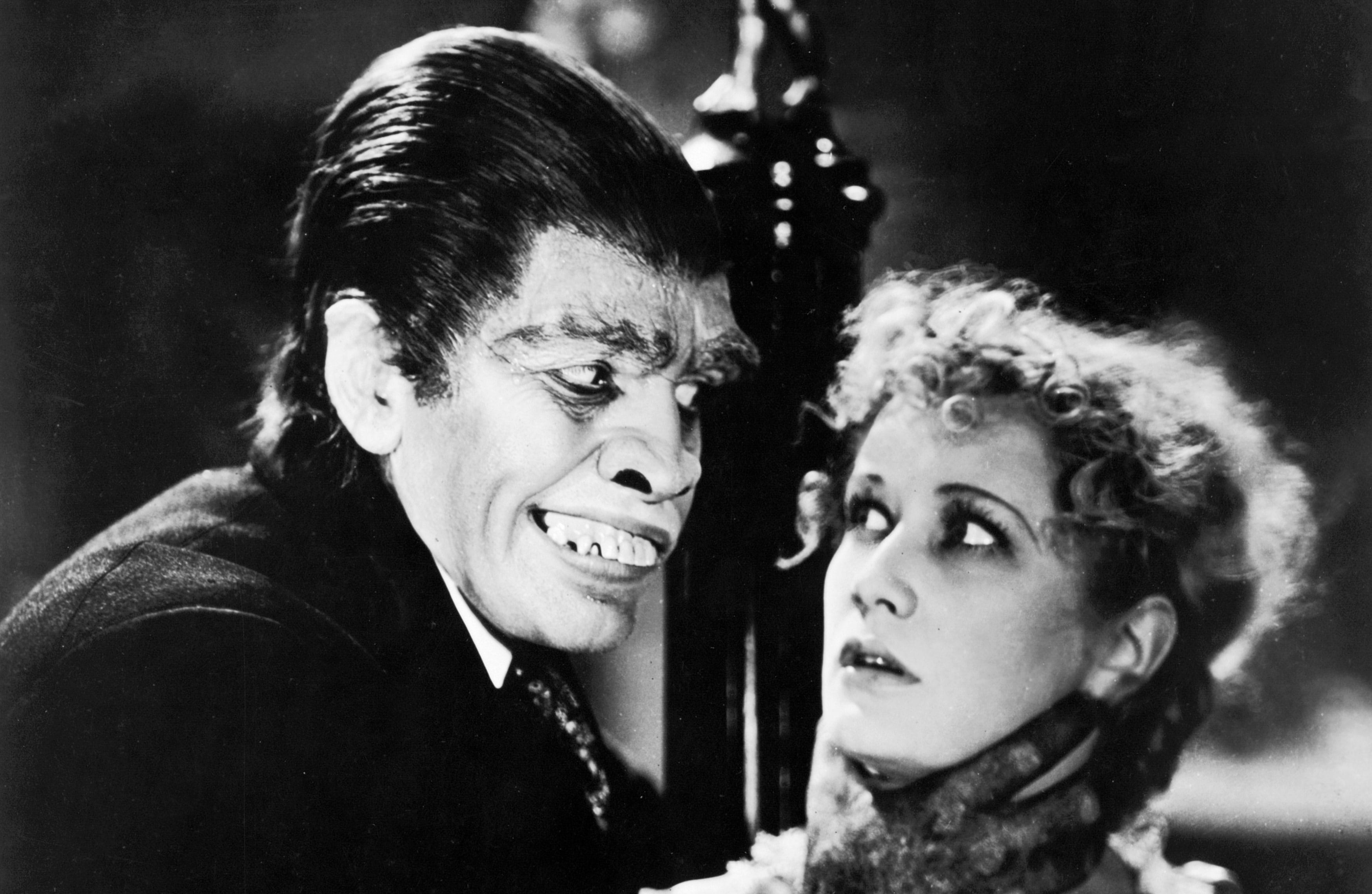


 On the surface, The Opportunities Party has an admirably progressive criminal justice

 On Genocide
