…[T]hat insurgent horror was knit to him closer than a wife, closer than an eye; lay caged in his flesh, where he heard it mutter and felt it struggle to be born….” ― Robert Louis Stevenson, The Strange Case of Dr Jekyll and Mr Hyde
It is hard not to feel a bit optimistic watching Chris “Chippy” Hipkins present as a pragmatic but determinedly progressive leader on Big Hairy News, but we have been here before. NZ Labour are like Lucy in Peanuts repeatedly pulling away the football at the last minute, with the proviso that in this analogy NZ Labour are also Charlie Brown. They believe their own lies more than the electorate does. Like other “centre-left” parties in the Western “democracies”, they are a collective human embodiment of the fallacy called an “argument to moderation”. For decades the right have been pushing extremist policies with no concern for public opinion, and the tepid “centre-left” response actually normalises the right-wing shift. Worse still that right-wing is often a faction within the supposedly leftist party. Our own neoliberal turn in the 1984-90 Labour government is an anti-democratic case in point, as is Clintonism, Blairism and Starmerism.
Currently the UK is finding that the Labour Party it voted for is extremely right-wing. Can we be headed the same way? All things being equal we might be quite relieved to have Chippy back as PM with his ability to come across as something other than a sociopath, a fascist, and a grifter – a skill which Luxon, Seymour, and Peters all seem to lack. All things being equal we might be slightly reassured that on BHN he rejected neoliberalism and claimed to more inclined towards Keynesianism. But things aren’t equal. They never have been and they are even less so now. The golden age of Keynesianism wasn’t just an outcome of Keynesianism. It occurred when parties like NZ Labour (Te Rōpū Reipa o Aotearoa) were full of socialists pushing for socialist policies. Now we face a massive international turn to the extreme right which is playing out in our own country.
Many people foresaw the direction which UK Labour was taking after Jeremy Corbyn’s ouster and it became common for critics to refer to the new leader as “Keith” Starmer. This jeering (for example this parody song Pasokeithication) turned out to be far more insightful and prescient than any of the paid political commentators could manage. Now that Starmer is in Downing St. it is striking that the people who best predicted his policies were those who loathed and mocked him. It is a measure of the current state of politics.
The rules of the game are changing, and short of a massive shift in Labour Party politics the best we can hope for is Dr Chippy adding the odd bandaid and sending a few more ambulances to the bottom of the cliff. At worst though Hipkins (or his replacement) will be the thuggish Mr Keith rather than the boyishly ebullient Dr Chippy so beloved by middle New Zealand. Mr Keith will exploit the accelerating shitshow and clusterfuck that this coalition is becoming to empower a continued swing rightward. There is also a threat to Te Pāti Māori and the Greens (Te Rōpū Kākāriki) as there is also a move to solidify duopoly politics as a form of bifurcated fascism. Already Mr Keith has reared his ugly head in response to Green MP Tamatha Paul stating that she had been told by some constituents that a police presence makes them feel less safe.
Mr Keith’s response was to say: “Tamatha Paul’s comments were ill-informed, were unwise, and in fact were stupid. I don’t think responsible Members of Parliament should be undermining the police in that way.” This betrays a lot about his instincts and whom he identifies with. He is both punching left and punching down. It is not a straightforward political calculation either as there was a huge opportunity to score from the Coalition’s outraged spittle-flecked gammon responses while appearing to be the voice of reason. Luxon called her “insane” for reporting the words of her constituents and there is ample room to attack him profitably for this without being seen as an enemy of the police. Hipkins instead chose to give a free-pass to his political enemies and attacked his allies. It shows his authoritarian instincts and shows that his idea of the “public” is an ideological construct that excludes vast swathes of the public who have to live in a different world than he will acknowledge. By rejecting criticism as “undermining” he betrays the childish magical thinking of the elite who believe that dysfunction doesn’t exist if you don’t talk about it. He evinces an increasingly decadent form of groupthink (which I discuss below) that is international in scope.
The Global Context
Politics in the Western world (particularly in the Anglosphere) has clearly become co-ordinated. This emanates from a cluster of think-tanks, astroturfing organisations and para-governmental lobby groups (such as ALEC in the US that has drafted much legislations). The most evident symptom is the transnational political communications industry with its migratory talking points such as the millennial’s smashed avocado canard (which became a right-wing politician’s favourite despite originally being used ironically as a satire on boomer conservatism). Increasingly “communications” has become a key concern in policy decisions. This mimics the existing situation in the US where each high level politician is effectively a product to be marketedi and thus must put such considerations foremost in all propositions.
One of the symptoms of the creeping fascism that has taken hold in the West is that the techniques of political campaigning have become a perennial tool of governance.ii In the old days a politician only had to lie to the plebs for a month or so to secure years of tenure where they answered to no one but the civil service. Ideally the public would barely know what the ruler did in that time, let alone need to be brainwashediii into violently demanding that the ruler do it harder.
The reason our politics have turned fascist rather than merely authoritarian is precisely because of the need to maintain a pretence of democracy under the guise of an imposed form of populism. The techniques of mass manipulation have been refined to a science which I will refer to here as “shitfuckery”. In the 1950s national security states were built on bipartisan anti-communist shitfuckery. In the 1980s neoliberal states were built on bipartisan anti-socialist anti-worker shitfuckery. Now we are facing a market-fascist technofeudal state being built on bipartisan socailly reactionary shitfuckery. Previous bouts of shitfuckery acted to constrain the state against unwanted democratic influence, but this bout is evidently the beginning of a process intended to dismantle much of the state in favour of more direct oligarchic control not dissimilar to that seen in dystopian cyberpunk narratives.
This may feel very distant from Aotearoa or may feel very close depending on what you are focussing on at any given moment. On the one hand we have Blackrock, and Marc Andreessen’s a16z, and Citizen Thiel, and Brookfield, and a “bipartisan” push for more Public-Private Partnerships, and concern about a billionaire remaking NZMe into an even more right-wing organisation, and the Regulatory Standards Bill, mass public sector layoffs, Atlas Network apparatchik David Seymour’s unexplained power and impunity despite being an incredibly unpopular politician whose party won only 8% of the party vote, and the push for a “NZ DOGE”. On the other hand someone could argue that adding all of these things together comes far short of adding up to revolutionary change. The question is, just how much should we be concerned?
There are four things that we can tell from the foregoing list. The first is that this country is clearly hooked into a global movement. The second is that there is a clear direction of travel to the right. The third is that this is not constrained to an ideology of conservatism or anything that might be considered centre-right. There are multiple strains in this global movement but they are all extreme right teleologies sharing a fascist ethos. The fourth thing is that people are not taking this even remotely seriously enough. At the electoral level politics is governed by a paradigm that has been subverted because the political right are consciously acting to change the parameters of the Overton window while the political “left” are led by mostly right-wing individuals.
Paris Marx featured Aotearoa as an early adopter in the recent spate of global DOGE-style politics:
After the election, Musk congratulated National leader Christopher Luxon, writing on Twitter/X, “Congratulations and thank goodness!”
Luxon’s government is the most conservative to run New Zealand in decades, in part because of the outsized influence ACT leader David Seymour has played, despite his party holding only 11 seats. In February, Seymour was asked whether New Zealand needed a DOGE of its own. “We do have a Ministry for Regulation that is doing what some people in America are talking about,” he responded.
After taking power, Seymour formed the Ministry for Regulation with the goal of cutting regulations across government. He said that would be necessary to increase economic growth and productivity, and more recently scolded his fellow citizens to “get past their squeamishness about privatization.” But Seymour’s Ministry wasn’t just about pushing right-wing economic policy; it was also a power grab to ensure his goals can be realized.
The Rat-shit Parties and the Ratchet System
There is a calculated move by multiple actors to change the political landscape. If they make radical change then only radical repeal can counter. Hence one of the greatest dangers we face is not from those who identify as being on the right, but from those who pose as the left, but are incapable of being genuinely of the left. Throughout the Anglosphere and beyond there is a co-ordinated ongoing project to ban all genuine left-wing thought from electoral politics. The right-wing ratchet of politics is rapidly approaching a market fascist apotheosis that will unleash genuine nightmares if we cannot break this cycle. In Aotearoa we should currently be most on guard for a complete right-wing takeover of the Labour Party in the mould of Starmer in the UK. Rather than being moderated by Te Pāti Māori and the Green Party, the resulting coalition would be a trap designed to destroy the coalition partners by forcing them to alienate their electoral base.
The very concept of the left is being subsumed in a new paradigm wherein the moderate arm of an increasingly kleptocratic anti-democratic elitist oligarchy is labelled “left”. The basis of the thinking is that if your proposals for general welfare are not Swiftian solutions based on your belief that unsuccessful people are better off being humanely converted into fertiliser, you must be a bleeding-heart lefty with a weird soft-spot for the peons. In this discourse Thatcher and Reagan become moderates, if not centrists, and such historically disparate conservative German chancellors as Merkel and Bismark are recast as being centre-leftists. This creates a system in which people are trapped into supporting the right against both their interests and their will.
A political duopoly is of the utmost importance in such systems. The US is the exemplary model where two parties with ever more right-wing politics maintain an artificially balanced political landscape by actively avoiding any organically popular policies. One party foments populist fascist fervour, while the other (the rat-shit party) takes the principled stance of tutting while creeping fascism takes over the country. A shocking insight into the profundity of the problem can be gained by watching Jamaal Bowman (who was primaried and ousted by the Dems for being against genocide) talking to Briahna Joy Gray. Taken with other materiali it becomes clear that at that level of politics there is an interlocking multiply-redundant system of control that works as both direct coercion and as effective mind control. Bowman, a victim of this system, defends it and indeed seems to have internalised it as a dominant part of his self-identification. Like Winston Smith he has come to love his torturer and exult in his own persecution.
The Democrats offer no alternative to creeping fascism – only occasions of partial and temporary respite. Their leadership consciously undermines progressive reforms on which they base their appeal, such as Biden cynically normalising relations with Cuba just hours before leaving office, or putting forward progressive legislation and then applying no pressure to the “rotating villain” who is predictably able to block the legislation.ii It is the overtly hateful and hurtful rhetoric and policies of the Republican Party that generates votes for both sides. Meanwhile some element of the Democrat leadership seems always to persuade the Party that the only response must be to also embrace hate, but slightly less enthusiastically.
The duopoly system works by one party openly campaigning as right-wing while another campaigns as “centre-left”, but is controlled by people who knowingly or unknowingly have very right-wing politics. Hipkins is be just such a creature.
I was inspired to write this article in response to a recent piece published by 1/200 is entitled “Chris Hipkins is a Pathetic Loser”. The anonymous author of this piece doesn’t tell us if she thinks being a “pathetic loser” is a bad thing in a Labour leader, but the article is actually quite critical of Hipkins. The acerbic wit and lines such as that suggesting that Hipkins might be a “piece of white bread made sentient by a witch” reveal the identity of the unnamed author, who can be none other than a grudge-laden Jacinda Ardern. Clearly Ardern has finally seen through this sausage-roll eating everyman bullshit which is just a persona to hide a man whose ambition makes him a slave to established power.
I may possibly be mistaken about Jacinda Ardern embracing communism and submitting articles to such a disreputable site as 1/200, but it is almost certainly true that she, like Hipkins, would not have thought of herself as right-wing in any sense. Ardern seemed to want to be a democratic leader, and I think that says something about our political culture that her understanding of actual democracy was reminiscent of Marie Antoinette’s understanding of actual hunger.iii Her response to right-wing flak and reactionary opposition to reform was to try to use executive power to push reforms through without trying to develop a popular mandate. As a “communications” graduate it probably seemed totally natural to separate her paternalistic policy decisions from the opinions of the unwashed masses. For Ardern campaigning seemed to be an instrument to gain power by seeming slightly more credible when making almost exactly the same promises as the opponent. It makes sense in the same way that if in a quiz tiebreaker your opponent has guessed that Mt Everest is 858 metres high, you will win by saying it its 859 metres high. The lesser evil is still evil, and being very slightly less shit means you are still shit. After Obama’s 2008 presidential campaign, Western “democracy” has become ever more lost in a politics of marketing sentiments with little pretence of having a coherent political ideology.
Keith Hipkins is at best an inheritor of Ardern’s narrow and manipulative elitism. The Chippy persona might be in some sense real, but I don’t think it means anything in the rooms where decisions are made. The wishes of the electorate are to be assuaged, not obeyed – not even heeded. Instead Hipkins will reliably turn to the high priesthood of late-stage capitalism and piously obey their instructions on whom to throw into a volcano to avert the wrath of the Almighty and Vengeful Economy. (After all, why would anyone question the orthodox authorities when the entire planet and everyone on it is doing so incredibly fucking well?)
The danger that Keith Hipkins poses comes from the intensification in recent years of the ratchet mechanism. In the past the right side of politics has shifted the goalposts, while the rat-shit side simply failed to undo right-wing policies and has slow-walked progressive reform. When Ardern was not attempting reform by decree she was burying other reforms in Byzantine processes that were doomed to a slow fizzling death. This despite gaining the unprecedented mandate of an outright majority of the party vote in the 2020 election. Hipkins then made a bold point of his “bonfire of the policies” which drastically reduced the already negligible progressive impact of what could and should have been a transformative government.
Events in the UK, though, have shown that a new game is afoot. It is a pokemonesque evolution of the neoliberal turns of Rogernomics, Blairism, and Clintonism.iv For a long time the abysmal policy failures of the right and the centre-right have been used to discredit a governing party implementing those policies in such a way that the opposing “centre-left” can move to the right. Both the tribal partisanship and the focus on individual personalities create space for successor governments to adopt the same ideological and policy positions as their vanquished political enemies with a few token changes. The most obvious example of this is the Tony Blair-led Labour government that came to power in 1997. That government’s neoliberal governance is often seen as the greatest victory of Margaret Thatcher in establishing the neoliberal dictum of TINA (There Is No Alternative) as a bipartisan orthodoxy. The electorate has different ideas, but as the events of Jeremy Corbyn’s Labour leadership show there is a powerful establishment consciousness that TINA must be enforced and that only a safe pair of hands can be allowed to steer the ship of state.
Starmer is just such a safe pair of hands, but his government is taking things far further than someone like Blair. His government has embraced the ridiculous under-regulated profiteering in the privatised water and energy sectors; they have cut benefits including a massive cut in funding for the disabled; and they are now contemplating a DOGE-like attack on public sector jobs which they are referring to as “Project Chainsaw” in reference to market fascists Javier Milei and Elon Musk.
Squawkbox examined the moment in Westminster when Wes Streeting taunted the opposition:
‘We’re doing things Tories only talked about’, says red Tory health secretary – before going on to list cuts and warmongering.
Right-wing Labour Health Secretary Wes Streeting has ‘said the quiet part out loud’ and admitted that Starmer’s Labour is worse than the Tories and mounting an assault on the state and social security that British people depend on – and going further than the Tories ever dared.
And, in a sign of how removed the red Tories are from the real lives and experience of ordinary people, he didn’t seem even to realise what he was giving away, instead boasting about it and claiming this was ‘change’ that people had voted for:
The UK Labour government is pursuing many policies that are to the right of its hated Conservative predecessors while chucking a bone of overdue tax-reform to the electorate, and that should worry us in Aotearoa. This only happens because of a long-term programme of elite-capture of the “centre-left” that bears some examination.
Keir Starmer was groomed to play as a Labour politician despite having the thinnest of left-wing credentials. Part of the way political leaders are retrofitted to appeal to the plebs is a process of salting the mine. This term comes from the olden days when people would use shotguns and other methods to embed gold pellets into the walls of unproductive gold mines to convince credulous would-be buyers to part with their money. For a future politician you salt the mine with union, human rights, community and antiwar work. Thus people like Starmer, Obama and John Kerry are not fallen lefties (of whom there are plenty), but right-wing authoritarians for whom left-ish rhetoric is merely the means to the end of gaining power.
Western centre-left parties are following in the footsteps of the US Democratic Party by becoming more “broad church” and “big tent” ideologically. This is not a new phenomenon (as students of British Labour history well know) but now such parties no longer have the skeletal structure of an espoused social democrat ideology. They avoid referring to themselves as socialists and they would never think of socialism as an answer to problems. They have become amorphous blobs, like political slime moulds, without any defining shape or character apart from “in” or “out”. In these parties it is very easy for moneyed and/or security state interests to implant or co-opt those who they consider to be the best leadership for a potential governing party.
Like the most brainless of little birds, the party faithful will accept the cuckoos in their midst even as they savagely attack and evict the genuine offspring of the original movement. Some of these cuckoos probably don’t even realise what they are. They are part of the generalised fascist drift of our age. They don’t understand the concept of having principles. They come through backgrounds such as student politics where they learn to lock away and cut the blood-flow to those human traits that might cause one to lose a debate or a grade. Principles are just another dead weight like self-doubt, indiscreet honesty, and intellectual curiosity. The trick is not to lie, but to learn to believe whatever fits the format in question. The answer is that Mt Everest is 859 metres in height and giving it even one more metre is an unprofessional extravagance.
Moral, ideological and intellectual flexibility are ideal traits for success in a political party hierarchy. A party representative must represent the party. To do so without losing votes for the party they must unhesitatingly represent the views of the party as their own views. The shortest distance between two points is a straight line and thus in time the candidate in question comes to simply believe what the party tells them to believe. Any matters of principle will tend to arise from residual convictions held before joining the party. Those may or may not be profound and devout among those with an activist or union background, but those who come through student politics tend to have ideological flexibility and to see this flexibility as a moderating virtue. In other circumstances this flexibility might be a desirable trait, but it is destroying democracy because such amenable people are primed to be pushed by vested interests, by stultifying orthodoxies, and by incremental corruption.
Those parties that grew from working-class activism are very distant from their roots. Institutional and cultural changes have almost destroyed the educated working class that once provided a significant voice in politics. Party faithful for Aotearoa’s Labour Party are firmly in the middle class, including a large number of socially-conscious business owners. They are not a great bulwark against elite-capture of the party leadership. Without the direct personal stake in the welfare of the poor they don’t have the same instinctive aversion for shills in the same way that hippos don’t have an instinctive aversion for snakes. They are used to a world made benevolent for their ilk and will proudly look for the best in people, especially if they are on the same team.
The shills are not all elected officials, they can be advisors (such as those who are apparently the real power in the UK Labour government), or they can be external “experts” who incant the nostrums that fill and fatten the fatuous brains of the politicians. By nature, as non-experts, our elected representatives are giant vessels for received wisdom which they get from the extremely biased sources that they gravitate to. The result is a form of extreme collective stupidity sometimes referred to as “groupthink”. The main characteristic of groupthink is that it creates a safe space for irrational and baseless beliefs, if not extreme idiocy. Groupthink makes wisdom out of blatant fallacies, and it is the reason that the uneducated public has so often proven in polls to have better policy instincts than their leaders.
The concept of groupthink is only half of the story. The concept was first applied to politics as a form of apologism that assumes the best of intentions among decision makers. It was embraced by architects of the “tragedy” and “blunder” of the American War in Viet Nam to excuse their own brutal actions. On one hand this is a sickening response to a decade of brutal genocide that saw millions die in acts of horrific violence, and on the other hand it is an arrogantly privileged view from an elite that could never imagine that they might not really have been in charge. They created a myth of a scam with no scammer. In reality such “leaders” were and are easy marks for ruthless manipulators. Worse still they are impervious to any experts who question orthodoxy or suggest radical reform (however desperately it is needed). Being so replete with received wisdom and faith in the tenets of leadershipping (and, to be fair, generally overworked and overstretched) elected leaders are not at home to deep critical inquiry. As Jamaal Bowman exemplifies, they cocoon themselves in beliefs and pseudo-knowledge that is needed for them to function within the system in which they are embedded.
The Litmus Test
Do you think I am overstating things? Because I am not. Consider the example of reactions to the Gaza Holocaust. Admittedly NZ Labour has been a mixed bag, but they are not in power and who knows how they would run things if they were. Perhaps we could get some clue from the example of Australia’s Labor government. Their Prime Minister Anthony Albanese is not just a namesake of the redoubtable Francesca Albanese, but is himself a former pro-Palestine stalwart. As Crikey tells it: “Albanese was once one of Labor’s most outspoken MPs on the situation in the Middle East and arguably one of Labor’s most prominent pro-Palestine advocates.” Yet his centre-left government has been more anti-Palestine than our National-led coalition government (which includes David Seymour who is a pro-genocide fascist maniac). Aotearoa voted for a ceasefire at the UN in September while Australia abstained.
We have witnessed the inaction of Western officialdom to the urgent need to act to stop the slaughter in Palestine despite clear public sentiment against Israel’s actions. For most normal people it is quite achievable to condemn and oppose Israel’s violence without qualification regardless of where they stand on Hamas or any other issues. Not so with the our social betters. Political, non-governmental and corporate leadershippers have been obtuse, callous, arrogant, cowardly and sometimes brutal in service of ignorance and death. Corporate leaders chose genocide over profits. Bureaucrats choose genocide over following the law. Academic administrators choose genocide over learning. NGO leaders choose genocide over reputation. Politicians choose genocide over winning elections.
The unanimity is striking and worth taking a moment to contemplate. It is as if they are part of a CABAL or cult with a secret oath. It is as if no one is allowed to run an organisation if the security state doesn’t have material to blackmail them with.
There may be some truth to notions of global kompromat given what we know about the US approach to getting support for its genocide in Iraq, but the scale and scope of this compliance betrays a much broader disciplinary mechanism: a shared global but largely exclusive worldview. An elite groupthink. This is why I make snide references to “leadershipping”. I am referring to an ideology from the world of CEO-worship that has slipped into our political culture. It suggests that there is a discipline of leadership that is a form of expertise superior to that of people who actually understand the particulars of an issue. It is often wrapped up in the language of do-gooding NGO jargon, but it is at heart an elitist, authoritarian, anti-intellectual discourse. It is quite literally a fascist trait that has wrapped itself in a skin of paternal/maternal benevolence. It is also as ridiculous as it is dangerous. It has all of the flaws of technocracy but instead of giving power to narrow-minded nerds who vastly over-estimate their own competence, it gives the same power to baby-kissing buffoons and pillocks of the community who have perfected the art of failing upwards.
I could go into much more detail about the extraordinary failure to act appropriately displayed with frightening unanimity by our leadershippers. My expectations of these people have slipped lower than ever. It is hard to even believe their willingness to apologise for mass murder; their willingness to crush those who give so much of themselves in this heartbreaking helpless effort to force an end to this horror; their willingness to twist and ignore the words of experts and even the orders of the highest court on the fucking planet.
People have been trying to point out for decades that lesser-evilism in US politics leads to pre-destined endpoint of pure evil. The same is true of incremental compromise on an individual level. Compromise is compounding and it makes governments very dangerous. If you want to know how evil comes out of banality, it is through those habits of minor compromise that add up. A process of eliminating the uncompromising and conditioning the compromised ensures that in time institutions are populated with potential monsters. They await the time that they are asked to aid in the slaughter of innocents and they will click their heels and shout “Jawohl, mein Führer!”
A key mechanism behind the creation of groupthink is an incremental intellectual compromise that is conjoined with the more obvious moral compromise. The reason that I emphasised received wisdom earlier is that there is an intellectual authoritarianism common to political leaders. High status individuals are, unsurprisingly, prone to the belief that status is an indication of merit. They have this pious faith despite some fairly obvious signs that our civilisation is decadent and incapable of even addressing existential threats of it own making. Worse still, expertise in our times is decreasingly determined by the problematic academic hierarchy and more influenced by late-stage capitalist institutions. Editors and publishers push certain individuals and even create “rockstar” intellectuals. Conjoined with the desires of the security state and the influence of plutocrat dominated think-tanks, it should surprise no one that the “authorities” thus promoted are usually bigoted and reactionary and often childish and highly emotional people whose ideas come from places of personal resentment. The ethos of merit is also a self-reinforcing dysfunction because these “intellectuals” have often succeeded in some area of scholarship but are promoted as experts on totally unrelated areas on the basis that they have big IQs.
Having myself studied the acknowledged intellectual dysfunction of the US political leaders waging genocide in Indochina, it has long been clear to me that the problem did not end in 1975. Instead the very institutions that produced that dysfunction have proliferated and are clearly deployed consciously to shape the collective mind of leaders. Politicians, journalists, academics and bureaucrats are exposed to the “real world” in curated experiences such as ride-alongs or embedding. They become psychologically reliant on and subordinate to the professional who is given direct control over them, especially if there are safety concerns. For them the world is thus turned into a Potemkin village. We now have a system where all manner of interests are incentivised to control the beliefs and perceptions of leaders and have developed a lot of ways of doing so.
The cliché is “those who can make you believe absurdities can make you commit atrocities.” There is no shortage of absurdity in the world of supposed expertise. The discipline of economics has supplied a string of ideologues (stretching back to Malthus) who leverage relatively narrow empirical work to create massive sweeping constructions of dramatically bad political theory. Economics has came to function with massive over-reach, influencing policy in ways that have no valid basis. Moreover the neoliberal diktat is of late only plausibly linked (if that) to economic orthodoxy, yet it is treated by political leaders as some immutable Law that cannot be traduced: Thou mayst be tempted by the wailing of the children that hunger, but thou must gird thine loins and stuff parsley in thine ears. If thou dost feed the children The Economy will become wroth and He will smite one thousand and thirty-three for each one child that is fed by thine hand.
The atrocity is that real avoidable suffering on a very large scale comes from following policy prescriptions that come from specious and often ludicrous claims of necessity. Harry Robson published an article in Watchdog reminding us that the government of Aotearoa used to work hard to ensure that there was full employment. They weren’t all leftists, they just did their job according to the actual mandate given to them. Comparing Aotearoa with Finland Gary Payinda asks “why can’t we have nice things too?” “You can’t really call it socialism because they are a very market-based capitalist society.” In reality their government still has a residual belief in the public good, while ours are either hostile to the public good or credulously allow fake economic arguments to persuade them to continue a project of immiseration and vast inequality that worsens the material conditions of all but a fraction of a percent of the population.vi
ITSE: It’s the Stupid Economics!
Neoliberalism will not be undone by NZ Labour. Dr Chippy might claim to be more Keynesian than neoliberal but he doesn’t really grasp what that would mean. He would not, for example, contemplate fundamentally changing the Reserve Bank Act. The NZ Labour Party is not a home for free-thinkers. Hipkins is not the only potential Keith. Keithness is endemic. Take Barbara Edmonds talking about PPPs. On Big Hairy News she defended PPPs as sometimes desirable even though they are inherently more expensive. Her reasoning is that the country must maintain “fiscal headroom” which is doubly fallacious because she takes a strong stance against using PPPs for critical infrastructure, so she is saying we have to spend extra on non-critical infrastructure adding an unnecessary fiscal commitment for the future (i.e. a self-perpetuating “fiscal headroom” problem) rather than simply raise the revenue.
“Headroom” is the word of the day in the UK. Chancellor Rachel Reeves thrice boasted of her headroom creating plan in her spring statement. The Shadow Chancellor’s response to the statement invoked no less than 4 headrooms. Reeves replied with, “What the markets should see is that, when I have been tested with a deterioration in the headroom, we have restored that headroom in full. That is one of the choices that I made. He says that it is a sliver of a headroom. Well, it is 50% more headroom than I inherited from the Conservative party. When I was left with a sliver of headroom, I rebuilt it after the last Government eroded it.” All of this took me back to the grimmest days of the 1980’s, not because of the impending austerity, but because Reeves’s answer has clearly exceeded Max Headroom. I am not going to apologise for that last sentence, so let’s just move on to the fact that the UK news media are also pretty keen on the word “headroom” at the moment. The sudden rise and apparently crucial status of a word indicates that it is employed as a “thought-terminating cliché”. Edmonds use of the term is not reassuring and it is worth noting that the very concept of “headroom” is absolutely antithetical to the Keynesianism that her Party leader pretended to espouse.
“Headroom” is just another in a 50 year-tradition of economic concepts being used selectively to reject governing according to the will of the public. We live in a completely Freidmanite world – conquered by stealth and perfidy – where the government cannot act in favour of the poor because that is deemed to contravene market forces, but it can favour the rich because it is supposed that market forces will correct any economically harmful activities. Apparently that means that we don’t have to worry about politics being totally corrupt because the market will always stop it from being corrupt. It is all just a scam being made credible by economists. In reality no economic theory can provide policy prescriptions or prohibitions without context. Governance is bigger than economics. In fact, as I suggested earlier, economics is bigger than economics. Sermonising about economistic pieties such as “fiscal headroom” is merely a thought-control technique to justify unjustifiable schemes against the public interest, of which PPPs are a mere sub-category.
Edmonds’s other PPP defence was a dismal response to Pat Brittendon questioning whether it is possible for PPPs to provide cheaper outcomes when they always add the expense of a profit margin. She answered, “Some would say it is possible and because PPPs are actually found quite commonly around the world, but also it comes down to that risk threshold and that affordability threshold which is agreed to a negotiate at right at the beginning. So if the risk is low enough then yes it will be cheaper for the private sector because they won’t have the risk of basically having to pay out more at a later date. So I’m assuming that’s where it would be cheaper however the major thing for us again get it right from the start and when the negotiations have to be really really good.” I do not know about you, dear reader, but that sort of answer makes me utterly furious, not least because people like Edmonds actually seem to think that this sort of nonsense makes them the adults in the room.
Economist Craig Renney has a sobering “bluffer’s guide” to PPPs and concludes “There might at the very edges be a good case for a PPP, but it would be very rare. Great financial cases for PPPs would be even rarer.” What he implies, but does not state outright, is that there is an inherently antagonistic relationship here. The transfer of risk, which is a major justification for PPPs given by both Labour and National Parties, is something that the private corporations will do everything they can to avoid. It doesn’t take a genius to work out that private companies take government contracts to avoid risk, not take it on. It is worse than that because PPPs create a whole new level of risk because there is the intrinsic risk that the private enterprise will succeed in creating unearned income from the deal. Renney emphasises the Byzantine complexity of these arrangements and it is worth remembering that you cannot rely on good faith from these actors. While a hypothetical case can be made for that unique alignment of the planets that makes a PPP worthwhile, the practical history of PPPs reveals a litany of disaster for governments. Their Private Partners in this (for example the Compass Group) do not suffer the reputational damage that one should expect after profiting handsomely from failure.
There are three reasons why private enterprises are repeatedly allowed to effectively steal from the public with support from elected officials. The first is corruption, which includes perfectly legal acts done to show donation-worthiness to the “business community”. The second is an ideological project to increase inequality, destroy public services, and create a plutocratic feudal society with social-Darwinist pretensions. The third is the stupidity displayed perfectly by Edmonds when she said “PPPs are actually found quite commonly around the world….” This is groupthink. She is responding to a plain argument against PPPs with an argument from moderation. It may seem arrogant to go against the conventional “wisdom” of Western governments, the IMF, the World Bank, The Economist, ad very much nauseum; but the real arrogance is to fob people off with half-arsed defences of this bullshit.
Mr Keith is a Liberal Zionist
The Keithness of NZ Labour is most easily seen in the party’s liberal Zionism. Liberal Zionistsi support a project of injustice by selectively opposing the most obvious injustices and artificially separating those offences from the very enterprise that brings them about. There are two very important aspects of liberal Zionism that are apposite. One is that liberal Zionists will never devote serious energy to stopping the things they decry that are done in the name of Zionism. Every salient atrocity instead brings them to a fervour of #NotAllZionists hand-wringing and an Olympic-speed sprint to distance themselves from Netanyahu and his right-wing buddies. The second thing to note is that they constantly shift ever more into endorsing the very things they claim to oppose. At times of crisis they become full-throated pro-genocide cheerleaders. For example, every single person the world over who has endorsed Israel’s “right to defend itself” by unleashing violence on Gaza knew that masses of innocents would die or were already dying. Israel has no such right. It is this combination of ignorance, incurious stupidity, and the sheer evil of choosing to make apologies for the massacre of innocents that typifies the actual fascism of Western governments.
Israel has been doing things that liberal Zionists claim to abhor from its inception. The situation since 1967 has grown increasingly stark. If liberal Zionists were what they pretend to be every joule of their energy would be devoted to ending the genocidal creeping annexation of East Jerusalem and the West Bank, and the genocidal siege and slaughter inflicted on Gaza. Instead they contend that the features of the Zionist project are bugs. Every liberal Zionist the world over now supports the illegal settler movement in some form when they used to play at opposing it. Aotearoa is no exception. In 2015 Dr Vacy Vlazna discussed our much vaunted draft UNSC resolution on illegal settlements:
NZ normalises Israeli atrocities by falsely presenting Israel and Palestine as equal perpetrators and equal victims and by pushing the demand that Palestine gives up its endeavour for justice in the International Criminal Court thus letting Israel off scot-free for its monstrous war crimes and crimes against humanity.
While NZ demands that Israel freezes its rapacious settlement expansion…, it absurdly promotes the farce of negotiations that expand settlements. There is no demand by NZ that the zionist infiltrators leave the present settlements that have illegally expropriated half of the remaining Palestinian West Bank.
NZ obediently keeps up the pretence of a two state solution when Netanyahu has repeatedly ruled out Palestinian sovereignty.
The reaction to the injustice is not to act to prohibit the act, it is an attempt to regulate it. This is the equivalent of abolishing prosecutions for murder and replacing them with a regulatory framework seeking to place a limit on how many murders a perpetrator commits and to ensure that murders are hygienic. While not enforced by any material means, if these regulations are not obeyed the murderers could face the tepid prospect of additional unenforced regulations being imposed. Regulating something like this normalises it, and since the limitations are ignored such moves only benefit the genocidal project.
The neoliberal state is another abomination that has been embedded and strengthened by pseudo-opposition. The rat-shit “centre-left” equivocates between those who would crush the poor, exploit them for obscene gains, and send them broken to an early grave; and those who suggest that we not do those things. Since there is a power imbalance between exploiter and exploited that equivocation is effective endorsement. The welfare of the people is seen as a luxury to be attended when propitious circumstances allow, while more generally the rat-shit leaders act according to the dictates of the market fascism (because that is what The Economy needs).
Liberal Zionists showed their true colours in October of 2023. It wasn’t the first time. Every time that a pretext is there to do so liberal Zionists endorse Israeli violence and at some discretionary time later decry the inevitable results of the thing they endorsed. So too of neoliberalism. Economic shocks have been used to push radical destructive reforms. However on both counts there is now a sense that what once had to be sold as abnormal is now to be cemented in place as the permanent state of things. We know that even as mass-murder and ethnic cleansing accelerates in Palestine no major party in most Western countries is going to break with liberal Zionism and the pompous pseudo-humanitarian performance of pushing a “two-state solution” (as if that was not an effective endorsement for genocide). There are worrying signs that a similar uniformity is taking hold in the face of radical attacks on the public good.
“Welfare liberals” are falling in line with market-fascist thinking. The distinction between a “welfare” and “classical” liberals has always been a falsehood. From the outset the ideology that came to be known as “liberalism” was freighted with two hideous incurable tumours – the primacy of property rights and a religious belief in The Economy as an entity. I have made reference already to human sacrifice and this is no exaggeration. When the Great Famine broke out in Ireland the Tories liberalised the grain trade, but it did not help. When the Whigs gained power in Westminster in 1846 they decided to go much harder and cancelled government relief efforts to help starving Irish people altogether, relying on the market completely. A measure of just how successful the approach was is the fact that Ireland still has a lower population than it did in 1841. This is because they sacrificed hundreds of thousands of lives to save the economy but this actually left the economy completely wrecked.
Far from The Great Famine being an occasion for ideological reform, the British government shifted this brutal form of genocide to India, where on multiple occasions they banned the provision of relief to people suffering famine caused largely by the British Empire’s commodity-hungry and resource-extracting economic policies. Tens of millions died slow painful helpless deaths in a series of events spanning decades. The same people who murdered these millions cited free-trade for the sake of the economy but had no hesitation in preventing Indian commerce from competing fairly with British rivals.
While privileged liberal ideologues indulge themselves by rejoicing in the moral superiority of their negative liberty, it has always been the case that liberalism is selective in offering its bounty of freedom. The British and US empires have been prolific in incarcerating, torturing and killing those who exercise their freedom of speech if it threatens imperial “interests”. We see in such instances that the enemies of Western benevolence are “militants” and “terrorists”, whose “terrorism” may in fact be such dire acts as pamphleting, teaching children, organising a strike, or wearing glasses. Freedom of speech exists so long as your speech doesn’t threaten the existing power structure, and now that the Western hegemony has become ideologically fragile we see that the news media have lost their sense of flexible loyalty and have become rigid regime propaganda. Speech is becoming more openly policed. This may currently seem like a Palestine exception, but will clearly be applied to other issues immanently. “Antisemitism” has been a very useful and powerful tool to overcome residual human rights sentiments, but other pretexts are available including “grooming”, “woke”, “radicalism”, and the old faithful “terrorism”.
Liberalism has always offered freedom for me and an agonising death of starvation for thee. Friedrich Hayek even made a point in The Road to Serfdom of arguing that freedom necessarily includes the freedom to starve to death in a gutter. This book is beyond problematic and anyone who looks beyond its reductionist premise will find that every page drips with evil. It is a work of fanatical utopianism that airily espouses a system of suffering imposed by state coercion of actual people in defence of abstract “freedom”.
Welfare liberals have been lured though decades of indoctrination to view left-wing causes as indulgences and products of their own superior benevolence. They have no intellectual equipment to oppose market fascists if times of crisis are invoked. They are voting again and again to cause excess deaths and suffering by cutting welfare and public health services. The effects of this on the marginalised are real. The libs are opposed to “austerity” as such, but their argument from moderation is that we must have “fiscal prudence” (aka austerity) so that we can heal our poor wounded and bleeding economy. Once the economy recovers then the poor will once more benefit from their bounteous welfare charity (as long as we have headroom, naturally).
There are numerous problems with the idea that you have to restrict government services at times of crisis. We are always in times of crisis or recovery from crisis. Part of the manner in which economic governance has been hijacked from serving the public good is the sense of a permanent state of exception. Historically successful progressive reform has taken place without regard for the economic problems of the time. It happens when people decide that a more just world is necessary. Despite orthodox wisdom, these changes have massively benefited the economy while the belt-tightening impulses of liberals simply feed a vicious circle of dysfunction and inefficiency in the state and community sectors.
The Road to Terfdom
Where welfare liberals have succeeded is in extending the selective privileges of negative liberty to people who aren’t straight white men or able to pass as such. Identity politics is by no means unimportant and is not secondary, but liberal identity politics tends to favour the interests of those who are already comparatively privileged in terms of wealth and social capital. Another big problem that people have found in recent years is elite capture of identity politics.ii That said, even this top-down beneficence can have a profound effect in changing the day-to-day lives of marginalised people, giving them breathing room to be who they are and for their voices to be heard. Elite capture aside, the liberal rhetoric on this subject is actually true. The real problem is that these freedoms are not based on solidarity and genuine empowerment and thus they are all too easily reversed.
Any student of history who has thought about the topic will know that years of liberal progress can be undone in months or weeks. When it suits the state or the ruling class a given group will quickly become targets. Communal violence or persecution based on ethnic, religious, sectarian, caste or class identity arises almost instantly when desired. Examples include the persecution of Chinese in numerous Western settler colonies when their labour was made undesirable by economic factors; the drastic loss in status and material wealth of women after the Great War; and innumerable examples of selective or general anti-migrant sentiments arising just at the exact right time to provide a populist pretext for the state’s economically motivated crack-down on certain types of migrants. All of these things can happen without needing so much as a change in government, let alone regime, and they are starting to happen now.
The clouds of reaction loom darkly on the near horizon. The sudden reversal in women’s reproductive rights in the US is an opening shot. The global attack on trans rights is rapidly and predictably expanding into a broader fascist attack all forms of gender diversity including cis-people’s wrights to reject narrow gender norms. The powerful voices for “libertarian” ideals all seem by coincidence to be white supremacists and their “libertarian” ideals don’t seem to be any impediment to their open espousal imposing a form of serfdom on the vast majority of the population. The Venn diagram of market fascists, Christo-fascists, race fascists, male-supremacist fascists grows ever closer to a circle. The diversity that exists in their ranks is only one Night of the Long Knives away from extinction. Even if some bloody consolidation doesn’t happen, it is inevitable that the white male father will be crowned once again to stand alongside the bourgeoisie as assumed norms and assumed authority figures. This elevation, however, is a divide-and-rule strategy by a narrow elite who actually thinks of the average bourgeois white male as an insignificant bug. In late-stage capitalism the rulers are not bourgeois, they are an aristocracy cos-playing as self-made.
There is no need for a coup to bring about this fascist transformation. The so-called centre-left is happy to institute policies that further marginalise minorities and women by following economic policy prescriptions that deepen existing inequalities. The enthusiasm with which the UK Labour government is pursuing the same sort of policies as our ACT-led coalition, Javier Milei, and Musk’s DOGE shows that the centre-left is not to be trusted, or at least not their leadership. The main threat to the UK government’s massive attack on the poor, the vulnerable, and the state sector is opposition from their own party.
Starmer and his ilk were never a credible electoral force. They won by default due to a string of ostentatiously terrible Tory governments making dramatically bad decisions. There has been a trend of this sort of thing. Our ridiculous ferry and school lunch incompetence stories are tepid versions of the grandiose incompetence displayed by the likes of Trump, Bolsonaro and Milei. Despite everything the UK electorate clearly didn’t trust Starmer. Labour won a massive landslide in seats taking two-thirds of the parliament, but they only had 34% of the popular votes. Given the poor turnout they won this huge landslide with only one out of every five registered voters casting a vote for them – and many of those votes would be for anti-Starmer Labour candidates. Labour did much much better under the “unelectable” Jeremy Corbyn.
Like Biden’s victory it is only the antipathy towards the other option that has led to these unpopular leaders gaining their position. In the case of UK Labour it is clear that this fact is overtly being used as an opportunity to inflict a massive programme of neoliberal attacks against the public interest. Elected or not, this is deeply undemocratic. The risible landslide ensures that the UK government can largely ignore the public and the left-wing within their own ranks. They may concede the odd fight, but by the time the electorate get to choose another government these decisions will be well entrenched (and electors might not have much else to choose from anyway). On Double Down News George Monbiot makes many of the same points I have made, adding that Labour are running to the right of every Tory government except Liz Truss, and that by doing so they are paving the way for the rise of an openly far-right political movement under Nigel Farage’s Reform Party.
It is clear that there is a new phenomenon abroad, a new variant on the duopoly that supercharges the anti-democratic politics created by culture war which makes people choose the unpalatable rat-shit “centre-left” option because the alternative is a monster who only appeals to the delusional and the hateful. An interesting test case may be Canada’s Mark Carney. Despite his dubious establishment background Carney has progressive rhetoric, but this may just be the salting of a worked-out neoliberal mine. Carney ended a corporate carbon tax as soon as he became PM and cancelled slow-walked plans to increase Capital Gains Tax. It all seems depressingly familiar. In this case, the monster who differentiates Carney and gives him room to move right is Trump more than his actual opponent Pierre Poilievre. It will be interesting to see, assuming Carney wins, whether Trump’s hostility will create space for further neoliberal attacks on, say, Canada’s health system. I would be a lot less surprised by that than by a former reserve bank governor actually following through on his espoused progressive ideals.
So far, the more the Coalition here in Aotearoa reveals itself to be a collection of idiots, lunatics, charlatans and fanatics the more Hipkins shows his Mr Keith side. His endorsement of the attack on Tamatha Paul should be put in the context of a long relentless dirty politics campaign against left-wing Green Party parliamentarians. In an MMP environment it may seem counterproductive on the surface to allow, let alone endorse, attacks on the caucus members of such a close ally. On another level there is a clear (if totally disgusting) rationale in that Labour’s leadership knows that a sizeable chunk of National voters will vote for them in the right circumstances, such as a disastrous pandemic or calamitous coalition government. But even if that is strictly true it is only a pretextual rationale because Labour could run as a left-wing party rather than trying to be the more credible and less cruel conservative alternative. Their electoral calculus is not neutral, it is bound by neoliberal TINA assumptions.
How to Tell Four Lies in Only Two Assertions
On the “NZ Leftist Collective” podcast Samah Huriwai-Seger let it be known that she did not consider the Labour Party to be on the left. This provoked both disbelief and indignation from fellow panellists. Eventually the spluttering died down and some arguments were made around ways in which Labour policies have benefited people (including the “working for families” tax credit, which was fantastic apart from the tiny detail that it deliberately excluded the poorest children in the country).
There were two reactions to Huriwai-Seger that were very telling. One was that all four other panellists (one being Labour MP Kieran McAnulty) made a point of saying that Labour wasn’t National. ACT or NZ First. This sounds very much like the political style of US Democrats and UK Labour, a fact which should send chills down the spine. Another was Craig Renney’s answer to Huriwai-Seger’s contention that Hipkins gave a “green light” to Israel’s genocide in Gaza. Renney pointed out that he had been in rooms full of Labour Party faithful who were unanimously opposed to the genocide. This is a completely fallacious understanding of the way party politics works. After all, if you were in a room full of UK Labour members 6 months ago you would have been very hard-pressed to find any who supported benefit cuts to disabled people let alone the entire package of right-wing measures that is at the very core of the current government. Renney’s thinking has no allowance for the elite capture of political leadership when that is perhaps the most important thing shaping policy, governance, and even ideology in our time.
The question of Hipkins giving a “green light” to genocide when he was Prime Minister is beautifully illustrative. On the surface Huriwai-Seger might seem to have been reading a lot into Hipkins making the blandest of prevarications. In reality the conventionality of Hipkins response shows the power of groupthink to be violently immoral and deceptive in an offhand way. Asked directly about a “cutting of food, fuel, water and electricity” Hipkins answers that Israel “has a right to defend itself” but “there are international norms” of proportionality and “I’m not going to make a judgement on the specifics”. In a few short words he manages an incredible amount of lying.
The first lie is that Israel has a “right to defend itself”. It cannot claim self-defence against resistance forces as an occupying power. I covered this fully when the Gaza Holocaust first began.
The second lie is that this is a question of “norms” rather than laws. Sieges for a legitimate military purpose are legal, but it is illegal to trap civilians or blockade food. This sort of blockade is also prohibited under clause (c) of Article ii of the United Nations Convention on the Prevention and Punishment of the Crime of Genocide.
The third lie is the implication that this is not also a blatant violation of the Fourth Geneva Convention which obliges the occupant to ensure the welfare of the occupied. This is where a simple negation can hide Byzantine doublethink. Hipkins must have been given official advice on more than one occasion that Israel is the occupying power, yet it doesn’t seem to penetrate his smug-shrouded skull to think what this means in moral and legal terms. Huriwai-Seger references the fact that for people “who see themselves in Palestinians” this is a “green light for explicit genocidal intent”. I raise this here because even though Hipkins is clearly aware that Israel has an ongoing control over the movement of people and goods in and out of Gaza (including on the border with Egypt), Hipkins acts as if they are not committing blatantly cruel immoral and illegal act against a helpless population of non-combatants. The implications are that Hipkins doesn’t really think of Palestinians as being worthy of the same moral calculus that he would use for Westerners (including Israelis) and that he believes that International Humanitarian Law is actually just a bunch of fuzzy “norms” that for some reason makes no provision to prohibit this form of mass atrocity.
The fourth lie is the old complexity canard hidden in hidden in Hipkins’ refusal to judge “specifics”. We have seen a lot of this during the last 18 months. No matter how blatant and clear-cut the situation becomes people trot out old clichés of a complicated and intractable age-old conflict. In fact, there are no possible “specifics” that can justify inaction when someone announces that they are about to commit a crime. Hipkins had a clear moral and legaliii obligation to denounce Israel’s genocidal rhetoric and the actions taken to enact those threats. To plead that this is premature judgement is the same as saying that one cannot consider an obvious crime to be a crime until someone has been convicted of it. This is the equivalent of saying that no one can ever be an accessory to a crime because the perpetrator enjoys the presumption of innocence so it is impossible to be an accessory until a conviction has been entered.
The fact that Hipkins is so egregiously deceptive and immoral in so few words shows the power of orthodoxy. His groupthink-captured mind is so immersed in a world of political compromise and politically-compromised intelligence that there is no actual bottom line. For anyone who is capable of putting aside racially-informed prefigurations, what he was confronted with when was a stark and alarming intent to inflict suffering and death on defenceless people. It had none of the usual camouflage. It was right there and people were already suffering and dying as it was put to him, and yet he found room to prevaricate.
One of the dangers is that “centre-left” political leaders see themselves as the adults in the room, but this prejudices them against understanding what is really going on. They are conservative and authoritarian in their choice of who to trust as sources of information. For example, Kieran McAnulty, on the same podcast I have mentioned, found out for the very first time that “defund the police” is not a call for abolishing the police. The slogan actually cohered after more than a decade of growing and uncontroversial awareness that the police have increasingly been used inappropriately to deal with problems arising from the underfunding of needed social services. It might be a bit of a stretch to go from that one piece of data, but it was noticeable that he was the only one on the panel of 5 to whom this was news. With exceptions for some specific causes, most Labour parliamentarians are not activists. As such they take the nonsense that is spread in mainstream circles as authoritative while tending to view those who have more knowledge and clarity as being emotional and overly partial. Increasingly on many topics they live in an information bubble that is controlled by fascist billionaires and, whatever their personal inclinations, that means they will default to fascist positions and then defend them against those they see as extremists.
As things stand, the rise of Mister Keith in this country seems like an inevitability. The economic mismanagement of the coalition and the terrible situation they are creating will be the ready excuse for continued austerity and continued attacks on the coherence of the public sector. The thing that might stop Chippy from going full Keith is the power of the Greens and Te Pāti Māori.
Through no fault of their own Te Pāti Māori are less of a threat to the right simply because in our media and political ecosystem every move they make that energises progress also creates and equal and opposite reactionary excitement. On the other hand the campaign against the Greens is a clear fixation. The dirty politics that has long festered in this country has evolved into a more establishment-wide attack on the party that is becoming akin to the anti-Corbyn campaign. It is the fact that left-wing ideals have won control of the leadership of the party (rather than merely its members and voters) that has made it a target. In the past the party has been reliably neoliberal, with the party’s left-wing always disadvantaged by the politics of working with neoliberal-dominated Labour.
Two-Faced Fascism
The new fascism that we face does not require a single Party nor a single Leader, but it must be able to exert the same level of control in its ability to foreclose on genuine democratic left-wing politics. As I have mentioned there is an existing international model of duopoly that exploits the ostensible diversity of a having a “liberal” and a “conservative” wing fighting like Lilliputians over egg prices as camouflage for actual uniformity.
On 1/200 podcast recently Oliver reiterated a point made some time ago that this fascist shift is in response to a crisis in imperial hegemony and late-stage capitalism. As he points out, it is an alternative to a New Deal style reform or (I would add) the mollifying reforms that ended the uprisings of 1967-68. I believe that this time of crisis has been long foreseen and this fascist response has been in the pipeline for around 30 years. There is a neo-Malthusian, neo-feudal, neo-aristocratic, racist, market-fascist synthesis that is currently directing world events with a power vastly disproportionate to the political appeal to sane people. Because people are fixated with the rise of far-right populism they have been slow to recognise the hegemony of far-right ideas among the most elevated Western circles. As such many powerful, but not ultra-elite, people are adherents to and servants of a project that they do not understand.
All of the problems that face us have clear socialist solutions, but they can only be undertaken by rejection of the tumours of liberalism – economism and the selective fetishisation of property rights. From an ultra-elite perspective the problem with this is that it is democratising. Once people take control of economic functions to avert crisis, then they will have a very clear and compelling path forward to use that same control to create justice. They are clearly determined to allow crises to continue accelerating to the point of no return. It is no exaggeration to state that these people are pressing towards a future in which they are overlords in a world of slaves.
The danger that the leftist Greens present is that the public is increasingly hungry for radical answers because the status quo is looking more and more frightening. Right-wing radicalism is embraced by the establishment proudly. Yet another important point raised by Samah Huriwai-Seger was that despite a long relationship the Greens have never had a cabinet position in a Labour-led government. In contrast Winston Peters has been Deputy PM and foreign minister under both Labour and National. In the current Coalition the minor parties both have 3 cabinet posts. In both cases they have pushed radical measures and have created massive headaches for the government. Labour’s leaders may or may not believe the rationales they use to explain keeping the Greens out of government, but the reality is that the establishment simply doesn’t trust people who are not ideologically captured. For example, who could imagine Chlöe Swarbrick answering a question about PPP in the way that Barbara Edmonds did?iv
As business-as-usual answers become ever less credible, the power of socialist ideas becomes hard to suppress with the normal bullying superiority of privileged rhetoric. The ideological divide is becoming ever more clear. The centre cannot hold. The right are racing to end all possible expressions of democratic politics while rapidly creating a mass-movement of violent fascists from the discontents that they themselves are creating. The left has only truth and clarity on its side. Socialist answers are not abstractions. A socialist answer to a problem is to fix the problem, not to leave the problem because of a superstitious notion that acting directly to fix the problem will actually somehow make the problem worse.
The establishment has been playing a game of whack-a-mole for decades in which it attacks any potentially transformative democratic politics with increasingly tired economic nostrums and irrelevant anti-communist screeching. None of it ever made sense, but as long as bad times could be relied on to be followed by better times it was a saleable bad-deal – like a high-interest car loan for an overpriced vehicle that you are buying for status rather than utility. Now we are starting to realise that a decent bus service is actually more important in the grand scheme of things. The establishment reaction is that if we don’t want to work our lives away to pay for a late model Ford Ranger, then we should die in a gutter as a salutary economic lesson. The crisis we face is not one of limits to growth it is one of limits to excess. Human productive power is so great that it far exceeds that required to maximise health and happiness. Once we start solving crises through direct socialised means we will inevitably address the injustices of inequality, and that will mean the end of the current world order.
The centre is collapsing on multiple fronts. The death/unmasking of liberal Zionism is the paradigm of our political moment. I highly recommend the bookPalestine Hijacked by Thomas Suarez which shows that fascism became the driving ideology of Zionism in the 1920s and has secretly remained so since. If you go back a decade or two, right-wing expansionary settlers were considered a fringe of Israel’s political landscape and yet their project was underwritten by the state. Now Ben Gvir and Smotrich are at the centre of power, but also their “left-wing” opponents will never go back to the pretence of seeking peace with Palestinians under a two-state solution. The liberal Zionists have embraced ethnic cleansing and annexation and the smattering who can’t swallow that reality have had to turn against Zionism altogether. The same is true of liberals in the rest of the world. They have supported oligarchic capitalism on delusory grounds for so long that now the fascist pivot has come they are simply embracing it. They are establishment loyalists who believe that following the rules of “liberal democracy” must be safeguarded against the any socialist notions that might take hold amongst the credulous public. Liberal democracy, as Walter Lippmann wrote over 100 years ago, must be safeguarded against the will of the public by an elite who employ the “manufacture of consent”.
For all of these reasons duopoly politics is essential. The duopoly is the new Fascist Party. The UK experience shows us that the only impediment to a “centre-left” party leading a radically far-right government is a genuine alternative with a parliamentary voice to strengthen the remnants of the left within the governing party. It may be that the end of this fascist turn only comes when polities like the UK and Canada end first-past-the-post voting and the US either stops being insane or stops being so relevant.
In Australia, where the duopoly is constrained by minor parties and independents, the duopoly have passed bipartisan (actually tripartisanv) legislation vastly increasing political spending limits so that they can flood selected seats with money to get rid of such roadblocks. The tolerance for extreme right-wing minor party politics and the intolerance for any real left-wing politics is the same on both sides of the Tasman.
Certain people in NZ Labour will be looking to take down the Greens and TPM wherever possible. By undermining the ability of their partners to achieve position themselves on the left, they also weaken their electoral support. Right-wing politics is fed by two things: rich people’s money and poor people’s sense of futility. Clearly we need to grow support for the left-wing of both of Labour’s potential coalition partners.
Things Change
Samah Huriwai-Seger suggests that we might need a new left-wing worker’s party, but I think that the history of New Labour and the Alliance in this country shows hard limits in this approach. Without the extra constituency that a “green” or Māori party have to differentiate them they are easily smothered by Labour. Moreover we don’t need to follow the failed tactics of the past because we are not necessarily caught in the same trap that existed then.
A few years ago I would have considered NZ Labour to be an irredeemable shitlib smugfest of people madly in love with repeating the mistakes of the past. I would have considered an Aotearoan Jeremy Corbyn an impossibility because no sensible left-wing person would be part of NZ Labour. But things change. Labour voters, Labour members, and even most of the Labour caucus is not going to be wildly enthusiastic about repeating what is going on in the UK under Starmer’s Labour.
Under Jeremy Corbyn the Labour Party became the largest party in Europe by membership. When the Labour leadership started using the undemocratic constitution of the party to over-ride the membership there was a mass exodus. This is understandable, but it was very frustrating to watch. Once the right-wing had showed its hand it was the perfect opportunity for a movement to organise the rank-and-file against the takeover of the party. It might seem hard when the putative left-wing Momentum movement in Labour had been subverted, but doing something that might have seemed futile at the time may have paid off. Starmer is unmasked for what he is. The antisemitism ruse is played out. Ordinary people abhor the Israel’s genocide and want action from their government. The US empire and its bullshit capitalism looks ever more alarming as Trump and his collection of fascists attack friends and enemies alike. If there had been a co-ordinated leftist movement to contest the heart of British Labour it might be looking well-positioned right now to change the government.
I don’t know whether Chris Hipkins is redeemable, but I believe that people like McAnulty and Edmonds genuinely want to be of the left. I think that people in NZ Labour can understand the need for genuine transformational politics. More importantly, though, I think that they can finally be brought to understand that the reason the Clark and Ardern governments were not transformational was that they never tried to be transformational. Loyalists can point to various things they did that benefitted people greatly, but the figures on things like housing and inequality show the underlying malaise. Labour members are as hungry for change as anyone else, the trick is to persuade them to stop deferring to failed leadershippers and to start relying on knowledge rather than authority.
A lot of people are starting to see an emergence of fascism in response to crisis, but another way of looking at it is that an extant fascism is unmasking itself because its liberal capitalist outer shell is cracked. It may be a terrible time, but it is a time of clarity and a time when there is greater hope for change than there has been for years.
For better or worse there can be no armed revolution, our only choice is to use the institutions of liberal governance and make them into the democratic instruments that they purport to be. That must be a movement fighting on a thousand different fronts. Amongst many other things that means that Labour Party members have to end the elite capture of their party. They need to purge the establishment leaders and those creepy fucks who are linked to the security state. They can’t allow rule by advisors and they can’t keep accepting pragmatism as an excuse for right-wing governance. They need to stop worshipping Chippy. If he is not replaced or forced to change then he will be the next Starmer. If he is prevented from instituting austerity by coalition partners then his job will be to destroy those partners. Does he even know this himself? I doubt he does, but we do and that is more important. We shouldn’t continue letting the elite perspective persuade us that what we see isn’t real.
Can this happen before the next election? Maybe not. But every moment that passes makes our choice clearer. It is a choice of socialism or fascism (and there is no appetite for authoritarian “socialism”). This moment of clarity means that the disagreements of the left begin to look less important at exactly the same time that establishment liberal solutions reach a low point in public credibility. That means that there is a potential to penetrate through the media miasma. People don’t want Mr Keith and they do not need to accept him.
TIFA.
There is a fucking alternative.
iI want to note here that I am using this language as a familiar framework, but I do think that strictly speaking there can be forms of Zionism in the broadest sense that do not support or seek to justify any offences against Palestinians. When I use “liberal Zionism” I include Zionists of the left (if they can be called that), but I do want to acknowledge that there are a few radically pro-Palestinian Zionists out there who want a democratic homeland with no exclusive rights for Jews. I believe we should emphasise being pro-Palestinian over being anti-Zionist. I understand it makes little difference at this time, hence my adoption of standard anti-Zionist terminology, but there may come a time when having the clarity to remember that the fight is for Palestinian justice, safety and human rights, not against an abstract.
iiPlease readElite Capture: How the Powerful Took Over Identity Politics (And Everything Else) by Olúfẹ́mi O. Táíwò.
iiiUnder the Genocide Convention. This is putatively not enforceable because it is not in our genocide legislation, but I would argue that an obligation does not have to be judicially enforceable to be an obligation and that our growing tendency to believe otherwise (such as with UNSC resolutions that do not authorise force being labelled “non-binding”) is a sign of the metastasis of fascism in global politics. Moreover, as Craig Mokhiber has pointed out with regard to Yemen’s attacks on shipping, the obligation to act against genocide is jus cogens and thus is legally binding without specific legislation.
ivI feel like I am tempting fate here, but it really isn’t about individuals. In a different political culture with different expectations Edmonds would not have answered the way she did either.
vThe “centre-right” party in Australia is a coalition of Liberal and National parties, with the latter being very right-wing indeed.
iThere are two follow-up pieces first with a very frank Kshama Sawant, then a lengthy but sometimes revealing livestream in which Bowman and Cori Bush’s new podcast on Zeteo.
iiThis is discussed in the livestream referenced in note iii.
iiiI know it’s actually apocryphal. Fuck off please.
ivYou are allowed to take a moment here to imagine political leaders as battling Pokemon. It is therapeutic.
vOut of 57 British Prime Ministers Starmer is the 30th to be Oxford educated.
viAlong with the economic losses created by straitjacketing the government and by the economic effects of inequality, even the rich lose access to public services. Where they exist, the private replacements such as private healthcare, are plagued by antagonistic incentives to make profit where possible. The rich also lose freedoms and quality of life as these criminogenic policies create safety issues. They do not even save in taxes because the long-term costs generated by poverty are greater than the savings.
iIn other countries party structures place their emphasis on balancing appeal to local party members, local voters, and the party hierarchy. In the US the appeal is to party leadership, to donors, and to voters, but the major parties do not have a party membership so the representational mandate element is already reduced making the process far more of a sales pitch for the individual rather than a selected individual chosen to sell the party.
iiIn this, like many other things, fascism is a distorted mirror of the left. True left-wing governance involves a constant discourse with a thinking and involved public, a burden which “left-wing” governments have often proven to be disinclined to bear. Fascism, on the other had, seeks to empower its policies by a continual mobilisation of the public through brainwashing, by which I mean propaganda, by which I mean “public relations”, by which I mean “communications”.
iiiI use the term brainwashing advisedly having myself studied Brainwashing 101 at a journalism school. That said, I did fail the first hurdle of brainwashing school, to wit the very first lesson in which we were meant to be brainwashed into believing that our brainwashing was not brainwashing and was in fact a crucial yet trivial service called “communications”. The reasoning was that the brainwashing techniques we were to be taught would not be used for brainwashing due to our professional ethics. These ethics were taken to be universal for absolutely everyone and backed by a rigid ethos sufficiently strong to survive in a world which runs on [checks notes] massive near universal corruption. Many of the successful brainwashing graduates probably went into harmless communications roles, but lets face it, people like Christopher Luxon do not get elected without the help of expert brainwashers.
Aotearoa (New Zealand) has a lot of serious problems. Neoliberal reforms have been imposed against the will of the people here and it is only our pride and our racially informed sense of kinship with imperial power that keeps us from recognising that we are a neocolony – a privileged neocolony perhaps, but a neocolony nonetheless.
Recent decades have been an affront to our sovereignty and our progressive and socialist history. We were the first country with a 40 hour working week, the first to allow women to vote, the second to have a comprehensive public health system, and the first welfare state. It cuts against the grain, therefore, that in 30 years we have gone from a country with no poverty or unemployment and near the worst income inequality in the OECD (7th worst in 2014). With relatively low wages and one of the highest costs of living in the world, neoliberalism is ripping apart our social fabric. We have a housing crisis that is worse than those hitting the US, UK, Australia and Canada, but it is even more of a shock because 30 years ago the idea of homelessness and of people begging in the streets was simply alien to us.
Make no mistake, neoliberalism has fucked this country, and I do blame the US and the UK along with those traitor scum politicians who serve the empire and not their own people. But in one key respect, neoliberalism was pushing against an open door. Neoliberalism seeks to shrink the social support offered by the state but it also seeks to grow the coercive powers of the state – the police and the prisons. The latter harmonises much more easily with traditional Aotearoan values. We are a punitive people. We are not ruled by fear of malefactors to the extent that the US seems to be, but we still have a strong attraction to “law-and-order”.
Our prison population has traditionally been high, but as incarceration rates have grown in other countries we have kept our place in the leading pack (excluding the US which is in a league of its own). We imprison people at nearly twice the rate of Canada; 45% higher than England and Wales and 30% higher than Australia.
The punitive culture in Aotearoa is partly the product of settler-colonial relations. The nature of colonialism is to obliterate autonomy. In Aotearoa the British achieved this in the same manner in which they did in India. First is the process of dividing the locals, using diplomatic trickery, and co-opting collaborators. The second is military conquest, which is only achievable because of native forces. The third is the realm of police, judges, truancy officers, land surveyors, bureaucrats, and lawyers. It is a telling part of our history that the reputed “last gasp” of the decades-long New Zealand Wars was when a column of 120 armed men was sent to arrest a leader, Hone Toia, who refused to pay a dog tax. The judge who imprisoned Hone Toia made it clear that he was demonstrating the reach and power of the government.
The story thereafter will be familiar to other settler colonial societies, Compulsory schooling became the mechanism for literally beating and torturing the language and culture from Māori children. There was a school-to-borstal pipeline, particularly for Māori boys. This was the beginning of a self-sustaining circle of institutional racism. The result is that even though Māori are only 15% of the total population, they make up more than 50% of the prison population. Even Al Jazeera has made a documentary about the “Locked-Up Warriors” of our country.
However, at the risk of weakening the sense of crisis (which is very real in absolute terms) I feel obliged to point out that in proportion to indigenous populations Aotearoa actually has a lower indigenous incarceration rate than Australia and Canada. Australian aboriginals are the most imprisoned people in the world, ahead of US African-Americans. None of this should detract from the significance of Māori imprisonment here, where indigenous people make up a much larger part of the total population.
The prison is clearly being used as an ongoing tool of colonial control, even if it is only the momentum of the past that keeps it so. Yet I would argue that treating this as a race issue alone will not help. The racism of the system show that it is an unjust system, but getting rid of the race element will not fix the injustice. We have a massive social problem with Māori incarceration, but if we fix the racism inherent in the system will it really fix a system that is so open to racism? Where would that leave us with regards to class and poverty? In this day and age can do we really think we can address a racial disparity if we don’t also address inequality?
Native Affairs
Māori TV is a gift to all Aotearoans because it is our only public service mandated TV broadcaster. They produce some very good television – albeit at the cheap end of the spectrum. Yet I was sceptical of the Native Affairsepisode on “Locking Up Māori”. I had the strange feeling that they would acknowledge the role of racism and poverty but then circle back around to the normal mindless position of showing stories of individual prisoners finding redemption with the help of guitar-toting redeemers.
Well, colour me un-fucking-surprised.
Of course, there is something to be said for reminding people that structural and personal racism are real factors behind imprisonment rates. When Marama Fox recently dared to use the term “racism” as a cause of Māori incarceration in The Spinoff’s “Great Debate”, the audience guffawed in incredulity. Clearly some people out there need a bit of educating. Therefore it might seem like a good deed to highlight the structural racism and social drivers that lead to high rate among Māori, but viewers of Native Affairs are probably not the ones that need telling. If you are not familiar with Native Affairs, it is just what it sounds like – a current affairs programme dealing with issues relating to Māori. The name is an ironic reference to the Ministry of Native Affairs – an historic institution of racial paternalism, land theft, and ethnocide.
Marama Fox (Māori Party Co-Leader) was quite expressive in the “Great Debate”
Given their viewership, it is less significant that Native Affairs addressed structural issues, so neglected in the mainstream, than that they took that as a starting point for a narrative that herded people back into alignment with mainstream thinking – like a sheepdog ensuring our wayward brains don’t wander too far from safe pastures.
First they identified the empirically proven drivers of incarceration as being poverty and poor education. Crucially they assert, without the same evidential backing, that “in Aotearoa cultural disconnection is a third factor.” They may or may not be correct in this. As I will discuss later it is not whether the latter is true or not that is at issue, but rather the way in which adding the element of cultural alienation sets up a narrative centred on the individual offender. It is a path back to old habits of thinking; the modern equivalent of the 19th century Samaritan’s self-righteous efforts to save the souls of the benighted sinners who have fallen from the Godly path of lawfulness.
Soon after this introduction the programme also broaches the subject of structural racism in the justice system. Māori are more likely to be stopped by police. Under the same circumstances they are more likely to be charged. If convicted they receive harsher sentences and are more likely to be imprisoned. Cumulatively it is this layered racism that is probably the biggest factor in Māori imprisonment.
So if poverty, under-education, and racism among police and judiciary are the best known significant drivers of Māori imprisonment then a documentary should surely focus on changing social policy, ending structural and personal racism in education, reforming the police and judiciary. The prisoners (referred to constantly in the programme as “these people”) are not the real authors of their fate in this regard. Yet instead of having the intellect and the guts to embrace what the statistics tell us, the participants cleave to facile moralism – depicting the narratives of each prisoner as being driven by transgression and the consequences that follow from it.
The social science shows clearly that focusing on changing prisoners is stupid. It tells us unambiguously that we are not being honest about what acts do or do not deserve punishment and why we expect prisoners to embrace guilt, remorse, and the need to change themselves. People are married to the fictional reductionism of crime stories in books, TV, and cinema. Through constant sensationalism in the news people are made overly fearful of the capacity for violence among convicted criminals, feeling safer if they think that people are being locked away. This is a heuristic error that vastly exaggerates the ability of any prison system to enact what is called “specific incapacitation” by isolating the offenders from society. It also fails to account for the ability of the prison system to engender violence.
Native Affairs should have shown the efforts to reform those in authority, and highlighted where such efforts do not exist. The onus should have been on police, politicians, teachers and judges. We should have seen them struggling to overcome their racism and their moral and intellectual failings. Exemplars should have described their journey of overcoming their unthinking abuse. In the documentary we meet the victim of a cruel self-righteous and almost certainly racist judge. This judge ruined a young man’s life. He caused immense harm and pain. but where was that judge or one like him talking about their journey to redemption – complete with guilt and remorse for destroying futures, for ripping apart social bonds, and for wasting inordinate amounts of taxpayers money?
I am aware that our prejudices are deep. It is easy to see a tattoo-covered ill-spoken prisoner as a wrongdoer, but few people can envision the judge as being a dangerous and vicious parasite, profiting from suffering that they help perpetuate. Yet if you strip away our personal fears and our social prejudices; if you judge the judges on the fruits of their actions rather than their benevolent rhetoric and evinced good intentions, it is authorities such as these that need fixing, not our prison population. So, dear reader, I am going to walk you through some things. I am going to show you that incarceration and criminality are not strongly linked; and I am going to help you learn to fear and loathe the genteel. Regardless of the existence of individual dangerous prisoners, collectively those in prison are the victims of violent injustice, not the other way around.
Lipstick on a Pig
On the surface, The Opportunities Party has an admirably progressive criminal justice policy. They aim to reduce our prison population to half the projected number in 2027. There are two problems with this: arrogance and reductionism. The arrogance comes from presenting evidence already widely understood and proclaiming that other politicians are too stupid to get it. The reductionism is in reducing a complete socio-political problem to a single track of statistics without any sort of critical self-awareness. I don’t want to be unfair to TOP, who do link criminal justice to broader issues of poverty and inequality, but even that is a very narrow way of looking at a much more profound questions of guilt and innocence; justice and injustice; transgression and obedience. The weakness of their position is easily demonstrated with a question: if it is so stupid and counterproductive to lock up 10,000 people, why do you want to keep 6000 people in prison?
TOP are trying to solve a “problem” without asking why it arose initially. Why are we so punitive? I have suggested that some of it comes from our colonial past, but it has a contemporary and historical scaffolding that exists independently of that. We blame our populist right-wing politicians fear-mongering at election time andemotive pressure groups like the Sensible Sentencing Trust; we blame talkback radio and racist muddle-Nu Zillind, but it takes two to tango.
Our politics are not shaped by one side of a political divide, they are shaped by the way our political discourse divides issues into two vested camps and creates a static establishment orthodoxy that serves both.
While Hegel, followed by Marx and Engels, proposed that social forces create a dynamic “dialectic”, it is far more common in our time for “opposing” ideologies to become entwined in mutually sustaining inertia. Arrayed against the self-righteous sadists who demand that convicts must suffer are an equally facile bunch of liberal journalists, left-liberal politicians and NGO do-gooders who (by choice or by constraint) are mainly about looking as saintly as possible without really rocking the boat.
Our problems run much deeper than the attitudes of right-wing people. The rituals that surround our criminal justice system should be a clue that something is wrong. Rationality does not need to don special robes and use dead languages to give itself gravity. The system itself is not a measured and enlightened social institution, it is a quasi-religious instrument of authority. On close examination it maintains a strange irrational pretence of omniscience and still functions as if the court and the judges within it were touched with divine power.
Fixing our criminal justice system will require much more that a white-hatted technocrat Sheriff riding in on his high-horse to tell all us dumbshit yokels how to live our lives. The problem with people like Gareth Morgan is that their disdain for the intellects of others makes them incredibly naïve about social institutions. Just because a given institution purports to serve a given function that does not mean that that is it’s sole function, or main function, or even a real function. Some social institutions do the opposite of their pretended function. To put it another way, Gareth Morgan wants to put “evidence-based” lipstick on a pig that he is too stupid to smell.
Controlling and Punishing Social Inferiors
Our institutions have multiple historical roots but the tendency to echo the past (even when we can see clearly how inhumane and unjust the past was) has to be explained in contemporary terms. We are not so different than our cruel, stupid, superstitious and hypocritical forebears and much that we think of as the cast is actually still as much with us as it has ever been.
To begin with there is the religious and pseudo-religious moral impulse to view matters of criminality as an expression of sin – a form of moral transgression. This comes from the belief that the law is a moral framework and even when it fails to be so obedience to the law is a moral imperative in itself. This is an authoritarian viewpoint that is not actually morally sound. It is an irrational impulse and you do not have to delve too far into history to see that morality and obedience to the law are distinct and may be at complete odds with each other. By consensus we now recognise many laws from different places and times as immoral – for example, race and gender legislation that make chattels of racial groups, wives and daughters; apartheid laws; or the Third Reich’s racial laws.
Then there are the politicians, bureaucrats and social workers who see their jobs as being the imposition of their will on the behaviour of others. At base any attempt to change an individual or group of individuals is an attempt to to control those persons through the exercise of one’s own will. This may be both a personal inclination that attracts people into positions of such power and a situational product of our institutions of power. Our society hands people in these situations hammers and instructs them to treat certain individuals as nails. For example, social workers may as a group lobby for social change, but their day-to-day hour-to-hour activity is to try and change individual people however futile that may ultimately be in the bigger picture. By contrast, some politicians have a clear pre-disposed inclination to enjoy exercising power over others. Bill English was recently asked what cause he would take to the streets to march for, and he responded that he would march for the right to govern us. This is just a small glimpse into the state of derangement that veteran senior politicians fall into. They do not see governance as the exercise of shaping institutions in order to allow the will of the people to rule, but rather see governance as creating and using institutions to control and “govern” the people. To them that is what governing is, and they see no contradiction between that and what they refer to as “democracy”.
These contemporary controlling impulses find rich and fertile soil to flourish in our inherited criminal justice system. Centuries of penal reform have changed the sharp brutality of sadistic 18th century barbarism, into the duller grinding inhumanity of today. The criminal justice system that we have today may be the most gleamingly polished turd in human history, but underneath it is still an inherited institution of class warfare (repurposed to serve also as an instrument of racial oppression).
When the historian George Rudéexamined early 19th century English “criminal justice” system, he found an institution devoted to perpetuating the social order of class and ethnic division, not an institution of “justice”. This was occurring at a time that saw an increasing conflation of poverty and criminality. The enclosure of common land and the loss of small-holdings, along with agricultural reform and industrialisation, had seen a growth of poverty in England and a breakdown in the medieval “Poor Laws”. Not coincidentally, this era saw the creation of the first professional police force. Many of the lower classes were transported first to North America and then to Australia and there was not a great deal of distinction between committing a criminal act and being criminalised and punished due purely to indigence.
The end of the transportation era saw the rise of a three-part system of prisons, debtor’s prisons, and workhouses. The workhouses were cruel and exploitative. The clear, if irrational, ideological foundation was that the poor must be made to suffer if they were to receive sustenance. The moralism of the era demanded that they redeem themselves through suffering, tinged by Calvinist beliefs that poverty was a sign of sinfulness and God’s disfavour.
Trapped in the “Safety Net”
Social reformers worked to end this inhumanity, and seemingly they succeeded. Yet they did not succeed as well as they might have hoped. Decades after the abolition of workhouses George Orwell lived the “down and out” life in England and what he found was a new form of cruelty and a new way of trapping people in poverty. Those who sought shelter and nourishment were forced to prove that they were not merely lazy scroungers living the high life at the expense of their betters. Thus they were forced to remain imprisoned in locked cells for their shelter and then forced by law to walk many hours to get shelter for another night. Needless to say they could not work and could not have social or family connections. With no way of earning money their attire, and particularly footwear, was appallingly poor for those who had to spend each and ever day walking and exposed to the elements:
“One could not, in fact, invent a more futile routine than walking from prison to prison, spending perhaps eighteen hours a day in the cell and on the road. There must be at the least several tens of thousands of tramps in England. Each day they expend innumerable foot-pounds of energy – enough to plough thousands of acres, build miles of road, put up dozens of houses – in mere, useless walking. Each day they waste between them possibly ten years of time in staring at cell walls.”
It was an expensive and self-defeating exercise. The sadism of it was less newsworthy (or Dickensworthy) than the workhouses, but was it really much better? Things may have improved now, but maybe not as much as people think. In many ways we are slipping back. Poverty and its effects are intensifying and incidents of people trapped in implacable cycles of futility and suffering are on the increase.
We have never gotten over the idea that those who need help can and should be controlled. We think it acceptable that unemployed beneficiaries should be drug tested (and sanctioned for failing) and an overzealous campaign against “contamination” has seen many people lose tenancy in social housing due to traces of methamphetamine being found. Effectively that means that the less fortunate in society have a greater degree of state control in their lives than the more fortunate.
Many people undoubtedly think that it is beneficial for the unfortunate to have the guiding hand of a benevolent state to guard them from their own self-destructive impulses. It is for their own good, after all. In reality that is as much of a self-righteous delusion as the Victorian missionary’s belief in reforming the sinner. There is an increasing recognition that the neoliberal state systematically produces homelessness and that forcing special conditions on recipients of housing or other welfare acts to reproduce the vicious circle enforced on tramps in Orwell’s time.
One response to the structural injustice created by neoliberalism is the movement known as Housing First. Even PM Bill English proudly claims credit for “Housing First” initiatives. Unfortunately English is about as capable of grasping the essence of Housing First as Vlad the Impaler would be capable of grasping Nonviolent Communication. In theory, though not as it is widely practised, Housing First is supposed to provide unconditional tenure. Yet under 3 terms of National Party government, with English as leader or deputy, the government’s own social housing agency has been going in the opposite direction.
Neoliberalism reproduces the trap enforced on Orwell and his down-and-out compatriots, but with a much greater masquerade of benevolence. It actively encourages the underlying cause of social ills through deregulation, austerity, erosion of worker conditions and the devaluation of labour in relation to capital. Neoliberalism helps poverty, precarity and socio-economic exclusion to flourish, encouraging the disease but making a show of treating the symptoms. The long walks and the cold cells of 1930s England are replaced by the equally futile system of grants and supplements, constantly exposing people to a capricious and arbitrary system where they must pointlessly engage in a bureaucratic struggle to gain the money and service required to live in a system that is designed to give minimal support. The basic “safety net” support is insufficient in itself and yet is still contingent on conditions and impositions that can be extremely difficult for destitute people to live up to.
On the Native Affairs programme they revealed that the Howard League works to get inmates their driver’s licenses. This is a crucial and worthy effort, but it is a piecemeal step. The need for drivers license is a symptom of poverty, social exclusion and racism in the education system. It is not the only barrier affecting inmates and if they have to keep reaching out for help over each thing the process itself becomes demoralising and debilitating.
We have begun to have real conversations about the reality facing those on benefits today, and with luck that will continue, but for the last 40 years the gravitational pull has been to become ever more and more aligned with the US. By withdrawing support from the most needy due to infringements of a pseudo-moral code of behaviour we risk following the US footsteps of creating a criminalised underclass, a “school-to-prison pipeline” and a racial caste system. In many aspects the US is already in a Dickensian state. For example Eric Garner, who was killed by NYPD, was a career criminal who lived by breaking the law – he sold loose untaxed cigarettes and lived off the meagre profit margin. He wasn’t selling them at the time of his killing. He wasn’t even on his normal turf and was doing nothing wrong, but a cop recognised him from his own neighbourhood. Garner got angry at being harassed when minding his own business, and the police reacted with brutal and escalating violence that intensified when Garner was struggling for his life.
It feels as if we are not far away from the point where we too will tolerate the life and death of our own Eric Garner, seeing both the “criminal” and the poor person as somehow less human, lot worthy of a right to a dignified life and ultimately not even worthy of a guaranteed right to life of any sort. In the NZ Herald Paul Little has recently asked how Dickensian we have become:
Under the so-called three strikes law, Raven Campbell, a prison inmate who pinched a guard on the buttocks – his third offence – was sentenced, as that law required him to be, to the maximum term of seven years jail.
Social housing agency Tamaki Housing issued an eviction notice to the five children of Mabel Pe just weeks after her death. They were given three weeks to vacate the home where they had lived for 10 years.
Housing New Zealand issued an eviction notice to a family of seven, including two blind children, after their grandmother died. [3 of the children also suffer PTSD after losing a mother to cancer and a father to suicide shortly thereafter.]
In the last quarter of 2016, the number of people applying to Work and Income for hardship grants to buy food was 112,000 – an increase of 14 per cent over the equivalent period in the previous year.
Wendy Shoebridge, who was discovered dead in her home the day after she was told she faced charges over benefit fraud, was later found not to have committed any fraud, according to evidence presented at the inquest into her death.
We are seeing the rise of conditions of ever greater social division, a restructure in the relations of capital to labour and a massive upward redistribution of wealth. The transformation is akin to that of the mid-19th century, described by Karl Polanyi asThe Great Transformation, and the response of our welfare and criminal justice systems is the same. It is not to ameliorate the conditions of those who are suffering the most under the change, but to preserve the social order. In effect this usually means inflicting greater suffering, hence the rising prison populations and the growing precariousness of those on benefits. If we don’t face up to those facts, how can we hope to make things better with our evidence-based culturally-sensitive “progressive reforms”. Quite apart from the fact that much of the “reform” only seeks to get incarceration rates back to where they were decades ago we cannot hope to effect positive change if we do not face up to the in-built malevolence and injustice in the system.
Crime Rates and Imprisonment Rates are not the Same Thing
To return to Native Affairs:Almost immediately after having established that Māori are imprisoned at rates disproportionate to their offending, without skipping a beat the narrator of “Locking Up Māori” reverts to the mindless conflation of imprisonment and crime rates, almost as if the journalist is incapable of processing the meaning of what is coming out of her own mouth.
The disconnect between crime and punishment is something that we as a society are not dealing with at all. It is far greater than the disparity in offending rates and imprisonment rate between Māori and Pākehā because there is also a massive class dimension that reinforces the racial dimension. Everything about our notions of crime is freighted with class disparity.
To begin with there is a much larger problem of prejudicial enforcement than merely who gets stopped by police more when driving or walking. Whole sectors of society are virtually invisible to law enforcement when it comes to certain sorts of crime. Most notably, bourgeois and wealthy people can reliably get away with committing drug offences. Many politicians have used illegal drugs, but few of those oppose prohibition. They are not volunteering to be punished themselves, but they are happy for others to be punished for doing the same thing they were not punished for.
The system is incorrigibly unequal and unjust. Ironically, many prisoners are victims in childhood or adolescence of serious criminal offences against them. Many, as we now know, were abused while in state care. Repeated offences of sexual abuse and severe physical abuse against vulnerable children in one’s care are amongst the most serious crimes we can imagine, yet those who perpetrated such heinous offences are afforded effective impunity while the victims often end up imprisoned for far less grave crimes.
Our need to see certain infractors punished is shaped far more by our sense of social order and hierarchy than it is by legally defined criminality. Researcher Emily Baxter conducted research for a project she called “We Are All Criminals”. In interviews with people she draws out the crimes they have committed and maybe spared little thought for because they suffered no consequences. She then gets them to reflect on how their lives might have been different had they been apprehended and reflect on the role that class and race play in making the difference between what might have been a youthful adventure for them, but could be the start of a descent into social exclusion for others.
The fact is that we are all criminals. Only a miniscule number of people have not committed crimes that individually or cumulatively could bring about a custodial sentence. If you think you are one of the rare innocents, then you probably need to interrogate you memory more vigorously.
There are also crimes which are hard to detect and prosecute. Nobody disputes that rape is a very serious crime, but the great majority of rapists a will never see the inside of a court, let alone a prison. We accept that reality because we cannot change it, yet it is hard to say how it can be just to imprison a minor thief or a cannabis user when rapists walk free far more often than not.
Further still there is the massive disparity in prosecution and even in the legal status of equivalent crimes that corresponds with differences in socio-economic status and power. The most obvious example at the moment is the disparity between those who commit tax evasion and those who commit benefit fraud. Tax evasion costs the government 33 times as much as benefit fraud, but the response is the inverse of what should be rational. Academic Lisa Marriott gives us these points:
We investigate a higher rate of welfare recipients than taxpayers. Around 5 percent of welfare recipients are investigated in an average year, compared to around 0.01 percent of taxpayers.
We have greater numbers of criminal prosecutions of welfare fraudsters than tax evaders. In a typical year, there are 600–900 prosecutions of welfare fraudsters and 60–80 prosecutions of tax evaders.
A higher proportion of prison sentences are given to welfare fraudsters, for a lower level of offending, compared to tax evaders. For an average level of offending of $76,000, 67 percent of welfare fraudsters received a prison sentence. For an average level of offending of $229,000, 18 percent of tax evaders received a prison sentence.
Marriott also compares two cases: “To summarise: welfare fraud of $3.4 million, where all was repaid (and more[$6.7 million was paid]), resulted in 10 years in prison — while white-collar crime of $4.3 million, where none was repaid, resulted in less than two years in prison.”
Another disparity is in the treatment of employers who steal from employees and vice versa. “Theft as a servant” is considered very serious because it is a breach of trust. Stealing from your employees, though, is a different story. I guess the logic is that because employees don’t have a choice to entrust their wages to their employer there is no breach of trust when the employer steals from them. Wage theft is commonplace in Aotearoa yet criminal penalties such as imprisonment, home detention or even community service are unknown. There is a push to impose criminal penalties such as prison on offenders, but not because we treat all other thieves in this manner, but because the offending is now reaching such a level of exploitation that it is linked with enslavement – yes enslavement, another thing we could not have imagined happening here even ten years ago.
Stealing hundreds of thousands from people poorer than you, who have no choice but to trust you, and whose labour is the source of your own wealth isn’t even treated as criminal. That is how fucked and how biased the system is.
And then there are those who more or less get to decide for themselves what the law is and whether or not they are allowed to steal from others without penalty. Meteria Turei, co-leader of the Green Party, bravely admitted to having lied about having flatmates in order not to lose some of the benefit she received while she was a single mother studying law. This was to raise awareness of poverty and precarity. She was hounded by the media relentlessly and felt compelled to resign just a week and a half after Andrew Little’s resignation (another party leader resigned the next week, by the way, just to keep the journalists on their toes). People asked why Turei had to go for taking a small amount so that she could afford to raise a child, while our wealthy PM Bill English took much more by deception. A “fact-check” assured people that Turei was naughty, because she broke the law, while English did not. Simon Wilson then he “sense-checked” the fact-checkers comparing the crimes of Metiria Turei with the perfectly legal acts of PM Bill English who claimed hundreds of thousands of dollars as a member of Parliament in order to cover the cost of living in a place he clearly did not live. Some of Wilson’s conclusions:
Bill English must have known that he and his family did not live in Southland. But the system allowed him to pretend that they did, and he took advantage of that.
He got away with it by arguing that his lawyers had told him it was OK.
When he was found out, the system continued to protect him.
In fact, as Wilson further explains, the legality of the acts was not actually tested strongly: “He denied he had broken the law and the auditor general agreed. She appears to have been particularly persuaded by the fact he had relied on legal advice that his position was tenable.”
But wait, there’s more! Because ultimately the most criminally guilty people in the world don’t just go free, they are rewarded for their crimes. The worst criminal bankers on Wall St and in the City of London are not jailed, they are paid handsomely to retire, to stay on, or to work in government. Corporations can become a law unto themselves, causing thousands of deaths in Third World countries though pollution or using government forces to massacred those who stand between them and profit. From the days of United Fruit in Guatemala, to Shell’s involvement in the slaughter of people in the Niger Delta. No criminal charges.
Nor are there charges for murders carried out by the CIA, let alone other crimes. The whole existence of the clandestine action arms of agencies such as the CIA is based on lawbreaking. One old pre-digital estimate suggested that the CIA was committing crimes at a rate of 80,000 per day, dwarfing any non-governmental organised crime outfit. With computerised surveillance there is a near unlimited potential for individual crimes to be happening a dizzying speed.
Then there are the mass murderers. Since the death of Stalin, those with the most blood on their hands have mostly been Western political leaders. Johnson, Nixon, Kissinger – even Ford and Carter – Brzezinski, Reagan, Thatcher, Bush(es), Clinton, Blair. It is estimated that 20 million have been killed due to US-led aggression since World War II, frequently with crucial UK participation. They also have high levels of involvement in other acts of mass-murder. They backed the slaughter of 1 million in Indonesia and the subsequent genocide in East Timor. They gave diplomatic cover to the genocide in East Pakistan (now Bangladesh). They trained and backed those carrying out the genocide in Guatemala. Third world dictators cannot even compare in terms of the number of dead they have caused. Yet Henry Kissinger, perhaps the biggest murderer of them all, is a fêted elder statesman, treated like a rockstar guru by the political elite. These people are by any reasoned standard more despicable and fearful than the very worst of our prison population.
So, when you see the stats that show that social forces such as racism and poverty are the main causes of imprisonment, do not immediately think, yeah, but people need to be held accountable for their actions. The worst people in the world are not held accountable for their actions. Normal people are not held accountable in the way that those who fall foul of the criminal justice system are. It is a capricious system full of racial and class prejudice and rampant injustice
Argument from Consequences
As mentioned, the Native Affairs programme that fulfilled my low expectations of journalistic endeavour included “cultural disconnection” as an unproven third factor driving Māori incarceration. How much it is true that “cultural disconnection” causes imprisonment is definitely an interesting topic, but in the programme it becomes the central factor – the focus of the programmes call to action. Without seeming to be aware of what they were doing, the makers of the programme use the topic of “cultural disconnection” to leave poverty and poor education as background factors in a narrative driven by notions of individual reform.
There is certainly something quite powerful in the question by one prisoner who asked why it took coming to prison for him to find out about his own identity. The colonial system literally stole the sense of self from many Māori and it is heartbreaking that it might take imprisonment for some of those to benefit from reconnecting. But now the viewers have been taken back into their comfort zone, the place where no one can see the forest because they are too busy looking at all the trees. Unlike those factors of class and race which allow for the actions of others to be a cause of imprisonment, “cultural disconnection” can only be interpreted as a cause of criminality in the prisoner themselves. The notion leads us back to the belief that it is still their criminal transgression that drives their fate and what we really need to do is to help them to stop being so angry and naughty.
It is as if the journalists are programmed by cliché. They will always find a way back into the comfort of tinkering reformism that maximises the sense of doing good but minimises any real clash with the status quo. In this case, cultural disconnection brings the focus right back to criminal acts by prisoners. It is actually a little bit ridiculous, because as wonderful as it may be for Māori inmates to connect with tikanga Māori, it is not why they are in prison and nor should they be penalised if they do not want to embrace Māoritanga. When you get right down to it, they are suggesting that you can fix a racist system by getting the victims of racism to change, not the racists. There is an obvious parallel here to those who think that the way to prevent rape is for the potential victims to alter their appearance and behaviour.
Yet people seem to find it impossible to let go of the notion that prisoners have personal responsibility for their fate. To be reformed they must go through the ritual of penitence and agree that it is they that must transform. It is true that, apart from those wrongly accused, they must have contributed at least one “wilful” criminal act to find themselves behind bars, but between the disparities in policing and sentencing we can see that in most ways the criminal act is not the greatest factor contributing to the imprisonment.
It is tempting at this point to separate violent from non-violent offenders. Then, in pragmatic terms, we could abolish drug prohibition and end custodial sentences for non-violent crime. That would lower prison populations and instantly curb the worst injustices coming out of the racial biases of the criminal justice system. But as much as I feel that drug prohibition is morally insupportable (and that too is a conversation that needs to be dealt with in full) I also think that blunting the worst excesses of an unjust system still leaves an unjust system.
The fact is that even in committing a criminal act an offender is acting as a product of circumstances beyond their control. People resist understanding this, but it is abundantly clear in the statistics. In violent offending, the unchosen circumstances of birth and upbringing are clear predictors. Growing up exposed to and especially victim to violence does not always mean that a person will become violent, but it is such a strong statistical association that it cannot be ignored. And there are other factors such as sensory deprivation in infancy, exposure to lead and other toxins, traumatic brain injury or other neurological conditions. The more we study the factors that influence behaviour the more we must admit that we are all products of circumstances that we do not control.
It is not just the social sciences that problematise our punitive understanding of criminality. While many philosophers still try to justify the existence of free will, neuroscientists are increasingly able to pinpoint the chemical processes of decision-making. If someone spikes you with a drug it will affect your decision-making. If someone controls the information you receive, it will affect your decision making. If you are abused as a child, it will affect your decision-making. Free will is a delusion. Even our current understanding of physics suggests that the universe is shaped by stochastic (individually random and unpredictable) subatomic events. Because these shape the real world and ultimately affect our lives it is impossible to reconcile the nature of the universe with free will.
Free will was an excusable explanation for a complex phenomenon in the same way that explaining lightning as bolts cast by a god was excusable before the process was properly understood. It makes sense that we would feel that free will exists even without proof, but it is a religious concept not a rational concept. Basing criminal justice decisions of the concept of free will ultimately makes no more sense than treating criminality as demonic possession. Yet the concept of free will underpins our notions of criminal culpability.
We cling on to a model of individual guilt and just punishment because it works so well with our emotions and social conventions. When bad things happen we want a sense of reciprocity and we also want to feel protected from those who might threaten us. On the more sinister side, we also have a tendency to persecute those who are perceived as alien, defective, diseased, or just a burden to our social collective. This is nothing to do with justice. On the contrary, it is one of the ways our evolution has sowed within us conflicts between compassion and brutality; xenophobia and solidarity; inclusion and exclusion.
Our sense of reciprocity, however, is perhaps the greatest impediment to a more enlightened approach because this innate tendency is bolstered and magnified by the narratives in which we constantly immerse our consciousnesses. I refer here to books, film, TV and so forth. In our stories transgressions seldom go unpunished, guilt is seldom in doubt to the reader or viewer, and there is almost always the implication that somehow the punishment ends the narrative arc, tying up the story with a nice little bow. However, this is not just true in fictional narratives, it is also the structure used almost exclusively in news reporting and documentary.
In reality neither safety nor reciprocity can be achieved through the criminal justice system and social exclusion is both undesirable and harmful. Despite this, they are powerful desires and the reason we cling to the idea of free-will is that without free-will we cannot have individual criminal culpability. Without that sense of culpability, we cannot package reciprocity, safety and social exclusion as a function of “justice”.
We cling to the idea of wilful individual responsibility when logic and evidence both tell us it is a delusion. We do not want to deal with the consequences of not having the ability to pronounce guilt because it would deprive us of our ability to see the criminal justice system as having inherently positive outcomes.
Ritual Sacrifice
There is something disturbing about the way we as a society created a sudden and new official Truth once a judge or jury has pronounced guilt. Suddenly doubt is officially banished, facts are certain.
There is a time between the verdict and the sentencing when the convict becomes a species of outlaw. Their penalty and path back to citizenship is undetermined and actions which are not crimes may affect their penalty as much, or more, than the actually criminal act(s). This outlaw status, by some mysterious rationale, becomes retroactive. Everyone has a right to deny charges against them without penalty, but once they are found guilty a magic time machine allows judges to reward “early guilty pleas” because the special powers they have make everything fair (and apparently there is no contradiction at all in discriminating in favour of those who admit guilt because it is not the same as discriminating against those who maintain their innocence).
It is just as problematic that once guilt is established there is an expectation that the convict must now align themselves with the official Truth and make a ritual obeisance before the court by admitting guilt and expressing remorse. This is not a rehabilitative process and it is not a parole hearing, this is part of the sentencing, so it is actually quite difficult to say, in terms of justice, why remorse at the time of sentencing is so important. The practical effect of coercing a show of remorse from a convict is that it forces that person, and often their supporters, to readjust their narrative and to reify the Truth established by the court.
One of the strangest parts of the ritual, from my perspective at least, is the breadth which judges give themselves in rendering judgements. At this point in the proceedings there can be no objections or arguments. It is pure soliloquy. It is quite normal for judges to tell those found guilty what their motives were, what they were thinking, and what they feel currently, as if the judge were some form of omniscient telepath.
As with everything here, I do not have to delve deep into the past to find exemplars. A case I find problematic is that of Gustav Sanft who killed his 2 year-old daughter. At sentencing just a few days ago as I write his wife pleaded: “I know people want to see Gustav punished for this accident, I see it everyday in him that he punishes himself. All I can ask is have mercy on Gustav. Our babies need their daddy at home, that is where he belongs.” The judge, however, decided that Sanft was not experiencing real remorse but rather “self-pity”. He sentenced him to 4 years and 4 months imprisonment.
The judge said: “Your denial you pulled the trigger is something you have latched onto, perhaps to help explain to yourself, and others, the terrible consequences of that morning.” This leaves us with two unpalatable options. One is that the judge, despite feeling at liberty to characterise the mental states of others, is so ignorant that he is unaware of the effect of adrenaline on short-term memory. If Sanft did pull the trigger there is no reason at all to expect that he would remember doing so. The other option is that the judge doesn’t actually care what Sanft believes. Either way, the emphasis on this detail is disturbing. The prosecution did not rely on his having pulled the trigger and the jury’s verdict does not confirm the fact.
If Sanft were more calculating and cold-blooded he might simply have told the judge what he thought the judge wanted to hear. Ultimately he cannot be considered more guilty of the original crime because he refuses to admit to something he may not even remember. I cannot say what sentence might have been given if Sanft had admitted the act, but the judge himself has made it seem that a very important factor in sentencing is submission to the judgement of the court. It is hard not to feel that what is required of Sanft is not completely different to an auto-da-fé – the public penance required and coerced from those condemned by the Inquisition which reinforced to onlookers the righteousness and honesty of the convictions and subsequent punishments.
Michel Foucault opens Disclipline et Punir with the horrifying theatrical spectacle of the public execution by torture of an attempted regicide. Foucault made the case that the theatrics of power did not disappear with penological reform, they just became more regular and less overtly objectionable. In that much, at least, he is correct. Much of this ritualised display is a show of power designed to maintain and reproduce the power that is exercised.
The Disconnect
We understand that the outcomes of our criminal justice system are measurably and demonstrably bad. The individual stories of those caught in the system, though most people are blissfully ignorant of them, can be extremely harrowing. People’s punishment may lead to much greater suffering than the crime they committed. In most cases the family of prisoners suffer despite not having committed a crime, and the cost to the taxpayer is excessive – stealing from the sort of spending that might be genuinely helpful to people.
We acknowledge these harms yet we seem to think that the basic system doesn’t need fixing. It has been more than 250 years since Cesare Beccaria wrote On Crimes and Punishments, and yet in many ways we have not yet lived up to his vision of a humane system in which punishments served rational utilitarian purposes. Perhaps it is an impossibility; punishment and humane rationality may not be not reconcilable.
We need to end the vestiges of noxious feudalism within our court system, but to do that we may have to go further. We need to end the fictions of guilt and innocence and the even more dangerous fiction that we can safely create an absolute Truth and justly act as if doubt does not persist. We need to move beyond our primitive senses of vengeance and reciprocity and recognise that punishment is never just.
We need to abolish prisons. It may be that some people must be specifically prevented from harming others, but in the vast majority of cases we know that imprisoning some people is not a way to prevent harm.
Even in a case of “preventive detention”, which aims at the specific incapacitation of those who are deemed an unavoidable danger to others, we have seen recently that the criminal justice system may enable crime instead of preventing it. In another NZ case that was in the headlines just days ago, a man who had been sentenced to preventive detention after having been convicted of raping (on separate occasions) a woman and a girl was found to have subsequently raped three cellmates. One was repeatedly raped for a week. Another was knocked unconscious and then raped. The man threatened to kill his victims and told them he had nothing to lose because he was a “lifer” due to his preventive detention sentence. In other words the attempt at incapacitation seems to have actually become a factor leading to the violence.
The double-bunking that facilitated these rapes was introduced under Minister Judith Collins who dismissed concerns over rape, then later made a prison rape joke (as did the PM of the time John Key). These details reveal that the most “law and order” minded people are ultimately, if unconsciously, concerned about social order, not justice. The very reason that they are so assured in their “tough on crime” stances is that they have a Manichean view of Us “good” people and Them “bad” people. Such people often commit crimes, quite serious ones, but they don’t consider themselves to be criminals. Criminals are the racial and class Other. The baddies from the cop shows.
Prisons are a mechanisms of social control, one of the ways that the neoliberal state is keeping lower class people in their place as the system begins to fail them. You might think that if we get rid of prisons, change the court system, and if we stop singling out some as the officially Guilty, then we will have a sense of broad impunity that will lead to a lawless orgy. It is a challenge, true. Yet we are almost all criminals, and we accept as a matter of course that those who have committed the most heinous acts must continue to live among us. Some, particularly rapists, will never even have to talk to a policeman. So may be acquitted because of reasonable doubt rather than innocence. Some will have been convicted, but apart from a very small number who die in prison, those people will still be part of society. Prisons can’t change that. They can and do make things worse in a number of ways.
The problems of the criminal justice system, and the politics and power behind the discourse of criminal justice, are absolutely pervasive. I can almost take exemplars from the headlines of any day on which I am which I write on the issue, and indeed I did so. There is no cherry-picking here, this gross injustice is the daily reality of our society and it needs to change.
This has been my idiosyncratic argument for abolition; born of my frustration at the half-arsed bullshit that journalists keep spouting; born of my frustration at all the things never talked about, the assumptions and the complacency. I hope it adds new dimensions, but I should also point out to readers that there are far more developed views out there. Abolitionism has a very long history with many renowned proponents such as Emma Goldman, Nils Christie, Ruth Morris and Angela Davis. I urge readers to engage with the prison abolition movement, includingPeople Against Prisons Aotearoa. The costs of not abolishing prisons are growing.

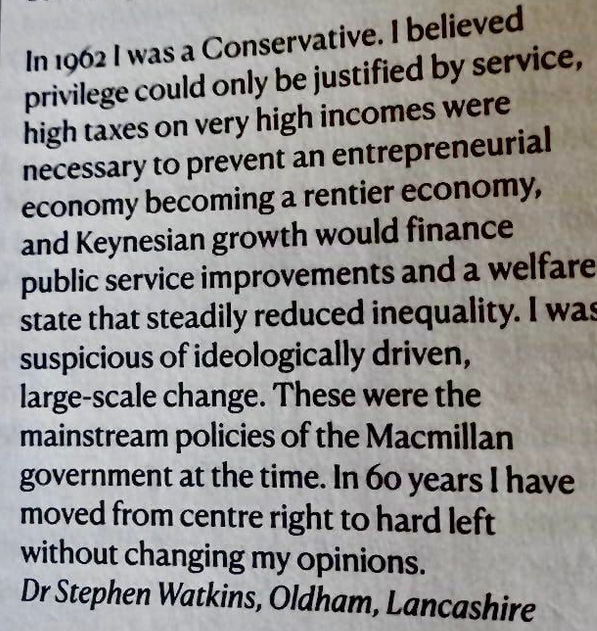



 On the surface, The Opportunities Party has an admirably progressive criminal justice
 On Genocide