The Poisoned Chalice of ICC 

Standard

Many people reacted to the ICC’s prosecutor’s application for warrants for 2 Israeli and 3 Hamas officials as some sort of triumph, a signal moment for the growing pressure to hold Israeli leaders accountable, but it is not. People for whom I normally have utmost respect are steadfastly ignoring the ICC’s record and refusing to think through the actual ramifications of these charges. A simplistic, even childish, authoritarianism seems to grip them, leading them to the delusion that some stern authority figure will get the baddies and make everything right. Even the admirable Francesca Albanese asserted that this is a “watershed”. It is not a watershed, nor is it simply an empty gesture, it is a disaster in the making. 

Though two of the three Palestinians referred for charges have subsequently been killed, it still sets a dire precedent that a highly political process can be used to charge leaders of a resistance group as if on a par with the leaders of the occupying force. It would be bad enough if leaders of victim and aggressor groups were treated with parity, but the whole process is weighted against the Palestinians. As I will demonstrate the grounds on which the ICC prosecutors referred charges against Palestinian leaders are almost infinitely more permissive than those for laying charges against Israeli leaders. If this is unchallenged it will create an easy pathway for hostile powers to control Palestinian politics and excise effective resistance leaders by forcing Palestinian authorities to exclude or even arrest them.

This is an incredibly difficult topic to write about because it involves so many common misconceptions and ideological pieties. The ICC has been called the International Caucasian Court and the Imperialist Criminal Court and has been widely criticised for its self-evident flaws, but still the Court is discussed by officialdom and the punditocracy as if it were some hallowed and grave edifice of ultimate international justice. The public has no choice but to accept this at face value, and no matter how extreme the failings of the court that is unlikely to change because of extant critiques. The problem is that choosing individual flaws simply allows our leadershippers (1) to make promises of reform and continue to treat the Court as a sacrosanct institution. In a parallel universe it might be reformed, but in our real world it is incorrigible and needs to be disestablished.

In some ways the ICC is the criminal justice system in a settler-colonial state called Earth and, like all criminal justice systems of the settler-colonial states, it is inherently oppressive. Complaints about its biases have simply led to promised reforms and seemingly its abysmal record does nothing to stop the amplified class (those who monopolise public political conversations) from gaslighting the public into respecting the institution while the voiceless few with untainted knowledge simply look on in horror. In moral terms the reactions of the official world are truly equivalent to someone finding that their workmate is a cannibal serial killer and dealing with the issue by buying them a vegetarian cookbook and brightly talking about meatless Mondays around the water cooler in order to model a more healthy lifestyle. 

There is no way of fixing the ICC’s bias because selecting individuals to prosecute in order to end impunity for crimes of mass violence is inherently political in a world of so much mass violence. No leader of a militarily strong country is likely to be arrested and tried and those countries, either directly or through proxies, cause almost all of the mass atrocities in this world. The very nature of the court is selective and intended to have a salutary impact. This sounds very reasonable at face value, but we have a phrase that describes such procedures. That phrase is “show trials”. 

On an even deeper level, however, the ICC is part of a broader political move to maintain and deepen an international system of injustice. Rather than allow international judicial institutions to develop a transparent international justice system wherein states that are adjudicated to be committing grave crimes are placed under the collective pressure of a genuine international community, the US jealously guards the ability of its State Department to declare certain countries to be malefactors, to impose sanctions, and to punish those who do not conform with those sanctions. The ICC’s focus on individual criminality helps this process by pushing the focus onto individually or racially demonised enemies of the West while providing easy exculpation for Western leaders (who by default are accorded the assumption of benevolent intentions regardless of the nature of their acts).

For this reason I have to treat the ICC for the hydra that it is. It is insufficient to concentrate on just one aspect of its flaws. If the resulting word count is daunting, I apologise. Consider, though, that Norman Finkelstein wrote an entire book entitled I Accuse!: Herewith A Proof Beyond Reasonable Doubt That ICC Chief Prosecutor Fatou Bensouda Whitewashed Israel just to try and nail down one indisputable instance of corruption.

The “End of Impunity”

The story goes that the impulse to create the ICC was born out of discomfiture at the ad hoc nature of the International Criminal Tribunals for Rwanda and Yugoslavia (ICTR and ICTY). The claim was that rather than have any possible accusation of victor’s justice there would be a permanent body that would be all the more effective because it would end, or at least erode, the impunity enjoyed by leaders in sovereign nations. The risk of prosecution would, in this fairy tale, be credible enough to provide a genuine deterrent against the commission of the gravest crimes.  Instead, as mentioned, the court showed itself to be corrupt and biased from the outset. In addition it seemed to be coyly trying to avoid any move that might come back to bite its Western masters in the buttocks. For example, the Rome Statute laying out the jurisdiction of the Court did not include the crime of aggression until 2010, sidestepping some awkward conversations about the acceding states that had joined in the US-led invasion and occupation of Iraq. 

From the heady days of 20 years ago (when the court promised to end the impunity of all the barbarous warlords whilst studiously ignoring the blatant crimes that the US was committing in its “War on Terror” (2)) things have almost come full circle to the point where even their greatest supporters would have trouble suggesting that their “justice” is any less selective than that of ad hoc tribunals. The court works very slowly and must of necessity be selective. Now that it is issuing warrants for citizens of states who are not party to the Rome Statute, it is effectively cherry-picking from the entire world in a manner that is quite arbitrary in terms of gravity. On the other hand, from a political perspective the choices it makes are far from arbitrary and are invariably in accordance with the Western media discourse about the sort of person who is guilty. 

A Chalice of Kool-aid?

It is impossible for me to avoid thinking of the Kool-aid metaphor when I see people celebrating the ICC chief prosecutor’s decision to pursue charges relating to the current slaughter in Gaza. My gut reaction is that this is an ugly egocentric response amongst people who want to be able to declare “we are winning”. It is stupid and superstitious in the manner that using bleeding to treat tuberculosis or trepanning for epilepsy was superstitious. The existence of a serious problem does not validate a “solution” that only brings more harm. It depresses me to see people slurping this Kool-aid with such relish, but I understand that not everyone has the privilege of discernment. For the Palestinian people it is better described as a poisoned chalice. The Kool-aid drinkers actively choose to ignore the poison (3), but those offered the chalice may be dying of thirst; they may drink in desperation even knowing that there may be poison. That only redoubles the need for those of us with the luxury of some detachment to be realistic about the actual significance of the ICC charges against Hamas and Israeli leaders. 

Netanyahu and Gallant will likely never see the inside of an ICC court, and if they do it will only be the final indication that they are no longer of any use to the Zionist project of genocide in Palestine. Charging two people for crimes is obscenely inadequate during a genocide in which hundreds of thousands, if not millions, are actively participating (including perhaps as many outside of Israel as within it). These tokenistic charges can only ever serve to demonstrate de facto impunity and fuel backlash. We are witnessing a brutally violent genocide unfold and the ICC has sought more charges against leaders of a resistance organisation than against the perpetrators of the genocide. On the other hand, the charges against Haniyeh, Sinwar and “Deif” may cause, and are certainly aimed at causing, very serious problems for Palestinians. They will sow conflict, further pushing the “internationally recognised” but democratically deficient Palestinian Authority into the role of a collaborator regime. If this becomes a precedent the Western controlled ICC will bring or threaten charges against any resistance leader whom it considers problematic, and the PA will have to hunt them down if it values being “internationally recognised”.

On the surface the theatrics of international relations seem to suggest that Israel genuinely fears the ICC, but in public diplomacy all is never what it seems. Revelations that the Israelis have been spying on and manipulating the ICC seem to imply that Israel regards the ICC as a serious threat. The assumption is that the ICC has a business-as-usual and that Israel’s covert activity intended to disrupt its normal function is fallacious. The spying is just one of a number of control mechanisms used by the Zionist powers to steer the ICC. In reality the practice of constantly besieging international organisations covertly and overtly is normal practice for the US empire. Covert action works along with diplomatic and propaganda efforts that discipline individuals in such organisations. For example the US spied on the members of the United Nations Security Council leading up to the 2003 Iraq War, but this was in support of far more powerful public and private diplomatic actions. 

Covert action is not a disruption, it is part of the mode of control, and the ICC is not some independent body being undermined, it is already penetrated through and through. Israeli spying might as well be intrinsic to the organisation. To illustrate what I mean, consider the revelations that Israel used its surveillance to detect incidents that attracted the ICC prosecutors attention and would intercede by announcing its own investigation which then triggers Article 17 of the Rome Statute. This states that cases become inadmissible if the “case is being investigated or prosecuted by a State which has jurisdiction over it”. In theory the ICC could still pursue charges if they feel that charges are not “genuinely” being pursued, but the action required for Israel to compel the ICC to drop a case is far less than any reasonable definition of “genuine”. It is important to note that spying on the ICC may help Israel to fine-tune this control mechanism but it is not a necessary part of the equation. Even if a case has been opened it can easily be closed in this manner. For example, the ICC opened an investigation into UK war crimes in Iraq then stopped it in 2006, began it again due to the UK’s inaction in 2014, but then shut it down again in 2020. The ICC evinced “concerns” but considered that 15 years of apparent prevarication but cited a judgement that “courts do not base their decisions on impulse, intuition and conjecture or on mere sympathy or emotion” (4) – a formulation which is both emphatic and vague enough to be used for almost any occasion. The upshot is that if you openly refuse to do anything about the crimes of your personnel the ICC can act, but if you hire a bunch of people to actively do nothing for decades the accused need never fear. Of course, not all states are accorded the privilege of this effective impunity. For that you need “credibility”, which is generally code for having a pale-skinned citizenry. But that isn’t the only catch that works in the favour of the rich and powerful.

You may ask – why does the government of the UK have jurisdiction over crimes committed by UK personnel in Iraq and not, say, the government of Iraq? Well, the way it works is this: if you invade a country and overthrow its government then you have jurisdiction. This is often framed as a burden of responsibility, but it is quite obviously a useful tool for military aggressors. The Rome Statute was written with complete foreknowledge that this is the case and the intrinsic injustice of it does not seem to bother the ICC at all. That is because, as I will detail more fully later, the ICC is part of a project to atomise International Humanitarian Law such that powerful states have full impunity, their officials and personnel have de facto impunity, and officials of weak states are often subject to a credible threat of prosecution at the behest of European powers or even the US (which openly calls for the ICC prosecutions such as that of Uhuru Kenyatta despite not being party to the Rome Statute). 

So why does Israel have jurisdiction over crimes committed in occupied territories that no other state recognises as being part of its sovereign territory? Why? Because it is the occupier and as such it bears the weighty and burdensome responsibility to investigate whenever it feels that its personnel may have done something bad. Thus when video footage emerges of Israeli personnel torturing prisoners, Mark Miller is smirkingly content to repeat ad nauseum that these serious concerns must be investigated by Israel and the IDF. Hence we get the phenomenon that we untrained people view as the perpetrator (Israel) investigating itself and finding itself innocent of all charges (5). But in this model Israel itself is never under a cloud of suspicion. The very nature of a criminal proceeding is to select certain individuals as suspects (they cherry-pick bad apples, if you will allow me to mix fruit into an unappetising salad). By necessary implication the state and the society carrying out the prosecution are exculpated and the judicial system itself is affirmed in its Godlike impartiality and Popelike infallibility (6).  

Moreover, whether the country is Israel, the US or any “civilised” Western nation, this conception of individual criminality is a goose laying golden exceptionalist eggs. Such proceedings will always affirm the fundamental righteous nature of a society that is not affected by the injustices it perpetrates as a matter of unremitting habit. The message is something like Bernie Sanders’ constant refrain of: Netanyahu bad/Israel good. (The rigorous underlying reasoning is that bad is bad and good is good – which is pretty airtight). All the bad things Israelis do are exceptions, all the good things are the true intrinsic nature of the real Israel. Most readers will have come across this form of apologism being applied to the USA (where many people seem to feel that true America was in the era when President Bartlett was in the White House). It should be plain that singling out individual criminal perpetrators bolsters this ideology.

Criminal Punition vs. Justice 

In case it isn’t obvious I am highly skeptical in general of the redemptive power of the criminal justice system. It is an overwhelmingly negative institution much like aforementioned harmful medical practices of the past that only added to the patients’ ill-health but were held to be necessary because doing nothing was unacceptable. As with economic austerity, there is a false dichotomy (often used in bad faith) between doing the demonstrably harmful thing, in this case mass incarceration, and doing nothing. That said, though, it is also clear that impunity is tantamount to endorsement. Impunity, however, can be viewed outside of the narrow lens of contemporary criminal justice. As things stand, even if the powerful are convicted of crimes they may serve a carceral sentence and still resume their over-sized, over-privileged, over-loud role in society. In social terms this is a more important and problematic form of impunity. I am not saying that there is no point or no hope in trying to apply international law, but there is no constructive role for criminal prosecutions in our current international system.

For that reason I also want to assert that the ICC and the ICJ are not twinned, nor equivalent, nor even complementary institutions. The ICC can only ever be a tool of the oppressor against the oppressed. By the same token those who simply dismiss international law altogether are doing a great disservice to the present and the future. It is a rigged game, but choosing not to play simply gives Western governments carte blanche to commit genocide. Nor is it ethically acceptable to simply play the game as if it is not rigged. That is a form of collaboration and that is what the elite of the human rights establishment are – collaborators in the genocide. The only way forward is to know the game is rigged, to urgently exploit every loophole and ultimately to force the rules to be rewritten by relentlessly and painstakingly exposing every internal contradiction. 

If you want a fast and telling way to distinguish between the nature of the ICJ and the ICC I would suggest contrasting the moment when South African lawyer Adila Hassim fights back tears when discussing the children who have been killed in Gaza with the moment when Karim Khan declared: “Speaking with survivors, I heard how the love within a family, the deepest bonds between a parent and a child, were contorted to inflict unfathomable pain through calculated cruelty and extreme callousness.” In the former case you have someone overcome with emotion while presenting sound well-backed evidence in support of a reasoned argument. In the other you have a prosecutor deliberately evoking personal subjectivity and using emotive language in a tendentious manner. The very fact that the ICC is holding one of these publicity-oriented announcements (akin to those of District Attorneys in the USA) shows what a circus this is. This is a political process.

The Jester’s Court

Indeed, Karim Khan is a politician. After announcing the application for warrants he claimed that a “senior leader” told him: “This court is built for Africa and for thugs like Putin.” That is political talk that does not address the court’s actual record and does not name this clearly fictional senior leader. He is using a rhetorical trick to embed the notions that the ICC is apolitical and that the charges against Netanyahu and Gallant demonstrate the truth of this. He thus avoids exciting the curiosity of the ignorant. If he had said “This charge demonstrates that the ICC is not just a court for Africa and thugs like Putin” it would have raised some people’s interest. It would give a hint that there is a history to be uncovered, and it takes mere minutes to discover that in reality the ICC has a wholly abominable record that only seems to have worsened under Khan.

Khan was the desired choice for the job of ICC prosecutor by the US and Israel. Under his tenure the ICC immediately resumed paused investigations into crimes committed by the Taliban but ended investigations into US crimes in Afghanistan, as well as dropping another investigation into abduction, torture and murder at US black sites in countries such as Poland. Khan’s office has also charged Vladimir Putin with the unlawful transfer of children from Ukraine to Russia. The fact that they did not charge Putin with committing acts of aggression is also intriguing and I will return to that issue later. 

The ICC seeking warrants against Israeli leaders may arguably be “historic” but that is not the same thing as being positive. The very nature of this process has been one in which people’s expectations are used against them. It seems logical that the pressure of truth and activism will cause institutions to move towards justice over time, in conformance with Martin Luther King Jr.’s observation that “The arc of the moral universe is long, but it bends toward justice” (7). In the general sense I agree with this sentiment, but on the level of individual institutions it is just not true. The ICC is by nature a giant exercise in subverting justice, and a development may be both “historic” and inimical to progress. No news from them is good news.

There are some notable exceptions to the reflexive celebration of this ICC development. Justin Podur of the Anti-Empire Project (who has previous excoriated the “Imperial Criminal Court”) celebrates only the fact that it may signify the “controlled demolition” of the ICC. Ali Abunimah, on the other hand, found the Khan’s applications to be both “historic and cynical”. The “historic” part, though, is the widely accepted notion that somehow these acts break with past practice and thus move a step closer to ending Israel’s de facto impunity by symbolically repudiating the absolute impunity it has enjoyed at all levels. This is a total misreading of the situation. It falsely assumes that the actions of the ICC are somehow distinct from the apparently inimical reactions of the US, the UK, and Israel. In reality it is all a farcical puppet show. The ICC dragging its feet and agonising for years is a sign that growing pressure is forcing change. The latest move is a way of capturing that pressure, that energy and effort, and subverting it into a project that actually reinforces Israeli impunity.

Many years ago I wrote that the ICC was “Br’er Bibi’s Briar Patch”. I was trying to show that Israel’s histrionic protestations about the ICC were in fact bait to lure people into empowering the ICC to act, fully knowing that it can do nothing to affect Zionist Israel’s occupation and colonisation but can be a powerful tool against Palestinian liberation. It is no coincidence that as the apparition of Palestinian statehood begins to gain substance, the ICC has finally decided to do something, and that something is to file a completely disproportionate lopsided set of indictments. 

Tilted Scales

Contrary to Karim Khan’s rhetoric, the ICC referrals are in practice massively biased against Palestinian interests. Assuming that warrants were to be issued against all five individuals named by the chief prosecutor there could be terrible repercussions for Palestinians, but there will be nothing for Zionists to fear. This remains true even with two of the prospective defendants dead. On the Israel side of the coin, for example, Benjamin Netanyahu can fly to New York at any time in the future and can address the UNGA telling them that their whole organisation is anti-Semitic and that Karim Khan and the judges of the ICC are all Nazis. Nothing is going to happen to him. The US Congress, with bipartisan support, recently invited him for a record-breaking fourth time to address a joint session of Congress in Washington DC. He lied repeatedly, was applauded once every 5 words and given a standing ovation nearly every 2 minutes of his speech (8). It was a display that will hopefully become a shameful lesson on the degeneracy of the terminal stage of the US empire. For now, though, Netanyahu will be able to continue using these platforms to further his propaganda approach of painting all critics of Israel as illegitimate anti-Semites while at the same time making it very clear that he is untouchable.

Lawyer and legal commentator Michael Bradley suggested that even fewer repercussions redound on the named Hamas leaders given that they are already in hiding. He seemed quite unbothered by the repercussions of this, quipping “they already live as shadows and their liberty is only likely to end if and when Israel locates and drops a missile on them.” Firstly, I would like to point out that living “as shadows” is not really liberty. Secondly, it would have meant that a figure like Ismail Haniyeh, who lived openly in Qatar not in the shadows, could have been permanently delegitimised. He was killed by Israel not despite, but because, he was a central and almost irreplaceable part of ceasefire negotiations. If a warrant had been issued against him it might have achieved a similar effect in making it impossible for him to continue as a negotiator. Moreover, there was already US pressure on Qatar to expel Hamas which would dramatically increase their already profound diplomatic isolation.

You may wonder why that matters, but whether we agree with Haniyeh and Hamas or not this act sought to silence a significant voice and peace will be hard to find if we do not listen to all sides. It also obliges the Palestinian Authority to take action to pursue Yahya Sinwar, who is now far more crucial. So the Palestinian Authority will be under pressure to try to hunt down Hamas leaders. Bear in mind that the PA is run by Fatah and even if one believes that Fatah have never had much choice in the matter, they are literally collaborators with the Zionist regime. At the moment this is a moot point, but imagine the damage to the Palestinian cause if the collaborationist regime (woefully unpopular with Palestinians) is obliged to assist in the apprehension of the more popular resistance leaders of Hamas.

It is important to note that these indictments are highly biased against Sinwar, Deif, and especially Haniyeh. The “reasonable” claims against the Hamas leaders seem on the face of matters to strain credulity in most or all respects. In Orwellian fashion Khan states “…if we do not demonstrate our willingness to apply the law equally, if it is seen as being applied selectively, we will be creating the conditions for its collapse.” A cynic would say that Khan’s masters have most of the world’s weapons and commit most of the world war crimes and crimes against humanity so they might not be entirely unhappy if the collapse of their Imperialist court brings down the general collapse of international law. That cynic would be correct.

The fact is that the ICC charges resistance leaders for crimes committed during a legal act of armed resistance per se. This is all occurring in a context of illegal occupation, a genocide that is widely recognised as such by genocide scholars, and vastly disproportionate casualties from acts by the occupier that are far more susceptible to accusations of criminality. Those circumstances lend a lot of credibility to a senior Hamas official saying that the ICC “equates the victim with the executioner” (the official might have yet more credibility if Hamas were not such enthusiasts for carrying out the death penalty). 

The one charge under which the prosecutors may have firm ground is that of hostage-taking of civilians. That aspect of the Al Aqsa Deluge operation seems inevitably premeditated and is in contravention of so many articles of International Humanitarian Law conventions (including the 1979 International Convention against the Taking of Hostages) that I cannot list them here. Meanwhile, though, there is no talk of charging Israeli officials with hostage-taking even though they clearly take far more hostages. 

I am not going to comment much about claims of sexual violence except to relay Ali Abunimah’s observation that Khan is not pursuing charges over the highly politicised claims of sexual violence on October 7th, but instead charges that there are reasonable grounds to suspect sexual violence carried out against hostages held by militants and that there are also reasonable grounds to suspect criminal culpability on the part of Sinwar, Deif and Haniyeh. This is highly dubious as one would not reasonably expect any evidence connecting these people to such crimes (if they have taken place) until prosecutors have far better access to evidence than they currently have. I believe that this charge is laid in order to further the campaign of using accusations of sexual violence against Palestinians in order to facilitate the genocide in Gaza. 

Controlled Opposition 

In the recent book Deluge, a chapter entitled “Nothing Fails Like Success: Hamas and the Gaza Explosion” by Khaled Hroub reminds readers that Hamas has sought at every turn since 2006 to try to become a “legitimate peace partner”, making overtures to Fatah, Israel and the international community. They had been democratically elected as the government of the Palestinian Territories (as much to their surprise as anyone else’s) and they tried desperately to pivot accordingly, signalling that they would accept a two-state solution. The US and Israel did not want that. They wanted a villain so they made sure they had one. They also wanted to divide the Palestinians politically. Netanyahu facilitated billions of dollars of payments to Hamas to weaken the PA and to convince Israelis that there was no practical “peace partner” with whom they could negotiate.

The PA, led by Fatah, have been no less moulded to serve Zionist purposes than Hamas. By any measure they are a collaborator regime. They have no democratic mandate and a very thin base of support among the people. They are dependent on the enemies of their own people. From an imperialist perspective that makes them perfect. If history books were less circumspect and biased we would all be very familiar with the pattern. Syngman Rhee, a Christian who had not set foot in Korea for decades, was picked by the US to lead the Buddhist majority of Republic of [South] Korea. Soon after the genocidal bloodbath that resulted, the CIA manoeuvred to make Christian and WWII Japanese collaborator Ngo Dinh Diem leader of the Buddhist majority Republic of [South] Vietnam, leading to another genocidal bloodbath. Years later after invading Iraq the US would try to impose Ahmed Chalabi, who had no legitimacy or popular base outside of the DC beltway, as their puppet. They failed, but undaunted the US still managed to sow division and foment an insurrection in order to create another genocidal bloodbath.

Many collaborator regimes in the history of the US empire illustrate the interplay between being in conflict with one’s own population and being a military dependency of the empire. From Colombia, to Egypt, to the Philippines, to post-coup Iran, regimes that are inimical to the interests of their own people (often ironically referred to as “nationalists”) become enslaved to US masters. They might be military dictatorships (usually US-trained officers) or civilian governments who mask a turnkey Junta of officers who will step in if the civilian government strays too far from the designated path. These governments are advised to crack down violently on “terrorists” leading to increasing popular antipathy and (ideally) insurgency. Simply put, the leaders become enmeshed in an enterprise of criminality and conflict that ensures that they need US arms to prevent a popular or guerilla movement from taking over and taking vengeance upon them. This is the role chosen for the PA, for Fatah, and for the PLO. Whatever their numerous flaws and shortcomings, it would be naive and unjust to pretend that they have a lot of choice in this matter.

I have to emphasise here the extraordinary disparity of power between the Palestinian people and Israel acting with the backing of the US empire. The staunch resistance of the people themselves is undeniably effective, but it is impossible for any organised political faction to function as a representative of those people. In reality Palestinians are an impoverished stateless people facing a high-tech society with the 6th largest military in the world and an open-ended ad lib intervention by the US, the most powerful state in human history. Overt organisation can only be done at the sufferance of these powers, and without overt organisation there is no infrastructure. The PA cannot collect its own taxes, even Hamas was propped up financially by Israel, and UNRWA (effectively a third governing body) cannot function if Israel chooses to cut it off. I am not saying that things are hopeless, but we cannot afford to be unrealistic nor shy away from the unpalatable truth of Palestinian dependence on all of us to break the chains that bind them.

What the Palestinians face is not just the hostility of the top Zionist powers (i.e. Israel, the US, and the UK) it is the hostility of virtually every government in the world, including those who profess to support the Palestinian cause. Not only that, virtually every NGO in the world is also biased against Palestinians, even if they are vocal in condemning Israel’s crimes. I say that because very few pass up any opportunity to condemn armed Palestinians militants and Hamas in order to show that they are even-handed. In terms of political discourse the problems with this approach are manifold. The ideology of context-blind “even-handed” treatments of the oppressor and the oppressed is far too profound and pervasive for me to deal with here other than to say that it is essential in keeping alive Israel apologism when the world can see its inexcusable atrocities laid bare. More specifically, though, the delegitimisation of Hamas serves to ensure that no effective resistance will ever be accepted and that Palestinians will remain trapped between collaborator factions who help Israel commit a slow genocide of creeping annexation, and “terrorist” factions whose existence provides the pretext for Israel to accelerate the genocide with acts of mass slaughter.

Prosecuting the Victims

It is valid and legitimate to disagree with the violent acts of militants on October 7th but it is not legitimate to condemn the factions themselves nor their cause. It was wrong to condemn slavery abolitionists and suffragettes when atrocities were committed in their cause. It was wrong to condemn the “terrorist” African National Congress when their armed wing killed civilians. More to the point, it was wrong of the Germans in World War II to condemn partisan “terrorists” fighting it’s occupation. In fact, after the War it was long taken for granted that no crimes committed by resistance forces (no matter how grave and atrocious) would be prosecuted. To the best of my knowledge this was an inviolable unwritten rule until 2006 when Lithuania first sought to prosecute partisans, including Jewish partisans, for “genocide” among other crimes. It is a joke, but not a funny one – much like charging Palestinian resistance leaders in the midst of the daily slaughter of the genocide in Gaza.

Historian Benny Morris recently stated that while Israel may commit war crimes in its Gaza operations, Hamas’s October 7th attack was itself a war crime. Mehdi Hasan rather unforgivably let this pass unchallenged, but it is a complete inversion of the truth. Hamas committed war crimes during a legal act of armed resistance, Israel’s response is in all respects criminal by nature. The occupier does not have a right to use arms in self-defence against the occupied. Armed Palestinian factions have a clear legal right to use armed force to resist occupation and it is not legitimate to treat those crimes that occur during armed resistance as if equal in gravity to acts of armed violence that are illegal as such. By this I refer to acts of aggression and genocide. In these cases atrocities are not extrinsic to the purpose of the armed violence, they are of its essence.  Genocide in particular, even when not aimed at total extermination or expulsion, aims its violence at the target population as such, rather than at armed forces. In genocide the means and ends of the perpetrator are the same thing – to bring harm and destruction to the target group. A group like Hamas may commit atrocities in pursuit of its aims, but in the Gaza holocaust Israel’s atrocities are the aim. 

In any true “rules-based international order” Hamas would have been recognised internationally once it was elected and, as long as the occupation continues, it should have retained recognition as a legitimate political party regardless of any actions by its personnel. Instead, in topsy-turvy fashion, we accord that treatment to Israel’s political parties when the entire regime is fully committed to occupation, apartheid, annexation and genocide. At the same time the progressive countries in the international community show their support for Palestine by treating Fatah-controlled PA as the legitimate government. 

The PA’s international legitimacy has become a fait accompli, but it is still horribly problematic while it has no democratic mandate. President Mahmoud Abbas dissolved the Hamas-led parliament in 2007 and declared a state of emergency and there have been no elections since. Polls show that  Fatah enjoys little democratic support. The more jealously they guard their prerogatives as the one legitimate representative of the Palestinian people, the less moral and domestic legitimacy they have. Recently Hamas, Fatah and twelve other Palestinian factions signed a unity agreement but it is going to be hard to implement if there isn’t a wide international acceptance of the legitimacy of groups like Hamas that engage in armed resistance. Failing this there will predictably be a withholding of funds, aid, recognition, diplomatic ties and more until any resultant governing body cuts loose those factions deemed unacceptable, leaving the Palestinian people divided and weak.

Multiple countries recognising and supporting the PA may seem like a step forward, and is in some ways, but as the party controlling the PA has become more unpopular and more collaborationist and increasingly perceived as corrupt, the logic becomes akin to ostentatiously supporting the collaborator Quisling regime to show that you don’t like the Nazi occupation of Norway (while agreeing with Germany that the government-in-exile supports terror and needs to be sanctioned). To be very clear, I am not claiming a moral equivalence between Quisling and Abbas, but I am claiming that level of moral and intellectual bankruptcy among the international community.

So the ICC charges occur in the context of a political division among Palestinians crafted by Israel, the US and the UK to weaken and dominate the people while compromising their leaders. In this system the PA is trapped by its pursuit of international legitimacy, because that seems like a pathway to Palestinian liberation. If international public opinion is incorporated, the international arena is the only area in which progress seems to be happening towards an end of the agony of the Palestinian people. The problem with that is that they then become beholden and reliant on the governments of the UN nations, and in case anyone has failed to notice during this holocaust, but those governments are all run by scumbags and idiots. These leadershippers are stampeded into action by 40 fictional beheaded babies, and waste inconceivable amounts breath agonising, pontificating and condemning non-existent sexual violence by Palestinians, but they are measured to the point of indolence over thousands of real Palestinian babies being killed and totally uninterested in decades of documented instances of sexual violence and sexual torture of Palestinians abducted by Israel. We live in a world where it is easy to get fired for condemning genocide, but supporting genocide is a canny career move. International legitimacy is another poisoned chalice and that is not going to change until the ruling class start to fear the backlash they face from their own people. Until then the PA, and through them the Palestinian people, are at the mercy of an international misleadership class that can and will sabotage all efforts that challenge the slow genocide.

Not Serious People 

For the record, doing a press conference looking like a panel of proctologists convened to deliver a prognosis of someone with Stage-4 terminal haemorrhoids is not actually a sign of seriousness.

One of the problems with the ICC charges is that, as we have seen, they are taken very seriously by the officials of the world. The ICC should not be taken seriously as they have a very long history of proving themselves unserious. The ICC is a Europe-based mostly Europe-funded court. Europe has a relationship with African that is extractive, parasitical, and neocolonial in nature. African wealth flows very freely to European elites, and various forms of intervention are required to maintain that flow, often by ensuring the corruption of African leaders. Arguably the ICC functions to intervene in just such a manner. All ICC trials and all detained defendants have been African. For example, Jean-Pierre Bemba Gombo was arrested in 2008. He had fled the Democratic Republic of Congo after multiple attempts on his life. He was charged with being responsible for atrocities committed by the MLC militia he sent into the Central African Republic at the request of the CAR government to help quell a coup. The Supreme Court of the CAR found no grounds to lay charges against Bemba or, as the ICC prosecutor saw the matter, there was a “perceived inability of the system to gather evidence….” 

Bemba was in custody for well over two years before his trial even started, and it then took four years before he was convicted. It then took another two years before he was sentenced and thus a further two before his appeal was heard and his convictions overturned. Ten years of incredible expense and a man imprisoned for crimes that, quite predictably, could not be sufficiently proven. I would imagine that the four year trial was devoted to harrowing testimony and complex legal arguments and had very little relating materially to Bemba’s personal culpability. The whole saga, complete with witness tampering on both sides, was a parade of politicisation, corruption and ineptitude that should have seen the ICC’s doors shuttered then and there.

Now, once again, the ICC is pursuing charges against leaders of a non-state armed faction despite the obvious fact that they will never be able to prove the personal culpability of those charged in a fair trial. I don’t support the charges against Netanyahu and Gallant either because they are tokenistic distractions from the criminal guilt of the state of Israel, but at least it is theoretically believable that a criminal case could be built against them. In charging Sinwar, Deif and Haniyeh the ICC is doing what it really seems to have been designed for – attacking those inconvenient to Western imperialists and forcing their compatriots to turn on them. It is a divide and rule tactic, among other things. Worse still, it is a precedent. The ICC can repeat this process of both-sidesing any future Israeli pogrom (9) so that any resistance leader can be taken out of the equation by similar allegations.

The charges against Hamas leaders will be a whip for the backs of the PA, Palestinian civil society, and the Palestinian people. Hopefully none will choose to collaborate in furtherance of these charges, because whether they do or do not their real or imagined unwillingness to comply will be used to delegitimise them. It is likely (if the past is anything to go by) that these charges will be exploited to accuse Palestinians of non-compliance. Once that is mooted all of the professionals (who in their hearts may know that there is no commensurability between Israeli and Palestinian crimes) will trip over themselves to be the first to go on camera to show their even-handed credibility by condemning Palestinians like the pampered poodles that they are. 

For decades an international humanitarian reporting and condemning machine has sought again and again to create space for criticising Israel by showing its willingness to criticise Palestinians. To do so they have had to be wildly disproportionate in terms of gravity and scale so as to deliberately create a spurious sense of parity, because apparently that is needed to show that they take the crimes of both sides seriously. They do so with no regard for the politics of power that they are responding to. They have to assuage the political realities on one hand, but on the other they loudly avow that they cannot allow considerations of the political ramifications of their politically motivated bias to sway them away from “impartiality”. This isn’t justice being blind it is justice being blind-drunk and wilfully bigoted. To add insult, this is all enacted with the utmost unbearable pomposity.

Fake Justice, No Peace

The reader may have noticed a smidgen of contempt on my part for the champions of “justice” who seek to preserve human rights through the salutary prosecution of criminal malefactors. I have compared the way people think about the prosecution of criminals to mediaeval superstition, but really it is much deeper than that. It is a set of ingrained assumptions concreted in place by a very personal sense of ideology. It is religion. People find their purpose in it and they are not inclined to listen to those who would trash their vocation and sense of moral identity with mere facts and reason. 

The holier-than-thou antics of the “genocide prevention” professionals, for example, are particularly galling. Every major US military intervention since 1950 has been genocidal in nature and it has supported genocides in East Pakistan (now Bangladesh), East Timor, West Papua, Western Sahara, Guatemala, Argentina and other places. The US has directly or indirectly been a culpable party to most of the deaths that have occurred from acts of genocide since World War II. I would say at least two-thirds of genocidal violence since WWII has been attributable to the US or its clients. That does not even account for structural genocide. Structural genocide is what it sounds like – structural violence that is genocidal in nature. Structural violence used with the intent of undermining a people or nation’s wellbeing and development in order to subjugate that people or nation and/or gain economic access to resources in neocolonial fashion is genocidal by nature. The USA has used military intervention, sponsored coups, covert action, propaganda, economic pressure and diplomatic pressure to enforce  “Washington Consensus” rules of neoliberal economics that are linked to tens of millions of deaths through malnutrition and preventable disease. 

The United States of America is easily the most genocidal state currently in existence, and by some measures is the most genocidal regime in human history (with the obvious caveat that Germany and Japan committed genocidal violence at a far higher rate during WWII). The entire international apparatus of “genocide prevention” has arisen in this context, but all it has done until recently is to make it easily for the greatest perpetrator of genocide to commit further genocide. This is not merely by whitewashing the genocidal superpower, but also by turning accusations of genocide into a political tool for demonising enemies of the genocidal empire. 

The entire discourse of “genocide prevention” has wilfully ignored the genocidal empire and, I would argue, the inherently collective guilt that is intrinsic to genocide. It has focused on the demonic criminal figure. A key text is Samantha Power’s A Problem from Hell which quite deliberately evokes demonic evil in its very title. For anyone who has looked beyond the sanitised and grossly understated (in both numerical and qualitative terms) Western accounts US interventions it is a stomach-churning book to read. It frames the US as being too unresponsive to genocides. Some people believed that in receiving a prize from Henry Kissinger she had moved away from her human rights background when she used to criticise him, but some criticisms are so weak and minimising that they are obvious apologetics. Her critique of Kissinger over Cambodia/Kampuchea, for example, is that he had no credibility to criticise the “genocide” (10) there because he “had bloodied Cambodia and blackened his own reputation.” In reality Kissinger may have slaughtered as many Cambodians as Pol Pot did (11). Moreover, the Khmer Rouge would never have taken the country if not for the calculatedly genocidal nature of the violence and displacement created at Kissinger’s behest (12).

Power’s central thesis that the US needs to intervene more is frankly nauseating and the idea that she ever cared deeply about human rights seems highly unlikely. Humanitarian interventionists like Power, Clinton, Susan Rice, Nossel, Albright and so forth are simply neocons gendered as being female. If you think that is an exaggeration, please tell me what actual difference there is between the politics of leading neocon Robert Kagan and his humanitarian interventionist wife Victoria Nuland. The policies and ideology in international relations of humanitarian interventionists and neocons are identical – and foreign policy is what they really care about. They are imperialists first and foremost.  Writer David Rieff once even said to Power that her rhetoric on Libya was like that of neocon rhetoric about Iraq: “She said, jokingly, ‘I am not Paul Wolfowitz,’ and I said, ‘Yeah, actually, I think you are’”(13).

Whether the rhetoric is of the “indispensable nation” or the “responsibility to protect”, supporters of either slogan are simply creating pretexts for imperialist violence. Fortunately for these would-be overlords, the world’s population of politicians, journalists and academics boast no small portion of idiots in their number. They are happy to accept that those who napalm villages in Indochina, train death squads in El Salvador, back mass slaughter in Indonesia, torture people to death in Bagram,…(14) …are somehow moved by the highest sentiments to sacrifice national blood-and-treasure to make the world a better place. That is a key tenet of imperial apologetics, but that is far from the only problematic aspect of humanitarian interventionist discourse such as one finds in Power’s A Problem from Hell. It also replicates the politics of demonisation that is central to the art of modern warmongery (15).

Real Bad Hombres

Power’s A Problem From Hell frames mass atrocities as products of demonic individuals, not by making an argument that that is the case but by emotive appeal to existing prejudices. This suits the religion of criminal justice mentioned above, but also serves to help the very powerful commit the crimes they condemn in those weaker than they. The belief in the rectifying powers of criminal prosecutions originated in overt religion, evolved to become a tool of social domination through class and/or racial hierarchy, and is now fed like soma directly into the brains of the unwitting through the medium of copaganda shows and their prosecutorial spin-offs. The ideology of genocide prevention through deterrence is woefully weak for lack of evidence and reasoning, but I think that even that lame and vacuous justification hides an even emptier reality. People want to get the bad guy and lock them up because when something bad has happened they want closure – a self-inflicted “need” that afflicts the privileged. They want resolution. They want the credits to roll because their life experience is that injustice is a temporary departure from a norm of the world treating them fairly. The way they act, therefore, is not dissimilar to the behaviour that one would expect if convicting a murderer actually brought their victims back from death. 

Some people also view retribution as desirable, either because they think that malefactors should suffer or they have a belief in reciprocity and/or “accountability”. These are all personal and ideological beliefs. I won’t spend the time making a long argument against the applicability of these intangible desires in any true form of justice. Instead I will note that instances of war crimes and crimes against humanity may have hundreds, thousands, or hundreds of thousands of lives at stake. What matters here is not crime, it is human existence and human suffering. There are real instances when the choice of indulging the desire to “see justice served” may come at the cost of peace. If we set slogans and cliches aside, losing peace means deaths, grief, suffering, fear and trauma. In these circumstances it is completely reprehensible to elevate these abstracts at the expense of real people. 

It is understandable if survivors and those bereaved by such crimes want whatever solace can be provided by knowing that someone responsible has been judged and punished, however inadequate that punishment must inevitably feel. However, those who take up the cause of those victims with passion and pathos are nothing but posers. None of them seem to have the same righteous determination when it comes to US presidents, whose victims invariably outnumber those of all ICC defendants, often by multiple orders of magnitude. 

Notwithstanding that a form of psychological peace might be purchased for some victims, it should never be obtained at the cost of actual peace and the creation of more victims. In its current form “international criminal justice” is a political tool of the greatest criminals and they have no concern if they create a massive disincentive to those who might make peace or relinquish power. After all, why would a warlord ever agree to lay down arms and step aside from power if they knew that only the guns and the power stood between them and ritual humiliation and a life in a foreign prison where they will die without ever seeing their loved ones again? Charles Taylor, former President of Liberia, voluntarily relinquished power and went into exile under an agreement providing immunity. It is argued that he broke the conditions of his immunity, which may well be true, but his fate is likely to deter others from making peace far more than it deters them from committing war crimes.

The Charles Taylor Case

For some what happened to Charles Taylor might act as a deterrent to future would-be warlords, but that is hard to believe. The deterrence value of judicial punishments has never been as strongly evidenced as believers in general deterrence would like. Moreover, data suggest that of the three parameters thought to affect deterrence, certainty and celerity (swiftness) are highly important while severity is less so. International courts, ad hoc or otherwise, have demonstrated very clearly that they cannot provide certainty or celerity. Taylor’s trial, for instance, lasted 5 years. Theories of general deterrence also rely on rational choice theory, which has many limitations and caveats. A burglar might weigh risks, but many crimes do not accord well with rational choice theory. A rational person in charge of armed forces is very likely to conclude that the success or failure of their forces is infinitely more important than a possible criminal conviction in the hazily distant future.

Charles Taylor was a big fish for lovers of “international justice”. The Sierra Leone Civil War in which he intervened was a source of “blood diamonds”, and Taylor himself was the inspiration for warlord André Baptiste in the film Lord of War. He was literally a Hollywood villain. His victims arguably number in the thousands. Yet, as Taylor’s trial started the numbers of dead from the illegal invasion and occupation of Iraq already stood at many hundreds of thousands and would surpass a million before his conviction (16). The people who died in Iraq suffered as much, were mourned as much, deserved to live as much as those who died in Sierra Leone and their numbers weigh far more heavily. The complete historic absence of any institutional moves to hold George W. Bush and others criminally accountable for those deaths confirms beyond reasonable doubt that international criminal proceedings have everything to do with power and may at best be considered incidentally involved with justice. 

The clear lesson of the 30 year-long tradition of international criminal proceedings that began with the ICTY is that security comes from power. Far from providing deterrence for committing crimes, these proceedings incentivise any action, including criminal violence, that preserves the political and military power of any prospective defendant. 

There is also more of a cloud hanging over the conviction of Charles Taylor than one might believe from perusing the internet. It is well-suppressed and hidden in the interwebs, but if you know where to look you will find that one of the judges on the case, Justice El Hadji Malick Sow, thought Taylor should have “walked free”. It is well worth reading this interview with him, but I will try to summarise. Sow was an alternate judge on the case, but was there throughout. He acted as main judge whenever one of the others was absent. He seems to imply that he was more diligent than the other judges. He argues that he was supposed to become a main judge once one of the other judges began serving on the ICJ. He wrote a dissent and action was taken against him for doing so. His account is entirely consistent with that of someone not playing along with a politically determined process. 

The problem with the Taylor case seems reminiscent of that of the Bemba case in that one cannot realistically expect a distant leader to create enough evidence to convict them of crimes committed by armed forces far removed from their presence. A criminal court seems utterly inappropriate for these cases as convictions are only likely to come in most instances through subversion of the judicial processes. In addition I think one could rightly ask whether the length of these trials actually works against clarity. 

Waging a War of Aggression

There is one international crime that is far easier to prove, or would be if anyone actually prosecuted it. It is a crime undertaken by leaders directly, not one that requires proof of intentionality or wilfulness on a given leader’s part for actions taken by subordinates. That is the crime of waging a war of aggression. In 1946 the judgement of the International Military Tribunal at Nuremburg stated “To initiate a war of aggression, therefore, is not only an international crime; it is the supreme international crime differing only from other war crimes in that it contains within itself the accumulated evil of the whole.” The Nuremburg Principles and the UN Charter are completely consistent with this idea. When the UNGA approved a definition of aggression in 1974 the Resolution affirmed that “aggression is the most serious and dangerous form of the illegal use of force….” 

Reading the definition of aggression it is pretty hard to see how US leaders would defend against such accusations in innumerable instances. With major aggressions such as Indochina, Afghanistan, Iraq and Libya the US has constructed circumstances whereby it can claim a legal defence of acting at the invitation of local authorities or under the authorisation of the UNSC. I don’t think that these defences would mean much in court as their pretextual nature is pretty easily established. These excuses are merely propaganda points used to explain US impunity, and they provide the pretext for prosecutorial inaction as much as for acts of aggression. 

In cases where the US commits acts of aggression on a smaller scale it is hard to see any legal reason why their leaders were not prosecuted. For example, in 1989 the US invaded Panama in “Operation Just Cause” (17). They killed around 4000 people, and there is no defence for their actions in international law. The UN definition of aggression is broad enough that the US has literally dozens of cases to answer for. All US Presidents and many cabinet members seem eminently indictable. 

The international criminal justice industry has been very coy about the whole issue of waging a war of aggression. Originally the Rome Statute did not even include aggression among its enumerated international crimes. Now the statute addresses what one scholar refers to as “mere acts of aggression”. The cute trick here is to take the acts which were established from 1946 to 1974 as being a constitutive of waging a war of aggression and turn them from the acts of an entity committing the “supreme international crime” into an entirely new lesser form of crime. The customary International Humanitarian Law is perfectly clear, but it is equally clear that while invading other people’s countries is definitely frowned upon by the ICC, they aren’t going to suggest that the US is guilty of anything beyond an occasional legal peccadillo (or a tragic and clearly unintended miscalculation if the fatalities rise to six figures). 

4000 dead people is merely a micro-aggression. Equally having forces in Syria attacking the government of the country for ten years (after initially justifying their intervention as being aimed at ISIS) isn’t even newsworthy enough to warrant creating an excuse. After all, if you are going to treat each act of aggression as a literal act of aggression it would make running a massive interventionist military empire that kills foreign nationals every hour of every day into some sort of criminal enterprise. That sort of thinking leads to consequences that cannot be entertained by serious figures on the world stage.

The beauty of doublethink is that you feel no cognitive dissonance. There is no part of the individual or collective consciousness that says, “hey, wait a second….” As such it should surprise no reader that there is a massive exception to the refusal to entertain the possibility of treating the crime of waging a war of aggression as an actual crime. Can you guess the exception? It is not an African exception this time, perhaps because the powers that be really don’t want to draw any more attention to Paul Kagame than that which he is quietly accumulating at the moment (18). In this case the exception is unsurprisingly made for Russia and Putin. There is a proposal to institute a special tribunal to prosecute the Russian crime of aggression. Remember how the ICC was supposed to inaugurate an end to the vagaries of ad hoc tribunals? You might, but the people behind this are more loyal to the present moment because they don’t betray today with reference to yesterday and the impurities of context. The tribunal is supported by NATO and a bunch of EU institutions. In the end, though, it is so on-the-nose that, despite not being known for subtlety in double-standards, I think that even the Western chauvinists referred to as “the international community” may resile from such obvious rank hypocrisy.

Jus in Bello, Jus ad Bellum

As well as atomising and diminishing the “supreme international crime” as “mere acts of aggression”, the ICC is part of a broader politicised juridical tendency to abandon, obfuscate and mystify questions of the legality of a given conflict and instead focus attention on the legality of actions within the war. This neatly allows the most powerful states to deploy the age-old propaganda weapon of civilisation versus barbarism. As we all know (in our guts) acts of brutality are carried out by barbarians, therefore the war crimes of this sort are the province of illiterate former child-soldiers with poor socialisation and a surfeit of melanin. 

Crimes carried out within war are the province of “jus in bello” or legality/justice during war. The origin and nature of the conflict itself is the province of “jus ad bellum” which addresses the legality of the war itself. Jus in bello concerns play into the Western propaganda and the politicisation of the justice system to effectively blame and punish the victims of aggression. As we have seen already with the case of the ICC regarding UK war crimes in Iraq, this form of criminal justice is even more easily corrupted by money than normal criminal law. Further, as I will illustrate below, the right which powerful countries can exert to prosecute their own personnel (which stems from their own aggression) leads to obvious and abominable perversions of justice. War criminals are never really punished by the US and Israel, and are often made heroes if they face any form of judicial or disciplinary action. As I write Israel has just seen armed rioters (with parliamentarians and government ministers in their number) rioting in support of soldiers charged with torturing a prisoner with gang rape leaving internal injuries.

The erasure of jus ad bellum from the conversation is part of a larger war against context. As we have seen, at the end of World War II it was not the practice to prosecute those who had fought against the aggressors. I think that it would have caused enormous unrest. Is that right or wrong? Is it victor’s justice? There is no question that people did horrible criminal things while fighting against the Axis powers. Obviously history will never entirely replicate those circumstances, but it is worth thinking about why Allied and partisan/resistance personnel were not usually charged by any post-War jurisdiction for war crimes. Firstly, although there were plenty of military tribunals as well as the more famous international proceedings, it was always going to be the case that criminal cases were going to only represent a token percentage of indictable people after an orgy of murder of that scale. How would it have appeared to the public if, say, a resistance fighter were charged with torture and murder while major war criminals were happily working designing US missiles (replacing the many US rocket scientists purged for leftist sentiments with more ideologically sound Nazis); or hunting down communists in Eastern Europe, or developing bacteriological weapons to use against Chinese (allegedly); or teaching torture techniques to secret police in Bolivia. For these people the Nazi war against the tentacles of the “Judeo-Bolshevist menace” never ended (19) and it may have caused more than raised eyebrows if they were rewarded while those who fought against fascism were prosecuted.

The War against Context

The emphasis on jus in bello criminality is a crucial part of that most precious resource of imperialists – selective memory. Imperial violence in general, and the 100-year conflict against Palestinians in particular, require the continued and determined refusal to give a full context to events. The obvious exemplar of this bad faith behaviour is the manner in which the events of October 7 2023 have been treated as if there was no prior history of violence against Palestinians before that date, let alone that there had been a preceding escalation of violence on Israel’s part. 

It is hard to overstate the importance of creating an official truth and an orthodox historiography that can be used to cudgel dissenting voices. The emphasis on discrete criminal acts during conflict is part of a multi-pronged system producing official findings that have a level of internal consistency. The discourse is a thick-skinned organism which bristles with antibodies ready to expel unwanted facts and reality-based quibbles. 

The bureaucratic world is like the journalistic world in that it abhors reason and original thought as being subjective and suspect. Official truth is handed down from on high and bears the stamp of authority. The individual must “reject the evidence of their eyes and ears” as Orwell put it. Who are we mere humans, after all, to form opinions let alone make inferences? Truth comes from mechanistic processes that are objective. If blobs on satellite pictures are said to be the execution grounds or torture chambers or mobile chemical weapons facilities of an enemy it is because “analysis” says so, not a person. 

It is manifestly unjust to treat the crimes of an impoverished militarily weak armed group enacting legal resistance as being commensurable with the crimes of an advanced occupying power with sophisticated policy, rules of engagement, and communications capabilities. For example, the “Goldstone Report” on the violence “Operation Cast Lead” in 2008-9 was headed by a Zionist (chosen to give the report “credibility”(20)) who insisted that its mandate include investigating the crimes of Palestinian militants even though it originated as a reaction to Israel’s prolific violence against civilians in Gaza. The report devoted a considerable chunk of its verbiage to Palestinian crimes which, if weighted by the actual injuries and fatalities (3) they caused, would have been relegated to a paragraph or two. The victims are thus held to a higher standard than the aggressors. Indeed, when Israel kills 3 Palestinian civilians there is never any such close examination of their level of discrimination. Moreover, and more pertinently, by avoiding the jus ad bellum aspect as being outside of their purview (or seemingly that of any mere mortal) they avoid the obvious question: to wit, if Palestinians have the right to armed resistance to occupation and the right to armed self-defence, is it possible to declare their use of the inherently indiscriminate rockets illegal when those rockets are their only significant means of striking Israeli territory? It is all a monstrous sham, but the politics of being able to suggest a parity of illegality between the two parties has been absolutely crucial in blunting and silencing criticisms of Israel and in confusing the public who have no idea that the asserted “crimes” of Gaza-based militias were both miniscule and highly dubious before October 7 2023.

An even more blatant example of the corruption of justice that arises from the decontextualisation of Israeli crimes is the “Palmer Report”. Lead author Geoffrey Palmer (sadly not the actor from The Fall and Rise of Reginald Perrin, but the former Labour Prime Minister of Aotearoa) is widely seen as genteel, genial and honourable. He certainly seems to see himself that way, but on the strength of the Palmer Report I can confidently say that he is better described as a self-satisfied fuckwit. The Palmer Report ruled the Israeli blockade to be legal on the basis that it would not consider whether or not Israel had a right to be taking military action against Gaza (such as blockading it). On the presumption that it was legal to blockade Gaza they found that it was legal to blockade Gaza. Hence my use of the word “fuckwit” as the only appropriate word in my vocabulary. If that seems offensive, just think of the contribution that the Palmer Report made to muddying the waters and furthering the Zionist claims that Israel is not occupying Gaza. Palmer has untold Palestinian blood on his hands but clearly believes his life to have been one of service and philanthropy. What a cunt (21).

The Miracle of Compound Interest

The exclusive focus on jus in bello crimes also facilitates this notion, which I have already touched on repeatedly, that the right people to deal with any alleged crimes are the perpetrators. When aggressors prosecute their own personnel they try to extend impunity as much as possible, but when forced to prosecute will engage in something worse than a failure to act – a different form of show trial where the accused is made into a nationalist martyr, even a hero. We have now seen two riots in Israel over attempts to charge IDF personnel for acts amounting to rape and torture (though I doubt the eventual charges will reflect the gravity of the acts).

The system of prosecuting one’s own war crimes, like many such processes, goes through stages and where it begins may bear little resemblance to where it ends. It is the inverse of the way criminal justice works for the underprivileged. Consider the case of a working-class Māori in Aotearoa. From birth they are more monitored by state institutions, often in the name of “welfare”. At school they are subject to individual and collective prejudices. In the community they are subject to greater levels of police surveillance. All of this adds up to a much higher likelihood that any prosecutable behaviour will be detected. Studies show that once detected such behaviour is more likely to be charged than with other ethnic groups and that charges are, on average, more serious than those laid for identical behaviour by individuals of other ethnic groups. The Māori individual is more likely to be convicted than peers of other ethnicities and will attract on average a more severe sentence. This is the miracle of compound interest at work, with compounding inequity building and building to the point where 15% of the general population constitute 50% of prison population.

The miracle of compound interest works in the same manner for the privileged, but inverted. Crimes of the privileged (such as drug crimes) often attract no attention from the state at all. The same is true of war crimes. Consider US war crimes in Viet Nam. The Russell Tribunal (the most significant impartial body to consider these issues) found the US guilty of all counts that it considered – including genocide and waging a war of aggression. This means that every single death in the war at US hands, of which there were millions, was a war crime. In considering criminality, though, the US inverted the gravity and lethality of types of armed violence so as to only prosecute those at lower ranks who commit murders with small arms while ignoring the larger mass murders committed with air or ground artillery and largely ignoring those committed from vehicles such as boats and helicopters. Officers who order villages incinerated from the sky need fear no repercussions. The mass graves of the Hue massacre are held up by US supporters as the prime exemplar of a Communist massacre in the South, but we now understand that only 10-30% of the bodies found were killed by PLAF/PAVN forces that occupied the city, while 70-90% were killed by the intense shelling the US leashed on the urban area. Those victims were just as entitled to live but no one seems to want justice for them. 

In late 1968 the US 9th Army Division began a murderous campaign in the Mekong Delta called Operation Speedy Express featuring indiscriminate mass firepower (particularly from boats and helicopters). A whistle-blower described it as “a My Lai each month”, but he understated the rate of death as even the US Army estimated conservatively that 5000-7000 civilians were killed in the 5 month operation. The easily identified driving-force behind the death toll was Gen. Julian Ewell. German Generals were hanged by the US military for this crime and Japanese Generals for far less, but Ewell never had any need to fear prosecution.

Individuals of lower ranks who took matters into their own hands were the most likely to face any charges, particularly if they killed alone rather than in units. Grotesquely the US would never charge any crimes as actual war crimes because they were carried out against “friendlies”. These were criminal acts against a putatively allied civilian population. A typical example was PFC Charles Keenan. Convicted of murdering an elderly man and woman he was sentenced to life. After intercession by his local congressional representative (who thought it “impossible that a marine could be charged with premeditated murder while on patrol under orders”) his sentence was reduced to 25 years, then one of the charges was overturned and sentence was reduced to 5 years, then he got clemency and his sentence was reduced to 2 years and 9 months. 

The most famous such prosecution was that of 2nd Lt. William Calley who murdered at least 22 people during the My Lai massacre and tried to kill many more. Hundreds of people were killed in that massacre but only one person, an officer of the lowest rank, was ever convicted. Another officer, Captain Ernest Medina, was charged and acquitted, but no one higher up was prosecuted despite these junior officers having been explicitly instructed to “kill anything that moves”.  Calley was sentenced to life, but would that be particularly satisfying to the people of My Lai given that most of their dead were murdered by other people who faced no charges? While the verdict can have provided little satisfaction, closure, nor effective deterrence against future crimes, it did fuel a backlash. Leaders across the political spectrum from George Wallace to Jimmy Carter expressed outrage over the sentence – the latter encouraged Georgians to drive with their headlamps on for a week in solidarity with Calley. A song in support of Calley sold nearly 2 million records. Calley’s sentence of life with hard labour was commuted to 20 years, then ten years, then, by Richard Nixon himself, finally commuted to 3 years of house arrest. 

Only 14 GI’s were sent to prison for such crimes (referred to as “war crimes” by the Pentagon despite the formality) committed in Indochina. The number is so low that it is reminiscent of a dictator who holds “elections” in which they receive 99.2% of the vote. It is a poor figleaf that in many respects is worse than complete inaction. It signals to potential perpetrators that they are right to dehumanise and victimise enemy civilians (even “friendly” enemies) and that if they overstep the bounds of acceptable behaviour their righteous feelings will be taken into account. It fuels backlash and a self-righteous nationalism that situates barbarism in the essential nature of the victims of actual barbarism.

The ICC is constitutionally obliged to uphold this system. If powerful aggressors choose to make tokenistic, insincere or even subversive performances, the ICC will honour their efforts by granting blanket impunity at the international level.

It’s All Pretty Fucked, Isn’t It?

I hope that this is enough to convince you that the ICC should be abolished, but that is not my purpose in writing this piece. What I really hope to achieve is to stop people from boosting the oppressors’ court and to stop looking in stupid places for solutions that actually advance the cause of justice for Palestine. There is no case for respecting a diversity of approaches when this is an institution that will suck in every joule of energy given to it and use that against the innocent. The ICC will help Israel commit genocide with impunity. The ICC may, and probably will, be used against effective Palestinian leaders, assuring a future of continued misleadership and division. The way to stop it is to monitor the future actions of the court, understanding the traps it lays and explaining that understanding to others. 

At base the ICC has a terrible reputation already, but the public is shielded from this fact by the complacent deference of the amplified class. We must work to end that, starting now.

A Plea for Financial Support

It took me an inordinate amount of time to write this piece. In the course of writing Mohammed Deif and Ismael Haniyeh were killed and it was publicly revealed that William Calley had died earlier. Other events have occurred that occasioned revisions. The slow pace of writing becomes a cause for even more delay. I mention this because I have many other pieces that I feel I should write, including some that I have already begun. I do not need money to survive, but at this urgent hour I am getting desperate for more time to write.

I have been slowly writing very lengthy pieces like this for over a decade now. I have heretofore deliberately avoided all forms of monetisation because I did not want to be trapped by financial considerations into changing my approach. I don’t write for a general audience and I don’t preach to the choir. I try to write things that challenge people who may in all other respects share my political values and causes. If I think it takes 14,000 words to deal with a topic, I write those words and I don’t concern myself with the impact on readership numbers. I no longer fear that monetisation could corrupt me nor change these facts. I do not need a lot to sustain me, but an indication from any readers who appreciate my work enough to pay a few bucks would go a long way towards emboldening me to start more monetisation and cut back on my work hours. My day-job is far less important than this, and they won’t miss me much. I believe that my voice is quite different to the vast bulk of that which is currently available. If you agree please consider giving a little bit of money to my ko-fi account here.

NOTES:

1) I am fairly sure that “leadership” is now a verb. It is completely intransitive, because you don’t leadership people, you just leadership in a Platonic way.

2)Just a little reminder here that when the ICC was inaugurated the US was plunging into a mad era of blatant criminality. They had invaded Afghanistan in an obvious act of aggression, they had created an international system of abduction and torture, their siege of Iraq was estimated to have taken 1 million lives including 500,000 children, and the crimes were accelerating with an invasion of Iraq clearly on the horizon. I mention this because we are continually hypnotised by the miscontextualisation of historic events like this, to the extent that we don’t really appreciate how morally and intellectually bankrupt the ICC’s boosters actually were right from the outset.

3) I want to emphasise here that I am not suggesting that the victims of the Jonestown Massacre were responsible for their own deaths. I do not think that people who fall victim to cults like the Peoples Temple are to be blamed for their fate. More broadly, all humans have the roughly same capacities for committing acts of harm and those acts are the products of circumstance. Part of the thesis of this piece is that our attachment to concepts of individual moral and criminal culpability is a self-serving form of moralism that has nothing to do with justice.

4) In my limited reading of ICC, ICTR and ICTY judgements they seem to be very keen on the rhetorical trick of asserting the absolute necessity of a given stance. Thus any critic tends to be put in the position of arguing against the underlying principle which is always in itself inarguable. In reality, of course, differing principles can be applied with discretion. Sometimes the principle is empirical objectivity, in others it is wise judiciousness. These are contradictory principles, but who can object to either per se?

5) Our knowledgeable and educated superiors have a more profound understanding of the difficulties of bringing charges let alone securing convictions because of the profound legal insights they gained about war crimes by watching Apocalypse Now! and coming to understand the heartrending ambiguities of intentionality in the madhouse of war. 

6) Judicial impartiality and infallibility is one of those many areas of politics and society where a normative theory is treated as an actuality. As far as my observation goes these slippages always occur in such a way as to assert that the exercise of power is undertaken under a just and/or democratic authority. One might argue that the existence of such legitimating norms pushes society in a more just and democratic direction or, to the contrary, that it conceals unjust and undemocratic practices. I think that either may be true, and that in a declining society such our “Western world” these are hollow norms filled with the rot of injustice and violent privilege.

7) Apparently this was not original to King.

8) It is interesting that many people on social media understand that the display of obsequiousness is a significant story in itself, but despite being so unusual it is not considered so by news outlets.

9) By “pogrom” I of course mean “security operation” undertaken because of “Israel’s right to defend itself”

10) In a legal sense the Khmer Rouge regime in Kampuchea cannot be accused of genocide. Their victims were predominantly Khmers. Minorities such as Cham people were no more at risk of death than the majority (ethnic Vietnamese had already fled the country under the persecutions of the previous US client regime). The word “autogenocide” was coined, retrofitting the concept of genocide to suit the emotive politics of the term rather than the law and its original conception. Admittedly the behaviours and ideology of the Khmer Rouge regime intersect with genocidal behaviours and ideology, but so do political and religious persecutions in other non-genocidal contexts. Power’s choice to include the DK autogenocide in a book about genocide has nothing to do with any rigour, and everything to do with the Hollywood disseminated personalisation of the violence. The “killing fields”  resonate still, albeit mostly with boomers who remember the film of that name and its not-quite-white-saviour narrative.

11) As anyone who has read Manufacturing Consent already knows the fatality counts for the autogenocide are a very contested and political topic. What is generally missing is an account of how many died in Kissinger’s war on Cambodia. A Finnish inquiry report estimated that 600,000 died in the US carpet bombing and subsequent starvation and a similar amount under the Khmer Rouge autogenocide. Recent scholarship has suggested that more died at KR hands, but this is still a highly politicised issue despite fading in the public mind. The point stands that Kissinger, who murdered people in many places other than Cambodia, is no less condemnable than Pol Pot.

12) Even more overtly than in Viet Nam, the US did not make much of a pretence of trying to win the “war” they waged in Cambodia. Kissinger waged a campaign of complete destruction and deliberately driving the people from farmlands creating a famine among 2 million refugees in who fled to Phnom Penh. He ordered the USAF to use “anything that flies on anything that moves”. Before even beginning the war Kissinger briefed the ground operations head Col. “Fred” Ladd, telling him, “Don’t even think of victory; just keep it alive.”

13) People like Victoria Nuland and Robert Kagan kind of give the game away. Neoconservatism isn’t really about keeping women in their place and defending patriarchal masculinity. Going right back to Leo Strauss, neoconservatives have viewed traditionalism as a means not an end, and the current crop views culture wars in the same way, being happily able to play both sides of the issue. Often the side these imperialists take in the culture wars is just a reflection of their gender, their general vibe, and/or their equally arbitrary detail of whether they chose the Democratic or Republican Party as vehicles for their political ambitions. 

14)  ….facilitate apartheid in South Africa and Palestine; enjoy warm relations with despots in many repressive regimes such as the monarchy in Saudi Arabia and any number of military dictatorships; teach torture techniques to brutal client regimes such as the Shah’s Iran and Guatemala during its genocide; overthrow sovereign governments in Iran, Iraq, Gautemala, Syria, Chile, Grenada, Indonesia, Viet Nam, Cambodia, Laos, Haiti, the Dominican Republic and many more; back genocide in places like Iraqi Kurdistan, East Timor and Bangladesh; and many other crimes…. 

15) Or is it more of a craft?

16) I do not want to revisit the controversies of the mortality estimates here, but the critiques of the Lancet and ORB studies of mortality have not withstood scrutiny, at least in regards to the overall conclusions. The overall rise in mortality (from a pre-invasion baseline that was already elevated due to deadly sanctions) speaks for itself. The second Lancet (L2) study only confirms this but shows that most of the dead were lost to violence, with small arms fire from occupying forces being the number 1 known cause of death. If you want to read more I summarised the issues in section 1 of this article.

17) Note the potential double meaning if this is called “Operation Just ‘Cause”. I believe that this stems from the same sort of nerd machismo that led neocons to initially label the plan to invade Iraq “Operation Iraqi Liberation”. These are serious deadly events, but we should not forget that those behind these events may be disgusting annoying little shit-stains who wrongly think themselves witty.

18) He has reached the point where the US client figure starts to blame the US in order to garner nationalistic appeal. Afficionados of Cold War history will know that this is often close to the terminal stage in the puppet life-cycle.

19) For rocket scientists who ended up on the other side of the Iron Curtain it may have felt like the war against the tentacles of the “Judeo-Capitalist menace” never ended.

20) A pointless exercise as Zionists, in tellingly fascistic fashion, increasingly explain all unwelcome comments as being the product of a hostile and tainted individual. Richard Goldstone proved to be no exception.

21) Okay, there are two words in my vocabulary that seem to fit Palmer.

A “Loyal Little Ulster”: Why and How the UK and US Shaped Israel to Create Endless Conflict

Standard

Even though the land could not yet absorb sixteen million, nor even eight, enough could return… to prove that the enterprise was one that blessed him that gave as well as him that took by forming for England a little loyal Jewish Ulster in a sea of potentially hostile Arabism.” Ronald Storrs, Military Governor of Jerusalem 1917-20, commenting in 1937 on the rationale of the 1917 Balfour Declaration.

Zionism is the continual attempt to fit a square into a circle.” Lowkey, interviewed by Danny Haiphong 25 March 2024.

But the state of Israel was not created for the salvation of the Jews; it was created for the salvation of Western interests. This is what is becoming clear (I must say it was always clear to me). The Palestinians have been paying for the British colonial policy of ‘divide and rule’ and for Europe’s guilty Christian conscience for more than thirty years.” James Baldwin, 1979.

Israel was always meant to be a bleeding sore, an unending source of conflict and hence an unending source of suffering. In creating Israel the British were following a policy of divide-and-rule to create an outpost as a way of projecting power into the Arab world and its oilfields. In practical terms British power could only be projected through the maintenance of immanent or actual armed hostility. The success of this strategy, as the baton was passed to the US empire, has caused the region to suffer 100 years of instability and strife while the Palestinians have suffered a long slow genocide of everyday brutality punctuated by massacres and outbreaks of resistance.

The British Empire did not create Israel in gratitude for Chaim Weizmann’s invention and development of synthetic acetone (a component of cordite) during World War I. The British Empire did not create Israel in gratitude for the financial assistance provided by the British branch of the Rothschild clan. I could go into detail on each case but it is unnecessary. We only need to remember one thing: the British Empire would never do anything out of gratitude. Nor, as I will illustrate in the course of this article, did it deign to honour promises it made in order to achieve its own gains. There are romantic notions of a British sense of honour in the official sphere but these are false – products of a robust cultural hegemony and propaganda system. The historical record instead shows that British foreign policy, and before that English foreign policy, has been unusually ruthless, callous, and dishonest.

In respectable discourse it is only possible to refer to British perfidy and US aggression when talking in the abstract or about matters of the distant past, but when talking of current events one must always assume a foundation of benevolence and criticise these countries for straying or being diverted from their true nature. As a rule all aspects of British and US imperialism are treated as if they exist in an historical vacuum. Comparing British and US interventions with empires of the past is not the done thing. Comparing British and US interventions to their own past interventions is not the done thing. In the case of Palestine even comparing British actions to their own simultaneous actions in other parts of the Middle East is not the done thing. This is exponential exceptionalism. Just because we are doing this thing it doesn’t mean that we do this sort of thing, and please don’t look at all the other times we have done this thing because it is just not who we are. Luckily it is acceptable at all times to claim that the tail wags the dog of empire, whatever that tail might be. In the case of Israel existing anti-Semitic tropes about the influence of The Jews makes this all the easier.

Normally instead of entertaining the possibility that the British and US empires have deliberately created and sustained a situation of endless conflict because it serves an obvious purpose, people are more inclined to blame the Israel Lobby in ways that seem to reflect an intellectual descent from The Protocols of the Elders of Zion. The power of the Israel lobby is real, but it exists at the sufferance of the Empire Complex. It is a tool for imperial elites to exert control over political representatives and civil society in order to constrain “democratic distemper”, that is why it came to exist (not because of the mysterious control Jews are imagined to exert over the noble but hapless Anglo-Saxons who have traditionally run the world). 

Even when people seek to avoid this anti-Semitism they find other ways to avoid suggesting that any Western wrongdoing is intentional. An interesting example is “Balfour: The Seeds of Discord” (the latest in the seemingly infinite series of Al Jazeera English documentaries about the Balfour Declaration). Avoiding the traditional discourse which suggests that Jews exert a seemingly mystical power that allows them to dictate to Great Powers, the documentary employs a more fashionable way of preserving exactly the same explanation of motive. Instead of Magical Jew Power being at fault, it all happened because people like Balfour and British PM David Lloyd George believed in Magical Jew Power (MJP) due to their yucky anti-Semitism. This is very convenient because you can keep the exact same explanation for the creation of Israel while not having to rely directly on anti-Semitic tropes.

Lloyd George, Balfour and others are said to have thought that the promise of a homeland would unite all Jews to unleash their MJP in aid of the Entente in the Great War. How do we know? Because they said so, and people like that don’t lie, do they? There is a bit of a problem though in that World War I was over before the British could do anything towards creating a Jewish homeland in Palestine. According to this reasoning, then, the British incorporated the Balfour Declaration into the Mandate for Palestine because they had an irrational belief in monolithic Jewish power and conveniently ignored the fact that most Jews were not Zionists and many found the idea abhorrent and dangerous. At the same time it seems to have slipped their minds that they had already won the War that this was meant to help them win. 

I will have more to say about the Mandate later, but it is worth noting that a prominent expert on “Balfour: The Seeds of Discord” claims that the British were committed to Zionism because it was central to the legitimacy of the Palestine Mandate. This is wrong because the Mandate does not and cannot dispense with the rights of the Palestinian people, even though it is written tendentiously in order to give that impression. Moreover it seems a little strange to choose a specific exceptional legitimating purpose for the Palestine Mandate when the British operated Mandates in Jordan and Iraq with no need for any such rationale. Yemenis might also raise an eyebrow at the suggestion that the British cared about such niceties given that South Yemen did not gain independence until 1967. 

“Balfour: The Seeds of Discord” mostly suggests that the British do not act, but only react. As is so often true the British Empire, like the US Empire, is portrayed as unwitting. The moral failures are always those of ignorance and arrogance but never those of immoral intent. In 1883 John Seeley wrote, “we seem, as it were, to have conquered half the world in a fit of absence of mind.” Outside interests are used as pretexts by the imperialist parts of the establishment, led by the intelligence and military inside government in close intermingled accord with the arms, finance, and extractive industries. In this sense Zionists like Chaim Weizmann and the Rothschild’s served the same purpose as US puppets during the Cold War who somehow caused the US to act in ways it did not want to. People such as Syngman Rhee, Ngo Dinh Diem, Jose Napoleon Duarte, Shah Reza Pahlavi, Ferdinand Marcos, Suharto, and many more have been cited as forcing or constraining US DoD or State Department actions, notwithstanding that they were dependent on the US and in many cases owed their power entirely to US intervention. The utility of the tactic is self-evident, even when it becomes ridiculous. Ahmed Chalabi, whose power and legitimacy were never more than a US fiction, had his supposed desires used as justifications for US policy. This was an effective distraction because it provided a focus of contention. Journalists and academics lap that stuff up and seem somehow incapable of looking beyond it at possible real causes for an empire’s behaviour, such as… I don’t know, say, the desire to control the most important strategic asset in human history (oil).

In a sane world it would be considered ridiculous to discuss 20th Century Middle Eastern history without reference to petroleum. In our world the near inverse is true. Right-wing people can make pithy aphorisms about oil to show their tough realism, but to actually connect that to an analysis of decision-making is considered heretical. Thus, for example, Paul Wolfowitz can explain the need for the Iraq invasion using the phrase “the country swims on a sea of oil”, but one cannot suggest that decisions were made on that basis. Almost everything else is on the table: humanitarianism, greed, stupidity, security concerns, racism, anti-racism, and, of course, the MJP of the Israel Lobby. One can say that things occurred because George W. Bush was a venal idiot, but it is unacceptable to base a detailed analysis on the notion that this lifelong oil man invaded and occupied Iraq to maintain US control of the global oil trade. Dubya Bush was the 4th generation product of a politically engaged dynasty of energy and finance aristocrats, his cabinet was also full of oil executives, and his own father had begun a genocidal assault and siege on Iraq. Despite these facts in orthodox analysis he cannot be said to have been rationally and intelligently motivated in his actions. This would lead one to conclude that he successfully carried out an intentionally genocidal strategy that increased US power in the world, and that is not allowed.   

Petroleum is equally central in relation to the birth of Israel – and equally unspeakable. To understand why the British wanted to create a permanent open wound of violence in the midst of the Arab world it is necessary to go back to 1895. John Fisher (who would go on to become an admiral, a peer of the realm, and the first person on record to use the abbreviation OMG) became convinced that the Royal Navy must transition its fleet away from coal and into petroleum as a fuel. This was a very hard sell as Britain had ready sources of coal but no oil. It took Fisher 10 years to make his case, but once he did the British were uniquely well positioned to lay claim to the oil they knew rightfully belonged to them (but which non-British people had the temerity to live on top of). At the time, you see, there were no known sources of oil on the extensive soil of the Empire. No problem, though – the British “sphere of influence” was as large as its acknowledged empire, and it turned its baleful eye upon Persia.

The British knew a thing or two about exerting extra-territorial control over other people’s countries. They also knew a thing or two about strategic resources. Their naval power had been built on spreading coaling stations that facilitated its own movement and gave it a way of controlling or denying the same ease of movement for others. The art of strategic denial, which would become crucial to the bloody history of the Middle East, was also honed on its dominance of major sources of gold in South Africa.

(Always bear in mind that these territories, these resources and even this “influence” were acquired with mass violence and retained with mass violence. The British Empire killed people for this. They tortured for this. They beat and robbed for this. All of it.)

Desiring the oil of Persia they set about acquiring it in a quintessentially imperialist style. They did not seek to create stable access to the oil by creating a sustainable transaction of mutual benefit. In zero sum imperialist thinking that would be disastrous. If, for example, they wanted to send gunboats to shell the ports and workers of another country that was not being obedient they would have to ensure that Persia did not object enough to break the deal. That would be an intolerable imposition on the sovereign right of the British to protect its own “interests”. Instead they cut the sort of deal that you would expect from a violent crew of mobsters. Their method of ensuring stability relies on ensuring that the lesser, weaker party does not profit enough that they become less weak and might therefore be in a position to ask for a better deal.

For an empire the ideal relations of informal imperialism separate the interests of a small ruling group from the masses and from the national entity itself. As a good imperialist, you structure deals so that any profit tends to accrue to that small group, creating a beneficial enmity between these rulers and their own subjects who remain impoverished and are displaced, poisoned and often worked to death in the production or extraction of the desired resource. You ensure that much of the money that you do pay is returned immediately to buy arms from your own arms industry for use against the unhappy people. You make the rulers as hated as possible in their own countries, apart from a narrow client base and/or a minority ethnic or religious group. This is highly unstable and a source of continual violence and oppression, but the rulers become dependent on you and they are forced to keep the desired outpouring of national riches flowing. Should the local oppression fail for any reason, such as a popular revolution, you can declare a “national interest” and send in the marines, the gunboats, the spooks, or any combination thereof. The nature of the deal itself is such that it has created military dependency and underdevelopment that ensures that the people of the country have the minimum possible ability to resist your own use of force.

That model is sustained on blood and oppression, and we charmingly name it the “resource curse”. The received wisdom in Western boardrooms, lecture halls, and think-tanks is that somehow the possession of natural wealth creates bad governance. In most cases this is simply a poor cover for foetid racism. For believers in Western values it is considered common sense that the peoples of the developing world are morally and intellectually inferior to Westerners and this known fact is only suppressed due to wokeness. The agency of Western imperialist power is effaced: deleted from history and deleted from current affairs. 

The massive military expenditures of the US and its constant covert and overt interventions; its bombings; its wars; its threats; its overt and covert control, co-optation and subversion of international institutions is well documented and indisputable. What you are not allowed to say is that they are doing all of this for any cogent purpose. The continual flow of wealth and resources from the developing world to the developed world is meant to be viewed as a simple product of the natural order of things that is totally unrelated to massive arms expenditures, invasions, coups, espionage, economic warfare and so forth. To suggest otherwise is a conspiracy theory or some form of cultish dogmatic Marxism.

I am using contemporary US examples a little ahead of time here, but the British Empire provided the precursors to these structures of power and extraction. The British never had the level of military hegemony that the US possesses therefore they became extremely expert at exercising asymmetric power over vast populations using any and every tool available.

Once the British establishment had come to accept the inevitability of the need for the Royal Navy to make the change from coal to petroleum, they sought to intervene in a deal cut between mineral prospector William D’Arcy and the Shah of Persia (now Iran). By some accounts they even sent Sidney Reilly the “Ace of Spies” to deal with what was known as the “D’Arcy Affair” in 1905. This led to the establishment in 1909 of the Anglo-Persian Oil Company, which would later become the Anglo-Iranian Oil Company and later British Petroleum, or BP. In 1913 the APOC negotiated a sale of shares to the British Government. The Crown wanted a government-controlled source of oil. The man in charge of the negotiations was one Winston Churchill. Churchill was First Lord of the Admiralty and was engaged in continuing the modernising work of John Fisher by switching the fleet wholly from coal to oil as fuel. 

It would be in a letter to Churchill that Fisher first used the fateful letters OMG. More consequentially, though, Fisher would resign as First Sea Lord in 1915 in disgust over Churchill’s disastrous Dardanelles (Gallipoli) campaign, famous for its horrific and pointless loss of life. This precipitated Churchill’s own resignation. He was replaced by Arthur Balfour – yes that Arthur Balfour.

Balfour and Churchill had five things in common: They believed in the superiority of the Anglo-Saxon race, they were ardent imperialists, they were scions of families elevated to elite status through imperialist exploitation, they were enthusiastic Zionists, and they were anti-Semitic. I have to acknowledge that it is “controversial” to call Churchill an anti-Semite despite the fact that he often wrote and said anti-Semitic things that he never retracted. To be fair Churchill was by no means outstandingly anti-Semitic by the standards of the time and would in later life express an opposition to anti-Semitism, but that does not change the bald facts. His official biographer Martin Gilbert, a Jewish Zionist, counters claims of his anti-Semitism in part by saying that he was an ardent Zionist. This is a laughable claim because non-Jewish Zionists – from Balfour through to today’s Christian Zionists – are frequently explicitly anti-Semitic. Moreover the link between their anti-Semitism and their Zionism is not hard to explain – whether through racial animus or through religious zeal they want all the Jews to migrate to Palestine. To put it mildly, being a Zionist is by no means proof that one is not an anti-Semite.

Arthur Balfour was the Prime Minister of Britain who supported and approved Fisher’s naval modernisation programme. He was also politically associated with Winston Churchill and Churchill’s father before him. Both were also linked to imperialists like Cecil Rhodes, Lord Rothschild, Lord Esher and Lord Milner. This group were racists who believed in Anglo-Saxon superiority. It is common to suggest that they were “cultural racists” rather than outright racists, but I have seen no compelling reason to believe that this is a lesser form of racism. To illustrate: in Aotearoa some British “cultural racists” told 19th century Māori that they could become British, but those Māori that chose to do so soon discovered that a racial hierarchy based on skin colour was part of being British. This proves rather neatly that Anglo-Saxon “cultural racism” is the embrace of a culture of biological racism. Moreover this “cultural racism” leads to the same horrific conclusions as direct biological racism. Churchill, for example, said “I do not admit…  that a great wrong has been done to the Red Indians of America or the black people of Australia. I do not admit that a wrong has been done to these people by the fact that a stronger race, a higher-grade race, a more worldly wise race to put it that way, has come in and taken their place.”  These people believed in an Anglo-Saxon racial empire and believed in using violence and subjugation to create that empire. 

The Anglo-Saxon empire envisioned was to be a transatlantic one. Fittingly it would later be the alignment of British, US and Dutch oil interests between 1928 and 1954 that would provide the strategic underpinnings of such an empire, but Britain would be a decidedly junior partner by 1954. 

There is some controversy over whether the British may have deliberately pushed the Ottoman Empire into joining World War I on the side of the Central Powers. On one hand, Germany was clearly the best European friend that the Ottomans had, probably because they wanted to secure access to oil. Germany was constructing the Berlin to Baghdad railway, aiming at further establishing a port in the Persian Gulf and they had invested much into modernising the Ottoman military. On the other hand, the Ottomans could see a greater potential for security in aligning with the Triple Entente (Britain, France, Russia) so their choice of sides in WWI was by no means set in stone. Supposedly the British were meant to be courting the Ottomans, but they made the interesting decision to confiscate a newly constructed dreadnought battleship along with an unfinished dreadnought, two cruisers, and four destroyers. This made the Ottoman choice to go to war inevitable. It was Winston Churchill who ordered British crews to take the dreadnoughts, an unambiguously illegal act. Given subsequent events it is hard to believe that Churchill was not either intentionally pushing the Ottomans into the arms of the Central Powers or had convinced himself that the matter was already decided.

Churchill then launched the first oil war in the Middle East. This war was enormous by any standards other than that of the slaughter occurring simultaneously in Europe. It started with the Dardanelles campaign. This was ostensibly to draw Ottoman forces away from the distant Caucasus where they were fighting the Russians. It is unlikely to have achieved much towards that end. Instead after the first couple of weeks it was quite evident that British, French and ANZAC forces were trapped on the rugged shoreline. Despite this they stayed for eight months of futile slaughter. The campaign cost the Ottomans in blood and materiel, but it was more of a setback for the British, and more still of a human tragedy where lives were spent for no real gain.

Having failed to penetrate the Dardanelles the British kept fighting a war in the Middle East, notably in Iraq and Palestine. They committed over 1.4 million troops to this theatre when the situation in Europe was clearly desperate. The French made their alarm about this known. Given that the later German effort to “bleed France white” led to serious mutinies and came close to forcing France out of the war, it can be said that the British were truly risking a defeat in the Great War itself by pouring so much into their sideshow oil war. 

Along the way the British displayed the perfidy for which they have such renown. First they betrayed their Arab allies by signing the Sykes-Picot Agreement under which Britain and France would carve up the Middle East. Then they signed an armistice with Turkey (formerly Ottomans) which they immediately broke in order to invade and conquer Mosul. In doing so they also betrayed the French who had been given the area under Sykes-Picot. At the end of the war the British had occupied everywhere in the Middle East known to have oil apart from the Persian oil fields that it already controlled. After the war nearly a million imperial military personnel remained to occupy and pacify the region.

Given the cavalier approach that the British had to the agreements it made to induce others to serve its ends, it is striking that the vague Balfour Declaration is still talked about at all, let alone held up as some form of legitimation of the Zionist project. In contrast to promising to “look with favour upon the creation of a Jewish state” the British had explicitly promised the Sharif of Mecca, Hussain bin Ali, an independent Arab state that stretched from the Mediterranean and Red Sea to the Persian Gulf, from the Indian Ocean to the border of Turkey. (The only exception was a small strip roughly corresponding to Syria’s current coastal area.) 

I won’t dwell long on the partition and distribution of Arab lands that occurred. The British attempted to install puppet monarchies, but this provoked resistance. In particular Iraq was combative. Formed from the “3 Provinces” of “al-Iraq” in the Ottoman Empire, Iraq had been the greatest source of fighters in the Arab Revolt against Ottoman rule. Though divided ethnically and by sect, the population of Iraq soon found themselves united by the common hatred of the British presence, British exactions and British violence. Intended puppet leaders have been hard to control in Iraq because of its natural wealth and because its surface divisions are outweighed by a long sense of shared identity and history. It is the Cradle of Civilisation and its peoples have a far longer record of working together as one polity than do, for example, the peoples of Wales, England, Scotland and the northern bit of Ireland.

Winston Churchill directed the repression of the Iraqi Revolt in 1920, going so far as to advocate using mustard gas against villages. Aeroplanes dropped bombs on villages many years before the German bombing of Guernica would spark international outrage. Arthur “Bomber” Harris (who would later work closely with Churchill to conduct the deadly and controversial British “strategic bombing” during WWII) said that Arabs and Kurd “now know what real bombing means in casualties and damage. Within forty-five minutes a full-size village can be practically wiped out and a third of its inhabitants killed or injured.” After Iraq was granted “independence” British forces stayed and some sense of how independent Iraq truly was could be measured by the fact that the ostensible monarch of the country, King Ghazi, installed a radio station in his palace to broadcast anti-British political material. He soon died in a car crash that is often attributed to the British or to the pro-British politician Nuri al-Said. 

It was in this context that the decisions over the fate of Palestine were taking place: the British needing Middle Eastern oil and finding it difficult to ensure that the Arabs, Kurds, Persians and others living atop the oil would remain compliant. The process of deciding the fate of mandatory Palestine was clearly contested within the British establishment. It may seem like a “conspiracy theory” to state that a clique of oil-loving imperialist Zionists fought for and achieved the establishment of the state of Israel, but that is what the evidence lends itself to. Further, to suggest otherwise is to state that the British state is a monolith where foreign policy is not open to such contestation. The record of disagreements is clear and we can choose to believe that those promoting the establishment of a Jewish homeland were irrational weirdos who had no cogent reason for clinging on to their stance in the face of clear irresolvable difficulties, or we can believe that they kept their own counsel about their motives. They chose to present a face of a sentimental but unreasonable attachment to Zionism because they knew the world at large would not agree that their aims served the greater good. What they intended was unethical and immoral, and its execution would be necessarily criminal, but it was anything but irrational.

The period from 1919 to 1947 was absolutely crucial. The institutional processes show a struggle between different forces pulling in what amounted to opposite directions. Through multiple commissions, enquiries, and three white papers the British foreign affairs establishment repeatedly returned to the conclusion that no Jewish state could be established without clear violations of the rights of Palestinians and a violation of the League of Nations Mandate for Palestine. There was simply no legitimate way to honour the vague promise of the Balfour declaration which, after all, included the phrase “…nothing shall be done which may prejudice the civil and religious rights of existing non-Jewish communities in Palestine.” Rashid Khalidi thinks that there is a trick in the Balfour Declaration in that it mentions a national identity for Jewish people but not for Palestinians. I think that is according too much credence to the document. Similarly one of the experts on “Balfour: Seeds of Discord” states that the declaration accorded “civil” but not “political” rights but this is not a real division. It is a convention to divide political from civil rights, but the principle of equality before the law inevitably leads to equal political rights. In normal usage the term “civil” refers to political participation. Voting rights, for example, were intrinsic to civil rights struggles in the USA and Northern Ireland. 

Even in discussing semantics we are missing the point. The fact that such microscopic focus is given to the 67 words of the Balfour Declaration is a testament to the pressure to find non-realist explanations for British behaviour. In reality the Balfour Declaration is a meaningless piece of paper and, as I will discuss, Israel could never have been established as a Jewish state in anything like the form that exists today if it did not ethnically cleanse the non-Jewish community and steal their property. To say that this prejudiced “the civil rights of the non-Jewish communities in Palestine” is a massive understatement.

Ignoring the pointless Balfour Declaration (as we all should) the recognised power that the British had over the land of Palestine came from a League of Nations Mandate. The League’s charter provides for Mandates for League members to exercise power over nations that were no longer under the sovereignty of the defeated empires of Germany, Turkey and Austria-Hungary but were deemed unready for self-rule. The pertinent section for Palestine states: “Certain communities formerly belonging to the Turkish Empire have reached a stage of development where their existence as independent nations can be provisionally recognised subject to the rendering of administrative advice and assistance by a Mandatory until such time as they are able to stand alone.” Note the use of the term “independent nations”.

The Balfour Declaration was incorporated in the Mandate, but I must restate here that Zionists were never intending to create a “Jewish Homeland” that could be created without massively violating the civil rights of non-Jewish Palestinians. The Balfour Declaration was not just a dead letter, it was a stillborn letter that never drew a single metaphorical breath. 

The Mandate mentions Jews many times but doggedly refuses to accord any character to any other inhabitant of Palestine. This is quite striking given that nearly 90% of the population were non-Jewish Palestinians and that the League charter states that the Mandate is based on there being a provisionally recognised independent nation. Striking or not, though, it is an exercise in propaganda rather than legally significant. As absent as the Muslims, Christians, Druze and other non-Jewish people’s may be from the text in specificity, they are still there in every legal sense. Universal and general terms (such as the oft-appearing word “communities”) clearly cannot exclude non-Jewish peoples. The imperialists might have wished to create an openly discriminatory Mandate but were forced to affirm that no “discrimination of any kind shall be made between the inhabitants of Palestine on the ground of race, religion or language.”

An honest process would have recognised the intractability of the problem as soon as it was identified. An honest process would have acknowledged that the rights accorded to the Palestinian people in the League of Nations Charter, which is where the Mandate derives its claims to legitimacy, and in the Mandate itself make the creation of a Jewish state as such impossible. The conclusions reached by the 1939 White Paper should have been reached far earlier and should have been accepted and implemented. The 1939 White Paper rejected partition and proposed limiting Jewish immigration while transitioning to a sovereign state of Palestine that would be binational in nature. The problem was that, over the years, the abrogation of the rights of Palestinians in order to establish a Jewish state had been rejected many times and no case had been made, nor could be, that provided a path that would in any way satisfy Zionist desires while honouring the rights of the “non-Jewish communities”. With each such finding, though, the British would pointedly revert to the promise of a Jewish homeland in the mandate in order to reject these findings. These are repeated arguments from consequence, which is to say that they are fallacious. They do not deal with presented evidence and reasoning but instead attack the conclusions. It is a legalistic rhetorical trick undertaken in bad faith, and it happened repeatedly.

And what, we might ask, was the pressing need to keep perverting the course of the bureaucracy like that? Once again the conventional historiography would have us believe that it is the work of MJP. Worse still, given that most Jews were not Zionists it seems that the Magic Jew Power was controlled by a Zionist conspiracy. That would be industrial-grade anti-Semitism, and while it is tempting to believe Balfour et al. capable of such twisted thinking, it is not believable. One of their own colleagues, Edwin Montagu who was Secretary of State for India at the time, was an anti-Zionist Jew who made it amply clear that he thought the project anti-Semitic and a source of danger for Jewish people.

We are left with no declared motive on the part of British imperialists that holds up to scrutiny. Therefore we must search for an undeclared motive among at least some of the decision-makers. We might not be able to draw the straight line of an overt declaration that shows a concern for oil directly. As far as I know there is no document to that effect that would satisfy the vulgar empiricists that shamble through the history departments of the world seeking archival proof in the manner of zombies seeking brains. The straight line does not exist, but there are three dots labelled “1”, “2”, and “3” that just happen to lie in a straight line for anyone to join with minimal effort.

The final acts leading to the Nakba also fit the picture of a divided British establishment with some doing everything possible to establish a Jewish state and refusing to accept defeat simply because it could not be done in a legally or morally acceptable manner. The horrors of the Shoah had created a sense of urgency and exception in sentiment, but when the details were taken into account it is very clear that establishing a Jewish state would require a large scale genocide by historical standards. I will explain why this was necessary shortly, but I do want to acknowledge that this large-scale genocide was dwarfed in people’s minds by the scale of death during the recent War and that this will have blunted sensibilities. That said, more sensitive and engaged individuals like Folke Bernadotte, were not inclined to ignore some people’s rights because others had suffered such extremities. Bernadotte, famous for having rescued many Jews and others from Nazi camps, was supportive of “the aspirations of the Jews” but was even-handed enough that members of Lehi, a Zionist paramilitary group often known as the Stern Gang, assassinated him. (One of the three planners of the murder, Yitzhak Shamir, would become the Prime Minister of Israel in 1983). It is reasonable to think that Bernadotte was genuinely sympathetic to Zionism in the abstract but Lehi, like Ze’ev Jabotinski before them, knew that an Israeli state could not be created without genocidal violence. Bernadotte’s condemnation of violence against Palestinians, given his stature, could have harmed the Zionist cause greatly. 

I won’t repeat here what I have already written elsewhere on the subject of the genocidal nature of the occupation of Palestine, but a recounting of events with a focus on the practical needs of a “Jewish state” will show anew that genocide was always a pre-requisite even if the word itself was unspeakable.

The British were never able to square the circle of allowing the creation of a Jewish state without clearly violating the rights of the indigenous inhabitants, moreover the gap was far greater than we might suspect now that the establishment of Israel is a fait accompli. Having first rejected its own 1937 partition plan and then rejected its own rejection, the British took to playing the victim. They fobbed the problem off on the UN. Eventually this led in late 1947 to UNGA Resolution 181 laying out a partition plan. The UK abstained from the vote, but we now know that they lobbied vigorously for others to vote in favour of partition. 

Two things are worth noting about UNGAR 181. The first is that General Assembly resolutions are not legally binding. Israel, a country that is second only to the USA in violating General Assembly resolutions, should be the first to admit that. The second is that if everyone had agreed to abide by the provisions of UNGAR 181 and there had been a peaceful implementation of the partition plan it would have simply resulted in a temporary and unsustainable partition of a single Palestinian state. Without genocidal violence and ethnic cleansing there could never have been a “Jewish state”. Perhaps even more crucially a Jewish state could not exist without mass theft of Palestinian property.

As things stood the Jewish partition designated in UNGAR 181 would not even have had a Jewish majority without ethnic cleansing. Moreover, Jews owned only about 20% of the land in the partition and something like 10% of the commercial property and small enterprises. Even if they had not instituted a democracy in which they were outnumbered from the outset, respect of the civil rights of Palestinians would have left them totally economically dependent on Palestinians and without the resources they needed to allow the mass Jewish migration that later occurred. The property of refugees was taken and nationalised under the rationale that the owners had chosen to abandon it and were designated “absentees” while being denied the right to return. This created a massive national estate. Much of this was administered by the Jewish National Fund which by its own constitution served only Jews. 

After the Nakba Israel established itself on 72% of the land of Mandatory Palestine which in 1945 was only 30% Jewish by population. Despite this the ethnic cleansing they had carried out created a territory with a clear Jewish majority. Israel passed a law of “Return” which referred not to the expelled indigenous inhabitants but to all Jews who were given the right to “return” to Israel from wherever in the world they happened to be. When they got there it was absolutely necessary that they be leased residential, horticultural, agricultural and commercial property or land on which to develop these things. Due to the role of the Jewish National Fund these instant citizens immediately had greater access to these resources than the remnant Palestinians who had gained Israeli citizenship. 

It is not hard to imagine what would have happened if the Partition Plan had been implemented. The “Jewish State” could not have survived. There could be no “democratic” elections. Palestinian property ownership and tenure would have needed to be violated or property owning Palestinians would have become increasingly wealthy and empowered by the influx of Jewish immigrants which would have made it difficult to suppress their political participation. The Jewish state needed the violent dispossession of Palestinians in order to be born, but without the credible excuse of conflict it could not have done so and then claimed to be lawful and democratic. The 1947-48 War was crucial to them.

Let me be clear here, I am not saying that Palestinians and the Arab countries should have embraced the Partition Plan. They had no reason to and it would not have stopped the war anyway. UNGAR 181, like the Balfour Declaration, did not show a path towards the legitimate establishment of a Jewish state. It was a piece of theatre. It was an act of public diplomacy designed to give a pretext of legitimacy to an enterprise that simply could not be justified on closer examination. 

Genocide is almost invariably carried out under the cover of military conflict. It was true in 1947 and it is true today. Revisionist Zionists knew from the outset that acts of mass violence against the Palestinian people were necessary in order to establish a state of Israel. The first violence that occurred after the Partition Plan was an attack on a Jewish bus, but the perpetrators of these murders were retaliating for murders carried out 10 days before by Lehi. After UNGAR 181 violence escalated and the British largely allowed it to happen. Bearing in mind that UNGAR 181 was not legally binding it did not absolve the British of any responsibilities at all. 

The British Government rejected the Partition Plan (even though their officials had lobbied other countries to pass it) which shouldn’t surprise anyone because it would have violated their Mandate and if they could have justified it they would have done it themselves much earlier. They decided to end their mandate in May 1948, but instead of doing what they were clearly obliged to do – create an orderly transition to a sovereign state for the people of Palestine – they allowed violence to spiral out of control. They refused to cooperate with the UN, the non-Jewish Palestinians, or the Jews to work towards a transition. Then in February of 1948, once facts on the ground had made their responsibilities seem impossible to fulfil, they switched to supporting partition and the annexation of non-Jewish parts of Palestine to Transjordan (today’s Jordan). In March Zionist forces began executing the infamous Plan Dalet.

Some Zionist historians claim that Plan Dalet was defensive. It sought to clear threats from around pockets of Jewish population including those that lay outside of the area designated for Jews in the Partition Plan. According to this reasoning the ethnic cleansing was a by-product of a legitimate military exercise. The context to that claim was that, as I have already stated, there could never have been a Jewish state if they had not ethnically cleansed that part of Palestine. Furthermore, they did not give back the land beyond that delineated in the UN Partition Plan. Also, they did not allow these supposedly accidental refugees to return, instead they passed a law to prevent their re-entry, confiscate their property and to strip citizenship from any Palestinian citizen of Israel who married one of them. Moreover, they systematically lied for 40 years about why Palestinians fled and if anyone challenged these lies that accused them of being anti-Semitic.

Given the foregoing, my contention is that British imperialists knew that establishing a Jewish state as such was never going to be possible without the violent dispossession of the existing Palestinian people. They could have insisted to Zionists from the outset that a Jewish state was not on the table and worked towards the peaceful establishment of a “Jewish homeland” in a sovereign Palestine that would accord guarantees of freedom from persecution underwritten by the international community. The Palestinian government would control immigration but would be encouraged to accept Jewish immigrants who would bring funding raised overseas into the country to help development. The British had 30 years to do this yet they chose to keep the dream of a Jewish state alive for their own purposes. 

The British wanted a “loyal little Ulster” but they needed it to be in actual or immanent conflict with the Arab world for it to be of use. When the US replaced the UK in the patron role they referred to Israel as one of their “cops on the beat”. This was the term used by Nixon’s Defense Secretary Melvin Laird to refer to Iran, Turkey and Israel. These three non-Arab countries form a triangle around the richest oil fields in the world and it is pretty striking that they would be considered as policing the region when most of the Arab regimes in the area were also US clients at the time. The threat of Arab and pan-Arab nationalism to the ability to control global energy supplies was intense and it is still significant today. This is only aggravated by Islamic solidarity. 

Of course the British had no crystal ball to see the future, but it is worth thinking about the nature of the state of Israel now. Both in actions during the mandate period and actions afterwards the US and UK have created a state that can never know peace. The US in particular has exercised its international power, most notably in UN Security Council vetoes, to create an impunity that fuels Israeli delusions of peace through total victory. Israel is still seeking to square the circle that the British could never square.

George Orwell wrote that those who control the present control the past, and those who control the past control the future. He meant that those who shape our understanding of history also shape our beliefs about the present and our reactions to events. The proof of his insight is all around us, but as with all such concepts there are limitations, and those can be very important. There are gross facts that cannot be twisted or suppressed by shared indoctrination. The Nazis, for example, despite having a very strong grip on the communications and ideology of the German people, could not have declared that they had achieved victory in the siege of Stalingrad (though I suspect in early 1943 they would have loved to do so). Some things are resistant to distortion. Words are not simply arbitrary signifiers, they exist within webs of meaning. Israel has laboured tirelessly in arguing that Palestinians have no human rights on the grounds that they are stateless and that there is no such thing as a Palestinian. Rhetorical racism aside, though, they cannot claim that Palestinians are not human beings. 

Zionists cannot simply declare Palestinians to be non-humans, though many can be brainwashed into an emotional state in which Palestinians are inhuman or far less human than Israelis. The Orwellianism succeeds in that many people in the world have accepted Israel’s right to defend itself by killing Palestinians without thinking for a second that the Palestinians have the same right only more so because they are by far the greater victims of violence. The problem for Israel is that in formal and juridical contexts it is impossible to dehumanise people in that way. 

If the Nakba had happened in 1910 Israel might have been able to establish a Jewish-state-accompli, but after World War II people were writing a new rulebook of international law and human rights. Obviously we have not reached a point where those rules stop powerful state actors from committing crimes, but they do create an historical record in which those crimes are illegitimate. As long as they still stand and hold sway over officialdom, they limit the rewriting of history.

The key problem that Israel has is that it cannot undo the right of Palestinian refugees and their descendents to return. Due to timing Palestinian refugees come under the mandate of UNRWA instead of the UN High Commission for Refugees, and UNRWA doesn’t have the same mandate to seek durable resolution through voluntary repatriation, but that does not mean that Palestinians don’t have the right to return. Rather like the League of Nations Mandate for Palestine, the failure to name a specific right for Palestinians does not mean that it does not exist. The right of displaced persons to return to their homeland is a human right derived from Articles 13-15 of the 1948 Universal Declaration of Human Rights. Palestinians are humans, ergo they have that right.

Israel’s admittance to the United Nations was conditioned on its compliance with UNGAR 194 which, among other things, “Resolves that the refugees wishing to return to their homes and live at peace with their neighbours should be permitted to do so at the earliest practicable date, and that compensation should be paid for the property of those choosing not to return and for loss of or damage to property which, under principles of international law or equity, should be made good by the Governments or authorities responsible.” Most Palestinians are refugees, including half of those in the occupied territories. Clearly Israel did not comply with that resolution. Clearly UN members did not expect it to, but they could not simply pretend that Palestinian refugees did not exist. Their humanity was, and is, a gross fact that cannot simply be ignored for political expediency.

Though under immense pressure Yasser Arafat and the PLO did not renounce the Palestinian right of return in 2000, but if they had it would not have extinguished that right. It is typical of the delusory thinking that Israel is falling into that the leadership thought that Arafat had some magic power to abrogate the rights of Palestinians on the basis that he is a Leader. The whole point of human rights is that political leaders cannot arbitrarily cancel them. They wouldn’t be much use otherwise would they?

I am sure that there have been times in its history when Israel might have found a way to resolve issues peacefully in a way that had enough legitimacy to be lasting. It would have been painful and imperfect and it would have left some injustices unredeemed, but it could have ended the violence and unremitting oppression and crushing injustice that Palestinians have endured for generations. Instead the US gave Israel unconditional aid and assistance that was a poison. They have controlled the occupied territories for 67 years, meaning that they have made subjects of half of the world’s Palestinians without granting them rights while grotesquely claiming to be the “only democracy in the Middle East”. Drunk on the impunity gifted by the Western world and Israel’s own immense military power, they refuse to even say where their borders are, sponsoring a colonisation and ethnic cleansing programme in the West Bank and Jerusalem. Our political leaders, in obedience to Orwellian principles of power, act as if this is not happening. It is happening, though, and the gross fact is that its victims are human beings. 

Palestinians are not transitory phenomena. They are not simply a colour on a demographic map that can be changed with a paintbrush. They are human and their lives, their existences, their very breaths are gross facts that doom the state of Israel to fall. In its mania for a “final status” and in its awareness of the “demographic threat” Israel becomes ever more overtly genocidal. They act as if they can win by inflicting enough pain that the enemy will bend to their will, but they can only get what they seek by the non-existence of all Palestinians. It will not happen and the further they go down that path the worse it will be for both peoples. They cannot kill all Palestinians and the more they do kill the more they are repudiated internationally. The death they have unleashed on Gaza, which sadly will continue to rise even after the direct violence has ended, will never be forgotten, and what can they achieve from it? Seizing the northern third of the strip? It gets them no closer to their goal. Their goal recedes with every step they take towards it.

In the end, whose purposes does this serve? It serves an Empire Complex with military, intelligence, arms, financial, and energy interests at the core, but Israelis only have a fool’s paradise. Zionists could only ever have achieved their desires by making immense compromises in order that they could have a place of Jewish belonging and safety. Perhaps that was never possible, but if it was it could never be made as an exclusive Jewish ethno-state. Fed on the narcotic of impunity and the hallucinogen of exceptionalism they have for generations made it seem natural that the plucky Jewish state should continue – an oasis of [insert Western value here] in a desert of barbarism: 

Enlightenment? Of course.

Modernism? Naturally. 

Socialism? Absolutely. 

Not too much socialism? Heaven forfend! 

Secularism? Well we are a Jewish state, so… just kidding of course we are secular. 

Whatever you want, that is what we are. We are the Athenian Sparta. We shoot. We cry. We write the history and law textbooks to teach everyone that we had no choice.

It all seemed so real, but it was never real because Palestinians exist. Palestine exists. 

The loyal little Ulster has served its purpose well, but its time is coming to an end. The UK and US will jettison Israel when it suits them. Israel has been a tool of empire but it never suited the empire to create a stable peaceful Jewish state or homeland. Israelis will someday have to choose to live in a democratic state of Palestine, or to emigrate. There is no point in continuing to kill to chase a dream that can never be.

Support: http://ko-fi.com/krkelly

The Gaza Genocide: “Genocide” is the Necessary Word

Standard
Portrait photograph of Raphäel Lemkin

What is happening in Gaza currently is genocide. The power of the word is not because of its power to shock, but because of its accuracy. Now that the word is out of the bag, now that it has gained currency, we cannot allow it to be put back. Establishment voices have long since twisted the usage of the term genocide to serve power rather than justice and peace. If activists do not educate themselves they will find any mention of genocide turned against them as evidence of hyperbole, bias, and (of course) anti-Semitism.

Most genocide scholars seem to understand that Israel is perpetrating genocide against Palestinians, but as Rashed, Short and Docker wrote on the subject in the journal Holy Land Studies (2014, Vol. 13): “Genocide Studies knows it is being watched and can be threatened with vilification at any moment, even in a preemptive gratuitous way.” The result is that those few who do speak out are are represented as being in the minority, when they are allowed to speak out at all. In contrast the highly partisan scholars who deny genocide are regularly presented as the authorities on the subject. Such “experts” are very effective in sounding plausible to the public and to journalists when they are not. They play on people’s expectations and the public’s sense that responsible governmental and non-governmental bodies are constrained by truth and reason.

Once we grasp that what is happening is genocide much of the commentary will be revealed as sickening theatre that clings to a fantasy world where killing civilians is a tragic miscalculation. Seth Moulton, for example, has enough enough self-importance to lecture the Israelis that they are in a “counterinsurgency” and they need an “end-game” and that (according to the revolutionary insight that he shares with Stanley McChrystal) killing civilians will actually make enemies. He even went on Al Jazeera to remind Israel that it should remember the need to win the “hearts and minds” of Gazans. This was on 11 November, after a month of slaughter, and he is worried that Israel might not be winning “hearts and minds” in Gaza! What world is he living in? The same can be said, and has been said, for Piers Morgan demanding that Israel must do more for the patients in Al Shifa hospital.

We are in a war for history, fighting so that truth overcomes power. As George Orwell famously pointed out, the war for the past is the war for the future. What is happening in Gaza is very similar to what happened in 2004 during the Second Battle of Fallujah. That horror has been turned into a videogame where, in some sort of sick revisionism, players are meant to minimise civilians casualties while killing the Iraqi “bad guys”. Meanwhile wikipedia will tell you that there were few civilians in Fallujah (source: the US military) and that at most 800 civilians were killed, despite much eyewitness evidence of a higher level of civilian death.

Unlike Fallujah, where media were vigorously excluded, the world can see what is occurring in Gaza. Yet our collective memory is very short. As the outspoken Irish MEP Clare Daly has said: “…after they’re done the lies are exposed, but there’s never any reckoning.” She is talking of a reckoning for Israel, but those who support them internationally also face no reckoning and pay no price. That must change but unless we can name the genocide and get people to understand what that means, the dead we see before our eyes each day will be written out of the history books and the memory will fade to nothing. The genocide will be framed as a reaction to terrorism aimed only at destroying the violent threat posed by Hamas. We will debate the “errors” and “miscalculations” that led Israel to “indiscriminately” kill civilians in their understandably over-zealous efforts to wipe Hamas off the map. Some will say they were entirely justified, but “critics” will say they were in fact very naughty because they should have been more careful in their otherwise righteous attempt attempt to destroy Hamas. The single word “genocide” can change all of that.

Ideas are important. During the late 1960s, as people became ever more informed about what the US was doing in Viet Nam, official pronouncements began to ring hollow and then started to seem increasingly deranged. Politicians, generals and most journalists became trapped in the network of lies that allowed them to mischaracterise their violent aggression as a morally valid battle against “internal aggression”. The facts became more widely known because activists used various demonstrations and teach-ins to bypass the mostly hopeless print and broadcast media. As knowledge grew, the people clinging to the lies started to seem buffoonish, and that was a major step towards undermining the US ability to maintain its perpetual war.

The Idea of Genocide

Genocide may be among the most important concepts to come out of the 20th century, but it is hobbled by misuse, abuse, and most of all by biased denial. It has become incredibly hard to tell people what the word means because it has been highly distorted by both bad actors and well-meaning fools. It is also so emotive that it is normal to have incredibly strong convictions about what is and is not genocide while having no ability to define the term at all.

I would like to ask the reader to forget received wisdom and focus on the following facts about genocide. The first is that the man who invented the term, Raphäel Lemkin, defined it as being war conducted against people in contrast to war conducted against rulers and their military forces. The second is that Lemkin was always clear that genocide did not necessarily mean physical extermination. The third is that it is a process. It is “a coordinated plan of different actions” that share an aim. “Aim” is the word chosen by Lemkin originally, but “intent” is the common word used today. As I will elaborate later “aim” and “intent” are not the same as “purpose” and “motive”.

As a process, genocide is therefore not found in a single act, nor can it meaningfully be talked about as such. There is no such thing as “attempted genocide”. Nor is genocide a matter of degree. Something does not become genocide because it crosses an arbitrary red line. The commentariat can argue about whether violence has “risen to the level of genocide” but they are talking utter crap. Genocide occurs when numerous acts, which may or may not be crimes in themselves, are concerted to cause destruction of a people “in whole or in part” by inflicting physical or mental harm on a people including the erasure of identity.

Genocide is policy, albeit unwritten policy. Our habit of viewing this vast process as being a criminal “act” is wilful ignorance. Nothing could better illustrate that point than an Al Jazeera English panel discussion on the genocide in Gaza wherein their specialist genocide pundit refused to use the term for the most extraordinary reasons. Geoffrey Nice, the head prosecutor in the genocide case against Slobodan Milosovic, and thus the “expert” on theAl Jazeerapanel, was the only guest to demur at calling the genocide for what it is. He stated that genocide only exists when a perpetrator has a certain “state of mind”. He implied that you can’t name something genocide until a perpetrator has been convicted of the crime.

To put things into perspective, millions of people around the world are involved in actions that are necessary parts of the current slaughter in Gaza. As I will show there is clear evidence that there are co-ordinated actions with genocidal intent. The nature of the actions show this to be true. According Geoffrey Nice, the barrister and putative legal expert on genocide, he won’t use the term genocide because it has to be established that a criminal defendant had a genocidal “state of mind”. This would mean that he and other official types fully intend to deny genocide until the unlikely event that years later one or more individuals is tried and someone like him manages to convince a panel of judges that they can prove beyond reasonable doubt what a defendant’s state of mind was some years before.

Of course, one does not need a criminal conviction to conclude that Rwandans, Sudanese, Iraqis or Serbs are guilty of genocide. Mostly you just need a colour chart (though the US State Department will let you know when skin tone is not diagnostically sufficient).

Geoffrey Nice shows his true face when he uses some some tricky and improper language. He uses the term “wish” when the term “intend” is correct, and when he should say that actions are taken against people because of their identity, he inserts the word “simply”, emphasising the word with noticeable emotion. By saying “wishes to” and “simply because” he implies that “special intent” must come from special animus. This creates the impression that genocide is something undertaken by those we see as the Other: our enemies, the irrational demons that our leaders and politicians have already decried as being hateful monsters. In contrast, people like Henry Kissinger cannot commit genocide no matter how many people they cause to be killed because Kissinger doesn’t hate the people he kills. Mr Nice and his ilk could never use their courtroom telepathy to read genocidal intent his “state of mind” because they have twisted the meaning of “intent” to incorporate a motive of irrational hatred. But this portrayal of genocide as the product of slavering unthinking hatred stands in stark contrast with Lemkin’s notion of a calculated, complex, cold-blooded bureaucratic process.

In Eichmann in Jerusalem Hannah Arendt shows that genocidal violence on an industrial scale could occur at the hands of people who harbour no special hatred for their victims. Some have claimed that Arendt mischaracterised Eichmann, but the more general point has proved robust (in contrast with Daniel Goldhagen’s contrary thesis in Hitler’s Willing Executioners which is vigorously denounced by historians). Genocidal intent does not need to be demonstrated by the rhetoric of hate and extermination because neither is a precondition of genocide.

Different Israelis will have different and multiple reasons for participating in the genocidal violence and oppression that is visited on Palestinians. I do not think it would be over-generous to the Israeli people to say that the predominant motive is a quest for security. They claim that what they do is in self-defence. If we accord them the generous concession that we believe that they believe they are acting in self-defence, it does not mean that they are not committing genocide, nor even that they are not harbouring a racist hatred of Palestinians. If I said “I am not a racist, I am just scared of black men” you would be correct in telling me that I am actually a racist. Israelis who think that they are threatened by Palestinians as such being given by full sovereignty or full democratic rights are racist and genocidal. It is not that there may be no threat, but that they think with a double-standard that displaces all of the onus onto Palestinians without recognising any Palestinian right to establish relations that mitigate threats to their own collective.

There are also Israelis on the right, including hundreds of thousands of illegal settlers, for whom the genocide serves an overt expansionist plan of a “greater Israel” (as seen in Likud’s original party platform from 1977 which states “between the Sea and the Jordan there will only be Israeli sovereignty”). Most Israelis, though, simply believe that you cannot make peace with Palestinians unless you asserted total dominance over them. Arguably the second stance is more racist than the first, but both of them lead to the exact same genocidal policies. Two distinct motives leading to the same policy of genocide. Motive and intent are not the same thing.

Israelis have had a massive military advantage over Palestinians since before Israel even existed. Palestinians suffer due to this, far more than Israelis suffer. The racist claim is that Palestinians are too irrational and/or deceitful to make peace. Israel’s military occupation of the West Bank and Gaza displaces almost all of the risk and violence upon the Palestinian people with Israel operating security forces in the West Bank and blockading Gaza. Israelis are a rich people not allowing a poor people any autonomy because that would increase the power of Palestinians to oppose Israeli power. Not coincidentally the policy to suppress Palestinian power under a rationale of defence happens to allow illegal settlements to flourish in the West Bank. Whether the motive is defensive or expansionist hardly matters to the genocidal nature of the actions. Attempting to defend yourself by reducing another people to a point of inescapable weakness is a classically genocidal move that will inevitably lead to a logic of extermination because an oppressed people will always have some means to resist while they remain alive.

When Israel claims to be acting in “self-defence” we should know that this means attacking the people of Palestine as such – imprisoning, immiserating and killing them because it is their very identity, their cohesion and their bodies that Israel considers a threat. Taking this logic to its conclusion they will never consider themselves secure from threats until no Palestinians exist. The logic behind Israel’s actions is the logic of genocide. In the words of John Docker, genocide is a “composite and manifold” process. It does not begin nor end with periods of heightened mass violence such as Gaza is suffering at the time of writing this. The genocide began in 1947, but the current massacre can only truly be understood as part of that long tortuous generational crime.

Debasing the Coin”: The Tendentious Policing of the Word “Genocide”

“Genocide” is clearly one of the most misused words in the English language. This is not because it is overused, if anything it is more often underused. The problem is that people treat genocide as if the word were defined by some level of atrocity. Even supposedly serious genocide scholars embrace undefined subjective standards then accuse those who disagree of acting to “debase the coin” of the hallowed word. They want to police the usage of the term so that it fits an ideological notion of savagery and hatred. This tends to prejudicially exonerate richer, whiter countries who kill more clinically and from higher altitude while using better platitudes.

It is easy to understand the evasions and distortions used on the term “genocide” by analogy with the word “rape”. “Rape” is legally defined as a crime using the concept of consent. For decades, however, people have struggled to assert that rape is a matter of consent in the face of those who believe that “real rape” is when a stranger uses overt violence in an act that is either a form of abduction or burglary. Rape that happened outside of these circumstances has historically been downplayed, dismissed or ignored entirely. I could argue here very serious trauma can occur without someone beating a victim or holding a knife to their throat, but that is not the point. Comparing trauma and damage is an invidious trap that only serves to wrongly diminish, if not erase, a crime. The crime of rape cannot be denied by setting a minimum level of trauma or type of coercion because it is about consent.

Rape is rape is rape. Genocide is genocide is genocide. A genocide does not need to be compared or related to Holocaust to judge if it is worthy of the name. In fact, when Raphäel Lemkin coined the term he mostly eschewed reference to the ongoing extermination of European Jewry, of which he was well aware. Why? Because extermination or attempted extermination is a concept that does not need special elaboration and insight. Despite the fact that the word he invented – “genocide” – sounds as if it references immediate killing of a genos, it is a far broader term that encompasses violent extermination in a strategic spectrum.

In the very first paragraph on the subject of genocide Lemkin wrote:

Generally speaking, genocide does not necessarily mean the immediate destruction of a nation, except when accomplished by mass killings of all members of a nation. It is intended rather to signify a coordinated plan of different actions aiming at the destruction of essential foundations of the life of national groups, with the aim of annihilating the groups themselves. The objectives of such a plan would be disintegration of the political and social institutions, of culture, language, national feelings, religion, and the economic existence of national groups, and the destruction of the personal security, liberty, health, dignity, and even the lives of the individuals belonging to such groups.

In describing genocide Lemkin, a Polish Jew, cited German occupation policies in many nations targeting many ethnic groups, referring most often not to Jews but to other ethnicities, particularly Poles. Lemkin had long been concerned with both the physical killing of ethnic groups and the destruction of their cultural and social cohesion. He attempted in 1933 to create two international crimes: “barbarism” which entailed mass violence against ethnic groups; and “vandalism” which entail attacks on “works of cultural or artistic heritage”. In simple terms the word “genocide” came from the final crystallisation of his sense that these are not separate phenomena and are part of a wider practice of which direct violence is only a component. Lemkin’s first published discussion of genocide was a very short chapter in a large book. Lemkin cast his net wide, suggesting some form of genocide for many different nations ranging from the “Germanisation” of those considered racial cousins, to the mass killing of Poles, Russians and Jews.

There may be no more important thing to note about the concept of genocide than the fact that had Lemkin chosen to focus his attention on the genocide of Jews, to be consistent he would have begun his accounting of genocide no later than Hitler’s assumption of the Chancellorship of Germany. Some scholars have actually criticised this aspect of Lemkin’s conception because it means that non-lethal acts of discrimination such as firing Jewish civil servants and academics were acts of genocide. Once again they feel that this “debases the coin”. But Lemkin’s unadulterated version of genocide is the only way in which the term can be used to save lives. Understanding that a genocide is occurring means that people can rise up to stop the acts before they progress to the stage of mass killing. Isn’t that more important than waiting until the killing is over then putting someone in prison?

Genocide is thus such a broad and sensitive concept that the terms that have been invented to avoid using the g-word are redundant and ridiculous. Words like “ethnocide”, “sociocide” and “culturecide” largely serve the bad-faith purpose of concealing genocide. People are often more comfortable using “Apartheid” or “ethnic cleansing” because these words are considered more reasonable and measured, but our only criterion should be accuracy. The habit of politesse has predictably that favoured the most powerful while scruples about accusing members of the developing world of genocide have equally predictably been eroded to mere pretension.

This selective usage of the word genocide creates strange illogic. For example, how is a state is meant to ethnically “cleanse” land while not committing genocide? Bear in mind that Lemkin specifically wrote that one possible aim of genocide was the imposition of the “national pattern” on “the territory alone, after removal of the population and the colonization by the oppressor’s own nationals.” It would seem that “ethnic cleansing” is a very straightforward manner to achieve this genocidal outcome. Forced transmigration is not specifically prohibited under the United Nations Convention on the Prevention and Punishment of the Crime of Genocide (UNCPPG), but it doesn’t need to be. There is no practical way of ethnically cleansing people from an area without committing acts prohibited as constitutive of genocide and if your aim is to remove a protected category of person from an area entirely then that is clear genocidal intent.

To illustrate, let us examine the words of another vaunted “expert” Omer Bartov who expounded his reckons on the link between ethnic cleansing and genocide during a Democracy Now! interview: “there is a connection between the two, because often ethnic cleansing becomes genocide. That happened, in fact, in the Armenian genocide in World War I….” I can not for the life of me understand what he thinks happened. Does he believe that Armenians were just delivered eviction letters and told that the government would like them to march into the wilderness at their first possible convenience and the Armenians went in quiet obedience without any violence being visited on them? Does he think that forcing them to leave their homes was not “causing serious bodily or mental harm to members of the group” and “deliberately inflicting on the group conditions of life calculated to bring about its physical destruction in whole or in part”? Does he think that the Trail of Tears was not genocidal?

One reason for Bartov’s weird attitude may be that he was almost certainly brought up (in Israel) to believe that Palestinians had conveniently ethnically cleansed themselves at the perfect time to allow Israel to declare itself a state. Israel concocted a lie – a lie still repeated by Israelis and pro-Israel leaders and journalists – that Palestinians responded to a call from Arab allies and decided to leave just at the right time for Jewish majority state to be created where such a thing had previously been impossible. Jews made up less than one-third of the population of Palestine and would have been a minority in any conceivable geographical partition. We have now known for decades that there was a co-ordinated plan to empty “Arab” population centres for reasons of “self-defence”. I won’t detail the infamous Plan Dalet and the controversies that surround its intent, but suffice it to say during its implementation there was widespread violence including a number of massacres. Palestinians fled as intended. Israel managed to create a Jewish majority state that encompassed 78% of Palestine. Israel immediate acted to ensure that none of the refugees could return under the grotesque rationale that by fleeing they had given up their rights of residence and citizenship. This is despite the fact that Israel’s recognition by the UN was contingent on compliance with UNGA resolution 194 which ordered that Palestinian refugees be allowed to return immediately. Then Israel systematically lied so that Israeli children, like Bartov, were raised to believe in the immaculate self-cleansing of 700,000 Palestinians.

Ethnic cleansing is a useful concept, but it cannot occur outside of the concept of genocide. It is not a lesser crime against humanity in some unwritten hierarchy of badness. It is an act of genocide which accompanies other acts including the inevitable acts of violence that must occur to facilitate ethnic cleansing.

Genocide is a concept that could allow us to see and stop the ongoing violence of the powerful against the powerless, but only if the word is reclaimed and used with rigour. This has to come from the grassroots. People with status and those deemed to be experts are far too compromised. Those selected as what passes now as public intellectuals are usually those whose words appeal to one or more billionaires. Nowadays the problem is more one of amplification and algorithms than one of gatekeepers, but the answer is the same as it was in the 1960s. Activists must engage in their own education, creating intellectual constituencies for voices that serve truth and justice rather than money and power.

In the mean time the genocide experts and campaigners that most people will see are all servants of the status quo, however much crocodilian sentimentality they display. They want to “punish” the crime of genocide, which means sending old men to the Hague when of necessity the defendants have long since lost their ability to harm others. Then without proof or any attempt at self-interrogation they claim that locking up these old men helps prevent other genocides. They want to prevent the “real genocides” which are like the “real rapes” – i.e. those committed by political enemies, the poor, and the non-white. The US, meanwhile, is the suit-wearing serial rapist of this analogy whose victims are at best ignored if not punished and persecuted for the act of naming the crime committed against them. Israel is the kid brother who needs big brother to bail him out, but shares almost the same level of impunity.

It is time for an international movement to end the ability of states to openly commit genocide without fear that it will be named. At the moment it is comparatively easy to condemn Israel’s genocide because many top officials loudly proclaim their genocidal intent with regards to the current massacre in Gaza. What we have to ask is if we think it is acceptable that the same acts would not be considered genocide if the Israelis exercised greater control over such communications. Do we as activists think it is wise to allow the perpetrators of a crime to be able to control whether the world believes the crime is taking place? Because that is the current situation and if we rely on Israelis to keep announcing their genocidal intent we will find that the well will run dry very quickly.

Genocidal Intent

Intentionality is an important part of the notion of the crime of genocide. In the crime of genocide it is not the individual acts that make the crime but the genocidal intent behind those acts. This is known as dolus specialis or “special intent”, however, this phrase is tendentious and prejudicial. We should use the term “genocidal intent” because “special intent” has inescapable connotations of exceptionality, if not rarity, that are sadly unjustified when it comes to genocide. It is also over-emphasised and almost mystified as something unique to genocide. Intent is also highly relevant to the criminality of other acts. I could knock someone else’s property into my open bag with intent to steal or without intent to steal. It may not be possible to determine criminality by the act alone. In many jurisdictions a mens rea (Latin for guilty mind) or niyaa (Arabic for intention) is crucially important and often necessary for an act to be considered criminal at all, regardless of the consequences of the act.

There is a notion that “special intent” is to be found in the words of the perpetrators of genocide rather than their actions. This is untenable, if not unserious, for many reasons. Genocide scholar Raz Segal referred in the very early stages of the onslaught on Gaza to a “textbook case of genocide”. Obviously this is a brave and welcome stance, but he has fallen into the trap of emphasising the dramatic genocidal rhetoric of Israeli leaders. Their talk of “flattening” or “erasing” Gaza is hard to ignore, but it is not relevant to whether or not they are committing genocide.

The emphasis on the overt confessions of people committing genocide leaves us in the

unjustifiable position of judging the nature of someone’s actions on the basis of whether or not they choose to incriminate themselves. It also leaves the hopeless circumstance of arbitrarily deciding who is and is not sufficiently highly placed, or influential, or practically involved to count as being able to evince genocidal intent when genocide is a collective set of diverse actions. Moreover, the rhetoric cited is without exception exterminatory, not merely genocidal. Remember that this is a rigged game. If an African leader, especially an opponent of Western hegemony, ever used terms like “flatten” or “erase” regarding enemy territory in time of conflict they would undoubtedly be pursued by the ICC until their dying day. In the case of an Israeli leader, though, any exterminatory rhetoric is likely to prove poor evidence of genocidal intent as soon as they are able to point out they did not in fact fully flatten Gaza, and that their plans and actions always fell short of completely erasing the people living in Gaza. The Israelis and their genocidal comrades will simply say that the passion that followed the shock of October 7 led to understandable hyperbole and that no operations ever aimed at enacting such drastic policies. By trying to go beyond the required proof of genocide Raz Segal may find that the “textbook case” is a will-o-the-wisp which will disappear, leaving him enmired in the bog of interminable apologism.

We need to always keep in mind that genocide is a set of actions that share a genocidal intent, not a genocidal purpose. The distinction between intent and purpose is crucial as can be seen in the analogy of murder. If I hate someone so much that I kill them out of loathing that is murder, but equally if I kill them because I want to steal their wallet it is still murder. In fact if I kill a complete stranger simply because they are blocking my view of the sunset and shooting them seemed less bother than asking them to move, it is still murder. I don’t need any particular animus aimed at the victim in order to have murderous intent. That is why “special intent” is such a terrible phrase. It is used to create a false historical narrative of genocides whose archetypes in the Holocaust and the Rwanda genocide are heavily mythologised. All of the complexities and contradictions of these mass events removed to create a simplified arc that begins and ends with bad guys who want to exterminate a people because of an implacable hatred.

Israel has clearly shown a pattern of targeting civilians. This is not “indiscriminate”. They are choosing to target civilians. This is a discriminate choice. They target hospitals and ambulances. This is a war crime under the Geneva Conventions. The IDF even tweeted revealing their deliberate and discriminate choice to attack making the false claim that that they became “legitimate military targets” if Hamas used them (the tweet was soon removed). The IDF has plenty of legal expertise to draw on and those who decide the policies and rules of engagement know that they are committing war crimes. The fact that they choose to do so is not just a crime in itself, it is evidence of genocidal intent. The disparity in military capacity between Hamas and Israel is so vast that any strategic calculation would show that the gains from, say, attacking Al Shifa hospital are vastly outweighed by the massive strategic losses they are sustaining in the international diplomatic world and the world of public opinion.

We have all seen what is happening. More than half of Gaza’s hospitals are effectively condemned by Israel and more than half of its population have been displaced, but neither the displaced persons nor the hospitals in the south are safe from direct violence nor the indirect violence brought about by lack of food, water and fuel. When many people fled south, leaving behind much including food preparation facilities, Israel bombed many bakeries. They have ensured that humanitarian relief is a small fraction of what is needed.

Clearly Israel has breached the UNCPPG under the first three prohibited acts of Article 2: “(a) Killing members of the group; (b) Causing serious bodily or mental harm to members of the

group; (c) Deliberately inflicting on the group conditions of life calculated to bring about its

physical destruction in whole or in part….” The fact that they are doing so in multiple different ways acting in concert towards the same aim is what makes this a “textbook case of genocide”.

The main way to discern genocidal intent is through the fact that multiple different actions by the perpetrator work towards the same outcome. The intent is evident in the actions. It is not tenable to suggest there it is possible to repeatedly contravene the acts prohibited in the UNCPPG without genocidal intent. If you can identify those acts as being inflicted on a protected group as such then that is enough to demonstrate intent. Statistically there is no question that the victims of Israeli direct and indirect acts of violence are overwhelmingly non-combatants, and the discrimination between Palestinians and Jewish citizens of Israel is so stark that I don’t think I need to enumerate it here.

As mentioned, relying on emotional and/or racist outbursts as evidence of genocidal intent is problematic on two counts. Firstly it allows Israel to conceal genocide simply by exerting greater discipline over its officials. Secondly there is an easy defence for Israel in that they can point out that such pronouncements were mere rhetoric and were not incorporated into doctrine, policy, strategy or tactics. Israeli actions are all that are needed to prove genocidal intent, but if we did want to use Israeli statements to prove intent it should be those evince an intent because they proclaim a purpose that cannot be obtained without committing genocide.

Genocidal intent is shown when Israel refuses to define its borders; when it funds, supports, and defends illegal settlements; when it openly talks of aspirations to annex Palestinian territory; and when Netanyahu pointedly displays maps at the UN that exclude the Occupied Palestinian Territories from existence. Genocidal intent is chillingly hinted at in all discussions of the “demographic threat” posed by a growing Palestinian population. As mentioned, no people will cleanse themselves voluntarily from their homes.

To give some perspective I will refer to something I wrote (p. 60) regarding the genocidal intent of Germans during World War II. The point I made was that the “Final Solution” was not documented as such until after it was well under way. They had already begun murdering all of Europe’s Jews, but they had not recorded an explicit intent and had events happened slightly differently might never have done so. Some have claimed that this means that Judeocide was a “bottom-up” process that was begun by widespread anti-Semitism then adopted by the leadership. I counter by pointing out that from the very first draft of the German Eastern strategy, Generalplan Ost, a future was envisioned in which tens of millions of people, including all Jews, would disappear from Eastern Europe. The fact that people seem reluctant to see these plans as evidence of genocidal intent seems quite eccentric to me, but it fits the pattern of ignoring the banal, detached and bureaucratic origins of genocidal thinking in favour of a more dramatic and demonic evidence. Israel is never likely to create a “Final Solution”, but it has its own equivalents of Generalplan Ost.

I am not suggesting here that Israel intends to kill or starve all Palestinians but I will refer back to my earlier point about ethnic cleansing being inherently genocidal. I will also remind readers that at the time writing Israel is killing hundreds of Palestinians every day. Moreover their ongoing siege, their forced displacement, and their attacks and destruction of medical and other essential facilities have already began to take a huge toll. Al Shifa hospital has been losing patients due to lack of generator fuel and other supplies to such an extent that it has had to bury 179 bodies in a mass grave. All of the ICU patients died. Hunger and infectious disease are both on the rise and anyone who has studied genocide or colonial history can tell you that the combination of hunger and disease is by far the greatest killer in times of genocide.

Referencing territorial ambitions also far exceeds what is needed to prove genocidal intent. Maintaining the territorial status quo while deliberately enforcing conditions of life on Palestinians that maintain weakness and poverty clearly involves inflicting “serious bodily or mental harm”. As one article explains:

In early 2006, Dov Weisglass, then a senior advisor to Prime Minister Ehud Olmert, explained that Israeli policy was designed “to put the Palestinians on a diet, but not to make them die of hunger.” In 2012 it was revealed that in early 2008 Israeli authorities drew up a document calculating the minimum caloric intake necessary for Palestinians to avoid malnutrition so Israel could limit the amount of foodstuffs allowed into Gaza without causing outright starvation.

Lemkin pointedly left “mass killing” until last when detailing the ways in which genocide is committed through physical means. Before killing came “Racial Discrimination in Feeding” and “Endangering of Health”.

It is worth reading just how many different forms of discriminatory practice that Lemkin considered to be genocidal. Craig Mokhiber resigned from the UN, citing a “textbook case of genocide” against Palestine. Like Raz Segal I can only applaud the use of the term, but decry the reasoning behind it. Mokhiber says that a “sense of impunity” has caused Israeli officials to say the quiet bits out loud when normally one has to comb “dusty archives” and “secret correspondence to see what they were really up to….” To be fair he does reference discriminatory actions, but he is still suggesting that the genocidal intent is to be found in hateful, vengeful and exterminatory rhetoric. Like Segal he links the “textbook” nature to the extremities of Israeli posturing. In reality, though, the textbook is the UNCPPG and “special” intent is merely “the intent cause destruction in whole or in part”. From that perspective “special intent” is not a really high bar. If we really wanted to know what a “texbook” case looked like we would use the examples set out by Lemkin in Axis Rule in Occupied Europe.

Reading Lemkin gives a very different idea of genocide and genocidal intent than the public is likely to hear from “experts”. Under “Techniques of Genocide” Lemkin lays out a diverse set of policies of destruction. I have already dealt with the “Physical” techniques, but the others are laid out below with illustrative quotes.

“Political” –“…local institutions of self-government were destroyed and a German pattern of administration imposed.”

“Social” – “The social structure of a nation being vital to its national development, the occupant also endeavors to bring about such changes as may weaken the national, spiritual resources.”

“Cultural” – “Not only have national creative activities in the cultural and artistic field been rendered impossible by regimentation, but the population has also been deprived inspiration from the existing cultural and artistic values.”

“Economic” – “The destruction of the foundations of the economic existence of a national group necessarily brings about a crippling of its development, even a retrogression. The lowering of the standards of living creates difficulties in fulfilling cultural-spiritual requirements. Furthermore, a daily fight literally for bread and for physical survival may handicap thinking in both general and national terms.”

“Biological” – “…a policy of depopulation is pursued. Foremost among the methods employed for this purpose is the adoption of measures calculated to decrease the birthrate the national groups of non-related blood, while at the same time steps are taken to encourage the birthrate of the

Volksdeutscheliving in these countries.”

“Religious” – “…through the systematic pillage and destruction of church property and persecution of the clergy, the German occupying authorities have sought to destroy the religious leadership of the Polish nation.”

“Moral” – “In order to weaken the spiritual resistance of the national group, the occupant attempts to create an atmosphere of moral debasement within this group. According to this plan, the mental energy of the group should be concentrated upon base instincts and should be diverted from moral and national thinking.”

It becomes very obvious from Lemkin that destroying a genos “in part” means weakening that genos through such “techniques” or, more properly, through acts proscribed in the UNCPPG. The International Criminal Tribunal for Yugoslavia ruled “the part must be a substantial part of that group. The aim of the Genocide Convention is to prevent the intentional destruction of entire human groups, and the part targeted must be significant enough to have an impact on the group as a whole.” But this is case law for criminal cases brought against individuals. It is highly subjective and makes the presumption that the wording of the UNCPPG is to be ignored in favour of what the court thinks is the unwritten intention behind the convention. It begs numerous practical questions such as what is meant by “entire human groups” and in what timeframe is this meant to occur.

It seems as if the entire case-law of genocide is a gigantic argument from consequences that will only ever serve victor’s justice. As I will show below, moving away from the wording of the UNCPPG as a reflection of Lemkin’s concept of genocide leads to absurdities. Therefore genocidal intent requires no declaration of specific hatred, merely the demonstrated intent to weaken a people through proscribed means. Consistent actions against an identifiable protected group are in themselves evidence of intent as personnel cannot be impelled without such an intent. Moreover, extending full or partial impunity to one’s own people for committing crimes such as assault, theft, abduction, vandalism, rape and murder is essential to genocide. Once legitimate lawful purposes for providing such immunity are ruled out, there is clear genocidal intent.

As it happens Israel has a long documented history of undertaking the sort of acts of destruction that constitute genocide. I do not have the time to provide sources for each, but Israel has killed and imprisoned political and community leaders; it has attacked and vandalised community and arts organisations; it has attacked health providers; it has attacked and harassed worshippers and places of worship; it’s personnel have deliberately damaged places of religious and historical significance such as the Church of the Nativity; it has destroyed archaeological sites, graves and architecture in such a manner as to erase signs of a Palestinian identity from the land. Norman Finklestein’s book Beyond Chutzpah alone contains a litany documented acts by Israel that are clearly constitutive of genocide. The rationale of maintaining a power disparity (i.e. weakening Palestinians as such) is openly avowed. The book came out in 2005, before there even was a siege of Gaza and before the repeated mass violence against Gaza. In 2008-9, 2012, 2014 and 2021 Israel attacked Gaza killing mostly civilians and inflicting great damage on civilian homes, property and infrastructure. Israeli officials sometimes refer to this as “mowing the lawn”.

If we put too much emphasis on the current slaughter and the heightened rhetoric that has accompanied it we risk putting ourselves in a position that effaces the banal genocide of the day-to-day realities of Israel’s occupation and slow ethnic cleansing of East Jerusalem and in the West Bank. This would imply a version of genocide that starts when Israel starts dropping bombs, then stops when there is a ceasefire, but then starts again when bombs fall a few years later.

Genocide Does Not Have an On-off Switch

The orthodox view of genocide has little to to with Lemkin’s original idea. The UNCPPG obliges all states that have ratified the convention to take action. When it came into force in 1951 the US was committing genocide. They killed at least one million Korean civilians with a bombing campaign alone. Political and military leaders used racist and exterminatory rhetoric every bit as overt as that used by Israeli leaders today. It was, by those standards, a “textbook case of genocide”. Yet, as historian Bruce Cumings noted, under the wording of the UN Convention the US was committing genocide while under the auspices of UN Command itself (The Korean War, p 149).

What the US was doing in Korea was horrific and condemnable, and the world might be a much better place if the member states of the UN had acted to stop the slaughter because of its genocidal nature, but it can hardly surprise anyone that it did not. Nor can it be any surprise that governments failed to recognise subsequent US genocides in Laos, Viet Nam, Cambodia, Afghanistan, and Iraq (that is not even to mention the fact that many other US actions including sanctions programmes are clear intentional acts prohibited under the UNCPPG). As things currently stand the Genocide Convention has become a joke. The logic of Lemkin’s notion was smothered in its infancy because it was made into law and states were expected to act against something that was still a common practice of powerful countries.

Expediency has forced the official world to twist and contort the notion of genocide into one that does not so obviously inculpate the US, its allies, and its most powerful rivals. Then the subjective and irrational received version of “genocide” became a useful tool for the powerful to delegitimate leaders or regimes that are obstacles to the exercise of power. It is now also a tool of interstate public diplomacy, wielded in the most brazen cynical manner. The orthodox notion of genocide is encrusted with the dripping filth of realpolitik, but many caught up in the glamour of performative human rights work imbibe this ordure as if it were ambrosia, doing the work of the oppressor while basking in the self-righteous glow of false humanitarianism. Unwittingly, even those who want to use the term “genocide” in more worthy causes are trapped into mirroring the subjective and undefinable usages of the self-serving.

Katherine Gallagher, a senior attorney for the Centre for Constitutional Rights (CCR) which has filed a case against the Biden administration to block their further assistance in the ongoing genocide. By this they clearly mean the current assault on Gaza. In an interview with Democracy Now! Gallagher says the following: “And in recognition of the severity, that this is the crime of crimes, when it requires the specific intent to destroy a group, a national or ethnic group, in whole or in part, that is such a serious crime that states are obligated to take all measures within their control, all measures possible, from the second, from the minute they learn of the possibility of genocide, to stop that.”

Such constructions of “genocide” are full of absurdities. Take the “crime of crimes” assertion. What does it even mean? I could make a robust case that the US sanctions against Iran are genocidal on the basis that they fit the literal terms under which genocide is defined in the UNCPPG. In contrast I could very successfully argue that the Atlantic slave trade was not genocidal because it does not fit the literal terms of the UNCPPG. Should we argue that this is wrong because the Atlantic slave trade caused much greater death and suffering than the Iran sanctions? Or, should we just be fucking grown-ups and realise that words are not toys and that no useful categorical term is ever going to correspond to “a bad thing that I don’t like”.

Perhaps one of the most ridiculous things is the way that the passage of time is ignored. Take the question of intent. What is the shelf-life of an expression of genocidal intent? If Israelis keep doing exactly the same things but stop making racist statements about it, when does it stop being genocide and become a nicer form of killing people? At the other end of the spectrum, how far back can we obtain our “specific intent”. Plenty of early Zionists sounded pretty genocidal. Ze’ev Jabotinsky believed that a Jewish majority could only be established by force, saying that “All natives resist colonists” and comparing Palestinians to Sioux and Aztecs. To be clear “force” means killing members of the group, which is covered in the UNCPPG. The nicer Zionists distanced themselves from his rhetoric, but it didn’t stop them from using force to establish a substantial Jewish majority in 78% of Palestine.

If Jabotinsky is too right-wing or it is objected that he died before Israel existed, then we might look to the infamous words of Golda Meir who said that there was “no such thing as Palestinians”. Her reasoning is based on specious historical assertions, but in terms of genocidal intent it is perhaps the most chilling manner of creating the moralistic space for an intent to destroy a people – to suggest that their existence as a people is already a fiction. Is that not in some ways worse than calling them “animals”?

Likewise the passage of time is ignored when it comes to defining those acts that constitute genocide. Gallagher references the same three prohibited acts from the UNCPPG mentioned above – “…killing, causing serious bodily or mental harm, and creating the conditions of life intended to destroy a population, in whole or in part.” It is very clear from the context that Gallagher and the CCR are referring to recent events in Gaza, but when exactly do they think that Israel has not been “…killing, causing serious bodily or mental harm, and creating the conditions of life intended to destroy a population, in whole or in part”? If both of the latter acts are separate and sufficient in themselves to be considered genocide (as the convention makes completely clear) why is it that genocide is only being talked about now that killing is happening on an industrial scale?

The emphasis on killing also begs the question of what level of killing is sufficiently low for people to consider the genocide to be over. Would it be 10 a day? 1 a day? 1 a week? What is “substantial” enough? And then if they drop below that quota does the genocide start again when they next exceed that quota? Or does that make a new genocide altogether? Israel has repeatedly attacked Gaza. This attack may be worse, but it is not qualitatively different from Operations Cast Lead, Protective Edge or Pillar of Cloud. What conceivable real world criteria would allow someone to say that genocide is happening now, but that it wasn’t happening 3 months ago, or back to 2007, or back to 1967, or back to 1947. No sensible distinction can be made. The occupation is the genocide.

And what of the West Bank? If Israel is committing genocide in Gaza then the group it is committing genocide against is Palestinians as such. Are we supposed to believe then, that they are not committing genocide in the West Bank? If not, why not? Is it a matter of body count? Is it the bombing? What is it that makes one genocide and another not. Israeli military and settler violence is growing on the West Bank, as it was before October 7. Villages are being ethnically cleansed. There is killing. There is mental and physical harm. That is indisputable. People are also subject to conditions of life which are calculated to bring about their destruction in whole or in part. This is in part the confinement, restrictions and deprivations along with property destruction that are justified by the state of Israel as security measures, or it is the theft and destruction by Jewish settlers of Palestinian property (which occurs with state support) which can only be motivated by the desire to weaken and immiserate the Palestinians. Read Lemkin again. This is what he was talking about. The occupation is the genocide.

The Occupation IS the Genocide

As I have previously written:

Lemkin focussed originally on occupied Europe, but he saw the same processes in the conquest of the Americas and he spent much more time studying and writing about genocide in the Americas than about Germany’s genocides in Europe. He characterised Indian reservations as being a form of concentration camp and symptomatic of genocide. As you can imagine, this sort of thing did not go down well in 1950s USA. He was unable to find publishers for his later works. As John Docker has said: “We can only mourn that Lemkin’s manuscript writings were not published as he hoped, for in them the inherent and constitutive relationship between genocide and settler-colonialism is strongly argued, given subtle intricate methodological form, and brought descriptively to life.” Lemkin died poor and comparatively obscure 1959. Only 6 people attended his funeral. Had he lived longer he would have recognised that the strategic hamlet programme in Viet Nam was also symptomatic of genocide and I am sure he would have made the leap that links genocide to all forms of imperialism, not merely settler-colonialism.

Whether related to settler-colonialism or not, genocide reveals itself best in military occupations because they allow the full panoply of genocidal behaviour to manifest. Lemkin saw genocide as a combination of ancient and modern practices. On one occasion it might be the visceral slaughter of a massacre, on another the dispassionate exercise of issuing papers that reclassify people as no longer having the right to live in their homes. One might reduce the food intake available to a people who have been previously deprived of subsistence resources, or create a policy of retaliatory violence. One might order a carpet bombing raid or institute a military doctrine of “force protection” guaranteed to cause mass civilian death and widespread terror. In short, genocide can manifest as wanton violence and destruction or targeted violence and destruction. It can involve policies designed to control, to destroy, to immiserate, to alienate, or to provoke.

Lemkin had a long list of genocides that included every people subjected to modern-era settler colonialism, including Jabotinsky’s Aztecs and Sioux. Not one of these genocides stopped and started. He did not think that different policies at different times against the same people could have been different and distinct genocides because that would have been historically stupid and contrary to the very insight that led to him coining the term genocide. Equally, none of these genocides had to pass a court determination that someone was criminally culpable – despite the fact that Lemkin was a lawyer who fought hard to make genocide a crime. I highly doubt there was a single case where he thought that a people had been attacked and subjugated but he could not use the term genocide until he found some “dusty archives” showing a “specific intent”.

Israel has always had a genocidal intent towards the Palestinian people because they used the Arab world’s rejection of the non-binding UN partition plan to use acts of mass violence to ethnically cleanse a large swathe of Palestine. Retrospect makes these events seem inevitable, but Zionists who did not subscribe to Jabotinsky’s view could have prevented this and waited, agitating for a Jewish homeland that had it’s security guaranteed without being a Jewish majority state. That is what many claimed to believe in. Instead they chose a violent path that of necessity and by intent involved the destruction in part of the Palestinian people. While they insist that safety can only come from a Jewish majority state, which is the overwhelmingly prevalent stance, they are both practising apartheid and demonstrating a clear genocidal intent towards the Palestinian people.

The occupation is the genocide. Palestinians both inside and outside the Occupied Palestinian Territories (OPT) have the inalienable right of return to their ancestral homeland. It is recognised in international law and UN resolutions and Israeli efforts to get Palestinian leaders to abrogate that right have failed, and must always fail. Yet they insist that the security of a Jewish majority state must always oppose those human rights. They seek to impose ever more control and extraterritorial power over the OPT and in doing so they seek to permanently subjugate the indigenous and refugee Palestinians living there. In the West Bank, as with Gaza, conditions of life are dictated by the occupying power and they are clearly calculated to restrict economic, political and military power. That is genocide. In innumerable ways they restrict and degrade cultural, artistic, recreational, spiritual, and intellectual life. That too is genocide. The occupation is the genocide.

Two Choices. Two Futures.

It feels at the moment as if change is in the air. We sense that public sentiment has irrevocably turned against the occupation of Palestine and in favour of Palestinian freedom. People are reminded of the struggle against South African apartheid, but it is not clear that public sentiment can force real change, especially if activists remain in the mode where they stay fixated on “awareness” and public sentiment while neglecting tactics that address the power structures of society. Western societies have become so undemocratic, especially two-party systems such as the US and UK, that no amount of public opinion seems able to change some types of government policy.

While it seems that Israel is is over-reaching now and no one will ever forget this cruel slaughter, we should not forget that this seemed true to some extent during Operation Cast Lead in 2008-9. In the 2009 “Al Fakhoora (Al-Fakhura) School Incident” around 40 were killed by Israeli shelling. The reaction of global outrage was immediate. Even the UK government called for an immediate ceasefire. Al Fakhoora was so symbolic that a major Qatari higher education charity programme is named in memory of the massacre. In contrast recent strikes on the very same school costing 15 lives (4 November) then around 200 lives (18 November) have seen no such reactions from officials.

Even as it loses public sentiment Israel is winning the propaganda war by changing norms and making that which was universally unacceptable into that which must be discussed and weighed. For example the debates about Al Shifa hospital, which seem at first to be conspicuous failures of propaganda, exploit known media practices to create a long running multi-cycle news story that seems, due to the rules of reportage, to suggest that there may be some legitimate room for debate about whether Israel can legally attack a hospital. Meanwhile, having fixed the media as if they were an armed opponent drawn by a feint, Israel is wreaking widespread destruction against Palestinian hospitals and clinics, including even some in the West Bank.

As things currently stand Israel looks to continue a systematic attack on Palestinian medical facilities that is clearly genocidal while fostering debates about different individual sites, such as Al Shifa and the October 17 blast at Al-Ahli “Baptist” Hospital. In the latter case there were probably hundreds of deaths (though not the 500 initially reported) and Western media has spent incredible resources into proving that Israel’s claim that the blast was caused by a misfired Palestinian rocket is theoretically possible. In other circumstances this would be justified, but the weight of circumstantial evidence against Israel makes this exercise in vulgar empiricism seem misguided at best. There had already been 51 attacks against Gaza’s medical facilities from 7 to 17 October. Israel had thrice ordered the hospital evacuated from the 13 October. Since then Israel has continued to attack medical facilities and there are no functioning medical facilities left in the north of Gaza. Yet there is still serious debate about whether by some amazing stroke of luck for Israel the Palestinians accidentally took out a facility that Israeli forces were clearly intending to attack immanently. This shows the hazards of a narrow focus that excludes a greater context. Attacks on on medical facilities need to be viewed as a whole, and when viewed as a whole they clearly fit the definition of genocide.

The best tool that activists can use to exert actual power is to change the framing of the narrative. Leaders cannot be brought to follow the democratic will whilst they can evade direct statements of that will. Avoiding democracy is now a massive industry. It has developed from the humble self-taught rhetorical tricks of slippery politicians into the complex discipline and practice of political communications. Increasingly this is less about content and persuasion than it is about misdirection; luring people into narrative lines that turn into cul-de-sacs where resolution of contended issues is impossible. This means that there are always plausible reasons to be given for not acting to stop the slaughter in Gaza. Issues of consequences, of timing, of efficacy, of legality and even of fairness are used to excuse collaboration, including the collaboration of inaction.

There is a chance for real change and a free Palestine. We need to dismantle the narrative structure that perpetuates injustice. We need to challenge those telling people that what they see with their eyes is mere anecdote and that wiser heads feel that a certain amount of mass killing is a necessary unstoppable part of our best-of-all-possible rules-based international system.

The best signs of hope in these times have come from those who have defied and pushed back against narrative frameworks that seek to keep them on the defensive, having to condemn Hamas and affirm Israel’s right to defend itself then, as I wrote earlier, “…take the stance of a supplicant begging for moderation, clemency, or mercy”. The concept of genocide is a key tool in dismantling the narrative oppression that cripples our ability to fight physical oppression.

Two possible futures lie ahead of us. I will be detailing those futures how to shape them in a subsequent article, but suffice it to say that without real radical change that involves serious material consequences and constraints for Israel, the genocide will continue. The bombs will stop falling, but the people of Gaza will live in dire and horrific circumstances. Palestinians will suffer deprivation and death while Israel, though blamed by most, will continue its charade of allowing humanitarian aid at the expense of its own interests. Eventually desperation will drive one or more Palestinians into a salient act of violence that allows Israel to let out its war-cry of “self-defence”.

And the bombs will begin dropping again.

Then UN officials and the genocide experts can talk gravely of “a potential genocide” again, worrying if the killing might cross their unmeasurable imaginary line into being “the crime of crimes.” Then Israel will stop bombing and the world will keep it’s silence until the next “potential genocide”. And the next. And the next.

This leaves us only only two choices: unending genocide or free Palestine.

Israel’s Big Lie of “Self-Defence”

Standard

An occupier does not have the right to use arms in “self-defence”.

Is the mass slaughter of civilians self-defence? Every person has the right to life and to self-defence, but Israel’s “right to self-defence” is constantly being used to obfuscate the non-defensive nature of it’s military violence in Palestinian territory. Israel’s self-defence is a lie, not just because their actions are not defensive but because Israel cannot legally use its military in self-defence against Palestinians. Let me repeat that, Israel cannot legally use its military against Palestinians in self-defence. That is the big lie at the heart of the current horrors

There are four reasons why Israel cannot cite a legal right to self defence in response to Palestinian violence. First and foremost is that the ability of a very strong military power to achieve anything defensive by the attrition of a much weaker military power is spurious and leads into the genocidal logic of attempting to deprive a people of all capacity for violence.

The second reason is that Israel is actively contravening UN Security Council resolutions and the UN Charter is very clear on the fact that the right to self-defence exists “until the Security Council has taken measures necessary to maintain international peace and security.” A state that works to thwart UNSC measures to maintain peace and security cannot logically be extended the unimpaired right to self defence.

On the third count Israel is an occupying power and the occupied have a legal right to armed resistance. It would be nonsensical to accord a legal right to use arms to defend against another’s legal resistance. Fourthly, it would be equally paradoxical to allow each party to act in self-defence against each other’s acts of self defence. Thus one of the parties must be the aggressor. On several counts, not least its defiance of UNSC resolutions, Israel must be considered the aggressor.

Israel’s only legitimate way of defending itself begins with ending its occupation. Israelis have a right to life and they deserve peace and security as we all do, but they have no right to kill Palestinians and claim that they are pursuing those things.

Before tackling the specifics we should question the general validity of military violence as a form of self-defence. At this time hundreds of people are killed by Israel every day under the pretext of seeking to render Hamas 100% ineffective. This is a tacit claim of self-defence linked to the notion that Hamas is an ongoing source of potential violence to Israelis. However it is hard to reconcile this rationale with the actualities when one sees a parade of children’s corpses. One body after another with the increasingly familiar pall of concrete dust on their lifeless faces. Thinking of all of that pain, fear and suffering should make it impossible to somehow see killing those children as an act of self-defence. The human instinct to reject this monstrosity is not mere sentimentality. It would be impossible to make a sound detailed argument to show how the killing of any one of these children contributed materially to the increased security of Israelis. In truth it is far easier to argue that each dead Palestinian child makes Israeli people less secure.

Israel relies on broad and vague notions of “self-defence” to enact mass violence that does nothing to make any person safer and, in fact, is certain to cost the lives of many Israel personnel and any number of hostages. Military violence can only achieve so much as no amount of attrition will deprive a people of all ability to commit violence in return short of extermination. Beyond a point violence becomes waged “not merely against states and their armies but against peoples.” These were the words that Raphäel Lemkin when he first described the concept of genocide. Military violence can be used in ways that can only be called “self-defence” through the logic of genocide that situates the threat within the people and their intrinsic capacity for violence (also known as resistance). This is not legitimate self-defence, yet it is clearly part of the racist thinking of some Israelis and their apologists elsewhere.

It is actually normal that the logic of genocide presents itself as self-defence. Consider this quote by Arnon Soffer, the pre-eminent alarmist in Israel over the “demographic” threat of Palestinians:

“When 2.5 million people live in a closed-off Gaza, it’s going to be a human catastrophe. Those people will become even bigger animals than they are today … The pressure at the border will be awful. It’s going to be a terrible war. So, if we want to remain alive, we will have to kill and kill and kill. All day, every day … the only thing that concerns me is how to ensure the boys and men who are going to have to do the killing will be able to return home to their families and be normal human beings.” This is the reasoning of someone who has no concern for military power, who will never accept Israel’s overwhelming military might and nuclear deterrent as a sufficient lever ensure that Israel can be secure in a time of peace. These words are shockingly Himmleresque in labelling a people animals; in stating that mass killing is neither choice nor desire, but necessity; and in the sickening concern that mass killing might cause psychological harm to Israeli personnel. Adolf Eichmann and others at the Wannsee Conference shared Himmler’s fear of the effect of killing on the murderers and it was a major consideration in their adoption of the “Final Solution” which industrialised the mass-murder of Jews.

Soffer later explained: “I didn’t recommend that we kill Palestinians. I said we’ll have to kill them. I was right about mounting demographic pressures. I am also entitled to defend myself and my country.” It is difficult to imagine any Israeli getting closer to Nazi rhetoric than this, but it says something that his ideas were not immediately denounced by everyone in Israel for what they are. This is the essence of genocide. Though referencing the circumstances in Gaza, he is openly saying that Palestinians must be killed because they are Palestinians.

In contrast to genocidal notions, the theory behind using military power in self-defence draws on the idea that warfare is a contestation of belligerents using violence in a manner, as Clausewitz suggested, of wrestlers: “Each strives by physical force to compel the other to submit to his will….” This begins from the presupposition that each belligerent has diametrically opposed aims, which might have sufficed in the 19th Century, but does not suit our more complex polities today.

In reality, war is not a chess game and killing babies is not in any way the same as taking a pawn from the board, yet the use of aerial and ground artillery on populated areas implies that this brutal madness makes sense. We are tricked by the notion that the “self-defence” of nations is truly analogous to the self-defence of an individual using a weapon to counter an assailant. That analogy breaks down in an era of high-tech weaponry and in circumstances of asymmetry where the strong are killing the weak. Leaders and pundits often twist the notion of asymmetry itself to suggest that the strong are more vulnerable to the weak and are thus the real victims, but this is just one of those lies that are repeated so constantly that it becomes a commonplace.

Despite the clear disproportionate asymmetry of violence and the ever-growing numbers of people killed by Israel the media discourse enforces a framework that decontextualises Israeli violence, presenting it as a reaction to the violence of Hamas. Pro-Palestinian and pro-peace interviewees on Western media cannot speak without first making pronouncements affirming that they condemn Hamas’ “terrorist” violence and affirming Israel’s “right to defend itself”. These statements function as “thought-terminating clichés”, though in such instances they might be more aptly called “thought-terminating pieties”. Pieties go beyond mere clichés to invoke moralistic religious, patriotic, or other emotive ideological beliefs that create both a dominant sentiment as well as a constrictive framework of discourse. They close off certain avenues of speech, so that those who speak for Palestinians must begin by stating that Israel has a legal and moral right to kill Palestinians, and then take the stance of a supplicant begging for moderation, clemency, or mercy.

Of late Palestinians and others have pushed back against the pressure to commence their testimony and commentary with a condemnation of Hamas. They are trying to evade a narrative in which events commence with a condemnable act by Hamas and thus Israel’s massive surge of killing and destruction is framed as a reaction to Palestinian violence. This framework decontextualises events from the occupation and oppression including the ongoing acts of killing and destruction which Israeli personnel enact every single day in Palestine.

The “self-defence” argument is even more insidious than the attempt to frame all Israeli military violence as being in reaction to “terrorism”. It relies on a persistent but unrecognised one-sidedness. One cannot deny the right for Israelis to defend their lives, but nor can one deny the right of Palestinians to defend their lives. If Israel can kill Palestinian civilians in “self-defence” and present its own reasons to explain why such killings are necessary, then logic dictates that Hamas can do the exactly the same. Thus it may seem that if applied even-handedly “self-defence” becomes totally meaningless.

It may surprise people to know that in legal terms the problem of self-defence is not tricky nor intractable. Israel very clearly does not have the right to use military violence and claim self-defence on several grounds. Firstly, an occupied people has the right to resistance, including armed resistance, “in or outside their own territory”. Obviously it would be illogical to accord a legal right to armed resistance and then accord a legal right to collective self-defence against that legal resistance.

Thankfully the United Nations Charter has a way out of the paradoxes of allowing two belligerents the right to self-defence against each other’s self-defence and that of allowing self-defence against legal acts of resistance. Chapter VII of Article 51 states “Nothing in the present Charter shall impair the inherent right of individual or collective self-defence if an armed attack occurs against a Member of the United Nations, until the Security Council has taken measures necessary to maintain international peace and security.” Clearly “peace and security” has not been established but the United Nations Security Council (UNSC) has passed many resolutions on Palestine. Israel is currently violating a very large number of these resolutions ranging at least as far back as UNSCR 242 in 1967 through to UNSCR 2334 in 2016. These violations are occurring despite the fact that the US constantly vetoes UNSC resolutions that it deems detrimental to Israel. Logically cannot claim a legal right to self-defence if it violates the UNSC resolutions designed to bring “peace and security” thus its real path to legitimate self-defence lies first and foremost in complying with all relevant resolutions. In simple terms Israel must end its occupation as the very first of any acts of self-defence. Thus it does have the right to self defence but it must cease its own belligerency first.

I want to complicate this further here, but in a way that will lead to greater elegance and certainty, by explaining the onus on the aggressor. In 1946 the International Military Tribunal described waging a war of aggression as “the supreme international crime” that “contains within itself the accumulated evil of the whole.” Placing the onus on the aggressor (which is the government of the state not its people) in this way does not exonerate those who commit crimes in self-defence, but it means that the aggressor is also guilty. It is only thus that we can preserve the principle that all people have the right to life. Without the aggressor being morally and legally culpable it would mean not only that the military personnel of the aggressor belligerent have no right to life, but also that civilians of that state have no right to life if they should become legitimate collateral damage in legal military operations by the defending belligerent. This emphasis on the culpability of the aggressor is very satisfying because it closes these loopholes and also satisfies our moral instinct that a sovereign that wages aggressive war, knowingly sacrificing the lives of their own people, is guilty of the murder of those killed.

We need to pause here to reflect on our habitual callousness towards death in times of conflict. Death in wartime is so inevitable that we become inured to to its nature. Deaths caused by armed conflict tend to be terrifying, agonising, lonely, and brutally untimely. The grief of needless loss over those who usually have health and life to spare is not lessened because death becomes so statistical when the machinery of killing is unleashed. War is an abomination and every person who is currently working to prevent a ceasefire in Gaza is a criminal.

As things currently stand Israel has such a grip on the framing of the Western media coverage that it can get away with claiming its murders in Gaza are all part of a campaign to eradicate Hamas and that this is a legitimate act of self-defence. Of course, anyone who goes beyond the Western media (Al Jazeera being the easiest outlet to escape the censored narrative) will know that Israel is targeting civilians, hospitals, churches, ambulances, and so forth. For those who see only the Western media they must deal with the cognitive dissonance of seeing the death, destruction, and suffering and being told that it is arguably some form of self-defence. The trick with the Western media is not to state outright that Israel’s self-defence claims are true, but to avoid all facts or basic reasoning that gives lie to that claim.

Once those who support peace and humanity learn to counter Israel’s claims to the right to use violence in “self-defence” it will be another foundation of the propaganda narrative removed. Brave individuals are challenging the demand to begin all media interviews by condemning Hamas and refusing to accept timelines that always assert that cycles of violence begin with Palestinian actions. They need to add to that by rejecting Israel’s right to use arms in self-defence.

The way to counter the distortions of the Western media is to attack the borders of the narrative where they are thinnest and most strained. Some ideas are the sledgehammers that break through walls of cognitive dissonance, forcing people to unite what their eyes see and what their emotional and moral senses tell them with their intellectual framework – the story that they force facts and feelings into. When people see bombing, missiles and siege warfare against a powerless people the imagery does not naturally lend itself to a conclusion of violence waged for defensive purposes. To break the argument we need to attack the very validity of Israel’s claims.

An occupier cannot use arms in self-defence until they cease being the occupier.

The aggressor cannot be the defender.

Genocide is never justified. The violence of those who see others as a threat because of their membership in a “national, ethnical, racial or religious group” is the defining character of genocide. It is always framed as self-defence.

The Resistible Rise of Global Fascism Part 2: 8 Signs You Are Living Under a Fascist Regime

Standard

In Part 1 I asserted that there is a new globalised Fascist movement that has gradually, in fits and starts, insinuated itself as a new normal in Western regimes and in many “developing” regimes. A central claim of the article is that the differences between old Fascism and new Fascism are almost entirely due to the fact that the original Fascism was a nationalistic creed with imperialist ambitions, while the new Fascism is an imperialist ideology and mode of governance.

I also distinguish between the banal Fascism of governance and the dramatic Fascism of rhetoric. Fascists campaign as radical revolutionaries, but rule in a way that secures and bolsters the existing social order against mass discontent.

There is an inversion of the historic pattern in this new Fascism. This inversion of old Fascism parallels Sheldon Wolin’s conception of “inverted totalitarianism”. Old Fascism harnessed mass political engagement during a time of crisis and channelled it into an ultimately reactionary political project. The new Fascism has harnessed mass disengagement but the crisis it has brought by its own success has led to the same populist right-wing explosion that was the vanguard of the old Fascism. We can now see – particularly in the US – that this is a matter of sequence, not essence. The mass embrace of combative right-wing populism is becoming ever more common, and it completes the circle so that the symmetry with old Fascism is revealed.

A major difference between old and new Fascism is that the biopolitical paradigm of control in the new Fascism is neoliberal and expresses itself the state violence of police, courts and the “corrections” complex and through the discipline imposed on persons as consumers and workers. It lacks the paternalistic aspect of old Fascist corporatism and nationalism. This too is changing. Authoritarian political rhetoric and the actions of police and intelligence agencies have brought the new Fascism into much closer alignment with the old.

In writing this article I have been beset by two serious problems. The first is that each new day brings new revelations. For someone who is as slow in writing as I am, it feels almost farcical because I am constantly being overtaken by events. Internationally the manifestations of overt Fascism (such as the hundreds of neofascists who just marched behind Swastika banners in Helsinki) are dwarfed in significance by mass expressions of Fascistic xenophobic violence, mass support for crypto-fascist “right-wing populism”, yet more militarism, and increasingly remarkable and yet unremarkable government suppression (such as the Republic of Korea’s latest crack down which has seen, among many other things, more than 1000 cops sent to arrest a union leader hiding in a monastery).

The second serious problem is that boiled frogs are notoriously slippery, especially in metaphorical terms. In seeking to shine light on their sad state, I suddenly find them transformed into fish – fish who do not know they are wet. Immersed in a new Fascism, they cannot see the medium in which they swim. It is only by taking them out of the Fascist context that you can show the Fascist wetness of things and people that lie within. For example, the US started putting prisoners into Guantánamo 14 years ago. The institution was deliberately public – a display of power designed to incite fear and hatred, much like a public execution. At the same time, the public and overt nature of the Guantánamo prison complex was designed to establish a new norm. It established a state of exception – a zone where power was exercised without the constraints which are said to legitimise power. 14 years ago this state of exception seemed an exceptional response to exceptional and immediate circumstances. It was a dramatic departure from the norm. Now, 14 years later it is completely normalised. If events occur that provide a pretext to start sending more “terrorists” to Guantánamo we will only be surprised for about 3 seconds, and opposition will be seriously blunted by 14 years of inertia. As things stand, the continued imprisonment of inmates who have no rights at all is still a public statement. It says that power does not need legitimacy because the exercise of power legitimises itself.

Immersed in transparent Fascism, people are curiously incurious, accepting half-baked question-begging snippets of factoid-based analyticule. World-shaking historical events are placed in frames a thousand times too small to contain the full picture. I have previously written that the sheer scale of the refugee crisis is indicative of a subterranean Holocaust. Yet consumers of news media are given misdirection instead of analysis and are made to feel that the entire mass migration of tens of millions is somehow due to ISIS (the equally unexplained Instant State of Insane Salafists). The refugee crisis has been transformed by heightened fear and militarism into an even greater phenomenon, a type of post-simulation, post-Baudrillard mass violence: we may have already slipped into a secret sub rosa subterranean sub-real World War. There will be no precise and knowable beginning to this new World War, but it feels like the imprecise and unknowable beginning has already begun.

So bear with me as I list the 8 Signs that You are Living in a Fascist Regime, try to feel the wetness in which you are swimming and pity the fool author who bites off more than he can chew.


1 – Antifascists

In the Spanish Civil War there were International Brigades of volunteers who fought against the Fascist-led right-wing rebel coalition. Around one quarter of those volunteers came from Germany and Italy – countries that were overtly allied with the rebels – despite the fact that this would mark them as traitors. Perhaps more to the point the advent of the Civil War pushed the Spanish Republican side into a revolution. The rise of Fascism made the liberals and social democrats much less relevant and it empowered the innately antifascist Anarchists and Spain’s predominantly anti-Stalinist Communists.

When faced with movements of repressive authoritarianism, close-minded tribalism, moral expediency and vast inequality many people will respond by gravitating to libertarian, pluralistic, principled and inclusive ideals. Fascism changes the calculus so that when once people might have been inclined to think that society could not afford to be idealistic, they come instead to see that society can not afford not to be idealistic. Creeping Fascism has prompted a countervailing creeping antifascism. The upshot of the gradual advent of Fascism is that some people have become antifascists without even knowing it.

Of course, there is also overt self-conscious antifascist activism occurring. Antifascist or “Anti-Fascist” or “Antifa” groups are growing and becoming more active in Germany, the UK, Greece, Australia, Croatia, Portugal, Italy, Russia, France, Spain and Quebec to name a few. These tend to be counter-movements to extremist right-wing activists. Such antifascists have often historically fought street battles of varying intensity, but the frequency and distribution of such activities has slowly crept up. Even Bristol in the south of England has seen street violence between the Bristol Antifascists and the Bristol United Patriots. Such antifascists often greatly outnumber the more publicised growing right-wing formations such as Pegida and the English Defence League. Of late, however, that gap is closing.

The self-avowed antifascists are really only the tip of the iceberg of a broader and more significant generalised antifascist mood across the breadth of left-wing activism. This is an essentially and existentially antifascist movement, but even the activists don’t necessarily think of it in those terms. It started to evolve under an Anarchist renaissance in opposition to “globalisation” in the 90s. The thing about these Anarchists is that, like their Spanish antecedents, they largely rejected all of those organisational and tactical practices which were embraced by their antagonists. That meant a rejection hierarchy and dogma.

Consciously or unconsciously the anarchistic approach has come to permeate political dissent in the Anglosphere. Political scientist James Martel sees anarchist principles as central to the practices of internet freedom activists, antiwar activists, the Occupy and Black Lives Matter movements, and more. We should bear in mind that during the Cold War era left-wing dissent in the West was decidedly dominated by authoritarianism and dogma. I am not saying that such dissent cannot be antifascist, nor that Stalin wasn’t antifascist because he was authoritarian. What I am suggesting is that when Fascism becomes visible people start to react with a more organic antifascist impulse. This is intrinsically pure antifascism, and it is on the rise.

What differs now from, say, battles between anarchist antifascists and avowed neo-Nazis in the 1980s is that this is all much more directly connected to mainstream politics. The right-wing extremists may still be socially excluded and marginal to public opinion, but they are ideologically aligned with centres of power that use “dogwhistle” tactics to validate fascist politics without openly declaring themselves as Fascists. This is even more striking in countries where avowed antifascists take action against their own governing regimes, policies or parties. Such countries include Switzerland, Ukraine, Hungary, Latvia, Lithuania and Estonia, Turkey, and India.

Of course, this is only a selection of countries with antifascist activism. One I have not mentioned is the US, where avowed antifascists are rare, though there are some local and national organisations. In a way this can partly be put down to not seeing the forest of Fascism because there are so many trees blocking the view. Right-wing extremism is so pluralistic in the US that it resembles a bizarre menagerie. At the same time the political terminology of “right”, “left”, “conservative”, “liberal”, “socialist” and “libertarian” have all become empty signifiers meaning nothing more that “yay!” or “booo!” depending on the speaker. There is also the confusion that local, state and federal government agents practice and license right-wing extremism on one hand, but ostentatiously oppose it at other times. This is slippery Fascism – hard to oppose because it is so mercurial.

The US provides a lesson for all antifascists to learn – it is counterproductive to distinguish between the violent right-wing authoritarians who have swastika tattoos and the right-wing authoritarians who believe in guns or God or country or the uniform that they wear. What I expect to see, however, is that as the gobbets of Fascism increasingly clump together into a more obviously conjoined mass, those who have knowingly or unknowingly opposed aspects of Fascism during its rise will also consolidate both ideology and networks.

Whichever way you look at it, both activism that overtly opposes Fascism and activism that tacitly but coherently opposes what Fascism stands for is on the rise. It is a sure sign that there is a widespread Fascism which is prompting this phenomenon.

2 The Leader Principle

Like a South Park joke Amy Goodman recently inadvertently referred to the Canadian “presidential race”. It was also a Freudian slip. In the past 30 years it seems that every parliamentary democracy to have moved towards presidential style politics. In many countries the idea that a political party or ideology is tied to the personal qualities of a leader was once viewed with great suspicion. The reason for this is precisely because this style of politics is inescapably demagogic and fascistic.

In parliamentary democracies, strong party leaders have always been an asset, but electoral campaigning has traditionally been about getting a mandate for a party’s political platform and getting a mandate for a given parliamentarian to represent an electorate. That is the entire basis for the democratic pretensions of parliamentary systems – the basis on which the government claims to govern with the consent of the governed. In contrast, electing a single person as a “leader”, whether they be a Prime Minister or a President, is unavoidably undemocratic and presidential systems base their democratic claims on limiting or balancing executive power. More on that later.

To return to the fact that parliamentary systems are adopting a presidential campaigning style; the most striking example must be India. For those unfamiliar with India’s PM, if you do a web search for “Narendra Modi cult of personality” you will probably quite a surprise about the way things are in the “world’s largest democracy”. You will read that he had a TV channel in his name – or rather NaMo – when he was still Chief Minister of Gujarat; that NaMo is now available as an app; that his 2014 campaign created a “Mao-like personality cult” (which I believe may be even more serious even than riding a Mao-style bicycle); and perhaps most disturbing of all, in the style of the late Kim Jong Il, soon after his election he opposed moves to devote a chapter of school history textbooks in Gujarat to his heroism on the grounds that “the life story of living individuals should not be included”. Apparently this “humility” has only served to increase Modi’s popularity. But NaMo need not have worried because the political mass movement from which he sprung, the Rashtriya Swayamsevak Sangh or RSS, sees “nothing bad” in a personality cult (and if millions of militaristic uniformed ideologues with a history of violence see “nothing bad” it is probably advisable to think carefully before disagreeing aloud.)

Not only have elections become increasingly akin to popularity contests controlled by marketing firms, but numerous countries are moving to consolidate more power in the hands of a single leader. In Turkey President Recep Tayyip Erdoğan has been trying to extend the executive power of the President. Previously executive power was largely vested with the Prime Minister and Cabinet, leaving President as a largely symbolic head of state. Erdoğan’s Islamist AKP was once the electoral alternative to the established fascistic old guard of corporatist militarist US client rulers (who were part of the Third Wave discussed previously). The AKP had planned to extend the powers of the President, but the electorate didn’t want to play along and so the Turks had to have a second election. As Rosa Burç wrote the elections were the “last exit before the bridge” to “an authoritarian presidential system.” The AKP put up barriers to prevent that exit and the bridge was crossed. The AKP regained a parliamentary majority and three days later Erdoğan put forward his plan to rewrite the constitution.

Elevating one leader above the normal party-political processes is not only authoritarian in its essence, it also fits the anti-political pretensions of Fascism. Moreover, along with the trend towards this “presidential” style, there is a widespread tendency to extend greater and greater political control to the executive power. This happened globally in the first few years after 2001, not just in the West but in the developing world, the BRICS countries and East Asia. Now that those changes have been around for a while governments are entrenching them by normalising the use of executive power which was originally implemented as a crisis measure. This follows a model established by Egypt and Israel who both implemented “Emergency Laws” 70 years ago and have not deactivated them since. For all of us now, a state of extraordinary crisis is the new normal. When governments are not yelling and screaming about the current emergency, they are still using the emergency powers. If challenged they will simply start yelling and screaming about the current emergency because, even more than at the height of the Cold War, normality to these people is defined as being a state of extraordinary crisis and immanent existential threat.

The best example of this is the US because on paper the executive should be limited. Naturally, any executive is going to have a lot of power simply from the immediacy of the office and the inevitable leeway that comes from choosing just how to enact the will of the representatives, but in the US case there are many putative “checks and balances”. Individual states have a great deal of sovereignty. At the federal level the most fundamental powers – legislating, taxing, spending, declaring war and signing treaties – are all in the hands of the houses of congress. Implementing policy is dependent on the disbursement of funds and often on the passage of legislation, so any administration is dependent on Congress. Further the executive can be constrained by the courts which have taken on the role of a watchdog ruling on the constitutionality of policies and laws.

There has always been a tension in US politics because various administrations have attempted, with differing degrees of success, to govern in the style of a fixed-term dictatorship. In the 1960s and 1970s Congress started to fight to regain the exercise of power that it is afforded in the US Constitution. Both Houses of Congress, separately and jointly, formed committees such as the “Church Committee” and passed legislation such as the War Powers Act of 1973. This was in response to the seemingly uncontrollable executive power which was then referred to as the “Imperial Presidency”.

According to Digital History the attempts to rein in executive power had mixed results: “The War Powers Act has never been invoked. Campaign financing reform has not curbed the ability of special interests to curry favor with politicians or the capacity of the very rich to outspend opponents.” Well given that Congressional failure to make decisions on war has become a bad joke repeated like an annoying sitcom catchphrase, and given the insanely expensive Pandemonium that is the current 23.8 month-long campaign for the 2016 elections, it is clear that they are vastly understating the failure.

On the other side of the ledger, Digital History claims that “Congress has had somewhat more success in reining in the FBI and the CIA.” Really? There was certainly a period during which these agencies kept a low profile, but if they retain any circumspection in certain areas, they more than compensate by shameless excesses in others. The FBI went from the COINTELPRO-esque “Green Scare” repression to a post-9/11 incarnation where it seems that the main activitity of the Bureau has been to create terror plots in order to foil them and throw their own patsies into supermax prisons for inhuman and cruel confinement for breathtakingly long periods. As for the CIA, a key constraint placed on their activities were the executive orders issued by Ford, Carter and Reagan which prohibited political assassinations. Now, by contrast, the CIA maintains weaponised drones and kills frequently and overtly as a matter of “routine”. Worse still, perhaps, is the fact that the CIA and FBI are only small parts of a gigantic intelligence industry that is beyond oversight. Dana Priest and William Arkin’s landmark investigation “Top Secret America” is a disturbing look at an unstoppable many-headed monster. This is all the more alarming because the 2010 revelations cry out for action, yet no action is forthcoming or even talked about.

After 2001 executive power was extended by legislation such as the Patriot Act. George W. Bush also set a precedent by using “signing statements” as de facto, if limited, rule by decree. This was all magnified by “Unitary Executive theory” which holds that the President is at the apex all Federal executive authority. This is not from the Constitution, rather proponents argue that it is a true because they say so, which is true to the authoritarian spirit of the whole thing anyway. As Garrett Epps wrote: “In any crisis, it allows power to flow to the President; as crisis recedes, future Presidents tend not to give it back.” Obama has done exactly that. By not abdicating any of the powers accumulated by Bush he has entrenched and strengthened the Imperial Presidency to the point where it no longer needs to justify itself and it becomes invisible – especially to younger people.

Theoretically Congress could still exert authority over the President, but we have to look beyond appearances. Congress itself is beholden to other powers and can only act against the President when acting with their assent. There are still institutions that subject the Presidency to checks and balances – Wall St, the military-industrial-media complex, the imperial think-tanks, the NRA and so forth. For more on those institutions see section 8 below.

3 Idiocracy (WARNING: Contains Nuts)

Fascism has always had a strong anti-intellectual strain. A key demagogic tactic is to play on popular prejudice in a way that actively rejects critical engagement. Neocons share with the Nazis and other old-style Fascists an intellectual argument against intellect. Leo Strauss, in particular, devoted much scholarship to the ways in which exposure to complexity might dangerously overheat the brains of plebs. His acolyte Alan Bloom wrote the book The Closing of the American Mind in which he explained that if you don’t restrict, constrain and direct the learning of students to the things that Alan Bloom thinks are worthy, the very openness of the education system itself will cause a feedback loop of bottomless relativism which will actually cause the young to become close-minded.

It is possible that Strauss and Bloom were actually trying to subvert and spoil growing anti-intellectual trends. Strauss, a Jewish exile from Nazi Germany, feared the coming of a single world government. He advocated camouflaging meaning within a web of lies, even to the extent of living a life of lies. He advocated moral simplicity and a Manichaean clarity where good-guys wear white hats and bad guys wear black. He knew that this was consonant with Nazi philosophy so he was either being subversive or he wanted to make sure that the next time he was on the side of the persecutors not the persecuted (and if that was the case, why didn’t he just move to Israel). Likewise, Allan Bloom, as a gay Jew, had every reason to subvert the old-fashioned patriarchal Anglo-Saxon protestant dominated canon of “Great Books”.

Regardless of the intents of Straussian neocons, we may judge them on the fruits of their labours – they were fools. But they are just one tributary feeding into a veritable Mississippi of moronic mentality in the US. Other sources include televangelists who want you to send money in exchange for various unlikely miracles such as God paying back the loan with interest; advertisers who want you to send money in exchange for various unlikely miracles such as their product making you wealthy and sexually attractive; and politicians who want you to vote for them (and send money) in exchange for various unlikely miracles such as them not helping to destroy the human species.

The old fashioned Fascists reasoned their way to unreason through a philosophy rejecting materialism. A lot of today’s most influential opinion leaders would consider all philosophy to be derp and don’t believe in thinking anything that takes more than 140 characters (of which up to half may need to be set aside for hashtags). Likewise the neocons believe in keeping things simple for the masses. For them, people must be led by a sophisticated elite, but if intellectualism is suspect why would we want to be led by intellectuals – what we need is government of the idiots, by the idiots, for the idiots. The new Fascism offers that – at least in part.

One could say that the new Fascism Trumps the old Fascism in its capacity for unadulterated anti-intellectualism. Donald Trump doesn’t even bother to try and make sense. He is not necessarily innately stupid, but whatever his intellectual limitations may or may not be, he simply does not try to reason out his stances. He has absolutely no incentive to try to make sense of things, it would only get in the way of his success in making money, in being a celebrity, and in politics. He has no reason to reason.

Trump is also the beneficiary of many years of the boiling frogs mechanism discussed in the first part of this article. George W. Bush was careful to always distinguish between Islamist terrorists and peaceful Muslims, but his actions and his unspoken messages said something else. Under Obama the environment has remained extremely favourable to the growth of Islamophobia such that now Trump can lie through his teeth in saying and reiterating that he saw thousands of Arabs celebrating the attacks of September 11 2001.

Trump’s simplistic and hateful populism has prompted some people to use the f-word (here, here, here, here, here, for examples). Chip Berlet countered that he is not a Fascist, but rather a “nativist right-wing populist”. Without wanting to devote too much time to Berlet’s argument, the first thing that should be noted is that Fascists generally are “nativist right-wing populists” and that Berlet is simply begging the question because he does not define Fascism.

Second to Trump in the polls was Ben Carson. Andy Borowitz has pointed out that he is smashing stereotypes such as the tired old cliché view that neurosurgeons are intelligent. He claims that the pyramids in Egypt were built by Joseph to store grain. Why he advances this 1500 year-old pseudo-biblical hypothesis is anyone’s guess. I assume that he is predisposed to believe any contention that has a biblical reference no matter how unlikely it is and how extraneous to faith. He is also said to be struggling to wrap his head around the most simple facts of foreign policy, which led him to claim on live TV that “the Chinese are there” in Syria.

The fact is that revelations of Ben Carson’s diminished intellectual capacity have come hand-in-hand with his rise in popularity. I think it is fair to say that the US is leading the charge into mass stupidity, but even there they have reached peak Carson. Like Wile E. Coyote he is in temporary defiance of gravity but will soon plummet to the depths of becoming a pop-culture reference – a meme which conveys a certain type of blithe and unselfconscious naïve idiocy.

The most important thing to note about Trump and Carson is that doing, saying and believing stupid things has not in any way prevented them from being successful. On the contrary, it has been the key to their success. It would be hard to demonstrate, but I genuinely believe that Carson needed both his religiosity and his cluelessness to succeed. As a poor black young man scepticism, social consciousness, or even just showing up his academic superiors would have earned ire and exclusion, leaving him as just another angry individual with wasted potential. By destroying or suppressing intellectual potential outside of his chosen field Carson has been made into an intellectual monstrosity – like a jigsaw of a normal mind with 2 thirds or more of the normal pieces taken away. On a purely human level this makes him a bizarre twisted thing, but he is twisted in the right way to allow him to have succeeded.

Trump is the product of a far more widely evidenced type of protective stupidity – that of gangsters, used-car salesmen, politicians and journalists. This is the protective stupidity of someone who does horrible things, often visiting harm to others in a very personal manner. Such people adopt a callous and officious obtuseness which is their armour against any questions of morality and ethics. They internalise these things so that they don’t have to answer their own consciences either. The degree to which such people believe their own lies is moot. The only thing that makes Trump outstanding is not that obtuseness and bullshitting are weapons in his political/commercial/celebrity arsenal, but the fact that they form the foundation of all that he has done.

Once again, the key to understanding outstanding anti-intellectual figures like Trump and Carson is to understand the context of a progressive dumbing down of entire societies. Miseducation is spreading. In 2003 it was found that the more you watched Fox News, the more likely you were to believe falsehoods about Iraq. This was not caused by Fox overtly lying, but rather by their coverage being constructed in a way that would seem to be utterly nonsensical if these lies weren’t true. For example, you would not devote hours and hours of coverage to the links between Saddam and Al Qaeda if they were fictitious. The only way that would makes sense was if you had a deliberate co-ordinated plan to deceive people but did not want to be caught in an outright liAe. Similarly, the vast majority of consumers of Western news media will currently believe that refugees were responsible for the Paris terror attacks that happened recently. The media coverage of political moves to restrict refugee entry in response to Paris makes no sense unless refugees carried out the attacks. Thus it can be concluded that there is a conscious effort to deceive. People did not need to switch to being ignorant Fox viewers, because Fox News came to them.

Trump and Carson have responded to the Paris attacks in a way that prominent US Muslims have described as “beyond terrifying”. They make a connection to Nazism for the simple reason that the analogy is too apt to ignore. It isn’t just Trump and Carson either. Jeb Bush is calling for a “Christianity test” on Syrian refugees. People are still taking them seriously. Trump may never become President of the US, but he is creating a space in the political landscape. Someone slightly less comical but equally antagonistic to evidence-based reason could fill that space in future times, but even in the absence of that new Leader he has added to a vortex of unthought which sucks public discourse into a vapid vacuum.

This entire section has featured the US because it is a large slow-moving target when it comes to accusations of ignorance and stupidity. A town in North Carolina rejected a solar power farm in the belief that it would “suck up all the energy from the sun”. In 2012 I posted a piece entitled “Polls Show: Israelis Racist Hateful Baby Killers, “Americans” Stupider than Frog Spawn”. I wrote, “If a Martian were to make judgements on the peoples of the Earth based on their responses to polled questions, that Martian might possibly conclude that the average US citizen has an intellectual ability somewhat below that of a concussed baboon and that the average Israeli would like to see all Palestinians strangled at birth.” My point was that the average person from these countries was probably not well represented by the extreme results, but that the polls reflected growing trends. Sadly I was right.

But the growing interlinked hate and stupidity is by no means contained in the US and Israel. Writing of the current “Age of Stupidity” Andrew Levine opines: “The U.S. hasn’t gotten smarter, but it is no longer the outlier it used to be.

“Everyone knows that British bombs in Syria will serve no useful military purpose; that their effect is mainly symbolic. And yet they bomb – putting the British people at greater risk.

“This is stupid indeed, but David Cameron is downright sagacious compared to François Hollande. With the National Front breathing down his neck, Hollande has affected a stance as vengeful – and dumb — as Bush and Cheney’s after 9/11.”

Anti-intellectualism is pre-condition of many of the aspects of Fascism that I will continue to enumerate. The violence, the chauvinism and the hypocrisy all require a type of willful stupidity to exist. Sometimes the stupidity is internalised and intrinsic to the individual Fascist, but it is often a deliberate construct. The bizarre claim by Binyamin Netanyahu that the Grand Mufti of Jerusalem persuaded Hitler to kill all the Jews is, like the Tory attacks on Corbyn in the UK, calculated to impress a certain section of the Zionists who are impervious to simple logic and common sense. ISIS followers believe that they will fight a battle against the “Romans” in small town in northern Syria as part of the end-of-days showdown against the Antichrist. This is used to recruit people, but it only works because they are willing to accept a particular interpretation of a sentence in the Hadith as being worth killing and dying for. Perhaps that is what makes ISIS most scary – they are idiots like us.


3b More Idiocracy

As amusing and alarming as the foregoing idiocy may be, it may actually be less of a problem than the degradation of those institutions that are meant to reflect the pinnacles of intellect and knowledge.

Tertiary education, for example, has always been dominated by the ruling class and by bourgeois perspectives. If universities are often associated with activism and dissent it is certainly not because rich kids are more idealistic and dedicated than others, it is because the knowledge that is incidentally gleaned in their process of “education” tends to create discontent. The very nature of the universe itself is anti-establishment. To paraphrase Steven Colbert, “truth has a well-known left-wing bias”. Of course, the knowledge aspect of tertiary education is on the decline. For some reason it is universally accepted that the tax payer and the student should pay their own money to become exploitable “human capital” that someone else can profit from. We demand that universities provide what employers want even though the employers aren’t paying for it. Instead of tertiary education, wherein students learn about things, we have a tertiary training model, where students learn to do things.

In addition the university is a strictly hierarchical structure. It is all very open and free until suddenly it isn’t. There is no one who will tell you outright not to say certain things, but wrong thought is treated by double-standards of nit-picking, obtuseness, bullying and petty lies. If you don’t take the hint the system will eventually turn on you and you will suddenly realise that at key points it is purely authoritarian, 100% opaque, completely immune to appeal or interrogation. This is referred to as “traditional independence”. You don’t have to take my embittered and biased word for it because Steven Salaita, who was unfairly fired for his political beliefs, researched the whole subject and wrote this book and gives a one hour talk on his findings here.

Universities are also, and more importantly, dominated by junk merchants (who directly exchange “scholarly” product for money from those who benefit) and fanatics of ideological orthodoxy (who may be difficult to distinguish because their official pieties also serve vested interests). Furthermore there is a great gray area where as prospective employers, as sponsors, as investors, and as “partners” certain industries and interests influence tertiary institutions. Education is further degraded by the clearly deleterious influence of industries such as the pharmaceutical, petrochemical, arms, mining, biotech/agribusiness, PR/marketing, media, and finance along with an equally if not more destructive involvement from the military.

Beyond the university system there are also the “think tanks”, where money talks, power yells and Orwellian ideology screams out of loudspeakers. This is a whole issue in itself, worthy of entire articles like this, or this. Because they provide pundits and commentary for news media, think tanks have effectively become a type of ideological priesthood. Rather than describe them all in general terms I offer this case-study on a very respectable UK Islamophobe think tank excerpted from a blog post by ex-diplomat Craig Murray:

“Donald Trump’s remarks have brought appropriate condemnation, but the Henry Jackson Society got there first. In February 2006 Douglas Murray, Associate Director of the Henry Jackson Society, stated :

It is late in the day, but Europe still has time to turn around the demographic time-bomb which will soon see a number of our largest cities fall to Muslim majorities. It has to. All immigration into Europe from Muslim countries must stop. [] Conditions for Muslims in Europe must be made harder across the board: Europe must look like a less attractive proposition.

“Douglas Murray also came out with a straight defence of the use of torture by Western intelligence agencies.

“The Henry Jackson Society is the go-to organisation for broadcasters looking for comment on Islamic affairs. I was both pleased and surprised to see the Henry Jackson Society named two days ago in a Guardian article on the mainstreaming of Islamophobia. …

… Guess what? The Guardian Editors have now excised all mention of the Henry Jackson Society from the article on the mainstreaming of Islamophobia. Interesting that, isn’t it?

The Henry Jackson Society seconds staff to the Quilliam Foundation. This extraordinary organisation is a career vehicle for “reformed jihadists” to milk huge salaries and luxury lifestyles from government money, in return for fronting an organisation run by the security services. Quilliam specialises in denouncement of Muslim organisations and talking up the Jihadi threat, offering “expert advice” on the government’s anti-free speech strategy. At the same time, it seeks to maximise the income of its directors. One interesting collaboration to make money was its collaboration with the current head of Pergida UK, and former head of the English Defence League, Stephen Yaxley-Lennon (Alias Tommy Robinson).

“Quilliam have received millions from the taxpayer for their dubious “work”. But their application for Home Office funding to split with Yaxley-Lennon remains an episode beyond belief. Several of Quilliam’s staff are “lent” by the CIA-funded Henry Jackson Society.

With the idiocy, the spin, the ideological faith-based reasoning, the junk, and the propaganda predominating in the public discourse, where does that leave public intellectuals? There is still room for engaged activist academics to tackles inequality, housing, racism, or neoliberalism in many important ways, but the fundamental areas of international relations, economics, and politics are the realm of the fanatics, the mercenaries and the pseudorealist dullards. More often than not, news media contextualise Western military action by getting comment from a puerile geek who heads a University-based think tank with called the “Center for Strategic Something-or-Other” who thinks the world is a James Bond movie and gets breathless while describing moves “take out” these ISIS forces or those Al Qaeda affiliates.

The most respected intellects in the public realm are now those best at peddling propaganda and blithely trashing intellectual rigour. Niall Ferguson, for example, wrote a 2012 Newsweek cover article that was full of deliberate distortions, that hasn’t lowered his stock. If Noam Chomsky had done something like that we would never hear the end of it, but Niall Ferguson is treated as if he is some form of superior being. His books are also abysmally poor from a scholarly, intellectual and ethical viewpoint except when he is writing about financial history. When writing about finance he is incisive and cynical, but when writing of more general history he simply reproduces old political rhetoric and propaganda. He is like an archeologist who, on excavating a midden, throws away all artifacts and instead collects the ancient, dry, dusty manure into a big heap. Then, for this pile of shit, he is given high accolades, praise, book deals and glowing reviews.

Neocons and other old warmongers like Henry Kissinger are treated increasingly like idols. In France the most notable intellectual of this time is Bernard-Henri Lévy. That alone should be enough to show how low we have sunk. Like Henry Kissinger, “BHL” is widely loathed, but he is accorded the highest status as a public intellectual.

The right-wing fanatics and neoliberal apparatchiks, who promote of greed, selfishness, hate and war, are not balanced by opponents who are given the same stature. Antagonists are effectively crowded out of the mainstream conversation so that the anti-intellectualism of the right-wing pundits spreads discredit over scholarship as a whole. Left-wing public intellectuals thrive amongst the activist minority, but are almost totally excluded from mainstream news media. Instead, news media will not only feature junksters from think-tanks, but will often allow paid PR people and political consultants to act as pundits. It is simply free unregulated political advertising for right-wing and commercial interests.

Meanwhile, a war criminal like Tony Blair can travel to any part of the world and, no matter how much ordinary people hate him, rich people will pay huge sums to hear him speak. They do not line up to pay for ex-leaders who did not wage a war of aggression. They are so enamoured of power that in their magical thinking the very fact that Blair was such a successful mass-murderer imbues his words with mystical sagacity. This reveals much about elite culture and politics that I will return to later.

In the US there is also a rarified zone “inside the beltway”. This Olympus is at the heights of power, but apparently at that altitude something weird happens to your brain and Ronald Reagan looks like a Great Man or even some form of genius. Among the beltway demigods are many neocons like Robert Kagan who are treated as paragons of intellect. Let me be very very clear here: some of these neocons, most likely including Kagan, know exactly what they are doing. Their idiocy is calculated. The past 15 years of ongoing slaughter, destruction and instability in the Middle East, Central Asia and parts of Africa under the rubric of fighting terrorism has seen the US extend its already unparalleled imperial hegemony. Without this death and suffering the US empire, which has voluntarily been constructed out of militarised control of strategic resources and finance, would have shrunk. By their own tacit standards, which are seldom voiced, the neocons have succeeded enormously. But that is not my concern here, because the way they publicly explain themselves is utter nonsense. Their intellectual offerings are much like those of Niall Ferguson, but where his is dusty remnants, theirs is fresh, steaming and pungent.

Accorded the status of intellectual people like BHL, Kagan, or Ferguson can say stunningly stupid things and be praised for their superior minds. However, let us not pretend that this is not pointed. The stupidity must serve the right purpose. It must be pro-war, pro-authoritarian, and pro-neoliberal. Or it could be Islamophobic. Sam Harris, for example, has extremely clever ways of saying extremely stupid things. As Marek Sullivan writes in Counterpunch, Harris uses “‘vaccinated polemicism’—a polemicism that incorporates a moderate dose of self-reflexive critique”. What he does is reject the crude Islamophobic rantings of people like Trump, and having established himself as a creature of reason, he performs a 180-degree turn and affirms them, except now couched in more multisyllabic terms. This “enables him to say one thing while meaning another, to give the impression of reasonableness while endorsing the most noxious ideas of the right.” To extend the metaphor I used for neocons and Ferguson, Sam Harris proves that despite everything they say, you can polish a turd. Many people who don’t like the raw turds offered forth by Trump or Ted Cruz will cheerfully gobble down Harris’ polished turds, which are a much better class of crap.


4 Let Your Fists Do the Talking

The proclivity for using violence is an intrinsic constituent of Fascism. When Fascists eschew violence it is always a tactical decision, because on the whole they are ideologically and psychologically wedded to the idea that if they use violence to advance an agenda it is necessary, natural and morally righteous.

If you have ever found yourself in personal opposition to neonazis or fascistic white supremacists, you will know that they project their own violent tendencies and intentions on those who oppose them ideologically. Fascist ideas are very attractive to people who have what psychologists refer to as “appetitive aggression”. This is fostered by trauma, such as family violence, and in turn prompts not just violent acts but cruelty.

Your average Fascist, however, is not a frontline Brownshirt. They mostly want violence to be inflicted on those they think of as enemies by those who they think of as their protectors. They want the police to be violent to criminals and to those who threaten the social order with activism. They are both thrilled and reassured by displays of military might and by the use of mass armed violence against those who they perceive as potential threats. This, in turn, is part of a tendency that psychologists term “right-wing authoritarianism”.

“Right-wing authoritarians” also believe strongly in following a leader, hence the name. For this reason I want to return to a particularly revealing recent incident described in the headlines of Democracy Now!:

“Trump’s remarks at a rally in Birmingham, Alabama were interrupted by an African-American activist who shouted, “Black lives matter.” Trump shouted, “Get him the hell out of here,” and a group of Trump’s supporters surrounded the activist, Mercutio Southall Jr., kicking and punching him. Trump defended their actions in a Fox News interview Sunday.

Donald Trump: “I don’t know, rough up, he should have been – maybe he should have been roughed up because it was absolutely disgusting what he was doing. … And this was a very obnoxious guy, who was a troublemaker, was looking to make trouble….”

Trump is saying that it is good to beat up people who annoy you and his supporters spontaneously do that to protesters at his rallies. At a more recent rallysupporters yelled Shoot him! Kick his ass! and even Sieg heil—a Nazi salute—as one protester was dragged away.” Others yelled “light the motherfucker on fire”. But Trump and his followers are not that far from the mainstream. When protests have occurred at rallies for the Democrats as well as the Republicans for a number of years attendees have spontaneously surrounded the dissidents and chanted “U S A! U S A!” in a manner that should be chilling. It is not that much of a step to go from an aggressive mass chant to the violence of physical force.

[I have just seen an even more striking incident at a Trump rally where the reviled dissidents were themselves rather midlessly partiotic and joined in the USA! chant]

Part of this is the belief that people raising their voice is discordant and a form of transgressive violence. Any perceived insult to the country or to authority prompts great violent anger. For both the leader and the followers anything seen as insubordination is the equivalent of unpredictable dangerous violence. This is shown again and again by US police who can become violent and agitated if people are not deferential.

The “white male entitlement syndrome” is part of a growing culture of authoritarianism in the US. A key indication was one of those incidents that should have been widely broadcast news, but which the global mainstream media managed to pretend was not newsworthy and that is the “Don’t tase me bro!” incident which became famous through social media. This happened in 2007 when some security guards at the University of Florida decide to detain someone because the did not like the question he posed to John Kerry. He quite rightly resisted being silenced and what followed looked a lot like they deliberately inflicted pain on him for having been defiant. The difference between this and many of the police incidents is that these guards were by no means in a confrontation, they had no possible excuse for being fearful, and they were not forced to exert control over the body of the man. Everything they did was utterly gratuitous. I am not trying to excuse other incidents of police violence, but this is an extremely uncomplicated example of uniformed thuggery by people who seemed to believe that it people who do not show deference to authority should be punished with violent pain. My great fear is that many people cannot really see why this incident is so disturbing and symptomatic.

It is only a short step from a crowd bravely beating a lone protester, to militias attacking peaceful rallies while the police studiously fail to notice. From there violence may easily become deadly. Back to India, Narendra Modi’s ideological wellspring – the RSS – is a militant organisation with many aligned militias. They have a long history of entanglement and involvement in bloody communal violence. This has long been a serious problem, but now violent Hindu nationalism has, to a degree, been endorsed by the state.

The English language Indian website Countercurrents features many stories about Indian fascism. This is a large and complex issue in a large and complex country, however there are two stories that I think will be striking to most readers. One is the fact that Indian tax money is being spent erecting statues to Naturam Godse. Godse was the Hindu nationalist, formerly of the RSS, who killed Mahatma (“Venerable” or “Great Soul”) Mohandis Gandhi. The statues are part of an attempt to rewrite history: to make Gandhi more exclusively Hindu and to elevate Godse. “One BJP MP called him a patriot and other BJP MP said that Godse chose the wrong target, instead of Gandhi; he should have chosen Nehru as his target.”

Alonside Gandhi and his murderer, Modi has also elevated the Sardar (“Chief”) Vallabh Bhai Patel. Patel banned the RSS after Godse killed Gandhi, so it is little wonder that Sandipan Sharma writes: “The utopian dream of the lamb and lion drinking from the same fountain couldn’t have found a more perverse fulfillment.” Combining contradictions within one entity might be fertile for spiritual and philosophical thought, but in politics it always denotes the deliberate confusion of antagonistic values in order to create Orwellian doublethink. War is peace. Modi, like Sam Harris, is polishing turds. He is making violence, hatred and intolerance acceptable to people who want to pretend that they are not complicit in the excesses of the few.

The second striking story of Fascism emanating from India is the natural result of the dogwhistle endorsement of communal violence that is implicit in Modi’s governance. This is the advent of anti-beef militias who attack and sometimes lynch people suspected of eating beef or transporting cattle. These attacks are directed against Muslims in general. Countercurrents details 5 deaths, all of which seem to be prompted by faulty or flimsy information, before adding: “Recently three writers were killed by fascist forces. Dr. Narendra Dabholkar, Govind Pansare and M.M.Kalburgi were killed in cold blood and none of the culprits were arrested so far.”

Central and Eastern Europe have seen the coinciding phenomena of the rehabilitation of old Nazis with the rise of Fascist violence. In Latvia hundreds of Waffen-SS veterans and supporters marched. Earlier, “the last Estonian SS veteran to have been awarded the Nazis Knight’s Cross, Harald Nugiseks, was buried in Estonia with full military honors on Friday 10 January 2014.” In Croatia nationalists demonstrated against an antifascist ceremony chanting the Ustasha slogan “Za dom spremni” (“Ready for the homeland”). The Ustasha ran a Nazi client regime in World War II. They had their own death camps where an estimated 34,000 Jews, 80,000 Roma and 300,000-600,000 Serbs were killed. In Ukraine, though loathed by many Ukrainians, large numbers of West Ukrainians venerate Stepan Bandera whose Organization of Ukrainian Nationalists had dedicated SS units who are estimated to have massacred a total of 500,000 civilians.

Those who embrace the Fascists of the past as heroes tend to minimise their crimes of violence, but they themselves embrace the use of violence as a valid form of political action. Many readers of this article will no doubt be aware of the Odessa Massacre, but given the mainstream silence on the subject it is worth (re)acquainting yourself with the facts to understand what Fascists will do when they are able.

Behind the thugs who commit acts of cruelty are demagogues who spout what may at first seem to be hyperbole. We know from sources such as the Auschwitz doctors interviewed by Robert Jay Lifton that the over-the-top rhetoric of Nazi leaders, which they had almost disregarded when first hearing it, made it much easier to adjust to the new reality of daily participation in mass-murder. For this reason, like a tongue probing a sore (and cliché) tooth, I must return to the topic of Donald Trump: “’We’re fighting a very politically correct war,’ Trump said during a 2 December interview on Fox and Friends. ‘And the other things with the terrorists, you have to take out their families. When you get these terrorists, you have to take out their families! They care about their lives, don’t kid yourselves. They say they don’t care about their lives. But you have to take out their families.’”

Trump, who is ahead in polls by up to 5-27% depending on the poll, defended his openly stated plan to murder innocent people by saying “we have to be much tougher than we’ve been”. But it is the context in which Trump is saying these things that is most disturbing. He fellow candidate (currently second in the polls) Ted Cruz wants to carpet bomb ISIS areas, where millions live, and says “I don’t know if sand can glow in the dark, but we’re going to find out.” The same debate in which Trump said those things saw the moderator ask Carson: “Could you order airstrikes that would kill innocent children by not the scores, but the hundreds and the thousands? Could you wage war as a commander-in-chief?” So now it is normal and accepted that mass-murder is part of the job description of President of the US.

Being a pediatric neurosurgeon, Carson’s response to being accused of not being willing to slaughter kids was fascinating: “…you should see the eyes of … children when I say to them, ‘We’re going to have to open your head up and take out this tumor.’ They’re not happy about it, believe me. And they don’t like me very much at that point. But later on, they love me. …

HUGH HEWITT: So you are OK with the deaths of thousands of innocent children and civilian. It’s like—

DR. BEN CARSON: You got it. You got it.”

Even for a religious person like Carson it seems a stretch to think that those you have killed will look back and love you for it. Carson is combining two techniques of sanitising violent crimes that, while not exclusive to them, were greatly beloved of the Nazis. One is a specific dehumanisation which strips victims of their capacity for suffering. Usually this is done by saying that “life is cheap” for the enemy, but Carson’s childish fantasy works to the same effect. The other is the use of a medical/surgical metaphor for warfare. This enduring mental framework for the grotesqueries of mass violence adjusts the attitude of those on the home front, those in the rear echelon, and those in the front lines carrying out the butchery. We might like to think that we cannot become the new Nazis, but once you accept the basic proposition that killing human beings is an act of sanitisation, or the excision of a disease, then there is no limit to how far you will take that killing.

This brings me to my final point, Jeb Bush, because of the circumstances, is able to make a completely anodyne and banal call for genocidal mass slaughter: “We need a strategy. We need to get the lawyers off the back of the war fighters. Right now, under President Obama, we’ve created this standard that is so high that it’s impossible to be successful in fighting ISIS…. We need to increase our military spending. We need to deal with a no-fly zone in Syria, a safe zone. We need to focus on building a military that is second to none.”

Bush’s word are the most significant of all because, although he is far too unpopular to become POTUS, he is the genuine voice of power. His words could have been uttered by Hilary Clinton without anyone raising an eyebrow. Her own rhetoric is extremely warlike and she is the easy frontrunner when it comes to campaign contributions from weapons manufacturers. Remember that almost every POTUS of the last half century has become significantly more hawkish after each successful election. In that context, what Bush is saying is ominous in the extreme.


5 Might is Right

Fascists believe that by exercise of power and will people can righteously act outside of the boundaries of law. They loathed “criminals”, but when they used the term they meant poor people, minorities, and race/class traitors. Breaking the law for your political beliefs or for self-advancement is not really criminal. “Moral” crimes and material gain are gray areas because the Fascist ideology is really just a cover for a psychology of us and them. The fear and hate directed at them is rationalised and justified by the fact that they are innately criminal. Those prone to this viewpoint are, on one hand, inclined to project their own sense of self onto others they consider respectable, and on the other hand have so conflated the concept of criminals with their phobic negative feelings about them. On both counts it makes it hard for them to view social peers and social superiors as actual criminals, nor view their illegal and transgressive acts as being actual crimes.

Once again our societies have drifted into a place where the fundamental relations of power that were truly important to Fascism are in effect, but the more visible flashing patent-leather declarations of Fascist ideology.

We are now more accepting of the idea that the rich and the powerful are beyond the law. I could mention here the near impunity enjoyed by perpetrators in finance, in oil and mining, in US law enforcement. There are a few scapegoats, but they are the exception. For example Donald Blankenship, CEO of Massey Energy, was prosecuted after 29 men were killed in a mining disaster in 2010. In my own country of Aotearoa when 29 mine workers were killed in the same year, CEO Peter Whittall managed to position himself in the news media (which is a willing tool of the PR industry) as something akin to a heroic rescuer. Whittall did face 12 charges, but they were dropped in what appears to be a deal in exchange for a voluntary payment of $3.4 million. His company was convicted and fined and ordered to compensate victims, but it went bankrupt, paid no fine, and gave only $5000 to each grieving family.

We are thoroughly accustomed to the idea that prosecutions against the rich are dropped because they might be expensive and risky, but we seem utterly oblivious to the hugely disproportionate use of national wealth that goes into prosecuting the poor and then locking them up at the taxpayer’s expense. I was nearly selected to sit on the jury for a couple accused of small-time tax fraud. Between investigation and prosecution it was clear that the expense to the taxpayer would have been at least 10 times the amount that they were accused of defrauding. The prosecution were seeking custodial sentences the costs of which would have also exceeded the amount they defrauded. In a bittersweet epilogue, after the conviction the local community has had to use its resources, including time donated by lawyers, to prevent the female convict from being deported away from her citizen children.

The accused in that instance were not exactly poor. They were petit bourgeois facing the same sort of “justice” that a working-class petty criminal would face. To demonstrate the long arm of the law, the state will entirely disregard cost when it comes to punishing the lower orders. The criminal justice system will wreak havoc on families and communities to remind all ordinary people that they are subject to the rule of law. They are sending a message to the poor. They also send a message to the rich, but it is a very different message. The message is that they will be fine unless they are very unlucky, or they steal from rich people, like Bernie Madoff did, or they paint a large bullseye on your chest and wear a cap saying “I’m an ideal scapegoat”, like Martin Shkrelli did.

Having different rules for the rich and for the poor is nothing new, but as our societies become more authoritarian, it becomes more natural. US law enforcement officers, for example, seem to genuinely believe that if they break the law it is not a crime. Equally, the outpourings of public support for George Zimmerman show that for tens of millions of people in the US right and wrong is a literal matter of black and white. The scary thing is that those who don’t believe that George Zimmerman is a murderer are so profoundly racist, in a deep and often quiet way, that they cannot even be reached by reasoning.

Similarly, when an Auckland businessman chased a 15 year-old tagger and stabbed him to death with a knife, there was a great deal of public support for his claim that it was self-defence. The boy, who was Maori, was portrayed in court as a pothead and an alcoholic. The killer was convicted, but the incident showed how even in Aotearoa, the foul slime of respectable and fearful racism is not far from the surface.

These cases show the way different aspects of society blend into a Fascist whole. Hate for the poor, however tinted by race and class notions, is always a product of uneasy consciences as well as being linked to authoritarianism and chauvinism – call it the discreet guilt of the bourgeoisie.

Times of crisis catalyse fearful privilege and create a fertile medium for Fascism to flourish. One of the symptoms that has come to the fore of late is Aggrieved White Male Entitlement Syndrome. This is a violent reaction, much like that which prompted the formation of proto-Fascist Freikorps militias in Germany after World War I. This happens when those who enjoyed status and security within the system lose their privilege due to systemic change or crisis. Out of egocentricity, and because the myths of society put them in an unrealistically central role, they mistake the symptom of breakdown (their loss of privilege) for the cause. They then blame those who campaign for equality for breaking a system in which they dreamed themselves to be the ruling class.

As I have already written about on another occasion, there is also an imperial version of Aggrieved White Male Entitlement Syndrome. You don’t have to be white or male, you just need to think that you are meant to be the part of the greatest and best country in the world, and when that imperial state no longer accords you secure well-being, your reaction is that other peoples should be attacked. In the most tragicomic fashion this is demonstrated by a recent poll in which 30% of US Republicans supported bombing Agrabah – a fictional country from a Disney cartoon.

This brings me to my next point, that governments and powerful political leaders are not expected to always act lawfully. There is now very little expectation that Western governments will give a cogent legal rationale for military action.

Governments and their agencies have always broken laws, but the open defiance of the international law currently displayed by Western governments and some of their client regimes is precisely comparable to the same open defiance of international law displayed by Hitler. In many respects this was Hitler’s most striking trait.

The evolution of this overt and unapologetic illegality is quite and interesting tale. I call it “How to go from Truman to Hitler in 6 easy steps”:

  1. Create client states as in South Korea and South Vietnam so that you can wage aggressive war against enemies under the pretext of “defending” the states you yourself created.

  2. Wage clandestine aggressive warfare using puppet troops or mercenaries under the command of US “advisors” as occurred in Laos.

  3. Wage secret conventional warfare using your own forces, but doing it “off the books” as in the “secret” bombing of Cambodia.

  4. Lie, blackmail, bully and distort UNSC authorisation to use force as in the 2003 invasion of Iraq. Note that this involved a greats deal of time and effort and was achieved at considerable diplomatic cost. It prompted mass popular unrest and was generally a risky and costly road to waging a war of aggression.

  5. Get a UNSC authorisation to use limited force for a specific purpose and then simply use that as an excuse to wage a war of aggression. If people object, just thumb your nose at them. UNSC 1973 authorised the use of force to protect civilians, but belligerent Western and Arab regimes simply used as the pretext to wage aggressive war which toppled Libya’s government.

  6. Bomb Syria and get all of your friends to bomb Syria. If people point the finger you can say that everyone else is doing it anyway. Congratulations, you are now officially As Bad As Hitler.

The UK claims that its bombing of Syria is legal as “collective self-defence” of Iraq under Article 51 of the UN Charter bolstered by UNSC 2249. But Article 51 provides that “Nothing in the present Charter shall impair the inherent right of individual or collective self-defence if an armed attack occurs against a Member of the United Nations, until the Security Council has taken measures necessary to maintain international peace and security. Measures taken by Members in the exercise of this right of self-defence shall be immediately reported to the Security Council and shall not in any way affect the authority and responsibility of the Security Council under the present Charter to take at any time such action as it deems necessary in order to maintain or restore international peace and security.” The intent is that claims to act in collective self-defence cannot simply be used as a pretext for aggression. The UNSC specifically did not authorise military force in UNSC 2249, therefore it must not accept, as a body, that there is a valid case for collective self-defence. It is perfectly legal for the UK to bomb Iraq at Iraq’s behest, but to bomb Syria on that basis cannot stand because the same logic could be used for any act of aggression where you deemed that one state was being attacked from within another. If that were the case any of the 5 permanent members of the UNSC could wage aggressive war anywhere in the world by citing this pretext and there would be no way to overrule them.

Let me reiterate that the transformation is not such much one of increased illegality, it is that we no longer expect of governments to act within the law. Security Council resolutions were a big deal in 2003, an issue in 2011, and a mere curiosity for “policy wonks” in 2015.

By the same token we are readjusting our expectations of democracy. 2003 was a watershed. A NY Times writer wrote that antiwar demonstrations “are reminders that there may still be two superpowers on the planet: the United States and world public opinion.” Now we know that world public opinion has little power to constrain the US, or the EU, or NATO, or China, or Russia. The people of the world are the superpowerless. They are fooled and they are manipulated. When they do not accept lies they are capable of staging massive, elaborate, sustained and magnificent displays of impotence.

A study based on data from 1981 to 2002 confirmed what most people who concern themselves with the issue already knew: the US is not a democracy. The history of the Trans-Pacific Partnership Agreement (TPP) shows that the US is no exception. Both in polling and through mass action, peoples showed their clear opposition, but the regimes who signed the deal don’t really care. Equally, in this and in so much else, the news media vastly favoured the elite narrative and gave very little time to the popular narrative of opposition.

Not only is the democratic deficit getting worse, but the democratic electoral façade is becoming an ever more bizarre communal ritual that has nothing to do with democracy. To begin with I believe that there is a global pandemic of chronic electoral fraud. This is matched by an elite neoliberal hegemony over political and public opinion polling. We fool ourselves that, like PR companies, polling companies are amoral apolitical mercenaries, but they will not provide loyal service to those on the political left.

If we know that there is no democracy derived from the electoral process, then we are left to wonder what the increasingly elaborate and expensive business of campaigning is all about. The US is subjected to nearly 2 years of Presidential campaigning, but there is clearly no connection between public will and the actual post-election policies of the winner. In part the process is an auction block, with candidates selling policy for contributions. Mostly, though, the US Presidential campaign is an extended orgy of propaganda.

With a cast of thousands, a budget of billions, with focus groups, strategists, spin-mongers and the ever compliant presstitutes, the whole fantasmagoria is a long unrelenting barrage of thought control. It manufactures consent, it manufactures assent, and it manufactures disgusted disaffection and complacency. It gives some the illusion of self-determination, while it drives others away from all political participation. Amongst the array of candidates many will find either someone who they believe in, or someone who they feel must be kept from office, or both. All of the candidates are sheepdogs, herding all the voters together into lines to buy the product, Democracy®. They ride the electoral roller coaster in Democracyland and when it ends they are too dizzy and dazed to know up from down and left from right. Whatever happens after that they are told that they asked for it themselves or, more often, that everyone else voted for it and they must accept the democratic will. You can’t complain if you don’t vote and you can’t complain if you do vote.

To return to the subject of war, we can track the democratic deficit growing alongside the ever more blatant illegality. People hated the Korean War, so they voted for Eisenhower who ended the war. People didn’t want a war in Viet Nam, so they voted for Lyndon Johnson who promised not to send “American boys” but he promptly did exactly what he had promised not to do. Then they voted for Richard Nixon who promised to end the war. That did not work, either. But they had also been taking to the streets and taking direct action. More than 6 years after Nixon had been elected on promising to end the war, Congress finally ended the funding that would have seen the war continue in perpetuity. Now, however, it doesn’t matter if people take to the streets. Congress will never defund a war in the current circumstances. Perpetual war is with us. There are no democratic avenues to constrain the US empire in fomenting one eternal conflict after another.


6 Chauvinism, Extremism and the Death of Empathy

Two important related traits of right-wing authoritarians (or authoritarian “followers”) are aggression and a lack of empathy in general. These traits are greatly intensified by an excessive and exclusive identification with one’s own self-defined collectivities such as ethnicity, race, nation, religion, sect, region, sex, and class. This even extends to rather minor things like school and sporting affiliations, but these may become very serious to the authoritarians.

When you get authoritarian governance mixing with a widespread mass authoritarianism then you will inevitably end up in a Fascistic society. The authoritarian followers do not need to be a majority, they merely need to activated and weaponised by official sanction.

The dog-whistle approach of demagogues has continually fertilised and inflated the extremism of the authoritarian minority and, like the Weimar Germans, we have probably been distracted by the growing pluralist and libertarian tolerance of the majority.

While we are caught up in the good feelings that certain dramatic reforms engender, such as gay marriage, we fail to notice the increase in structural problems, the growing levels of social, political and economic exclusion, the growing corruption of unbridled plutocracy. We fail to notice the anomie, the inequity and the iniquity, but we also fail to notice that large numbers of people don’t share our joy at seeing our fellow human beings gain dignity and freedom. Those people think that gay rights and social disintegration are the same thing. They might or might not think that growing inequality is a threat to society, but they will all screw up their faces at the mere thought of feminists, and they will all be scornfully resentful of “political correctness”.

And now, when crises hit these people and their opinions are no longer quarantined. They live in a world threatened by demons and it shapes their thinking in ways that we might find difficult to grasp and beliefs we might find difficult to take seriously. These beliefs are now supported and promulgated by “mainstream” political leaders, religious leader newspaper editors, and broadcasters.

Carly Fiorina was attacked by some for saying: “Watch a fully formed fetus on the table, its heart beating, its legs kicking while someone says we have to keep it alive to harvest its brain.” But many people are being told, and are receptive to, the message that the fact-checkers are the ones who have it wrong. For example in Breitbart you can read an article entitled “AP Correction Shows Carly Fiorina Is Right About Planned Parenthood and the Media”. If you actually read to the end carefully it does not actually validate Fiorina’s lie, but you actually have to try hard to notice that.

A Time article also seems at first to make Fiorina’s claims seem more credible. Twice they state that the video which she referred to has been released, but further down you can read: “There are no images on the full video of any attempt to harvest the brain of the fetus, and there is no sound.” The man who produced the video, Gregg Cunningham, claims to be “confident” that it is of an abortion, but refuses to name any organisation or clinic. In an online update Time was forced to admit that the footage could depict a miscarriage. As for Cunningham: “He said he worked as an intelligence officer at the Pentagon, where he learned the importance of using graphic images in wartime propaganda to establish popular sympathy for victims and anger at enemies.”

To summarise, mainstream people and outlets are promulgating emotive deceptive propaganda that feed extremism and violent reaction. Those who drink from this wellspring of demonisation divide the world into Us and Them.

They may be evil, subhuman, or merely unreachably alien. In many respects the Them is of lesser importance, a mere symptom of the more fundamental sense of Us. The point is that you only empathise and identify with the exclusive group that you understand as being human. You do not accord full humanity to others. From this perspective your understanding of any given Other may include any or all of the following: they are not capable of reason; they do not love their children; they cannot feel the same level of pain, fear or grief; they are inscrutable; they love destruction suffering and violence; they are evil.

The irony is that those who think they are the Us become the closest approximation to their own vision of the demonic Them – capable not only of committing monstrous acts but coming to revel in the suffering of others.

A recent study in the US has shown that students are significantly less empathic and more narcissistic than those 30 years ago. People are apparently confused as to how this could come to be, and the finger of blame often points to technology, violent games, and various aspects of youth culture. This makes me want to scream in outrage because we have wilfully promoted social relations and an orthodox ideology which makes narcissism and lack of empathy an absolute necessity for survival, let alone success, in contemporary Western societies and this disgusting culture has emanated from the US spreading like gangrene into the Anglosphere and then beyond.

From the Baby Boomer “Me Generation”, through the New Age, right up until now we have had more than half a century of an evolving social structure in which self-promotion has become compulsory in ever more varied spheres of life. The effect has been that of a repackaged and rebranded social Darwinism. Under the guise of individual positivity and self-esteem we have created societies where crushing competition is omnipresent. In this world the meek and the modest are kicked in the face, and feeling empathy for others will cause futile counterproductive angst.

This is the context that produces hipsters. For them social success and social inclusion requires an exquisite degree of self-regard while the space that previous generations might have reserved for political engagement is now filled with political correctness and ethical consumerism. This is also the context which produces trolls – people who derive a pleasurable sense of power and superiority from acts of destructive cruelty.

Other results of this need for narcissism include the reactionary impulse to recreate the nurturing tight-knit communities of an imagined yesteryear. In this imagined past the things that might cause anxiety, such as emancipated women or coloured people who are not servile, are (inaccurately) removed. This can be seen in Mad Men where the past is rewritten to make white male privilege seem less problematic, less contested, more natural and, above all, something that is not a source of guilt. That is not altered by a touch of self-reflexiveness or a morality-play type critique of white privilege because it is reaffirming the mythology of white supremacist nostalgia. Interestingly the critiques of Mad Men have themselves been dismissed as anachronistic, meaning that the ordinary perception of the past is in fact a distorted fantasy of white male empowerment.

The fascist nostalgia fuels nativism, racism, sexism, sectarianism, and religious fervour, but there is also a purely negative reaction that rather than trying to recreate fantasy, tries simply to exclude the contemporary notes of discord. In this nothing quite symbolises turning one’s back on humanity the way a gated community does. Gated communities have flourished in the last 40 years in both the developed and the developing world. The fact that they are often occurring where the risks of violent crime are negligible or not lessened by being in a gated community shows that these are the product of a distorted sense of danger and a fear of the disintegration of a fictional safe social order which never existed outside of the imagination.

The death of empathy can make the hegemonic class, ethnicity, gender, sect and/or religion into potential monsters. There is probably no clearer example of a nation losing the capacity for empathy than Israel. Israel has seen increasing levels of callousness and brutality. The anti-African racism in Israel has prompted both alarming words and shocking deeds. Israelis cheer the killing of Palestinians and desecrate their corpses. Religious scholars encourage the killing of children “if there is a good chance they will grow up to be like their evil parents.” A wedding party of Orthodox Israeli Jews danced and cheered to celebrate the death from fire of an 18 month-old Palestinian, brandishing knives and guns and stabbing a photograph of the murdered baby.

I could probably devote thousands upon thousands of words to describing what trollish hatred and violence that is gripping Israel, but instead I want to show how Fascism in one people can encourage Fascism in their enemies. In this instance I could cite the fact that opposition to Israeli crimes often causes anti-Zionists to cross a line from supporting the legitimacy of groups like Hamas and their right to resist occupation to actually becoming partisan advocates and supporters of this reactionary theocratic political organisation. More interesting than that, though, is the way that the real crimes of Zionism feed old-fashioned anti-Semitic conspiracy theories and white supremacist beliefs. People who believe in the impending “white genocide” (and who would probably cheerfully kill their grandmother if she began an intimate relationship with an Arab) seem genuinely concerned for the suffering of Palestinians. Of course, some are obvious shills for Israel, like this one but I don’t think they all are. The existence of these groups in turn feeds Zionist propaganda. The US-based Anti-Defamation League (ADL) decries the scary extremist “White Supremacists”. This is fuel for their long-standing practice of appropriating alarm at the hateful racism of others and using it to delegitimise and attack those who would critique the hateful racism and oppression perpetrated by Israel.

The ADL is increasingly preaching to and collecting from the choir. Since that choir includes numerous billionaires and both the preaching and the singing are in the service of US empire, the ADL doesn’t have to worry too much about their increasingly frayed credibility. It is not easy to practice the legerdemain that equates anti-Zionists like Rania Khalek, Max Blumenthal, Ali Abunimah, or Rania Masri with the Ku Klux Klan or some skinhead thug covered in swastika tattoos, but the Zionists can afford to look foolish.

However, even Israeli elites are starting to see more of an equivalence between their own leaders and the Nazis. The Israeli ambassador to Switzerland responded to new legislation aimed at left-leaning NGO’s in Israel by posting this famous Göring quote to facebook “Voice or no voice, the people can always be brought to the bidding of the leaders. That is easy. All you have to do is tell them they are under attack and denounce the pacifists for lack of patriotism and exposing the country to danger. It works the same in every country.” Meanwhile: “Hebrew University lecturer Dr. Ofer Cassif wrote on Facebook that Justice Minister Shaked is ‘Neo-Nazi scum’ and told Army Radio afterward, ‘I think it’s fair to compare Israel to Germany in the 1930s, and not to the years of genocide.’” Gideon Levy, who is admittedly somewhat of a dissident, wrote a New Year op-ed for Haaretz “2015: The Year of Blatant and Unapologetic Israeli Fascism”.

Israel is not the only Fascist state that feeds off the fascism of others. ISIS was the direct result of the US-led invasion and occupation of of Iraq and it thrives in an ongoing US-led destabilisation/permanent-war/slow-genocide strategy that seems to be aimed at all populous Arab countries. Europeans who join ISIS are motivated by experiencing Western racism and economic exclusion combined with seeing the hypocrisy and cruelty of Western military violence against Islamic peoples.

Former ISIS captive Didier François describes his captors as being far more driven by right-wing ideology and hatred of “democracy” than by religious ideology. “Islamofascism” was originally a purely fictional conceit created by neoconservatives seeking to promote war in the Middle East. [Islamofascism seems to fit a pattern of self-fulfilling prophecies made by US ideological “scholars”. These claims are patently false when made, but become true as the supposedly unintended outcome of US interventions. These notions include the “clash of civilisations”, the “arc of instability” and the “end of Iraq”. All of these conceits claimed that there was endemic conflict in the areas where the world’s most significant oil reserves are found. The claims were full of factual and logical errors when first made, and yet after heavy and violent US intervention they became reflected in actual events. While the “clash of civilisations” thesis is still nonsense, all of these claims are now in some respects reified and played out in violence destruction and misery.]

Predictably “Islamofascism” feeds from Islamophobic fascism. The latest Al Shabaab recruitment video, for example, features Donald Trump. Equally, the response to the existence of this new Islamofascism is an explosion of Christofascism, Amerofascism, Ziofascism, Whiteyfascism, Eurofascism, and Liberofascism. Like the Islamofascists these fascists appeal to an imagined past and seek to “make America/Britain/Eretz Israel/Ukraine/etc. great again”. There is also a utopian “end of history” promise of a future of righteous peace which just needs some military action, some redrawn borders and maybe a little bit of lebensraum.

Even satirical morons Barry Shitpeas and Philomena Cunk remarked that ISIS atrocities functioned to destroy the sense of humanity that was beginning to be extended to the millions of refugees fleeing conflict. Trump and Katie Hopkins thrive on the brutality of ISIS.

ISIS doesn’t just promote fear and loathing, it feeds self-righteous chauvinism. People don’t use the term “master race”, but the savagery of Islamist terrorists along with the facts of poverty, conflict and chaos make people of the US and Europe feel highly superior to the peoples of the former colonies.

Of course, those of you who are reading this article are likely to understand that the conflicts in the Middle East, North Africa and Central Asia are all sparked and fuelled by Western intervention. We know this because if you follow events the evidence cannot be ignored. Many people might not grasp the purpose of these monstrous acts, but Western fingerprints are undeniably all over the masses of murder weapons. As Andre Vltchek wrote of Syria: “The conflict… is so ‘unnecessary’, so bizarre, so obviously triggered by the West and its vile allies and interests.”

Most Westerners, however, do not understand that their own brutal regimes are visiting this suffering on poor nations and peoples. Most Westerners take this as proof of the savagery of those other peoples. Some say it aloud – the Trump followers, the Likudniks, the Daily Mail readers and so forth – and some just think it. The latter, which in the US context would cut right across supposedly vast gulf between “left” and “right”, from those who support John Ellis Bush (“JEB!”), to the Clintonites and the Sandernistas. These folks do not openly proclaim that others are barbarians, they just claim that the USA is the epitome and fount of civilisation, and they feel all the more smug for being too politically correct to say directly what they believe.

Under Hitler, the Germans were also very convinced that they were the embodiment of civilisation. Germans did not look back on their brutal actions in the Herero genocide and think – “we are actually the violent savages, not those we oppress.” Equally, people in the US cannot and do not match the brutal actions of their leaders and soldiers to their notion of who they are. US soldiers raped boys in front of their mothers in Abu Ghraib. It is difficult to think what more it would take to qualify as barbaric. Yet, as Rob Corddry explained on The Daily Show, this does not change the self image of people in the US: “There’s no question that what took place in that prison was horrible, but the Arab world has to realize that the U.S. shouldn’t be judged on the actions of a…well, we shouldn’t be judged on our actions. It’s our principles that matter, our inspiring, abstract notions. Remember: just because torturing prisoners is something we did, doesn’t mean it’s something we would do.”


7 State Repression

The savage empires with their torture and their massacres often fuel the hypocrisy and the exceptionalism by reference to the “freedoms” that they enjoy in the homeland. This too may often be more myth than reality. There is a confirmation bias which takes any affirmation of “traditional” freedoms and liberties as being fundamental and any curbs on freedom to be exceptional and not representative. The reason that this seems true to people is that state repression is not aimed at people who do not pose a threat to the state. When the state becomes fragile it may begin imprisoning journalists or comedians who speak heresy, but the ideal response to such people is to do nothing and act positively to ensure that that they are overwhelmed by having at least ten times as many column-inches and twenty times as much airtime devoted to more patriotic opinions and more loyalty to the social order.

There is a lot of truth to the sense of freedom in the developed Western world. There is a virtuous circle where a regime allows more freedoms because the people are contented and unthreatening and those increased freedoms increase the level of contentment which in turn allows even greater liberalisation. Existing alongside this, however, is another source of loyalty and contentment, which is delusion brought about by propaganda. The two work very well together because you can create enough freedom and material well-being in the homeland that it seems intuitively correct when you claim to be the standard-bearers of human goodness. Thus when you carry out brutal acts of slaughter against foreign peoples it seems perfectly believable when you blame the victims.

Western ideological governance is not so much carrot-and-stick as carrot-and-stick-and-koolaid.

I will return to the “stick”, later. At this point we should note that the “carrot” helps mask the bitterness of the mind-controlling “koolaid”. The carrot is the Bernie Sanders “bribe” which I referred to in part one of this article. The carrot comes in forms like the US “New Deal” or accommodation reached in Western Europe after 1968 which saved capitalism from itself. The problem with the “carrot” is plutocratic distemper. If elite plutocrats are not actively frightened of the consequences of not providing a carrot they tend to resent giving carrot handouts to the masses. Once the carrot is gone, the “koolaid” of regime loyalty becomes very sickly and increasingly hard to swallow.

Contrary to popular belief, empires do not tend to be very good at doling out carrots. Many people, having taken their patriotic koolaid, think that empires are run for the benefit of the homeland. In fact the very nature of empires is to create a set of imperial interests and power relations which detach an imperial elite from the homeland population. The Roman, the Spanish and the British Empires all developed in such a way that inequality and deprivation gripped both the imperial centre and the conquered periphery. As the homeland population becomes less economically significant, as is happening now with the outsourcing of industrial labour, the imperial elite cheerfully destroys the social structure. This is not just out of unreflexive greed, but also because wealth distribution has a democratising effect and elites do not like democracy. Thus the virtuous circle of carrot-and-koolaid is replaced by a vicious circle of deprivation-and-stick.

I will deal with the increasing levels of inequality and economic injustice in the next section, but it is important to highlight the centrality of class relations. Underneath all of the doling out of carrots regimes are always, at base, structured to favour the interests of a ruling class. There is always discontent and dissent among those who see more clearly or whose place in the social order leaves them out of the carrot party. Because of that there is always the stick. In the best carrot-and-koolaid consuming scenario the stick stays out of sight. It is deniable, but ideally the carrot-and-koolaid munchers sense that it is there. They fear it but cannot confront it. If the stick comes out of hiding it puts them off their carrots, and if they don’t enjoy the carrots they will refuse to swallow the koolaid. For some people the stick is always brandished visibly. They get little carrot and they can’t stomach the koolaid so the stick is used to shut them up. A lot of them will drink the sickening koolaid anyway, just out of despair and because they will probably get even more stick if they don’t.

In these metaphoric terms what we have seen is that Western societies is the withering of the carrots. They are small and rubbery, and some people are getting very few. The koolaid, meanwhile, has doubled in sickly sweet strength – it is more effective to some, but more revolting than ever to others. The stick is brandished and used far more widely.

Civil liberties have been seriously eroded everywhere after 2001. People in the US, for example, might have once expected that at some stage the tide would shift back and liberties would be restored, but instead the very institutions that might provided a countervailing impetus have been eroded or blunted. I don’t feel that I need to go into specific detail on measures such as the UK’s prolific CCTV cameras or the US airport security regime, readers are probably just as familiar with the details as I. The one thing that is universal and unprecedented, though, is electronic surveillance (or data collection if you think there is a meaningful distinction).

We should all understand that our precious Western freedoms have always been contingent. You are most welcome to freely express your opinion in a “free-speech zone” but if you do anything that actually seriously disrupts the ruling class you will be subject to pain of some form. This is generally done in legalistic terms, but false charges are commonplace. Often this is not in pursuit of a criminal conviction but just a way of locking people up, bullying them and hurting them. In the US, for example, when major protests occur police departments regularly have a pre-approved budget of millions to cover settlements from lawsuits stemming from misconduct.

As the carrots dry up, and discontent grows, more and more people will discover what the stick feels like. The importance of the dragnet data collection is that politically active people are more and more likely to face charges relating to conspiracy or intent to commit a crime. Now, when those charges are brought to court the prosecutor will have comparatively easy access to years and decades of texts, comments and phone conversations. The prosecutors will be assisted by excellent speech recognition software and algorithms designed to go through everything you have ever allowed to be digitised, not to mention everything your child has ever told to its favourite talking toy.

Realistically speaking, if warrants are used to make this data presentable to court they will be sought only after intelligence offices, police and/or prosecutors have already had a not-so-legal sneak preview. Because computers have already trawled through everything to find things that fall within predetermined criteria of incriminating material, they will find exactly what they are programmed to find. After that the defence will have to rely on the scepticism, goodwill and propriety of the judge and jury. Scepticism may grow as people become more aware of the problem, but goodwill and propriety are dwindling commodities.

In the developed countries we have become subject to greater surveillance by far than any other population in human history. Thus far this has been of more use in shaping public opinion than in dragging dissidents away in the middle of the night. That should not be much of a comfort. The fine control over “messaging” that the “computational politics” of big data is itself fuelling a type of bland tyranny wherein spin doctors can make the masses accept nearly any outrage – a subject to which I will return in my conclusion.

The degradation of traditional Western liberties does not need to be repeated here in full. In my country, for example, an intelligence agency was caught breaking the law by spying on people so the government just passed a new law to retrospectively make the spying legal. This sort of thing is typical not just in the West, but in all countries where “terrorism” provides plausible cover.

France could perhaps be emblematic of the lunacy of it all because they are clamping down on free speech in order to, supposedly, protect free speech. Whilst the entire world was still rallying for free speech and everyone was declaring “I am Charlie”, Dieudonné M’bala M’bala managed to get himself arrested for posting “I feel like Charlie Coulibaly” to facebook. He was charged with incitement to terrorism because Coulibaly was the surname of one of the Charlie Hebdo shooters. Dieudonné was making a clear point about the hypocrisy, but he did not arrest himself. The French authorities were also making a very clear point – a declaration of what they consider to be protected speech and what they consider to be incitement.

The worst spikes in state repression have been seen in the increase of death sentences and executions in Saudi Arabia, Pakistan and Egypt. Saudi Arabia just put 47 “terrorists” to death in one day and then hung their bodies from gibbets. In the year since lifting an execution moratorium, Pakistan has killed over 200 men, most of whom were labelled as “terrorists”. In Egypt there have been 3 mass death sentences handed down and confirmed in the last 2 years which have left hundreds condemned to die for participation in political activities. Another mass trial of 494 protesters facing the death penalty has been postponed for the 11th time in more than two years.


8 Inequality and “Corporatism”

Some people bandy about the term “corporatism” with considerable ignorance. They simply assume that “corporatism” means rule by big business “corporations” in the US sense of the word. Others like to sneer at the ignorance of such people, but in this case the ignorant are more grounded in the real world than the sophomoric geeks (who should probably stick to arguing about Star Trek or what method of suicide Alan Moore will use if they make another film based on one of his stories). As is so often the case, the ignorant mass opinion is wrong in detail, but broadly makes sense, while the educated opinion is correct in a central aspect but completely oblivious to the larger picture. This is why educated people can be much more twisted and Orwellian in their beliefs. But I digress….

Fascist and postcolonial corporatisms espouse various vertically organised “corporations” as a means of organising and representing the entire populace. This is a highly authoritarian ideal, with each corporation structured hierarchically. It means that a top stratum of society runs everything in the name of various subdivided parts of society, but in effect they become their own separate elite interest. In postcolonial corporatism this meant that the politico-military elites controlled large industrial, extractive and agricultural concerns (often alongside former colonial interests). Whether or not they were the formal owners of enterprise, this politico-military-capitalist would be able to expropriate profits and accumulate capital whilst risk was absorbed by the state.

For Hitler and Mussolini, the former combatants, the ideal was to create a giant army-like machine out of the nation-state, to make it a single organism. Corporatism was the ideology put forward, but as the Parenti quote in part one of this article showed, the reality was a close collaboration of government and capital, with government acting as the muscle of capital against labour. This was not even an invention of the Fascist countries. Despite its liberal ideology opposing such things, the British Empire had built a very close-knit revolving-door sort of relationship between government and the industries of arms, finance, shipping, steel, coal, and oil. Germany and the US had followed in Britain’s footsteps and in some respects Hitler’s empowerment of the industrial elites was a restoration of the central role that they had occupied under the Kaiser.

“Corporatism” is therefore quite a good word for the interpenetration of government and capital we now experience. Like their liberal forebears, neoliberal (anti)praxis is a complete contradiction of the espoused ideals of neoliberalism. Neoliberal globalisation and “liberalisation” is, in fact, the spread of corporatist governance. It is the process of concentrating both capital and political power within a shrinking group of inseparably mixed “private” and “public” elites.

There are many reasons why the rich and powerful feel that the rich and powerful should have all of the power and wealth concentrated in their own hands; why they should be the masters of the universe. Even small business employers tend to be paternalistic at best and at worst hateful of their socioeconomic inferiors. Research shows that wealth has a positive correlation with narcissism and aggression and a negative correlation with empathy. I suspect that there is are even stronger equivalent correlations engendered by one’s position in a political power hierarchy.

Wealth and power are increasingly inseparable. Between speaking fees, directorships and consultancies, those who use power in the right way when they hold office are showered with riches thereafter. They become part of a network of institutions of wealth, power and information/ideology. Within this are think tanks and private institutions that shape or even write government policies like the Council on Foreign Relations; institutions that write legislation like the American Legislative Exchange Council; or they could undertake some of the executive functions of government like the US Federal Reserve or the RAND corporation. These are just examples, of course, but there is interpenetration with lobbying organisations and PR firms. Then there are conspiracy forums such as the Bilderberg Group where the most powerful people in the world meet in secret, but if you suggest that they might actually conspire in these secret meetings (as opposed to merely making small talk) you are tarred as some sort of fantasist.

Within this network are also those enterprises whose business model is reliant on policy, legislation and/or government spending for their revenue. This includes armaments, nuclear and finance industries by their very nature. Other industries choose to pursue a similar path either exclusively or partially. These include mining, oil, agribusiness, food, pharmaceuticals, biotech, aerospace, energy and infrastructure. Other business generate revenue by supplying demand with goods and services or by creating previously non-existent demand through marketing and then filling that demand. Because of their intimate involvement in government these private interests inevitably edge closer and closer to taking the shortest route between point A (collecting taxes) and point B (giving that tax money to executives and shareholders). US government contractors are particularly bold with boondoggles like the f-35 jet, and the insanely corrupt no-bid contracts of the Iraq occupation.

Halliburton subsidiary KBR initially made great wealth from contracts in Viet Nam furnished by Lyndon Johnson (to whom they had given sizeable campaign contributions). In Iraq they were given $39.5 billion in contracts. A 2003 CBS story gives the background:

“The system has been awarding billions of dollars in military contracts to private firms. Among these firms is a Halliburton subsidiary, Kellogg, Brown & Root, which got the oil fire job, and in 1992, authored a study that concluded it would be good to privatize billions of dollars worth of military work. ‘Of course they said it was a terrific idea,’ says Charles Lewis of the Center for Public Integrity, a group that monitors the government for possible corruption. ‘So they helped design the architecture for privatizing a lot of what happens today in the Pentagon when we have military engagements.’

“In 1992, the Department of Defense, under then Secretary of Defense Cheney, commissioned the Halliburton subsidiary to do the study. In 1995, Cheney became the CEO of Halliburton.

“Says Lewis, ‘Why would a defense secretary, former chief of staff to a president and former member of Congress with no business experience become the CEO of a multibillion-dollar oil services company,” asks Lewis. “He was brought in to raise their government contract profile and he did.’

“Halliburton nearly doubled the value of federal contracts it received – from $1.2 to $2.3 billion – during the five years Cheney was its CEO. “I’m not saying it’s illegal,” says Lewis, who points out that many former high-ranking military officers work for firms seeking federal contracts. ‘They set up the system for themselves, and they may be doing it in red, white and blue, but they’re doing quite well.’”

With US interests in particular this is not just an upward redistribution of the wealth of the US masses, it is an appropriation of wealth from everyone on the planet. Almost every nation in the world, including China and Russia, is forced to pay the US some of the money that the US spends on weapons which, in a roundabout fashion, are used to make sure they keep paying. This fiendish system was described in Michael Hudson’s book Super Imperialism. In case you are unable to read the book, Hudson has explained the underlying thesis in 84 seconds here.

Not coincidentally the interests that get to feed at the public trough just so happen to be the means of imperial hegemony. To complete the picture one must also include news and entertainment media, but between arms industry ownership of major media, intelligence agency control of news media, and Hollywood dependence on the Pentagon, that too is well within the same network. I have said it before, and I will say it again, this is an “empire complex” and it is nothing new to this world:

In 1902 John Hobson noted that the British Empire was a drain on the wealth of the majority of the people of Britain and the majority of the capitalist enterprises of Britain. He wrote: Seeing that the Imperialism of the last three decades is clearly condemned as a business policy, in that at enormous expense it has procured a small, bad, unsafe increase of markets, and has jeopardised the entire wealth of the nation in rousing the strong resentment of other nations, we may ask, How is the British nation induced to embark upon such unsound business; The only possible answer is that the business interests of the nation as a whole are subordinated to those of certain sectional interests that usurp control of the national resources and use them for their private gain.

But the nature of these certain sectional interests was far from random: shipping, coal, arms, finance, and military contracting. These were the beneficiaries of empire, but they were also the tools. These are strategic industries. They were the British military-industrial complex – the empire complex if you will. None of these interests were separable from the Crown, nor, more to the point, was the reverse the case.”

Those who use political office to advance the empire complex are richly rewarded. Tony Blair, for example, has a net worth of over £60 million. Bill Clinton is worth about $80 million. Part of this comes in astronomical speaking fees. Blair was once paid £364,000 for two 30 minute talks, and Hillary Clinton’s speaking fees average $230,000. Given that large numbers of people think that Blair should be tried as a war criminal, including his current successor as Labour leader, the high speaking fees and the adulation given to Blair by the rich and the cronies seem to indicate that there is a strong disconnection between the culture and beliefs of ordinary people and those of the elite. In one Marie Antoinette moment, for example, Save the Children had to apologise after having caused outrage by giving Blair a “Global Legacy” award. This was reminiscent of the mass anger, that apparently was unforeseeable in Washington DC, when the Bush administration had the brilliant idea of making Henry Kissinger the head of the 9/11 Commission.

The people at the centre of the empire complex are out of touch and no longer capable of smelling the putrid stench of their own corruption. They do not believe that the law applies to them, and though they might choose to be sentimental about some issues, they clearly do not place any value on the lives of ordinary people in normal circumstances. We have seen an evolution from the banal “Realist” excuses for mass-murder put forward by Henry “One Should Not Mistake Covert Action for Missionary Work” Kissinger; through the naïve attempted sincerity of Madeleine “We Think the Price is Worth It” Albright; to the giggling lunacy of Hilary “We Came. We Saw. He died” Clinton. You may think that it is unfair to compare Clinton’s statement about the death of Gaddafi with Albright’s statement about the deaths of 500,000 children, but Gaddafi was not the only Libyan who died. Clinton’s remarks are by far the scariest because they were premeditated and the sick delight she is taking in the news of Gaddafi’s death is all too evident. Normally even the worst dictators at least put on a front of solemn gravity and Clinton’s twisted pleasure reminds me of nothing so much as the smirk on Saddam Hussein’s face in 1979 as he read a list of “enemies of the state” in a council meeting where many named were present. They were all executed within hours.

French economist Thomas Piketty is right in the basic premise of Capital in the 21st Century: inequality is feeding itself. For structural and psychological reasons elitist inequality acts to concentrate wealth at the same time as becoming ever more deranged. I have referred to it as plutocratic distemper. It is not just driven by greed and megalomania, but by creating a psychosocial milieu in which elitism is natural, vast wealth is always a just desert, and democracy is only ever demagoguery and is a threat to “liberal” oligarchic liberty.

I will not go into detail on elitist governance, and the lies they tell themselves and others to justify plutocracy. It could take up a great deal of time and space. The point is that, thanks to technological development which has created ever larger and more immediate areas of effect for wealth and power, there is a vicious circle of inequality. Like the British Raj, the mechanisms by which ordinary people constrain their rulers have been destroyed by the imperialistic nature of political and economic governance. In many respects Fascism and Nazism replicated those same effects by destroying unions and other aspects of democratic governance, but the effect was the same.


Conclusion – The Whole Kit and Caboodle

I wrote at the beginning of this part of this article that events would keep overtaking me, and they have. The new Bundy siege is just one example. Speaking of anti-intellectualism in the USA, DC Comics also put out an annual in which an editor’s note describes some text as “translated from Pakistanian”. In France people report electoral disappointment for the Front National, but the right-wing party won a record number of votes despite the mainstream lurch rightwards after the Paris attacks.

In addition I have given very short shrift to Central and Eastern European fascism in its various overt and covert forms. Some writers see Ukraine as one front in an antifascist war while Syria is another. NATO has become a Fascist coalition, and perhaps discreetly it always has been. In that sense one can tie everything I have written about to interventions in Syria, Libya, Iraq and even back to the bombing of Serbia.

I have also left out the historical continuities between the anti-Comintern Axis powers and the Cold War era anti-Communist alliances led by the US. Unreconstructed Fascist and Nazi personnel were recruited not just for building rockets, but also for counterintelligence, propaganda and even torture expertise. Klaus Barbie, for example, was sent through the notorious “ratline” of Operation Paperclip and was then recruited by US counterintelligence and used as a torturer in Bolivia. Other Fascists were recruited into anti-communist “stay behind” armies, which would become notorious for conducting false-flag terror attacks and were linked, along with Italian intelligence, to the Bologna train station bombing that killed 85 people.

Something else that I have left out is the subject of militarism. In some ways it is difficult to assess. A lot of places have long had a very high bar of militarism and any increase is generally slow enough as to be imperceptible. The most obvious exception is Japan, where the renaissance of militarism is as striking as it is alarming. In contrast, countries like Egypt and Indonesia have the military woven into every strand of society, but this is nothing new. Mass conscription states like Israel and the Koreas are also innately militaristic. In Israel this has grown like a cancer due to the advent of paramilitary settlers and the aforementioned increasing embrace of violence.

The Anglosphere is most definitely more militaristic than it was in the 1970s. In the UK, Australia and Aotearoa the fetishistic honour and obeisance paid to former servicemen has become and obscene form of worship. People have forgotten that the original returned servicemen’s organisations were explicitly antiwar and that the original national commemorations, which began after the Great War of 1914-18, were against all war. Now the “fallen” are glorified in order to promote war.

For my money, though, the US may be the most militaristic society ever in human history. Their fervour exceeds countries where the actual military is omnipresent, like Israel. Israelis may have fantasies of being a cross between Sparta and Masada, but the banal reality of khaki-clad teenagers with their horny sexting and typical acne-ridden idiocy does not allow the depth of militarist delusion that is indulged in the US. In the US it seems as if every enlisted dweeb is an action movie hero and every high-ranking officer is a personal development guru with almost mystical insight and intellect. It is the latter part that is most surprising, in a way, but it indicates that the authoritarian worship of success that is endemic to the US is being translated into a military idiom. The logical outcome of this was already predicted in Paul Verhoeven’s 1997 satire Starship Troopers. Critics were confused by Verhoeven’s depiction of Fascist consumerism in 1997, but as Calum Marsh wrote in 2013, “now people are finally getting the joke”.

I have missed out many many significant fascistic aspects of our time, but I have tried to be consistent in suggesting that it is the whole that must be judged, not various events, institutions or people. It is the context that makes the person a Fascist, not merely their individual traits words or actions. If someone holding political office in a Fascist regime is not actively rejecting the fascistic aspects of the regime that that are involved in that office, then they are a Fascist. That is why I draw the distinction between Jeremy Corbyn and Bernie Sanders.

It is not just political office holders, it is also the academics, journalists, business people and normal workers who embrace fascist ideas. However, ordinary people are far less fascistic than elites, including the content creators of the left and alternative media. For example, Democracy Now! and Brave New Films joined the gushing adulation that is pouring out of “progressives” because Obama cried about the little kiddies when, after 7 years in office, he decided to take executive action to curb the insane gun violence problems in the US. In both cases, however, facebook commenters made it very clear that at least they had not forgotten that this Oscar-worthy performance came from a man who regularly kills children. Are these alternative media people Fascists then? I would say that they have to work much harder to earn the right to categorically deny being Fascists.

Ultimately, though, you may well ask why I choose to make any claim about Fascism at all? It is, after all, only a word. Moreover, most ordinary people will just think that you are a bit unhinged to say that there is a new global Fascism that has slowly taken over the world. Yet we do need a word.

There is a coherent ideological movement rightwards that has spread throughout the globe. It is not entirely new, but it can no longer be labeled as neoliberalism, neocolonialism, Western imperialism, globalisation, or any combination thereof. Nor are variants of “totalitarianism” any good.

Italian Fascism once happily embraced a totalitarian identity. If a regime is helpful enough to enunciate a totalitarian norm, it is very easy to criticise them as being totalitarian. The problem is in deciding whether their practices are actually more totalitarian than those who don’t proudly announce that they are totalitarian. There is no good reason to presuppose that people who overtly embrace totalitarian rhetoric are more totalitarian in practice. That is only the beginning of the problems inherent in using the term “totalitarianism”

For totalitarianism to work as a concept we would have to have a very good idea of what is and isn’t the state and have good reasons for making the distinction. Market fundamentalism, for example, could be described as totalitarian because it imposes a total paradigm of power, but it claims that the market’s power is separate from the state. Should that be accepted, and if so why? Or, to use an example that is only half absurd, should we consider all states with a state run education system to be totalitarian? Almost every citizen of these countries is socialised to think the same way about maths, sciences, art, music, history and language. They are given identical standardised instructions on how to think about civics, politics and their obligations and duties as a citizen. To someone with radically different ideological views, might this not be considered totalitarian?

For these reasons the process of labeling a given regime as “totalitarian” is tautological. Certain aspects of the society are deemed totalitarian because they are products of the totalitarianism of the regime, and the regime is diagnosed as being totalitarian because those same aspects are symptoms of the disease. This was very useful to liberal ideologues and self-loving Western chauvinists like Friedrich Hayek and Isaiah Berlin who were able to use it as a way of equating Nazism and Communism while painting Western liberalism as the best of all possible worlds. Because it is tautological the concept of totalitarianism is analytically sterile and the insights offered by thinkers like Hannah Arendt and Sheldon Wolin are like diamonds wrapped in used toilet paper – they are not that hard to get at, but you would be advised to wash the stinky Hayek from your hands afterward (do not touch your eyes, nose or mouth with Hayek-stained hands or you may contract brain rot!)

Fascism is a very good word to use because this ideological phenomenon that has taken over much of the world’s power elite is very compatible with the Fascism and Nazism of old. Not only that, but the suit-wearing, anodyne new Fascists are ideologically, politically and militarily aligned with overt neo-Fascist and Neo-Nazi groups and individuals. Furthermore, when the West bombs or sends troops or uses proxies is it as Fascist aggressors. This is something that the regimes in Russia, Syria and Iran are acutely aware of. I am not saying that to excuse their own authoritarian repression, but it is a fact. They know that they are facing an unfolding World War against Fascism, just as Stalin (who was not a nice person) knew that Fascism/Nazism was the greatest threat to the USSR, to Russia, to socialism and to humanity. He wasn’t wrong. He was a horrible person, but he wasn’t wrong.

Finally, I want to trace briefly how we came to this point.

For a long time people kept leaders from going “full Fascist”. This coincided with the period of comparative equality, humanitarian progression and aspects of democratic governance. This was also a time of intellectual ferment and public engagement. In part I think we owe a debt to the people of Spain, because it was their resistance to the Fascists rebels, and the positive aspects of their revolution, that woke and roused the mass hatred of Fascism that was the natural sentiment amongst people in France, the UK and the US. Beyond that, though, we really do have to thank Adolf Hitler for opening people’s eyes to the full putrescence of unleashed Fascism. In fact, a shocking number of military, commercial and political leaders did not actually think that Nazism was bad, especially in the US, but those people had to be very careful about what they said in public. Fascism was not respectable any more.

In a sense the post-WWII world was inoculated against Fascism, but we haven’t had our booster shot. Not that I think people have become much more sympathetic with fascism. That has certainly started to happen now, but the progress of creating the new Fascism began earlier. I have referred several times to what I term “plutocratic distemper”. This can be related to Piketty’s work on inequality, and it basically indicates that the elite ability of concentrate wealth and power in elite hands has created a feedback loop. They are increasing inequality and social exclusion and the result will be the destruction of society. This happened in Rome’s past when the Senatorial class in the republic started using political power to concentrate ownership by seizing lands theoretically due to be given to retired legionaries. From this arose an economic paradigm of large landholdings (latifundia) owned by oligarchs and worked by slaves. Ordinary people became much less important to the economic activity of the republic. The populares were political enemies of the elitist optimates who were appropriating land for the wealthiest. Populares fought for and secured a subsidised grain dole for the underemployed landless people who moved to the city. Later the dole became free. The contest between optimates and populares was a century of street thugs fighting, lynching, political assassination and civil strife that became a series of civil wars. This destroyed the republic. I would have destroyed the entire Roman polity, no doubt, if the civil wars that followed the death of Gaius Julius Caesar had not been won by Octavian – a man who would rule as princeps Augustus Caesar for a very impressive and relatively stable 4 decades.

I think we have reached a similar point in our history for two reasons. The first is that technology has destroyed the wealth distribution that previously occurred through the selling of labour. Out of both necessity and desire the purchasing power of workers is dominated by goods and services that do not provide a large amount of employment. The “invisible hand” can increase mass consumption, but it cannot redistribute wealth under that paradigm. The consumption can be maintained at high levels through falling prices and built-in obsolescence but that will only accelerate the loss of purchasing power in the long term. Like the Romans before them, ordinary people are becoming peripheral to the economic functioning of society. Their jobs may still be absolutely crucial to society, but they cannot retain their market value.

The second reason is because the elites have become too good at wielding power. They are using what has been labeled “computational politics”. Zeynep Tufekci introduced the idea with these words:Digital technologies have given rise to a new combination of big data and computational practices which allow for massive, latent data collection and sophisticated computational modeling, increasing the capacity of those with resources and access to use these tools to carry out highly effective, opaque and unaccountable campaigns of persuasion and social engineering in political, civic and commercial spheres.”

The upshot of computational politics is a vast amount of turd polishing. Ideas that are against the common interest are constantly tinkered with, rebranded, repackaged, rephrased, re-rebranded and generally fucked with until people lose the ability to oppose them. Some of the most assiduously polished and gleaming turds are politicians. With their consultants, pollsters, and spin merchants, each has acquired a teflon coating. The fact that Australia’s Tony Abbot actually managed to get into trouble and not slime his way out of it immediately is a testament to his near inhuman ability to alienate and disturb ordinary sane people.

The new Australian Prime Minister has evinced admiration for his Aotearoan counterpart, former Merrill-Lynch currency trader John Key. Before even becoming leader of the “centre-right” National Party Key was implicated in illegally using a religious cult to campaign in contravention of electoral law. Key also developed a clear pattern of frequent lying. In mid-2014 this list of his 150 most important lies was collected. His lies are more venal and petty than the whoppers told by Trump, but as with Trump he is never actually concerned with what is true, only what he can say that will give him the greatest gain. He does not ever suffer negative consequences from these lies, and may be personally unable to fully distinguish the difference between truth and lies.

Key’s dishonesty should have killed his political career, but he would literally have to start killing babies on camera to spark any real consequences. He became an object of international ridicule when he repeatedly pulled a waitresses ponytail. It became more sinister when it was revealed that he has a habit of compulsively touching young girls’ ponytails. If you think that this might cause him to keep a low personal profile you would be wrong. He once again became the butt of John Oliver jokes when he went on commercial breakfast radio and revealed, among other things, that he has peed in the shower and does not “trim his downstairs” before he became a little bit evasive in discussing his habits of masturbation. Not content with leaving it there, the Right Honourable John Key would later go on an even more low-brow morning radio show to do a stunt in a cage where he was asked to pick up a bar of soap and chose to play along with the hilarious implied prison rape joke.

Key gets away with this stuff, which is all cleared in advance, because he has constructed an ordinary bloke image. His actions are very political, and very right-wing, but his persona is devoid of all politics. With considerable calculation he acts like he is not even the holder of high office even while he flaunts his high status and power. He depoliticises his politics in a way that old Fascists would have admired, but which is also appealing to a jaded population that is deeply distrustful of political ideologies.

This antipolitical trend is also seen in Guatemala where they elected a comedian to be president. Jimmy Morales describes himself as a “common man”. His politics are right-wing and he is accused by rights groups of being racist, sexist and homophobic, but he acts as if he has no politics. His campaign manifesto was six pages long and he argued that his lack of experience was his greatest asset.

Key and Morales are also like Trump. Their lack of coherence makes them immune to the vestiges of democracy that remain in the electoral systems of their countries. Their opponents are forced into the same position just to compete. Coherent politics has already become a liability. Trump doesnt just use a big lie technique, he uses a big joke technique because saying utterly outrageous things and sticking by them is much easier, less risky and less costly than trying to make real observations.

That is how we have reached this point. This plutocratic distemper has created a kakistocracy (rule by the worst) which is a new form of Fascism. The Fascism will destroy itself eventually, but the longer it lasts the more it threatens our civilisation, our species, and even our planet.


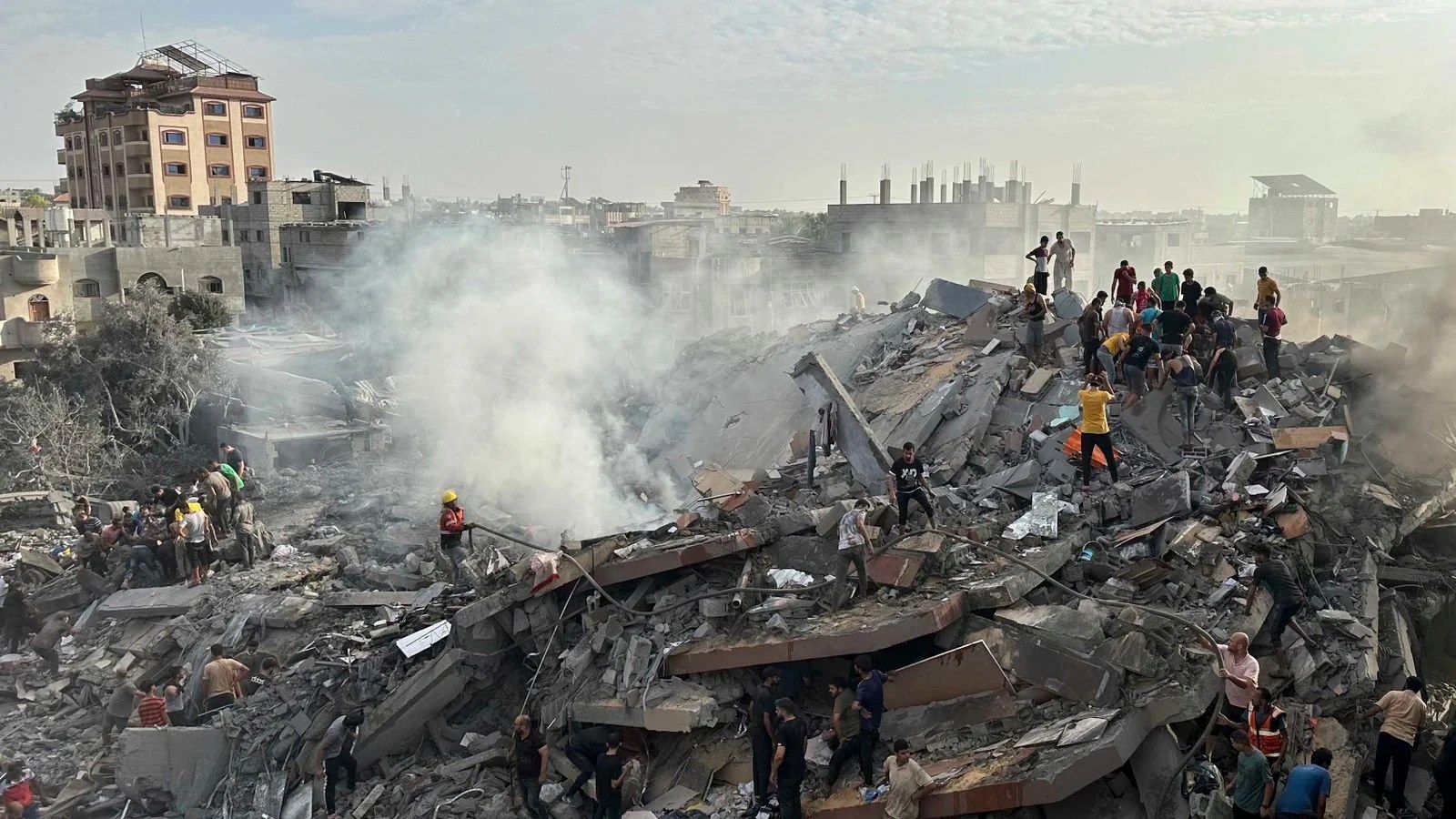
 

UNSC Draft Resolution on Palestine: Aotearoa Dances the Whisky Tango Foxtrot

Standard

2013-Limbo

This is an unscripted commentary about the abysmal and cowardly draft resolution circulated by Aotearoa/New Zealand at the UNSC. The resolution purports to encourage and to bring closer a “two-state solution” to the occupation of Palestine.
This resolution is founded on delusions and lies that can no longer be excused.
Apologies for the uneven audio quality in the first 10 minutes

Meet Willy Pete®: The Collected Orrmails

Standard


On the 15 of August 2015 Dr Vacy Vlazna published an article detailing an event that had happened exactly one year earlier during a protest at the offices of the NZ Superfund (a public retirement fund):
“…[C]oncerned young protesters [had] chained themselves in the NZSF office (Auckland) demanding that the NZSF immediately divest from Israel Chemicals (ICL) – a supplier of lethal white phosphorus to the US army for the manufacture of munitions sold back to Israel to barrage fire and death on Gaza.
In response to spokesperson Nadia Abu-Shanab’s passionate urging for divestment, Adrian Orr’s smug retort was,
‘Do you brush your teeth? ( Nadia: ‘Sorry?’) ‘Do you brush your teeth? White phosphorus is used in many places.’”
The speaker, Adrian Orr, is a very well paid executive. His smarmy attitude became even more apparent later: “Nadia then goes on to say, ‘Palestinians have actually identified the company’ and Orr butts in with appalling callous flippancy, ‘I can identify lots of companies that annoy me in life.’”

The article ended with a call to action:
“Ask folk to write to NZ SuperFund CEO Adrian Orr at enquiries@nzsuperfund.co.nz and Cc john.key@national.org.nz
with just two sentences:
Adrian Orr
CEO, NZ Superfund
Brush your teeth with white phosphorus or divest from Israel Chemicals!
No war crimes investment in my name.
…and click resend every morning to maintain the rage and principle.”
Everyone who reads this wherever you are in the world should do exactly that. I set out to do exactly that, but my restless fingers decided to do something a bit more elaborate.
By the request of a reader I have decided to gather together all of my love letters to Adrian Orr. Please respect the fact that I am opening my innermost intimate naked self to your probing gaze.

Re: Humble Apologies
To Adrian Orr,
In my email yesterday I fear that I may have implied that you were a fatuous overpaid moral midget. On reflection, however, I think I see your point. You were highlighting the “dual use” of chemicals that can have beneficial effects. It has made me reassess my whole stance on the people who made Zyklon-B. People forget that although more than a million died slow agonising deaths in giant gas chambers poisoned with Zyklon-B, it was also used to delouse clothing. By ridding the clothing of these pests, many people will have be saved from irritation. That is the thing about something like white phosphorus, we get on our moral high horse about people dying in terror and agony or being maimed, yet life is never just a matter of black-and-white like that.
Thank you for opening my eyes.
Yours gratefully,
Kieran Kelly

Re: I am Hurt
To Adrian Orr,
I must say that I am a little hurt and upset that you haven’t acknowledged the sincere apology that I addressed to you yesterday. It hurts because I look up to people like you. Some might say that you are a vacuous apparatchik who will say any old moronic thing – such as implying that white phosphorous is used in toothpaste – in order to justify the unjustifiable. But I know that is not the real you at all. I mean, what sort of world would it be if we paid $800,000 per annum to an utter imbecile? That would be completely unthinkable.
Anyway, I just wanted you to know that your disregard is hurtful, but I can rise above that. I actually have some news. This news involves you, but I’m not quite ready to divulge all just yet. Hopefully I can let the cat out of the bag tomorrow, and I assure you that you will be the first to know all about it.
Yours Sadly but with a Hint of Optimistic Anticipation,
Kieran Kelly.

Re: Exciting New Project
To Adrian Orr,
I notice that you still haven’t responded to my emails. Was it something I said? I really would appreciate it if you contacted me. I have something very important to discuss and it may be to your advantage.
In fact, I am struggling to contain my excitement here, because you have given me a gift more precious than you could ever hope to understand – the gift of inspiration. You see, it is entirely thanks to you that I have nailed it. I have come up with a concept for a new product that will take the world by storm – Willy Pete Toothpaste®!!!
This product will literally set the world alight one bathroom at a time, and I owe all of the credit to you.
I think I should point out here that when I said that this news would be to your advantage I didn’t want to suggest that my gratitude would extend to sharing profits, but I thought you might get a spiritual boost from knowing how inspiring you are and that is worth more than mere money.
What I am prepared to give you, though, is a complementary sample tube. All I need to do is find a material that can contain the white phosphorous paste and still be flexible enough to squeeze. As it stands the product has a tendency to ignite and burn right through flesh and into the bone itself. It also produces a cloud of fine particles that stays in a type of dehydrated gaseous suspension that will sear people’s eyeballs and burn people from the inside out when inhaled. It’s a real bummer, actually.
Yours in Excitation,
Kieran Kelly

Re: Please Help Me
To Adrian Orr,
I wouldn’t normally dare to ask this, but I am desperate. I really really really need your help.
As you know I have begun work on my exciting new product Willy Pete Toothpaste® but I keep hitting roadblocks. I know that being an entrepreneur means that I must take the good with the bad, but I am getting near breaking point. No matter how hard I try to make a nice sanitary product out of white phosphorous it still remains a chemical that kills, maims and poisons. The fact that it also brightens and whitens just seems a little insignificant to someone dying in fear and agony.
I realise that you are not a chemist but it would be a real help to me to just know how you mentally sanitise white phosphorous. For you, it is apparently easy to ignore all of that whole killing side of things. If we could just harness that sort of attitude – if only for marketing and quality control – it might just save the enterprise.
I am desperate here. I have always thought of you as the Jedi Master, while I am your humble Padawan. In that vein I know you will not mind if I beg you: Help me Obi Wan, you’re my only hope.
Yours Anxiously,
Kieran Kelly.

Re: Responses to Mr Orr’s Questions
To Adrian Orr,
I have not yet heard back from you and I am aware that you are probably very busy. I really would appreciate your input, but I know you must have questions of your own. I cannot promise to address all of your concerns but I think that these responses might answer your most urgent needs.
1.    Yes, but not for religious reasons. At the time the procedure was often performed as a hygiene measure.
2.    No Police record – just a solo album by Sting.
3.    World peace and an end to all hunger – JK, ;-) No, really I would ensure greater stability and a single lasting final solution to the problem of overpopulation.
4.    The death penalty, with no exceptions of coming from “broken homes” or any of that boohoo poor crim nonsense.
5.    Some of my best friends are Maoris.
6.    It is a business like any other and it is not appropriate for government to interfere with the market for alleged “moral” reasons.
You can see that I really am on the same page as you. You can trust me, so please write back!
Yours Transparently,
Kieran Kelly.

Re: Some Clarifications
To Adrian Orr,
I must apologise if my last email left you somewhat perplexed. If you are wondering why I wrote JK, it was not in reference to John Key, as in “FJK”. Not that I don’t want to mention John Key. He is a wonderful role model – a humble Kiwi who made it big at Merrill Lynch but rather than just looking after himself and his money he came back to give something back to our country by being our Prime Minister. But, though John Key is seldom far from my mind, or heart, in this instance JK stands for “just kidding”. And the punctuation that followed “;-)” is meant to represent a wink – letting you know that I didn’t actually mean what I said, in fact quite the opposite.
I have also been told that my choice of words was somewhat unfortunate. Apparently suggesting that there should be a “final solution” to global overpopulation sounds potentially harsh. I know from the way you responded to protesters concerned about the issues of horrific weaponry being used on our fellow human beings that you are like me. People like us could never suggest that harsh measures will be necessary to deal with excess population ;-) I am not one of those that believes that it is inevitable that the weaker members of our species must die for the greater good of all ;-) I am sure that overpopulation on a planet of finite resources will be solved by a coming together of all peoples in multicultural harmony ;-) And I definitely don’t think that poor people, who all seem to insist on breeding like rabbits, have only themselves to blame if they end up starving to death after they have poached all the game animals ;-)
I think you can appreciate the depth of my feelings about this.
Yours Resolutely,
Kieran Kelly

Re: Bloody Hippies!
To Adrian Orr,
I know that you were once like me – burning to make the world a better place and earn lots of money doing it. And what better place to do that than in the finance sector where the most ethical and the most productive activities of the entire human species are conducted. Yet, despite the fact that banks are more beneficent than any charity, they pay extremely high salaries.
But apparently all of these ridiculous hippie do-gooders are just too stupid to know that they can do more good in the finance sector than they can do with silly sit-ins (which only stop smarter and better people from doing the real work of making the world a better place) and they could earn a bloody good living at the same time. Not that any of them could handle a real job anyway, but I think we can agree that they should just bugger off and die somewhere.
These idiots don’t understand that you do the real work of making the world a better place and, quite frankly, it makes me wild that they have the gall to imply otherwise. Who do they think they are? That is why it was such a classic moment when you shot down that stupid blathering on about white phosphorous. That protester was lucky to get away with just being made a fool of. The day will come soon when you won’t have to put up with that protest nonsense. It will be like America and you, in your position, won’t even have to say a word. You can even pretend to be all supportive and say “let them speak,” but a big guard will say “sorry sir, I have my orders”. Then the hippie will be freaking out saying “Don’t tase me bro.” And then it’s ZAP! and you can go back to work doing real good.
What amazes me is that nobody makes these people protest, and they know it doesn’t do any good. They must want to get hurt, otherwise they’d just stay home and watch X-Factor like the normal plebs.
Yours Irately,
Kieran Kelly.

Re: From Far Beneath You
To Adrian Orr
I am very hurt by your continued refusal to respond to my emails, but I admire you for it. I know that if you acknowledged the time and effort I put into writing to you it would only be doing me harm. It would make me complacent and self-satisfied and it would destroy ambition and aspiration. I understand. For someone like you to stoop down to my level would be mollycoddling condescension. That is why, despite the frustration and pain, I revel in the fact that you respect me enough to ignore me.
To you my communications must be like those of a puny ant squeaking up at you. But your neglect drives me on, and one day I will be worthy of your attention. You see, I am still working on the Willy Pete Toothpaste®. I know that when I last wrote I had struck some obstacles, but the inspiration of knowing that you yourself embrace the idea of a toothpaste made from a chemical weapon gave me the faith required to continue. I know I am close to a breakthrough. I feel it in my bones. One day I will be able to hold my head up and look you in the eye. Perhaps we could play golf together, or maybe get some cocaine and hire some prostitutes.
Yours in Happy Anticipation,
Kieran Kelly.

Re: Do Not Forsake Me, Oh My Darling!
To Adrian Orr,
Once again I must humbly beg you forgiveness. I realise that I have been less than forthcoming recently with details of this product development phase for Willy Pete Toothpaste®. I have simply been snowed under. But the results, I hope, will speak for themselves. Sadly, those results will have to wait for another day. For now it is hush-hush.
You will recall that I was having difficulty with product development. Having taken the inspiration from your tacit suggestion that white phosphorous can be used in toothpaste, I was having real difficulties with the fact that any product that contains white phosphorous as an ingredient is toxic. Then there was the additional volatility problem, which meant we couldn’t even get the stuff in tubes without it igniting. That brings me to the third problem, the tendency for the product to sear, maim and kill consumers.
Obviously in the case of a company like Israel Chemicals they actually want the end consumer to be maimed or killed, but that is quite a different business model. At this stage we envisage that our marketing and distribution would focus on the major supermarkets rather than shooting the product at screaming fleeing consumers. I don’t think that New Zealand is quite ready for that level of guerrilla marketing. Mind you, if you hear anything from JK (as in FJK, not “just kidding”) then just give us the nod. I don’t want to say too much, but just think “dual use” and I’ll leave it at that.
Yours Ready to Face All Contingencies,
Kieran Kelly

Re: Utopia is Just Around the Corner
To Adrian Orr
You will be glad to know that I have been working hard. You fired me up. You light the way. You are the wind beneath my wings. But as they say, a project like turning a cruel and obscene weapon into a trusted household product is 10% inspiration and 90% perspiration and I am dripping wet now.
I know that you’ll think I’m being a tease, but I’m going to save the best news until later. I want to see if I can’t just string you on a little longer before the big pay-off. Suffice it to say that things are now progressing nicely. What I am prepared to let you in on is our brand new slogan for Willy Pete Toothpaste®.
Are you ready?
Wait for it…
The slogan is…
Feel the Burn!
Isn’t that great? The thing I love best about that slogan is that it has that Idiocracy factor. Rather than working on different levels, it doesn’t work on any level but it doesn’t matter. You know that film Idiocracy? There’s a great scene where everyone is starving because because the crops are dying. The crops are dying because they are being watered with sports drink. They are being watered with sports drink because it has electrolytes and the people know electrolytes are good because TV tells them so. Electrolytes are a selling point so they must always be good. It is like Newspeak in George Orwell’s 1984 where words are replaced with just “good” or “bad” so you don’t need to bother with context or nuance.
I don’t mind telling you that when Idiocracy came out some of my friends in marketing said we would never end up like that. I told them at the time that they were being negative, and I think it is safe to say that I was right. Look at Donald Trump.
Idiocracy is just round the corner and that is the inspiration for Willy Pete Toothpaste® and that is the inspiration for the slogan – Feel the Burn!

Once again I have you to thank, because when I saw you trying to confuse and humiliate a protester by this left-field out-of-the-box notion that white phosphorous could be used in toothpaste I was immediately reminded of O’Brien from 1984. If you recall, there is a point where Winston Smith is struggling with the way that O’Brien combines a great facility of mind at one point and a subhuman stupidity and obtuseness at others. Of course, by the end Smith understands the truth. When you are truly powerful there is no such thing as being stupid; there is no such thing as being wrong.
Hail to Thee, Oh Mighty One,
Kieran Kelly

Re: Why Do I Love You So?
To Adrian Orr,
I think that I have made it absolutely clear how much I admire you, but if I was to be honest I also hate you. I hate the fact that you came from a humble background. I can’t help it if my parents were intelligent. I would love to have been raised by a junkie single-mum sucking at the government teat just so I could prove that I was made for better things.
What makes me most jealous, though, is the fact that you can say things that I can’t. People like you don’t have to mince words about society’s losers. You are the Novus Homo – the New Man – like the renowned Cicero. He was the greatest defender of a system that was basically a meritocracy – well, it was certainly better than letting the stinking mob spread chaos and destroy all that was great about Rome. I see you in that light, as a type of neo-Optimate, but instead of defending Patrician power you are defending something even more noble – the power of the market.
When you finally lost your cool with the pro-Palestine protesters and sneered. “I can identify lots of companies that annoy me in life”, you were actually making a very principled point. I know it came across a bit like you were just being an arrogant arsehole, but the fact is that we can’t attack successful companies just because we don’t like them. Everything that is great and good about our society comes from the success of companies whose very success comes from supplying demand. We can’t pick and choose what we personally like instead of heeding market demand because, as Friedrich Hayek points out, that is the Road to Serfdom. Some people might have some sort of political view about creating munitions that incinerate people, but if there is a market demand we can’t ignore it. If people are willing to spend real money to burn other people, then denying them would be very distorting and dangerous. In fact, Hayek says that if we do that we will all end up as slaves living in a Totalitarian nightmare eating algae and wearing unisex overalls. I can’t quite remember his exact argument, but he was a respected economist and Thatcher loved his book so it is definitely real economics and not a lunatic tract for moronic ideologues.
Peace. Out.
Kieran Kelly
P.S. Of course, our own JK is another Novus Homo, isn’t he? However, I must admit I don’t really see him as being in the mold of the great Cicero. He has the passion, but not the diction. It does make me think of another Roman orator though – Cato the Elder. He is still remembered today for earnestly crying out “Carthago delenda est!” whenever he could get away with it. I reckon that if the Right Honourable Member himself is concerned with his legacy he should take a page from Cato. Instead of fussing around with this flag nonsense he should make it his unerring habit to end his every utterance in parliament by yelling “Get some guts!” That way, he would definitely be assured of a place in the history books. He would probably get on John Oliver’s show again too, and that exposure is great for brand “New Zealand”.

Re: And another thing…
To Adrian Orr
And the other thing about you bootstrapped peasants is that you have a lot of privileges that are not available to people like me. As I said, I can’t help the fact that my parents were not stupid losers working as toilet cleaners, or stablehands, or whatever it is that feeble-minded plebs can manage without chopping their own hands off. (Incidentally why do we have to pay ACC levies to compensate those who are too stupid to do menial tasks without mutilating themselves? Why do people seem unable to grasp the fact that this creates incentives for people to maim themselves? Has this world gone completely mad?)
I give you full credit for pulling yourself from the festering swamp of drooling inbreds that we know fondly as the “Great Unwashed”. Bravo, and all that, but now that you have scaled to the heights of fully-evolved sapience (and hopefully kicked the habit of grooming your relatives looking for juicy lice to eat); now that you are arrivé, as it were, you have that great privilege that I mentioned in my earlier missive. Your lowly origins mean that you can speak your mind where I can not.
For me life is a minefield. There are so many things on which I cannot voice an honest opinion without being accused of being worse than Hitler, and that is only the half of it! I cannot even point out simple matters of fact without being accused of being a privileged rich white man. Talk about ad hominem albus!
That is why I was frustrated watching you talk to those screeching busybodies that were trespassing in your office building. We both know that they don’t really give a toss about the Hamas-loving hummous-eaters they claim to care about. They are just doing this to pad their resumés with “activism” so they can get into lefty politics and then hop aboard the UN gravy train like Aunty Helen. But these Arabs, these so-called “Palestinians”, in Gaza are not like Giant Pandas or Sirocco the Kakapo. People want to save cuddly nice charismatic deserving creatures, but you could have completely queered their sales pitch by telling some home truths about the so-called human beings whom they paint as being victims.
Did you know, for example, that 40% of the Gazans who can work don’t even have a job! Even most of those who do have a job take handouts from UN and NGO “benefactors”. Imagine that: a whole cramped little territory of hundreds of thousands of bludgers sticking their hands out. (That is what we will have here in our own country if we keep rewarding people for sitting on their arses and being poor). And half of the houses in Gaza are rubble, but even though they don’t have any jobs they still don’t rebuild them! They just sit around waiting for someone else to build everything for them. And with your humble background you can say this sort of thing. You can say, and it is just a simple fact, that we cannot support these people forever. The kindest thing is to just let nature take its course, or even to act to shorten the suffering of these miserable souls. It is pure undeniable fact, but when I say it, people call me a monster. I don’t think they understand how much that hurts my feelings.
Live Long and Prosper,
Kieran Kelly.

Jews and Genocide

Standard

An audio commentary: http://www.radio4all.net/index.php/program/82622

 A sort of companion piece to the article “The Refugee Crisis and the New Holocaust” which explores the political misuse of Holocaust exceptionalism and Judeocide exceptionalism to mask the genocidal nature of empires past and present.

link to mp3: https://archive.org/download/20150908JewsAndGenocide/20150908Jews%20and%20Genocide.mp3

Partial transcript with hyperlinks:

Jews and Genocide

Zionists like to lay special claim to the term genocide on behalf of all Jews, but now anti-Zionists have taken to supporting this. Some anti-Zionists and supposed anti-imperialists have repeated the false claim that the term was invented to denote the killing of Jews. The only reason that I can see for this is to maintain a false image of genocide as an act of exceptional villains. In fact genocide is a normal behaviour of imperial and colonial powers. Despite many attempts to rehabilitate empires as being on some level noble – all imperial and colonial projects are inescapably genocidal.

However, a number of Jewish nationalist ideologues claim that the only true genocide was that carried out by the Germans against Jews. These people are called “Holocaust exceptionalists”, and their claims are broadly understood by genocide scholars as being nonsense supported by falsehoods. It is fair to surmise that Holocaust exceptionalists are generally ardent Zionists. That is why I have been alarmed to see their most central and fundamental lie being spread by anti-Zionists, anti-imperialists, and antiwar writers. That lie is the idea that the word genocide was ever in any way meant to be a way of describing Judeocide in particular.

One writer went so far as posting that the word genocide “was invented… in order to stress the difference between murdering Jews and killing lesser breeds.” This lie is so easy to disprove that it is laughable. Anyone can spend 30 minutes reading Chapter 9 of Raphael Lemkin’s Axis Rule in Occupied Europe (which can be found here) and they will know that there is no way that Lemkin meant the “genocide” term to be exclusively applied to Jews or to the Judeocide that was happening even as he wrote.

When people refuse to accept or even to re-examine a demonstrably false claim it is because it is an essential foundation of a much larger lie. For Zionists the obvious need is to make Israel morally immaculate and incapable of doing wrong. Holocaust exceptionalists have to perform serious mental contortions to avoid confronting the fact that genocide was not intrinsically related to Judeocide, but apparently the Zionists are not alone in this. When I have tried to correct others on this issue I am met with resounding silence and even censorship. The question is why don’t these antiwar and anti-Zionist people want to face up to a very simple truth? What do they have to hide? Or what are they hiding from?

Genocide is an incredibly important word. That is the reason that the meaning of the word is suppressed. It is a term, like “terrorism”, that is thrown around with great passion by people who would never in a million years be able to explain what they actually mean when they use the term.

Many people bandy the term genocide about with great emotion and no thought. However, there are also people who scorn others for inappropriately using the term when they too would be completely incapable of giving a real definition. The whole discourse between these two sides is even more idiotic than the sum of its parts because it is like a debate without any reasoning. The conflict is invariably between a party who believes that it is a badge of passion, courage and moral engagement to claim that something is genocide, and another that believes labelling something as genocide is premature, rash, irrational, partisan or lacking in scholarly standards.

Unacceptable Ideas

You might wonder how this widespread idiocy came to pass. It is very simple. At the end of World War II a traumatised world wanted to know how the events they had lived through had come to pass. They wanted to criminalise the German and Japanese leaders and they wanted to understand what had led these societies to cause such violence. People wanted to understand this as criminality and pathology. But there were two areas into which inquiring minds might wander which were metaphorically signposted with skull-and-crossbones and the legend “STAY OUT!”

The first area relates to the war that had just been. The victors in this “Good War” were in reality drenched in the blood of the innocent and that was a very delicate matter. We have just passed the 70th anniversary of the bombings of Hiroshima and Nagasaki, and there is still a suppression of the fact that those bombings were not military in intent. They were not aimed at winning the war against Japan. Nor was the even more deadly campaign of firebombing that preceded the atom bombs. In fact most of the “strategic” bombing carried out by the US and UK in World War II was simply mass murder of civilian populations, and it was militarily counterproductive – a misuse of resources that hindered military progress. I could illustrate this in detail, but let me try to save time and effort by using a comparison. The Soviet Union produced more armaments than anyone else in the war. They did not build bomber fleets to bomb German cities. To do so would have been an unthinkable, nigh suicidal, waste of resources. The Western Allies had the luxury of wasting their most valuable materiel and personnel on a project of mass murder, but the underlying strategic calculus is the same – it was militarily counterproductive.

With the deaths of millions of civilians weighing on the consciences of leaders and on the collective conscience of the people’s who had fought against the greater evil of Axis, the last thing anyone would want would be the suggestion that the actions of the Allied leaders in killing civilians were in some intrinsic and essential way linked to the atrocities committed by Japan and Germany. Both collectively and individually, both consciously and unconsciously, people knew not to explore any notion that would suggest that mass killings of civilians by Allies had any fundamental and immutable connection to the mass killings of civilians by Axis powers.

This is best summed up by Justice Robert Jackson’s opening statement at the Nuremberg Trials, “…the record on which we judge these defendants today is the record on which history will judge us tomorrow. To pass these defendants a poisoned chalice is to put it to our own lips as well.” Please note that he is not talking about a future trial of a future regime, but the way “history” will judge “us” – meaning Jackson and his contemporaries. The discourse of aggressive war that was created at Nuremberg was closely and precisely shaped to construct a crime of which the Germans were guilty but of which the Allies were not. That is why Hermann Göring at times shouted out “What about Hamburg?” and “What about Hiroshima?” Göring knew that wasn’t a legal defence in and of itself, he was trying to fracture the narrative framework with which his prosecutors and judges legitimated themselves.

And then there is another no-go area – another place from which the collective consciousness (and most individual consciousnesses) shied away in fear. In addition to avoiding any suggestion that Axis atrocities might bear any resemblance to the Allied habit of incinerating innocent human beings by the tens of thousands, it was also imperative that there be no suggestion whatsoever that Japanese and German conquest and occupation might in any way resemble the colonial and imperial policies of Britain, France and the US.

The Frightening Truth

To be very clear: the Allies killed millions in World War II, but the Axis powers killed tens of millions. Within reason, aggression can justly be called “the supreme international crime differing only from other war crimes in that it contains within itself the accumulated evil of the whole.” Thus, to suggest that there is a moral equivalence between Axis and Allied crime is not really acceptable. (It is equally unacceptable to claim a moral equivalence between Nazi crimes and those of Communist regimes in the USSR or China).

That said, however, the atrocities that the Germans and Japanese committed against the peoples of Europe and Asia inevitably resemble the crimes of other colonising and imperially hegemonic powers. Both of these Axis powers, along with Italy, consciously wanted to repeat the imperialist and colonialist conquests of the British and French. The difference is that with changes of technology the intensity and speed were unprecedented. What would have been 50 years of killing for the British Empire was squeezed into 5 years. Yet the principle was the same, and I cannot help but think that the main reason that people saw a moral distinction between German imperial expansion in Europe and, say, British expansion in Africa was that most of the victims of the Germans were White.

Meanwhile policies of deliberately and systematically killing civilians came to dominate the so-called “strategic bombing” of the UK and US during the war. They too bore chilling similarities to the policies of mass killing pursued by the Germans and Japanese. Eric Markusen and David Kopf published a book called The Holocaust and Strategic Bombing which documents parallels in the way the Germans and the Western Allies were justifying ever greater mass killings with pretensions of clinical detachment and inevitability, along with eerily similar euphemisms – such as the German “evacuation” and the British “dehousing”.

The fact is that there is an essential and fundamental connection between the actual extermination of peoples, such as the Aboriginals of Tasmania, the “hyperexploitation” such as lead to millions of deaths at Potosí and 10 million in King Leopold’s Congo, and the social and cultural destruction accompanying the economic and political subjugation of imperial or neocolonial domination. Within that framework there are also practices of ethnic cleansing and of any systematic attempt to reduce a non-military population through killing, preventing births, or reducing material wellbeing to lower lifespans.

The Germans did, or attempted to do, all of the above to various peoples under the Nazi leadership of the “Third Reich”. In many ways this project was inchoate and even contradictory, and yet viewed from enough distance it had a distinct singular form. One man, Raphael Lemkin, saw it and recognised in it “a coordinated plan of different actions aiming at the destruction of essential foundations of the life of national groups.” He called that “genocide”.

Disney Genocide

Lemkin had a profound insight which had three things in common with other fundamental changes in paradigmatic thinking. The first is that it had a long gestation. Lemkin didn’t just base his idea on German policies under Hitler, he had been researching and thinking about these issues since he was a teenager nearly three decades earlier. He was horrified by the Armenian genocide and spent his early adulthood trying to understand and encapsulate that violence, with the particular aim of making it an “international crime”.

The second is that its significance was much greater than the originator himself understood at the time. Later, Lemkin himself, much to the detriment of his career and political standing, made a clear link between genocide and settler-colonialism. He spent a great deal of his time writing about the genocidal destruction of indigenous peoples in the Americas. In my opinion he did this despite wishing to think the best of his new home in the United States. Had he lived longer he would have been forced to confront the fact that imperialism is inherently genocidal even when it is not engaged in settler colonial expansion. Rather than seeking to impose the “national pattern” of the imperial centre it seeks to impose an “imperial pattern” which is equally alien to the victim group but which also cements their subjugation in an ethnoracial imperialist hierarchy. This is achieved with exactly the same social, political, cultural and economic destruction and the same forced displacement, concentration and mass killing that characterises settler-colonial genocides. This is true regardless of whether the empire is predominantly formal, informal, or neocolonial.

The third thing that happens when new revolutionary ideas arrive is that people try to cling on to outmoded beliefs and ways of thinking. They are resistant, and in the case of genocide this resistance has been nourished by political interests and given a fertile discursive medium by the historical experiences of the internal and external relations of Germany’s Third Reich. The nature of genocide was obscured from the very genesis of the term by a strident and loud imagery of Nazi exceptionalism.

An exceptionalist emphasis was one of two opposing reactions to the unprecedented suffering inflicted on the world by the Nazi regime. The other emphasis was to try to understand what conditions had led to members of our species doing or allowing things that seem to be unvarnished evil from the outside. A lot of good and bad things came out of line of thought, but I would argue that it greatly profited societies to think of the German experience as one to be studied and avoided. It is from this tradition, which is always at least partly relativistic, that sprung concepts like Hannah Arendt’s “banality of evil” and our understanding of the psychology of authoritarians. I think that a very frightening aspect of contemporary life is that our understanding of these Nazi traits fades, and as the understanding fades the traits themselves become more and more manifest in ever more shamelessly inhuman official discourse. Two recent examples being the US “Law of Warfare” field manual which authorises the killing of journalists and the West Point professor who wants the military to kill lawyers and scholars who oppose US military actions to the list of targets – not to mention attacking mosques and various other enemies of US military freedom.

In contrast to those who sought deeper understanding of Nazism, all forms of exceptionalism involve taking supposedly unique aspects of something and presenting them as essential and defining characteristics. This vastly overstates the substance of those aspects that are claimed as being exceptional and, if accepted, makes comparisons impossible. This exceptionalist approach can be seen in the famous Disney wartime propaganda film “Education for Death”. It is understandable that there was a desire to dramatise the oppressive and invasive nature of the Nazi regime, but it encapsulates a fetishistic approach that is literally a cartoon version of reality. As propaganda this is to be expected, but after the war it is not as if people said to themselves: “Now that that is over I need to take a more nuanced view of the National Socialist government in Germany if I am to truly grasp the nature of that regime and its atrocities.”

The danger of exceptionalist narratives is that they deny context and refuse to allow comparisons. The upshot of this is that people emphasise the wrong things in the fetishistic and cartoon manner which I mentioned. Thus US exceptionalists create a fetish out of surface aspects of their constitution that they are formally and informally indoctrinated at a young age to view as essential parts of “democracy”. In reality, the excessive focus and attention then given to the “democratic” nature of US governance actually makes it far easier for undemocratic power relations to develop and entrench themselves.

Similarly, an exceptionalist narrative about Nazi Germany emphasises surface appearances and destroys any ability to learn and to avoid repetition. To use a reductio ab Hitlerum analogy, it is like saying that everything will always be okay as long as the highest political office is not occupied by a man with a funny moustache.


Holocaust Exceptionalism

Here is a multi-choice question:

The US has just won a war against the forces of darkness embodied by Germany and Japan. There is a new word around called “genocide”. Are you inclined to think that this word means a) what Hitler did to the Jews, b) what Hitler did to the Jews and what was done to the indigenous people of North America in order to create the US – illustrate your answer with reference to the screen appearances of John Wayne.

Clearly no ordinary citizen of the victor states would want to think that the crime of genocide, which saw millions of Jews systematically murdered, was a very prominent part of their own proud national heritage. Canada, Aotearoa, the US, and Australia didn’t want to see their origins as stained by comparison to the roving mass-murders of the Einsatzgruppen. The USSR didn’t want to see the Terror Famine in Ukraine or Stalin’s ethnic cleansing transmigrations as bearing any resemblance to the Camps in which so many of their own died. And the old imperial powers, France and Britain, didn’t want to see their bejewelled traditions of civilising hegemony equated in any way to gassing children.

In the fertile ground of Nazi exceptionalism that was already established it was inevitable that Holocaust exceptionalism take root, not just as the explicit belief of hardliners, but also as the default starting point for general layperson’s discourse. The base belief is that the Holocaust is the defining archetype of what genocide is and that other events are “genocidal” to the extent that they can be compared to the Holocaust.

What is this Holocaust that they are talking about? Part of the problem is that this is an extremely slippery concept. The real problem is that people don’t want a robust definition of the Holocaust. They want to be able to know what it is without having to cogently delineate that knowledge. For most people the Holocaust is emotive but vague. It is misunderstood not in the manner that one might misunderstand historic events like the War of the Roses or the reign of Emperor Qin Shi Huang, but rather the impressionistic imagery is so powerful as to drown out actual detail. This is understandable, but still regrettable.

The Holocaust is so overwhelming that a film like Schindler’s List had to be made in monochrome because even the sombre and washed-out cinematic tones that are conventionally used for Eastern Europe in World War II are insufficient for an actual concentration camp. Genocide is literally made to be black-and-white. Our sensitivities to the issue are so high that misters used to cool visitors to Auschwitz today caused an international outcry because they were reminiscent “the Holocaust showers” (as one news bulletin called them). There were, of course, no actual “Holocaust showers”. The realities are not any less horrifying than the nightmare images, but they are more complicated. In fact, the realities are more horrifying than the symbolic beliefs, and once you know them you can’t unlearn them. That is why people create a totemic imagery of the Holocaust. They can feel all of the horror, grief and outrage without the crippling depression. Most of all, they don’t feel the burden of obligation to end suffering. Instead, steeped in the dark cartoon visions of “Holocaust showers”, they are more able and more likely to inflict suffering because they are artificially separating the suffering of certain human beings from other members of the same species.

The symbolic or cartoonish approach to conceptualising the Holocaust has the advantage that you do not have to be categorical about something to make it a defining character. It is possible to retain the notion that the Holocaust is encapsulated in the conspiracy of the Final Solution, in the Judeocide, and in the gas chambers of death camps. Everything that is not part of that vision is either forcibly incorporated or essentially ignored.

To clarify my point, let me draw your attention to the role of a) gas chambers and b) the Final Solution. These things are synonymous with genocide in most people’s minds, but Lemkin never included them in his description of genocide for the very simple reason that he didn’t know about them. Moreover, if these things had not existed it might have meant that many more Jews would have survived in relative terms, but most European Jews would still have been killed by the genocide policies that Lemkin described. Those Jews who died were joined by many millions of others who died as a result of genocide. The Final Solution and the gas chambers are clearly linked to genocide in that they are a way of enacting genocide that is entirely consistent with the logic of genocide take to its greatest extreme – that of extermination. These things are linked to genocide, but they do not typify let alone embody genocide.

The end result is that the paradigmatic exemplar of genocide, the Holocaust, is a misrepresentation of itself, let alone genocide as a whole. For some that means that the Holocaust was the only genocide. For most, however, it means that when one decides to use the “g-word”, one constructs the newly acknowledged genocide as being a reflected image of that mythologised Holocaust. By maintaining that exceptionalist purity one never needs to accept something as genocide if one does not want to. In fact, people can get very angry when someone labels something genocide on the basis that to do so is to accuse the perpetrator of being as bad as the worst atrocities of German mass murder. Conversely you can appropriate the imagery of the Holocaust for anything you don’t like, particularly if you can label it anti-Semitic. In an extreme example a man was filmed at a rally opposing the “Iran nuclear deal” recently where he yelled that Obama was releasing money to “the terrorist Nazi regime which is building nuclear gas chambers!”


Kelly’s Law

If you are attempting establish the moral validity of acts by refuting any comparison to Hitler’s acts, you are defending the indefensible.

Most readers will probably be familiar with Godwin’s Law: “As an online discussion grows longer, the probability of a comparison involving Nazis or Hitler approaches”. The most common corollary is that the party that makes the analogy has lost the argument. It is dated now, and perhaps it was always more inclined to be used against critical thought than to promote it. I propose instead that what we need now is a “law” that states that if you are attempting establish the moral validity of acts by refuting any comparison to Hitler, you are defending the indefensible. This is true whether the reaction is the gut reaction of an Israeli who spits and yells with genuinely distraught anger at the suggestion that Israel is committing genocide; or whether it is the snide put-downs of a pundit, politician, bureaucrat or academic who sneers at those who claim that the US or UK or France has committed genocide.

The corollary of Kelly’s Law is that not only must the person refuting the Hitler comparison be defending the indefensible, but they are almost certain to be demolishing a straw man in doing so. To say that someone has committed genocide is not the same as saying that they are morally equivalent to Hitler in the same way that saying the we evolved through processes of natural selection is not the same as calling someone a monkey. For example, in his book Empire Niall Ferguson first himself compares the actions of British forces during the Indian Mutiny to those of the SS against Jews, but then concludes that the British weren’t actually as bad as the SS as if that somehow makes things better.

Nazi exceptionalism and Holocaust exceptionalism are the gift that keep on giving. As long as you avoid building death camps with giant gas chambers and crematoria then you can incinerate and starve hundreds of thousands. It is like teflon coating for genocide perpetrators. It shields them from all serious accusations of intentional wrongdoing because any attempt to suggest a systematic purpose behind Western mass violence is delegitimised as being an invalid attempt to equate our leaders with the Nazis. I fear that this will continue until the point where it Western governments, particularly the US, actually do become the moral equivalent of the Nazis – and that moment does get closer over time.

A New Holocaust

People don’t want to face up to the reality of genocide, because they will then have to admit that Western states are committing massive acts of genocide right now. The Western interventions most apparent in the Middle East, Africa and Central Asia have created mass destruction and mass death.

The tempo of violence that exists now does not even match that of the bombing during the Korean War, let alone the enormous scale of violence of World War II. However, this violence never ends. It seems destined to continue for eternity and the scale of death continues to creep upwards. Western interventions of many types have sowed conflict and instability and they keep tearing at these open wounds, often blaming the victims. I cannot shake the feeling that if Germany had not been at war, Nazi genocide policies would have been enacted at the same slowly accumulating pace.

The destruction and the violence are often meted out by enemies of the United States, but I think people are beginning to grasp that to greater or lesser extents the US is often the creator and sponsor of these enemies. Moreover these enemies are often materially dependent on the US either directly or through allied regimes. That is the new reality, or at least one of the new realities. Lemkin’s understanding of genocide was of disparate acts that could only be related to each other when you grasped the underlying strategic reasoning,

That is why anti-Zionists are embracing Holocaust exceptionalism. Israel provides such easy cartoon villains, Netanyahu and a cabinet of political colleagues that seems unable to go two months without a minister openly calling for the extermination or ethnic-cleansing of non-Jews. They might as well have a leader with a funny moustache. It is facile and comforting, but it is stupid. Israel does not have the power to effectuate all this destruction, nor does it control the US. Everything the US has done has followed a trajectory it has clearly been on since 1945. Trying to explain it current genocidal actions is like trying to explain the trajectory of a cannonball by a stiff gust that arose during its flight without any suggestion that there might have been a cannon involved at any point.

US Rule in Occupied Earth (or Everything You Need to Know About Genocide, but Never Knew to Ask) Part 4: You Are Next

Standard

Leunig - How to do it

http://www.radio4all.net/index.php/program/82288

direct link to mp3: https://ia801508.us.archive.org/12/items/20150817USRulePart4/20150817%20US%20Rule%20Part%204.mp3

Lemkin defined genocide as being a form of warfare, but instead of it being military warfare “against sovereigns and armies” it was war against “subjects and civilians”. We do not need to distinguish between the sort of internal “war” declared against a minority within a state and the sort of “war” that is waged against a foreign people. So, for example, the Japanese “3 Alls Policy” of “Kill all. Burn all. Loot all,” was genocidal because it was aimed at the Chinese people and was not a truly military scorched earth policy.

Lemkin focussed originally on occupied Europe, but he saw the same processes in the conquest of the Americas and he spent much more time studying and writing about genocide in the Americas than about Germany’s genocides in Europe. He characterised Indian reservations as being a form of concentration camp and symptomatic of genocide. As you can imagine, this sort of thing did not go down well in 1950s USA. He was unable to find publishers for his later works. As John Docker has said: “We can only mourn that Lemkin’s manuscript writings were not published as he hoped, for in them the inherent and constitutive relationship between genocide and settler-colonialism is strongly argued, given subtle intricate methodological form, and brought descriptively to life.” Lemkin died poor and comparatively obscure 1959. Only 6 people attended his funeral. Had he lived longer he would have recognised that the strategic hamlet programme in Viet Nam was also symptomatic of genocide and I am sure he would have made the leap that links genocide to all forms of imperialism, not merely settler-colonialism.

Whether related to settler-colonialism or not, genocide reveals itself best in military occupations because they allow the full panoply of genocidal behaviour to manifest. Lemkin saw genocide as a combination of ancient and modern practices. On one occasion it might be the visceral slaughter of a massacre, on another the dispassionate exercise of issuing papers that reclassify people as no longer having the right to live in their homes. One might reduce the food intake available to a people who have been previously deprived of subsistence resources, or create a policy of retaliatory violence. One might order a carpet bombing raid or institute a military doctrine of “force protection” guaranteed to cause mass civilian death and widespread terror. In short, genocide can manifest as wanton violence and destruction or targeted violence and destruction. It can involve policies designed to control, to destroy, to immiserate, to alienate, or to provoke.

Perpetrators of genocides like to claim that their actions are military in intent. Sometimes they are deliberately deceiving and sometimes they are wilfully lying to themselves. The greatest lie they tell themselves and others is that attacking the civilian population and its infrastructure is a valid way of degrading military strength. This is the lie that was behind of the “strategic bombing” of civilian areas in World War II and was used to implement the genocidal sanctions against Iraq. These are very instructive examples of genocide undertaken in the guise of warfare, yet, instead of looking at those I want to focus on counterinsurgency.

Imagine a materially and/or numerically inferior people who occupy land that you covet. You start taking their land by force and/or start using your superiority to coerce their departure through inflicting some form of pain. Eventually resistance will ensue. The resistance may or may not have been part of the plan, but it now becomes the excuse for ever greater violence against the people as such. War against a people as such is, by definition, genocide. When you deconstruct counterinsurgency programmes throughout history you will find that this pattern of genocide is common to many.

I already mentioned the Japanese “3 Alls” campaign. The excuse for this genocidal behaviour was that it was a way of combating the People’s Liberation Army which drew sustenance from the people themselves. Mao said, “The guerrilla must move amongst the people as a fish swims in the sea.” But the point is that the people wouldn’t have supported the PLA if it did not in some way embody their collective will. The Japanese, by contrast, were inimical to the Chinese people. Their occupation was already genocidal, if they hadn’t been strategically inclined to inflict destruction of Chinese people as such, then they would have dealt with any insurgency by actions, policing or military, that were restricted to the PLA itself. In fact, the genocidal strategic imperative was greater for the Japanese than the military strategic imperative because such “counterinsurgency” is inherently counterproductive militarily.

To put it in simple terms you win a counterinsurgency by winning the “hearts and minds” of the people and thus isolating the guerillas from the material support of the people and delegitimising them so that violence against them does not cause the people to hate you. But, if your strategic designs are against the fundamental welfare of the people themselves you cannot win their hearts and minds and so it is inevitable that when armed resistance arises the response, if you do not alter your strategic aims, will be genocidal.

It is no great secret that the way to win against an insurgency is to win the acceptance of the people and then treat the guerillas as a separate military or policing operation. The reason this is not done is not that people don’t know it, but because they cannot accommodate the will of the people even to the degree that would get them to cease supporting the conflict of armed resistance. In short, for demostrategic reasons they are enemies of the people and they are at war with the people. It doesn’t matter of it is a tribe of 300, or a nation of millions, the same applies. Just as the genocidal acts of the Japanese drove people into the arms of the PLA, the same pattern has been enacted throughout Latin America, Southeast Asia, and in Eastern Europe during the Partisan War. In fact, Hitler said: This partisan war has its advantages as well. It gives us the opportunity to stamp out everything that stands against us.” It is well worth remembering at this point that Lemkin described Hitler’s genocides as being “a new technique of occupation aimed at winning the peace even though the war itself is lost.”

Since the First Indochina War, the US has shown unmistakeable signs that it welcomes and even fosters insurgent resistance as a way to channel its military might into genocidal violence and destruction. Few people realise how much of the US effort in Indochina went into systematically attacking civilians without even the pretext of a nominal insurgent presence. They did this on the basis that the people themselves were the sea in which the guerilla swam. The entire Phoenix Programme, for example, was aimed at civilians. “Free-fire zones” were, among other things, designed to re-designate non-combatants as legitimate targets for death. Under this logic missions of mass death could be carried out without any hint that an actual combatant might be present. US personnel were also trained to view the people of Viet Nam through a hostile racial lens. That and the way the GIs were deployed created a systematic situational predisposition for US personnel to view the the people of Viet Nam to be their enemy. If the US had wanted it to, a fraction of the money they spent on fighting in Indochina could have been spent in ways that won the “hearts and minds” of the local peoples. But that would have empowered the people. The Vietnamese, for example, would have been very thankful and then have firmly continued to move towards reunifying their country and exercising self-determination.

The US now exerts more hegemony over Viet Nam by having visited genocidal destruction and lost the military struggle than it could ever have done by making the concessions needed to allow it to achieve military victory. The state of Viet Nam was far less damaged by US destruction than the people of Viet Nam. The war had actually left the country as a military powerhouse and regional hegemon. On the other hand, bottom-up development was crushed. When industrialisation took hold it was not some form of strategic development that empowered the proleteriat and the nation, it was low-wage light manufacturing for the benefit of Western multinationals and Western consumers. That is a profound strategic victory for the US empire.

Viet Nam’s ongoing weakness means that it is subject to the governance of the “Washington Consensus” institutions which use debt and trade to prevent development in a for of structural violence, but at least there seems to be little prospect of hostile military action from the US. Iraq, on the other hand, seems to be slated for an eternal grinding and inhuman violence punctuated by periods of mass slaughter. Iraq has become like Prometheus to the US Zeus. Zeus ordered his servants Force and Violence to chain Prometheus to a rock where each night an eagle would tear out his liver. This was partly in revenge for Prometheus tricking Zeus out of what Zeus thought he deserved to be given as offerings by humans, and partly because Prometheus, a friend to humanity, had given fire to humans. In many respects the analogy is chillingly apt. For the US, even backing successful coups in Iraq didn’t produce regimes that were willing to make sure that Iraqi oil wealth was used to benefit US hegemony, thus Iraq cheated the US out of its due.

Due to a combination of petroleum, geography, demography, culture and history the Iraqi people, as such, are indelible enemies of US empire. Even under Saddam Hussein oil resources were nationalised and oil profits went into national development. Iraq is too large to be a rich rentier state with a small wealthy citizenry and it is too small for the oil profits to be inaccessible by the bulk of the population as in Nigeria. This is a big problem for an imperial polity, ie the US empire, that specifically uses control of petroleum as a method of strategic hegemony.

The result is that if you want to see an almost exhaustive exemplar of genocide then you should look to what the US has done in Iraq. It has been, to paraphrase Lemkin, “a coordinated plan of different actions aiming at the destruction of essential foundations of the life of [Iraqis], with the aim of annihilating [Iraq itself]. The objectives of [the] plan [are the] disintegration of the political and social institutions, of culture, language, national feelings, religion, and the economic existence of national groups, and the destruction of the personal security, liberty, health, dignity, and even the lives of the individuals belonging to such groups.” To outline the Iraq Genocide I can go through each one of Lemkin’s “techniques of genocide”. He enumerated these in Chapter 9 of Axis Rule in Occupied Europe, which, as you will recall, is where the term “genocide” originates. His descriptions of techniques of genocide can be very closely mapped to US actions in Iraq. And remember that this is the original defining document on what genocide actually is and you can go through it point by point and see how well it applies to US actions. The process is far too complex to detail fully here, but I will give a rough outline and hopefully you can use your own faculties and prior knowledge to fill in some gaps.

  1. Thee first technique of genocide was labelled Political – this would include the entire “De-Baathification” process; the period of rule by Paul Bremer; the suppression of mass demonstrations, of political dissent and of organised labour; the subversion of sovereignty; and the imposition of constitutional arrangements.

  2. Social – changing the legal structure; abolishing unionism; targeted killings of community leaders; fomenting sectarian division; disruption family social and economic life by targeting “military-age males” for disappearance or death. One of the biggest social impacts has come from the eliticidal killings of intellectuals and certain professionals such as doctors. This began with “Debaathification”, and then there were kidnappings, then the US instituted the “Salvador Option” and since that time intellectuals have often been targeted by death squads.

  3. Cultural – To paraphrase Lemkin by merely changing the word “regimentation” to “chaos” and the word “Poland” to “Iraq”: “Not only have national creative activities in the cultural and artistic field been rendered impossible by chaos, but the population has also been deprived inspiration from the existing cultural and artistic values. Thus, especially in Iraq, were national monuments destroyed and libraries, archives, museums, and galleries of art carried away.” Let me repeat: “…national monuments destroyed and libraries, archives, museums, and galleries of art carried away.”

  4. Economic – to quote Lemkin again: “The destruction of the foundations of the economic existence of a national group necessarily brings about a crippling of its development, even a retrogression. The lowering of the standards of living creates difficulties in fulfilling cultural-spiritual requirements. Furthermore, a daily fight literally for bread and for physical survival may handicap thinking in both general and national terms.” In 2013 Iraq passed the $100 billion US dollar mark for post invasion oil sales, and yet Iraqis still languish in poverty.

  5. Biological – in this category Lemkin discussed measures that the Germans used to lower birthrates particularly by geographically separating the men and women. The US has pursued policies which separate men from women en masse, but not to such an extent that it would affect the birthrate significantly. Bear in mind, however, that the physical and environmental aspects of genocide against Iraqis have also acted to reduce birthrates and may be even crueller than dividing families.

  6. Physical – Lemkin divided this into 3 subcategories: a) Discrimination in feeding – by 1998 it was calculated that 1 million had died because of sanctions imposed on Iraq. In infants particularly this was from a combination of disease and malnourishment. The perpetrators – the US and the UK – blamed the Iraqi government, but the rationing system in Iraq was as efficient and equitable as could reasonably be expected. In fact it cannot be denied that in this regard the Ba’ath government provided a far better and far less corrupt service than any large-scale service provided by the US government or any US contractor in Iraq. In reality, the deaths were the result of the deliberate withholding of essential nutrition and medications; b) Endangering of health – in addition to the sanctions preventing medications from reaching Iraq they also prevented medical equipment from being replaced. This was a slow torturous atrocity whose intentionality cannot be questioned. Then during the invasion and occupation US military forces systematically targeted medical personnel and medical facilities. This was something that Dahr Jamail was at pains to document at the time and compiled into an alarming report in 2005. Not content with merely bombing hospitals and systematically murdering health workers, the occupation authorities also used the same sort of destructive policies they used on economic assets – giving both US and Iraqi money to corrupt contractors who had been formally been made immune to both Iraqi and US law and were thus guaranteed impunity in advance. While facilities struggled to cope with mass violence and to rebuild that which was degraded during the sanctions period, Iraqi funds were misspent on lining the pockets of rich US contractors. c) Mass killing – the shocking results of the mortality survey in 2006, known as “Lancet2” or “L2”, have now been vindicated. As well as a very high rate of violent death L2 showed that up to 2006, where known, most people were killed by coalition forces and most people were killed by small arms. Total mortality in Iraq due to the invasion is above one million. If this is added to the fatalities caused throughout the previous 13 years the figure in considerably in excess of 2 million.

  7. Religious – Here I could cite the numerous attacks on and destructions of Mosques carried out by Coalition forces in the first few years of the occupation. But it is impossible to avoid mention of the sectarian and religious conflicts caused by the occupation. This is portrayed as something that is an endemic problem, but that is a complete lie. Westerners don’t seem to grasp how unusually blood-drenched Christianity is, and how sickeningly racist it is to project that peculiar tradition of violent intolerance onto others in order to avoid seeing Western culpability in fomenting bitter divisions. Just to be clear, it is not Christian theology that originated the violence of the religion, but rather the fact that it became the state religion of a thousand year-old empire that had the established habit of brutally killing those it considered to be ideologically heterodox. Indeed, Christians themselves had frequently been victims of this impulse. Once Christianity was bedded in to Roman politics it was inevitable that the Roman approach to heresy would reassert itself. Then the Church split, with Rome becoming the centre of a quasi-sovereign multinational “Papal monarchy”. This Western church found that its power was greatest when it was fighting heretics and infidels and it became addicted to bloody Crusades. These were not just to the Holy Land, but also included the brutal genocide of the Albigensian Crusade. After that was the Inquisition and then the Reformation set off the wars of religion which killed millions upon millions. That is not even to mention the indelibly Christian flavour of Western imperialist violence which continues to this day. Buddhism, Hinduism and Islam all have violence in their past and present, but none have a history that compares to this. For that reason I get very angry when people talk about the sectarian violence in Iraq as being the result of some ancient enmity. Very little of the violence in Islam’s history has a sectarian origin. Western historians talk about Shi’a political participation in the original Sunni ruled Caliphate as being “political quietism”, but even that is projecting a Western standard coloured by things like the massacre of Huguenots in Paris. I could go on, but I hope you get the point.

  8. Moral – Lemkin wrote: “In order to weaken the spiritual resistance of the national group, the occupant attempts to create an atmosphere of moral debasement within this group. According to this plan, the mental energy of the group should be concentrated upon base instincts and should be diverted from moral and national thinking. It is important for the realization of such a plan that the desire for cheap individual pleasure be substituted for the desire for collective feelings and ideals based upon a higher morality.” I think that this is a subjective area, but I think that the imperial pattern that the US tries to replicate everywhere, including at home, is one of atomised consumerism. In Iraq’s case this meshes with the social, cultural and economic destruction mentioned above.

  9. Environmental – Lemkin did not have this category, but it seems now a salient and highly important technique of genocide. Lemkin had no environmental awareness, as such, because of the times in which he lived, but some people now use the term ecocide to refer to systematic environmental destruction and I believe that ecodide is best understood as being one of these techniques of genocide. In Iraq the US has systematically caused environmental degradation by destroying infrastructure and contaminating areas with toxins, radioactive material and unexploded anti-personnel ordnance. Perhaps the most well known pollutant is depleted uranium, but recent studies in Fallujah show that it is only one part of a toxic cocktail that causes birth defects and cancer. Practices like using burn pits have also created deadly exposure to toxins for both Iraqis and US personnel. Like Agent Orange, these are slow motion chemical weapons attacks, and like a gas attacks there is always some “blowback” onto your own personnel (for a war leader, sacrificing pawns is necessary to win the game). Like Agent Orange, the pollution will kill for generations, causing health problems and heart-rending grief. Worse than even Agent Orange, however, some of these pollutants will stay for as long as we can foresee – a legacy of death and suffering that is practically eternal.

The Iraq occupation was a watershed moment, but it was not an aberration. It was part of an increasingly genocidal imperial policy that has blossomed into a series of ongoing neocolonial postmodern holocausts. The US sows conflict and instability and ensures that there is never any conclusion. Through direct or proxy interventions the US has created one eternal warzone after another. There is now a string of destabilised states, many of them so-called “failed states”, whose people are denied any path to peace. The situation is proliferating: Yemen, South Sudan, Libya, Syria, Iraq, Afghanistan, Somalia, western Pakistan and eastern DR Congo. These are the acute cases, but there are many other countries have a lower level of chronic violence and instability.

These spreading zones of violence are a new form of genocide that slowly effectuates “the destruction of essential foundations of the life of national groups”. Can it be said that the goal is to “annihilate” these nations? Yes it can, because the goal is to annihilate them as such. It is imprinted in the logic of the genocide. Because the violence provokes resistance, the logic of the genocide will demand unending violence. The violence creates its own strategic imperative for continuation while at the same time the institutions created to carry out that violence gain substance and a life of their own.

History will record the current era as a time of neocolonial slaughter much like the spasm of imperialist violence at the end of the 19th century – an increasingly mechanised blood-letting that foreshadowed the slaughter of World War I. However, genocide is not a discrete and absolute phenomenon. It is never the case that “a genocide” is committed in isolation. The current genocides have long historical roots. US “counterinsurgency” in the “Indian Wars”, in Latin America and in Asia, is cross-pollinated with South Africa’s “Total War” against its neighbours, and Indonesia’s genocides, and Israel’s invasions of Lebanon. This has created a system of in institutional knowledge rife with various techniques of Balkanisation and destabilisation.

By playing Hawks off against Doves, US imperialists create room for themselves to inflict unending violence without ever allowing the perception of control that a military victory would give. Retired General Mike Flynn believed that the US needed to use more military force to defeat IS but has also said: What we have is this continued investment in conflict. The more weapons we give, the more bombs we drop, that just … fuels the conflict.” This is a complaint that has gone right back to 1950, becoming particularly prominent during the 2nd Indochina War. Military officials try to explain that they are hamstrung and prevented from achieving military victory, but rather than taking their claims seriously they are written off as being overzealous madmen. The fact is that apart from some insane proposals to use nuclear weapons, the military types do have a point. Military decisions are avoided for the same reason that counterinsurgencies become counter-productive, because the real enemy is the people and a military victory would only hinder the strategic goal of crushing the people themselves.

It would also be wrong and artificial to separate genocidal wars abroad from domestic governance. The institutions of genocide that Germany created when it committed genocide in East Africa are considered important antecedents of the later genocides in Europe. But the first people that the Germans put in concentration camps were German political dissidents. The first Nazi mass killings were of disabled Germans. Military war, genocide, and the quotidian oppression of domestic governance partake from each other. In the US there is a long interplay between the criminal justice system and the genocidal attacks on peoples of other countries. This is inseparable from the past genocides of colonisation. Ajamu Baraka, writing on the recent death in custody of anti-police brutality activist Sandra Bland wrote “The struggle in the U.S. must be placed in an anti-colonial context or we will find ourselves begging for the colonial state to violate the logic of its existence by pretending that it will end something called police brutality and state killings.”

Mass incarceration, domestic torture, police killings, and mass surveillance are all institutions that feed and feed from genocide abroad. In this sense you can see that it becomes an impediment to argue that a given phenomenon is “a genocide”, instead we need to acknowledge that a phenomenon such as US mass incarceration is genocidal and not “a genocide”.

A famous quote from Martin Niemöller begins: “First they came for the Socialists, and I did not speak out because I was not a Socialist.” It ends: “When they came for me, there was no one left to speak out.” That is the nature of genocide. If we do not find a way to end the genocidal interventions in the Third World our turn will come, and collectively it already has. An elite habituated to meeting obstacles with genocidal violence will enact it on their own people, and that has already begun. If an innocent Caucasian is brutalised by a US policing and mass incarceration system that is primarily aimed at people of colour, that does not make that person an aberration of collateral damage but rather an indication that those institutions will be used against whomever it serves. The divisions between some “Them” and some “Us” are lies. They mean nothing, but we are made to feel that the mass violence perpetrated by our governments on distant foreigners is no threat to us, and may even be to protect us. It is not true. Every death we allow to happen places us all at greater risk, places our loved ones at greater risk. And one day, when it happens where you live, those who might speak for you will be dead or silenced.

But speaking out now has to be an act of true revolt. Ours is an age in which there is no more crucial imperative than that of demolishing the lies of elite ideology. Western regimes are almost impervious to the opinion of the masses, so mass education is far less important than deprogramming the apparatchiks that populate our boardrooms, newsrooms, seminar rooms and lecture theatres. We do not need to educate the masses. What will they do when they are educated, be knowledgeably powerless? No, we need to enrage the masses and delegitimise the elites. Their intellectual and moral pretensions are hollow.

To do this more than anything we need two things. One is to rediscover the knowledge and analysis of imperial power, and the other is to understand that imperialist violence, including structural violence, is genocidal in nature. Elite Western ideology was struck a blow by the end of the Cold War. By the late 1990s analysis of “globalisation” had begun to merge with a new, and not exclusively Marxist or Marxian, interest in the US empire. By now this has been almost completely expunged. In its place we have the traditional dullard stance of those who, without ever having to trouble their brains for confirmation, take it as granted that the default approach of the US is to seek to create stability and spread democracy. Less Pollyanna-ish, but equally blind are those who view US foreign policy as a variety of “realism” in response to “national security threats” such as “Islamist terrorism”. Most infuriating of all are the opponents and critics of US foreign policy who are now dominated by beliefs that US foreign policy is controlled by the Israel Lobby and/or acts primarily in order to deliver profits to the military-industrial complex. These are not only tropes of repugnant apologism, they are fatuous ahistorical and anti-intellectual conceptual cul-de-sacs which make cogent analysis impossible. They clearly satisfy deep-seated psychological needs, but they mainly fulfil the role of concealing continuities and preventing people from seeing the true shape of US imperial interventions.

To illustrate the potency of the term genocide imagine how difficult it would have been for the US to justify its actions in Iraq, if academic and media interlocutors had seen the pattern of genocide in US actions. Currently continuity and intentionality are concealed by simply replacing and recycling varying excuses made to limitlessly amnesiac intelligentsia. No one steps back and asks whether the current excuse for genocidal violence actually makes sense in the larger picture. Saddam might invade his neighbours again? Bomb the water infrastructure! Saddam has WMDs? Starve the people! There is resistance to our occupation? Dismantle all of the economic infrastructure and destroy historic sites! Insurgency? Kill! ISIS? Bomb! Iraqis don’t love us? Bomb some, arm others, then arm the ones you bombed and bomb the ones you armed! If it wasn’t so horrifically serious, it would be a pathetic joke.

Understanding the genocidal nature of this violence is the only way to end the cycle of mutating rationalisations. If they can’t launch a bombing campaign with a lie about a gas attack, the next lie will come along shortly and eventually one will stick. Take Gaza, for example. Israel’s violence has been justified as being: “Because Hamas. Because rockets.” But already you can see the beginnings of a new trendier discourse being established, where it is the failure of Hamas to control Salafists that will justify future genocidal violence. “Because ISIS. Because rockets.” And when that wears out there will be another excuse. And if we don’t escape the parameters of discourse set by the idea that Israeli actions are related to security (whether you agree with them or not), then there will never be an end to potential excuses. While we debate the merits, they will kill more. And so it will continue.

To conclude, then, I hope that Anuradha Mittal learns what I have said here and I hope she decides that it is not a good idea to give a detailed hour-long account of a genocide and to baulk at using the word “genocide” itself. What she described was a people who were dispossessed, had their movement controlled, were cut of from the native soil that provided them economic and psychological health, had family lives shattered, were traumatised, were deprived of materials of culture and religion, had social networks destroyed or degraded, and finally had their history, their agency and ultimately their humanity expunged from the official state narrative of history. If that isn’t genocide then there can be no such thing.

I would also like Chris Hedges and Laila al-Arian to reflect on the fact that they published a book in 2008 that specifically claimed that US personnel were systematically murdering Iraqis in large numbers, but never used the word genocide. Perhaps they can now see that they effectively orphaned their work and made it irrelevant by not giving the systematic killing its rightful context as being genocidal mass killing. To put the murders they talk about in any real context that relates them to the bombing, sanctions, economic destruction, social disintegration and civil war absolutely requires that the word and the concept of genocide be used.

The word must be used because the genocide continues in Sri Lanka just as it does in Iraq. The situation in Iraq is well known, but what Mittal describes is also alarming because the Sri Lankan government seems to use weakness to deepen persecution. They seem to have exploited the military weakness of the Tamil Tigers at the end of the civil war to conduct mass murder and they have used their victory to rewrite history to further denigrate the Tamils. That forebodes further armed mass violence. By the appropriate use of the term genocide, however, public alarm and discontent can be wakened. Once people actually grasp the meaning of the word it will be much easier for groups such as Tamils to awaken people and much harder for perpetrators to convince them to stay asleep.

Perhaps most important of all is the potential to cause a “revolt of the guards”. This is something that Howard Zinn famously advocated at the end of a People’s History of the United States and it is also something that Chris Hedges refers to frequently. The fact is that when people come to understand that they are engaged in a necessarily atrocious and criminal enterprise they are liable to stop. The concept of genocide can open peoples’ eyes to the cruelty in which they have become enmeshed.

But the power of the word does not end there. Many of the war resisters within the US military who acted against the genocide in Indochina used the term genocide to justify their actions, or refusal to act. It is a very powerful position to take, to say: “This is genocide, and I will not partake in genocide”. If someone says “this war is immoral” the counter-argument is that it is not for them to decide what is moral. But if you say “this is genocide” then any disputant is inevitably going to have to argue that it is not genocide and that opens up the discourse to discussions of human suffering as opposed to notions of threats and security and combat that dominate the discourse of war.

The fact is that there are clearly people out there who will actually argue that it is sometimes right to commit genocide. In that sense perhaps spreading a greater understanding of the term does risk “debasing the coin”. These people will crawl out of the woodwork, and then there will be a discourse of genocide and genocide-lite. Various reasons will be put forward that some genocide is tolerable, maybe necessary, and even, perhaps, sometimes a moral good. But most people will never buy into that. Genocide necessarily means deliberately inflicting suffering on the innocent. In practice military warfare also means this, but proponents can always argue that such suffering an unfortunate side-effect of an otherwise perfectly moral enterprise of destruction killing and maiming. When something is appropriately labelled and understood as genocide, the perpetrators have no place to hide. That is what we need.

US Rule in Occupied Earth (or Everything You Need to Know About Genocide, but Never Knew to Ask) Part 3: Lemkin’s Logic

Standard

greedchains

Audio: http://www.radio4all.net/index.php/program/82190

or direct link to mp3: https://ia801508.us.archive.org/16/items/20150811USRulePart3/20150811%20US%20Rule%20Part%203.mp3

Soundcloud: https://soundcloud.com/on-genocide/20150811-us-rule-part-3

The misuse of words is a key way to ensure that the ideological hegemony of the powerful is not disrupted when they commit acts that ordinary people find abhorrent. In 1946 George Orwell wrote “In our time, political speech and writing are largely the defense of the indefensible. Things like the continuance of British rule in India, the Russian purges and deportations, the dropping of the atom bombs on Japan, can indeed be defended, but only by arguments which are too brutal for most people to face, and which do not square with the professed aims of the political parties.” A couple of years later he famously satirised this as “Newspeak” – a language of journalists and intelligentsia which systematically stripped the language of all meaningful terms, replacing them with good, bad, plus-good, plus-bad, double-plus-good, and double-plus-bad. A key aspect of using a concept of double-plus-bad or double-plus-good is that it cannot be argued against because it doesn’t have a concrete definition. We do this in a low-grade level as human beings because we are lazy and proud. We like to impress and to win arguments by using buzzwords in the place of thought. But at the higher levels of discourse (at the double-plus-bad and double-plus-good level) the use of language becomes systematically controlled in a way that shows clear purpose.

The higher one’s social ranking, the more constricted and controlled one’s vocabulary and hence thought. In part this is due to conscious propaganda manipulation coming from government and corporate interests which have long targeted “opinion leaders” with propaganda and left the messaging to “trickle down” (in the words of the US Government’s “Vietnam Information Group”). Orwell satirised this as being a “Party Line”, portraying it as a centrally coordinated effort, but what he was really suggesting is that the system functions the same whether there is a “Politburo” giving orders or not. The point is, that the ideology is internalised and the elites become their own and each other’s thought police. That was what Orwell analogised as being constant surveillance and inescapable broadcasting. The constant unstoppable nagging of the television and the inescapable omnipresent surveillance in 1984 were allegories for the internalised orthodox ideology.

The actual centralised dissemination of ideology is relatively crude, as the comparative failure of the Vietnam Information Group illustrates. The decentralised co-optation of elites is more subtle, more profound and more robust. It harnesses people’s imaginations, but more importantly it harnesses their ability to avoid imagination and thought. In real life what this may mean is that a word that does have a definition, has that definition suppressed and people use the word as if there was no actual definition at all. An obvious example is the word “terrorism”.

The word “terrorism” is used in a manner that has little to do with any actual stable definition. Originally terrorism referred to advocating the use of terror during the French Revolution. It was actually put forward as a way of minimising state violence because the emphasis on generating terror would maximise the disciplinary effects of violence. In other words, if you scare the shit out of people you don’t need to kill as many to make them all behave the way you want them to. It’s an old idea, of course, just named and given a post-enlightenment rationalisation. That form of terrorism is still very current everywhere that there is a military occupation. More broadly, though, terrorism came to denote a warfare technique where violence is used to terrorise the general population as a way of exerting pressure on a state power without having to inflict military defeats. As a technique of asymmetric warfare it has an obvious appeal, but it is usually counterproductive and a gift to your enemies. Indiscriminate attacks, like the terror-bombing campaign waged by Britain against Germany, tend to consolidate public support behind government and military leaders.

In real terrorism, the regime that rules the target population generally benefits. Moreover, ever since there has been the asymmetric use of terror, state regimes have labelled all asymmetric warfare as terrorism. In fact they have lumped in as many actions of their enemies under the category of terrorism as possible and, without exception, this is done as a way of garnering support for their own acts of terrorism, which they call “policing”, “security operations”, “counterinsurgency” or “counterterror”. The use of the term “counterterror” is quite interesting because it allows states to overtly signal to their personnel that they are to use terror tactics, but it has enough linguistic slippage to provide deniability.

In propaganda discourse terrorism is never something that stands alone, you tie it to other things like ethnicity and religion. The Germans of the Third Reich were not induced simply to hate distinct groups of people. Their propaganda system, just like ours, conflated various plus-bads and double-plus-bads to make them all seem like a great interlocked multifaceted double-plus-badness. Criminals were bad and perhaps deviants, sexual deviants who were decadent, devolved creatures, Jews or Jew-like, who are all lefties, socialists, Communists, and they want to destroy Germany. So the enemy was the criminal-queer-Jew-decadent-racial-deviant-Commie. If someone was shown to be one, they were tainted with all others. And if they were demonstrably not homosexual, for example, it didn’t matter because there was a more profound way in which they actually were – they embodied the real essence of the category rather than the mere outward form. And even though the Nazis related all of this to racial and cultural hygiene, the fact is that the most common immediate excuse for using violence against these Chimerical enemies was terrorism.

Germans used the concept of terrorism for exactly the same reasons as it is used now:

1) Because regimes like to pretend that terrorism threatens the stability of the entire society, notwithstanding that actual terrorism does not generally destabilise regimes, even if it disrupts society.

2) Because each individual will feel that they could be a victim. Terrorists are not going to stop to ask your political opinion before they kill you. This makes people feel as if they are on the side of the government because they share a common enemy.

3) Because calling people terrorists provides the all important sense of reciprocity that makes state violence against the “terrorists” seem justified. Britain, France, Israel and the US have all, just like Germany, used the label of “terrorism” to denominate entire populations as being terroristic in some essentialised way. This is used to make genocidal violence and terrorism against those populations seem justified.

In one of the most striking examples of late, Israel has just passed a law giving themselves permission to force feed hunger strikers in the manner practiced by the US and recognised elsewhere as torture. Telesur reports that security minister Gilad Erdan explained: “Prisoners are interested in turning a hunger strike into a new type of suicide terrorist attack through which they will threaten the state of Israel.”

Once upon a time, academics would have at least kept in the backs of their minds the notion that terrorism was a politically misused term. However, instead of that translating into publicly railing against the hypocritical misuse of the term by Western terrorist governments, their public contribution would tend to be along the lines of reminding people that “one man’s terrorist is another man’s freedom fighter”. Like most fatuous clichés, this has the advantage of seeming thought-provoking whilst, in fact, being thought-killing. That was the typical liberal educated view – not to actually attempt to put things into a robust linguistic framework that could facilitate real analysis, but to imply that it is all a matter of opinion anyway.

As bad as that sounds, it all changed for the worse after 2001. Suddenly there was a boost for academic “security” specialists. People who had perhaps been more marginal in terrorism studies and security studies found that their way of defining terrorism (by taking the people they wanted to call “terrorists” and working backwards) were suddenly more prominent. The response from more level-headed academics was, of course, to immediately concede the middle ground to them and allow them to set the agenda. This meant that state terrorism, which was never incorporated into “terrorism studies” anyway, was now unmentionable. The idea that no definition of terrorism should prejudicially exclude a certain type of perpetrator is apparently alien to respectable scholars. Dissenting academics turned to “critical security studies” and the new “critical terrorism studies”. But these are self-marginalising positions which by their very names tell us that practitioners do not study a thing, but rather study the way that thing is discussed. The existence of something like “critical terrorism studies” necessarily embeds an orthodox “terrorism studies”. In practice, this provides a dual academic track wherein those who question what they are told voluntarily concede the greatest authority to those who are more inclined to parrot what they are told.

To force those who use words like “democracy” and “terrorism” to only do so in accordance with robust fully contextualised definitional criteria would be to deprive potential aggressors of a potent tool against thought. This is just as true of the term “genocide”, but there is an additional significance to the term. A true understanding of genocide will do more prevent its misuse as a way of eliciting a desired uncritical emotional response. This is because genocide differs as a concept in that understanding genocide will also strip away ability for perpetrators, especially repeated perpetrators such as the United States of America, to conceal the immorality of their intents as well as their actions. The meaning and applicability of the term genocide not only belies the rhetoric of moral righteousness, wherein the US strikes for freedom and to protect the innocent from evil-doers, but also the equally repulsive rhetoric of blunders, of inadvertence, and of self-driven systemic dysfunction. Applying the concept of genocide to US foreign policy reveals a conscious systematic intentionality in a project that very few people would consider morally acceptable. But to apply the term genocide, we need to recover the original meaning, which is to say a stable meaning that does not contradict itself and can be reconciled with historical usage.

To understand what genocide means it is best to trace the thinking of Raphael Lemkin, who invented the term. Lemkin was a Polish Jew who was passionate about history. When he was a teenager the Armenian holocaust had a huge impact on him. This was understandably emotional but was also a profound intellectual impact. He saw in these horrible events something related to the history of the persecution of Jews and the violence of pogroms. He became a lawyer and in the 1933 he advocated that new international laws be passed banning acts which would be considered crimes against the law of nations. He proposed two new international crimes which were, in brief terms, killing people on the basis of their ethnic, religious or national identity (barbarity”) and the destruction of items of culture, places of worship and so forth (vandalism”). Amusingly, his collective term for the crimes of “barbarity” and “vandalism” was “terrorism”.

Lemkin’s genius was not, despite his intents, in naming a crime but rather in naming a strategic behaviour. It would be better if genocide had never been thought of as a crime. Genocide is something that the powerful do to the weak and, despite the mythology, legal remedies do not work between parties of highly disparate power. Whilst people like to claim that laws are an equaliser that provides the weak with a tool to fight the powerful, that is not the historical experience of criminal law nor of international law. Power includes the power to police and enforce law and the power to defy law, thus the law must always be obeisant to power. Admittedly, one can theorise a society wherein a social contract made all people equal before the law, such as posited by Jean-Jacques Rousseau, but in practice that would have to be a society with no significant hierarchical differentiation. The hegemonic group in any society has always used different forms of law, including criminal law, against lower classes and ethnic minorities or, when desirable, women, the LGBT community, religious groups, or people who hold undesirable political opinions. Law, in short, is inescapably predisposed to be a tool of the powerful against the weak. That is not to say that people cannot use the law for the benefit of the weak, but that is a function of individuals working against the general inclination of the system.

The limits of laws can be be demonstrated by a counter-factual thought experiment. Imagine that Lemkin had succeeded beyond his wildest dreams in 1933 and that the current UN Genocide Convention had been signed and ratified by all countries including Germany in 1933. Would that have impacted the passage of the Nuremberg Race Laws in 1935? Well it didn’t stop South Africa instituting draconian “Pass Laws” in 1952, so one would have to say no. In fact there is no way in which our historical experience of the UNCG seems to suggest it would have constrained Germany in any way at all. By the time people in Allied countries were reacting to German genocides with demands for action, their governments were already at war with Germany. Moreover, their excuse for not acting against the infrastructure of extermination was the over-riding need to win the war, and argument that would not have been altered by the existence of a genocide convention. On the other hand, in 1938 the existence of a genocide convention might have strengthened Germany’s claims that ethnic Germans were being persecuted in the Sudetenland and given more legitimacy to the Munich Agreement which gave Germany the Sudetenland and left Czechoslovakia nearly defenceless against future German aggression.

That is why it is actually a pity that Lemkin was a crusading lawyer, because his great insight was in inventing a theoretically rich term which was the crystallisation of considerable historical knowledge. The breakthrough he made was to realise that the violence he had called “barbarity” and the destruction he had called “vandalism” could be reconceptualised as a single practice called “genocide”. This is absolutely fundamental to understanding what genocide means.

Here is how Lemkin introduced the subject:

Generally speaking, genocide does not necessarily mean the immediate destruction of a nation, except when accomplished by mass killings of all members of a nation. It is intended rather to signify a coordinated plan of different actions aiming at the destruction of essential foundations of the life of national groups, with the aim of annihilating the groups themselves. The objectives of such a plan would be disintegration of the political and social institutions, of culture, language, national feelings, religion, and the economic existence of national groups, and the destruction of the personal security, liberty, health, dignity, and even the lives of the individuals belonging to such groups. Genocide is directed against the national group as an entity, and the actions involved are directed against individuals, not in their individual capacity, but as members of the national group.

“The following illustration will suffice. The confiscation of property of nationals of an occupied area on the ground that they have left the country may be considered simply as a deprivation of their individual property rights. However, if the confiscations are ordered against individuals solely because they are Poles, Jews, or Czechs, then the same confiscations tend in effect to weaken the national entities of which those persons are members.”

So Lemkin’s first example of an act of genocide is the confiscation of property from “Poles, Jews or Czechs….” This is a concept in which mass violence against people’s physical bodies is only one facet of a larger practice. In other words, when the Canadian government admitted recently to committing “cultural genocide” they were not truly apologising, but using slimy evasive apologetics. There is no such thing as “cultural genocide”, there is only genocide. Pamela Palmater introduced her reaction thus: “What happened in residential schools was not ‘cultural genocide’. It wasn’t ‘language genocide’. And it wasn’t ‘almost genocide’. What happened in residential schools was genocide. Canadian officials targeted Indians for assimilation and elimination purely for economic and political reasons.”

When Palmater wrote that she was merely introducing an extended argument, but she made a much more revealing comment about the nature of genocide when speaking on Democracy Now!:

“I know there was a focus on culture and that people were abused and beaten for speaking their language and culture, and they were clearly denied their identity. But for many of these children, upwards of 40 percent, they were denied their right to live. And that goes far beyond culture. Think about at the same time the forced sterilizations that were happening against indigenous women and little girls all across the country. Sterilization has nothing to do with one’s culture, but, in essence, the one’s right to continue on in their cultural group or nation-based group. The objective was to get rid of Indians in whatever way possible. Culture was one aspect of it, but also denying them the right to live or to procreate was an essential part of this.”

The key sentence is: “The objective was to get rid of Indians in whatever way possible”. Palmater knows that that does not mean the literal extermination of every single person that is even nominally Indian. What it means is erasing Indians from the places that they are not wanted at that historical moment. As Lemkin wrote, “Genocide has two phases: one, destruction of the national pattern of the oppressed group; the other, the imposition of the national pattern of the oppressor. This imposition, in turn, may be made upon the oppressed population which is allowed to remain or upon the territory alone, after removal of the population and the colonization by the oppressor’s own nationals.This can be achieved through killing, assimilation, immiseration or dispossession. This can be achieved through transmigration – the ancient Assyrians, the Atlantic slavers, and the Soviet Union all uprooted populations to weaken them by taking them from their native soil. Equally, mass settler migration to the US, to Aotearoa, to West Papua, to Tibet or to Palestine imposes a new “national pattern” on the land.

The connection to native soil has profound personal aspects that might be considered spiritual, cultural or psychological, but let us not ignore the more immediately physical and concrete factors. Uprooting people utterly destroys their economic independence and can seriously degrade social interconnections that help provide the essentials of life. Thus, the famous susceptibility that colonised people have to Old World diseases has often struck when they are forced away from the land on which they rely for sustenance. People use the excuse of a purely biological fact (namely, the lower efficacy of immune response in populations that have not had generations of exposure to certain pathogens) to conceal the degree to which those who die of disease are often outright murder victims. When those who survive are relocated it may be to camps, ghettos, or reservations that provide little for independent existence. In fact the genocide perpetrator will place them in a subordinate and precarious position, exerting as much control over them as possible whilst creating the greatest degree of appearance that the victim population are separate and autonomous. Once again we are referring to the position of included exclusion, but with the pretence that the situation is the inverse – that the victims are autonomous and choose their own situation. All of this makes victim blaming much easier and allows further genocidal depredations to take place should the perpetrators discover the need for further dispossession.

This is what is facing a number of Western Australian Aboriginal communities currently. These communities are dependent on government supplying services, as are we all, but the cost of supplying services to Aboriginal communities will no longer be subsidised by the federal government, and the WA state government is refusing to make up the shortfall. Australian Prime Minister Tony Abbott said: “What we can’t do is endlessly subsidise lifestyle choices if those lifestyle choices are not conducive to the kind of full participation in Australian society that everyone should have.” That could be said about any rural community because they all cost more to provide services to. In fact, mathematically there must always be places that cost more to provides services to than the average, and this same Western Australian government has just announced that it will be spending $32 million to upgrade rural water facilities that happen to be in the electorate of the Minister for Water.

Abbott’s words are particularly incendiary, though, because even if these are the traditional lands of the people living in these communities, when you look at the whole picture of colonisation in Australia the most heavily populated and resource rich lands are now all full of the descendants of settlers. The places that Aboriginal people can most easily maintain cultural autonomy and cohesion are those that were economically marginal to the early settlers, and those places were generally more marginal and sparsely by the indigenous people for the same reasons. Moreover, there is the fact that continued occupation of traditional lands might lead to the granting of native title. (You might think that 40,000 years is long enough to justify any such claim, but in legal terms let us not forget that until 1967 Aboriginal people were counted as wildlife not humans.) Some of these communities might be economically underdeveloped, but they do happen to be adjacent to large amounts of mineral wealth. Many put this latest attack against Aboriginal communities in the context of the 7 year old “intervention” in rural Northern Territories communities. As John Pilger has documented in the film Utopia the intervention was based on lies and seems more to do with exerting control over lands that are a potential source of strategic mineral wealth.

If official Australia is trying to dispossess Aboriginal people as such from land over which they want to exert control it is genocide. However, I do not want to overemphasise the significance of “ethnic cleansing” in a way that replicates the over-emphasis on mass murder that is more common. As scholar John Docker puts it, Lemkin took great care to define genocide as composite and manifold”. Acts of genocide are interrelated and interlocking events that create a network though space and time. Genocide against Aboriginal peoples has at various times and in various places meant extermination, enslavement, imprisonment, theft, fraud and impoverishment. Famously the genocide of Aboriginal peoples also involved the “stolen generation” of abducted children taken from Aboriginal parents and raised by “white” Australians.

The UN Genocide Convention specifically references the “forcible transfer” of children. This came from Lemkin’s observations of the Germanisation of other Caucasians. Lemkin and all those who contributed to the wording of the Genocide Convention would have had this sort of “denationalisation” in mind. Even though the abduction of Aboriginal children was occurring at the time that the Convention was written, I don’t think the people of the time really thought that it would apply to different “racial” groups, or at least those with generally distinct appearance. Regardless of the rhetorical equivocations on the subject, nobody thought that Aboriginal children would become white because they were raised by white parents or in white institutions. It was not a transfer into the hegemonic group, it was a transfer out of connection with others of the victim group. In fact, taking children was and is a way of trying to create that which all wielders of political power are innately inclined to want. They want to create human husks, cyphers who act only according to the stimuli given to them. Taking children functions in the same way that transmigration or concentration functions. It strips agency and magnifies the power of the perpetrator over the bodily existence of the victims. It is intended to also provide control over the mental existence of the victims, usurping their decision-making and imposing the “rationality” of the perpetrator.

There is a lot to unpack here. Genocide is actually the expression of a desire for complete power, a fantasy which is not unique to genocide at all. People become pure objects to be moved and used at will. Their own independent existence and agency is nullified even to the point where if it is determined that they are to die it is achieved with the mere flick of a switch. This sort of power cannot be achieved without exerting destructive violence. For individuals torture might be used to produce “learned helplessness” in order to exert this sort of power over them. Genocide aims to exert this power over defined groups who are connected by familial relations. As with torture, the power relation that it creates and the violence in which it is expressed, become the ends as well as the means.

I will relate this all back to mass murder and systematic annihilation in Part 4, but first let me mention race. Race and racism are social constructs but the important thing to realise is that racial discourse does not generate genocide. It may provide fertile ground, but the seed itself is from elsewhere.

Genocide has a dynamic relationship with racism or other forms of group hatred. A significant part of that is the systematic inculcation of hatred in a perpetrator population. This is a very old part of warfare and genocide, generally signalled by leaders who promulgate atrocity propaganda. This propaganda might be a story about soldiers killing babies, or it could be about how the enemy leader’s great-great-grandfather murdered an honoured ancestor. The idea is that the intended perpetrators will view any of the intended victims as somehow linked to the crime in some essential way. The violence of warfare and/or genocide naturally fuels the sense that membership in a group makes one guilty of the crimes of any of that group. In the former Yugoslavia it has been found that ethnic animosities were generated by acts of genocide, not the other way around. This is true whether the animosity is towards perpetrators or victims. If you are part of a group that is perpetrating genocide you will have a driving need to hate the victims. This is because we are socialised in such a way that to see some from our group as the “bad guys” in relation to the Other is like an act of painful self-mutilation that hurts, maims, and causes social death.

The point is that genocide is not an expression of racial hatred as such and it does not conform to the logic of racial thinking. If you believe that some undesirable trait or stain is carried in the “blood” in accordance with racial theories, it makes no sense to transfer children from the victim population. Hitler appeared to be conscious of this at least in the case of Jews. In a letter to Martin Bormann he wrote: “We use the term Jewish race merely for reasons of linguistic convenience, for in the real sense of the word, and from a genetic point of view there is no Jewish race. Present circumstances force upon us this characterization of the group of common race and intellect, to which all the Jews of the world profess their loyalty, regardless of the nationality identified in the passport of each individual. This group of persons we designate as the Jewish race. … The Jewish race is above all a community of the spirit. … Spiritual race is of a more solid and more durable kind than natural race. Wherever he goes, the Jew remains a Jew.” This is the other face of the coin revealed by Palmater in the quote above: “The objective was to get rid of Jews in whatever way possible”, not because of some special singular property of Jews but because of the entire multiplicity of everything that created the group identity of Jews.

With Native Americans in Canada and with Jews in Germany the object was to efface a group as such in order to allow the expansion of the hegemonic national identity. For Hitler this was philosophically linked with group will, but the same conclusions can be reached by your average prosaic greedy white supremacist who wants to get their hands on mineral resources, votes, or an expanded tax base. But Hitler’s genocidal activities and intents did not stop at the borders of Germany or Greater Germany. He wasn’t just attacking an internal minority he was also attacking ethnic and national groups outside of Germany’s borders for the purposes of imperial expansion and he was doing so using the same process – the process of genocide.

We have so overemphasised the concept of genocide as being an attack on an internal minority that even genocide scholars write about Jewish victims of German genocide as if they were a German minority. For Lemkin’s memory this is doubly abusive because he was a Polish Jew, as were half of the Jews killed by Germany. Lemkin’s prime exemplar of genocide, when he coined the term, was Poland. He mentioned many victim groups, including Jews, but the most commonly cited group he used to demonstrate “techniques of genocide” were the Poles, as such. He understood that Jews were slated for annihilation, but genocide had to be shown as a much broader phenomenon.

In genocide what is attacked is the sum of all of those things that make the victim group a group. We don’t have a term for this thing. At the risk of creating confusion I am just going to label the entire collection of inherent connections that provide a group identity its “demotic” and I think the unique essence that is created can be referred to as the “demotic idiom”. I do this to ground the terms by reference to the complex, but concrete, phenomenon of language. I also wish to make reference to demos because genocide is a strategic response to demographic circumstances. Genocide can be thought of as a demostrategic phenomenon.

So the demotic of the group is what is attacked in genocide. It is aimed at the victim group – the genos – as such. Thus the demotic is all of those things that make the group the group as such, and those things contribute strength and richness to the demotic idiom, which is, of course, unique. This would be individual and collective property, folklore, places of worship, sports stars, social welfare programmes, poets, statuary, language and public transport infrastructure – to name just a few random things. For convenience I am going to ignore weaknesses and say that anything that contributes in any way to the group identity as such is part of the demotic and is therefore potentially a target of genocide. You can attack an entire group by killing a single poet, for example.

Lemkin didn’t really quite understand the implications of the breadth of genocide. Instead of what I refer to as the demotic, he referred to a “biological aspect” to what had previously been called “denationalisation”. He specifically referenced the fact that Hitler viewed biology in essentialist terms: “Hitler’s conception of genocide is based not upon cultural but biological patterns. He believes that ‘Germanization can only be carried out with the soil and never with men.’” Therefore there is a contradiction here between the public Hitler of Mein Kampf and the private Hitler, confessing to Bormann that he doesn’t actually believe the literal truth of those words.

In fact, there is no “biological aspect”. Genocide is in that sense a misnomer. What Lemkin had mistaken for biological was actually the familial aspect of the demotic. Racial ideology and differences in phenotype notwithstanding, a genos is actually a social construct. It is a socially constructed demographic entity and it is reproduced primarily through child-rearing. The family is where language, customs, and the simple fact of self-identification are passed to the individual by their parents and other relatives. Moreover, even beyond the fundamental inscribing of group character on the individual, without which the group would not even exist, the familial interconnection carries through in later life. Connections with family form the closest social bond. Almost always individuals share group membership in the genos with those relatives with which they share the most significant social bonds. Inevitably, then, the familial interconnections correspond with biological structure and genetics and are the most significant sustenance of the demotic idiom.

Genocide scholars emphasise the fact that it is the way that perpetrators define the group that is important, not the way victims self-identify. Here is where we run into what seems to be a problem, because perpetrators tend to define victims in biological racial terms. However, it may be that someone’s life is spared on the basis that they do not display the “racial” characteristics by which the perpetrator claims to identify the victim group, but then again it might not. Ultimately the racial hygiene pretensions of some genocide perpetrators must be treated as hollow because the biological pretensions of racial discourse are hollow and unstable. No genos can actually be defined by “race”. The nature of human diversity is such that even the originating defining character of a genos is unstable. In fact, the hard defining lines that may form around a genos tend to be in reaction to racism, persecution and genocide. It is these things that prevent pluralistic integration.

I feel that I am drifting away from the central points about genocide, even though the problematics of identity are very important. Getting back to the demostrategic logic of genocide, there are several prominent motives for committing genocide, but in reality they are not as distinct as we might think. A settler-colony that wishes to cleanse the land of the indigenous is ultimately trying to achieve the same thing as an imperial power that wishes to crush and insurgent people which is much the same as a nationalist state that wants to erase a discordant minority and exert greater control through uniformity. The point is that all of these are undertaken by visiting destruction on the demotic idiom in the form of violence against the people and the destruction and degradation of those aspects of existence which collectively provide substance to the group.

Continued in Part 4: “You Are Next”.