Israel’s War Against Morale and Morality: Learned Helplessness, Elite Capture, Managed Fascism, and How to Fight Back.

Standard

To begin I cried every day,

then every day,

then every day.

No shock, only churning

yearning helpless sadness.

A living emotion

that has grown tough and bitter:

A wiry weed

hugging dark cracks so that

tears are hard to reach.

Part of me has died.

A percentage is now rubble.

Last week a heartbreaking message was delivered on twitter: “This will be the last post we share here. We believe there is no point in telling our human stories anymore; everyone has grown accustomed to seeing us killed. It’s no longer worth the risk to send our voice out to a world that is content with mere solidarity. Even many of our human stories no longer interest people (even our voice is being ignored). It’s time to stop waiting for a savior and to help ourselves survive. Please try to keep us in your prayers.” 

These words came from @GazaMartyrs, an account dedicated to naming and humanising people killed by Israel’s genocidal violence in Gaza. The decision to end these activities came after another post that read: “Nothing has ever shaken or broken me before like Mohamed did today during our filming. There is nothing in this world that justifies killing a man’s children, mother, and wife all at once. He went from being the happiest man because of his children to being completely shattered in a single moment. This is the reality for all of us here in this hell. We are being killed here, losing our dearest loved ones and friends, and all we have met with is abandonment and silence.”

That earlier post came in response to a particularly cruel story. Readers may be familiar with the tragic details. Muhammad Abu al-Qumsan left his wife, mother-in-law and newborn twins to obtain birth certificates for his babies. Social media posts show how happy Muhammad and his wife were with their beautiful and beloved new arrivals. An Israeli strike hit precisely the 5th storey apartment where the proud new mother, Dr Jumana Abu al-Qumsan, was standing at the window trying to get an internet signal. 

Given what we know of the timing and precision of the strike it seems very likely that Israel deliberately timed the murders so as to leave the father bereft. This is an act of psychological warfare. It may seem counter-intuitive to suggest that Israel would deliberately leave a survivor whose tragic loss becomes a global news story, but, as the reaction of @GazaMartyrs shows, such actions can be very demoralising. Thankfully @GazaMartyrs have resumed their work, but the source of their despair is ongoing. Israel is selectively using ostentatious atrocities to make Palestinians feel powerless and isolated while also creating a divide between the global Palestine solidarity activist population and less engaged majority populations in Western countries. 

We cannot know for certain that this or any particular act of murder was also a macabre form of psychological operation, but if it’s not true in this case it is certainly true in others. The killing of Hind Rajab and the paramedics sent to her aid took place over many hours, took great coordination, and was clearly intentional and purposive. Equally in the initial months of the assault on Gaza an IDF run Telegramsocial media account shared many explicit posts by IDF personnel showing themselves committing clear war crimes. There are many other instances where Israeli officials and personnel have gone out of their way to show cruelty, viciousness and illegality. There is no real dispute that this is happening, but it seems natural to assume that this action is counterproductive to Israeli strategy and it is a product of dysregulated ideological fervour. This is by no means a safe or sound assumption. There are clear benefits for Israel in ostentatiously promulgating terrible crimes, beginning with the effect of terrorising people in Gaza and demoralising Palestinians and their allies throughout the world.

Israel is using its acts of brutality to wage psychological war on Palestinians and those who oppose the violence and oppression visited upon them. These acts work on different levels and it is clear to see that currently Israel seeks to avoid publicising its acts in the West Bank and in East Jerusalem, but allows acts perpetrated in Gaza and on Palestinians taken from Gaza to be seen widely. In doing so they show how little they fear losing support among the international general public. They do this all knowing that a significant minority of Westerners, mostly due to racist views about Palestinians, will never waver in their support for Israeli violence even at its most inhumane and extreme. 


Powerlessness

Many people reading this will bear emotional scars from these months of slaughter and suffering and fear and grief. We have witnessed so much of the violence in graphic and often intimate detail. How can any activist, doing whatever they can to bring an end to the horror, not feel a sense of impotence? There seems to be no avenue to make our voices heard, to exert our will. We are constantly reminded that our efforts seem to change nothing. Each new obscenity feels like another gut-punch meant to teach us again and again that there are no limits. There is no red line.

There is a reason for the feeling of helplessness in that it is the product of design. Israel is using its ability to act with impunity to create that sense of impotence and futility.  At the same time the parade of atrocities we see, whether by accident or design, also serves to distance activists from our compatriots. Even though most people in the general public favour peace in Gaza, they are woefully misinformed about the nature of the violence there. Those people are led to believe it is a military conflict, in which civilian deaths are collateral damage. They do not understand what genocide means and they think that activists who use the term are either exaggerating for rhetorical reasons or are deranged fanatics. If you try to explain by using illustrations of what is going on each day in Gaza, they will think you a wide-eyed partisan and are highly unlikely to believe you. They will make the reasonable seeming inference that if what you are claiming were true then it would be talked about on the news and our political leaders would behave much more assertively in reaction to these atrocious crimes.

At times it has seemed that each atrocity by Israel is concealed and effaced by the next, like a deadly form of Gish-galloping. (Gish-galloping is a bad faith rhetorical technique, used often by Zionists, where instead of explaining a position cogently you simply overload people with a stream of arguments, many or all of which may be indefensible individually). As well as doing that on our screen, it feels as if Zionists are also enacting this as a violent psychological warfare technique. We are being deliberately overwhelmed by a relentless grinding tempo of massacre upon massacre. Events such as the Superbowl final are exploited for their distracting power, but more prominent acts of Israeli violence are themselves used as camouflage for further murder, such as when the IDF used the aftermath of the Flour Massacre to kill many aid workers. 

When it suits them, Israeli officials know that they can lower the rate of death so that, having themselves set a bar of what is newsworthy violence, they know with certainty that news media will ignore or bury this increasingly banal mass killing. They have completely corrupted the news media through manipulation of their established practices – the “news values” that guide them on what is and is not worthy of passing on to the masses. This works alongside practices of direct control, covert control, lobbying, and flak to create a system in which the critical reporting of Israeli violence is disproportionately infrequent and is always blunted leaving the talking points of apologists unchallenged. For the general public this means that the deaths and mutilations they see become a form of background noise because the root causes seem disputable and the complicity of our own governments is made to seem at least excusable if not tactically merited in the apparently confusing and contended circumstances. Israel does not seek to win public support for its genocide, it seeks to control the nature of public disapprobation by ensuring that the stark one-sided nature of its genocidal onslaught is hidden.

Every military action of the IDF has a propaganda dimension. This is the culmination of a long history of violent psychological operations developed by the US in the last seventy years. From Edward Lansdale hanging the bodies of exsanguinated rebels from trees in the Philippines after WWII, to the hybrid military/psychological/political onslaught of “Shock and Awe” unleashed on Iraq in 2003, the distinction between warfare and propaganda has become non-existent. Clearly the main approach for the IDF is to maximise the power of indirect violence through hunger, exposure, deprivation and disease. The violent agonies of displacement and famine have never been understood by the general public, and the situation in Gaza has few parallels because of its sustained and inescapable nature. Yet while they exploit the media habit of silence on this form of violence to assuage the general public, they also use targeted dissemination of more shocking violence that they know will reach only those who already oppose their oppression. For example, there is the aforementioned Telegramchannel that an IDF psychological warfare unit created to disseminate images of graphic violence, destruction and overt war crimes. Their material reached the activist population of the West through social media, and may have featured in news of non-Western countries, but did not reach the general Western public.

The invisible violence of diseases, homelessness, fear, dislocation, constant exposure to discomfort, lives arrested and deprived of aspiration and meaning is as nothing to the Western public. At the same time the more shocking graphic images of violence are also absent from their lives. But while the opiated masses live in the smog of manufactured acquiescence, activists are bombarded with a surfeit of graphic imagery that may also serve to dull the emotions. Israel can choose to attack the morale of the activist population by creating messages through acts that we can read but the general public cannot, acts that we know are true but can never prove. They can sadistically terrorise, hunt and murder Refaat Alareer. They can take their time massacring Hind Rajab, her family, and her rescuers. They can deliberately leave Muhammad Abu al-Qumsan alive to spread the sense of terror and helplessness. All or most of it must be deliberate, but we cannot demonstrate this let alone prove it to such a degree that people who assume that such things can never happen will change their worldview.

Israel uses its impunity to display its impunity. The sadism is functional. The Palestinians in Gaza become like mice cornered by a cruel cat while we watch in horror unable to intervene, unable to reach, unable even to comfort. In Gaza the people are subject to every imaginable attack. True to the nature of genocide the onslaught occurs at once on many levels, each multiplying the damage of the others. Outside of Gaza, though, we are all subject to a psychological attack. They are using the techniques of “learned helplessness” on us all.

Absurdities and Epistemic Bifurcation

There is a saying derived from Voltaire that has been honed over a few centuries to: “Those who can persuade us to believe absurdities can make us commit atrocities.” Our society produces absurdity by controlling what is and what is not speakable. This is a self-perpetuating system as each incident that is interpreted in that restricted light is another data point proving that the sort of event that is excluded from consideration must never happen because there are no examples of it happening. Certain historical analyses that are plausible according to the specifically pertinent facts are considered inadmissible because they contravene a predetermined framework of the way the world works. Most commonly we see such contentions labelled as “conspiracy theories” (CT).

I do not want to alienate those who struggle against the right-wing CT community, but the term itself is toxic. What is and is not labelled “conspiracy theory” has nothing to do with whether or not something involves a conspiracy, nor is it valid to criticise a theory on the grounds that it posits a conspiracy. Those people who use the term seem to have no idea of the weight of the anti-intellectual shackles that they are helping to fetter humanity with. That which is and is not considered CT is determined by naked power. For example, in a thousand years historians will look at the invasion and occupation of Iraq and will probably take it as read that the war occurred due to the quantity and high quality oil in Iraqi territory. Tony Blair, however, successfully argued that “the oil conspiracy is honestly one of the most absurd when you analyse it.” So instead of a banal imperial reality that is in total accord with overt US foreign policy doctrine (the “Carter doctrine”), the news media gave far more credence to the elaborate tales of intelligence sources such as “Curveball”, tales of mobile weapons labs, yellowcake lies, the “dodgy dossier”, fever-dreams of missiles hitting “British soil”, and so forth. The banal and historically normal explanation was a “conspiracy theory”, but the elaborate and unrealistic tissue of complex fabrications was acceptable even though each contention involved a high number of conspiracies. So much for “conspiracy theory”.

Thus there is a growing two-way credibility gap. There is an epistemic bifurcation that is part of a wider atomisation that is creating a world of mutually exclusive realities. The empire has taken the Roman principle of divide et impera and worked out how to send it through our eyes and into our brains on an individual level. I have long remarked on the fact that US actions are often clearly meant to be read in two ways – one message to the imperial masses, and a very different one to those who resist. To the disempowered masses of the  “Arab street”, for example, they are often sending the message that they are a ruthless, savage, mass-murdering genocidal power. The very same acts used to send that message, though, are often framed in the West as being acts against the barbaric violence of the people they are killing. Nor do they have any scruples about re-imagining themselves as victims. Their prolific expansive use of unmatched military violence against much weaker people becomes something they have had forced upon them by their unwitting well-intentioned entanglement with the dark quagmire of non-Western incivility. And then, as per Frankie Boyle’s famous quip, “they’ll come back 20 years later and make a movie about how killing your people made their soldiers sad.” That heart-of-darkness shit just keeps happening to the poor bastards, and somehow they never learn. The Panglossian optimism of the “Whig theory of history” has been replaced with the whingeing narcissism of the “Shitlib theory of history” where the perpetrators are always the victims (and Trump was, would be, and always will be 100 times worse). 

The absurdity of the mainstream worldview does not come from any individual incident, it comes from the cumulative effect of excluding certain possibilities from consideration over and over again. This feeds the vulgar empiricism of those who always insist that positive proof is necessary for some interpretations, but not for others. Such people do not like any suggestion that a pattern might be discerned, or even sought to be discerned, among events which share common characteristics. Ironically (but not really ironically) right-wing activists who oppose the “mainstream” will sometimes exploit these behaviours to create bad faith attacks on the bad faith orthodoxy. For example, some anti-vaccination activists question the viral origins of AIDS and SARSCov2 on the basis of a vulgar empiricist claim that ignores all of the statistical links as being insufficient as they are not direct demonstrations of a laboratory infection leading to the attributed disease. These people are ridiculous, but effectively this is what orthodox scholars in some fields do all the time. The thing that makes this apparent right-wing dissent ironically unironic is that these dissident activists are largely controlled by a bunch of astroturfing billionaires and their toadies. I would go so far as to say that I have a theory that there is a conspiracy among some very wealthy people to control public policy by creating flak for governments through loud and over-resourced fake activists. 

Now that I have accidentally outed myself as a proud conspiracy theorist, I feel empowered to say that sometimes we should consider that things may be as they first appear rather than insisting that things must be explained in a certain way. There is always an assumption that “civilised” governments and their military arms will not do certain things like killing their own civilians or committing genocidal violence against others. No number of proven historical cases of US, UK or Israel doing such things will be taken into account. In reality, governments in general are well demonstrated to frequently exceed the bounds of behaviour that any normal person would consider tolerable. The Zionist 3 (US, UK, Israel) even more regularly exceed the violent inhumanity of most contemporary societies. I am not going to list proven crimes here, but if I did so it would show that no action of these governments should be judged on the basis that they would not cross certain lines or that they are constrained in any way by morality. No doubt there are people and institutions that limit some atrocities, but what is limited is determined by pragmatic considerations of power. The moral calculus is complex and contended, but the most important fact to remember is that there is no ultimate red line. If the stars align the right way for the worst amongst them, they will begin implementing a “final solution” for the Palestinian people and we are already well along the road to that horrific destination.

In April, a World Central Kitchen team of 7 aid workers was slaughtered with thorough and deliberate overkill in the “deconflicted zone” of Deir al-Balah. Orders passed through multiple channels to achieve this. Israel’s non-explanation was that they thought that armed militants had taken one of the vehicles. They initially mentioned a possible kidnapping, but that was not part of the later report possibly because outside of Israel it is not considered normal to respond to a suspected kidnapping by killing the victims. The Israeli report claims that they mistook a guard for a militant and thought that one of the aid workers was another militant because someone allegedly thought that a bag was a gun. At no stage was there a suggestion that the imaginary militants posed any immediate threat to anyone. That would suggest that they were not looking for people they needed to target, nor people they should target, but rather the people they could get away with targeting and killing. Command gave permission to engage the vehicle with the suspected militants. After attacking that one vehicle Israel claims that two soldiers went against procedure by attacking the other two without permission. According to Israel it was all done in error. It was a very thorough mistake to take the lives of every one of the seven aid workers in the convoy.

This all happened at a time when the Israeli government was fighting diplomatically to be allowed to block aid entering Gaza altogether and many Israelis have shown a violent antagonism against humanitarian aid and to aid workers. The IDF report begs so many questions that even if taken at face value it does not preclude premeditated murder. It is not an exoneration of criminal intent it is a narrative framework provided for those who already assume that these deaths cannot have been purposive. Yet it was such a very comprehensive attack and Israelis have no lack of motive at a collective or individual level. Whether seen as a military strategy to deny supplies to armed militants, or an intrinsic part of the genocidal war against the Palestinian people, or a product of anger and hatred towards those who seek to give succour to the enemies of Israel, there are clear reasons why someone might deliberately use a pretext to kill an entire aid team. 

We don’t know for sure that Israeli individuals at some level in the chain of command decided to kill an entire aid team, but the circumstances and results certainly lend themselves to that possibility. These killings led to a result that the Israeli government desired. Some aid organisations halted operations meaning that aid was further restricted, as was the number of outsiders coming into Gaza to help and (perhaps more crucially) to bear witness. Like the 2010 killings of 9 activists trying to deliver aid to Gaza by sea, the WCK killings sent a message. These deaths set a precedent and as we have seen in the case of recent attacks on aid vehicles in Gaza, Israel can attack without consequence any time it wants and aid organisations have no choice but to suspend operations.

Many of you reading this may be feeling uneasy that I am suggesting that in all probability someone with some level of authority in Israel decided to kill an entire aid team. The conventional wisdom is that, as Carl Sagan said, “extraordinary claims require extraordinary evidence”. Absent some genuine scientific or statistical expectation, though, this is the fallacy of conservatism – the idea that of two or more interpretations of events one is to be preferred as being more mundane. In political matters the weight of conservatism is usually purely ideological and has nothing to do with any scientific criteria.

Is it shocking to think that some Israelis actually intended all of the WCK workers to be killed? Perhaps it is shocking, but it is anything but extraordinary. Some might object that they wouldn’t risk it because they could not necessarily get away with it. But they can get way with it, and they know it. As long as Israel itself investigates and exonerates itself of intent in the short-term it doesn’t matter if later investigations bring that into question. Our leaders in politics and media do not ask for truth, they ask for fig leaves. Once they have the fig leaf, they add it as a page to the Encyclopedia of Official Truth. Thus, the lie that a possible thing is not possible, becomes the absurdity of claiming that these perfectly plausible things can never happen. 

All of this is made even more sickening and alienating by the overt way that Israel can systematically kill Palestinian aid workers. The absurdity of the Encyclopedia of Official Truth is deepened in these cases, not by the insufficiency, but by complete silence. Israelis can openly share footage of themselves committing atrocities and other war crimes, but despite the unimpeachable source, it is not considered newsworthy. The victims are not considered newsworthy. The violence of the genocide in Gaza has become unremarkable, as has the violence of settlers and security forces in the West Bank and East Jerusalem. It is not news, they may say, but there is a bit of a catch here. The existence of passenger aircraft is not news either, but news media do not act as if they don’t exist. When discussing Palestine the media are like people who try to explain air disasters without ever admitting that aeroplanes exist. That is because, on the one hand, the ongoing systematic violence against Palestinians is too banal and well-understood to bear reporting on but on the other hand the systematic genocidal nature of violence, which is the key context, is politically controversial. Therefore, the thing that is too well known in one sense must become a complete unknown when reporting on related events. Just how did the lifeless bodies of these 83 people end up scattered here amidst this metallic debris less than an hour after departing from an airport? What could explain the event? Is it because they were being used as human shields, or might a stray Hamas rocket have killed them?


Elite Capture and the Bonds of Shame

On The Daily Show Rob Corddry responded to the Abu Ghraib scandal by satirising the collective US position, “…the Arab world has to realize that the US shouldn’t be judged on the actions of a … well, we shouldn’t be judged on actions. It’s our principles that matter, our inspiring, abstract notions. Remember: just because torturing prisoners is something we did, doesn’t mean it’s something we would do.” The political leaders of the Western world and most other countries went along with exactly that contention, and they continually reaffirm it to this day. They do exactly the same with regard to Israel, but the results are far more grotesque. Israel doesn’t have the soft-power of the US and its image as a liberal Western nation doesn’t have as much sway in convincing us to ignore reality. 

It is increasingly hard for people to believe the narrative of plucky little Israel, living at the outer edge of civilisation withstanding the onslaughts of the barbarian hordes that surround it. Some people have clearly internalised a racist blind hatred of Palestinians as such, but for those who haven’t the pretextual nature of Israel’s “security” narrative is wearing thin as they continue relentless violence and unconcealed dispossession of Palestinians. Even the average regular Western consumer of “Islamist terrorist” content is likely to find the generic conventions weakened if not violated by the glimpses and hints that slip through to them of house demolitions, land theft and infrastructure destruction. A glimpse of a road being destroyed as shown above may not immediately cause a rethink, but it will sow the seeds of dissonance and the Zionist “security” narrative will seem stretched thinner and thinner until one day it just snaps, and that person is lost forever to the Zionist cause. Meanwhile the Israelis themselves are finding it hard to maintain the façade of civilised morality as the culture of fanatical racial hatred deepens. Their public relations on social media now feature gleefully captioned images of the bloody bodies of slain enemies. They are speaking more and more to a narrow group of fanatics who have no interest in outdated imagery of liberal Israel as the bulwark against extremism. They are speaking to a racist core that want a fascistic militaristic muscular Israel standing against the barbarian Asiatic hordes like the 300 at Thermopylae.

Our beloved leaders in the Western political, media, business and academic world largely speak as the racist Zionists do, but without the foaming mouths and spray of spittle. They are not enthusiasts. They are not ideologues. They are measured and pragmatic. They are not ideological fanatics, rather they are fanatical Panzaists who believe this to be the most banal of all possible worlds.i If a giant were to suddenly appear and swipe them with a massive spiked club, their last words as they lay mangled and dying would be a warning about the dangers of windmills. They know that Israel is a bastion of Western civilisation and embodies the values of the West. Historical reality notwithstanding, Western values include the knowledge that all of the horrific violence they commit is only ever because they had really good reasons and ultimately had no real choice in the matter. In fact not doing the violence would be a complete dereliction of Western values. To eschew righteous killing would be insulting to the memory of those who died in far jungles to protect our freedoms. It would be like wiping your arse with the Declaration of the Rights of Man and of Citizen, the Magna Carta, and the screenplay to the beloved M*A*S*H finale “Goodbye, Farewell and Amen” .

Western atrocities are always undertaken to prevent something that we are assured will be worse, not just for “interests” but generally speaking for the people that will be shelled, bombed, shot, displaced, and starved. When the West kills people it is really in those people’s interests if they could but see it. As an unnamed US Army Major told Peter Arnett in 1968, “It became necessary to destroy the town [Bến Tre] to save it.” Scaled up the Western attitude could accurately be parodied as, “the only thing worse than committing genocide is not committing genocide”.ii

Little that has come after October 7 2023 really supports Israel’s counterterrorism discourse, but each day brings more evidence that belies it. The numbers of dead are bad. The optics are bad. The logic is bad. The sheer duration is bad. The reports from third parties are bad. The diplomacy is bad. The court cases are bad. The polls are bad. The context is screaming in the ears of our leaders: “THIS IS GENOCIDE!” Despite this, they still live in a world where it is very costly to call the genocide a genocide, and there is no cost at all for outright genocide denial. Yet as “Israel’s right to defend itself” becomes ever more self-evidently detached from reality, none of these people are shifting their opinions, in fact many are hardening.

If the world worked the way it is meant to work, world leaders should fear the consequences of supporting a genocide. It is a crime to support genocide, whereas there is no crime of being insufficiently helpful to Israel (they just act like there is). In political reality (which influences realms beyond politics) the formal and theoretical situation is reversed. Some people, such as the leader from a small leftist party or a lecturer in Middle Eastern history, can say “genocide”, but those with the authority to speak as part of the establishment must prevaricate or make an outright denial using the aforementioned fallacy of conservatism. As typically seen in the academic world (for example) to speak certain truths you must declare yourself to be partisan or “critical” and banish yourself to the fenced-off free-speech zone where dangerous truths are quarantined in containment. In contrast, those who speak for power (such as those with administrative positions) must privilege power over evidence as a source of truth.

As the distance between the evidence and the official “truth” grows ever starker, you might expect that people’s positions might change, but we can see that this is not happening. Leaders will not change unless they are pushed with extreme force. They are trapped, you see. The worse things get the more they are psychologically and politically tied to being genocide enablers. At high levels of any hierarchy there is always a survivorship bias in favour of expediency. Those who act inexpediently do not keep climbing the rungs of the power ladder. Expediency is the water in which our fishy leaders swim, breathe and defecate, but even they must morally rationalise to tell themselves that their self-interested actions are for the greater good. For most (apart from a few sociopaths and outright neofeudalists) their careers are built on the foundation that they must advance themselves in order to advance humanity. Once they have decided on the righteousness of their position they have access to all of the human arts of evading, ignoring, or explaining away undesirable evidence.

As the visible evidence of terrible suffering grows, those who support the causes of that suffering become morally tied to the position. From what may have been a relatively mild support, as time and body count grows it becomes ever more necessary to believe in the value of the cause while the atrocious cost skyrockets. Those who keep acting in support of the violence become de facto members of a baby-killer club. Like those in clubs whose initiations involve social transgressions, such as humiliation or violence or unusual shared sexual behaviour, they become tied by bonds of shame that are also potential bonds of blackmail. The leaders are detached from the herd of the naive public – the masses that do not and cannot ever understand the sordid but unavoidable realities of real power and true politics. This is wonderful news for Imperialists and Zionists. The Zionist 3 cannot maintain a legitimacy that will convince a rational person to support the genocide, so they want to trap an elite class in an irrational state that is isolated from democratic influences.

In far more basic practical terms it is also impossible for leaders, especially those directly involved in politics, to change position on something that is so significant and has such a naked moral dimension. The reality of our politics is that any admission of, well, anything at all is a weakness to be exploited. That is even more so if one chooses to betray the cause of Israel and the US empire. In the media world, for example (though equally in other areas) the flak machinery in the “propaganda model” theorised by Edward Herman and Noam Chomsky in Manufacturing Consent is now reinforced by what appears to be a fascist 5th column within leadership roles who exploit any weakness as an occasion for oppressive over-reaction. Thus, any number of people can complain about media bias against Palestinians and it will be greeted at best with empty gestures but in contrast any accusations that criticism of Israel is “antisemitism” may be bring serious consequence even when completely without merit. Some of this is due to the work that has been done (for example with the IHRA definition of “antisemitism”) to create an institutional bias, but it seems equally clear that ideologues or corrupt agents will seize on any pretext to purge the heretic.

The more absurd the elite position the more defensive and hostile to questioning they become. The Marie Antoinette vibes are getting stronger and stronger as they do everything to isolate themselves from the wrong voices or the wrong questions. Some of us masochistically geek-out to footage of Mark Miller and similar creatures contorting words into unrecognisable abstract sculpture, but we are a small minority of connoisseurs of political bollocks. We are, to coin a term, wank wonks.iii By contrast, normal people only experience the political speech of proper leaders, not spokespeople. None of the reporters who push Miller into verbal nonsense by being direct and persistent will ever be allowed to ask such questions of Biden, Trump or Harris. No Western leader will be pressed with hard factual details on the realities of the genocide, and we all know it. So, presumably, do any political reporters who value the “access” that lets them earn a living.

The walls of allowable thought become ever thicker and opaque to those ensconced within, but equally they are brittle. The organisers of the Democratic National Convention did not even allow a pro-Harris Palestinian-American delegate to deliver a vetted speech because even letting her humanity be seen is a political cost to them, regardless of her co-opted words. Things are so delicate that they could not accord a reminder of the plight of millions of Palestinians be seen as valid in the same sense that the plight of 100 Israeli hostages is seen as valid. Violent societies often employ selective sentimentality to erase the humanity of the enemy, even to the point of total hypocrisy.


Our Fascist Reality and How to Fight Back

People are tired. People are demoralised. Yet people are persisting. There seems to be no diminution of anti-genocide activism despite the hollow feeling of impotence that pervades. Stopping now seems unthinkable, despite having so little to show for extraordinary amounts of time, energy, imagination, tears and anger. One of the problems is that a lot that we do is premised on the idea of changing public opinion. This is difficult when access to the eyes and ears of the public is dominated by bad faith equivocation and outright lies, but it is essential. It is essential, but unfortunately it is by no means sufficient.

If we were a democratic civilisation then winning over the public would be the end-game, but it isn’t. Even if we can’t persuade a majority in the West that the genocide is a genocide, they have at least come to understand that an attack on Hamas does not justify the death and destruction that is happening. Unfortunately the public doesn’t have any say in government policy in general and international relations in particular. The traditional view is that we inhabit “distorted polyarchies” which are pluralistic but in which political power is highly skewed in favour of those with wealth and status. Part of this system has long been the manipulation of the public through indoctrination and censorship. Great figures in what liberals stupidly refer to as “democratic” theory such as Walter Lippmann openly despised the intellects of the vulgar masses and believed that “democracy” required the “manufacture of consent” (hence the title of the Herman/Chomsky classic). Sheldon Wolin referred “managed democracy” leading to a resultant “inverted totalitarianism” where a demoralised confused public is dominated by corporate power. In the 20 years since Wolin wrote that, however, we have seen the rise of a global fascist movement that exists in the same structure of inverted totalitarianism. “Managed democracy” has become “managed fascism”.

In managed fascism anomie pervades the dispirited and/or precarious masses. The resulting discontent is increasingly harnessed by the very people causing discontent, harnessed and used to create a force of reactionary ideologues empowered to crush any who threaten to enact reform or revolt. These new brownshirts are not just in the streets. There are keyboard brownshirts, thinktank brownshirts and boardroom brownshirts. They belong to no single party, but they tend to follow their leaders with such fervent myopia that they might not notice the core of reactionary patriarchal racial-supremacy that they are signing up for. The fascist ideology of our age may not have a single Führer, but it has a single essence that is cohering rapidly.

The good news is that the steps we must follow to force our own countries to fight against genocide in Gaza will also serve to weaken inverted totalitarianism and to combat the burgeoning fascism of our age. We must work to infiltrate actual democracy into our political institutions, we must work to make leaders fear the public, and we must force reason and intellect back into the public political discourse in place of dishonesty and bullying. An awful lot of groundwork has been laid by the posting and postering and protesting of the last year. Possibilities are opening, though the road ahead is not short nor easy.

The first thing that needs to be understood is that any ceasefire will not be a ceasefire. The past has show that when Israel raises the bar on its levels of slaughter that bar is never subsequently lowered. Permanent violent assault is the future of the entirety of the occupied Palestinian territories. Ever deeper immiseration, ever deeper control, and ever deeper humiliation. Israel has gone all in and there is no real going back, only further charades and chicanery. For this reason we can safely commit to the long haul rather than succumb to the sense of immediate need. If public opinion is reset by a pretense of peace, we need to show people that there is no peace and continue from that point. One thing should now be clear to most activists – something that has been true from the start but has been well hidden – the genocide will not end until Palestine is free. That can only mean one democratic state from the river to the sea. If some of the citizens refer to that state as Israel then let them as long as others can call it Palestine and all the people that belong there can call it home.

People will need patience and diligence more than anything. The long haul means knowing that you will just keep coming back to the work when you can. It means thinking of angles and approaches when you can. It means cultivating yourself and others when you can. It means switching from thinking of goals to thinking of processes.

The long haul approach means approaching the heights of power by building power, not arriving as a petitioner with doffed cap asking for justice from the lord. What I mean by that is using the force of democracy to change things at the attainable level and building upwards from there. A successful model in the past has been to bring activism to local bodies, even if only for symbolic resolutions. It works because the core of activists are not a “vanguard” or in any way analogous to the brownshirts mentioned above. It works because activists represent the public sentiment and, at the local level, you can face down politicians who can’t spin their way out of the fact.

People have been building connections within unions and associations, places that hold vestiges of democratic power in our pluralistic fascist societies. Once these bodies are forced to take an anti-genocide stance there is much that can be achieved. For example, if medical unions are made to engage in the issues they can issue statements over hospital attacks or murders of health workers and agitate for the media to cover the issues in a manner that focuses on the Israel’s intentional targeting of medical personnel.

All aspects of activism aim at the same thing, exerting moral, intellectual and democratic power in polities governed by people to whom these are all alien concepts. In these times of dire democratic deficit the power of the people is more or less the same as it is under a dictatorship, but that power is not to be despised. If the masses speak with one voice they have all the power – well sort of. An important caveat is that they have to speak with one predominant voice and that voice must be issuing a demand. It is not sufficient that the majority of the public oppose the genocide, it must be that a clear self-conscious and confident majority makes it known to the government that they will not tolerate continued collaboration with genocide. This is a blunt instrument. The public cannot demand specific policies as easily as it can veto broad flavours of policy.

Public intolerance of government complicity in genocide does not necessarily entail specific disruptions such as riots or strikes or direct action. All that is needed is that a norm against genocide denial is established in the collective consciousness. We already know that this works because such a norm already exist regarding the Holocaust. Mainstream public figures cannot support genocide denial in that instance and it must be extended to this genocide. The key is that people at all levels know that their complicity will be visible such that a politician dare not deny the genocide because the journalist would not dare normalise their denial nor fail to mention it. To create that new political reality is going to take a broad-front approach. All avenues of intellectual resistance must be pursued at all times until the war is won. There can be no half-measures because we know beyond all reasonable doubt that half-measures or compromises are merely false hopes, rest stops on the long road to defeat. Ending the genocide means ending the genocide, and that means ending the occupation.

The fight for Palestinian freedom is the fight for our own freedom. This creeping managed fascism is no joke. The 1930s showed that once fascism got its jackboots under the table, though it may have been a fringe belief to begin, its values grew within the wider society. The same is happening now. In the US and the UK particularly we have seen increased activity of right-wing racist mobs. While there has been a selectively firm and rapid response against some of the rank-and-file racist rioters in the UK, the leading provocateurs are unmolested. Meanwhile peaceful direct action on the left is punished far more severely while terrorism laws are being used to oppress selected individuals for opposing genocide. Over time fascist politics create fascist populations. There can be no better illustration of this fact than what has happened to the minds of Israelis in the past few decades.

The reason that what is happening is fascistic rather than simply plutocratic and authoritarian is because of the power that old and new media to create cadres of hateful fanatics – useful cadres. The logic is the same as that which led Stalin to become such an enthusiastic exponent of Russian nationalism despite a lifetime devoted to an internationalist ideology and despite not even being Russian. Nationalism was a tool of power that had been lying around. The aspect of fascism that is relevant here is the epistemic ideology of combat and enmity that followers take on. They become anti-intellectual self-programming robots who do not build an episteme from observed facts, but rather populate their own and each other’s mind with “facts” created from the predetermined worldview. The manipulation of old media by people like Rupert Murdoch has fed this, but we also need to bear in mind the harmful effects of the ideological isolation present in the online world. Each person’s phone becomes a pocket beer hall where thousands of impassioned preachers of hate can be watched holding forth on the need for action, the need to violently punish the malefactors who (in their fevered heads) have wronged them.

Israel has effectively lost its battle to colonise Palestine. The only future for the project would be an ethnic cleansing and annexation of all the occupied territories, which the world cannot tolerate if it claim to respect law and rights. The only path for Zionist victory is through an international regime of fascism – a world where the most powerful countries reject the rule of law and in which the only reality the masses ever experience is that which the rich wish them to see. So, you may ask, what’s new? What is new is the matter of degree that will be required. Israel must now defeat the growing legion of institutions that, after decades of bending over backwards to create a Palestine exception, have been forced by the hard work of grassroots activists to accept the humanity of Palestinians and the inadmissibility of denying otherwise universal rights on the basis of statelessness (and/or the special pleading of the “Jewish” state).

I am not suggesting that increasing fascism will be forced on the entire Western world just to support Zionism. If anything I feel it works the other way around. Support for Israel is more useful as a pretext for suppressing political dissent than the inverse. At the same time the utterly unmoving steadfast support shown by the US regime for Israel shows how important this is to the empire. When US officials cite US “interests” we need to pay very close heed. In 1986 Joe Biden said would have to “invent an Israel to protect US interests in the region” if Israel didn’t exist. Nearly four decades later he reiterated, “If there were not an Israel, we’d have to invent one.” We should also recall that we are in the third decade of what some US officials referred to as the “Long War”, a war they predicted was going to take 30 years. The scope of the Long War was global, but of the known prominent targets all have been targeted with hybrid or outright warfare and all suffer ongoing violence. The “War on Terror” was the pretext for the Long War, but as the history of Africom shows, the war has a tendency to start before the terror. (The same can be said of the Iraq insurgency which was in response to the depredations of “counterinsurgency” and the NLF insurgency in late 50s South Viet Nam which was prompted by the suppression supposedly meant to quell it).

I cannot even imagine what the ultimate aim of the Long War is, if such a thing exists. All I can say is that this seems like a very dangerous period in terms of a possible overt World War, and Palestine seems to be at the centre. The end of a 30 year Long War also roughly coincides with the believed 2000 year anniversary of the crucifixion of Christ. Many millenarian Christians feel that this time the end really is nigh. As frightening as the prospect of an apocalyptic war is, we cannot assuage or mollify the aggressors because they are beyond such measures. We can only constrain them by defeating them and if there is a risk of wider war it only grows with the diplomatic and military empowerment of Israel’s genocide.

This is our fight, and by “our” I mean everyone who is sane. Will enough people realise this? I don’t know, but I will end this article with an observation made by TikTok and Twitter user @highlyvibey: “anyone who’s okay with slaughtering children for their political ambitions is okay with killing you too”.


If this article was not too noxious for you, please consider giving some money to me via https://ko-fi.com/krkelly

iWith apologies to Miguel de Cervantes (Don Quixote), Voltaire(Candide), and Robert Sheckley (Mindswap).

iiFurther apologies, this time to Oscar Wilde (The Picture of Dorian Gray).

iiiApologies, in this instance, are owed directly to the reader.

A “Loyal Little Ulster”: Why and How the UK and US Shaped Israel to Create Endless Conflict

Standard

Even though the land could not yet absorb sixteen million, nor even eight, enough could return… to prove that the enterprise was one that blessed him that gave as well as him that took by forming for England a little loyal Jewish Ulster in a sea of potentially hostile Arabism.” Ronald Storrs, Military Governor of Jerusalem 1917-20, commenting in 1937 on the rationale of the 1917 Balfour Declaration.

Zionism is the continual attempt to fit a square into a circle.” Lowkey, interviewed by Danny Haiphong 25 March 2024.

But the state of Israel was not created for the salvation of the Jews; it was created for the salvation of Western interests. This is what is becoming clear (I must say it was always clear to me). The Palestinians have been paying for the British colonial policy of ‘divide and rule’ and for Europe’s guilty Christian conscience for more than thirty years.” James Baldwin, 1979.

Israel was always meant to be a bleeding sore, an unending source of conflict and hence an unending source of suffering. In creating Israel the British were following a policy of divide-and-rule to create an outpost as a way of projecting power into the Arab world and its oilfields. In practical terms British power could only be projected through the maintenance of immanent or actual armed hostility. The success of this strategy, as the baton was passed to the US empire, has caused the region to suffer 100 years of instability and strife while the Palestinians have suffered a long slow genocide of everyday brutality punctuated by massacres and outbreaks of resistance.

The British Empire did not create Israel in gratitude for Chaim Weizmann’s invention and development of synthetic acetone (a component of cordite) during World War I. The British Empire did not create Israel in gratitude for the financial assistance provided by the British branch of the Rothschild clan. I could go into detail on each case but it is unnecessary. We only need to remember one thing: the British Empire would never do anything out of gratitude. Nor, as I will illustrate in the course of this article, did it deign to honour promises it made in order to achieve its own gains. There are romantic notions of a British sense of honour in the official sphere but these are false – products of a robust cultural hegemony and propaganda system. The historical record instead shows that British foreign policy, and before that English foreign policy, has been unusually ruthless, callous, and dishonest.

In respectable discourse it is only possible to refer to British perfidy and US aggression when talking in the abstract or about matters of the distant past, but when talking of current events one must always assume a foundation of benevolence and criticise these countries for straying or being diverted from their true nature. As a rule all aspects of British and US imperialism are treated as if they exist in an historical vacuum. Comparing British and US interventions with empires of the past is not the done thing. Comparing British and US interventions to their own past interventions is not the done thing. In the case of Palestine even comparing British actions to their own simultaneous actions in other parts of the Middle East is not the done thing. This is exponential exceptionalism. Just because we are doing this thing it doesn’t mean that we do this sort of thing, and please don’t look at all the other times we have done this thing because it is just not who we are. Luckily it is acceptable at all times to claim that the tail wags the dog of empire, whatever that tail might be. In the case of Israel existing anti-Semitic tropes about the influence of The Jews makes this all the easier.

Normally instead of entertaining the possibility that the British and US empires have deliberately created and sustained a situation of endless conflict because it serves an obvious purpose, people are more inclined to blame the Israel Lobby in ways that seem to reflect an intellectual descent from The Protocols of the Elders of Zion. The power of the Israel lobby is real, but it exists at the sufferance of the Empire Complex. It is a tool for imperial elites to exert control over political representatives and civil society in order to constrain “democratic distemper”, that is why it came to exist (not because of the mysterious control Jews are imagined to exert over the noble but hapless Anglo-Saxons who have traditionally run the world). 

Even when people seek to avoid this anti-Semitism they find other ways to avoid suggesting that any Western wrongdoing is intentional. An interesting example is “Balfour: The Seeds of Discord” (the latest in the seemingly infinite series of Al Jazeera English documentaries about the Balfour Declaration). Avoiding the traditional discourse which suggests that Jews exert a seemingly mystical power that allows them to dictate to Great Powers, the documentary employs a more fashionable way of preserving exactly the same explanation of motive. Instead of Magical Jew Power being at fault, it all happened because people like Balfour and British PM David Lloyd George believed in Magical Jew Power (MJP) due to their yucky anti-Semitism. This is very convenient because you can keep the exact same explanation for the creation of Israel while not having to rely directly on anti-Semitic tropes.

Lloyd George, Balfour and others are said to have thought that the promise of a homeland would unite all Jews to unleash their MJP in aid of the Entente in the Great War. How do we know? Because they said so, and people like that don’t lie, do they? There is a bit of a problem though in that World War I was over before the British could do anything towards creating a Jewish homeland in Palestine. According to this reasoning, then, the British incorporated the Balfour Declaration into the Mandate for Palestine because they had an irrational belief in monolithic Jewish power and conveniently ignored the fact that most Jews were not Zionists and many found the idea abhorrent and dangerous. At the same time it seems to have slipped their minds that they had already won the War that this was meant to help them win. 

I will have more to say about the Mandate later, but it is worth noting that a prominent expert on “Balfour: The Seeds of Discord” claims that the British were committed to Zionism because it was central to the legitimacy of the Palestine Mandate. This is wrong because the Mandate does not and cannot dispense with the rights of the Palestinian people, even though it is written tendentiously in order to give that impression. Moreover it seems a little strange to choose a specific exceptional legitimating purpose for the Palestine Mandate when the British operated Mandates in Jordan and Iraq with no need for any such rationale. Yemenis might also raise an eyebrow at the suggestion that the British cared about such niceties given that South Yemen did not gain independence until 1967. 

“Balfour: The Seeds of Discord” mostly suggests that the British do not act, but only react. As is so often true the British Empire, like the US Empire, is portrayed as unwitting. The moral failures are always those of ignorance and arrogance but never those of immoral intent. In 1883 John Seeley wrote, “we seem, as it were, to have conquered half the world in a fit of absence of mind.” Outside interests are used as pretexts by the imperialist parts of the establishment, led by the intelligence and military inside government in close intermingled accord with the arms, finance, and extractive industries. In this sense Zionists like Chaim Weizmann and the Rothschild’s served the same purpose as US puppets during the Cold War who somehow caused the US to act in ways it did not want to. People such as Syngman Rhee, Ngo Dinh Diem, Jose Napoleon Duarte, Shah Reza Pahlavi, Ferdinand Marcos, Suharto, and many more have been cited as forcing or constraining US DoD or State Department actions, notwithstanding that they were dependent on the US and in many cases owed their power entirely to US intervention. The utility of the tactic is self-evident, even when it becomes ridiculous. Ahmed Chalabi, whose power and legitimacy were never more than a US fiction, had his supposed desires used as justifications for US policy. This was an effective distraction because it provided a focus of contention. Journalists and academics lap that stuff up and seem somehow incapable of looking beyond it at possible real causes for an empire’s behaviour, such as… I don’t know, say, the desire to control the most important strategic asset in human history (oil).

In a sane world it would be considered ridiculous to discuss 20th Century Middle Eastern history without reference to petroleum. In our world the near inverse is true. Right-wing people can make pithy aphorisms about oil to show their tough realism, but to actually connect that to an analysis of decision-making is considered heretical. Thus, for example, Paul Wolfowitz can explain the need for the Iraq invasion using the phrase “the country swims on a sea of oil”, but one cannot suggest that decisions were made on that basis. Almost everything else is on the table: humanitarianism, greed, stupidity, security concerns, racism, anti-racism, and, of course, the MJP of the Israel Lobby. One can say that things occurred because George W. Bush was a venal idiot, but it is unacceptable to base a detailed analysis on the notion that this lifelong oil man invaded and occupied Iraq to maintain US control of the global oil trade. Dubya Bush was the 4th generation product of a politically engaged dynasty of energy and finance aristocrats, his cabinet was also full of oil executives, and his own father had begun a genocidal assault and siege on Iraq. Despite these facts in orthodox analysis he cannot be said to have been rationally and intelligently motivated in his actions. This would lead one to conclude that he successfully carried out an intentionally genocidal strategy that increased US power in the world, and that is not allowed.   

Petroleum is equally central in relation to the birth of Israel – and equally unspeakable. To understand why the British wanted to create a permanent open wound of violence in the midst of the Arab world it is necessary to go back to 1895. John Fisher (who would go on to become an admiral, a peer of the realm, and the first person on record to use the abbreviation OMG) became convinced that the Royal Navy must transition its fleet away from coal and into petroleum as a fuel. This was a very hard sell as Britain had ready sources of coal but no oil. It took Fisher 10 years to make his case, but once he did the British were uniquely well positioned to lay claim to the oil they knew rightfully belonged to them (but which non-British people had the temerity to live on top of). At the time, you see, there were no known sources of oil on the extensive soil of the Empire. No problem, though – the British “sphere of influence” was as large as its acknowledged empire, and it turned its baleful eye upon Persia.

The British knew a thing or two about exerting extra-territorial control over other people’s countries. They also knew a thing or two about strategic resources. Their naval power had been built on spreading coaling stations that facilitated its own movement and gave it a way of controlling or denying the same ease of movement for others. The art of strategic denial, which would become crucial to the bloody history of the Middle East, was also honed on its dominance of major sources of gold in South Africa.

(Always bear in mind that these territories, these resources and even this “influence” were acquired with mass violence and retained with mass violence. The British Empire killed people for this. They tortured for this. They beat and robbed for this. All of it.)

Desiring the oil of Persia they set about acquiring it in a quintessentially imperialist style. They did not seek to create stable access to the oil by creating a sustainable transaction of mutual benefit. In zero sum imperialist thinking that would be disastrous. If, for example, they wanted to send gunboats to shell the ports and workers of another country that was not being obedient they would have to ensure that Persia did not object enough to break the deal. That would be an intolerable imposition on the sovereign right of the British to protect its own “interests”. Instead they cut the sort of deal that you would expect from a violent crew of mobsters. Their method of ensuring stability relies on ensuring that the lesser, weaker party does not profit enough that they become less weak and might therefore be in a position to ask for a better deal.

For an empire the ideal relations of informal imperialism separate the interests of a small ruling group from the masses and from the national entity itself. As a good imperialist, you structure deals so that any profit tends to accrue to that small group, creating a beneficial enmity between these rulers and their own subjects who remain impoverished and are displaced, poisoned and often worked to death in the production or extraction of the desired resource. You ensure that much of the money that you do pay is returned immediately to buy arms from your own arms industry for use against the unhappy people. You make the rulers as hated as possible in their own countries, apart from a narrow client base and/or a minority ethnic or religious group. This is highly unstable and a source of continual violence and oppression, but the rulers become dependent on you and they are forced to keep the desired outpouring of national riches flowing. Should the local oppression fail for any reason, such as a popular revolution, you can declare a “national interest” and send in the marines, the gunboats, the spooks, or any combination thereof. The nature of the deal itself is such that it has created military dependency and underdevelopment that ensures that the people of the country have the minimum possible ability to resist your own use of force.

That model is sustained on blood and oppression, and we charmingly name it the “resource curse”. The received wisdom in Western boardrooms, lecture halls, and think-tanks is that somehow the possession of natural wealth creates bad governance. In most cases this is simply a poor cover for foetid racism. For believers in Western values it is considered common sense that the peoples of the developing world are morally and intellectually inferior to Westerners and this known fact is only suppressed due to wokeness. The agency of Western imperialist power is effaced: deleted from history and deleted from current affairs. 

The massive military expenditures of the US and its constant covert and overt interventions; its bombings; its wars; its threats; its overt and covert control, co-optation and subversion of international institutions is well documented and indisputable. What you are not allowed to say is that they are doing all of this for any cogent purpose. The continual flow of wealth and resources from the developing world to the developed world is meant to be viewed as a simple product of the natural order of things that is totally unrelated to massive arms expenditures, invasions, coups, espionage, economic warfare and so forth. To suggest otherwise is a conspiracy theory or some form of cultish dogmatic Marxism.

I am using contemporary US examples a little ahead of time here, but the British Empire provided the precursors to these structures of power and extraction. The British never had the level of military hegemony that the US possesses therefore they became extremely expert at exercising asymmetric power over vast populations using any and every tool available.

Once the British establishment had come to accept the inevitability of the need for the Royal Navy to make the change from coal to petroleum, they sought to intervene in a deal cut between mineral prospector William D’Arcy and the Shah of Persia (now Iran). By some accounts they even sent Sidney Reilly the “Ace of Spies” to deal with what was known as the “D’Arcy Affair” in 1905. This led to the establishment in 1909 of the Anglo-Persian Oil Company, which would later become the Anglo-Iranian Oil Company and later British Petroleum, or BP. In 1913 the APOC negotiated a sale of shares to the British Government. The Crown wanted a government-controlled source of oil. The man in charge of the negotiations was one Winston Churchill. Churchill was First Lord of the Admiralty and was engaged in continuing the modernising work of John Fisher by switching the fleet wholly from coal to oil as fuel. 

It would be in a letter to Churchill that Fisher first used the fateful letters OMG. More consequentially, though, Fisher would resign as First Sea Lord in 1915 in disgust over Churchill’s disastrous Dardanelles (Gallipoli) campaign, famous for its horrific and pointless loss of life. This precipitated Churchill’s own resignation. He was replaced by Arthur Balfour – yes that Arthur Balfour.

Balfour and Churchill had five things in common: They believed in the superiority of the Anglo-Saxon race, they were ardent imperialists, they were scions of families elevated to elite status through imperialist exploitation, they were enthusiastic Zionists, and they were anti-Semitic. I have to acknowledge that it is “controversial” to call Churchill an anti-Semite despite the fact that he often wrote and said anti-Semitic things that he never retracted. To be fair Churchill was by no means outstandingly anti-Semitic by the standards of the time and would in later life express an opposition to anti-Semitism, but that does not change the bald facts. His official biographer Martin Gilbert, a Jewish Zionist, counters claims of his anti-Semitism in part by saying that he was an ardent Zionist. This is a laughable claim because non-Jewish Zionists – from Balfour through to today’s Christian Zionists – are frequently explicitly anti-Semitic. Moreover the link between their anti-Semitism and their Zionism is not hard to explain – whether through racial animus or through religious zeal they want all the Jews to migrate to Palestine. To put it mildly, being a Zionist is by no means proof that one is not an anti-Semite.

Arthur Balfour was the Prime Minister of Britain who supported and approved Fisher’s naval modernisation programme. He was also politically associated with Winston Churchill and Churchill’s father before him. Both were also linked to imperialists like Cecil Rhodes, Lord Rothschild, Lord Esher and Lord Milner. This group were racists who believed in Anglo-Saxon superiority. It is common to suggest that they were “cultural racists” rather than outright racists, but I have seen no compelling reason to believe that this is a lesser form of racism. To illustrate: in Aotearoa some British “cultural racists” told 19th century Māori that they could become British, but those Māori that chose to do so soon discovered that a racial hierarchy based on skin colour was part of being British. This proves rather neatly that Anglo-Saxon “cultural racism” is the embrace of a culture of biological racism. Moreover this “cultural racism” leads to the same horrific conclusions as direct biological racism. Churchill, for example, said “I do not admit…  that a great wrong has been done to the Red Indians of America or the black people of Australia. I do not admit that a wrong has been done to these people by the fact that a stronger race, a higher-grade race, a more worldly wise race to put it that way, has come in and taken their place.”  These people believed in an Anglo-Saxon racial empire and believed in using violence and subjugation to create that empire. 

The Anglo-Saxon empire envisioned was to be a transatlantic one. Fittingly it would later be the alignment of British, US and Dutch oil interests between 1928 and 1954 that would provide the strategic underpinnings of such an empire, but Britain would be a decidedly junior partner by 1954. 

There is some controversy over whether the British may have deliberately pushed the Ottoman Empire into joining World War I on the side of the Central Powers. On one hand, Germany was clearly the best European friend that the Ottomans had, probably because they wanted to secure access to oil. Germany was constructing the Berlin to Baghdad railway, aiming at further establishing a port in the Persian Gulf and they had invested much into modernising the Ottoman military. On the other hand, the Ottomans could see a greater potential for security in aligning with the Triple Entente (Britain, France, Russia) so their choice of sides in WWI was by no means set in stone. Supposedly the British were meant to be courting the Ottomans, but they made the interesting decision to confiscate a newly constructed dreadnought battleship along with an unfinished dreadnought, two cruisers, and four destroyers. This made the Ottoman choice to go to war inevitable. It was Winston Churchill who ordered British crews to take the dreadnoughts, an unambiguously illegal act. Given subsequent events it is hard to believe that Churchill was not either intentionally pushing the Ottomans into the arms of the Central Powers or had convinced himself that the matter was already decided.

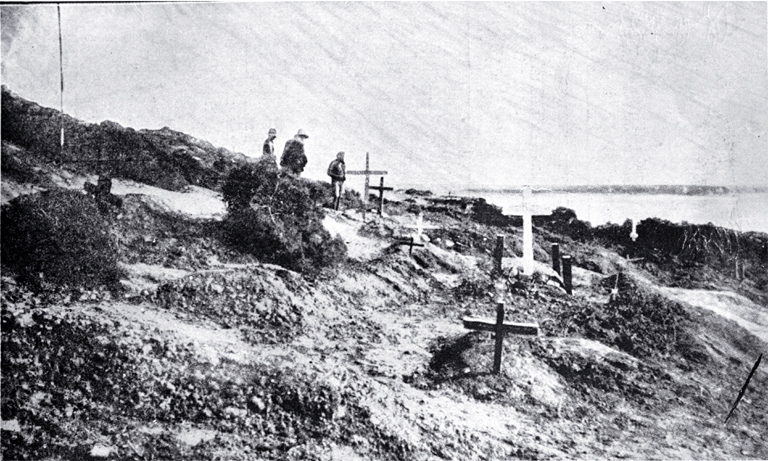
Churchill then launched the first oil war in the Middle East. This war was enormous by any standards other than that of the slaughter occurring simultaneously in Europe. It started with the Dardanelles campaign. This was ostensibly to draw Ottoman forces away from the distant Caucasus where they were fighting the Russians. It is unlikely to have achieved much towards that end. Instead after the first couple of weeks it was quite evident that British, French and ANZAC forces were trapped on the rugged shoreline. Despite this they stayed for eight months of futile slaughter. The campaign cost the Ottomans in blood and materiel, but it was more of a setback for the British, and more still of a human tragedy where lives were spent for no real gain.

Having failed to penetrate the Dardanelles the British kept fighting a war in the Middle East, notably in Iraq and Palestine. They committed over 1.4 million troops to this theatre when the situation in Europe was clearly desperate. The French made their alarm about this known. Given that the later German effort to “bleed France white” led to serious mutinies and came close to forcing France out of the war, it can be said that the British were truly risking a defeat in the Great War itself by pouring so much into their sideshow oil war. 

Along the way the British displayed the perfidy for which they have such renown. First they betrayed their Arab allies by signing the Sykes-Picot Agreement under which Britain and France would carve up the Middle East. Then they signed an armistice with Turkey (formerly Ottomans) which they immediately broke in order to invade and conquer Mosul. In doing so they also betrayed the French who had been given the area under Sykes-Picot. At the end of the war the British had occupied everywhere in the Middle East known to have oil apart from the Persian oil fields that it already controlled. After the war nearly a million imperial military personnel remained to occupy and pacify the region.

Given the cavalier approach that the British had to the agreements it made to induce others to serve its ends, it is striking that the vague Balfour Declaration is still talked about at all, let alone held up as some form of legitimation of the Zionist project. In contrast to promising to “look with favour upon the creation of a Jewish state” the British had explicitly promised the Sharif of Mecca, Hussain bin Ali, an independent Arab state that stretched from the Mediterranean and Red Sea to the Persian Gulf, from the Indian Ocean to the border of Turkey. (The only exception was a small strip roughly corresponding to Syria’s current coastal area.) 

I won’t dwell long on the partition and distribution of Arab lands that occurred. The British attempted to install puppet monarchies, but this provoked resistance. In particular Iraq was combative. Formed from the “3 Provinces” of “al-Iraq” in the Ottoman Empire, Iraq had been the greatest source of fighters in the Arab Revolt against Ottoman rule. Though divided ethnically and by sect, the population of Iraq soon found themselves united by the common hatred of the British presence, British exactions and British violence. Intended puppet leaders have been hard to control in Iraq because of its natural wealth and because its surface divisions are outweighed by a long sense of shared identity and history. It is the Cradle of Civilisation and its peoples have a far longer record of working together as one polity than do, for example, the peoples of Wales, England, Scotland and the northern bit of Ireland.

Winston Churchill directed the repression of the Iraqi Revolt in 1920, going so far as to advocate using mustard gas against villages. Aeroplanes dropped bombs on villages many years before the German bombing of Guernica would spark international outrage. Arthur “Bomber” Harris (who would later work closely with Churchill to conduct the deadly and controversial British “strategic bombing” during WWII) said that Arabs and Kurd “now know what real bombing means in casualties and damage. Within forty-five minutes a full-size village can be practically wiped out and a third of its inhabitants killed or injured.” After Iraq was granted “independence” British forces stayed and some sense of how independent Iraq truly was could be measured by the fact that the ostensible monarch of the country, King Ghazi, installed a radio station in his palace to broadcast anti-British political material. He soon died in a car crash that is often attributed to the British or to the pro-British politician Nuri al-Said. 

It was in this context that the decisions over the fate of Palestine were taking place: the British needing Middle Eastern oil and finding it difficult to ensure that the Arabs, Kurds, Persians and others living atop the oil would remain compliant. The process of deciding the fate of mandatory Palestine was clearly contested within the British establishment. It may seem like a “conspiracy theory” to state that a clique of oil-loving imperialist Zionists fought for and achieved the establishment of the state of Israel, but that is what the evidence lends itself to. Further, to suggest otherwise is to state that the British state is a monolith where foreign policy is not open to such contestation. The record of disagreements is clear and we can choose to believe that those promoting the establishment of a Jewish homeland were irrational weirdos who had no cogent reason for clinging on to their stance in the face of clear irresolvable difficulties, or we can believe that they kept their own counsel about their motives. They chose to present a face of a sentimental but unreasonable attachment to Zionism because they knew the world at large would not agree that their aims served the greater good. What they intended was unethical and immoral, and its execution would be necessarily criminal, but it was anything but irrational.

The period from 1919 to 1947 was absolutely crucial. The institutional processes show a struggle between different forces pulling in what amounted to opposite directions. Through multiple commissions, enquiries, and three white papers the British foreign affairs establishment repeatedly returned to the conclusion that no Jewish state could be established without clear violations of the rights of Palestinians and a violation of the League of Nations Mandate for Palestine. There was simply no legitimate way to honour the vague promise of the Balfour declaration which, after all, included the phrase “…nothing shall be done which may prejudice the civil and religious rights of existing non-Jewish communities in Palestine.” Rashid Khalidi thinks that there is a trick in the Balfour Declaration in that it mentions a national identity for Jewish people but not for Palestinians. I think that is according too much credence to the document. Similarly one of the experts on “Balfour: Seeds of Discord” states that the declaration accorded “civil” but not “political” rights but this is not a real division. It is a convention to divide political from civil rights, but the principle of equality before the law inevitably leads to equal political rights. In normal usage the term “civil” refers to political participation. Voting rights, for example, were intrinsic to civil rights struggles in the USA and Northern Ireland. 

Even in discussing semantics we are missing the point. The fact that such microscopic focus is given to the 67 words of the Balfour Declaration is a testament to the pressure to find non-realist explanations for British behaviour. In reality the Balfour Declaration is a meaningless piece of paper and, as I will discuss, Israel could never have been established as a Jewish state in anything like the form that exists today if it did not ethnically cleanse the non-Jewish community and steal their property. To say that this prejudiced “the civil rights of the non-Jewish communities in Palestine” is a massive understatement.

Ignoring the pointless Balfour Declaration (as we all should) the recognised power that the British had over the land of Palestine came from a League of Nations Mandate. The League’s charter provides for Mandates for League members to exercise power over nations that were no longer under the sovereignty of the defeated empires of Germany, Turkey and Austria-Hungary but were deemed unready for self-rule. The pertinent section for Palestine states: “Certain communities formerly belonging to the Turkish Empire have reached a stage of development where their existence as independent nations can be provisionally recognised subject to the rendering of administrative advice and assistance by a Mandatory until such time as they are able to stand alone.” Note the use of the term “independent nations”.

The Balfour Declaration was incorporated in the Mandate, but I must restate here that Zionists were never intending to create a “Jewish Homeland” that could be created without massively violating the civil rights of non-Jewish Palestinians. The Balfour Declaration was not just a dead letter, it was a stillborn letter that never drew a single metaphorical breath. 

The Mandate mentions Jews many times but doggedly refuses to accord any character to any other inhabitant of Palestine. This is quite striking given that nearly 90% of the population were non-Jewish Palestinians and that the League charter states that the Mandate is based on there being a provisionally recognised independent nation. Striking or not, though, it is an exercise in propaganda rather than legally significant. As absent as the Muslims, Christians, Druze and other non-Jewish people’s may be from the text in specificity, they are still there in every legal sense. Universal and general terms (such as the oft-appearing word “communities”) clearly cannot exclude non-Jewish peoples. The imperialists might have wished to create an openly discriminatory Mandate but were forced to affirm that no “discrimination of any kind shall be made between the inhabitants of Palestine on the ground of race, religion or language.”

An honest process would have recognised the intractability of the problem as soon as it was identified. An honest process would have acknowledged that the rights accorded to the Palestinian people in the League of Nations Charter, which is where the Mandate derives its claims to legitimacy, and in the Mandate itself make the creation of a Jewish state as such impossible. The conclusions reached by the 1939 White Paper should have been reached far earlier and should have been accepted and implemented. The 1939 White Paper rejected partition and proposed limiting Jewish immigration while transitioning to a sovereign state of Palestine that would be binational in nature. The problem was that, over the years, the abrogation of the rights of Palestinians in order to establish a Jewish state had been rejected many times and no case had been made, nor could be, that provided a path that would in any way satisfy Zionist desires while honouring the rights of the “non-Jewish communities”. With each such finding, though, the British would pointedly revert to the promise of a Jewish homeland in the mandate in order to reject these findings. These are repeated arguments from consequence, which is to say that they are fallacious. They do not deal with presented evidence and reasoning but instead attack the conclusions. It is a legalistic rhetorical trick undertaken in bad faith, and it happened repeatedly.

And what, we might ask, was the pressing need to keep perverting the course of the bureaucracy like that? Once again the conventional historiography would have us believe that it is the work of MJP. Worse still, given that most Jews were not Zionists it seems that the Magic Jew Power was controlled by a Zionist conspiracy. That would be industrial-grade anti-Semitism, and while it is tempting to believe Balfour et al. capable of such twisted thinking, it is not believable. One of their own colleagues, Edwin Montagu who was Secretary of State for India at the time, was an anti-Zionist Jew who made it amply clear that he thought the project anti-Semitic and a source of danger for Jewish people.

We are left with no declared motive on the part of British imperialists that holds up to scrutiny. Therefore we must search for an undeclared motive among at least some of the decision-makers. We might not be able to draw the straight line of an overt declaration that shows a concern for oil directly. As far as I know there is no document to that effect that would satisfy the vulgar empiricists that shamble through the history departments of the world seeking archival proof in the manner of zombies seeking brains. The straight line does not exist, but there are three dots labelled “1”, “2”, and “3” that just happen to lie in a straight line for anyone to join with minimal effort.

The final acts leading to the Nakba also fit the picture of a divided British establishment with some doing everything possible to establish a Jewish state and refusing to accept defeat simply because it could not be done in a legally or morally acceptable manner. The horrors of the Shoah had created a sense of urgency and exception in sentiment, but when the details were taken into account it is very clear that establishing a Jewish state would require a large scale genocide by historical standards. I will explain why this was necessary shortly, but I do want to acknowledge that this large-scale genocide was dwarfed in people’s minds by the scale of death during the recent War and that this will have blunted sensibilities. That said, more sensitive and engaged individuals like Folke Bernadotte, were not inclined to ignore some people’s rights because others had suffered such extremities. Bernadotte, famous for having rescued many Jews and others from Nazi camps, was supportive of “the aspirations of the Jews” but was even-handed enough that members of Lehi, a Zionist paramilitary group often known as the Stern Gang, assassinated him. (One of the three planners of the murder, Yitzhak Shamir, would become the Prime Minister of Israel in 1983). It is reasonable to think that Bernadotte was genuinely sympathetic to Zionism in the abstract but Lehi, like Ze’ev Jabotinski before them, knew that an Israeli state could not be created without genocidal violence. Bernadotte’s condemnation of violence against Palestinians, given his stature, could have harmed the Zionist cause greatly. 

I won’t repeat here what I have already written elsewhere on the subject of the genocidal nature of the occupation of Palestine, but a recounting of events with a focus on the practical needs of a “Jewish state” will show anew that genocide was always a pre-requisite even if the word itself was unspeakable.

The British were never able to square the circle of allowing the creation of a Jewish state without clearly violating the rights of the indigenous inhabitants, moreover the gap was far greater than we might suspect now that the establishment of Israel is a fait accompli. Having first rejected its own 1937 partition plan and then rejected its own rejection, the British took to playing the victim. They fobbed the problem off on the UN. Eventually this led in late 1947 to UNGA Resolution 181 laying out a partition plan. The UK abstained from the vote, but we now know that they lobbied vigorously for others to vote in favour of partition. 

Two things are worth noting about UNGAR 181. The first is that General Assembly resolutions are not legally binding. Israel, a country that is second only to the USA in violating General Assembly resolutions, should be the first to admit that. The second is that if everyone had agreed to abide by the provisions of UNGAR 181 and there had been a peaceful implementation of the partition plan it would have simply resulted in a temporary and unsustainable partition of a single Palestinian state. Without genocidal violence and ethnic cleansing there could never have been a “Jewish state”. Perhaps even more crucially a Jewish state could not exist without mass theft of Palestinian property.

As things stood the Jewish partition designated in UNGAR 181 would not even have had a Jewish majority without ethnic cleansing. Moreover, Jews owned only about 20% of the land in the partition and something like 10% of the commercial property and small enterprises. Even if they had not instituted a democracy in which they were outnumbered from the outset, respect of the civil rights of Palestinians would have left them totally economically dependent on Palestinians and without the resources they needed to allow the mass Jewish migration that later occurred. The property of refugees was taken and nationalised under the rationale that the owners had chosen to abandon it and were designated “absentees” while being denied the right to return. This created a massive national estate. Much of this was administered by the Jewish National Fund which by its own constitution served only Jews. 

After the Nakba Israel established itself on 72% of the land of Mandatory Palestine which in 1945 was only 30% Jewish by population. Despite this the ethnic cleansing they had carried out created a territory with a clear Jewish majority. Israel passed a law of “Return” which referred not to the expelled indigenous inhabitants but to all Jews who were given the right to “return” to Israel from wherever in the world they happened to be. When they got there it was absolutely necessary that they be leased residential, horticultural, agricultural and commercial property or land on which to develop these things. Due to the role of the Jewish National Fund these instant citizens immediately had greater access to these resources than the remnant Palestinians who had gained Israeli citizenship. 

It is not hard to imagine what would have happened if the Partition Plan had been implemented. The “Jewish State” could not have survived. There could be no “democratic” elections. Palestinian property ownership and tenure would have needed to be violated or property owning Palestinians would have become increasingly wealthy and empowered by the influx of Jewish immigrants which would have made it difficult to suppress their political participation. The Jewish state needed the violent dispossession of Palestinians in order to be born, but without the credible excuse of conflict it could not have done so and then claimed to be lawful and democratic. The 1947-48 War was crucial to them.

Let me be clear here, I am not saying that Palestinians and the Arab countries should have embraced the Partition Plan. They had no reason to and it would not have stopped the war anyway. UNGAR 181, like the Balfour Declaration, did not show a path towards the legitimate establishment of a Jewish state. It was a piece of theatre. It was an act of public diplomacy designed to give a pretext of legitimacy to an enterprise that simply could not be justified on closer examination. 

Genocide is almost invariably carried out under the cover of military conflict. It was true in 1947 and it is true today. Revisionist Zionists knew from the outset that acts of mass violence against the Palestinian people were necessary in order to establish a state of Israel. The first violence that occurred after the Partition Plan was an attack on a Jewish bus, but the perpetrators of these murders were retaliating for murders carried out 10 days before by Lehi. After UNGAR 181 violence escalated and the British largely allowed it to happen. Bearing in mind that UNGAR 181 was not legally binding it did not absolve the British of any responsibilities at all. 

The British Government rejected the Partition Plan (even though their officials had lobbied other countries to pass it) which shouldn’t surprise anyone because it would have violated their Mandate and if they could have justified it they would have done it themselves much earlier. They decided to end their mandate in May 1948, but instead of doing what they were clearly obliged to do – create an orderly transition to a sovereign state for the people of Palestine – they allowed violence to spiral out of control. They refused to cooperate with the UN, the non-Jewish Palestinians, or the Jews to work towards a transition. Then in February of 1948, once facts on the ground had made their responsibilities seem impossible to fulfil, they switched to supporting partition and the annexation of non-Jewish parts of Palestine to Transjordan (today’s Jordan). In March Zionist forces began executing the infamous Plan Dalet.

Some Zionist historians claim that Plan Dalet was defensive. It sought to clear threats from around pockets of Jewish population including those that lay outside of the area designated for Jews in the Partition Plan. According to this reasoning the ethnic cleansing was a by-product of a legitimate military exercise. The context to that claim was that, as I have already stated, there could never have been a Jewish state if they had not ethnically cleansed that part of Palestine. Furthermore, they did not give back the land beyond that delineated in the UN Partition Plan. Also, they did not allow these supposedly accidental refugees to return, instead they passed a law to prevent their re-entry, confiscate their property and to strip citizenship from any Palestinian citizen of Israel who married one of them. Moreover, they systematically lied for 40 years about why Palestinians fled and if anyone challenged these lies that accused them of being anti-Semitic.

Given the foregoing, my contention is that British imperialists knew that establishing a Jewish state as such was never going to be possible without the violent dispossession of the existing Palestinian people. They could have insisted to Zionists from the outset that a Jewish state was not on the table and worked towards the peaceful establishment of a “Jewish homeland” in a sovereign Palestine that would accord guarantees of freedom from persecution underwritten by the international community. The Palestinian government would control immigration but would be encouraged to accept Jewish immigrants who would bring funding raised overseas into the country to help development. The British had 30 years to do this yet they chose to keep the dream of a Jewish state alive for their own purposes. 

The British wanted a “loyal little Ulster” but they needed it to be in actual or immanent conflict with the Arab world for it to be of use. When the US replaced the UK in the patron role they referred to Israel as one of their “cops on the beat”. This was the term used by Nixon’s Defense Secretary Melvin Laird to refer to Iran, Turkey and Israel. These three non-Arab countries form a triangle around the richest oil fields in the world and it is pretty striking that they would be considered as policing the region when most of the Arab regimes in the area were also US clients at the time. The threat of Arab and pan-Arab nationalism to the ability to control global energy supplies was intense and it is still significant today. This is only aggravated by Islamic solidarity. 

Of course the British had no crystal ball to see the future, but it is worth thinking about the nature of the state of Israel now. Both in actions during the mandate period and actions afterwards the US and UK have created a state that can never know peace. The US in particular has exercised its international power, most notably in UN Security Council vetoes, to create an impunity that fuels Israeli delusions of peace through total victory. Israel is still seeking to square the circle that the British could never square.

George Orwell wrote that those who control the present control the past, and those who control the past control the future. He meant that those who shape our understanding of history also shape our beliefs about the present and our reactions to events. The proof of his insight is all around us, but as with all such concepts there are limitations, and those can be very important. There are gross facts that cannot be twisted or suppressed by shared indoctrination. The Nazis, for example, despite having a very strong grip on the communications and ideology of the German people, could not have declared that they had achieved victory in the siege of Stalingrad (though I suspect in early 1943 they would have loved to do so). Some things are resistant to distortion. Words are not simply arbitrary signifiers, they exist within webs of meaning. Israel has laboured tirelessly in arguing that Palestinians have no human rights on the grounds that they are stateless and that there is no such thing as a Palestinian. Rhetorical racism aside, though, they cannot claim that Palestinians are not human beings. 

Zionists cannot simply declare Palestinians to be non-humans, though many can be brainwashed into an emotional state in which Palestinians are inhuman or far less human than Israelis. The Orwellianism succeeds in that many people in the world have accepted Israel’s right to defend itself by killing Palestinians without thinking for a second that the Palestinians have the same right only more so because they are by far the greater victims of violence. The problem for Israel is that in formal and juridical contexts it is impossible to dehumanise people in that way. 

If the Nakba had happened in 1910 Israel might have been able to establish a Jewish-state-accompli, but after World War II people were writing a new rulebook of international law and human rights. Obviously we have not reached a point where those rules stop powerful state actors from committing crimes, but they do create an historical record in which those crimes are illegitimate. As long as they still stand and hold sway over officialdom, they limit the rewriting of history.

The key problem that Israel has is that it cannot undo the right of Palestinian refugees and their descendents to return. Due to timing Palestinian refugees come under the mandate of UNRWA instead of the UN High Commission for Refugees, and UNRWA doesn’t have the same mandate to seek durable resolution through voluntary repatriation, but that does not mean that Palestinians don’t have the right to return. Rather like the League of Nations Mandate for Palestine, the failure to name a specific right for Palestinians does not mean that it does not exist. The right of displaced persons to return to their homeland is a human right derived from Articles 13-15 of the 1948 Universal Declaration of Human Rights. Palestinians are humans, ergo they have that right.

Israel’s admittance to the United Nations was conditioned on its compliance with UNGAR 194 which, among other things, “Resolves that the refugees wishing to return to their homes and live at peace with their neighbours should be permitted to do so at the earliest practicable date, and that compensation should be paid for the property of those choosing not to return and for loss of or damage to property which, under principles of international law or equity, should be made good by the Governments or authorities responsible.” Most Palestinians are refugees, including half of those in the occupied territories. Clearly Israel did not comply with that resolution. Clearly UN members did not expect it to, but they could not simply pretend that Palestinian refugees did not exist. Their humanity was, and is, a gross fact that cannot simply be ignored for political expediency.

Though under immense pressure Yasser Arafat and the PLO did not renounce the Palestinian right of return in 2000, but if they had it would not have extinguished that right. It is typical of the delusory thinking that Israel is falling into that the leadership thought that Arafat had some magic power to abrogate the rights of Palestinians on the basis that he is a Leader. The whole point of human rights is that political leaders cannot arbitrarily cancel them. They wouldn’t be much use otherwise would they?

I am sure that there have been times in its history when Israel might have found a way to resolve issues peacefully in a way that had enough legitimacy to be lasting. It would have been painful and imperfect and it would have left some injustices unredeemed, but it could have ended the violence and unremitting oppression and crushing injustice that Palestinians have endured for generations. Instead the US gave Israel unconditional aid and assistance that was a poison. They have controlled the occupied territories for 67 years, meaning that they have made subjects of half of the world’s Palestinians without granting them rights while grotesquely claiming to be the “only democracy in the Middle East”. Drunk on the impunity gifted by the Western world and Israel’s own immense military power, they refuse to even say where their borders are, sponsoring a colonisation and ethnic cleansing programme in the West Bank and Jerusalem. Our political leaders, in obedience to Orwellian principles of power, act as if this is not happening. It is happening, though, and the gross fact is that its victims are human beings. 

Palestinians are not transitory phenomena. They are not simply a colour on a demographic map that can be changed with a paintbrush. They are human and their lives, their existences, their very breaths are gross facts that doom the state of Israel to fall. In its mania for a “final status” and in its awareness of the “demographic threat” Israel becomes ever more overtly genocidal. They act as if they can win by inflicting enough pain that the enemy will bend to their will, but they can only get what they seek by the non-existence of all Palestinians. It will not happen and the further they go down that path the worse it will be for both peoples. They cannot kill all Palestinians and the more they do kill the more they are repudiated internationally. The death they have unleashed on Gaza, which sadly will continue to rise even after the direct violence has ended, will never be forgotten, and what can they achieve from it? Seizing the northern third of the strip? It gets them no closer to their goal. Their goal recedes with every step they take towards it.

In the end, whose purposes does this serve? It serves an Empire Complex with military, intelligence, arms, financial, and energy interests at the core, but Israelis only have a fool’s paradise. Zionists could only ever have achieved their desires by making immense compromises in order that they could have a place of Jewish belonging and safety. Perhaps that was never possible, but if it was it could never be made as an exclusive Jewish ethno-state. Fed on the narcotic of impunity and the hallucinogen of exceptionalism they have for generations made it seem natural that the plucky Jewish state should continue – an oasis of [insert Western value here] in a desert of barbarism: 

Enlightenment? Of course.

Modernism? Naturally. 

Socialism? Absolutely. 

Not too much socialism? Heaven forfend! 

Secularism? Well we are a Jewish state, so… just kidding of course we are secular. 

Whatever you want, that is what we are. We are the Athenian Sparta. We shoot. We cry. We write the history and law textbooks to teach everyone that we had no choice.

It all seemed so real, but it was never real because Palestinians exist. Palestine exists. 

The loyal little Ulster has served its purpose well, but its time is coming to an end. The UK and US will jettison Israel when it suits them. Israel has been a tool of empire but it never suited the empire to create a stable peaceful Jewish state or homeland. Israelis will someday have to choose to live in a democratic state of Palestine, or to emigrate. There is no point in continuing to kill to chase a dream that can never be.

Support: http://ko-fi.com/krkelly

The Gaza Genocide: “Genocide” is the Necessary Word

Standard
Portrait photograph of Raphäel Lemkin

What is happening in Gaza currently is genocide. The power of the word is not because of its power to shock, but because of its accuracy. Now that the word is out of the bag, now that it has gained currency, we cannot allow it to be put back. Establishment voices have long since twisted the usage of the term genocide to serve power rather than justice and peace. If activists do not educate themselves they will find any mention of genocide turned against them as evidence of hyperbole, bias, and (of course) anti-Semitism.

Most genocide scholars seem to understand that Israel is perpetrating genocide against Palestinians, but as Rashed, Short and Docker wrote on the subject in the journal Holy Land Studies (2014, Vol. 13): “Genocide Studies knows it is being watched and can be threatened with vilification at any moment, even in a preemptive gratuitous way.” The result is that those few who do speak out are are represented as being in the minority, when they are allowed to speak out at all. In contrast the highly partisan scholars who deny genocide are regularly presented as the authorities on the subject. Such “experts” are very effective in sounding plausible to the public and to journalists when they are not. They play on people’s expectations and the public’s sense that responsible governmental and non-governmental bodies are constrained by truth and reason.

Once we grasp that what is happening is genocide much of the commentary will be revealed as sickening theatre that clings to a fantasy world where killing civilians is a tragic miscalculation. Seth Moulton, for example, has enough enough self-importance to lecture the Israelis that they are in a “counterinsurgency” and they need an “end-game” and that (according to the revolutionary insight that he shares with Stanley McChrystal) killing civilians will actually make enemies. He even went on Al Jazeera to remind Israel that it should remember the need to win the “hearts and minds” of Gazans. This was on 11 November, after a month of slaughter, and he is worried that Israel might not be winning “hearts and minds” in Gaza! What world is he living in? The same can be said, and has been said, for Piers Morgan demanding that Israel must do more for the patients in Al Shifa hospital.

We are in a war for history, fighting so that truth overcomes power. As George Orwell famously pointed out, the war for the past is the war for the future. What is happening in Gaza is very similar to what happened in 2004 during the Second Battle of Fallujah. That horror has been turned into a videogame where, in some sort of sick revisionism, players are meant to minimise civilians casualties while killing the Iraqi “bad guys”. Meanwhile wikipedia will tell you that there were few civilians in Fallujah (source: the US military) and that at most 800 civilians were killed, despite much eyewitness evidence of a higher level of civilian death.

Unlike Fallujah, where media were vigorously excluded, the world can see what is occurring in Gaza. Yet our collective memory is very short. As the outspoken Irish MEP Clare Daly has said: “…after they’re done the lies are exposed, but there’s never any reckoning.” She is talking of a reckoning for Israel, but those who support them internationally also face no reckoning and pay no price. That must change but unless we can name the genocide and get people to understand what that means, the dead we see before our eyes each day will be written out of the history books and the memory will fade to nothing. The genocide will be framed as a reaction to terrorism aimed only at destroying the violent threat posed by Hamas. We will debate the “errors” and “miscalculations” that led Israel to “indiscriminately” kill civilians in their understandably over-zealous efforts to wipe Hamas off the map. Some will say they were entirely justified, but “critics” will say they were in fact very naughty because they should have been more careful in their otherwise righteous attempt attempt to destroy Hamas. The single word “genocide” can change all of that.

Ideas are important. During the late 1960s, as people became ever more informed about what the US was doing in Viet Nam, official pronouncements began to ring hollow and then started to seem increasingly deranged. Politicians, generals and most journalists became trapped in the network of lies that allowed them to mischaracterise their violent aggression as a morally valid battle against “internal aggression”. The facts became more widely known because activists used various demonstrations and teach-ins to bypass the mostly hopeless print and broadcast media. As knowledge grew, the people clinging to the lies started to seem buffoonish, and that was a major step towards undermining the US ability to maintain its perpetual war.

The Idea of Genocide

Genocide may be among the most important concepts to come out of the 20th century, but it is hobbled by misuse, abuse, and most of all by biased denial. It has become incredibly hard to tell people what the word means because it has been highly distorted by both bad actors and well-meaning fools. It is also so emotive that it is normal to have incredibly strong convictions about what is and is not genocide while having no ability to define the term at all.

I would like to ask the reader to forget received wisdom and focus on the following facts about genocide. The first is that the man who invented the term, Raphäel Lemkin, defined it as being war conducted against people in contrast to war conducted against rulers and their military forces. The second is that Lemkin was always clear that genocide did not necessarily mean physical extermination. The third is that it is a process. It is “a coordinated plan of different actions” that share an aim. “Aim” is the word chosen by Lemkin originally, but “intent” is the common word used today. As I will elaborate later “aim” and “intent” are not the same as “purpose” and “motive”.

As a process, genocide is therefore not found in a single act, nor can it meaningfully be talked about as such. There is no such thing as “attempted genocide”. Nor is genocide a matter of degree. Something does not become genocide because it crosses an arbitrary red line. The commentariat can argue about whether violence has “risen to the level of genocide” but they are talking utter crap. Genocide occurs when numerous acts, which may or may not be crimes in themselves, are concerted to cause destruction of a people “in whole or in part” by inflicting physical or mental harm on a people including the erasure of identity.

Genocide is policy, albeit unwritten policy. Our habit of viewing this vast process as being a criminal “act” is wilful ignorance. Nothing could better illustrate that point than an Al Jazeera English panel discussion on the genocide in Gaza wherein their specialist genocide pundit refused to use the term for the most extraordinary reasons. Geoffrey Nice, the head prosecutor in the genocide case against Slobodan Milosovic, and thus the “expert” on theAl Jazeerapanel, was the only guest to demur at calling the genocide for what it is. He stated that genocide only exists when a perpetrator has a certain “state of mind”. He implied that you can’t name something genocide until a perpetrator has been convicted of the crime.

To put things into perspective, millions of people around the world are involved in actions that are necessary parts of the current slaughter in Gaza. As I will show there is clear evidence that there are co-ordinated actions with genocidal intent. The nature of the actions show this to be true. According Geoffrey Nice, the barrister and putative legal expert on genocide, he won’t use the term genocide because it has to be established that a criminal defendant had a genocidal “state of mind”. This would mean that he and other official types fully intend to deny genocide until the unlikely event that years later one or more individuals is tried and someone like him manages to convince a panel of judges that they can prove beyond reasonable doubt what a defendant’s state of mind was some years before.

Of course, one does not need a criminal conviction to conclude that Rwandans, Sudanese, Iraqis or Serbs are guilty of genocide. Mostly you just need a colour chart (though the US State Department will let you know when skin tone is not diagnostically sufficient).

Geoffrey Nice shows his true face when he uses some some tricky and improper language. He uses the term “wish” when the term “intend” is correct, and when he should say that actions are taken against people because of their identity, he inserts the word “simply”, emphasising the word with noticeable emotion. By saying “wishes to” and “simply because” he implies that “special intent” must come from special animus. This creates the impression that genocide is something undertaken by those we see as the Other: our enemies, the irrational demons that our leaders and politicians have already decried as being hateful monsters. In contrast, people like Henry Kissinger cannot commit genocide no matter how many people they cause to be killed because Kissinger doesn’t hate the people he kills. Mr Nice and his ilk could never use their courtroom telepathy to read genocidal intent his “state of mind” because they have twisted the meaning of “intent” to incorporate a motive of irrational hatred. But this portrayal of genocide as the product of slavering unthinking hatred stands in stark contrast with Lemkin’s notion of a calculated, complex, cold-blooded bureaucratic process.

In Eichmann in Jerusalem Hannah Arendt shows that genocidal violence on an industrial scale could occur at the hands of people who harbour no special hatred for their victims. Some have claimed that Arendt mischaracterised Eichmann, but the more general point has proved robust (in contrast with Daniel Goldhagen’s contrary thesis in Hitler’s Willing Executioners which is vigorously denounced by historians). Genocidal intent does not need to be demonstrated by the rhetoric of hate and extermination because neither is a precondition of genocide.

Different Israelis will have different and multiple reasons for participating in the genocidal violence and oppression that is visited on Palestinians. I do not think it would be over-generous to the Israeli people to say that the predominant motive is a quest for security. They claim that what they do is in self-defence. If we accord them the generous concession that we believe that they believe they are acting in self-defence, it does not mean that they are not committing genocide, nor even that they are not harbouring a racist hatred of Palestinians. If I said “I am not a racist, I am just scared of black men” you would be correct in telling me that I am actually a racist. Israelis who think that they are threatened by Palestinians as such being given by full sovereignty or full democratic rights are racist and genocidal. It is not that there may be no threat, but that they think with a double-standard that displaces all of the onus onto Palestinians without recognising any Palestinian right to establish relations that mitigate threats to their own collective.

There are also Israelis on the right, including hundreds of thousands of illegal settlers, for whom the genocide serves an overt expansionist plan of a “greater Israel” (as seen in Likud’s original party platform from 1977 which states “between the Sea and the Jordan there will only be Israeli sovereignty”). Most Israelis, though, simply believe that you cannot make peace with Palestinians unless you asserted total dominance over them. Arguably the second stance is more racist than the first, but both of them lead to the exact same genocidal policies. Two distinct motives leading to the same policy of genocide. Motive and intent are not the same thing.

Israelis have had a massive military advantage over Palestinians since before Israel even existed. Palestinians suffer due to this, far more than Israelis suffer. The racist claim is that Palestinians are too irrational and/or deceitful to make peace. Israel’s military occupation of the West Bank and Gaza displaces almost all of the risk and violence upon the Palestinian people with Israel operating security forces in the West Bank and blockading Gaza. Israelis are a rich people not allowing a poor people any autonomy because that would increase the power of Palestinians to oppose Israeli power. Not coincidentally the policy to suppress Palestinian power under a rationale of defence happens to allow illegal settlements to flourish in the West Bank. Whether the motive is defensive or expansionist hardly matters to the genocidal nature of the actions. Attempting to defend yourself by reducing another people to a point of inescapable weakness is a classically genocidal move that will inevitably lead to a logic of extermination because an oppressed people will always have some means to resist while they remain alive.

When Israel claims to be acting in “self-defence” we should know that this means attacking the people of Palestine as such – imprisoning, immiserating and killing them because it is their very identity, their cohesion and their bodies that Israel considers a threat. Taking this logic to its conclusion they will never consider themselves secure from threats until no Palestinians exist. The logic behind Israel’s actions is the logic of genocide. In the words of John Docker, genocide is a “composite and manifold” process. It does not begin nor end with periods of heightened mass violence such as Gaza is suffering at the time of writing this. The genocide began in 1947, but the current massacre can only truly be understood as part of that long tortuous generational crime.

Debasing the Coin”: The Tendentious Policing of the Word “Genocide”

“Genocide” is clearly one of the most misused words in the English language. This is not because it is overused, if anything it is more often underused. The problem is that people treat genocide as if the word were defined by some level of atrocity. Even supposedly serious genocide scholars embrace undefined subjective standards then accuse those who disagree of acting to “debase the coin” of the hallowed word. They want to police the usage of the term so that it fits an ideological notion of savagery and hatred. This tends to prejudicially exonerate richer, whiter countries who kill more clinically and from higher altitude while using better platitudes.

It is easy to understand the evasions and distortions used on the term “genocide” by analogy with the word “rape”. “Rape” is legally defined as a crime using the concept of consent. For decades, however, people have struggled to assert that rape is a matter of consent in the face of those who believe that “real rape” is when a stranger uses overt violence in an act that is either a form of abduction or burglary. Rape that happened outside of these circumstances has historically been downplayed, dismissed or ignored entirely. I could argue here very serious trauma can occur without someone beating a victim or holding a knife to their throat, but that is not the point. Comparing trauma and damage is an invidious trap that only serves to wrongly diminish, if not erase, a crime. The crime of rape cannot be denied by setting a minimum level of trauma or type of coercion because it is about consent.

Rape is rape is rape. Genocide is genocide is genocide. A genocide does not need to be compared or related to Holocaust to judge if it is worthy of the name. In fact, when Raphäel Lemkin coined the term he mostly eschewed reference to the ongoing extermination of European Jewry, of which he was well aware. Why? Because extermination or attempted extermination is a concept that does not need special elaboration and insight. Despite the fact that the word he invented – “genocide” – sounds as if it references immediate killing of a genos, it is a far broader term that encompasses violent extermination in a strategic spectrum.

In the very first paragraph on the subject of genocide Lemkin wrote:

Generally speaking, genocide does not necessarily mean the immediate destruction of a nation, except when accomplished by mass killings of all members of a nation. It is intended rather to signify a coordinated plan of different actions aiming at the destruction of essential foundations of the life of national groups, with the aim of annihilating the groups themselves. The objectives of such a plan would be disintegration of the political and social institutions, of culture, language, national feelings, religion, and the economic existence of national groups, and the destruction of the personal security, liberty, health, dignity, and even the lives of the individuals belonging to such groups.

In describing genocide Lemkin, a Polish Jew, cited German occupation policies in many nations targeting many ethnic groups, referring most often not to Jews but to other ethnicities, particularly Poles. Lemkin had long been concerned with both the physical killing of ethnic groups and the destruction of their cultural and social cohesion. He attempted in 1933 to create two international crimes: “barbarism” which entailed mass violence against ethnic groups; and “vandalism” which entail attacks on “works of cultural or artistic heritage”. In simple terms the word “genocide” came from the final crystallisation of his sense that these are not separate phenomena and are part of a wider practice of which direct violence is only a component. Lemkin’s first published discussion of genocide was a very short chapter in a large book. Lemkin cast his net wide, suggesting some form of genocide for many different nations ranging from the “Germanisation” of those considered racial cousins, to the mass killing of Poles, Russians and Jews.

There may be no more important thing to note about the concept of genocide than the fact that had Lemkin chosen to focus his attention on the genocide of Jews, to be consistent he would have begun his accounting of genocide no later than Hitler’s assumption of the Chancellorship of Germany. Some scholars have actually criticised this aspect of Lemkin’s conception because it means that non-lethal acts of discrimination such as firing Jewish civil servants and academics were acts of genocide. Once again they feel that this “debases the coin”. But Lemkin’s unadulterated version of genocide is the only way in which the term can be used to save lives. Understanding that a genocide is occurring means that people can rise up to stop the acts before they progress to the stage of mass killing. Isn’t that more important than waiting until the killing is over then putting someone in prison?

Genocide is thus such a broad and sensitive concept that the terms that have been invented to avoid using the g-word are redundant and ridiculous. Words like “ethnocide”, “sociocide” and “culturecide” largely serve the bad-faith purpose of concealing genocide. People are often more comfortable using “Apartheid” or “ethnic cleansing” because these words are considered more reasonable and measured, but our only criterion should be accuracy. The habit of politesse has predictably that favoured the most powerful while scruples about accusing members of the developing world of genocide have equally predictably been eroded to mere pretension.

This selective usage of the word genocide creates strange illogic. For example, how is a state is meant to ethnically “cleanse” land while not committing genocide? Bear in mind that Lemkin specifically wrote that one possible aim of genocide was the imposition of the “national pattern” on “the territory alone, after removal of the population and the colonization by the oppressor’s own nationals.” It would seem that “ethnic cleansing” is a very straightforward manner to achieve this genocidal outcome. Forced transmigration is not specifically prohibited under the United Nations Convention on the Prevention and Punishment of the Crime of Genocide (UNCPPG), but it doesn’t need to be. There is no practical way of ethnically cleansing people from an area without committing acts prohibited as constitutive of genocide and if your aim is to remove a protected category of person from an area entirely then that is clear genocidal intent.

To illustrate, let us examine the words of another vaunted “expert” Omer Bartov who expounded his reckons on the link between ethnic cleansing and genocide during a Democracy Now! interview: “there is a connection between the two, because often ethnic cleansing becomes genocide. That happened, in fact, in the Armenian genocide in World War I….” I can not for the life of me understand what he thinks happened. Does he believe that Armenians were just delivered eviction letters and told that the government would like them to march into the wilderness at their first possible convenience and the Armenians went in quiet obedience without any violence being visited on them? Does he think that forcing them to leave their homes was not “causing serious bodily or mental harm to members of the group” and “deliberately inflicting on the group conditions of life calculated to bring about its physical destruction in whole or in part”? Does he think that the Trail of Tears was not genocidal?

One reason for Bartov’s weird attitude may be that he was almost certainly brought up (in Israel) to believe that Palestinians had conveniently ethnically cleansed themselves at the perfect time to allow Israel to declare itself a state. Israel concocted a lie – a lie still repeated by Israelis and pro-Israel leaders and journalists – that Palestinians responded to a call from Arab allies and decided to leave just at the right time for Jewish majority state to be created where such a thing had previously been impossible. Jews made up less than one-third of the population of Palestine and would have been a minority in any conceivable geographical partition. We have now known for decades that there was a co-ordinated plan to empty “Arab” population centres for reasons of “self-defence”. I won’t detail the infamous Plan Dalet and the controversies that surround its intent, but suffice it to say during its implementation there was widespread violence including a number of massacres. Palestinians fled as intended. Israel managed to create a Jewish majority state that encompassed 78% of Palestine. Israel immediate acted to ensure that none of the refugees could return under the grotesque rationale that by fleeing they had given up their rights of residence and citizenship. This is despite the fact that Israel’s recognition by the UN was contingent on compliance with UNGA resolution 194 which ordered that Palestinian refugees be allowed to return immediately. Then Israel systematically lied so that Israeli children, like Bartov, were raised to believe in the immaculate self-cleansing of 700,000 Palestinians.

Ethnic cleansing is a useful concept, but it cannot occur outside of the concept of genocide. It is not a lesser crime against humanity in some unwritten hierarchy of badness. It is an act of genocide which accompanies other acts including the inevitable acts of violence that must occur to facilitate ethnic cleansing.

Genocide is a concept that could allow us to see and stop the ongoing violence of the powerful against the powerless, but only if the word is reclaimed and used with rigour. This has to come from the grassroots. People with status and those deemed to be experts are far too compromised. Those selected as what passes now as public intellectuals are usually those whose words appeal to one or more billionaires. Nowadays the problem is more one of amplification and algorithms than one of gatekeepers, but the answer is the same as it was in the 1960s. Activists must engage in their own education, creating intellectual constituencies for voices that serve truth and justice rather than money and power.

In the mean time the genocide experts and campaigners that most people will see are all servants of the status quo, however much crocodilian sentimentality they display. They want to “punish” the crime of genocide, which means sending old men to the Hague when of necessity the defendants have long since lost their ability to harm others. Then without proof or any attempt at self-interrogation they claim that locking up these old men helps prevent other genocides. They want to prevent the “real genocides” which are like the “real rapes” – i.e. those committed by political enemies, the poor, and the non-white. The US, meanwhile, is the suit-wearing serial rapist of this analogy whose victims are at best ignored if not punished and persecuted for the act of naming the crime committed against them. Israel is the kid brother who needs big brother to bail him out, but shares almost the same level of impunity.

It is time for an international movement to end the ability of states to openly commit genocide without fear that it will be named. At the moment it is comparatively easy to condemn Israel’s genocide because many top officials loudly proclaim their genocidal intent with regards to the current massacre in Gaza. What we have to ask is if we think it is acceptable that the same acts would not be considered genocide if the Israelis exercised greater control over such communications. Do we as activists think it is wise to allow the perpetrators of a crime to be able to control whether the world believes the crime is taking place? Because that is the current situation and if we rely on Israelis to keep announcing their genocidal intent we will find that the well will run dry very quickly.

Genocidal Intent

Intentionality is an important part of the notion of the crime of genocide. In the crime of genocide it is not the individual acts that make the crime but the genocidal intent behind those acts. This is known as dolus specialis or “special intent”, however, this phrase is tendentious and prejudicial. We should use the term “genocidal intent” because “special intent” has inescapable connotations of exceptionality, if not rarity, that are sadly unjustified when it comes to genocide. It is also over-emphasised and almost mystified as something unique to genocide. Intent is also highly relevant to the criminality of other acts. I could knock someone else’s property into my open bag with intent to steal or without intent to steal. It may not be possible to determine criminality by the act alone. In many jurisdictions a mens rea (Latin for guilty mind) or niyaa (Arabic for intention) is crucially important and often necessary for an act to be considered criminal at all, regardless of the consequences of the act.

There is a notion that “special intent” is to be found in the words of the perpetrators of genocide rather than their actions. This is untenable, if not unserious, for many reasons. Genocide scholar Raz Segal referred in the very early stages of the onslaught on Gaza to a “textbook case of genocide”. Obviously this is a brave and welcome stance, but he has fallen into the trap of emphasising the dramatic genocidal rhetoric of Israeli leaders. Their talk of “flattening” or “erasing” Gaza is hard to ignore, but it is not relevant to whether or not they are committing genocide.

The emphasis on the overt confessions of people committing genocide leaves us in the

unjustifiable position of judging the nature of someone’s actions on the basis of whether or not they choose to incriminate themselves. It also leaves the hopeless circumstance of arbitrarily deciding who is and is not sufficiently highly placed, or influential, or practically involved to count as being able to evince genocidal intent when genocide is a collective set of diverse actions. Moreover, the rhetoric cited is without exception exterminatory, not merely genocidal. Remember that this is a rigged game. If an African leader, especially an opponent of Western hegemony, ever used terms like “flatten” or “erase” regarding enemy territory in time of conflict they would undoubtedly be pursued by the ICC until their dying day. In the case of an Israeli leader, though, any exterminatory rhetoric is likely to prove poor evidence of genocidal intent as soon as they are able to point out they did not in fact fully flatten Gaza, and that their plans and actions always fell short of completely erasing the people living in Gaza. The Israelis and their genocidal comrades will simply say that the passion that followed the shock of October 7 led to understandable hyperbole and that no operations ever aimed at enacting such drastic policies. By trying to go beyond the required proof of genocide Raz Segal may find that the “textbook case” is a will-o-the-wisp which will disappear, leaving him enmired in the bog of interminable apologism.

We need to always keep in mind that genocide is a set of actions that share a genocidal intent, not a genocidal purpose. The distinction between intent and purpose is crucial as can be seen in the analogy of murder. If I hate someone so much that I kill them out of loathing that is murder, but equally if I kill them because I want to steal their wallet it is still murder. In fact if I kill a complete stranger simply because they are blocking my view of the sunset and shooting them seemed less bother than asking them to move, it is still murder. I don’t need any particular animus aimed at the victim in order to have murderous intent. That is why “special intent” is such a terrible phrase. It is used to create a false historical narrative of genocides whose archetypes in the Holocaust and the Rwanda genocide are heavily mythologised. All of the complexities and contradictions of these mass events removed to create a simplified arc that begins and ends with bad guys who want to exterminate a people because of an implacable hatred.

Israel has clearly shown a pattern of targeting civilians. This is not “indiscriminate”. They are choosing to target civilians. This is a discriminate choice. They target hospitals and ambulances. This is a war crime under the Geneva Conventions. The IDF even tweeted revealing their deliberate and discriminate choice to attack making the false claim that that they became “legitimate military targets” if Hamas used them (the tweet was soon removed). The IDF has plenty of legal expertise to draw on and those who decide the policies and rules of engagement know that they are committing war crimes. The fact that they choose to do so is not just a crime in itself, it is evidence of genocidal intent. The disparity in military capacity between Hamas and Israel is so vast that any strategic calculation would show that the gains from, say, attacking Al Shifa hospital are vastly outweighed by the massive strategic losses they are sustaining in the international diplomatic world and the world of public opinion.

We have all seen what is happening. More than half of Gaza’s hospitals are effectively condemned by Israel and more than half of its population have been displaced, but neither the displaced persons nor the hospitals in the south are safe from direct violence nor the indirect violence brought about by lack of food, water and fuel. When many people fled south, leaving behind much including food preparation facilities, Israel bombed many bakeries. They have ensured that humanitarian relief is a small fraction of what is needed.

Clearly Israel has breached the UNCPPG under the first three prohibited acts of Article 2: “(a) Killing members of the group; (b) Causing serious bodily or mental harm to members of the

group; (c) Deliberately inflicting on the group conditions of life calculated to bring about its

physical destruction in whole or in part….” The fact that they are doing so in multiple different ways acting in concert towards the same aim is what makes this a “textbook case of genocide”.

The main way to discern genocidal intent is through the fact that multiple different actions by the perpetrator work towards the same outcome. The intent is evident in the actions. It is not tenable to suggest there it is possible to repeatedly contravene the acts prohibited in the UNCPPG without genocidal intent. If you can identify those acts as being inflicted on a protected group as such then that is enough to demonstrate intent. Statistically there is no question that the victims of Israeli direct and indirect acts of violence are overwhelmingly non-combatants, and the discrimination between Palestinians and Jewish citizens of Israel is so stark that I don’t think I need to enumerate it here.

As mentioned, relying on emotional and/or racist outbursts as evidence of genocidal intent is problematic on two counts. Firstly it allows Israel to conceal genocide simply by exerting greater discipline over its officials. Secondly there is an easy defence for Israel in that they can point out that such pronouncements were mere rhetoric and were not incorporated into doctrine, policy, strategy or tactics. Israeli actions are all that are needed to prove genocidal intent, but if we did want to use Israeli statements to prove intent it should be those evince an intent because they proclaim a purpose that cannot be obtained without committing genocide.

Genocidal intent is shown when Israel refuses to define its borders; when it funds, supports, and defends illegal settlements; when it openly talks of aspirations to annex Palestinian territory; and when Netanyahu pointedly displays maps at the UN that exclude the Occupied Palestinian Territories from existence. Genocidal intent is chillingly hinted at in all discussions of the “demographic threat” posed by a growing Palestinian population. As mentioned, no people will cleanse themselves voluntarily from their homes.

To give some perspective I will refer to something I wrote (p. 60) regarding the genocidal intent of Germans during World War II. The point I made was that the “Final Solution” was not documented as such until after it was well under way. They had already begun murdering all of Europe’s Jews, but they had not recorded an explicit intent and had events happened slightly differently might never have done so. Some have claimed that this means that Judeocide was a “bottom-up” process that was begun by widespread anti-Semitism then adopted by the leadership. I counter by pointing out that from the very first draft of the German Eastern strategy, Generalplan Ost, a future was envisioned in which tens of millions of people, including all Jews, would disappear from Eastern Europe. The fact that people seem reluctant to see these plans as evidence of genocidal intent seems quite eccentric to me, but it fits the pattern of ignoring the banal, detached and bureaucratic origins of genocidal thinking in favour of a more dramatic and demonic evidence. Israel is never likely to create a “Final Solution”, but it has its own equivalents of Generalplan Ost.

I am not suggesting here that Israel intends to kill or starve all Palestinians but I will refer back to my earlier point about ethnic cleansing being inherently genocidal. I will also remind readers that at the time writing Israel is killing hundreds of Palestinians every day. Moreover their ongoing siege, their forced displacement, and their attacks and destruction of medical and other essential facilities have already began to take a huge toll. Al Shifa hospital has been losing patients due to lack of generator fuel and other supplies to such an extent that it has had to bury 179 bodies in a mass grave. All of the ICU patients died. Hunger and infectious disease are both on the rise and anyone who has studied genocide or colonial history can tell you that the combination of hunger and disease is by far the greatest killer in times of genocide.

Referencing territorial ambitions also far exceeds what is needed to prove genocidal intent. Maintaining the territorial status quo while deliberately enforcing conditions of life on Palestinians that maintain weakness and poverty clearly involves inflicting “serious bodily or mental harm”. As one article explains:

In early 2006, Dov Weisglass, then a senior advisor to Prime Minister Ehud Olmert, explained that Israeli policy was designed “to put the Palestinians on a diet, but not to make them die of hunger.” In 2012 it was revealed that in early 2008 Israeli authorities drew up a document calculating the minimum caloric intake necessary for Palestinians to avoid malnutrition so Israel could limit the amount of foodstuffs allowed into Gaza without causing outright starvation.

Lemkin pointedly left “mass killing” until last when detailing the ways in which genocide is committed through physical means. Before killing came “Racial Discrimination in Feeding” and “Endangering of Health”.

It is worth reading just how many different forms of discriminatory practice that Lemkin considered to be genocidal. Craig Mokhiber resigned from the UN, citing a “textbook case of genocide” against Palestine. Like Raz Segal I can only applaud the use of the term, but decry the reasoning behind it. Mokhiber says that a “sense of impunity” has caused Israeli officials to say the quiet bits out loud when normally one has to comb “dusty archives” and “secret correspondence to see what they were really up to….” To be fair he does reference discriminatory actions, but he is still suggesting that the genocidal intent is to be found in hateful, vengeful and exterminatory rhetoric. Like Segal he links the “textbook” nature to the extremities of Israeli posturing. In reality, though, the textbook is the UNCPPG and “special” intent is merely “the intent cause destruction in whole or in part”. From that perspective “special intent” is not a really high bar. If we really wanted to know what a “texbook” case looked like we would use the examples set out by Lemkin in Axis Rule in Occupied Europe.

Reading Lemkin gives a very different idea of genocide and genocidal intent than the public is likely to hear from “experts”. Under “Techniques of Genocide” Lemkin lays out a diverse set of policies of destruction. I have already dealt with the “Physical” techniques, but the others are laid out below with illustrative quotes.

“Political” –“…local institutions of self-government were destroyed and a German pattern of administration imposed.”

“Social” – “The social structure of a nation being vital to its national development, the occupant also endeavors to bring about such changes as may weaken the national, spiritual resources.”

“Cultural” – “Not only have national creative activities in the cultural and artistic field been rendered impossible by regimentation, but the population has also been deprived inspiration from the existing cultural and artistic values.”

“Economic” – “The destruction of the foundations of the economic existence of a national group necessarily brings about a crippling of its development, even a retrogression. The lowering of the standards of living creates difficulties in fulfilling cultural-spiritual requirements. Furthermore, a daily fight literally for bread and for physical survival may handicap thinking in both general and national terms.”

“Biological” – “…a policy of depopulation is pursued. Foremost among the methods employed for this purpose is the adoption of measures calculated to decrease the birthrate the national groups of non-related blood, while at the same time steps are taken to encourage the birthrate of the

Volksdeutscheliving in these countries.”

“Religious” – “…through the systematic pillage and destruction of church property and persecution of the clergy, the German occupying authorities have sought to destroy the religious leadership of the Polish nation.”

“Moral” – “In order to weaken the spiritual resistance of the national group, the occupant attempts to create an atmosphere of moral debasement within this group. According to this plan, the mental energy of the group should be concentrated upon base instincts and should be diverted from moral and national thinking.”

It becomes very obvious from Lemkin that destroying a genos “in part” means weakening that genos through such “techniques” or, more properly, through acts proscribed in the UNCPPG. The International Criminal Tribunal for Yugoslavia ruled “the part must be a substantial part of that group. The aim of the Genocide Convention is to prevent the intentional destruction of entire human groups, and the part targeted must be significant enough to have an impact on the group as a whole.” But this is case law for criminal cases brought against individuals. It is highly subjective and makes the presumption that the wording of the UNCPPG is to be ignored in favour of what the court thinks is the unwritten intention behind the convention. It begs numerous practical questions such as what is meant by “entire human groups” and in what timeframe is this meant to occur.

It seems as if the entire case-law of genocide is a gigantic argument from consequences that will only ever serve victor’s justice. As I will show below, moving away from the wording of the UNCPPG as a reflection of Lemkin’s concept of genocide leads to absurdities. Therefore genocidal intent requires no declaration of specific hatred, merely the demonstrated intent to weaken a people through proscribed means. Consistent actions against an identifiable protected group are in themselves evidence of intent as personnel cannot be impelled without such an intent. Moreover, extending full or partial impunity to one’s own people for committing crimes such as assault, theft, abduction, vandalism, rape and murder is essential to genocide. Once legitimate lawful purposes for providing such immunity are ruled out, there is clear genocidal intent.

As it happens Israel has a long documented history of undertaking the sort of acts of destruction that constitute genocide. I do not have the time to provide sources for each, but Israel has killed and imprisoned political and community leaders; it has attacked and vandalised community and arts organisations; it has attacked health providers; it has attacked and harassed worshippers and places of worship; it’s personnel have deliberately damaged places of religious and historical significance such as the Church of the Nativity; it has destroyed archaeological sites, graves and architecture in such a manner as to erase signs of a Palestinian identity from the land. Norman Finklestein’s book Beyond Chutzpah alone contains a litany documented acts by Israel that are clearly constitutive of genocide. The rationale of maintaining a power disparity (i.e. weakening Palestinians as such) is openly avowed. The book came out in 2005, before there even was a siege of Gaza and before the repeated mass violence against Gaza. In 2008-9, 2012, 2014 and 2021 Israel attacked Gaza killing mostly civilians and inflicting great damage on civilian homes, property and infrastructure. Israeli officials sometimes refer to this as “mowing the lawn”.

If we put too much emphasis on the current slaughter and the heightened rhetoric that has accompanied it we risk putting ourselves in a position that effaces the banal genocide of the day-to-day realities of Israel’s occupation and slow ethnic cleansing of East Jerusalem and in the West Bank. This would imply a version of genocide that starts when Israel starts dropping bombs, then stops when there is a ceasefire, but then starts again when bombs fall a few years later.

Genocide Does Not Have an On-off Switch

The orthodox view of genocide has little to to with Lemkin’s original idea. The UNCPPG obliges all states that have ratified the convention to take action. When it came into force in 1951 the US was committing genocide. They killed at least one million Korean civilians with a bombing campaign alone. Political and military leaders used racist and exterminatory rhetoric every bit as overt as that used by Israeli leaders today. It was, by those standards, a “textbook case of genocide”. Yet, as historian Bruce Cumings noted, under the wording of the UN Convention the US was committing genocide while under the auspices of UN Command itself (The Korean War, p 149).

What the US was doing in Korea was horrific and condemnable, and the world might be a much better place if the member states of the UN had acted to stop the slaughter because of its genocidal nature, but it can hardly surprise anyone that it did not. Nor can it be any surprise that governments failed to recognise subsequent US genocides in Laos, Viet Nam, Cambodia, Afghanistan, and Iraq (that is not even to mention the fact that many other US actions including sanctions programmes are clear intentional acts prohibited under the UNCPPG). As things currently stand the Genocide Convention has become a joke. The logic of Lemkin’s notion was smothered in its infancy because it was made into law and states were expected to act against something that was still a common practice of powerful countries.

Expediency has forced the official world to twist and contort the notion of genocide into one that does not so obviously inculpate the US, its allies, and its most powerful rivals. Then the subjective and irrational received version of “genocide” became a useful tool for the powerful to delegitimate leaders or regimes that are obstacles to the exercise of power. It is now also a tool of interstate public diplomacy, wielded in the most brazen cynical manner. The orthodox notion of genocide is encrusted with the dripping filth of realpolitik, but many caught up in the glamour of performative human rights work imbibe this ordure as if it were ambrosia, doing the work of the oppressor while basking in the self-righteous glow of false humanitarianism. Unwittingly, even those who want to use the term “genocide” in more worthy causes are trapped into mirroring the subjective and undefinable usages of the self-serving.

Katherine Gallagher, a senior attorney for the Centre for Constitutional Rights (CCR) which has filed a case against the Biden administration to block their further assistance in the ongoing genocide. By this they clearly mean the current assault on Gaza. In an interview with Democracy Now! Gallagher says the following: “And in recognition of the severity, that this is the crime of crimes, when it requires the specific intent to destroy a group, a national or ethnic group, in whole or in part, that is such a serious crime that states are obligated to take all measures within their control, all measures possible, from the second, from the minute they learn of the possibility of genocide, to stop that.”

Such constructions of “genocide” are full of absurdities. Take the “crime of crimes” assertion. What does it even mean? I could make a robust case that the US sanctions against Iran are genocidal on the basis that they fit the literal terms under which genocide is defined in the UNCPPG. In contrast I could very successfully argue that the Atlantic slave trade was not genocidal because it does not fit the literal terms of the UNCPPG. Should we argue that this is wrong because the Atlantic slave trade caused much greater death and suffering than the Iran sanctions? Or, should we just be fucking grown-ups and realise that words are not toys and that no useful categorical term is ever going to correspond to “a bad thing that I don’t like”.

Perhaps one of the most ridiculous things is the way that the passage of time is ignored. Take the question of intent. What is the shelf-life of an expression of genocidal intent? If Israelis keep doing exactly the same things but stop making racist statements about it, when does it stop being genocide and become a nicer form of killing people? At the other end of the spectrum, how far back can we obtain our “specific intent”. Plenty of early Zionists sounded pretty genocidal. Ze’ev Jabotinsky believed that a Jewish majority could only be established by force, saying that “All natives resist colonists” and comparing Palestinians to Sioux and Aztecs. To be clear “force” means killing members of the group, which is covered in the UNCPPG. The nicer Zionists distanced themselves from his rhetoric, but it didn’t stop them from using force to establish a substantial Jewish majority in 78% of Palestine.

If Jabotinsky is too right-wing or it is objected that he died before Israel existed, then we might look to the infamous words of Golda Meir who said that there was “no such thing as Palestinians”. Her reasoning is based on specious historical assertions, but in terms of genocidal intent it is perhaps the most chilling manner of creating the moralistic space for an intent to destroy a people – to suggest that their existence as a people is already a fiction. Is that not in some ways worse than calling them “animals”?

Likewise the passage of time is ignored when it comes to defining those acts that constitute genocide. Gallagher references the same three prohibited acts from the UNCPPG mentioned above – “…killing, causing serious bodily or mental harm, and creating the conditions of life intended to destroy a population, in whole or in part.” It is very clear from the context that Gallagher and the CCR are referring to recent events in Gaza, but when exactly do they think that Israel has not been “…killing, causing serious bodily or mental harm, and creating the conditions of life intended to destroy a population, in whole or in part”? If both of the latter acts are separate and sufficient in themselves to be considered genocide (as the convention makes completely clear) why is it that genocide is only being talked about now that killing is happening on an industrial scale?

The emphasis on killing also begs the question of what level of killing is sufficiently low for people to consider the genocide to be over. Would it be 10 a day? 1 a day? 1 a week? What is “substantial” enough? And then if they drop below that quota does the genocide start again when they next exceed that quota? Or does that make a new genocide altogether? Israel has repeatedly attacked Gaza. This attack may be worse, but it is not qualitatively different from Operations Cast Lead, Protective Edge or Pillar of Cloud. What conceivable real world criteria would allow someone to say that genocide is happening now, but that it wasn’t happening 3 months ago, or back to 2007, or back to 1967, or back to 1947. No sensible distinction can be made. The occupation is the genocide.

And what of the West Bank? If Israel is committing genocide in Gaza then the group it is committing genocide against is Palestinians as such. Are we supposed to believe then, that they are not committing genocide in the West Bank? If not, why not? Is it a matter of body count? Is it the bombing? What is it that makes one genocide and another not. Israeli military and settler violence is growing on the West Bank, as it was before October 7. Villages are being ethnically cleansed. There is killing. There is mental and physical harm. That is indisputable. People are also subject to conditions of life which are calculated to bring about their destruction in whole or in part. This is in part the confinement, restrictions and deprivations along with property destruction that are justified by the state of Israel as security measures, or it is the theft and destruction by Jewish settlers of Palestinian property (which occurs with state support) which can only be motivated by the desire to weaken and immiserate the Palestinians. Read Lemkin again. This is what he was talking about. The occupation is the genocide.

The Occupation IS the Genocide

As I have previously written:

Lemkin focussed originally on occupied Europe, but he saw the same processes in the conquest of the Americas and he spent much more time studying and writing about genocide in the Americas than about Germany’s genocides in Europe. He characterised Indian reservations as being a form of concentration camp and symptomatic of genocide. As you can imagine, this sort of thing did not go down well in 1950s USA. He was unable to find publishers for his later works. As John Docker has said: “We can only mourn that Lemkin’s manuscript writings were not published as he hoped, for in them the inherent and constitutive relationship between genocide and settler-colonialism is strongly argued, given subtle intricate methodological form, and brought descriptively to life.” Lemkin died poor and comparatively obscure 1959. Only 6 people attended his funeral. Had he lived longer he would have recognised that the strategic hamlet programme in Viet Nam was also symptomatic of genocide and I am sure he would have made the leap that links genocide to all forms of imperialism, not merely settler-colonialism.

Whether related to settler-colonialism or not, genocide reveals itself best in military occupations because they allow the full panoply of genocidal behaviour to manifest. Lemkin saw genocide as a combination of ancient and modern practices. On one occasion it might be the visceral slaughter of a massacre, on another the dispassionate exercise of issuing papers that reclassify people as no longer having the right to live in their homes. One might reduce the food intake available to a people who have been previously deprived of subsistence resources, or create a policy of retaliatory violence. One might order a carpet bombing raid or institute a military doctrine of “force protection” guaranteed to cause mass civilian death and widespread terror. In short, genocide can manifest as wanton violence and destruction or targeted violence and destruction. It can involve policies designed to control, to destroy, to immiserate, to alienate, or to provoke.

Lemkin had a long list of genocides that included every people subjected to modern-era settler colonialism, including Jabotinsky’s Aztecs and Sioux. Not one of these genocides stopped and started. He did not think that different policies at different times against the same people could have been different and distinct genocides because that would have been historically stupid and contrary to the very insight that led to him coining the term genocide. Equally, none of these genocides had to pass a court determination that someone was criminally culpable – despite the fact that Lemkin was a lawyer who fought hard to make genocide a crime. I highly doubt there was a single case where he thought that a people had been attacked and subjugated but he could not use the term genocide until he found some “dusty archives” showing a “specific intent”.

Israel has always had a genocidal intent towards the Palestinian people because they used the Arab world’s rejection of the non-binding UN partition plan to use acts of mass violence to ethnically cleanse a large swathe of Palestine. Retrospect makes these events seem inevitable, but Zionists who did not subscribe to Jabotinsky’s view could have prevented this and waited, agitating for a Jewish homeland that had it’s security guaranteed without being a Jewish majority state. That is what many claimed to believe in. Instead they chose a violent path that of necessity and by intent involved the destruction in part of the Palestinian people. While they insist that safety can only come from a Jewish majority state, which is the overwhelmingly prevalent stance, they are both practising apartheid and demonstrating a clear genocidal intent towards the Palestinian people.

The occupation is the genocide. Palestinians both inside and outside the Occupied Palestinian Territories (OPT) have the inalienable right of return to their ancestral homeland. It is recognised in international law and UN resolutions and Israeli efforts to get Palestinian leaders to abrogate that right have failed, and must always fail. Yet they insist that the security of a Jewish majority state must always oppose those human rights. They seek to impose ever more control and extraterritorial power over the OPT and in doing so they seek to permanently subjugate the indigenous and refugee Palestinians living there. In the West Bank, as with Gaza, conditions of life are dictated by the occupying power and they are clearly calculated to restrict economic, political and military power. That is genocide. In innumerable ways they restrict and degrade cultural, artistic, recreational, spiritual, and intellectual life. That too is genocide. The occupation is the genocide.

Two Choices. Two Futures.

It feels at the moment as if change is in the air. We sense that public sentiment has irrevocably turned against the occupation of Palestine and in favour of Palestinian freedom. People are reminded of the struggle against South African apartheid, but it is not clear that public sentiment can force real change, especially if activists remain in the mode where they stay fixated on “awareness” and public sentiment while neglecting tactics that address the power structures of society. Western societies have become so undemocratic, especially two-party systems such as the US and UK, that no amount of public opinion seems able to change some types of government policy.

While it seems that Israel is is over-reaching now and no one will ever forget this cruel slaughter, we should not forget that this seemed true to some extent during Operation Cast Lead in 2008-9. In the 2009 “Al Fakhoora (Al-Fakhura) School Incident” around 40 were killed by Israeli shelling. The reaction of global outrage was immediate. Even the UK government called for an immediate ceasefire. Al Fakhoora was so symbolic that a major Qatari higher education charity programme is named in memory of the massacre. In contrast recent strikes on the very same school costing 15 lives (4 November) then around 200 lives (18 November) have seen no such reactions from officials.

Even as it loses public sentiment Israel is winning the propaganda war by changing norms and making that which was universally unacceptable into that which must be discussed and weighed. For example the debates about Al Shifa hospital, which seem at first to be conspicuous failures of propaganda, exploit known media practices to create a long running multi-cycle news story that seems, due to the rules of reportage, to suggest that there may be some legitimate room for debate about whether Israel can legally attack a hospital. Meanwhile, having fixed the media as if they were an armed opponent drawn by a feint, Israel is wreaking widespread destruction against Palestinian hospitals and clinics, including even some in the West Bank.

As things currently stand Israel looks to continue a systematic attack on Palestinian medical facilities that is clearly genocidal while fostering debates about different individual sites, such as Al Shifa and the October 17 blast at Al-Ahli “Baptist” Hospital. In the latter case there were probably hundreds of deaths (though not the 500 initially reported) and Western media has spent incredible resources into proving that Israel’s claim that the blast was caused by a misfired Palestinian rocket is theoretically possible. In other circumstances this would be justified, but the weight of circumstantial evidence against Israel makes this exercise in vulgar empiricism seem misguided at best. There had already been 51 attacks against Gaza’s medical facilities from 7 to 17 October. Israel had thrice ordered the hospital evacuated from the 13 October. Since then Israel has continued to attack medical facilities and there are no functioning medical facilities left in the north of Gaza. Yet there is still serious debate about whether by some amazing stroke of luck for Israel the Palestinians accidentally took out a facility that Israeli forces were clearly intending to attack immanently. This shows the hazards of a narrow focus that excludes a greater context. Attacks on on medical facilities need to be viewed as a whole, and when viewed as a whole they clearly fit the definition of genocide.

The best tool that activists can use to exert actual power is to change the framing of the narrative. Leaders cannot be brought to follow the democratic will whilst they can evade direct statements of that will. Avoiding democracy is now a massive industry. It has developed from the humble self-taught rhetorical tricks of slippery politicians into the complex discipline and practice of political communications. Increasingly this is less about content and persuasion than it is about misdirection; luring people into narrative lines that turn into cul-de-sacs where resolution of contended issues is impossible. This means that there are always plausible reasons to be given for not acting to stop the slaughter in Gaza. Issues of consequences, of timing, of efficacy, of legality and even of fairness are used to excuse collaboration, including the collaboration of inaction.

There is a chance for real change and a free Palestine. We need to dismantle the narrative structure that perpetuates injustice. We need to challenge those telling people that what they see with their eyes is mere anecdote and that wiser heads feel that a certain amount of mass killing is a necessary unstoppable part of our best-of-all-possible rules-based international system.

The best signs of hope in these times have come from those who have defied and pushed back against narrative frameworks that seek to keep them on the defensive, having to condemn Hamas and affirm Israel’s right to defend itself then, as I wrote earlier, “…take the stance of a supplicant begging for moderation, clemency, or mercy”. The concept of genocide is a key tool in dismantling the narrative oppression that cripples our ability to fight physical oppression.

Two possible futures lie ahead of us. I will be detailing those futures how to shape them in a subsequent article, but suffice it to say that without real radical change that involves serious material consequences and constraints for Israel, the genocide will continue. The bombs will stop falling, but the people of Gaza will live in dire and horrific circumstances. Palestinians will suffer deprivation and death while Israel, though blamed by most, will continue its charade of allowing humanitarian aid at the expense of its own interests. Eventually desperation will drive one or more Palestinians into a salient act of violence that allows Israel to let out its war-cry of “self-defence”.

And the bombs will begin dropping again.

Then UN officials and the genocide experts can talk gravely of “a potential genocide” again, worrying if the killing might cross their unmeasurable imaginary line into being “the crime of crimes.” Then Israel will stop bombing and the world will keep it’s silence until the next “potential genocide”. And the next. And the next.

This leaves us only only two choices: unending genocide or free Palestine.

The Empire Paradox: More Power is More Weakness

Standard

neolibs

In response to my recent article on US imperial wars some people objected to my characterisation of the US empire. I wrote: “In global terms the US has never been more powerful” and some were quick to point out that the US empire is very weak. To those people I want to say that we are both right, but the weaknesses of the US empire do not generally affect its functioning. One day these weakness will become very, very important, but we cannot predict when that will be. In the meantime, critics of US empire undermine themselves by their focus on weakness, which often leads to millenarian predictions of immanent collapse.

To explain, I will begin by giving shape to the empire’s dynamic of power and weakness. There is nothing new in suggesting that empires can become victims of their own success. “Imperial overreach” is a common enough term and it is clearly worrying at least one imperialist (Zbigniew Brzezinski, whom I will discuss further at a later point). However, while the established language of “stretch”, “overextension” and “centrifugal forces” evoke 2 dimensions, I want to suggest that we visualise the empire in 3 dimensions.

2-dimensional metaphors of imperium are cartographic in origin. They reflect the logistical, strategic and tactical concerns of an empire of military, bureaucratic and economic control. The irony is that the imperial quest to conquer and tame geography is also a process of transcending geography with institutions and communications which erase differences and distances. Geography is still important in many respects, but I think we need to visualise the totality of empire in an abstract way, because in some important ways it has become a post-geographic empire wherein many important connections exist without physical proximity. This changes some facts of empire, even if others remain the same.

For example, the British had to worry about the “agency problem” in India which could be epitomised by, say, an East Indian company employee marrying a local woman and setting up in business with his new in-laws. This was very common, and the response from the Empire was to create a segregationist and anti-miscegenation racial discourse (and to ship young British women to India in bulk consignments). In contrast, the US can send agents to any country without such worry due to transnationalisation and global mobility. Though there is still a bias towards people of European descent, diplomats, spies, contractors, investors, missionaries, and garrisoning troops are ever more likely to be people of colour. Far from needing to keep its people separate, the US empire is benefiting from its ability to send agents who have ethnic origins and family ties to the neocolony in question. Meanwhile comprador oligarchs (especially in the Western hemisphere) are educated in the US and may have residences and business concerns in the US. The nationality on your birth certificate might limit your power at the highest levels (unless Trump and the “birthers” are correct), but there is still an international imperial elite including many non-US nationals who wield great power.

My proposal for an abstract 3-dimensional model of imperial power is a foam of conjoined bubbles. Each bubble represents a discrete institution of imperial power relations has the properties which we associate with metaphorical bubble such as a price bubble.

Imperial power relations are bubbles because the empire is a structure which puts power into the hands of the few. As Antonio Gramsci famously observed there must be “Consent” to domination, and as Gandhi noted: “We in India may in moment realize that one hundred thousand Englishmen need not frighten three hundred million human beings.” This sets up a dynamic that necessarily inclines towards an increasing but individually unsustainable concentration of power with the necessary increase of coercive power being a threat to the “hegemony” that maintains the consent of the governed.

Not every aspect of imperial power replicates the dynamics of an economic bubble, but I think that enough do to make the generalisation valid. In the resulting imperial spume each bubble; such as petrochemical hegemony, financial hegemony, or entertainment media hegemony, must individually expand or die, but the conjoined bubbles can artificially prevent a bubble burst, or may at other times simply fill the space so that the imperial mass continues with little diminishment. But as the bubbles continue a general trend of expansion there will be an increasing number of bubbles large enough that the bursting will set off a chain reaction. Theoretically there will come a point where the increasingly dominant and powerful empire will be susceptible to complete collapse from the tiniest pin-prick.

The problem is that the system is too complex for us to predict. We don’t know where we are at. The empire has responsive institutions, so vulnerabilities that are predictable are compensated for. This itself feeds the processes of inflation. To use another analogy, perhaps the future will bring a giant iceberg of imperial weakness which is foreseen, but cannot be avoided. It is possible, but the empire is constantly steering among icebergs. I think it is more likely that one day an unforeseen fault will cause a cascade failure, destroying the ability to steer. After that we can spend all the time we want arguing whether it was the unforeseen fault or the giant and obvious iceberg which is to blame (or praise) for the empire’s collapse.

Because of this unpredictability, the weaknesses of the US empire are significant potentialities, but they have little relevance in actuality. For those who oppose empire there is little to be gained fro focussing on imperial weakness.

I count myself among those who has a bias towards perceiving the inherent weakness, contradiction and self-defeat built into imperial expansion. We do not want to think of the empire as a “success” in any terms. We do not want to think that the mass-murderers of Washington DC might go to their graves believing that they have been on the side of the angels. We do not even really want to admit war and genocide can be used successfully to advance the interests of US empire. We want people to understand that nobody truly benefits from the cruel crimes of empire.

I do not want to believe that the US empire “wins” all the time, but I know that that is the real nature of empire. With very few exceptions it will always leverage from its superior power and will win every conflict eventually. Every time the US empire seems to be handed a defeat, it is only a matter of time before it becomes a US victory. In 1950 the US was worried about an independent Viet Nam becoming an industrialised socialist regional hegemon. Now Viet Nam is a poor neoliberal source of cheap labour that has signed the TPP and lets US warships use Cam Ranh bay and Haiphong harbour. The Phillippines evicted the US military in 1992, to much acclaim, but they were back a decade later and have been increasing their presence ever since (including announcing of 5 new bases in recent months).

They are also hard to stop when they decide to go to war. 3 years ago, after protest had prevented US bombing of Syria, I wrote “Though apparently thwarted in its efforts to justify action against Syria, the US is likely to continue looking for cracks in the wall of opposition and will exploit any opportunity to act, relying on its well established impunity.” Sure enough, in time the US began bombing Syria, having found a completely different rationale that coincidently meant they needed to bomb the country they had wanted to bomb for unrelated reasons just months before.

In Latin America, just a few years ago it seemed that the tide had turned decisively and enduringly against Usanian dominance, but now: Dilma Rouseff has been ousted; Venezuela is nearing collapse under the strain of US economic warfare and sabotage; Mauricio Macri plunged Argentina back into the deepest depths of neoliberalism; post-coup Honduras is rife with right-wing death squads; Rafael Correa will not be standing in the upcoming Ecuadoran election; and the historic peace-deal in Colombia has actually given a platform and relevance to mass-murderer Alvaro “I did it because it was a necessity” Uribe who is leading the right-wing campaign against peace (50 years of killing is apparently not enough).

In Europe, NATO has expanded to Russia’s borders in numerous places. India is now clearly in the US camp, a factor that should not be underestimated. Under AFRICOM (established 2002) the US military is now deeply entrenched and highly active throughout most of Africa. US military capabilities on the borders of rivals and enemies become ever more menacing with deployments such as the THAAD missiles in ROK, and ABM missiles in Romania and Poland.

The US remains the largest arms exporter and provider of military “aid”, but there has been a qualitative shift that increases the dependency of its clients. US weapons systems, and the insistence on “interoperability” amongst allies and clients, are now such that many military activities require US contractor or military personnel for maintenance. This gives the an unprecedented lever of control that supplements the military aid and training programmes that ensure that officers in the neocolonies are loyal to the empire. In direct terms the US can also, under circumstances decided by itself, take control of the massive and well armed forces of the Republic of Korea (ROK). Moreover, though its sidekick the UK has dropped from 2nd to 5th in military spending, it is now the second biggest arms dealer in the world.

The US has been proliferating missile defence systems which are designed to prevent retaliation from Russia after a massive US nuclear attack. This alone is causing dangerous instability, but the US is also trying to blur the lines between nuclear and conventional weapons to make them more “thinkable. Complementing this is a very expensive nuclear modernisation programme that includes many smaller “tactical” munitions.

In conventional terms the US also has excessive and peerless firepower. The US has 10 massive “supercarriers” currently in service. There total displacement is close enough to be called a megaton (1,000,000 tons). In contrast, adding all other countries aircraft carriers together you get under 200,000 tons of displacement (one fifth of the US strength). Total US naval size is 4 times that of its nearest rival (Russia): quote “the U.S. war fleet displaces nearly as much as all other warships in the world’s navies, combined.” Given that is also has the highest nuclear and conventional payloads, and the greatest technological sophistication, it is fair to say that the US Navy is considerably more powerful than all other navies combined.

In military terms the US is unquestionably a greater power now that it was in the past, and it is the greatest military power in world history.

The US has also gone from strength to strength in being able to impose economic control and in coercing and bribing governments into signing over economic sovereignty to the empire’s corporate arm. Once again it seems that the US empire never has to concede defeat, it merely bides its time and finds a new way forward when checked. The anti-globalisation movement in the late 1990s seemed spell the end of the march of neoliberalism. Indeed the Doha round of WTO negotiations, which started in 2002 and still continue, were hijacked by notions of development and welfare. Undeterred, the US has turned to bilateral and regional multilateral deals which further US hegemony and neoliberal governance. Now it gets to exploit the synergies that result from having its fingers in so many pies. The TPPA and TTIP, for example, also function to isolate China and Russia. We may still be holding a good fight against the TPPA, but the fact that the US could muscle in on someone else’s trade deal and then pervert in entirely to their own cause and then get the government’s concerned to sign the deal. Now many believe that TTIP is dead in the water. I would caution that there was a period when the TPPA also seemed dead (some say it is now), but stalled is not the same as dead.

The forces wanting these agreements are not going anywhere and no one is actually dismantling the process to this point. With the TPPA in particular, even if ratification becomes indefinitely delayed popular outrage, we don’t have a realistic way of getting the deal off the table altogether. This is a ratchet system, it can only go one way and it moves that way every time public pressure is relaxed or confounded.

Even if we defeat TPPA and TTIP, then there is already the Trade in Services Agreement (TiSA) which “imposes unprecedented restrictions on SOEs and will force majority owned SOEs to operate like private sector businesses.” As George Monbiot writes: “TTIP has been booed off the stage but another treaty, whose probable impacts are almost identical, is waiting in the wings. And this one is more advanced, wanting only final approval. If this happens before Britain leaves the EU, we are likely to be stuck with it for 20 years.”

We seem to have no means of reversing the progressive loss of economic sovereignty. Each individual country knows that they will be hammered if they take the first step. Thus in those periods where a country might be lucky enough to have a government that has a level of benevolent intent, they are constrained to trying to beautify our prison cells with some flowers and maybe (if we are really lucky) a comfortable vermin-free mattress. They provide insufficient and, above all, precarious well-being in a world where inequality has become a rampant cancer, as dangerous as it is obscene and surreal. Billionaires now own over $US7 trillion in wealth.

The empire can think up new ways of robbing and enslaving the people of the world because it owns our governments, it owns our bureaucrats, it owns our spooks, it owns our generals. As for multinational corporate interests (and their legions of lawyers and lobbyists and PR hacks), well the empire owns them and they own the empire (or is that the other way around?)

At the launch of a left-wing think tank author and academic Nick Srnicek said: “Neoliberalism is dead, and we have an opening to produce something new.” He is right, but wrong. His diagnosis is no different from what was said by people like him after the Asian Financial crisis 20 years ago. We must build intellectually robust counterarguments to neoliberalism, but we should realise it does not actually need to be intellectually valid to continue. You cannot kill that which does not live. Likewise, it is wrong to think that the rise of right-wing populism means an end to neoliberalism. It is a scam, and you don’t have to believe in the lies to perpetuate them or use them. Srnicek thinks that Trump is anti-neoliberal, which is what a lot of Argentinians thought about Mauricio Macri. Macri (who laid off 100,000 public sector workers in his first 3 months and deregulated labour laws for the benefit of employers) has just announced an end to energy subsidies which will cause a 400% rise in gas prices. Combined with Macri’s earlier move to raise wholesale electricity prices this will mean increases in power bills of up to 700%.

I think it is great, wonderful and necessary that we use the term “neoliberalism” as a catch-all term. It helps us draw links between the policies of our own governments and the international trends, and now people are grasping the fact that it has an authoritarian side. But I would caution against treating it as deriving its coherence from an ideology. As David Harvey pointed out in A Brief History of Neoliberalism neoliberals do not play by the rules they espouse.

Neoliberalism isn’t really particularly neo, it is just a new bottle for the old sour wine of market fundamentalism (as Fred Block explains in this interview). In practical terms, for example, Herbert Hoover was indistinguishable from a neoliberal except that he was less slick. In reality, the final nail in the intellectual coffin of market fundamentalism came before neoliberialism even existed. It was the work of economic historian Karl Polanyi whose unrefuted 1944 book The Great Transformation showed that market fundamentalism always was a bunch of crap going right back to its first policy applications in the 19th century. Polanyi also found exactly the same double standards in 19th century British laissez-faire that Harvey found in its modern incarnation, quoting a US Treasury Secretary who complained that the British Empire’s policy was “do as we say, don’t do as we do”.

Thus, neoliberalism always was an undead ideology of Zombie Economics. Personally I find it hard to believe that people take something like Friedrich Hayek’s The Road to Serfdom seriously but clearly, like Ayn Rand, he is tapping into the hidden desire for absolution that obviously afflicts the wealthy and the bourgeois. It must be something like that, because it is a really pathetic book. First Churchill and then Thatcher had tens of thousands of copies distributed free to the Conservative Party faithful like it was the Tory Bible, or Little Red Book.

The thing about zombies is that, however shambling, they are hard to stop. There have been few sour notes in the orchestrated global advance of neoliberal imperialism. There have been thorns in the sides of the US – nation-states that just won’t play ball – but the empire has the time and expanse to quarantine such naughty countries until such time as they can crushed. People call the US weak, but they are destroying Syria now at no real cost to themselves. Syria was on a list, as was Libya. People point to Libya and call the intervention a failure, but Libya is fucked and it hasn’t hurt the empire in any way. Mission accomplished, surely? And then there is Iraq. Iraq, which would be an incredibly rich nation without intervention, is barely holding together. It is so divided that any powerful outsider (not just the US) can destabilise it. This is a clear win for the US, and they used the Iraq invasion to give $US19 billion of Iraq’s money to US contractors like Halliburton. Iraq now spends billions in oil money each year to buy US weapons and is completely dependent on US support to keep its government in one piece.

neoliberal-power-supply

Picture: power supply in Iraq embodying the “logic” of neoliberalism

After what the US has done to Iraq, no one should think that Iraqis want the US there, but people still call the 20-year genocide a “failure” and a “tragic error”. It is an evil master-stroke, not a mistake. The empire is only threatened by such action in that eventually it may over-reach, so each success carries the germ of potential disaster. As I mentioned at the beginning though increased power and increased fragility go hand in hand. Maybe a collapse of the empire will come, but until that time the empire’s power is an actuality, but its weakness is only a potential.

People who develop the habit of announcing the immanent demise, or even just the weakness of the US will eventually find themselves in the same position as those cultists who have to sheepishly keep pushing back the date of the apocalypse as each predicted end-time passes without the end actually happening. Historians Joyce and Gabriel Kolko spent decades emphasising US weakness in foreign policy, beginning during the US war in Indochina. At each point, over the decades of writing, it seemed valid to highlight this supposed weakness, but if you trace their work through time that aspect of the work becomes ridiculous, which in turn brings into question their very understanding of the empire. Sun Tzu advised: “When you are strong, appear weak”, and US officials love nothing more than whingeing about their vulnerability and impotence. The Kolkos let themselves be misdirected. They let their desire for a more just world lead them astray.

The empire’s weaknesses are its contradictions, which is another way of saying what I wrote in the title: more power is more weakness. But the potential weakness only affects the empire in the here-and-now inasmuch as it causes imperialists to become circumspect and modest. That is not happening. We know it is not because there is an exception to the rule, and that is Zbigniew Brzezinski. He wrote an article this year calling for caution and realignment. However, he is claiming that the US empire is already dead (which could be seen as disingenuous) and that a global realignment has to occur in which Russia and/or China are incorporated. He is basically advocating a global carve-up of the world and his can even be read as an appeal to take substantive control of China and Russia in order to dominate parts of the globe through them (in the same manner that occupied post-WWII Japan was used as a sub-hegemon in East Asia).

Brzezinski is clearly not being 100% honest either. He makes a transparently fake denunciation of “the current inclination of the Saudi government still to foster Wahhabi fanaticism”. Once the obvious lie is removed he is clearly saying that SA (which used to just buy US weapons and not use them) should continue in its new-found warmongering role.

Perhaps Brzezinski is genuinely worried about continued unipolar expansion, and that is what makes him an exception, but his answer is to a problem of empire is more imperialism: a controlled US dominated delegation of power to subordinates: “the United States must take the lead in realigning the global power architecture”. Nevertheless Mike Whitney seized on Brzezinski’s article with glee at the arch-imperialist giving up on empire, and I think he represents a broader tendency to want to see the empire as crumbling. But even if one imperialist did give up on empire, it isn’t much to get excited about it. Moreover, if “giving up on empire” comes in the form of saying that the US should create an new New-World-Order, then I would hate to see what expansionism looks like.

Besides all of that, none of this is new for Brzezinski, and a veteran like Mike Whitney should have remembered that this echoes Brzezinski’s stance from 2006, especially since Whitney quoted him in 2007: “American power may be greater in 2006 than in 1991, (but) the country’s capacity to mobilize, inspire, point in a shared direction and thus shape global realities has significantly declined. Fifteen years after its coronation as global leader, America is becoming a fearful and lonely democracy in a politically antagonistic world.” In fact Brzezinski had much the same stance in 2000 when he published The Geostrategic Triad advocating “The progressive inclusion of Russia in the expanding Transatlantic”. He wanted the US to rule in conjunction with partners dominated by it. The details in his latest article are different (China promoted, Europe demoted, Russia matured), but the essence is the same, a unilateral imperialism that calls itself multilateral and pretends to be pragmatic by being thoroughly overtly repugnant in the name of realism.Having seen many excited tweets about Brzezinski’s putative turn against empire, I think it is a good case study on which to end. It shows how we fool ourselves, seeking the easiest signs of hope and progress when the outlook is actually daunting and scary. We cannot see what lies ahead. We could be on the cusp of something great or something horrific or a long hard slow battle which we might not win. At the moment we have little control over such things. Any attempt to take a shortcut because of some will-o-the-wisp is counterproductive. We have been dealt a crappy hand, but that is what we have to live with because the masses are unreachable and will remain so until dissidents can offer a coherent comprehensive alternative to empire. That is why Srnicek was correct in his prescription, even if his diagnosis was a bit off.

To paraphrase Gramsci, what we need is accuracy of the intellect and sufficiency of the will, in that order.

US Wars are for Empire, Not for Profit

Standard

102150898483_aae3daec96

Yemen is being destroyed. A US-backed “Saudi Coalition” has been bombing and shelling Yemen for 16 months. The UN puts the civilian death toll at 3700, but (aside from the question of why combatants’ lives apparently only count if they are Western soldiers) this probably vastly under-represents the death toll by both direct violence and by the indirect effects of the war. Most of the country has no reliable access to clean water and people, particularly young children, are dying of disease and deprivation.

On August the 22nd, two eminent commentators gave interviews on Yemen. Harper’s magazine editor Andrew Cockburn (author of a book on drone assassinations called Kill Chain) was interviewed on Democracy Now! Later in the day Medea Benjamin (prominent activist co-founder of Code Pink and also author of a book on Drone Warfare) was interviewed on KPFA’s Flashpoints.

Cockburn and Benjamin were in complete agreement about two very important facts. This first is that this is a US war. As Cockburn wrote in a Harper’s piece:

Thousands of civilians – no one knows how many – have been killed or wounded. Along with the bombing, the Saudis have enforced a blockade, cutting off supplies of food, fuel, and medicine. A year and a half into the war, the health system has largely broken down, and much of the country is on the brink of starvation.

This rain of destruction was made possible by the material and moral support of the United States, which supplied most of the bombers, bombs, and missiles required for the aerial onslaught. (Admittedly, the United Kingdom, France, and other NATO arms exporters eagerly did their bit.)

The second important fact is that Saudi violence is is targeted against civilians and civilian infrastructure. To quote Cockburn again: “They’ve destroyed most of the health system. They destroyed schools. Human Rights Watch did an excellent report pointing out that they’ve attacked—consistently attacked economic targets having nothing to do with any kind of war effort, but like potato chip factories, water bottling factories, power plants. It’s an effort to destroy Yemen. And … we are part of that. This is our war, and it’s shameful.”

The type of warfare Cockburn is describing, systematic violence against a national group and systematic destruction of a nation-state, is exactly what was meant by Raphael Lemkin when he coined the term “genocide” (as you can read for yourself here) and it is clearly covered by the UN Convention against genocide which prohibits any intentional destruction “in whole or in part” of a national group by:

(a) Killing members of the group;

(b) Causing serious bodily or mental harm to members of the group;

(c) Deliberately inflicting on the group conditions of life calculated to bring about its physical destruction in whole or in part;

(d) Imposing measures intended to prevent births within the group;

(e) Forcibly transferring children of the group to another group.

I will return to the significance of the concept of genocide in due course, but there is a third very significant thing on which Benjamin and Cockburn agree, and that is that the US motive in participating is to make money. In response to Kevin Pina’s opening question as to why the US is involved, Benjamin answered: “That’s a pretty simple one: money; greed; US weapons industries. The Saudis have become the number 1 purchaser of US weapons.” In this case, however, I must vehemently disagree with Benjamin and Cockburn (and on this subject it often feels like I’m disagreeing with the entire Western world). Blaming greed, or the power of profit, is a dangerous delusion. If opposition to permanent warfare continues to be dominated by this trope then we will never be able to end these ongoing massacres. Nor, for that matter, will we be able to halt the war on the domestic front – the intrinsically linked increase in militarisation, surveillance, and state violence (actual and potential) that is the other side of the permanent warfare coin.

There are many things that make me angry about the wide-held belief that US foreign policy is shaped by the profit motive. It is facile; it is intellectually cowardly; it is self-defeating; it is chauvinistic (or more specifically Usacentric) and thus unavoidably racist; and it is embarrassingly credulous. Nicholas J S Davies recently published an excellent article on the “normalisation of deviance” which causes US foreign policy elites to embrace a worldview of vast cognitive dissonances, in which realities of illegal and inhumane US practices are subsumed (and thus made possible) in the oceanic assumption of fundamental existential US benevolence, benevolence of US purposes, and benevolence of US intents. My contention is that Benjamin, Cockburn, and others I shall name are part of a constrained and disciplined dialectic of opposition that condemns the individual dissonant actions but actually accommodates and reinforces the US exceptionalist worldview that creates the “normalisation of deviance”.

There are two things that are very crucial to understand. One is that the US exceptionalist worldview is hegemonic throughout the West and, to a lesser extent, globally. What this means is that when judging the actions of the US government we project our own self-image onto imagined or real agents (such as the US President). We assume that the motives behind their actions are sane and rational and not malevolent in intent (unlike those of demonised enemy leaders who are often assumed to be acting out of irrational or diabolical intent). That is not to say that the claim is that US foreign policy is rational, but rather that irrationality is created by the system, while US leaders are personalised as rational beings who mean well in exactly the way that enemies of the West are personalised as irrational and/or malevolent in intent.

The second thing to understand is that without the widespread “normalisation of deviance” US military interventions would be impossible. Many US personnel would not follow the flagrantly illegal orders which they currently enact without a second thought. Other countries would not continue to cooperate with the US except when necessary and they would make war crimes prosecutions an unsurpassed priority of public and private diplomacy.

The idea that “war is a racket” and that wars are fought to line the pockets of profiteers is part of a tradition that comes out of an ideological consensus that is so widespread as to be nearly invisible. This is a materialist consensus between Marxists, liberals, conservatives, and others which embraces economic determinism (meaning roughly that economics shape society rather than society shapes economics). Note that Marxists often reject economic determinism as merely “vulgar Marxism”, but the fact remains that the very terminology of Marxism, much of which is used by non-Marxists, ensures that they remain shackled to that basic position. Free-market liberals, conservatives, neoliberals, and libertarians are ultimately just as tied to economic determinism, not least because they embrace the notion of capitalism which (as we tend to forget) comes from Marx. The point about this materialist consensus is that creates a common language in which people can intelligibly argue about the fine details of a fundamentally nonsensical construct. Disputants on both sides find that the path of least resistance lies in affirming the underlying orthodoxy and working with that, and the prefabricated arguments that come with it. The fatal flaw is that dissent becomes limited and impotent to affect change.

People who cite the military-industrial complex and profiteering as being a cause of US foreign policy often seem to be rather smug with what seem to me to be an unjustified sense of bravery and insight. I think people find it satisfying because they have the sensation of having pierced a veil, or having clambered over the thorny hedge that surrounds the a meadow of classroom platitudes. Such people, presumably, feel good about themselves for being clever. They will generally only be challenged by people who still cling to an even less tenable analysis so they need never interrogate these beliefs.

There is also a certain calculus of dissent. If you reject the mainstream view in the most obvious and easy fashion, you can be sure that you will have a cohort of like-minded semi-dissidents. However, if you then question and reject the easy critique, you will most likely find yourself isolated and deprived of the common language and shortcuts shared between the mainstream and semi-dissenting viewpoint. Usually someone will be quite young when they reject idealistic notions of politics and embrace a sense of amoral economic determinism and human greed or self-interest as driving forces behind the exercise of power. Once they have that conviction it will be a foundation on which rests all of their political analysis that they develop through life and thus it becomes an ingrained unexamined habit of thought.

However, when it comes to war, the centrality of profit/profiteering becomes a big problem. There are some exceptional circumstances, such as the interests of US financiers in World War I, in which powerful individuals may have a strong profit-motive that leads them to agitate for war. On the whole, however, wars do not create wealth, they destroy wealth. Some interests may profit, but fighting wars will reduce overall profits (except in as much as they may allow an upward redistribution of wealth through the disbursement of tax money and government bond money (which is the tax money of future generations)).

In the US context people may mistakenly believe that they have a more robust analysis than “war is a racket” because they can cite the existence of the military-industrial complex. The problem with that is that is presumes that the military-industrial complex just created itself. On Waatea 5th Estate, for example, Henry Rollins opened an interview by explaining the whole thrust of US politics since Reagan as being caused by the needs of the military-industrial-complex and the prison-industrial-complex. In fairness, he did go on to show that he understood the prison-industrial-complex to be a dynamic mechanism (situated in history) for reproducing the racialised “caste” system that subjugates African Americans. However, he shows no such insight into the military-industrial complex, though its historical roots are, if anything, more strikingly functional than those of the prison-industrial complex. The prison-industrial complex exists to maintain a domestic social order through violent subjugation and the military-industrial complex exists to maintain imperial hegemony and an international social order through even greater violence and subjugation.

The term “military-industrial complex” was coined by Dwight Eisenhower at the end of 8 years in the White House. The forerunners of the complex can be seen in the British Empire. Thus, in trying to diagnose the British Empire at the end of the 19th century, John A. Hobson noted that the Empire was an economic drain, but that it benefited “certain sectional interests”. He specified that these interests were the finance sector plus the shipbuilding, boiler-making, and gun and ammunition making trades”. In those days of British naval supremacy shipbuilding and boiler-making were the equivalent of the aerospace industry in the US today. Hobson, like today’s aficionados of the military-industrial complex, treated the whole thing as if it were some sort of scam – an unfair and vastly disproportionate way of fleecing the British people and the colonies. But the disproportionality itself showed that profit could not be a driving factor. Why, after all, would wealthy landowners and traders sacrifice their own wealth, as Hobson claimed, for sectional interests? If those interests had taken control of policy, why and how?

The key to understanding this “empire complex”, as I will call it, is that these “certain sectional interests” were, alongside the military and some other parts of the British state structure, the governing structures of the Empire (and the informal empire). This rose from a deliberate blurring of the lines between state and private power. For example, in Century of War F. William Engdahl writes of 3 “pillars of the British Empire” (finance, shipping and control of natural resources) and gives this example of interpenetration between private interests, government and British intelligence:

Britain modelled its post-Waterloo empire on an extremely sophisticated marriage between top bankers and financiers of the City of London, Government cabinet ministers, heads of key industrial companies deemed strategic to the national interest, and the heads of the espionage services.

Representative of this arrangement was City of London merchant banking scion, Sir Charles Jocelyn Hambro, who sat as a director of the Bank of England from 1928 until his death in 1963. During the Second World War, Hambro was Executive Chief of British secret intelligence’s Special Operations Executive (SOE) in the Government’s Ministry of Economic Warfare, which ran war-time economic warfare against Germany, and trained the entire leadership of what was to become the postwar American Central Intelligence Agency and intelligence elite, including William Casey, Charles Kindelberger, Walt Rostow and Robert Roosa, later Kennedy Treasury Deputy Secretary and partner of Wall Street’s elite Brown Brothers, Harriman.

The US military-industrial complex took things further than its British forerunner. When Eisenhower gave his famous warning about the “military-industrial complex” he was referring to something with long historical roots and antecedents, but nevertheless he was referring to something new; something only a decade old. In earlier drafts of Eisenhower’s farewell address it was referred to as the “military-industrial-Congressional complex”. In retrospect it was unfortunate that the word “Congressional” was omitted, because he nature of Congressional involvement shows a level of premeditated planning. Military contracts were distributed to every possible Congressional district so that every representative would be vulnerable to losses of jobs and income in their district. Politicians were being deliberately tied to the complex, so that it would be possible to either direct or replace any who spoke out against the interests of the complex. This was all happening at the time when NSC-68 became policy, creating what we know as the Cold War.

NSC-68 was a policy document signed by President Truman in 1950. It halted the post-WWII demobilisation of the USA and put the country on a permanent wartime footing. Though top secret, the 58 page document is stuffed full of propaganda that painted a fictitious picture of the USSR as a military threat to the USA. It states: “The Kremlin regards the United States as the only major threat to the conflict between idea of slavery under the grim oligarchy of the Kremlin … and the exclusive possession of atomic weapons by the two protagonists. The idea of freedom, moreover, is peculiarly and intolerably subversive of the idea of slavery. But the converse is not true. The implacable purpose of the slave state to eliminate the challenge of freedom has placed the two great powers at opposite poles. It is this fact which gives the present polarization of power the quality of crisis.” NSC-68 is full of fake figures and outright lies about Soviet capabilities. The document was probably not intended to persuade lawmakers and administrators as much as it was to give them a Party-line and talking points. These were words, phrases and arguments that could sell a new brand of USA to the people living in the USA itself and the strongest dissenting voices were soon silenced by McCarthyism.

Military spending tripled in the three years after NSC-68. An armistice was signed in Korea in 1953, but the military spending remained at wartime levels, and has never significantly decreased since.

The military-industrial complex was purposefully given a lever to control Congress and this tells us something about the intentionality of its creation, but I must point out that the complex has other levers to pull. Like other big industries which rely on government contracts and/or a lucrative legislative and policy environment, the private interests in the complex spend vast amounts on lobbying and campaign donations. This alone gives them “unwarranted influence” far in excess of what Eisenhower might have envisaged (at least in the fact that that influence is ineradicable by any means short of revolution). It gets even worse, however, because elected officials in the US are heavy investors in weapons and aerospace, and House and Senate members are not prohibited from insider trading. Between 2004 and 2009 19 of 28 members of the Senate Armed Services committee held stock in companies to which they could award contracts. They are only: “precluded … from taking official actions that could boost their personal wealth if they are the sole beneficiaries.”

The circle of venality tying politicians to the military-industrial complex works through bonds of greed and self-interest, but it has nothing to do with the profit mechanisms of “capitalism” as it is usually conceived. The complex was partly the product of historical processes shaped by power relations, but more importantly it was a conscious artifice. At the same time that food companies were developing the “TV Dinner”, US political elites created a TV Dinner military hegemony which went with a new TV Dinner empire. They pulled back the foil on their instant empire by announcing the doctrine of Cold War “containment”. Modelled on the 19th century “Monroe Doctrine”, by which the US gave itself the right to intervene in any Western hemisphere country, “containment” meant that any time the US had the power and desire to intervene they would simply claim that there was a Communist threat.

The military-industrial complex was created to tie government to the project of empire, however it did not remain static once created. Because this is an empire, success within the system is not determined by market forces, as much as market forces are twisted, wrangled and beaten into a shape that feeds the semi-private arms of imperial power. They are profitable, but that is incidental.

Both the military-industrial complex and the prison-industrial complex are subsumed within a greater empire complex. This model of government corruption (campaign financing, lobbying, revolving door appointments, intellectual property legislation, no-bid contracts, cost-plus contracts, bail-outs, etc.) creates a whole class of industries that are co-dependent with government. These are not random concerns, they are tied together by a shared characteristic. Such industries include arms; aerospace; finance; agribusiness; pharmaceuticals; health; oil and energy; infrastructure; media and communications; and security/policing/prisons/mercenaries. What ties them together is that whoever controls these things controls nations and peoples.

The imperial complex creates a situation where it becomes inevitable that the business of empire is empire, and nothing else unless it is in the service of empire. The government of the USA is so integral to the empire complex that, in foreign policy, it is purely devoted to the extension and maintenance of imperial power. In fact, the model of governance imposed on the empire by the public-private branches of the empire complex, widely known as “neoliberal”, increasingly provides the model of domestic governance. The US is colonising itself. The empire complex has evolved to control, not to build, nurture or protect. Like empires of the past, it has become the tool of a narrow elite whose interests are not truly tied to the motherland any more tightly than they are to the colonies.

This brings me back to the claim that the US is behind the bombing in Yemen because it feed the profits of the military-industrial complex. The claim is 100% wrong. None of this is for profit. It was a system intentionally constructed to maintain and extend imperial hegemony. It’s subsequent evolution has not in any way made it capitalistic, but has alarmingly broadened and deepened the governance structures.

There is an underlying assumption by Cockburn, Benjamin and other such critics of US foreign policy that the money factor has perverted foreign policy from its true course. This implies that uncorrupted by money (and nefarious foreigners) US foreign policy would revert to being a largely benevolent practice directed by concern with national security, the national interest, and the prosperity of the homeland. The frustrating thing about this is that it is a complete refusal to simply attempt to analyse an empire (which many critics US foreign policy gladly admit that it is) as an empire. It is sad that trenchant critics of wars (and the bloodthirsty elites who wage them) are stuck with such a childish mentality. They evince a faith that the proper purpose of the system itself is akin to that of a parent (whether loving or stern) and that Dad just needs to sober up from the intoxication of money.

Most critics of US foreign policy assume that it is a dysfunctional branch of nation-state politics, rather than even entertaining the idea that it might be a very rational and functional arm of imperial politics. For example, they assume that provoking terrorism against US interests and people is a failure of policy, but there are no concrete reasons for believing this. In contrast, one can argue that the US provokes terrorism on purpose in order to justify foreign interventions and erosions of civil liberties. That is a reasoned position that explains US actions with a clear motive. That doesn’t mean you have to agree with it, but let us consider conventional assumption that provoking terrorism is a mistake. In that case the contention is that an observed repeated pattern of behaviour (the various violent provocations such as invasions, bombings, torture, kidnappings) is a continual series of errors due to systemic dysfunction. To support this you must create a complex analytical apparatus showing that some essentialist cultural characteristics (a blend of ignorance, arrogance, and the desire to do good) cause US officials and personnel to keep repeating the same mistakes and never learn their lesson. All of this, a massive offence against the principle of parsimony, rests on the assumption that there can be no intent to foment terrorism because those same officials and personnel are collectively inclined to protect Usanians and US interests. This all falls down though, in the very obvious fact that the US government only protects US citizens when forced to. In the policies environment, public health, health, economy, trade, infrastructure, civil defence and (let us not forget) foreign intervention the US government shows that it will happily sacrifice the lives of its citizens. Terrorism deaths are a drop in the bucket compared to those caused by the insufficient healthcare in the US. Moreover, if you pre-ordain that non-interventionism and demilitarisation are not allowable foreign policy options, then you will not allow a policy that keeps people safe from terrorism. In practical terms that is a conspiracy to foment and harness terrorism for foreign interventions because the results are foreseeable and unavoidable.

Accompanying the infuriating belief that the natural state of Western governance is enlightened self-interest is the more repugnant and hypocritical belief that non-Western foreigners act in ways that need no explanation other than their hatred, brutality, and irrational violence. We endless ask ourselves where the US went “wrong” over various acts of mass violence, but no one feels the need to agonise about what part of the Qatari national character causes them to keep making the “mistake” of thinking they can bomb terrorism out of existence. The only analysis you need put forward is that they hate Iran, or hate Shi’a or (if you are really sophisticated) hate republicanism, then there is not need to explain why this translates into bombing or invasions or torture or any form of violence. When non-Westerners commit such acts it is treated as no more remarkable than the sun rising.

When Saudi Arabia bombs Yemen with US weapons, few entertain the notion that the Saudi Arabia might be acting as a US proxy, even though the US must approve enough to keep supplying the bombs. Instead we have a frankly racist discourse that suggests that Saudi Arabia is by some means dragging the US into a conflict in contravention of US interests. This whole “tail-wags-dog” trope really pisses me off. The US has been using the supposed rebelliousness and truculence of its puppets as an excuse for its actions going at least as far back as Syngman Rhee, the dictator they installed in South Korea after WWII. Everywhere that they possibly can, the US installs leaders who are unpopular enough with their own people that they are dependent on the US military to stay in power. That is how you run an empire. Sometimes it is in the US interest that such people make a show of anti-imperialist defiance, but when they really are defiant they tend to find themselves exiled, dead or imprisoned in fairly short order.

In the case of Saudi Arabia, an oligarchy of royals rules in defiance of the public will and the public interest. That is the classic recipe for a client regime, and probably differs little from a standard Roman client regime 2000 years ago. Iraqi-American analyst BJ Sabri has been posting a multi-part analysis of Saudi subjugation for over some months and argues that Saudi dependency is very deep, perhaps unusually so. In Part 2 of the series Sabri wrote:

On one side, we have the Saudi deference to the United States. I view this deference as follows: (1) confluence and reciprocal opportunism of two different but oppressive ideologies —Wahhabism and imperialism; (2) oil and petrodollars, and (3) a long history of secret deals—since the day Franklin D. Roosevelt met Abdul Aziz Al Saud in 1945. On the other, we have a supremacist superpower that views Al Saud as no more than a backward tribal bunch whose primary function is providing special services to the United States. These include cheap oil, buying US weapons, investing oil money in the US capitalistic system, supporting US hegemonic quest, buying US national debt, and bankrolling its covert operations and wars.

To drive the point, I argue that the combination between lack of means, lack of resistance, and other forms of dependence (US political and public relations support, for example) has created a situation of dependency. It incrementally forced the Saudi regime into a mental subordination to the United States similar to an occupied mentality.

Of course, others will tell you that the US must be acting at the behest of Saudi Arabia because they have no motive of their own. As Cockburn reports, “no one that I talked to in Washington suggested that the war was in any way necessary to our national security. The best answer I got came from Ted Lieu, a Democratic congressman from California who has been one of the few public officials to speak out about the devastation we were enabling far away. ‘Honestly,’ he told me, ‘I think it’s because Saudi Arabia asked.’”

When people like Cockburn make reference to “our national security” as if it were a factor in US military interventions I have to check that I haven’t been whisked to a parallel dimension. When has US national security ever been a consideration in a US decision to attack another country? This is the most interventionist state in the history of humanity and from an historical perspective the only differentiation in terms of national security is whether the US government puts a lot of effort into lying about having a national security interest (e.g. Viet Nam, Cambodia, Korea, Iraq); puts on a minimal or pathetic show (e.g. Grenada, Laos, Syria, Libya); or doesn’t really bother with the pretence at all (e.g. Haiti, Somalia, Panama).

Implying that a given US military intervention is aberrant because not does not serve national security is gross intellectual cowardice. It is a way of critiquing US policy without ever suggesting that the US might itself be worthy of criticism. Notions of exceptionalism are not challenged but rather are enforced by the implication that each act of mass violence is a departure from an unspoken norm. These are criticisms that sanitise and conceal US agency and intentionality by using the equivalent of the passive voice.

Gareth Porter is a fine critic of US policy when it comes to challenging the lies of officials who are gunning for war. He has written extensively to debunk the nuclear scare tactics used by US officials to threaten war against Iran and to impose cruel sanctions. But Porter is also an exponent of this passive voice historiography. His 2005 book Perils of Dominance documented the fact that the US had an unassailable strategic hegemony and lied to create the impression that the USSR was a threat to national security. It is a very useful book (although I would dispute his exculpation of Lyndon Johnson), but the way Porter frames facts, indeed the central “thesis” of the book, is that not having any genuinely security fears caused the US to invade Viet Nam. It is rather like framing a story of spousal abuse by focussing on the fact that the perpetrator was induced to beat the victim because of a large difference in size and strength.

The reason I bring Porter up is because in a recent interview with Lee Camp he said we need to go beyond the military-industrial complex and look at the “national-security complex” and the “permanent war state”. At first glance you might think that he and I were on the same wavelength, but despite admitting to long years of “committing the liberal error of opposing the war, but not the system”, he refuses to relinquish his central delusion. He reprises the same analytical framework that was very common after the US withdrew from Viet Nam under titles like Quagmire Theory or Stalemate Theory. The idea is that bureaucratic systems running on their own logic become the determinants of foreign policy. This allows people like Arthur Schlesinger (himself an official under Kennedy) to state that the war in Indochina was “a tragedy without victims” and talk of “the politics of inadvertence”. This apologism can be seen in book titles on US war that emphasise benign intent or lack of agency such as Nobody Wanted War, or the book by one of the US officials who help destroy Iraq whose lame excuse is We Meant Well.

Discussing Syria (though it could just as well be Yemen) Porter says US actions point to “the total inanity and irrationality of US policy”. This is the critique of someone who wants to go on record as opposing US warmongering but wants the least possible challenges and repercussions for doing so. It resonates easily with people, but it simply does not hold up to any intellectual examination. US aggressions, as Porter admits, fit a pattern of behaviour, so are they irrational? Irrational would imply self-defeating, but the US has been destroying countries, Balkanising them, destabilising them, killing and impoverishing in many places. They have created an ever-lengthening string of failed or near-failed states in actions so momentous that they have created the greatest refugee crisis since World War II. Why would irrationality be so consistent and have such a strong impact?

I do not have the time and space here to detail the intrinsic links between genocide and imperialism here, but let us not be unnecessarily stupid and deny that empires profit from Balkanising, partitioning and destroying countries that are strategically inconvenient. That is well established as part of history, and there is no reason at all to think that the US should be any different. The US empire, despite its internally generated weakness and contradictions, goes from strength to strength in foreign policy. The USSR is gone and NATO is on Russia’s border. China is besieged by the “Pacific pivot” and the TPP. Independent nationalist regimes that reject the neoliberal “Washington Consensus” (which is the surrender of economic sovereignty to the US empire) have been picked off one by one. In global terms the US has never been more powerful.

How many times do we need to see the same intentional destruction of a country and its people by the US before we call it what it is – genocide. This is intentional destruction of “nations and peoples” and it is exactly what the term genocide was coined to describe.

The US empire is hollowing itself out. As it fails internally it will be ever more driven to impose control globally. As the 2016 Presidential campaign enters its crucial stage, we are entering the most dangerous period of history since the Cold War. We cannot afford to cling to delusions. We need to oppose US wars; evict US military bases; end mass surveillance and intelligence co-operation; reject neoliberalism and pro-corporate trade deals; and we need to reject the propaganda and discourse of US exceptionalism and apologism. When I say “we”, I mean every single person on the planet (including people in the US itself). The empire has to be beaten back on all fronts, because otherwise there are two horrific options: either it collapses, or worse still it doesn’t.

It is not “Ridiculous” to Reject Hillary, Part 2: Bride of the Monster

Standard

bride

In Part 1 of this article I argued that the 2016 US presidential race is the Alien vs. Predator election. The joke, which is at the expense of everyone on this planet, is that they are both aliens and both predators. Many ordinary people understand the situation perfectly well. A South Carolina real estate billboard shows Trump and Clinton and reads: “Moving to Canada? We can sell your home.” Even a month ago you could read this Onionesque headline at The Hill: “Poll: 13 percent prefer meteor hitting earth over Clinton, Trump”. It is even heard “out of the mouths of babes”. My 11 year-old daughter and her friend just told me a joke they heard in school:

Q: Clinton and Trump are together in a plane crash, who survives?

A: America.

Many ordinary US folks get it. They understand. Some may grit their teeth and vote for Clinton, but most people do not have positive feelings about her. A small number of others feel the same about Trump and argue that he is actually the lesser evil. I will return to that subject later.

Clinton and Trump are much more similar to each other than they are to any ordinary mortals. The Clintons are estimated to be worth $110 million in wealth. Trump is clearly also obscenely rich (even if it is partly delusional). It is widely known that Ivanka Trump and Chelsea Clinton are friends, but Bill and Donald are much closer than people think. In 2012 Clinton said of Trump: “I like him. And I love playing golf with him,” and Trump called Clinton “a really good guy”.

The other link between Bill and Donald is their mutual friend, the paedophile billionaire Jeffrey Epstein. It is very important, if indirect, evidence that Clinton and Trump inhabit an elite sociopathic world where ordinary people’s lives are insignificant and expendable. People might think I am making the following stuff up, so I will simply quote from named news sources:

Daily Wire: “Both presumptive Republican presidential nominee Donald Trump and former President Bill Clinton have ties to convicted pedophile and Democratic donor, billionaire Jeffery Epstein and ‘Sex Slave Island.’”

Fox: “Former President Bill Clinton was a much more frequent flyer on a registered sex offender’s infamous jet than previously reported, with flight logs showing the former president taking at least 26 trips aboard the “Lolita Express” — even apparently ditching his Secret Service detail for at least five of the flights, according to records obtained by FoxNews.com.

The tricked-out jet earned its Nabakov-inspired nickname because it was reportedly outfitted with a bed where passengers had group sex with young girls…

New York magazine: “’I’ve known Jeff for fifteen years. Terrific guy,’ Trump booms from a speakerphone. ‘He’s a lot of fun to be with. It is even said that he likes beautiful women as much as I do, and many of them are on the younger side.’” [This is from 2002. The investigation leading to Epstein’s conviction for child-sex offences began 3 years later.]

VICE: “In 2010, Epstein pled the Fifth when asked by a lawyer representing one of Epstein’s victims about his relationship with Trump: ….
Q. Have you ever socialized with Donald Trump in the presence of females under the age of 18?
A: Though I’d like to answer that question, at least today I’m going to have to assert my Fifth, Sixth, and 14th Amendment rights, sir.”

Epstein was also allegedly involved as the procurer of the 13 year-old who was allegedly raped by Trump in Epstein’s apartment. As both Lisa Bloom and Drew Salisbury point out, these are not accusations that can be dismissed out of hand.

Hillary Clinton cannot wash her hands of Bill’s record of sexual violence, in part because her denials have helped him escape the consequences. Particularly damaging is Juanita Broaddrick’s belief that Hillary tried to ensure her silence after Bill almost certainly raped Broaddrick in 1978. The National Review reports: “Juanita Broaddrick’s claim was supported by not one but five witnesses and a host of circumstantial (though no physical) evidence.” The allegation seems difficult to deny because Broaddrick never voluntarily came forward. Rather, she was served with a subpoena and then taped without her knowledge after years of rumours. Hillary’s approach to this has been to brazen it out in a frankly Trumpian show of denial: “On December 3, a couple of weeks after Clinton tweeted, ‘Every survivor of sexual assault deserves to be heard, believed, and supported, ‘a woman at an event in Hooksett, New Hampshire, asked, ‘Secretary Clinton, you recently came out to say that all rape victims should be believed. But would you say that Juanita Broaddrick, Kathleen Willey and Paula Jones be believed as well?’ Clinton replied, ‘Well, I would say that everyone should be believed at first until they are disbelieved based on evidence.’ The audience applauded.”

These rape allegations are symptomatic of an aristocratic system in which Marie Antoinette would feel at home. Epstein, for example, received a secret “sweetheart” non-prosecution deal from the FBI and only served 13 months. There is no equality under the law and many ordinary people are becoming acutely conscious of the divide between Us and Them.

A good argument can be made that voting for Trump or Clinton is essentially exactly the same thing. They are friends, peers, comrades and co-conspirators. Trump puts on a good show of dirty negative campaigning, but remember that this guy really does come from the entertainment world and even from pro-wrestling. His CV includes “body-slamming, beating and shaving” WWE owner Vince McMahon, and anyone who doesn’t at least entertain some doubts about the sincerity of his campaigning trash-talk is simply refusing to see what is in front of them. It is possible that this invective is just his natural way of being, but if that is true then he isn’t actually sincere in anything he does. The only question is whether he remains friends with the Clintons after this campaign.

We have now reached a point where both of these super-rich aristos are campaigning for the votes of the working class. Trump knows that he gets far more votes campaigning against trade liberalisation than he does by pushing xenophobia, and it was a key component of his recent speech in Detroit (though he did promise jobs to “titties like… Detroit” instead of “cities”). But he mixed “fiscal conservative” tax-cut rhetoric with anti-trade-deal rhetoric in a way that was unconvincing. Trump runs as an outsider and a maverick, but so has every Republican candidate since 1996. He decries Clinton as a creature of Wall St., but his own economic team includes several billionaires including financier John Paulson.

In essence Trump and Clinton also have identical stances on the TPP, a point that should give as much pause to Clinton supporters as to Trump supporters. Tim Kaine, who went against most Senate Democrats in support of TPP “fast-track” authority and defended the decision hours before being nominated as VP candidate, stands out because his flip-flop objections to the TPP (a transparent ploy to dilute the left-wing anger against his nomination) differ sharply from Trump and Clinton in that they reference unfairness in practical, ethical, and moral terms. Clinton’s TPP stance agrees with Trump’s and his implication that the problem with the TPP is that US negotiators were outsmarted and outmanoeuvred by us cunning foreigners with our underhanded slyness. Indeed, while some of us here in Aotearoa are wondering why our government is signing us up to a pact which will hurt and alienate our biggest trading partner (China), Trump is saying that the TPP “was designed for China to come in, as they always do, through the back door and totally take advantage of everyone.” The media don’t particularly care to highlight the fact, but Clinton has stuck to the same risible line: “We can not let rules of origin allow China — or anyone else, but principally China — to go around trade agreements. It’s one of the reasons why I oppose the Trans-Pacific Partnership because when I saw what was in it, it was clear to me there were too many loopholes, too many opportunities for folks to be taken advantage of.”

Understanding the dynamics of these elections, and the ramifications of taking one stance or another, cannot be reduced to “candidate X says they support A and I support A, therefore I support X”, but our journalists and pundits are simply not capable of dealing with the reality of the politics we have to live with.

Broadcaster Paul Jay (who would much prefer Clinton as POTUS than Trump) put his finger on something when he observed that people should choose the lesser evil but “the problem is… they don’t call them the ‘lesser evil’; they start saying good things about them.”

Trump and Clinton are both vicious parasitic lifeforms too loathsome for people to bear in ordinary circumstances, but the people’s instincts are blunted and confuted by a journalistic and academic culture that gets stuck in half-think. Half-think, I should explain, is the process by which some people take the surface appearance of things and then apply fatuous received wisdom. Half-thinkers apply pre-fabricated generalities to any situation in order to make all things conform to an established ideology of complacent authoritarianism. Thus, when the common plebeians of Pompeii became alarmed by a smoking mountain and shaking ground they were probably reassured by one of their social betters: “Well actually, according the Greek authorities on such phenomena, belching is a healthy response for the human body and if the earth itself should belch it is surely a good omen. Quod erat demonstrandaaaaaaaah!”

Those who use half-think gain a sense of superior education and intellect, having gone past the mere vulgar issues of “plain fact” and “common sense”. However, this is no process of interrogation in which the half-thinker delves beneath the surface. It is an unthinking response that can be arrived at instantaneously, or sheltered behind over a long period. The half-thinker simply grabs onto any generality which they can pass off as being an educated insight in order to defend the status quo. That is to say that half-think is used to defend racism, inequality, war, state violence and so forth. It is fundamentally conservative in nature and often revolves around defending the indefensible because it is natural, unavoidable, part of human nature, or what anyone would expect of any “red-blooded male”.

I mention all of this because in times of political and social decadence and dysfunction, half-thinkers will always do their best to convince people that there is “nothing to see here”. Chris Trotter, who readers may remember from Part 1, has been employing the phrase politics is the “art of the possible” as a kind of snobby way of blocking his ears and going “lalalalala I’m not listening, I’m not listening lalalalala”. On one hand he is using a commonplace generality to assert something that he could never safely assert in specific reference to Clinton herself, and on the other hand, in doing so, he is performing the standard half-think trick of making remarkable things unremarkable.

I do agree with the half-thinkers on one thing, because they believe that there is nothing new under the sun. Where I differ from the half-thinkers is that for them this means: Western liberalism is the acme of civilisation; the people in charge are there for a reason; the police are doing their best in a difficult situation; North Korea is a rogue nation; ordinary people are dangerously stupid; Putin is a villain; our politicians mean well; you have to have a seat at the table to enact real change.

Half-thinkers like Trotter never examine their assumptions, they just use safety in numbers to avoid being challenged. They use their compatibility with power to keep real intellectuals at the margins.

In contrast to Trotter, Luciana Bohne, compares Clinton to Bertie Wooster’s Aunt Agatha: “the one who chews broken bottles and kills rats with her teeth.” She casts Trump as Charybdis, “a huge bladder of a creature whose face was all mouth and whose arms and legs were flippers”, and Clinton as the Basilisk. “I’m raving, you say? This is the Age of Empire, and empire breeds monsters.”

Bohne’s imagery is extravagant because her eyes are open and the times demand it. Man-eating giants are striding the land stuffing screaming peasants in their maw by the handful, like so many jelly-babies, and people like Trotter are saying: “What giants? I can only see windmills and people have always been crunched up in windmill accidents. It is nothing new. Yelling about it will only cause more windmill deaths.”

Trotter wants us to be practical, but is his business-as-usual, vote-for-the-lesser-evil-then-appeal-to-her-progressive-principles actually practical? Or is it based on Panzaist delusions that turn a bloodthirsty mass-muderer into a well-meaning advocate of the rights of children? To counter cliché with cliché, is supporting Clinton the “art of the possible” or is it sticking your head in the sand?

Trotter doesn’t simply rely on the threat of Trump to argue that the US electorate should settle for Hillary, he also claims “This was the battle that Bernie won. As he told the Convention: ‘This is the most progressive platform in the history of the Democratic Party!’ Yes, he endorsed Hillary, but in doing so he took care to bind her to that progressive platform with chains of rhetorical steel.”

In reality the platform is fatally flawed. Cornel West abstained from passing the platform because it did not oppose the TPP, acknowledge the occupation of Palestine as an occupation, or call for universal healthcare: “I have no other moral option”, he explained. Worse still, by stating “we will not hesitate to take military action if Iran violates the agreement”, the platform is advocating illegal aggression. The US has no right to take military action if Iran breaks its nuclear deal. Moreover the threat of a war with Iran horrifies most of the US public, particularly Democrats, so slipping a phrase like that in without mass protest shows how US exceptionalism and these “lesser evil” oligarchic politics create a massive and dangerous cognitive dissonance.

Even if the platform did have stronger and less ambiguous commitments, it is still nothing more than rhetoric. In the US system, there is no comeback for an administration or a caucus that does not abide by a platform. The platform means nothing. Obama entered his first term with Democrats in control of both houses of Congress so the 2008 Democratic platform should have been more binding than ever, right? Here are some of my favourite excerpts from that 2008 platform so you can judge for yourself:

* “We believe that the people of Puerto Rico have the right to the political status of their choice, obtained through a fair, neutral, and democratic process of self-determination. The White House and Congress will work with all groups in Puerto Rico to enable the question of Puerto Rico’s status to be resolved during the next four years.” [Under the Obama administration Puerto Rico has just been stripped even further of self-determination and been placed under similar governance to that which worked so well for Flint, Mi.]

* “We support equal rights to democratic self-government and congressional representation for the citizens of our nation’s capital.” [For the actual situation here is John Oliver’s rant]

* “We will close the detention camp in Guantanamo Bay,….” [No comment]

* “We support constitutional protections and judicial oversight on any surveillance program involving Americans.” [LOL]

* “Working together, we can cut poverty in half within ten years. We will provide all our children a world-class education, from early childhood through college.” [Data from Feb. 2015: “The official poverty rate is 14.5%, meaning 45.3 million people in the US live in poverty, up by over 8 million since 2008. An additional 97.3 million (33%) of people living in the United States are low-income, defined as incomes below twice the federal poverty line, or $47,700 for a family of four. Taken together, this means that 48% of the US population is poor or low income, 1 in every 2 people. More than 1 in 5 children in America (21.8%) are living under the official poverty line. Half of all children will be on food stamps before they turn 20, including 9 out of 10 African American children. ]

* “To renew American leadership in the world, we must first bring the Iraq war to a responsible end. … At the same time, we will provide generous assistance to Iraqi refugees and internally displaced persons. We will launch a comprehensive regional and international diplomatic surge to help broker a lasting political settlement in Iraq, which is the only path to a sustainable peace. We will make clear that we seek no permanent bases in Iraq. We will encourage Iraq’s government to devote its oil revenues and budget surplus to reconstruction and development.” [The US just announced 400 more troops deploying to Iraq: “Last month, President Obama raised the “cap” on the number of ground troops in Iraq to 4,647. This cap has become something of a running joke, as the Pentagon has repeatedly admitted to having well more troops than that. Most recent estimates have over 6,000 US ground troops in Iraq already, before this new deployment.”]

The 2008 Democratic Party platform also promised to end nuclear weapons, whereas Obama has launched the biggest nuclear weapons programme since the Cold War. They promised to institute transparent government, but “transparency” and the FOIA system has become even more of a farce than under Bush II. Redactions are so commonplace and arbitrary that they release whole redacted pages that now have “redactions within redactions”, as if redacting something once is not enough any more.

So much for this year’s allegedly “progressive” platform, but we are still left with the major practical argument that supporting Clinton is necessary to stop Trump, even if she is not a desirable leader in her own accord. There are several important assumptions behind that which should be interrogated. One: can Trump win, and under what circumstances? Two: does supporting Clinton actually help stop Trump? Three: is Trump actually worse than Clinton? Four: balancing all these factors and more, what are the practical repercussions of supporting Clinton?

Like most people, I am frightened of what Trump might unleash on the world, but I have become much more relaxed on the specific subject of him winning the Presidency. All things being equal, Trump really doesn’t have a chance simply because this is a negative election (where the vote is decided on whom you most hate) and Trump alienates more people in swing states, while Clinton alienates people in populous safe Democrat states. In practical terms, as Rik Andino has pointed out, it is hard, if not impossible, to see a scenario in which Trump wins 50% of electoral college votes.

Since Clinton’s nomination, Trump is looking even less viable. In fact, with Clinton’s nomination it was as if a switch was thrown and suddenly the media that had previously made it seem that Trump could get away with murder, found his standard daily outrages now damaging and intolerable. Tellingly, it all began with him saying of Gazala Khan: “Maybe she wasn’t allowed to have anything to say. You tell me, but plenty of people have written that.” Suddenly this typical Trump comment was unacceptable, with news reports switching from telling people that Trump can say these things with impunity to running pompous features like this Guardian piece about how the dead “hero” Humayun Khan “could derail his campaign”.

Meanwhile, Trump has plummeted in the polls. Even previously safe Republican states , like Georgia, seem to be leaning towards Clinton. In Republican Arizona Clinton now leads in the polls. On the one hand this might seem to be expected in a state that is nearly 30% Hispanic, but on the other, Arizona has a history of supporting some extremely Trumpish policies including the notorious SB 1070 “Support Our Law Enforcement and Safe Neighborhoods Act”. This is widely felt to have encouraged racial profiling and was formally opposed by 11 other states, Mexico, large numbers of Obama administration officials and Obama himself, law enforcement heads, 68 national members of Congress, and dozens of human rights and civil liberties organisations. The state also banned successful Mexican-American studies programmes after Arizona Superintendent of Public Instruction John Huppenthal had been horrified to find that “they were portraying Ben Franklin as a racist”, and “they got a poster of Che Guevara.” Many books were banned from schools including important texts from James Baldwin, Isabelle Allende, and Howard Zinn along with Chicano writers that include some of the most important literary and scholarly figures in Arizona itself. They banned Martin Luther King’s “Beyond Vietnam” speech, and the novelist and professor Manuel Muñoz is banned in the school just across the street from where he lectures.

In Maricopa County, which is home to 4.2 million of Arizona’s 6.8 million population, SB 1070 was welcomed by 4 term “toughest Sheriff in America” Joe Arpaio. To call Arpaio controversial simply cannot do justice to his proven hatefulness, dishonesty, sadism, xenophobia (or crypto-racism), corruption and abuse of power. Arpaio is a Trump supporter who makes Trump himself seem like Mahatma Gandhi. I cannot detail his impressive record of lunacy, so I will take the unusual step of recommending this section of his Wikipedia page.

Arizonan’s have stuck with Arpaio through thick and thicker. They voted for a State Congress that banned hundreds of books from schools and a Senate that passed SB 1070. Yet they are turning away from Trump (perhaps they are also belatedly having qualms about their “tough” sheriff). It really doesn’t bode well for Trump’s bid for the White House.

There is also the question of how serious Trump is in his Presidential bid. From the beginning, on an escalator, his campaign has played out like a prolonged amateurish publicity stunt. A tax specialist who examined the possible reasons that Trump would continue to refuse to release his tax returns could only conclude: “Donald Trump will not publish his tax returns because he does not expect to be President, or at best has not internalized what becoming President actually entails. Trump’s tax return strategy is directed at a future in which he is not President, but is an even richer self-promoter.” More recently still, Representative André Carson (D-Ind.) claimed that Trump is “trying to sabotage himself to clear the way for President Clinton”: “It appears as if he knows he will not be the next President of the United States, so he’s trying to sabotage this thing because he’s not used to losing.”

Perhaps it is irrelevant whether Trump really wants to win or not. Trump is a threat and he has the potential to unleash violence upon the world, but it does not follow that supporting Clinton lessens that threat. As Kshama Sawant (a socialist city councillor from Seattle) suggested on Democracy Now!, if people to the left of Clinton give her their support out of fear, then they will drive masses of ordinary people into Trump’s camp. It is actually the politics of the lesser evil that have given us Trump. What is more Trump is not necessarily going anywhere.

If Trump is just playing a game, using extremist rhetoric to stampede people into the Clinton camp (like a sheepdog, but with rabies) then an electoral loss may or may not mean the end of Trump’s political career. If Trump is earnest, however, then everything we know about him suggests that he will not accept defeat in the way we have come to expect. Defeated major party Presidential candidates have a tendency to recede like clumps of rotting matter back into the roiling mire of party politics, thereafter surfacing occasionally or not at all. But Trump, if he is what he appears to be, will not accept defeat. He has repeatedly claimed in advance that the election will be rigged and one of his Republican Party supporters warned that there will be a “bloodbath” if he loses in November.

People are understandably concerned that Trump’s loaded language, such as his recent hint about “2nd amendment people” taking action, will inspire political violence, but let’s keep this in perspective: Trump may inspire some lone nutcases, but whoever is next President will be killing thousands of people with the US military.

The most tangible and certain fact about the Trump campaign is that his campaign is shifting the discourse of politics altogether. From that perspective it fits a long tradition of pushing rightwards, of increasing oversimplification, of increasing extremism, of increasing self-righteous chauvinism, and of decreasing empathy. It is a slow drift into what can best be described as a type of fascism. It is a one-way street, a ratchet system that can only go towards fascism and never away from it (though it may feature socially liberally aspects which are very different from historical fascism). The thing that makes this drift so certain and unremitting is the politics of the lesser evil. Democrat and Republican leaders have been playing Good Cop/Bad Cop since the Reagan years. The very logic of the lesser evil ensures that each new election cycle will see both greater and lesser evils being more evil than the last time around. We might worry about what Trump might hypothetically do if he takes office, but this is an effect that we know he is having. It is happening now and supporting Clinton only strengthens the shift towards a more encompassing and total fascism.

Not only does supporting Clinton empower Trump’s transformation of politics (bearing in mind that Trump and Clinton are merely the latest in a line of electoral double-acts), but some people see Trump as the lesser evil. Anthony Monteiro, for example, is an activist and African-American studies scholar linked to Black Agenda Report and Counterpunch: “His positions come as close to the working class as you’re going to get.” Talking to Don Debar and Glen Ford he says “he is to the left of Hillary Clinton and Barack Obama….” He and others like him point out that Clinton is supported by the neoconservatives, Wall St., the military-industrial-complex, and appears much closer to overt plutocrats like the Koch brothers than Trump.

Those who see Trump as the lesser evil point out that Hillary Clinton is an undeniable war hawk, whilst Trump is an advocate of détente. Clinton has a public and undenianble track record of advocating, supporting, and committing war crimes that is far more significant from any perspective (including a feminist perspective) than Trump’s overt misogyny and probable history as a rapist. But then again, Trump is a monster, so treating him as the lesser evil is no more sensible than treating Clinton as the lesser evil.

Listening to Anthony Monteiro talk about Trump is exactly like listening to apologists for Clinton. The polemic follows exactly the same formula for either: Find the positive things and avoid testing them to see of they actually make sense; point out how scary the opponent is; state that there really are good reasons to treat the nicer rhetoric as substantive (like “chains of rhetorical steel”); find some reason to say that unlike the opponent this particular very rich powerful establishment figure is actually on the side of the common people; don’t mention the long public record that shows your candidate is against the common people (but do mention the corresponding record of the opposing candidate); et cetera.

In the end it is impossible to support Clinton or Trump in good conscience and that in itself is a practical consideration. Trump supporters should be aware of his extensive record of scams, lies and ties to organised crime. David Cay Johnston, for example, has been reporting on Trump for 27 years: he is not some stooge for the Clinton campaign; he isn’t protecting Wall St. from the new champion of Joe Lunchbox (quite the opposite really); he just reports that Trump has a long ongoing close working relationship with organised crime and reaches the conclusion (which is amply supported by evidence) that Trump is a dangerous “world-class narcissist”.

I am personally less interested in the individual character of a candidate than in the political dynamic that they create and that would result form their taking office. From that perspective Trump is terrifying. Almost everything that Trump says stokes anger. He is not only inflaming aggrieved white male entitlement syndrome, he is appealing to all who believe in US exceptionalism. He paints a picture of a noble and strong USA belittled and persecuted by inferior foreigners. This trope has historical roots from 19th century nationalism that continue through Fascism and Nazism. In the US context the conceit was a staple of the most violent hard-line Cold Warriors, but went mainstream under Ronald Reagan. Most relevant to Trump, however, was when it was used to justify one of the greatest war crimes of the 20th century by Richard Nixon – the invasion of Cambodia, which was followed by bombing that killed hundreds of thousands and is significantly responsible for the Khmer Rouge takeover and subsequent autogenocide. Nixon justified his act of aggression by saying that if the US “acts like a pitiful, helpless giant, the forces of totalitarianism and anarchy will threaten free nations and free institutions throughout the world.”

Trump is openly Nixonian, which again suggests that he is not very serious about winning the Presidency. Aides avowed that Trump’s nomination acceptance speech was modelled on Nixon’s 1968 acceptance speech. There are many similar themes, but in fact Trump’s speech was far more alarmist and negative, and thus more inflammatory. The scariest thing for me is that Nixon’s speech was a launching pad for a campaign of right-wing authoritarian law-and-order at home combined with a crucial promise of “peace with honor” abroad. Trump 2016 and Nixon 1968 are part of a US tradition of loudly avowing peace in an election campaign when you are set on war. Other examples include Wilson’s 1916 slogan “He Kept US Out of the War” and Lyndon Johnson’s 1964 declaration “we are not about to send American boys 9 or 10,000 miles away from home to do what Asian boys ought to be doing for themselves”. Nison’s “Peace with honor” meant 7 more years of war, in which millions died. Incidentally Nixon had recruited the Democrat and liberal Henry Kissinger (who was on LBJ’s staff at the time) to sabotage the 1968 Paris peace talks thus guranteeing more war.

Another war hawk who donned the election-year dove suit was George W. Bush. He opposed military over-commitment and nation building. He said, “I just don’t think it’s the role of the United States to walk into another country and say: ‘We do it this way, so should you!’” Trump has reprised Bush’s semi-isolationist pragmatic deal-maker rhetoric in its entirety. People seem to have forgotten that this was the platform on which Bush campaigned because he did exactly the opposite when he was in office but that should be a lesson about how we really need to view political rhetoric. Rhetoric has meaning, but it is not as simple as equating an expressed wish with an actual desiure or inclination. Sometimes it means exactly the opposite. In taking the same pragmatic dove stance (which does not reject chauvinist patriotism or exceptionalism) Trump is positioning himself exactly as Bush, Johnson, Wilson and Nixon did. He is stating a desire for peace in order to create political space to wage war.

Choosing between Trump and Clinton is a lot like choosing between Nixon and Kissinger. Clinton is unashamedly close to Kissinger and is rumoured to be seeking his endorsement. Clinton and Trump, by their positive referrals to the widely loathed Nixon and Kissinger, are showing how contemptuous they both are of ordinary people.

I tend to see Trump as more dangerous, but someone responded to my stance by pointing out that Clinton is more dangerous because she would have bipartisan support for waging war. In parliamentary terms (not in terms of public opinion) this is certainly true and may or may not become crucial to the future of the world. GOP senators and congressional representatives will support every military adventure, every increase in surveillance and secrecy, every assassination, every arms deal, and so forth. Like Tony Blair in the UK, the only legislative opposition that Clinton will face will come from a weak sub-group of her own party. So as well as being like the choice between Nixon and Kissinger, this election presents a choice akin to voting either for Tony Blair or George W. Bush: one is unstoppable because she has captured and controls the one party that might oppose her warmongering, the other is unstoppable because he has created the space to govern as a partisan rogue who is not subject to congressional restraint or restraint by public opinion.

In the final analysis, any acquiescence to Trump or Clinton is a grovelling surrender to a sick slave-master who is demanding that we eat a pile of steaming dog turds. People like Chris Trotter lick their lips at the prospect and expect us to do the same, but how can supporting for Clinton not be an act of self-debasement? The FBI, predictably, decided not to prosecute her even though it is clear from their account that they believe that she committed a serious crime, but their account contradicts what Clinton said on three occasions under oath. As Clinton will be aware, that perjury makes her eminently impeachable, which really should have ended her presidential run then and there. How can people be expected to vote for someone who could be impeached on the moment she takes office? Now she is involved in a “pay-to-play” scandal from her time in the State Department that, among other things, is the perfect example of why her attempt to keep her emails private was a serious crime. Clinton will enter office with a number of unresolved scandals that should disqualify her. The worst thing is that she will probably do so with impunity, revealing that she is above the law and that people like her can openly mock the law. To support Clinton is to support demockracy [sic] – the farce of elections that are used to legitimate an actual kakistocracy.

Chris Trotter recently compared Clinton to F. D. Roosevelt and claimed that the US role in Libya was just lending “support to British and French efforts in the UN Security Council to provide air support to Libyan rebels fighting Muamma Gaddafi.” He is coming very close to simple outright lying and seems completely unfazed by the masses of negative comments he receives and equally disinclined to answer any of the arguments and evidence presented within them.

I agree with Paul Jay that our best hope for the future is that Clinton becomes President, but then becomes the immediate focus for discontent and agitation. If we support Clinton (by “we” I mean those of us who know more than what is fed to us by a mendacious system of mass media) we will undermine our own future. Mumia Abu Jamal said “If Trump is the price we have to pay to defeat Clintonian neoliberalism – so be it.” I want to suggest that Trump is not likely to become POTUS and the we already pay the price of having Trump in our world. The real issue whether we are willing to risk an outside chance of a Trump presidency, or whether we will be self-defeating losers who let ourselves be spooked by the scary clown. People in the US and outside need to gear up to oppose the next President, whoever she may be.

Many Trump supporters are like Brexit supporters who, as Jonathan Pie pointed out, made an almost rationally irrational decision to choose a self-destructive hopeless gamble over the certainty of slow neoliberal degradation. They weren’t really being offered a choice, because the entire referendum was framed so that voting stay would be taken as an endorsement of the wider status quo. US voters are faced with a similar non-choice. Clinton’s election will be taken as a mandate for war, empire and neoliberalism. Moreover, if people do not make a show of rejecting both Trump and Clinton it will validate and consolidate the demockracy. It will be a watershed in the slow murder of democracy, perhaps not as irremediable as the 1932 Nazi electoral victory, but a definite goose-step in the same direction.

As a long-standing student of US history and wars, this election reeks to me of the election before a major war. I suspect that we will be tested by the next administration and our responses will write the future for us and our children. The distinction between war abroad and war at home has always been blurry and it looks like becoming much more so. The US is heading back into the Middle East at a time when conflict in the Middle East and North Africa is metastasising and consolidating into a single historic bloodletting.

It is time to ask the question, which side are you on? Supporting Trump could be hateful or delusional or simply the product of desperation, but supporting Clinton (even out of fear) is a clear endorsement of neoliberalism, neoconservatism and empire. Do you think that your hatred of Trump can justify supporting the killing of tens of thousands in the Middle East? the suffering of tens of millions as whole countries are slowly ground up and turned into failed states to maintain US hegemony? the immiseration of hundreds of millions as neoliberalism continues its march towards a nightmare future? If you choose Clinton, whether you are witting or only half-witting, you are the enemy of humanity.


It is Not “Ridiculous” to Reject Hillary; It is Not Undemocratic to Disrupt the DNC

Standard
how-to-draw-alien-vs-predator_1_000000019036_5Image source: dragoart.com

In a post on Aotearoa’s The Daily Blog, a supposedly “leftist” blogger, Chris Trotter, took “Bernie’s die-hard supporters” to task for being “ridiculous”. He was endorsing Sarah Silverman’s words, but after some inconsequential waffle, he took it a bit further: “That makes the ‘Bernie or Bust’ crowd something much more than ridiculous, Sarah, it makes them dangerous.”

Trotter is not alone in this sentiment, but it is highly arrogant to presume to criticise without showing any insight or seeming to know much about the subject at all. Not only is the disruption and protest valid, the circumstances that lead them to it have a significance even broader than this US general election. Trump v. Clinton is the Alien vs. Predator election. Those who refuse to reject the two-party system agree that they prefer Predator, but they disagree about which candidate that is. Meanwhile a growing number of people, with varying levels of politeness, are trying to get them to realise that Alien and Predator are both aliens and both predators. But this predicament facing US voters is to some extent faced everywhere that neoliberalism holds sway, it is just more scary and funny when you put it in the deranged context of US electoral politics.

In my country, as fellow Kiwi Patrick Gower explained to Democracy Now!, we have a “morbid fascination” with the political rise of Donald Trump, but our media have been much kinder to Hillary Clinton. I can only liken the phenomenon to US news media reporting on Israel which is far more obsequious and uncritical than Israel’s own media. I don’t know why our media gloss over the faults, weaknesses, scandals and crimes of Clinton, but they do. They also followed a script in which Bernie Sanders was a wannabe spoiler, threatening to hand the USA over to Trump by prolonging his primary campaign and splitting the Democrats (a narrative similar to that in which Nader is blamed for giving the 2000 election to Bush).

In reality, if you look for them even from half a world away, there are clear reasons why Clinton is so unpopular with the people of the USA. In fact, she and Trump currently have equal pegging in dislike with both having “unfavourable” responses of 58% according to Gallup. No past Democrat or Republican candidate “comes close to Clinton, and especially Trump, in terms of engendering strong dislike.” In ordinary circumstances neither Clinton nor Trump would be electable with that level of public disdain. The very fact that either could become POTUS is purely because they face each other.

These are strange times. We should reflect on the fact that each party can afford to put forward such a loser of a candidate only because both parties are doing so at the same time. Polls clearly showed that Bernie Sanders would have been able to beat Trump overwhelmingly in the popular vote (despite the vagaries of the electoral college system, this is historically reliable as an indicator of who will win ). Even though they come many months before the election these polls are not just an irrelevance and they probably even understate the advantage Sanders would have had over Trump. Like Clinton, and unlike Sanders, Trump is embroiled in ongoing scandals (over taxes, business practices and child rape allegations) that would in ordinary circumstances have made a presidential campaign highly problematic. Moreover, his campaigning style is key to his base of supporters, but the same theatrics and incendiary rhetoric inevitably make most people dislike him all the more. The only thing that keeps Trump in the race is Clinton, and vice versa.

Instead of feeling entitled to lecture and scold from afar, Chris Trotter should have taken the time to engage with the substance behind the discontent of Sanders delegates (not to mention the masses of protesters on the streets of Philadelphia, far greater in number than those protesting the RNC in Cleveland). To be “ridiculous” or even “dangerous”, as Trotter claims, the dissident Democrats would have to have no grounds to contest the legitimacy of Clinton’s selection as Democratic presidential candidate, no grounds to contest the legitimacy of the dominance of the two main parties in the electoral process, and no grounds to reject Clinton as morally unacceptable and insupportable as an elected representative. On all three counts those who refuse to accept Clinton have very safe and justifiable grounds.

Clinton’s selection as candidate has been far from democratic. She did not, as Trotter claims, win “fair and square”. There is evidence of systematic fraud in the Democratic primaries (the source is not a peer-reviewed paper, but this Snopes article confirms that there is substance to the claims). Similar findings come from a more recent non-partisan report (written in collaboration with Fritz Scheuren, former President of the American Statistical Association). In addition there has been voter suppression, most significantly in the psychologically and politically important states of California and New York. Then there is the media bias against Sanders (not to mention CNN dramatically biasing the electorate on the eve of the California primary).

Moreover leaked DNC emails clearly show that the primary process was unfair. DNC officials on DNC time were conspiring against a candidate and, by extension, the democratic process itself. How could anyone in good conscience simply brush this off as unworthy of examination? How much these DNC officials biased the process may be up for debate, but the fact that they did cannot be questioned. They were acting in bad faith all along, and decisions such as when and where to debate seemed to favour the Clinton campaign throughout. Politifact fatuously claims that there is no evidence in the DNC emails that they set out to rig the debates, but it is clear that important DNC staffers were willing and able to work to get Clinton the nomination, and her weakness as an orator is well recognised. To ignore these impacts also reeks of bad faith.

Perhaps we should also consider the fact that one of the leaks from Guccifer 2.0 showed that DNC staffers were planning Clinton’s strategy against the GOP “field” of candidates in May of 2015. This means that as far as they were concerned Clinton was already the anointed presidential candidate of their party. They were right: even though Clinton is highly unpopular; had to fight off a Sanders insurgency; and has been plagued by scandals about DNC emails, her own emails, and an FBI investigation, they were right to presume that she would get the nomination. The implications of this are that democracy is not really a factor in Democratic primaries and that insiders do not expect it to be.

And then there is the role of money in US politics. In simple terms, Clinton was given a lot more money than Sanders. According to the BBC in March, Sanders had received large numbers of small donations, but Clinton’s money was mostly from large donations with the finance industry being a crucial source. I would call that undemocratic whichever way you cut it, and while money is so crucial to the US electoral process, it can never ever be called “fair and square”.

Even if the #NeverHillary people did not have every right to reject the Democratic primary process in itself, they would still have grounds to reject it as part of a greater undemocratic system that maintains a duopoly of political power. Third parties are systematically excluded from publicly visible politics by the corporate news media. Social media has allowed third parties make a small amount of headway, just as soapboxes and pamphlets once did for Populists and Socialists, but now, as then, it is far from a level playing field. There is a media “blackout” of third parties. This became an issue in 2012, and it will be an even bigger issue this time. Not only are they quantitatively biased, but there is a qualitative bias in the news media with mentions of third parties being dismissive, mocking or negative. If Trump wins, for example, you can be certain that they will use the spoiler argument about Jill Stein, even though the most clear and direct cause will be the alienation of voters by the DNC’s decision to put forward a right-wing corporate-linked hawkish Clinton-Kaine ticket. And then there is the money thing, because the big corporate interests and billionaire donors have a huge sway in US elections (because of “Citizens United”) and they don’t like independent parties.

Yet the two-party system has never looked more undemocratic, more ridiculous, nor more fragile. The Republican primaries have become some sort of freak show and the party itself seems to teeter on the edge of a descent into a comical mash-up where crass aspirational consumer capitalism collides with Fascism and Torquemada’s Spanish Inquisition. The Democrats, meanwhile, continue a process that dates back to 1968 (though it has changed somewhat) of carefully canvassing their support base to find who would best represent everything that epitomises Democrat ideals, and then trying their best to paint their pro-corporate elitist neoliberal candidate as being something like that person.

The chaos in both parties shows that the chronic malaise of democratic deficit that has been eating away at the US for decades, has entered a terminal phase. Chris Hedges, prophet of doom and hope par excellence, has changed his metaphorical placardbycrossing out “The End is Nigh!” and replacing it with “Told You So!”.

People have every right to reject Clinton’s selection and to disrupt this burlesque parody of a democratic process because it is demonstrably undemocratic and because their rights are being violated, but they also have a clear moral claim to reject and disrupt as a matter of conscience. Make no mistake that among other things Clinton is a grade A war criminal with the blood of thousands on her hands. Even as First Lady she took a key role in Operation Desert Fox (an air war, justified with blatant lies, which killed thousands of Iraqis). She was a key exponent of the Libya intervention which, after securing UNSC approval, immediately (and with clear premeditation) exceeded its legal mandate and became a regime change operation. That is the crime of waging aggressive war, the greatest war crime that there is. Libya has been turned into a nightmare that quite literally makes Ghadafi’s period of rule seem like a Golden Age of freedom and prosperity. As Eric Draitser reports, we can now confirm that accusations of atrocities against the Ghadafi regime were lies; that the US intent was always regime change; and that Libya is now a festering sore of instability, ethnic cleansing, terrorism, militia violence, political repression and economic disintegration.

Libya has also been used to ship arms and fighters to Syria, fuelling a civil war which has caused 250,000 deaths. Not only do these arms go to some very brutal people in their own right (from the FSA leader who bit into a dead enemy’s heart or lung in 2013 to the US-backed Islamists who posted video of themselves beheading a 12 year-old boy last week) but, predictably, they have also been a major source of arms for the self-proclaimed “Islamic State”. As for Clinton’s part, Jeffrey Sachs writes that “In 2012, Clinton was the obstacle, not the solution, to a ceasefire being negotiated by UN Special Envoy Kofi Annan. It was US intransigence – Clinton’s intransigence – that led to the failure of Annan’s peace efforts in the spring of 2012….” She supports current US airstrikes in Syria, such as that killed at least 28 civilians just this Thursday (only a week after a nearby strike killed at least 74 civilians). Because the Syrian government has not given permission, these airstrikes are themselves war crimes. Not only are acts such as this crimes, threatening such acts is itself a war crime. Therefore Clinton, who advocates imposing a no-fly zone on Syria, is both advocating and arguably committing a war crime as a central plank of her campaign. Given that military and diplomatic officials reject the plan as unworkable and irrational this is Clinton’s equivalent of Trumps’ wall except that it is also a war crime. She even has a bizarre “Mexico will pay” twist in that she has proposed “sharing” the no-fly zone with Russia. She should be pilloried, but she gets a free pass because people don’t understand what a no-fly zone is. This, in turn, is because they have intentionally been left in the dark in order that they think of a no-fly zone as a passive act, rather than what it is: a violent form of aggressive warfare that requires the destruction of all air defences on the ground as well as the destruction of aircraft.

Another country that owes much suffering and loss of life to Clinton is Honduras. After a coup there, as Adam Johnson of FAIR writes: “Fifteen House Democrats joined in, sending a letter to the Obama White House insisting that the State Department ‘fully acknowledge that a military coup has taken place and…follow through with the total suspension of non-humanitarian aid, as required by law.’ But Clinton’s State Department staunchly refused to do so, bucking the international community and implicitly recognizing the military takeover. Emails revealed last year by the State Department show that Clinton knew very well there was a military coup, but rejected cries by the international community to condemn it.”

Post-coup Honduras has seen the return of right-wing death squads and political murders such as that of Berta Caceres, an activist who, before her death, had herself singled out Clinton as responsible for the coup. Ironically, Clinton’s running mate Tim Kaine frequently refers to his time in Honduras in 1980, decrying the dictatorship without ever acknowledging that it was installed and supported by the US, and showing no shame over sharing a podium with someone who helped destroy democracy and unleash violence there 3 decades later.

But if there is a people that has suffered most at the hands of Hillary Rodham Clinton, it may actually be the people of Haiti. In January of 2011 Hillary Clinton flew into Port-au-Prince to resolve an electoral dispute in this manner: the person who came third in the first round of Presidential elections should be bumped up to 2nd place because the US thinks he should and he should then compete in the run-off election. That is how Michel Martelly came to be President of Haiti. After 3 years the terms of the parliament’s deputies all ended, with Martelly refusing to hold elections. He ruled for a year by decree (without the international news media seeming to care in the slightest) before holding elections that were so fraudulent that they were scrapped after 8 months (in June). New elections are set for October of this year.

All of this was happening in a country tortured by an earthquake in 2010 that killed 220,000; a UN “stabilisation” mission, MINUSTAH, that acts more like a hostile violent occupying force; a cholera epidemic brought by MINUSTAH that has killed thousands; rampant corruption; and brutal political violence against the poor and the left. Meanwhile, Bill Clinton was put in charge of a much of the overseas construction funds and Hillary announced that they would test “new approaches to development that could be applied more broadly around the world.”

Instead of rebuilding Haiti it was decided to “rebrand” Haiti. After 5 years $13.5 billion of aid had been spent with little or no assistance being given to those affected. The money is systematically disbursed in ways that make the poor poorer and the rich richer. It goes to line the pockets of US contractors. It maintains a privileged class of NGO executives who wield regnal rights (those usually reserved for the sovereign) as if they were feudal lords. It goes on constructing enterprises that destroy farms and small enterprises to return only a pittance in slave wages (incidentally, during Clinton’s time heading the State Department, US embassy staff opposed a minimum wage rise and cables released by Wikileaks in 2011 showthat they helped block a law passed unanimously in Haiti’s parliament raising minimum wage from $US0.24 to $US0.61).

“Reconstruction” money also gets spent on luxury facilities for the rich on the theory (or rather the pretext) that poor homeless people will be able to get jobs. The US Red Cross raised $500 million for Haiti and only built 6 permanent houses, (note: this is not the International Red Cross, but rather the US organisation which also gained notoriety and condemnation for their response to Hurricane Sandy).

Meanwhile connected people from the US have found that Haiti is “open for business” (the actual slogan promoted by Clinton), with natural wealth to plunder and cheap labour to exploit. Among them is Hillary Clinton’s brother Tony Rodham, whose company scored a “sweetheart” concession to mine gold that had not been given for 50 years. The mining threatens to inflict severe environmental and humanitarian consequences. So when Clinton castigates Trump for ripping-off small businesses and workers, as she did in her acceptance speech, just bear in mind that her corruption hits people who are even more vulnerable. Like the no-fly zone issue she gets away with it because nobody knows about Haiti.

These are just some of the moral grounds on which people can legitimately refuse to support Hillary Clinton. Others have been highlighted by Black Lives Matter, often dating back to Bill Clinton’s terms as President. She was supportive of welfare reform, the drug war, and justice reform which all led to the current neoliberal security state. Complementing this are her ties to Wall Street, her immense wealth, her obscene speaking fees, and her clear political expediency and flexibility on issues that should be matters of conscience. Any real leftist should loathe Clinton in the same way that they would loathe Tony Blair and George Bush. They are a new aristocracy that have proven that they will steal and kill. These are all warmongering neoliberal neoconservative neofeudalist neofascists and it is time we finally understood that none of those labels is in conflict with any other of those labels. People like Trotter have an authoritarian streak that makes him far more offended by those who try to make themselves heard by disruption from below, then he does by a stinkingly corrupt decadent system that is far more offensive. His tone suggests that he views himself as being well above the ill-behaved rabble as if, despite his evidently ignorant and vulgar apprehension of the issues, he has some paternal wisdom. It is not a good look, but he is hardly the only example of his species abroad. He also has prior form: in 2007 when armed police terrorised an entire rural community with “anti-terror” raids on Māori and anarchist activists, he wrote “it wasn’t the actions of the police that provoked my fury, but of those who’d forced their hand.”

And yet, Hillary Clinton and the undemocratic behaviour of the “Democratic” party are not the only things that make disobedience and disruption a legitimate response. The Democratic National Convention showed extremely disturbing signs of militarist nationalism and fanatical fervour. Eddie Glaude described it as “retooling Ronald Reagan’s morning in America, the shining city on the hill”. That day a 4-star General marched out to a military drum-roll proclaiming Clinton’s credentials as a war leader. He scowled and yelled, probably trying to look like Churchill, but actually ending up looking more authentically Mussoliniesque than Trump: “To our enemies; we will pursue you as only America can. You will fear us!”.

And then there was the unforgettable end of Joe Biden’s speech. Long considered a non-entity only distinguished by his blinding teeth, Biden became a man possessed: a fist-pumping spittle-flecked vessel for the spirit of GI Joe and John Wayne: “We are America! Second to none. And we own the finish line. Don’t forget it! God bless you all, and may god protect our troops. Come on. We’re America! Thank you.”

Most significant of allwasthe moment that many considered the highlight of the entire conference. The crowd erupted when Khizr Khan,the father of a GI who died in the illegal and immoral occupation of Iraq, rhetorically asked Trump: “Have you even read the US constitution?” And then proffered his own copy from the left-hand shirt pocket (next to the heart).

Judging from the response on twitter Khan’s act was adored by nearly everyone, and that itself should be frightening because the moment carried many implications, and not one of them is good. Firstly we need to recognise that this is a ritual gesture popularised by the nationalistic right-wing Tea Party movement and linked in the public mind to that ideology. Secondly, as the US-Iraqi activist and writer Dahlia Wasfi commented: “the message that a ‘good Muslim’ is one who kills for US empire, oil, and Israel is no less offensive to me than whatever Trump has to say about Muslims or Islam.” Thirdly this is a type of disingenuous appropriation of Islam equivalent to greenwashing, pinkwashing or femiwashing. Even Piers Morgan tweeted: “Something very distasteful about Hillary using Khans as political pawns vs Trump given she’s partly responsible for their son’s death”. Fourthly it signifies that in the space of just 8 years, the Democratic Party has gone from viewing the Iraq War as a “war of choice” (which has connotations, if noticeably inexplicit ones, of immorality and illegality) to viewing the Iraq War as a fight to protect US freedoms.

The entire DNC was so nationalistic and militaristic that the actor and activist Margot Kidder was evidently driven to publish a cri de coeur in Counterpunch: she begins “the words are gagging my throat and my stomach is twisted and sick and I have to vomit this out”, and ends: “And there you all are tonight, glued to your TVs and your computers, your hearts swelled with pride because you belong to the strongest country on Earth, cheering on your Murderer President. Ignorant of the entire world’s repulsion. You kill and you kill and you kill, and still you remain proud.” My question is this: if Margot Kidder can see this clearly from within the belly of the beast (well, Montana), how can Chris Trotter, an Aotearoan and putative leftist, be such a blithe apologist for a mass-murderer like Hillary Clinton.

In all I have written I have focussed on morals and reasons of principle. They alone should make it clear that only thing that is “ridiculous” is the conceit of loftily condemning those who refuse to be drawn by fear into supporting the insupportable. I am aware, however, that there are many practical issues I have not dealt with. I am aware that some people will think that US voters, facing the possibility of Trump, do not have the luxury of rejecting Clinton. These are very important issues, because time and again even those who refuse to be chained to the “lesser-of-two-evils” cede the realist high-ground to intellectually and morally compromised dullards; dullards who insist, like broken records stuck in the era of vinyl, that we must play the game and change it from the inside. I do not intend to leave such claims unchallenged, so check back here for Part 2 of this article in which, amongst other things, I will test how strong “chains of rhetorical steel” are (hint: about as strong as chains of rhetorical butter).

My Conspiracy Against the UK Government

Standard

union_jack_1

I started a conspiracy to harm Her Majesty’s Government of the United Kingdom of Great Britain and Northern Ireland (HMGUKGB&NI). I wanted to deal as much damage to them as possible so I conspired with a poet to plant an explosive and incendiary petition right in the heart of their own website. It was a petition to make the UK Government respond or debate the question of appearing before the International Court of Justice and allowing it to rule on the case of the Chagos Archipelago.

At issue is the terrible injustice to the Chagossians and their descendants who were arbitrarily evicted from their homeland with trickery or brutality. It was the US that decided the negative repercussions of this crime were a reasonable price to pay for a completely depopulated archipelago in which to put a naval and air base. The US gave the order to their British subordinates in a now notorious 3 word telegram: “ABSOLUTELY MUST GO”.

At issue also are the rights of Mauritius. The UK broke international law by detaching Chagos in the lead-up to decolonisation but refuses to have the question adjudicated. Her Majesty’s Government takes the position that Chagos will be returned to Mauritius once the islands are no longer required for “defence” purposes. So far they have “needed” Chagos for 50 years and there is absolutely no reason to believe that they will not “need” the military base on the island of Diego Garcia for another 50 years.

The plight of the islanders, who continue to live in deprivation, is a worthy cause, but we allow it to distract us from what is most important. Our natural sympathies and our psychology as activists is used to make the issue into a lightning rod. We pour our energy into that, and the UK Government directs it safely away from its edifice of imperial violence. Ultimately this is not only turning our backs on the victims of US military violence, it is also useless to the Chagossians. The fact is that no one can argue against the proposition that an injustice was perpetrated against the Chagossians, but they and their supporters are forced to fight the same battle over and over again, and each time they win it gains them nothing. To understand why we need to understand that human rights discourse is dominated by establishment voices who are unquestioningly subservient to power.

Take the example of this educator and human rights professional. She writes:

Considering the crucial importance of the military base for the USA and having in mind all the conflicts that are currently taking place in the Middle East and Asia and those that might be coming soon, it is difficult to believe that even if the Chagossians win again, they would be allowed for real to resettle the islands again.

The case of the Chagossians is interesting precisely because of its complexity and the many factors that have to be taken into consideration when examining it: the interests of both American and British governments, international politics, diplomacy and security, are most certainly factors that could not just be disregarded. So how do human rights enter the picture? Are they taken into consideration when they are opposed to international security? Could they change the course of events? They should definitely influence it. And here comes the question – is something as important as international security worth risking, so that human rights are not violated?

This creates a false dichotomy between human rights and “international security”. The author clearly cedes precedence to security as the superior concern, but without devoting even a single atom of examination to what it might mean. The embedded presumption is that the US and UK can unilaterally decide what constitutes “security” and that their actions are necessarily in favour of “international security”. On a very basic level this violates logic by suggesting that killing people and wreaking destruction in a region geographically distant from both countries is somehow in the service of “security” when there can be no immediate threat from the victims of that violence and destruction. If that basic flaw is unconvincing then there is the fact that US/UK interventions in the Middle East, North Africa and Central Asia seem to have spawned incredible amounts of insecurity. If “security” is defined as being the physical security of human beings, or even UK citizens, it seems quite a stretch in these times of instability and crisis to say that US/UK military actions have been in the service of security, but to simply stipulate that this is the case without even giving some form of argumentation is ludicrous and unforgivable nonsense.

The political discourse of UK foreign affairs relies on unchallenged assumptions and areas of inquiry where silence is enforced. Like their US counterparts the UK establishment cultivates and inhabits a world of parochial narrow-mindedness and mirror-blindness where they never need to ask themselves why they consider it their right to take lands and resources from others by force. The assumptions are based on exceptionalist notions that presume a fundamental benevolence of nature and benevolence of purpose as the foundations of Western civilisation. These assumptions take on the character of articles of faith and challenges to those articles are greeted with hostility as being heresy. For those that would oppose unjust actions by HMGUKGB&NI it is made much easier to challenge on narrow grounds by suggesting that a particular crime is an exception, while they affirm the rule. That is why it is acceptable to criticise the UK for injustices perpetrated on the Chagosians or even on Mauritius, but it is not permissible to state that their purposes in doing so are themselves criminal, arrogant, imperialistic, militaristic, illegitimate and morally repugnant. In fact even bringing up the subject is offensive, because the facts are so clear. The UK has no right to be in the Indian Ocean and no right to use territory there in support of killing people in the Middle East and Africa.

It is easy to see, therefore, why well-meaning people are attracted to the easy option of treating the issue of the Chagos Islands as separate from the acts of mass violence that are facilitated by the base at Diego Garcia, but it becomes a trap, The callousness of the treatment of those deprived of a homeland is infuriating and exasperating by design. Both openly and behind closed doors officials will fight every step of the way to avoid any admission of wrongdoing. They will make challengers fight and fight for every little admission and then finally, when the time is right and the fullness of consciousness is invested in the blatant injustice, they will admit regret and cite “strategic necessity” for “defence purposes”. In practical terms neither an individual nor a movement can change track at that point. Leaders of the cause, such as crusading parliamentarians, will effectively be subverted or left in a halfway position of campaigning to moderate rather than end overt wrongdoing.

At the same time the voices of the dead of 50 years of mass killing cry out. Diego Garcia is a base for long-range cruise missiles and bomber aircraft as well as communications and logistical support. Even leaving aside the questions of its naval and nuclear role, it is the source of incalculable death, destruction and suffering. This is not potential or theoretical. Another 50 years of “defence purposes” will mean hundreds of thousands killed. The very nature of the weapons systems is such that “defence purposes” can only mean imperial aggression. These are true weapons of mass destruction. Despite pretences, they are not and cannot be used in a pure military sense against a chosen Hitler-of-the-month dictator and their armies, they are weapons that attacks “peoples and nations” – which is the original defining trait of genocide.

Since the end of World War 2 the most indiscriminate and obscene weapon of war to be used has been the B-52 bomber. After smaller aircraft and ground artillery had had created a 20 km traffic jam on the Mutla Ridge early in 1991, it was B-52s which carpet bombed those trapped there, massacring them in a period of hours. This became known as the “Highway of Death” and the B-52s which were responsible for the slaughter flew from Diego Garcia.

Most B-52s that flew in the 1990-1 “Gulf War” were based in Diego Garcia. The near obsolete bombers dropped one third of the aerial tonnage and every time they dropped ordnance it was, by the very nature of the weaponry, a war crime of disproportionate and/or indiscriminate killing.

Paul Walker wrote:

B-52s were used from the first night of the war to the last. Flying at 40,000 feet and releasing 40 – 60 bombs of 500 or 750 pounds each, their only function is to carpet bomb entire areas. … B-52s were used against chemical and industrial storage areas, air fields, troop encampments, storage sites, and they were apparently used against large populated areas in Basra.

Language used by military spokesman General Richard Neal during the war made it sound as if Basra had been declared a “free fire zone”…. On February 11, 1991, Neal told members of the press that “Basra is a military town in the true sense…. The infrastructure, military infrastructure, is closely interwoven within the city of Basra itself” He went on to say that there were no civilians left in Basra, only military targets. … Eyewitness accounts Suggest that there was no pretense at a surgical war in this city. On February 5, 1991, the Los Angeles Times reported that the air war had brought “a hellish nightime of fires and smoke so dense that witnesses say the sun hasn’t been clearly visible for several days at a time . . . [that the bombing is] leveling some entire city blocks . . . [and that there are] bomb craters the size of football fields and an untold number of casualties.”

This was the opening of a period of genocide against Iraq. In 1998, during the sanctions period which was estimated in 1996 to have cost 500,000 children’s deaths, B-52’s from Diego Garcia launched 100 aerial cruise missiles as a major part of Operation Desert Fox. While officials, wonks and security studies hacks are triumphal about the efficacy of strikes against “regime” targets this comes from the long-standing habit of conflating civilian and military targets.

The patently false stated aim of Operation Desert Fox was to “degrade” the mythical WMD programme. The targeting of “command and control”, WMD industrial and “concealment” sites, and the Basra oil refinery were all deleterious to the people of the stricken country. Only retrospectively did the think-tank pundits decide that the real aim must have been regime destabilisation not WMD, but as with the sanctions inflicting misery and hardship on Iraqis only strengthened the governing regime. From 600-2000 civilians died along with an unknown number of military personnel who were attacking no one and had no chance to defend themselves or fight back.

In 2001, Diego Garcia was the most important base in launching attacks on Afghanistan. This was a high-altitude no boots-on-the-ground approach by the US which led predictably to a power vacuum, rampaging warlords, insoluble instability, refugee crisis, food insecurity and everything else we have since seen unfold. Like Iraq, the country is being slowly tortured to death. In 2003, Diego Garcia was once again central to US efforts against Iraq. Readers are probably somewhat familiar with what has happened in the area since.

Diego Garcia has never had legitimate “defence purposes”. It is a strategic asset of empire and it is used to maintain control over the Middle East, South Asia and parts of Africa. The base is there primarily for the purpose of killing large numbers of people at once when other means of exerting power are unsuitable, undesirable or unavailable. Its role is distinctly and inescapably genocidal.

Here’s the thing: it is difficult for activists to recruit people by accusing the government of war crimes, let alone mass-murder and genocide. A web search will show that even antiwar websites and writers tend mention Diego Garcia’s role in bombing only in passing while focussing either on its role in torture and “extraordinary renditions”, or on the injustice perpetrated against the islanders.

It is easy to see why the plight of the Chagossians appeals in the same way that seeing rabbits tortured in testing cosmetics was so rousing in the 1980s. The moral dimensions of the issue are readily apparent and very few people need to re-examine their ideology, challenge their beliefs, or question their loyalties. The Chagossian cause is just, but it is not right to ignore other crimes which are even more monstrous. It is not right, and it is not wise. Without undermining the “strategic necessity” argument then there can never be a victory. The Chagossians have already won in court – several times – but they remain in exile. Why? Because “defence purposes”.

People may not want to hear the truth about imperial aggression and the suffering inflicted in their names, but they can at least understand that giving the US a base in the Indian Ocean from which to bomb people has not made the United Kingdom in any respect safer. No one can suggest that carpet bombing Iraq reduced the threat of terrorism or Saddam’s WMD. If we do not accept that there are valid “defence purposes” then there are no legally or morally valid “strategic” reasons for keeping the Chagos Archipelago. That is something that we must always bear in mind when working in this cause – there is no strategic justification and the UK has no right to be there at all.

The cause of Mauritius is also just. They are the rightfully sovereign country deprived due to “strategic” decisions taken in 1964-5 which were no more defensible than the depopulation decisions of 1970-1. Mauritius recently won a case against the UK in the Permanent Court of Arbitration, but the UK denies the jurisdiction of the court and the court cannot rule on the issue of sovereignty. Mauritius is taking the case to the International Court of Justice for an “advisory” ruling, but that is only as good as the publicity it generates. They need allies, especially among UK activists who can keep the issue on the agenda at home.

For this reason I contacted Mhara Costello, an activist and poet who uses the pen name Tamerishe. Along with her poem “Once Upon a Palestine” she also wrote “Just a Word” which deals with the abuse of the term “terrorist”. It seemed an appropriate qualification. We formulated a petition that would incorporate a direct challenge to the narrative frame which ensures that critiques always remain atomised, specific and isolated – hermetically and prophylactically sealed away from infecting the self-righteous self-love of civilised Britons.

The characters allowed for e-petitions to HMGUKGB&NI are predetermined and restrictive, and this is what Mhara posted:

HMG should agree with Mauritius to an ICJ case regarding the Chagos Islands.

The Republic of Mauritius claims sovereignty over the Chagos Archipelago, but that claim is disputed by the UK. If the UK government agrees the International Court of Justice can hear and judge the issues as a “Contentious Case” in accordance with international law.

At issue is more than sovereignty. The UK forcefully removed the inhabitants of the islands and leased Diego Garcia as a US military base. The treatment of the islanders is cruel and unjust, and has been ruled unlawful. The US military base sends bombing sorties which cause countless deaths and may constitute crimes of aggression or terrorism. The base is also implicated in torture, illegal rendition, and concealment of illegal munitions. More at: http://johnpilger.com/videos/stealing-a-nation.

The first response was silence. The after prodding the following belated reply:

Dear Mhara,

Thank you for your email. I apologise for the length of time it has taken to process your petition. We can accept the central request of your petition, but we cannot publish the second paragraph because it does not comply with our rules. This means that your petition would read:

HMG should agree with Mauritius to an ICJ case regarding the Chagos Islands.

The Republic of Mauritius claims sovereignty over the Chagos Archipelago, but that claim is disputed by the UK. If the UK government agrees the International Court of Justice can hear and judge the issues as a “Contentious Case” in accordance with international law.

If you could let me know that you are happy with this, we could publish your request immediately.

To which Mhara responded:

No, I am not happy removing the second paragraph. I would be willing to amend it. Can you be more specific please, regarding your objections? In what way does the petition not comply with the rules? Please cite which rules have been breached? I am unable to identify any (inadvertently) I may have overlooked.

She then sent a second reminder and eventually received a longer email including the following:

We cannot publish the second paragraph of your petition, because we have not been able to establish that the very serious allegations you make are true. I hope you will understand that we cannot publish allegations of unlawful conduct. We would be happy to look at alternative wording for this paragraph, if you would like to propose some. It would need to be worded moderately and fall within our rules. You might reasonably say, for example, that many people believe that the former inhabitants of the Chagos Islands have been very badly treated by the Governments of the UK and the USA, and that this ought therefore to be examined by the ICJ. 

They are saying that you can’t detail allegations that you want addressed in court, because you have to prove the truth of the allegations before petitioning to have the matter adjudicated. This response is a bureaucratic Catch-22 piece of nonsense. It must be assumed that, as intended, the petition itself is troubling. The offending paragraph deliberately broadens the issue as much as possible within the character limit. One petition is unlikely to really shake the UK establishment, but it may yet frighten them because it takes matters into a realm which they cannot control. What is more, there is a hook in it.

When they commit crimes or act unjustly the greatest vulnerability of the authorities is their perceived legitimacy. When they are forced to overtly display illegitimacy it breaks their support structure. Even in the face of mass popular condemnation, a government can act with blatant injustice as long as they have a cover story – a lie which, however unconvincing, allows those who really want to give them unconditional support to believe in benign intent or even the ineffable divine schemes of “security”, which lie beyond mortal ken. In this case the UK might be in an awkward position if the question were debated because it does not want to negotiate directly with Mauritius. To explain why they do not wish the matter adjudicated by the ICJ the UK government might either have to say it prefers bilateral talks or it would have to say that it does not think its actions should be subject to adjudication under international law because “defence purposes”. That would bring the spotlight back onto the criminal uses of the criminally acquired Chagos Archipelago.

Right at the moment the “perceived legitimacy” of the UK government may already be close to breaking. Foreign entanglements must surely seem even less attractive to the UK public than February 2003, when a million marched in London to protest the looming invasion of Iraq. The sordid aftermath of shame from that act continues while the ongoing Balkanisation of the oil rich Arab world is surely one of the most inglorious blood-lettings in the unpleasant history of conflict. Even for those who do not understand that US/UK intervention created the fractures and fervour that wrack the region, it is hard to see any nobility in backing the Saudis, the Israelis and the “moderate” forces that fight alongside al-Nusra.

Meanwhile, the establishment seems to have to put the UK public in its rightful place of silent subjugation more often than it would normally need to. It seems that every time that there is a popular consensus in the general population or some significant segment of it, they need to be reminded that their democratic voice must be conveyed through a mediating wah-wah pedal that is under the foot of their social superiors. Whether it is giving Thatcher an appropriate send-off, or naming a sea-vessel, or when Labour Party members mistakenly choose a leader whose views coincide with those of ordinary people. Much more of this and people will start demanding that the hollow sham of modern democracy have some populist stuffing shoved back in it, and once government’s start giving in to popular demands it just encourages more; things could spiral out of control and before you know it you are dealing with a sovereign self-emancipated people who do not want a society run by and for a controlling greedy and/or power-obsessed few.

That is why even an e-petition can frighten Her Britannic Majesty’s mighty Royal Government. They need people to continue to be their own worst enemies. They need people to sabotage their own efforts. They need people to think that those within the establishment have a greater understanding of issues and how to tackle them. They need them to make their own protests against specific injustice into an embrace and an endorsement of the system itself.

Let’s show them that we won’t play that stupid game any more.

The Shame of Anzac Day

Standard

IMG0049

In Aotearoa (New Zealand) and in Australia we observe Anzac day, commemorating the first landings at Gallipoli in 1915 on April 25. The Dardanelles campaign that followed this landing was 8 months of futile slaughter that ended in complete withdrawal. In the century since the sense of loss and the rightful condemnation of the vicious military folly were always muted and buried under tales of honour and national pride, but now we are forgetting altogether. In our fatuous nationalistic self-love we are telling our children that the war was a noble endeavour. History is being rewritten in the most offensive and disgusting manner and we need to finally confront the fact that Anzac Day should be a day of shame, not of pride.

After the Armistice in 1918 people began in many ways to commemorate the war. The event and monuments are solemn. Tombs or tomb-like memorials and plaques listing the fallen became commonplace. Events were also solemn. The Anzac Day service that we observe here in Aotearoa is based on funeral rites. Much of the memorialisation implicitly or explicitly promised to struggle against further war and bloodshed. For many this had been the war to end war, and that was the only meaning and consolation they could find in the futility of the carnage that had occurred. At the same time nationalism and the need to find positive meaning to soften grief shifted people from mourning the loss of lives to honouring the sacrifice of lives. But sacrifice implies that something was gained. Increasingly our commemoration of events that should fill us with deep shame has become an occasion for mistaken pride. We have forgotten the ugly truths of the Great War. Even though wars are happening now in which we have moral, if not material entanglement, we are as foolish as the people of 1914 who thought the War was a romantic adventure and would be “over by Christmas”.

We need to remember the forgotten truths, some of which were buried right from the start. To begin with, there is the fact that large numbers of British people actually opposed the war. On August the 2nd 1914 there was a massive antiwar rally in Trafalgar Square, London. The Manchester Guardian reported that it was “far larger, for example, than the most important of the suffragist rallies”. On that very day the British government decided to go to war. 4 cabinet ministers and one junior minister resigned and the government seemed in danger of falling, but on the 4th of August Germany invaded Belgium and Britain officially declared war. They now had the pretext of protecting Belgian neutrality, though they later violated Greek neutrality in the same manner. In truth, for Britain and for us, this was a war for Empire.

Less than 4 hours after Britain declared war Lord Liverpool, the Governor General of New Zealand, stood on Parliament steps in Wellington are read a proclamation from the Emperor King George. We were ordered to war. Many New Zealanders were wildly enthusiastic but the voices of those opposed to war were never heard. There was no debate and, as a country, we had no voice in this matter.

Young men who had no idea what they would face clamoured to volunteer. 2 years later conscription was introduced and about one third of the men sent overseas from Aotearoa were conscripts. Whether conscript or volunteer, though, the lives of military personnel during wartime are a form of regulated slavery. When ordered to die, they must die. New Zealanders died in numbers that can be hard for us to grasp. It was not lawful to act in the interests of self-preservation regardless of what you thought of the futile slaughter and stalemate that lasted for years on the Western Front. 23 New Zealanders were killed by firing squad for desertion.

April 25 is Anzac day. For both Australia and Aotearoa the formation of the Australian and New Zealand Army Corps was an occasion of national maturation, but we have always been too polite to admit that our national spirit developed in a very ignoble disdain for the weakness of ordinary Britons. For ordinary soldiers the Anzac spirit came from embarking thinking of themselves as somewhat inferior Britons, but on arrival discovering not only a commonality of culture between the two countries, but also a new sense of self for each. Far from being inferior, the Anzac troops soon developed the belief that they were superior to British soldiers and developed a degree of contempt for them and their murderous officers. British soldiers were physically and mentally weak for the simple reason that the British working class was the most malnourished in Europe. 50% of British military aged men were not even considered fit for military service. The Anzacs thought that they lacked strength, endurance, morale and initiative. That contempt for the less fortunate is how they overcame their sense of colonial inferiority.

As a result of the relative individual weakness of the British troops, British commanders used Canadian and Anzac troops as shock troops throughout the war. Because of this personnel from Aotearoa were over 50% more likely to be killed in the war than their British counterparts.

After three years of often horrific fighting – including the Battle of the Somme which left 2111 New Zealanders dead and 5848 wounded – New Zealand’s military effort culminated in the Third Battle of the Ypres, better known to us as Passchendaele. On the 12th of October 1917 New Zealand forces were ordered to advance in muddy conditions into machine gun fire. On that day alone 800 Kiwis died. Over all, the 3rd Ypres cost New Zealand 1796 lives. In a letter home Private Leonard Hart wrote:

Dozens got hung up in the wire and shot down before their surviving comrades’ eyes. It was now broad daylight and what was left of us realised that the day was lost. We accordingly lay down in shell holes or any cover we could get and waited. Any man who showed his head was immediately shot. They were marvellous shots those Huns. We had lost nearly eighty per cent of our strength and gained about 300 yards of ground in the attempt. This 300 yards was useless to us for the Germans still held and dominated the ridge.”

He also wrote about seeing British wounded who were abandoned by their commanders:

“These chaps, wounded in the defence of their country, had been callously left to die the most awful of deaths in the half frozen mud while tens of thousands of able bodied men were camped within five miles of them behind the lines.”

After Passchendaele the New Zealand Division, worn down by horrible misuse and deprivation, was as broken and lacklustre as their British comrades.

Indeed, the conditions faced by all frontline troops of all nations in the War were enough to break any normal human being. On arrival at the front they were confronted with overwhelming noise and disorientation in time and space. They had to contend with stench, filth, mud, vermin and cold. They were constantly fatigued from hard labour at or behind the front line. They suffered chronic sleep deprivation exacerbated by the reversal of day/night patterns of activity in the front trenches. They were malnourished and extremely prone to physical disease, but were often treated punitively, cruelly or callously on falling ill. They were starved of any, even basic, strategic information and and were frequently blind and helpless as death and danger stalked them or exploded all around them. Their lives were thrown away by others as if they had no value. In these circumstances the front line soldier inevitably came to see some actions of military superiors and politicians (and by association the “home”) as either gratuitously idiotic or insane, or even as intentionally murderous. This was not entirely irrational as many of the commanding officers of Britain and Europe were known to loathe the men they sent into battle. However, along with hatred of those in the rear echelons, frontline soldiers often developed a hatred for women and older men. Some even imagined that women were rejoicing in the slaughter of their own sons.

Deaths in the Great War were often lingering, agonising and horrific. That is the norm for the violence of death in war, yet the technology and the conditions of the fields of battle made this even more so in World War One. Only a lucky few died clean deaths, and many who died slowly would have died unattended, alone with their grief, fear, pain and loneliness. Others might have been dragged away by brave stretcher bearers, only to end up living with horrifying incurable mutilations. These men with lost limbs, crushed joints or incinerated flesh would live in chronic pain, often as beggars.

The sense of helplessness common to soldiers seems to have been a major factor in causing acute psychiatric casualties. Men would break down completely in various ways and there was considerable risk that such people would be tried in a court martial and even shot. Others were sent for treatment and for the first time, but not the last, military psychiatrists struggled with the fact that their job was not to make people better, but to make them effective again and send them back into the situation that was destroying them. We now know that those acute psychiatric cases were the tip of the iceberg. Post-traumatic stress disorder generally develops over many years or even decades. The war created an epidemic of family violence and alcoholism that wreaked havoc on the homefront, but did so behind closed doors.

Some of the men brutalised in the War became violent official or unofficial paramilitary squadrists. The notorious “Black and Tans” sent by Britain to Ireland were largely veterans of the Great War.

Similarly the Fascist and Nazi militias that became active throughout Europe were originally veterans. The violence of fascism was born in the trenches. Like the Spanish Flu that killed up to 50 million people, no mutation of ideology could have been so virulent and so deadly had it not been cultivated in the brutality of the Great War. This is what led to another 60 million dead in the bombed cities, on the battlefields, and in the gas chambers of World War II. As Holocaust scholar Yehuda Bauer tells us: “The killing, mutilation and gas poisoning of millions of soldiers on both sides had broken taboos and decisively blunted moral sensitivities. Auschwitz cannot be explained without reference to World War I.”

The violence that sprang from the Great War did not end when the next war ended in the nuclear incinerations of Hiroshima and Nagasaki. The British Empire had devoted fully 25% of its troops to fighting in the Middle East, and in doing so it directly set in motion events that are still causing death and destruction through war as I speak to you now. Men and women are fighting and dying right now, be they volunteers or conscripts. Bombs are dropping on civilians whose homelands may not have known real peace for 2, 3 or even as much as 5 decades.

The British effort in the Middle East was a war for oil. While France pleaded for help and saw one half of her young men die in battle (one half of all French men between the ages of 20 and 32 were killed in the war), but Britain ignored the desperation of her closest ally and invaded first Turkey and then Iraq. They treated their allies very badly. They betrayed their Arab allies by signing the Sykes/Picot agreement that carved up all of the Arab Middle East for Britain and France. They then betrayed the French by redrawing the boundaries of that agreement to put further distance between French territories and the oilfields that were the British goal. Then two days after an armistice that was supposed to end hostilities between Turkey and Britain, a British force invaded Mosul vilayet in what is now northern Iraq. After nearly two weeks of fighting they secured the area and now they had established control over every known source of petroleum in the Middle East. They created the countries of Iraq, Saudi Arabia, Syria, Lebanon, Palestine, Yemen and more. In a year or so the British were dropping poison gas on rebellious Iraqi villages.

That is the empire that New Zealand soldiers died for. That is the future that their sacrifice brought us: burning cities, mass graves and wars that now seem destined to simply continue in perpetuity, as if the very idea of peace is lost to us. If we want to honour their memory, we cannot lie to ourselves about the crime perpetrated on them – on all of us. This country sent 10% of its population overseas. We lost less than countries like France, Serbia or Austria (where many civilians starved to death) but look at an atlas. Those countries had little choice. What madness made us do this to our young men? In economic terms alone we crippled ourselves, wasting years of development, not for a worthwhile cause, not even for empty gains, but to help make a world that was much much worse for our efforts and our loss. It is a hard pill to swallow, but it is worse than if they had died for nothing. That is the truth, and if we want to honour their memories we have to work to end the suffering that still follows in the wake of their deaths. Those people who are dying right now in the Middle East are most often dying from arms made by our allies in the US while US and UK based oil companies reap record profits on a new tide of blood. We were craven and wilfully blind to the immorality of the British Empire, but we still provide intelligence, diplomatic and military support to their equally immoral successors. Is that too political? Well war is political and if you don’t talk about politics you cannot talk sensibly about war.

When the Great War was first commemorated it was in the spirit that we must never let this happen again. Antiwar sentiment was the norm, not least in the RSA. In 1922 if you bought one of the first red poppies sold here, you were donating to an organisation that was committed to peace. Now, I fear, we have forgotten the lessons of two world wars and Anzac Day is increasingly nationalistic and militaristic. This is not a day for pride. Pride is the greatest offence against the memories of the fallen.

The USA is 1984 in Stereo

Standard

(and so are the other Western “Democracies”)

19842016

In George Orwell’s book 1984 the mainstream media language of “Newspeak” was replacing English one word at a time. Complexities were abolished and replaced with simplistic notions where a word with a defined meaning like “democracy” was unnecessary and was replaced with “double-plus good”. This is interchangeable with other “double-plus good” things like “freedom”, “opportunity”, “our troops”, “human rights” and so forth. The point is that when one discusses “double-plus good” one does not have to get bogged down in details such as whether it is used accurately or not, nor what it actually means.

Terrorism” means “double-plus bad”. When people use the term “terrorism” it almost never comes from a critical judgement that characterises certain acts as terroristic because they employ terror. It is just as telling when the word “terrorism” is not allowable. US military violence is almost never called “terrorism”. This is not because people have weighed the characteristics of that violence and ruled our terror as an intended outcome – it is because terrorism is “double-plus bad”, and the US military can never be “double-plus bad”.

What Orwell did not envisage was the growth of another category of words. These represent concepts with two “meanings” in Newspeak – concepts which are “double-plus bad” to 50% of the population, but “double-plus good” to the other 50%. In the US a polarisation of issues that began with the artificial “culture war” created a double-Orwellian political discourse over issues like reproductive rights, guns, gender and sexuality, religion and tradition. In no issue has reason prevailed, instead fatuous unreason and tribal smugness are taking over those who formerly stood for progress. We are left with a bunch of chest-thumping troglodytes on two different sides yelling at each other while their brains shrink with each passing second. The issues they yell about may be important, but they only ever deepen the divisions and strengthen the status quo.

While the two sides compete in drooling primeval aggression, they have no time or energy to question the increasingly threadbare excuses given for the greatest crimes: mass killing; mass destruction (including environmental destruction); and the wholesale appropriation of the wealth of humanity and the resources of the planet.

When split in this way the sort of monolithic orthodoxy alluded to by Orwell is actually strengthened because it is subjected to much less critical scrutiny. It means that left-wing progressives who might be inclined to work for radical change can be distracted by greenwashing or pinkwashing. Equally, reactionaries are actually bolstered by the reforms they loathe but which fuel their apocalyptic rhetoric and fill their ranks with the discontented.

Kakistocracy, Mediocracy, Idiocracy, Ponerocracy, Pathocracy, and other words my spellcheck doesn’t like.

George Orwell’s 1984 was the Idiocracy of its time. Both works are satires about contemporary idiocy which use a science fiction gloss and a futuristic setting in order to mock, but also analyse, the stupidity of the authors’ peers. If each seems to be somewhat prophetic it is not because they were real attempts to predict the future, but rather because they were extremely accurate when exaggerating the trends of their own times.

1984 was more focussed on political stupidity and elite fools, but ultimately Idiocracy is the same – its depiction of mass popular stupidity becomes less important to the narrative than the fact that the people who make the decisions are the pre-eminent morons.

Both works use a disposable and transparent science fiction conceit in the same manner that Jonathan Swift used a fantasy genre in Gulliver’s Travels as a vehicle for criticising the politics and immorality of his own time and place. In Idiocracy there is a plainly whimsical and silly notion of increasing stupidity caused by a form of sexual selection that happens because stupid people choose to have more children. This is nothing more than a pretext for exploring the way marketing-driven ideology makes people into mindless drones. The reason that Idiocracy had predictive power is that the marketing model of deliberately dumbed-down consumers has diffused throughout more and more of society. This is the process which the film was critiquing.

In 1984 the science fiction conceit is more bitter than whimsical. Orwell is satirising the notion of totalitarianism (a notion which he helped into existence) by parodying his own Animal Farm and his former mentor Aldous Huxley’s Brave New World. His setting of near omnipresent surveillance cameras and (just as importantly) near omnipresent televisions and loudspeakers is the vehicle for showing that internalised orthodox ideology is a panoptical disciplinary mechanism stronger than any feasible secret police and surveillance regime. He was anticipating the slogan of 1968: “There is a policeman inside all our heads”, suggesting that we internalise the orthodox ideology of the state and it monitors us from within, making us do our exercises and punishing our disloyal thoughts. He was also well ahead of Noam Chomsky and Edward Herman because the allegory implies that greater thought control exists in those regimes with less physical repression.

I know what some of you are thinking – how can I be writing of Orwell’s Oceania having “less physical repression” when the protagonist is thrown in a dungeon and tortured in a real physical manner? That is the whole point, though. All of that is meant to be an allegory of the treatment meted out to those who don’t toe the line within any circles of intellectual, artistic or political communications in late-1940s Britain. When Winston Smith finds a little corner in which he thinks (mistakenly) that he is beyond the view of surveillance cameras and can write freely, it is a clear reference to Orwell’s own comment after a few months working at the BBC: “I consider I have kept our little corner of it fairly clean.” He quit the BBC about a year later in even greater disillusionment. He made reference to the BBC by calling the nebulous leader figure of Oceania “Big Brother”, and by painting journalism as “The Ministry of Truth”. He made an even clearer reference by naming the ultimate torture chamber “Room 101” after a conference room in Broadcasting House in which he attended editorial meetings.

Orwell’s critique of the BBC and other mainstream media is not at all subtle. The fact that there is a sort of conspiracy of silence over the obvious allegorical meaning completely vindicates his accusations of brainwashed obtuseness among the intelligentsia. Historically people have been very insistent that Orwell was critiquing totalitarianism and warning us about how horrible life will be if we let it happen here. That is what people are primed to expect and that is what they find, especially because they are not necessarily familiar with the subjects of satirical references. For those who have only read 1984 under the impression that it is a warning about the potential for future nastiness, I would suggest re-reading the entire work with this different understanding. Apart from anything else it is surprisingly funny in parts (although the humour does tend to leave the bitter after-taste that you get when things are a little too true).

Twice the Bang for your Buck

1984 tackled many mind-destroying facets of orthodox ideology, but I am going to stick simply to the one I mentioned above – the simplistic aspect to Newspeak which replaced complex realities with sterile predetermined moralistic judgements. This is a way of ensuring that people react in a kneejerk fashion and are not subject to the undesirably democractic results of thought, critical engagement and reasoned discourse. (It also parallels the type of stupidity derived from advertising that is seen in Idiocracy. In that film people water their crops with sports drink in the belief that electrolytes will help the plants because electrolytes are a selling point in ads. In other words, electrolytes are double-plus good.)

As I mentioned, though, things are structured a little differently and there are now two exclusive dialects of Newspeak. Imagine if most of the “two minutes hate” that people in Oceania devoted to screaming and yelling spittle-flecked abuse at a screen was redirected so that people on each side of the theatre aisle were pouring forth that very bile and loathing across at each other. If that is hard to imagine, you only need to look around online a little and eventually you will find a comment thread that fits the description.

In our stupid world irony is piled on irony. Ironically, people always misrepresent 1984 because they are being Orwellian in their obtuseness. In short, every time someone mindlessly misses the point entirely by going on about mass surveillance (usually mentioning prefab hero Edward McSnowden, the world’s first 100% synthetic whistle-blowing sheepdog), they are confirming that they are just as cowardly and moronic as the “Outer Party” dweebs of Orwell’s satire.

Idiocracy was also about the spread of stupidity created by the reproduction of ideology. It uses a genetic analogy to create an absurdly exaggerated illustration. There is, in fact, a well-known concept in which ideology is transferred through as an analogue of a gene. This analogue of a gene is a single encapsulated discrete unit of cultural production which can be replicated. The name given to this was “meme”.

The irony in this instance becomes apparent when we examine the history of the meme of the concept of the meme itself. To live, memes must be retained transmitted and propagated, just like genes. The term was created in 1976. It abided and slowly grew. By the 1990s it was becoming important in cultural activism and people started to enter self-consciously into a “meme war”. The hope was that the truth would give memes a greater attraction for retention and transmission. This would even out the unlevel playing field where elite cultural production dominates and propagandises. Hopes rose as the internet made it possible for any smartarse dissident to reach across the world and with a few well-chosen words and maybe a picture that would burst the bubble of stale orthodoxies and self-serving elite ideology. It looked as if the elite ideological hegemony that enslaves the minds of its victims might finally be overthrown.

In reality, of course, the internet actually provided a space of information overload – an environment where the fittest memes were the most facile, simplistic and self-satisfied snippets. Faced with a barrage of things and stuff, people are attracted to sensationalism and that which makes them feel good about themselves. Thus, in a dramatic twist, the very concept of the meme itself has been vastly overshadowed by its mutant offspring, the meme that a “meme” is a picture with a slogan added (the ironic iconic image being that of Gene [sic] Wilder radiating smug condescension). 99% of people who use the term “meme” use it exclusively in this latter sense, happily oblivious to the complex concept they are stomping all over.

These picture “memes” are emblematic of a social media driven paradigm of communication that is also seen in tweets and status updates. These are communications of speed and brevity. They lack complexity and the lack of critical foresight applied to communicating actually makes them deeply conservative. Everyone is a self-promoter and a crowd-pleaser, rigidly self-censoring so as to never challenge the orthodoxies of their own little reference group of followers.

By this mechanism many “progressives” and pseudo-dissidents have been transformed into the mirror image of the hegemonic class and their right-wing brownshirt thugs. They are sucked in to the “left wing” of a meta-orthodoxy embodied most clearly in institutions such as the Guardian or Huffington Post. These are left-wing enough to attract and retain left-wing readers but act almost purely to create boundaries to legitimate discourse and even to move their readers into a conservative outlook.

My Piety is Bigger than Your Piety

Regardless of any media affiliation, the online world tends to bring everyone down to the level of a spoiled bourgeois 18-year old Trotskyist, full of puerile arrogance and derision for those who don’t “get it”. In that sense, although people are getting ever more orthodox and rigid and unthinking, they are also taking on more to the outside appearance of fervent radicals.

The results are threefold. One result is that extremism and tribalism deepen. The second is that those who were once taking a stance based on knowledge and critical engagement are being crowded out by those who hollow out such causes to create mindless pieties. The third is that those same people are easily manipulated into becoming bulwarks of orthdoxy, cheerleaders of elite privilege, humanitarian warmongers, and liberal lovers of imperialist tyranny.

Everyone reading this is likely to recognise a key symptom of the malaise – lazy lies spread on social media and alternative media in support of left-wing causes. Not a day goes by when I do not find something that uses stupidity, ignorance or lies in a supposedly good cause. One that annoyed me recently was an article saying that “abortion is as old as pregnancy” and “abortion has always existed”. The article was making a worthy point, but doing so with idiocy. Because of that it can only ever preach to the choir and it encourages supporters of reproductive rights to become slack and stupid in their argumentation. It leaves them vulnerable to making idiots of themselves. Another example was a “meme” saying that 100 million “Native Americans” were killed by the “US Government”. The intent was arguably good, but the claim made is actually the result of racist chauvinistic parochialism. This is not the antithesis of mindless right-wing patriotic idiocy, it is its complement. Dissent is co-opted into the greater myth of US omnipotence and centrality. Yet everyone clicks “like” because if you don’t use your brain it seems worthy.

A big part of the support given to imperialist Western regimes like the US, and individual leaders like Obama or Sanders, is the use of this tribalism to create an unthinking loyalty. For example, virulent, if not unhinged, right-wing attacks on Bernie Sanders make people rush into his camp and react with fury against any real criticism. As with Obama, they become conditioned to think that criticism of the leader is itself a transgressive act of violence. At the same time they lose any shame about evincing proud support for mass murderers. They become zombie zealots who look normal at first but act exactly like Trump supporters when you criticise their chosen leader.

Similarly, the emotive and uncritical human rights discourse which most “progressives” are immersed in becomes a way to get them into supporting imperialist wars. The demonisation of Third World baddies like Saddam Hussein, Bashar Assad or Muammer Gaddafi allows these “liberals” to get in direct touch with their inner patriot, their inner warmonger, and their inner racist. They are then indistinguishable from the right-wing “hawks” except in being somewhat more insane in their eye-rolling enthusiasm for mass death.

Fans of 1984 might wonder why I haven’t acknowledged that Orwell already suggested a fundamental equivalence between opponents and supporters of Big Brother, symbolised by the fact that the canonical revolutionary text was hidden between the pages of the Newspeak dictionary. The reason is that I think that Orwell indicates a moral equivalence, but I am suggesting that more and more people who might think that they are dissidents are actually loyal party members in a new bifurcated Inner Party divided into two antagonistic wings under the same monolithic and unquestionable orthodoxy.

“Liberal” and “conservative” do not have definitions any more. They both mean double-plus good to some people and double-plus bad to others. Similarly certain issues are no longer really debated on their merits: taxes, guns, abortions, government, civil rights and many other topics are to greater or lesser extents no longer actual issues. They are key indicators of tribal affiliation that are either double-plus good or double-plus bad. It is like a binary code, and most people’s politics can be summarised in just 1 bit. People reading this article are likely to have a more nuanced view than that, but let us face it, if you read things like this you are in a very small minority.

Our job, in this tiny minority, is to crack the system. If you cannot drag someone away from supporting Bernie Sanders or the “humanitarian” bombing of ISIS, then alienate them from yourself and your cause. If you don’t do that, then every single individual issue will continue to be co-opted and subverted. If real activists stop tolerating Party loyalists then more will leave the Party and the short-term losses suffered by activist causes will be more than compensating by not having the cause taken out of the hands of real dissidents, subverted, and then used as a tool of oppression.

Moreover, if you don’t want to be sucked in to the Party, do not give into the temptation to be stupid just because it is easy and gratifying and gives you respite from the unrelenting “pessimism of the intellect”. For example, I have already mentioned Edward Snowden in disparaging terms, which will probably anger some of you. Snowden has done and said some good things, but he has also stated that letting the public know what their government is doing is a danger to democracy. Deep down you must all know on some level that he is an elite concoction, even if his elite faction is a dissenting one. Watch the trailer to Citizen 4 and tell me that his words are not made for Hollywood. You should not trust him – he is a former CIA officer. You should not like him – he is a US patriot who joined the Army after the 2003 invasion of Iraq. And you definitely should not idolise and lionise him as a being hero and the moral equivalent of Chelsea Manning. It is an insult to Manning’s sacrifice and suffering to even mention Snowden in the same breath.

We all want the easy way out and the easy answer. We must have hope, but do not hope for a saviour. Do not hope for the perfect revolution or the perfect movement. Hope for the strength to continue the struggle. Hope to keep hope alive.

Orwell ended 1984 with a vision of history as a boot stomping on a face for all eternity. We need to embrace that in the same way that Buddhists embrace the universality of suffering, and yet may nonetheless devote themselves to fighting suffering. The boot will always be with us and pretending otherwise is the road to delusion, or to despair and surrender. On the other hand, the boot isn’t going to spare you if you stop struggling so you might as well fight. Nor will the boot let you be on its side if you stomp on other people’s faces. It doesn’t have a side. It is a pure avatar of oppression.

Yet the boot is not uniform in the pain it dishes out. In simple terms, our choice is either to protect ourselves from the boot at the expense of others or protect others from the boot at our own expense. If we protect others instead of ourselves we reduce suffering more than if we protect ourselves. If everybody devoted themselves to that then the boot would be like a feather. But that is the trick isn’t it? The most important struggle is to get others to stand in solidarity when they are so prone to division, to fear, and to selfishness.

On the other side of the ledger, part of putting yourself first is also getting others to do the same. Selfishness loves company, resents and loathes altruism, and seeks to sabotage or subvert principled activism. In that sense it is like a conflict of us and them, but we don’t win be scoring points and being superior.

In conclusion: everyone should stop being so wilfully stupid, then things will get much better.