The NZ Govt has been stupid, abysmal, spineless, callous, racist, traitorous, sycophantic, hypocritical, deceitful and shameful in their response to the attack on Iran – like all Western leaders.
Epstein’s sex crimes and his power politics are inextricable. Sexual violence in general, and child sexual assault in particular, are crimes heavily influenced by status and by a sense of othering the victims. Not only was Epstein’s power network clearly based in large part around his sex trafficking and subsequent tacit or explicit blackmail, but the psychology of those who view and wield power in that manner is itself abusive. We are stupid to think that the people who will burn babies to death with incendiaries for financial and political gain would scruple to commit acts of extreme violence on them for personal gratification.
Why Do We Still Treat Western Life as More Valuable than Other Life?
On the day that 16 people were killed with brutal violence at Bondi Beach, 9 people were added to the death toll of brutal violence in Gaza. One fact is news that has reverberated globally for weeks. One fact means almost nothing to the world. One fact has seen politics and laws debated. The other will change nothing. One fact will be weaponised. One fact will be brushed aside.
According to our politicians and our news media some lives are worth more than others. The people killed by the US in Venezuela, for example, matter very little to Western leaders. Imagine if Venezuelan forces conducted a raid on a US embassy and killed over 80 people, including civilians. Would we be debating Trump’s legitimacy and ignoring those victims?
How did we get here? How did we get to the point where the weight and value of human life is so vastly different? It has reached the insane point where each life lost in Australia or Israel is considerably more consequential than 100 lives lost in Palestine. To understand how this comes about we need to understand rationales given for this disparity in the value of human life. It is worth dissecting the phenomenon, because the fact that it feels so natural tells us that it involves core facts about our political culture and indoctrination.
For someone working in the news media the answer may be simply that the deaths in Bondi are news and the deaths in Gaza are not news. This begs the question of what makes something news. There are many reasons given for why certain things are newsworthy and others are not. When subjected to scrutiny these commonsensical seeming rationales tend to melt away. At the same time the journalism-specific reasons given offer no insight into why elites on all levels from policy makers to advertisers and from law enforcement to religious leaders all seem to agree what is worthy of note and consideration.
The question is broader than the news media but they are the screen on which the elite world projects itself. Those who have kept abreast of events in Gaza through more detailed and less selective sources know just how false the elite narrative of the Palestinian Genocide is. The events of the last two years show how rigid and, above all, tight-knit the Western elite political culture is. They lie glibly. They lie frequently. They lie with lazy assurance. And when pressed they lie with violent vehemence to shout down the truth by bullying force. They show an outward ideological conformity that more than matches that of any Soviet apparatchik. Part of their strength lies in the fact that many of them know that they are lying and many more simply don’t give a shit one way or the other. Truth is not relevant to these people. They know what they are supposed to say and do and they do it without question. They are so indoctrinated that they anticipate the Party Line with no prompting. In the subject of genocide, for example, there are no end of elected officials who will sneer with great pompous self-assurance at the actual experts, whom they portray as childish and partisan. The news media are, of course, never going to burst that ludicrous bubble by explaining South Africa’s ICJ case against Israel, nor the many genocide scholars who concur, let alone those scholars who have long claimed that Israel has been committing a slow genocide in Palestine since its inception.
The news media are the gibbering mouthparts of bloodthirsty imperialism. Their main function in this time has been to make credible blatant falsehoods, not to make everyone believe them, but to make issues seem complex and debatable. They equivocate and give ordinary people the false impression that behind the obvious one-sided slaughter that must be reported (albeit as minimally as possible) is a complex nuanced reality of intractable problems and ancient enmities. They are conditioned and disciplined by a system in which contradicting the lies of the powerful with easily confirmed facts is considered “editorialising”. They devote many column-inches and much footage to Israel’s official claims, even though this is an easily demonstrable disservice to their readers and viewers.
It is ultimately the confusion about the circumstances that makes it seem normal to be so emotionally invested in those murdered in Australia and so muted, if not numb, to those murdered in Gaza. It is the miasma of uncertainty that allows people to ignore their fragile assumptions. But people have many layers of rationalisation, some more overtly racist than others.
Some will claim that the people killed in Gaza are all or mostly “terrorists”. To those people I would ask that they read or view the detailed reporting from alternative media of deaths when they occur. The reports are a litany of obvious non-combatant deaths. Anyone who spends time investigating the reporting from on the ground in Gaza will know that the fatalities we know about are almost all civilians. No one can spend a few hours looking at the footage and believe for a second that it is some Pallywood fabrication. Civilians are being killed violently on a daily basis.
Some genuinely believe that the non-combatant deaths are the result of legitimate military operations, but they are collateral damage in Israel’s attempts to secure its own people. This too falls apart when examined. Not only does an Israeli Army database suggest that only 17% or less of the fatalities are of armed militants, we can also examine incident after incident after incident where there is no plausible legal target. Indeed we can see that Israel systematically targets non-combatants after having redefined them as “threats” in a blatant violation of the principles of distinction and of non-combatant immunity found in numerous statutes of International Humanitarian Law. Moreover, it chooses lethal force with no pretence of attempting other interventions. For example when Fadi and Jumaa Abu Asi, boys aged 8 and 11, crossed the unmarked “yellow line” in Gaza, the IDF deemed their searching for firewood to be “suspicious activity on the ground” constituting “an immediate threat” and murdered them by drone “to remove the threat.” That is not an error, that is a case of using a pretext to deliberately and gratuitously murder children. I might also cite the case of the murder of Hind Rajab, her family members, and the known and identified paramedics attempting to rescue her.
Anyone who wishes can compile example after example after example of clear cases of the deliberate murder of non-combatants, prisoners, and wounded. Those blatant examples must rightly colour our judgment of all civilian deaths caused by Israeli actions. Rhetoric such as Netanyahu’s pointed mention of Amalek, and the frequent use of dehumanising and often openly exterminatory speech by Israeli political, media, and even religious leaders further illuminates the situation. The final fatal blow to any claims that civilian deaths are an accidental by-product of legitimate military action comes from the openly avowed war aims of Israeli leaders. In rejecting a sovereign Palestinian state despite decades of rhetoric about a “2-state solution”, and in constantly taking further practical steps towards annexation while undermining the possibility of an independent state of Palestine, Israel shows it’s intentions. The obvious, if unstated, programme of annexation requires a great reduction of the Palestinian population.
The 71,000 people counted as being killed through Israel’s actions are a significant undercount. A statistical analysis published in the Lancet found deaths from traumatic injury to be under-represented by 41%. The non-traumatic deaths caused by genocide-related exposure, malnutrition, lack of hygiene and lack of access to healthcare. The staggering loss in life expectancy (which far exceeds the dramatic drops in post-Soviet Russia and those in Iraq under sanctions and under occupation) suggest a holocaust of dimensions that we have not yet begun to grasp. It is worth bearing in mind that the legal definition of genocide itself specifies not just direct killing, but also “deliberately inflicting on the group conditions of life calculated to bring about its physical destruction in whole or in part.”
Is it just human nature that people who die the slow agonising deaths of starvation or preventable cancer are not as newsworthy as those who die of faster acts of violence? If so it still does not explain why violent deaths in Australia warrant so much more attention than the violent deaths of Palestinians. Some of those Palestinian deaths have been shocking, dramatic and eminently newsworthy. Drones have become sci-fi death machines, flying into buildings including a hospitals and dishing out death. If a remote-controlled flying death machine hunts down a fleeing grandmother and ends the terrified woman’s life in a hail of gunfire, how can this not be considered news? Where in the world has anything like this ever happened before?
What of the horrors of high explosive deaths that leave behind fractional corpses such as half a child hanging from a shattered building. Reducing whole people to gobbets of meat and bone that must be gathered by survivors into sacks, filled only to approximate a person by rough weight. Is that not newsworthy?
Prominent people like Refaat al-Areer and Anas al-Sharif are marked for death and we could watch helplessly as they spent their last days before the inevitable. Is that not newsworthy? Does that lack human interest?
News managers like to cite “proximity” as a reason for differential reporting that effectively assigns vastly more value to the lives of some people than others. There is a commonsense argument made that people care more about people who are akin to them, but aside from those cases where the audience might credibly have a personal connection, they are not reflecting but rather creating an in-group, an “us” based on Western chauvinism. The media ensure that this is a self-fulfilling prophecy. They use sentimentality and emotive copy, visuals, and sounds to create a sense of emotional connection.
As demographic changes take hold in “Western” countries the obsession with other “Western” countries that might be on the other side of the world begins to look more and more like naked racism. As with many other of our racist institutions the events of the Gaza Holocaust have acted to further tear the veil and show us the ugly reality beneath.
When Israel attacked Iran and killed many innocent Iranians, Iran retaliated, killing some 27 Israeli civilians whose deaths received far more coverage than the nearly 500 Iranian civilians who died because of Israel’s attack. Israel claims its attacks were justified by Iran being a threat, an irrelevant claim made in some form by all aggressors. Legally there is no case to me made for pre-emption because under the UN Charter Israel must seek a UN-brokered solution or a UN authorisation to use force. There is no credible argument to be made that they were exercising the right to self-defence under Article 51 of the UN Charter. That means that Israel is the aggressor by definition and yet we treat those killed in Israel as the real victims while those killed by the aggressor are barely a footnote.
Iran and Israel are in the same region. Western countries have many more Persian/Iranian residents than Israeli and somewhat more Palestinians than Israelis. Australia, for example had at the 2021 census 11,035 Israelis, 15,607 Palestinians, and 81,119 Iranians. The US had 191,000 Israelis at the 2020 census, an estimated 160,000 Palestinians in 2023, and 568,564 Iranians in the 2020 census. In the UK according to the 2021 census there were 114,432 Iranians, an estimated 60,000 Palestinians in 2017, and the latest figure for Israel born residents was 11,892 in the 2001 census. (Obviously these are hard to compare, but they fit a similar pattern).
Clearly there is no argument to be made that Western countries have more personal links to Israelis than to Palestinians and less so Iranians. The bias then, could perhaps be ascribed to a cultural affiliation, but does that really hold water?
A lot of effort goes into integrating Israel as a civilisationally “Western” country, but what does that actually mean? Israel is a deeply peculiar country by any standards and the ways in which it demonstrably differs from all other “Western” countries are numerous and significant. It doesn’t define itself as a legitimate nation-state in that it officially denies the existence of an Israeli nationality. It won’t define its borders either. It is partly theocratic, particularly with regard to family law. It is linguistically and ethnically distinguished by not speaking a European language and having a majority of its population of Arab descent when counting both Palestinian citizens of Israel and those “Mizrahim” whose ancestry is predominantly Arab (not to mention those many Palestinian subjects in territories that Israel has occupied and is settling).
Does Israel have special “Western values” and for that matter does Australia or any “Western” country? The Christchurch terrorist believed that there was a shared Western identity and that belief seems to be a core part of what made him such a vile cunt. For that reason alone we ought to at least interrogate this notion rather than gulping the Kool-Aid with such lip-smacking fervour.
There are actually no concrete measurable factors tying Western countries together that do not equally include countries not considered to be Western. From religion to religiosity, from gender disparity to wealth disparity, from economic production to political culture. Aotearoa, for example, is measurably more akin to Uruguay and Mongolia in economic and social measures. Our ties to Australia and the UK are equalled by our ties to Pacific Island nations and our economic and demographic ties to China outweigh our ties to the US.
People tend to ascribe Western-ness to one of two things – Christianity (or its modern political guise as “Judeo-Christianity”) or Western philosophy. We can quickly dismiss the former as Christian countries aren’t considered Western if they have the wrong skin colour. The second comes from artificially separating classical Greek philosophy from Persian and Indian, ignoring the Islamic origins of medieval European philosophy, and likewise ignoring the Chinese, Indian, Arabic, African, American, and generally global inspirations of modern European philosophy. As David Wengrow and David Graeber show in The Dawn of Everything (2021) the enlightenment was akin to the industrial revolution in that it was reliant entirely on synthesising raw materials gathered in far-flung conquests. There is a large question mark over the claim that the resulting “values” should rightly be called Western if one considers both the non-Western antecedents and the contemporaneous adoption of the same values in other parts of the world.
The key Western value always cited is “liberalism” – a very loaded term in itself. The histories of European and, indeed, US imperialism show that such “liberalism” as may exist in the imperial centre tends not to follow the troops and tax-collectors into the periphery. While the Atlee government in the UK was cementing the NHS and building social housing in the UK, British judges in Kenya were sending men in numbers previously unknown to the British Empire to die the cruel death of hanging. At the exact period that abolitionists were making inroads leading to the last execution in the UK, 1090 were hanged in Kenya.
The very notions of civilisation that Westerners claim to embody seem to act psychologically as a multiplier for savagery. After creating a fiction of the innate brutality of their intended victims they unleash violence and cruelty that is beyond all but the most warlike of their enemies. In Yemen, Kenya, the Philippines, El Salvador, Haiti, Panama, Algeria, Indochina, Angola, Korea, Iran, Guatemala, Iraq, Lebanon and Nicaragua (to name but a portion) one could argue that the “liberalism” of the torturer and executioner seemed a lot more like fascism.
One does not need to deny the unprecedented speed and scale of the genocidal slaughter of Poles, Russians, Jews and more by the German-led Axis powers to agree with Aimé Césaire’s observation that the underlying ideology was not novel except in its application to Europeans:
…[T]hey hide the truth from themselves, that it is barbarism, the supreme barbarism, the crowning barbarism that sums up all the daily barbarisms; that it is Nazism, yes, but that before they were its victims, they were its accomplices; that they tolerated that Nazism before it was inflicted on them, that they absolved it, shut their eyes to it, legitimized it, because, until then, it had been applied only to non-European peoples; that they have cultivated that Nazism, that they are responsible for it, and that before engulfing the whole edifice of Western, Christian civilization in its reddened waters, it oozes, seeps, and trickles from every crack.
King Leopold’s Congo notwithstanding, it does bear repeating that there were both quantitative and qualitative differences that distinguished the slaughter unleashed by Germany in Europe. Yet, at the same time, we should also be clear that the Nazi imperial project was modelled directly on European imperial practices elsewhere, not least of which was the genocidal Westward expansion of the United States of America.
A more obvious but equally fundamental point is that fascism was itself a product of Western civilisation. I would argue that it is a product of Western liberalism, moreover a feature not a bug. In this age of fascist renaissance it seems increasingly apparent that fascism and liberalism can coexist, and indeed always have.
Even at its most fundamental semantic level and historical usage liberalism is not liberatory, but rather betokens the largesse of the powerful. That is the literal definition of the word “liberal”. Beyond the theatrics, fascism simply functions as the tacit stick that always accompanies that carrot. Liberal polities bring the stick out whenever they succumb to their own impulse to eat the carrot leaving them with nothing to offer the masses.
One could argue that fascism is a Western value. It is a Western invention after all. One can also make the case for the key Western value being a proclivity for genocide. That certainly does unite Australia with Israel, but what of Iceland or Ireland? Are they particularly genocidal? And what of Japan’s activities during World War II? Empires and genocide are not exclusively Western because nothing is exclusively Western. Arguing for negative “Western values” is no more valid than arguing that there is an innate Western liberal benevolence.
I can also make a much briefer point about what “Western” means by reference to skin colour. Western countries are those with a lot of people descended primarily from Europeans and it is not much of a secret that those who think migration threatens “Western values” refer exclusive to people with darker skin on average. It is not, however, simply about the majority population. South Africa was a Western country when I was a child and now it is not. So a “Western” country is, beneath all of the flim-flam, code for a country run by white people (except if it is Russia). In that sense Israel does broadly qualify as the Ashkenazi population have disproportionate economic and political power.
So the notion that we are more proximate to other Western countries is a pretence to cover a form of unmentionable bigotry. I have been using Israel as an example but it differs somewhat because in Israel’s case “Western values” are mere camouflage for racially-informed politics, whereas with the case of countries like white-majority Australia “western values” are camouflage for politically-informed racism.
Our vast hypocrisy with regard to the suffering of Palestinians is ultimately about racism pure and simple. Obviously here in Aotearoa there is a level of connection with Sydney. There were around 85,500 New Zealand born people in Sydney at the 2021 census, not a huge number but still considerable for a country of this population (around 0.16% of Aotearoa’s own population at the time). A lot of people from here have visited Sydney. It is close by our isolated standards at a mere 2225km. We, in short, do have some connection, though not as close geographically or otherwise as people from elsewhere might imagine. For other “Western” countries, though, it is very far. How much does a rural Norwegian, for example, really have in common with someone from Sydney.
The idea of Western cultural affinity is a pretty poor disguise for clear racism, but the racism itself is perhaps equally confected. There has always been a tension in the Western discourse of Western-ness between the marker of skin colour and markers of national affinity; or class/social status; or anticommunist political ideology/love of the USA and baseball/consumerist addiction to Mickey Mouse and coca-cola (as seen respectively in French, British, and US cinema). This allows the hegemonic group to code non-whites selectively as “good” examples or leave them uncoded as the suspect other. Thus in the US we have had “good Indians” and various other types that can be divided into “good foreigners” and “good immigrants”. Thus those in the liberal arm of western libfascism can engage in a thoroughly racist act of scrutiny and judgement while convincing themselves that the very act proves them to be non-racist. (As I have mentioned it is in the essence of liberalism to bestow generously from a position of tightly held power).
There is always diversity in a culture of racism. Even among Nazis there were those, notably Otto Wächter and Adolf Eichmann, who claimed to be essentially innocent of the blood of the tens or hundreds of thousands they had been instrumental in murdering due to not having any personal animus. Evidently one could rise to the top ranks of the Nazi death-machinery without being a real racist, so we should be very discerning in how we view racism in a wider Western context. The inconsistency and fluidity of this two-faced racism is a source of great strength because it allows racial violence to function in the face of factual contradictions.
Western racism is not a science, it is a vibe. The inconclusive fluidity between unstated racism and stated but inchoate and often contradictory cultural claims is the escape hatch for anyone cornered by probing enquiry. The existence of exceptions is used in the same way that politicians might seek to deflect accusations of racism by citing their marriage to an Asian or a Samoan, and should be treated with the same contempt.
The racism of those who think that they aren’t racist is far more powerful than overt racism. It is the unseen ocean in which we swim. It is the odourless tasteless poison in the sweet tangy drink of Western self-satisfaction. There is a cloud of whiteness that covers Western diversity and it is there for one reason and one reason only: to create a Them who stand outside of this miasma of caucasity.
The rise of overt racism and fascism we are seeing seems in large part a reaction to the weakening of the assumed norm of Western whiteness. The winds of demographic change are threatening to disperse the cloud of whiteness. Like Trump’s more brazen and unapologetic imperialism with regard to Venezuela and Greenland, the growth in overt racism seems like a slide towards a de facto apartheid system. In most Western countries this manifests as anti-immigrant actions, but here in Aotearoa it is paralleled revealingly by actions against Māori political power and cohesiveness. Of course it is probably all just a coincidence that people linked to the same international think-tanks are pushing policies that suppress non-white people using completely different excuses in different countries. (While Atlas-linked politicians do have a strong tendency to fair skin, we should never neglect to consider their Asian wives or Samoan husbands or how well they get on with taxi drivers, all of which prove non-racist intent).
All of this is in the service of power. The notion of whiteness was invented to serve elite power through subdividing subjects in a manner of aggravating the existing oppressive power of slavery and empire. This worked to separate indelibly the poor Europeans from the African chattel slaves with whom they had sometimes begun to make common cause. In the US they made a system where intermarriage was banned, as was the legitimisation of children born to mixed parents. They created circumstances where maintaining slaves was made far easier and more affordable by an easily seen and roughly reliable distinction in skin tone. In the British and French empires when dealing with both transported slaves and with indigenous majorities, it became very important to separate relatively small numbers of Europeans from a majority population. Apartheid rules and norms were put in place. In India, for example, white men of any status, however lowly, were rapidly elevated above Indians of any status, however exalted. White women were shipped out to prevent intermarriage which had been shown to lead to disloyalty to the East India Company and the British Crown.
Racism is never as black-and-white as its exponents might like. As I have explained its inconsistency is a source of strength, but it is also a weakness. There is a clear failure in the US of the system of racism that once led white liberals to be, in the estimation of both Malcolm X and King, the greatest obstacle to the civil rights movement. Now there is broad solidarity with causes like Black Lives Matter and opposition to ICE raids. Of course that does not change elite politics at all. The telling reason is that there are still limits to liberal solidarity. Because “centre-left” types won’t stand with Palestine they not only become a key component in the most explicit and documented genocide in human history, they also pave the path for the electoral victory of the people they claim to oppose. Their willingness to be morally inconsistent is an inch that they give the libfascists – a massive inch that becomes a world-spanning mile. Their selective amorality leads them to be lead by the purely immoral. They vote for people who are indistinguishable from the other party in almost every aspect apart from branding, and what they get for it is a constant slide into inequality and fascism punctuated by empty promises and failed initiatives.
You can see, though, that people are starting to understand that compromise is no longer possible. We literally harm ourselves when we refuse to stand up for others. There is a complex relationship between this political reaction to increasingly undemocratic politics and the increasing visibility of those who were previously kept distant and alien by technology and culture. Our human commonality may be less discussed than in the 1970s, but it is more widely felt. We are quite simply far more exposed to human diversity both remotely and in person. The baseline of non-elite culture is far less racist than it was.
People are callous to the suffering of Palestinians and to the loss of Venezuelans, but it is clearly a constant work of great energy to keep them that way. A lot of people, for example, have some trust in Al Jazeera English because they have kept the humanity of Palestinians central to the reporting of events. For this reason it is all the easier to see their devaluation of Venezuelan life. Or at least it is so if you aren’t a loyalist seeking confirmation of your bias, or rather avoiding the grim fact that there are no reliable major news sources at all.
In many hours of watching their reportage over events in Venezuela I saw an iron discipline exercised to exclude inconvenient assertions or questions. In the innumerable mentions I saw of the terrible state of the Venezuelan economy not when mention or question was raised on the role of US sanctions in creating that situation. Even when Trump and Rubio made direct reference to oil underproduction they gave no context of the impacts of US sanctions on oil production. They didn’t even bring up the recent dramatic US theft of Venezuelan oil from a tanker. I saw several Venezuelan commentators and correspondents all of whom seemed in favour of the intervention. Not one was ever challenged with the most obvious questions about how they justify supporting a foreign power invading their country and killing their compatriots.
The first post-invasion edition of the panel show “Inside Story” featured informed critics of the US crime, but in general the reportage had been dire. AJE has done everything possible to make US claims seem credible when they clearly aren’t. The authoritarian nature of the Venezuelan government was treated as a topic of great interest deserving considerable attention when it clearly has nothing to do with US motives except as a transparently false pretext. The US has a long history of supporting and often installing viciously repressive regimes and is no slouch itself when it comes to killing and torturing people in various parts of the world. If political violence was the issue then one might ask why the US doesn’t start with a simpler exercise such as, say, not flying people to a torture camp in El Salvador.
After featuring several experts in international law who have been unequivocal in how clearly illegal US acts have been AJE has joined other media outlets in choosing to give considerable emphasis to the de facto impunity in a manner that conflates the subject. A correspondent directly referred to the Monroe Doctrine as being an argument in international law when by nature it is an argument against international law.
AJE has worked hard to distort the story, and not for direct self-interest as they are may lose viewers with such coverage. The point is not to convince you that Trump is right, it is to distract you from the alarming and infuriating realities. It is to dull your understanding of the naked imperialist politics by making it seem partisan and contingent. It is to make you think that there are two sides to the story. And above all, it is to make you think that the people killed aren’t really the point. The human part of the story is not interesting. The reporting is very different when the politics are different.
AJE covers Gaza with attention to the ground truth as experienced by the people, yet the initial reportage in this instance seemed very unconcerned about the death and destruction caused, yet pretty breathlessly excited about the glimpses of Maduro and Cilia Flores as they were transported to and around New York. I can only imagine how much worse this has been on other media outlets, because I can’t bear to watch any.
In the early 2000s a celebrated study showed the more people watched Fox News the less they knew about current events. My reaction at the time was to reflect that I could easily design a questionnaire to show the same phenomenon among viewers of BBC World. This made me a heretic by the standards of the time, but as much as we still need large media organisations we have to recognise that they are all irredeemably fucked. Al Jazeera is sacrosanct to some, but ultimately it is a large organisation devoted to serving political power and capital. It is Reactionary Except for Palestine.
Media organisations are no different to political parties in that they use selective moralism to destroy actual morality. In doing so they trick consumers into working against themselves by abandoning their solidarity with others. Like every confidence trick the bait on the hook is an appeal to selfishness. Wealth and security and status will come with the natural elevation in the pecking that comes from the debasement and suppression of someone identified by characteristics we do not ourselves possess. The leopards campaign by saying that when you give them the power to eat faces they will only use it for the good of humanity, so why worry? More than that, wouldn’t you be safer if some people’s faces were eaten?
The news media are a tool of oppression, but one that must gain your trust and your consent to be oppressed. They maintain trust by adjusting to key concerns that are of particular interest to the masses, while being very liberal with the truth regarding all of the other matters of concern to ruling interests.
The clearest and best studied example of the news media’s function at fighting rearguard actions against popular discontent comes from the US after the 1968 Tet Offensive in Viet Nam. The popular is that the wise men of the media lost faith with the war effort and thus conveyed discontent to the gormless masses, who are incapable of learning anything that they are not told by the media. In reality they were responding to a level of irrepressible dissent. People had already turned against the war in Viet Nam. A large part of this was due to work of activists in innumerable areas spreading information, though it was also fuelled by the fact that the line promulgated by the media was contradicted by events and, not infrequently, the images and footage that accompanied the official lies.
It is also untrue that after 1968 the mainstream media became oppositional to the government. Daniel Hallin was the leading scholar of this issue and what he found was that the news media effectively became a mirror of the consumer’s own views, allowing them to read confirmation and project common sentiment onto the media source. Doves and hawks both believed that the major networks shared their views.
This was not just a release valve for dissent and discontent, it became a way of corralling and controlling antiwar sentiment. The country was shaking with rebelliousness that crossed and melded different issues. What we see now (and I suspect it began back then) is that the preference is to represent issues as atomised and unconnected. News media like to find spokespeople who represent and issue in total isolation and those people should embody respectable conformity in all other aspects. For example, if you want a guest discuss poverty then the ideal person is one who runs a soup kitchen for an NGO that prohibits its staff to talk about government policy. This process is one of depoliticising politics, while politics itself becomes purely and issue of parties and leaders. Strong antiwar feelings were supplanted by strong anti-Nixon feelings. Liberalism is resurgent.
A massive part of the domestication of the antiwar movement was the destruction of universality, spearheaded by the a push to devalue the lives of Vietnamese, Laotians and Cambodians. The initial thrust of antiwar sentiment was dominated by ideas of an unjust, brutal and inhumane slaughter. This was often explicitly anti-imperialist and there was an increasing amount of support for the Communist-led National Liberation Front and for the government of the Democratic Republic of Viet Nam.
While Nixon made a fictional pro-war “silent majority”, the news media created an equally fictitious silent antiwar majority. While everyone protesting the war made it clear that they hated what their country was doing to the people of Indochina, the mainstream media knew by instinct that that could not be why ordinary people opposed the war. For them, by definition, ordinary people are intellectually and morally coarse. They aren’t educated liberals, they are racists. Beer-swilling Joe Lunchbox thinks Chinese food is suspect, so by clear inference cannot possibly care about the deaths of people we don’t care about. They care about the body-bags with our boys dying for a lost cause trying to save the feckless gooks from their own Asiatic tendencies. They effectively made themselves the victims of their own acts of genocide.
The infectiousness of this way of discussing the issue derives from the fact that is linked to pieties of patriotism. Anyone who does not centre the suffering of US personnel is suspect and could be subject to being attacked and humiliated into performing an auto-da-fé. The body bags trope, which seems very crude when one has the context, was repeated ad nauseam in all forms of media, including fiction.
The more subtle form of differentially humanising the victims of US aggression was to always forefront the number of US personnel killed. The sombre Vietnam Veterans Memorial annoyed militarists who wanted a celebration of glory, but it serves perfectly to imprint the notion of US victimhood and focus attention on that imposing list of names and the loss that is entailed. It became the norm to talk of the cost of the war as being “58,000 US lives”. After a while of this cliché some of the more adventurous sorts began adding the millions of Vietnamese dead as a very literal afterthought.
It actually took a long time for the constant repetition of this vulgar tribalism to become a self-fulfilling prophecy. Polls showed the belief that the US involvement in Viet Nam was a criminal aggression in nature reached a peak in the 1990s. The liberal “antiwar” discourse has become relentless apologism which suggests that the US government made a tragic miscalculation when trying (out of either noble or acquisitive motives) to bring free-market democracy to a lesser country. In this telling they were sucked into a strategic quagmire. The facts are that the US expended enormous resources and extreme urgency (especially from 1965 to 1968) to send a total of 3.4 million personnel. Politicians made the expected protestations of reluctance, but so did Hitler. The rush to full-scale commitment from 1965 was unmistakeable fervid. It was an aggression and a war of choice.
Racism, though, always proves an indispensable tool for those who seek to recast the crimes of the West as unintentional and out-of-character lapses in the norms of Western civility. In the liberal telling the quagmire was also the heart of darkness. The exposure to the savagery of the Vietnamese destroyed the moral fibre of our great young men and made some of them into raping, murdering, body-part-collecting madmen. Once again the people who flew thousands of miles to massacre people turn out to be the victims.
[Please note that I am not denying that most of these people are legitimately victims of US government. The median age of US personnel killed was 21. I am denying that their victimhood should be anything more than a footnote.]
The empire’s propagandists – both the hordes of ideologues who do it for free and the very numerous and well-resourced communications professionals whose significance is routinely glossed over – use sentiment against fact. Too much factuality, even if distorted, invites ordinary people to conduct their own private thought experiments and they will end up siding against empire. For example, the public were subjected to extremely emotive reporting about October 7 2023, including false but crucial claims of mass rape and 40 beheaded babies. The purpose is to cloud their reasoning, otherwise the claim that Israel could respond with violence because “Israel has a right to defend itself” might lead them to ask themselves: “don’t Palestinians also have a right to defend themselves?” That opens up a whole can of worms that ultimately leads to the fact that Palestinians have the legal right to carry out attacks inside Israel, but Israel does not have the legal right to attack Palestinians while it remains the occupier under international law.
Part of the fascistic nature of modern imperialism is the high level of appeal to sentiment. It is a self-sustaining system that uses differential humanisation to create a higher level of sentiment about Western/global North lives, which then justifies more attention and response, which then feeds the racially-informed differential humanisation. And around it goes.
New South Wales is now making a regular habit of deploying a large number of assault-rifle-toting, black-uniformed, masked police to the streets of Sydney when crowds are in the streets. It is the sense of gravity that makes it seem like a sane response. How is protecting large general crowds even related to an attack on a smaller crowd specifically targetted for their Jewish faith? If they are concerned that the attack was not isolated then it is Jews specifically that need protection. Even if they felt, for some undefined reason, that “terrorism” in a completely general and amorphous sense is now more of a “risk”, their response is hard to justify. Terrorists have the attacker’s advantage, and if you should deter a given attack with an armed police presence they will just choose another occasion. The best response to freelance political violence is to isolate the would-be perpetrators ideologically, politically and socially.
People used to know what heavily-armed masked government forces in the streets meant. It meant political repression. Nowadays, of course it is normalised because it happens in the USA, therefore it has to be inevitable. NSW’s little step further towards police-statehood happened through the shock effect (as described by Naomi Klein) bypassing the collective faculties of reason. It works because of the sense that something unprecedented has happened which thus justifies urgent equally unprecedented reactions.
The Bondi beach attack was not really as unprecedented as protrayed. In fact it is less than two years since a mass-murder happened in that very neighbourhood. Commentators (including even Antony Loewenstein) were in unconscious lockstep in their emphasis on the unAustralian-ness of it all. In this telling there was a massacre in Port Arthur 30 years ago leading to gun law reform which made such events unthinkable until the attack of 14 December 2025. I saw no mention of the Bondi Tower Junction massacre of 13 April 2024. Nor did I see anyone bring up the fact that the deadliest such attack on religious congregants was carried out by an Australian from New South Wales who had originally intended to attack Muslims in Australia. In other circumstance that massacre could easily have occurred in Australia. It seems almost baffling to ignore the relevance of each of these two events, one so close in time and space, the other only a little less recent and also linked to Australia and arguably the most significant previous attack of this kind anywhere in the world.
The Bondi beach attacks have brought more changes than just a scary policing. Gun laws are again being reformed. Hate speech laws are being strengthened. Visas are being restricted for “antisemitism”, which in practice includes pro-Palestine advocacy. NSW plans to designate “globalise the intifada” as hate speech. Antisemitism and holocaust education is being extended in schools.
There is quite a contrast with the Bondi Tower Junction attacks in which a white Christian man targeted women. There was no crackdown on misogynist speech or the sort of online activity that promotes violence against women. While the attack wasn’t as deadly it was still an international story complete with dramatic footage of two French men using bollards to thwart and fend off the murderer. This led to an international misinformation explosion that primarily misidentified the perpetrator as a Muslim. Zionist Rachel Riley went so far as to post: “For six months now people have been out our streets proudly calling for ‘Intifada Revolution’. If you want to know what ‘Globalise the Intifada’ looks like see the Sydney mall.”
Speaking of racism and Islamophobia, one of the French bollard-wielders was given residency in gratitude for his action, but a Pakistani who was wounded protecting others had to point out the double-standard before being given the same offer. Equally telling was the fact that the Bondi beach murderers were misreported as being Pakistani and Syrian, but there was no equal emphasis given to the fact that one was Indian. Evidently being Pakistani or Syrian is newsworthy for some reason, but being Indian is not.
We shouldn’t lose sight of the suffering of those hurt or killed on Bondi beach, nor the grief of those who lost loved ones. Yet there is a clear political agenda to elevate our sense of personal connection, to elevate our sense of the scale of the violence, and imbue the event with a singular significance. This model has been used over and over with regard to attacks carried out by Muslims, but is far less evident in other massacres. The Las Vegas massacre of 2017 led to a ban on “bump stocks” but even that was overturned. It all seems natural because of the self fulfilling prophecy of whose lives are valued and what threats to those lives we must take most seriously.
There is the question of the effect on the sense of security of Jews in Australia. This is real, though statistically the immediate threat remains negligible. Compare that, though, with the more solid and inescapable reasons for fear amongst Palestinians living in Gaza. Every day is a massacre and the survivors know that the next day will be a massacre too. They have all lost loved ones – not some. They have all suffered personal hardship – not some.
There is a creepy sense in which many seem to have internalised the differential humanisation of our institutions to the point where it seems to feel to them that people in Gaza feel pain less, grieve less, and fear death less. There is an implicit calculus as if they have in mind an unspoken fraction, a percentage of a full human life that each individual from Gaza possesses. A percentage of a human’s worth, and with that a percentage of a human’s capacity for emotion. When challenged with intended irony the “exchange rate” of Palestinian lives that Israel could rightfully take in response to their own losses on October 7, Piers Morgan actually gave it very serious consideration, concluding in his most pompous tones that he could not possibly make that determination as a mere bystander and implying that Israel must choose and should, in doing so, avoid disproportionate excess.
Morgan’s logic of exchanging death for death is sick enough in itself, but he clearly intended that Palestinian lives would count less mathematically than Israeli lives. Although this exchange was very early in the Gaza Holocaust, Israel had already killed thousands. Morgan also said that October 7 was by far the worst event in the “conflict” (i.e. the Palestine Genocide) even though it was less deadly than Israel’s 2008 attack on Gaza and its 2014 attack on Gaza. Eventually Morgan would decide that even as a bystander he had to say that Israel had gone too far. By the timing of this editorial change we can infer that Morgan feels that a Palestinian is worth about 1/50th of an Israeli life. We live in such a fucked-up world that he then peddles this as evidence that he is unbiased because there are limits to his support of Israel’s supposed right to defend itself (against the people it is constantly oppressing and frequently killing). I wonder how many Israelis Morgan thinks can be killed now that he understands that Israel’s actions are an atrocity.
When some people are attacked we are meant to feel that they are us. Others are meant to remain a distant concern. One provokes instant reflex and the other is grounds for pontification and prevarication. This has been naturalised through a racially-informed sense of collective identity – the cloud of whiteness (that can also cover the good non-white people when needed). This arose for specific reasons and serves a purpose. It is the default sentiment that makes Western hegemony seem fitting and unremarkable in international affairs. It is also the prime tool by which we are manipulated into supporting irrational, unjust, hypocritical and fascistic acts in our name by our governments.
Genocide is the life blood of empire; the theft of wealth, labour, and resources is the muscle and sinew; but the skeleton is built from bones of racism. Without it nothing has direction. Without it there is no shape to the skin. The skin? That fucking teflon coating. No matter how bald-faced the rapacity, no matter how enormous the injustice, no matter how large the death toll, we judge the US empire by the glamorous non-stick neon sheen of its civilised liberal-democratically-normed skin. That skin would collapse into slug-like grotesquerie if it were not given shape by racist double standards.
It is perhaps the most important functional aspect of racism to convince people that demonstrably terrible things done to some people aren’t really that bad and don’t really matter in a fundamental way. They may be regretted, but they are not cause for change. Some people don’t count. If people start thinking of them as fully human then the international structure of empire will come under threat by the solidarity of the public in the imperial centre.
In the near future of technological dystopian social holocaust that the tech billionaires want to create this may cease to matter, but at the moment it is crucial that people in the West do not start seeing Palestinians or Panamanians or Nigerians as fully human. This may actually be the real reason behind the pivot to serious anti-immigrant policies. Immigrants are economically crucial and highly profitable, but it has long served the interests of capital to socially marginalise them as a way of putting downward pressure on wages.
With a growing sense of diversity and acceptance becoming a key feature in Western neighbourhoods (including small towns) it is clear that there is an imperative not to drive the immigrants out (which would be very costly) so much as drive them under. The hopeful, and yet scary, part is that in the US they cannot do this while wearing the mask of liberalism and must show the fascist side. Time will tell what happens in other countries.
There are two aspects to imperial racism, qualitative and quantitative. I have been writing about the qualitative aspect, the sense of distance that dulls our ability to feel compassion for some people – people who seem alien cyphers to us. People for whom compassion is wasted because their suffering is inevitable. Their deaths save other lives and they are the prices for a better world, besides which their lives are already full of suffering. They can never have the things that make life bearable – the tesla, the jacuzzi, the beach resort holidays, the cocaine – so perhaps being bombed is a mercy. The Western news media will never give blow-by-blow accounts of their death agonies, so Westerners are left with their wilful self-delusion that our freedom bombs extinguish life as Godly fingers snuffing the candle flame of mortality. Bad killing is when mean people do the killing. Those mean people are the racial other and if our boys ever start being mean it is purely because they are infected by contagious savagery.
The quantitative element is also absolutely crucial here, and I must at least mention it for context. It is not distinct from the qualitative racism I discuss. In fact it is part of differential humanisation: the heuristic part. The sense that non-Western life is worth less causes people to keep seeking the minimum numerical amount of death that can be ascribed. They are also incredibly vehement about those who might, say, claim that a certain number have died when they can’t provide the exact name, address, shoe size and favourite colour of the alleged dead people as attested by authoritative Western sources such as the CIA, the BBC, or Joe Rogan. This is an entire topic in itself, but before concluding I wanted to ensure that people know that what I am talking about is not separate from the production of factual claims that support the sentimental racism which I am discussing here.
Our recourse against differential humanisation is to embrace universality and the fundamental moral principle of the Golden Rule. Western imperialism is an ideology (a fascistic ideology) that creates “facts” to fit the emotions produced by chauvinistic self-love and the accompanying sense of the inferiority of others. We must instead have a massive prejudice against violence. Those who suffer and die can never be seen a byproducts, collateral damage, or mere spear-carriers who “knew the risks”.
It is no coincidence that our culture has become increasingly anti-intellectual, that the humanities are being starved out of our education systems. Our growing sense that philosophical coherence is a mythical creature chased by privileged dreamers comes from a necessary need to prevent people from understanding the world they live in. Solidarity is enlightened self-interest, and that threatens the empire. So the answer is to stand up for others, to never have the arrogance to believe that the West can tell them how to run their lives, and to never tolerate harm being done in your name.
I speak here off the cuff about the centrality and culpability of the US in the Gaza Holocaust. I start by explaining why I use “Gaza Holocaust” as terminology. The US is not merely supporting Israel’s genocidal slaughter in Gaza, it is a direct participant. In this video I depart from my usual format and the result is much briefer. “Consistency is contrary to nature, contrary to life. The only completely consistent people are the dead.” ― Aldous Huxley.
…[T]hat insurgent horror was knit to him closer than a wife, closer than an eye; lay caged in his flesh, where he heard it mutter and felt it struggle to be born….” ― Robert Louis Stevenson, The Strange Case of Dr Jekyll and Mr Hyde
It is hard not to feel a bit optimistic watching Chris “Chippy” Hipkins present as a pragmatic but determinedly progressive leader on Big Hairy News, but we have been here before. NZ Labour are like Lucy in Peanuts repeatedly pulling away the football at the last minute, with the proviso that in this analogy NZ Labour are also Charlie Brown. They believe their own lies more than the electorate does. Like other “centre-left” parties in the Western “democracies”, they are a collective human embodiment of the fallacy called an “argument to moderation”. For decades the right have been pushing extremist policies with no concern for public opinion, and the tepid “centre-left” response actually normalises the right-wing shift. Worse still that right-wing is often a faction within the supposedly leftist party. Our own neoliberal turn in the 1984-90 Labour government is an anti-democratic case in point, as is Clintonism, Blairism and Starmerism.
Currently the UK is finding that the Labour Party it voted for is extremely right-wing. Can we be headed the same way? All things being equal we might be quite relieved to have Chippy back as PM with his ability to come across as something other than a sociopath, a fascist, and a grifter – a skill which Luxon, Seymour, and Peters all seem to lack. All things being equal we might be slightly reassured that on BHN he rejected neoliberalism and claimed to more inclined towards Keynesianism. But things aren’t equal. They never have been and they are even less so now. The golden age of Keynesianism wasn’t just an outcome of Keynesianism. It occurred when parties like NZ Labour (Te Rōpū Reipa o Aotearoa) were full of socialists pushing for socialist policies. Now we face a massive international turn to the extreme right which is playing out in our own country.
Many people foresaw the direction which UK Labour was taking after Jeremy Corbyn’s ouster and it became common for critics to refer to the new leader as “Keith” Starmer. This jeering (for example this parody song Pasokeithication) turned out to be far more insightful and prescient than any of the paid political commentators could manage. Now that Starmer is in Downing St. it is striking that the people who best predicted his policies were those who loathed and mocked him. It is a measure of the current state of politics.
The rules of the game are changing, and short of a massive shift in Labour Party politics the best we can hope for is Dr Chippy adding the odd bandaid and sending a few more ambulances to the bottom of the cliff. At worst though Hipkins (or his replacement) will be the thuggish Mr Keith rather than the boyishly ebullient Dr Chippy so beloved by middle New Zealand. Mr Keith will exploit the accelerating shitshow and clusterfuck that this coalition is becoming to empower a continued swing rightward. There is also a threat to Te Pāti Māori and the Greens (Te Rōpū Kākāriki) as there is also a move to solidify duopoly politics as a form of bifurcated fascism. Already Mr Keith has reared his ugly head in response to Green MP Tamatha Paul stating that she had been told by some constituents that a police presence makes them feel less safe.
Mr Keith’s response was to say: “Tamatha Paul’s comments were ill-informed, were unwise, and in fact were stupid. I don’t think responsible Members of Parliament should be undermining the police in that way.” This betrays a lot about his instincts and whom he identifies with. He is both punching left and punching down. It is not a straightforward political calculation either as there was a huge opportunity to score from the Coalition’s outraged spittle-flecked gammon responses while appearing to be the voice of reason. Luxon called her “insane” for reporting the words of her constituents and there is ample room to attack him profitably for this without being seen as an enemy of the police. Hipkins instead chose to give a free-pass to his political enemies and attacked his allies. It shows his authoritarian instincts and shows that his idea of the “public” is an ideological construct that excludes vast swathes of the public who have to live in a different world than he will acknowledge. By rejecting criticism as “undermining” he betrays the childish magical thinking of the elite who believe that dysfunction doesn’t exist if you don’t talk about it. He evinces an increasingly decadent form of groupthink (which I discuss below) that is international in scope.
The Global Context
Politics in the Western world (particularly in the Anglosphere) has clearly become co-ordinated. This emanates from a cluster of think-tanks, astroturfing organisations and para-governmental lobby groups (such as ALEC in the US that has drafted much legislations). The most evident symptom is the transnational political communications industry with its migratory talking points such as the millennial’s smashed avocado canard (which became a right-wing politician’s favourite despite originally being used ironically as a satire on boomer conservatism). Increasingly “communications” has become a key concern in policy decisions. This mimics the existing situation in the US where each high level politician is effectively a product to be marketedi and thus must put such considerations foremost in all propositions.
One of the symptoms of the creeping fascism that has taken hold in the West is that the techniques of political campaigning have become a perennial tool of governance.ii In the old days a politician only had to lie to the plebs for a month or so to secure years of tenure where they answered to no one but the civil service. Ideally the public would barely know what the ruler did in that time, let alone need to be brainwashediii into violently demanding that the ruler do it harder.
The reason our politics have turned fascist rather than merely authoritarian is precisely because of the need to maintain a pretence of democracy under the guise of an imposed form of populism. The techniques of mass manipulation have been refined to a science which I will refer to here as “shitfuckery”. In the 1950s national security states were built on bipartisan anti-communist shitfuckery. In the 1980s neoliberal states were built on bipartisan anti-socialist anti-worker shitfuckery. Now we are facing a market-fascist technofeudal state being built on bipartisan socailly reactionary shitfuckery. Previous bouts of shitfuckery acted to constrain the state against unwanted democratic influence, but this bout is evidently the beginning of a process intended to dismantle much of the state in favour of more direct oligarchic control not dissimilar to that seen in dystopian cyberpunk narratives.
This may feel very distant from Aotearoa or may feel very close depending on what you are focussing on at any given moment. On the one hand we have Blackrock, and Marc Andreessen’s a16z, and Citizen Thiel, and Brookfield, and a “bipartisan” push for more Public-Private Partnerships, and concern about a billionaire remaking NZMe into an even more right-wing organisation, and the Regulatory Standards Bill, mass public sector layoffs, Atlas Network apparatchik David Seymour’s unexplained power and impunity despite being an incredibly unpopular politician whose party won only 8% of the party vote, and the push for a “NZ DOGE”. On the other hand someone could argue that adding all of these things together comes far short of adding up to revolutionary change. The question is, just how much should we be concerned?
There are four things that we can tell from the foregoing list. The first is that this country is clearly hooked into a global movement. The second is that there is a clear direction of travel to the right. The third is that this is not constrained to an ideology of conservatism or anything that might be considered centre-right. There are multiple strains in this global movement but they are all extreme right teleologies sharing a fascist ethos. The fourth thing is that people are not taking this even remotely seriously enough. At the electoral level politics is governed by a paradigm that has been subverted because the political right are consciously acting to change the parameters of the Overton window while the political “left” are led by mostly right-wing individuals.
Paris Marx featured Aotearoa as an early adopter in the recent spate of global DOGE-style politics:
After the election, Musk congratulated National leader Christopher Luxon, writing on Twitter/X, “Congratulations and thank goodness!”
Luxon’s government is the most conservative to run New Zealand in decades, in part because of the outsized influence ACT leader David Seymour has played, despite his party holding only 11 seats. In February, Seymour was asked whether New Zealand needed a DOGE of its own. “We do have a Ministry for Regulation that is doing what some people in America are talking about,” he responded.
After taking power, Seymour formed the Ministry for Regulation with the goal of cutting regulations across government. He said that would be necessary to increase economic growth and productivity, and more recently scolded his fellow citizens to “get past their squeamishness about privatization.” But Seymour’s Ministry wasn’t just about pushing right-wing economic policy; it was also a power grab to ensure his goals can be realized.
The Rat-shit Parties and the Ratchet System
There is a calculated move by multiple actors to change the political landscape. If they make radical change then only radical repeal can counter. Hence one of the greatest dangers we face is not from those who identify as being on the right, but from those who pose as the left, but are incapable of being genuinely of the left. Throughout the Anglosphere and beyond there is a co-ordinated ongoing project to ban all genuine left-wing thought from electoral politics. The right-wing ratchet of politics is rapidly approaching a market fascist apotheosis that will unleash genuine nightmares if we cannot break this cycle. In Aotearoa we should currently be most on guard for a complete right-wing takeover of the Labour Party in the mould of Starmer in the UK. Rather than being moderated by Te Pāti Māori and the Green Party, the resulting coalition would be a trap designed to destroy the coalition partners by forcing them to alienate their electoral base.
The very concept of the left is being subsumed in a new paradigm wherein the moderate arm of an increasingly kleptocratic anti-democratic elitist oligarchy is labelled “left”. The basis of the thinking is that if your proposals for general welfare are not Swiftian solutions based on your belief that unsuccessful people are better off being humanely converted into fertiliser, you must be a bleeding-heart lefty with a weird soft-spot for the peons. In this discourse Thatcher and Reagan become moderates, if not centrists, and such historically disparate conservative German chancellors as Merkel and Bismark are recast as being centre-leftists. This creates a system in which people are trapped into supporting the right against both their interests and their will.
A political duopoly is of the utmost importance in such systems. The US is the exemplary model where two parties with ever more right-wing politics maintain an artificially balanced political landscape by actively avoiding any organically popular policies. One party foments populist fascist fervour, while the other (the rat-shit party) takes the principled stance of tutting while creeping fascism takes over the country. A shocking insight into the profundity of the problem can be gained by watching Jamaal Bowman (who was primaried and ousted by the Dems for being against genocide) talking to Briahna Joy Gray. Taken with other materiali it becomes clear that at that level of politics there is an interlocking multiply-redundant system of control that works as both direct coercion and as effective mind control. Bowman, a victim of this system, defends it and indeed seems to have internalised it as a dominant part of his self-identification. Like Winston Smith he has come to love his torturer and exult in his own persecution.
The Democrats offer no alternative to creeping fascism – only occasions of partial and temporary respite. Their leadership consciously undermines progressive reforms on which they base their appeal, such as Biden cynically normalising relations with Cuba just hours before leaving office, or putting forward progressive legislation and then applying no pressure to the “rotating villain” who is predictably able to block the legislation.ii It is the overtly hateful and hurtful rhetoric and policies of the Republican Party that generates votes for both sides. Meanwhile some element of the Democrat leadership seems always to persuade the Party that the only response must be to also embrace hate, but slightly less enthusiastically.
The duopoly system works by one party openly campaigning as right-wing while another campaigns as “centre-left”, but is controlled by people who knowingly or unknowingly have very right-wing politics. Hipkins is be just such a creature.
I was inspired to write this article in response to a recent piece published by 1/200 is entitled “Chris Hipkins is a Pathetic Loser”. The anonymous author of this piece doesn’t tell us if she thinks being a “pathetic loser” is a bad thing in a Labour leader, but the article is actually quite critical of Hipkins. The acerbic wit and lines such as that suggesting that Hipkins might be a “piece of white bread made sentient by a witch” reveal the identity of the unnamed author, who can be none other than a grudge-laden Jacinda Ardern. Clearly Ardern has finally seen through this sausage-roll eating everyman bullshit which is just a persona to hide a man whose ambition makes him a slave to established power.
I may possibly be mistaken about Jacinda Ardern embracing communism and submitting articles to such a disreputable site as 1/200, but it is almost certainly true that she, like Hipkins, would not have thought of herself as right-wing in any sense. Ardern seemed to want to be a democratic leader, and I think that says something about our political culture that her understanding of actual democracy was reminiscent of Marie Antoinette’s understanding of actual hunger.iii Her response to right-wing flak and reactionary opposition to reform was to try to use executive power to push reforms through without trying to develop a popular mandate. As a “communications” graduate it probably seemed totally natural to separate her paternalistic policy decisions from the opinions of the unwashed masses. For Ardern campaigning seemed to be an instrument to gain power by seeming slightly more credible when making almost exactly the same promises as the opponent. It makes sense in the same way that if in a quiz tiebreaker your opponent has guessed that Mt Everest is 858 metres high, you will win by saying it its 859 metres high. The lesser evil is still evil, and being very slightly less shit means you are still shit. After Obama’s 2008 presidential campaign, Western “democracy” has become ever more lost in a politics of marketing sentiments with little pretence of having a coherent political ideology.
Keith Hipkins is at best an inheritor of Ardern’s narrow and manipulative elitism. The Chippy persona might be in some sense real, but I don’t think it means anything in the rooms where decisions are made. The wishes of the electorate are to be assuaged, not obeyed – not even heeded. Instead Hipkins will reliably turn to the high priesthood of late-stage capitalism and piously obey their instructions on whom to throw into a volcano to avert the wrath of the Almighty and Vengeful Economy. (After all, why would anyone question the orthodox authorities when the entire planet and everyone on it is doing so incredibly fucking well?)
The danger that Keith Hipkins poses comes from the intensification in recent years of the ratchet mechanism. In the past the right side of politics has shifted the goalposts, while the rat-shit side simply failed to undo right-wing policies and has slow-walked progressive reform. When Ardern was not attempting reform by decree she was burying other reforms in Byzantine processes that were doomed to a slow fizzling death. This despite gaining the unprecedented mandate of an outright majority of the party vote in the 2020 election. Hipkins then made a bold point of his “bonfire of the policies” which drastically reduced the already negligible progressive impact of what could and should have been a transformative government.
Events in the UK, though, have shown that a new game is afoot. It is a pokemonesque evolution of the neoliberal turns of Rogernomics, Blairism, and Clintonism.iv For a long time the abysmal policy failures of the right and the centre-right have been used to discredit a governing party implementing those policies in such a way that the opposing “centre-left” can move to the right. Both the tribal partisanship and the focus on individual personalities create space for successor governments to adopt the same ideological and policy positions as their vanquished political enemies with a few token changes. The most obvious example of this is the Tony Blair-led Labour government that came to power in 1997. That government’s neoliberal governance is often seen as the greatest victory of Margaret Thatcher in establishing the neoliberal dictum of TINA (There Is No Alternative) as a bipartisan orthodoxy. The electorate has different ideas, but as the events of Jeremy Corbyn’s Labour leadership show there is a powerful establishment consciousness that TINA must be enforced and that only a safe pair of hands can be allowed to steer the ship of state.
Starmer is just such a safe pair of hands, but his government is taking things far further than someone like Blair. His government has embraced the ridiculous under-regulated profiteering in the privatised water and energy sectors; they have cut benefits including a massive cut in funding for the disabled; and they are now contemplating a DOGE-like attack on public sector jobs which they are referring to as “Project Chainsaw” in reference to market fascists Javier Milei and Elon Musk.
Squawkbox examined the moment in Westminster when Wes Streeting taunted the opposition:
‘We’re doing things Tories only talked about’, says red Tory health secretary – before going on to list cuts and warmongering.
Right-wing Labour Health Secretary Wes Streeting has ‘said the quiet part out loud’ and admitted that Starmer’s Labour is worse than the Tories and mounting an assault on the state and social security that British people depend on – and going further than the Tories ever dared.
And, in a sign of how removed the red Tories are from the real lives and experience of ordinary people, he didn’t seem even to realise what he was giving away, instead boasting about it and claiming this was ‘change’ that people had voted for:
The UK Labour government is pursuing many policies that are to the right of its hated Conservative predecessors while chucking a bone of overdue tax-reform to the electorate, and that should worry us in Aotearoa. This only happens because of a long-term programme of elite-capture of the “centre-left” that bears some examination.
Keir Starmer was groomed to play as a Labour politician despite having the thinnest of left-wing credentials. Part of the way political leaders are retrofitted to appeal to the plebs is a process of salting the mine. This term comes from the olden days when people would use shotguns and other methods to embed gold pellets into the walls of unproductive gold mines to convince credulous would-be buyers to part with their money. For a future politician you salt the mine with union, human rights, community and antiwar work. Thus people like Starmer, Obama and John Kerry are not fallen lefties (of whom there are plenty), but right-wing authoritarians for whom left-ish rhetoric is merely the means to the end of gaining power.
Western centre-left parties are following in the footsteps of the US Democratic Party by becoming more “broad church” and “big tent” ideologically. This is not a new phenomenon (as students of British Labour history well know) but now such parties no longer have the skeletal structure of an espoused social democrat ideology. They avoid referring to themselves as socialists and they would never think of socialism as an answer to problems. They have become amorphous blobs, like political slime moulds, without any defining shape or character apart from “in” or “out”. In these parties it is very easy for moneyed and/or security state interests to implant or co-opt those who they consider to be the best leadership for a potential governing party.
Like the most brainless of little birds, the party faithful will accept the cuckoos in their midst even as they savagely attack and evict the genuine offspring of the original movement. Some of these cuckoos probably don’t even realise what they are. They are part of the generalised fascist drift of our age. They don’t understand the concept of having principles. They come through backgrounds such as student politics where they learn to lock away and cut the blood-flow to those human traits that might cause one to lose a debate or a grade. Principles are just another dead weight like self-doubt, indiscreet honesty, and intellectual curiosity. The trick is not to lie, but to learn to believe whatever fits the format in question. The answer is that Mt Everest is 859 metres in height and giving it even one more metre is an unprofessional extravagance.
Moral, ideological and intellectual flexibility are ideal traits for success in a political party hierarchy. A party representative must represent the party. To do so without losing votes for the party they must unhesitatingly represent the views of the party as their own views. The shortest distance between two points is a straight line and thus in time the candidate in question comes to simply believe what the party tells them to believe. Any matters of principle will tend to arise from residual convictions held before joining the party. Those may or may not be profound and devout among those with an activist or union background, but those who come through student politics tend to have ideological flexibility and to see this flexibility as a moderating virtue. In other circumstances this flexibility might be a desirable trait, but it is destroying democracy because such amenable people are primed to be pushed by vested interests, by stultifying orthodoxies, and by incremental corruption.
Those parties that grew from working-class activism are very distant from their roots. Institutional and cultural changes have almost destroyed the educated working class that once provided a significant voice in politics. Party faithful for Aotearoa’s Labour Party are firmly in the middle class, including a large number of socially-conscious business owners. They are not a great bulwark against elite-capture of the party leadership. Without the direct personal stake in the welfare of the poor they don’t have the same instinctive aversion for shills in the same way that hippos don’t have an instinctive aversion for snakes. They are used to a world made benevolent for their ilk and will proudly look for the best in people, especially if they are on the same team.
The shills are not all elected officials, they can be advisors (such as those who are apparently the real power in the UK Labour government), or they can be external “experts” who incant the nostrums that fill and fatten the fatuous brains of the politicians. By nature, as non-experts, our elected representatives are giant vessels for received wisdom which they get from the extremely biased sources that they gravitate to. The result is a form of extreme collective stupidity sometimes referred to as “groupthink”. The main characteristic of groupthink is that it creates a safe space for irrational and baseless beliefs, if not extreme idiocy. Groupthink makes wisdom out of blatant fallacies, and it is the reason that the uneducated public has so often proven in polls to have better policy instincts than their leaders.
The concept of groupthink is only half of the story. The concept was first applied to politics as a form of apologism that assumes the best of intentions among decision makers. It was embraced by architects of the “tragedy” and “blunder” of the American War in Viet Nam to excuse their own brutal actions. On one hand this is a sickening response to a decade of brutal genocide that saw millions die in acts of horrific violence, and on the other hand it is an arrogantly privileged view from an elite that could never imagine that they might not really have been in charge. They created a myth of a scam with no scammer. In reality such “leaders” were and are easy marks for ruthless manipulators. Worse still they are impervious to any experts who question orthodoxy or suggest radical reform (however desperately it is needed). Being so replete with received wisdom and faith in the tenets of leadershipping (and, to be fair, generally overworked and overstretched) elected leaders are not at home to deep critical inquiry. As Jamaal Bowman exemplifies, they cocoon themselves in beliefs and pseudo-knowledge that is needed for them to function within the system in which they are embedded.
The Litmus Test
Do you think I am overstating things? Because I am not. Consider the example of reactions to the Gaza Holocaust. Admittedly NZ Labour has been a mixed bag, but they are not in power and who knows how they would run things if they were. Perhaps we could get some clue from the example of Australia’s Labor government. Their Prime Minister Anthony Albanese is not just a namesake of the redoubtable Francesca Albanese, but is himself a former pro-Palestine stalwart. As Crikey tells it: “Albanese was once one of Labor’s most outspoken MPs on the situation in the Middle East and arguably one of Labor’s most prominent pro-Palestine advocates.” Yet his centre-left government has been more anti-Palestine than our National-led coalition government (which includes David Seymour who is a pro-genocide fascist maniac). Aotearoa voted for a ceasefire at the UN in September while Australia abstained.
We have witnessed the inaction of Western officialdom to the urgent need to act to stop the slaughter in Palestine despite clear public sentiment against Israel’s actions. For most normal people it is quite achievable to condemn and oppose Israel’s violence without qualification regardless of where they stand on Hamas or any other issues. Not so with the our social betters. Political, non-governmental and corporate leadershippers have been obtuse, callous, arrogant, cowardly and sometimes brutal in service of ignorance and death. Corporate leaders chose genocide over profits. Bureaucrats choose genocide over following the law. Academic administrators choose genocide over learning. NGO leaders choose genocide over reputation. Politicians choose genocide over winning elections.
The unanimity is striking and worth taking a moment to contemplate. It is as if they are part of a CABAL or cult with a secret oath. It is as if no one is allowed to run an organisation if the security state doesn’t have material to blackmail them with.
There may be some truth to notions of global kompromat given what we know about the US approach to getting support for its genocide in Iraq, but the scale and scope of this compliance betrays a much broader disciplinary mechanism: a shared global but largely exclusive worldview. An elite groupthink. This is why I make snide references to “leadershipping”. I am referring to an ideology from the world of CEO-worship that has slipped into our political culture. It suggests that there is a discipline of leadership that is a form of expertise superior to that of people who actually understand the particulars of an issue. It is often wrapped up in the language of do-gooding NGO jargon, but it is at heart an elitist, authoritarian, anti-intellectual discourse. It is quite literally a fascist trait that has wrapped itself in a skin of paternal/maternal benevolence. It is also as ridiculous as it is dangerous. It has all of the flaws of technocracy but instead of giving power to narrow-minded nerds who vastly over-estimate their own competence, it gives the same power to baby-kissing buffoons and pillocks of the community who have perfected the art of failing upwards.
I could go into much more detail about the extraordinary failure to act appropriately displayed with frightening unanimity by our leadershippers. My expectations of these people have slipped lower than ever. It is hard to even believe their willingness to apologise for mass murder; their willingness to crush those who give so much of themselves in this heartbreaking helpless effort to force an end to this horror; their willingness to twist and ignore the words of experts and even the orders of the highest court on the fucking planet.
People have been trying to point out for decades that lesser-evilism in US politics leads to pre-destined endpoint of pure evil. The same is true of incremental compromise on an individual level. Compromise is compounding and it makes governments very dangerous. If you want to know how evil comes out of banality, it is through those habits of minor compromise that add up. A process of eliminating the uncompromising and conditioning the compromised ensures that in time institutions are populated with potential monsters. They await the time that they are asked to aid in the slaughter of innocents and they will click their heels and shout “Jawohl, mein Führer!”
A key mechanism behind the creation of groupthink is an incremental intellectual compromise that is conjoined with the more obvious moral compromise. The reason that I emphasised received wisdom earlier is that there is an intellectual authoritarianism common to political leaders. High status individuals are, unsurprisingly, prone to the belief that status is an indication of merit. They have this pious faith despite some fairly obvious signs that our civilisation is decadent and incapable of even addressing existential threats of it own making. Worse still, expertise in our times is decreasingly determined by the problematic academic hierarchy and more influenced by late-stage capitalist institutions. Editors and publishers push certain individuals and even create “rockstar” intellectuals. Conjoined with the desires of the security state and the influence of plutocrat dominated think-tanks, it should surprise no one that the “authorities” thus promoted are usually bigoted and reactionary and often childish and highly emotional people whose ideas come from places of personal resentment. The ethos of merit is also a self-reinforcing dysfunction because these “intellectuals” have often succeeded in some area of scholarship but are promoted as experts on totally unrelated areas on the basis that they have big IQs.
Having myself studied the acknowledged intellectual dysfunction of the US political leaders waging genocide in Indochina, it has long been clear to me that the problem did not end in 1975. Instead the very institutions that produced that dysfunction have proliferated and are clearly deployed consciously to shape the collective mind of leaders. Politicians, journalists, academics and bureaucrats are exposed to the “real world” in curated experiences such as ride-alongs or embedding. They become psychologically reliant on and subordinate to the professional who is given direct control over them, especially if there are safety concerns. For them the world is thus turned into a Potemkin village. We now have a system where all manner of interests are incentivised to control the beliefs and perceptions of leaders and have developed a lot of ways of doing so.
The cliché is “those who can make you believe absurdities can make you commit atrocities.” There is no shortage of absurdity in the world of supposed expertise. The discipline of economics has supplied a string of ideologues (stretching back to Malthus) who leverage relatively narrow empirical work to create massive sweeping constructions of dramatically bad political theory. Economics has came to function with massive over-reach, influencing policy in ways that have no valid basis. Moreover the neoliberal diktat is of late only plausibly linked (if that) to economic orthodoxy, yet it is treated by political leaders as some immutable Law that cannot be traduced: Thou mayst be tempted by the wailing of the children that hunger, but thou must gird thine loins and stuff parsley in thine ears. If thou dost feed the children The Economy will become wroth and He will smite one thousand and thirty-three for each one child that is fed by thine hand.
The atrocity is that real avoidable suffering on a very large scale comes from following policy prescriptions that come from specious and often ludicrous claims of necessity. Harry Robson published an article in Watchdog reminding us that the government of Aotearoa used to work hard to ensure that there was full employment. They weren’t all leftists, they just did their job according to the actual mandate given to them. Comparing Aotearoa with Finland Gary Payinda asks “why can’t we have nice things too?” “You can’t really call it socialism because they are a very market-based capitalist society.” In reality their government still has a residual belief in the public good, while ours are either hostile to the public good or credulously allow fake economic arguments to persuade them to continue a project of immiseration and vast inequality that worsens the material conditions of all but a fraction of a percent of the population.vi
ITSE: It’s the Stupid Economics!
Neoliberalism will not be undone by NZ Labour. Dr Chippy might claim to be more Keynesian than neoliberal but he doesn’t really grasp what that would mean. He would not, for example, contemplate fundamentally changing the Reserve Bank Act. The NZ Labour Party is not a home for free-thinkers. Hipkins is not the only potential Keith. Keithness is endemic. Take Barbara Edmonds talking about PPPs. On Big Hairy News she defended PPPs as sometimes desirable even though they are inherently more expensive. Her reasoning is that the country must maintain “fiscal headroom” which is doubly fallacious because she takes a strong stance against using PPPs for critical infrastructure, so she is saying we have to spend extra on non-critical infrastructure adding an unnecessary fiscal commitment for the future (i.e. a self-perpetuating “fiscal headroom” problem) rather than simply raise the revenue.
“Headroom” is the word of the day in the UK. Chancellor Rachel Reeves thrice boasted of her headroom creating plan in her spring statement. The Shadow Chancellor’s response to the statement invoked no less than 4 headrooms. Reeves replied with, “What the markets should see is that, when I have been tested with a deterioration in the headroom, we have restored that headroom in full. That is one of the choices that I made. He says that it is a sliver of a headroom. Well, it is 50% more headroom than I inherited from the Conservative party. When I was left with a sliver of headroom, I rebuilt it after the last Government eroded it.” All of this took me back to the grimmest days of the 1980’s, not because of the impending austerity, but because Reeves’s answer has clearly exceeded Max Headroom. I am not going to apologise for that last sentence, so let’s just move on to the fact that the UK news media are also pretty keen on the word “headroom” at the moment. The sudden rise and apparently crucial status of a word indicates that it is employed as a “thought-terminating cliché”. Edmonds use of the term is not reassuring and it is worth noting that the very concept of “headroom” is absolutely antithetical to the Keynesianism that her Party leader pretended to espouse.
“Headroom” is just another in a 50 year-tradition of economic concepts being used selectively to reject governing according to the will of the public. We live in a completely Freidmanite world – conquered by stealth and perfidy – where the government cannot act in favour of the poor because that is deemed to contravene market forces, but it can favour the rich because it is supposed that market forces will correct any economically harmful activities. Apparently that means that we don’t have to worry about politics being totally corrupt because the market will always stop it from being corrupt. It is all just a scam being made credible by economists. In reality no economic theory can provide policy prescriptions or prohibitions without context. Governance is bigger than economics. In fact, as I suggested earlier, economics is bigger than economics. Sermonising about economistic pieties such as “fiscal headroom” is merely a thought-control technique to justify unjustifiable schemes against the public interest, of which PPPs are a mere sub-category.
Edmonds’s other PPP defence was a dismal response to Pat Brittendon questioning whether it is possible for PPPs to provide cheaper outcomes when they always add the expense of a profit margin. She answered, “Some would say it is possible and because PPPs are actually found quite commonly around the world, but also it comes down to that risk threshold and that affordability threshold which is agreed to a negotiate at right at the beginning. So if the risk is low enough then yes it will be cheaper for the private sector because they won’t have the risk of basically having to pay out more at a later date. So I’m assuming that’s where it would be cheaper however the major thing for us again get it right from the start and when the negotiations have to be really really good.” I do not know about you, dear reader, but that sort of answer makes me utterly furious, not least because people like Edmonds actually seem to think that this sort of nonsense makes them the adults in the room.
Economist Craig Renney has a sobering “bluffer’s guide” to PPPs and concludes “There might at the very edges be a good case for a PPP, but it would be very rare. Great financial cases for PPPs would be even rarer.” What he implies, but does not state outright, is that there is an inherently antagonistic relationship here. The transfer of risk, which is a major justification for PPPs given by both Labour and National Parties, is something that the private corporations will do everything they can to avoid. It doesn’t take a genius to work out that private companies take government contracts to avoid risk, not take it on. It is worse than that because PPPs create a whole new level of risk because there is the intrinsic risk that the private enterprise will succeed in creating unearned income from the deal. Renney emphasises the Byzantine complexity of these arrangements and it is worth remembering that you cannot rely on good faith from these actors. While a hypothetical case can be made for that unique alignment of the planets that makes a PPP worthwhile, the practical history of PPPs reveals a litany of disaster for governments. Their Private Partners in this (for example the Compass Group) do not suffer the reputational damage that one should expect after profiting handsomely from failure.
There are three reasons why private enterprises are repeatedly allowed to effectively steal from the public with support from elected officials. The first is corruption, which includes perfectly legal acts done to show donation-worthiness to the “business community”. The second is an ideological project to increase inequality, destroy public services, and create a plutocratic feudal society with social-Darwinist pretensions. The third is the stupidity displayed perfectly by Edmonds when she said “PPPs are actually found quite commonly around the world….” This is groupthink. She is responding to a plain argument against PPPs with an argument from moderation. It may seem arrogant to go against the conventional “wisdom” of Western governments, the IMF, the World Bank, The Economist, ad very much nauseum; but the real arrogance is to fob people off with half-arsed defences of this bullshit.
Mr Keith is a Liberal Zionist
The Keithness of NZ Labour is most easily seen in the party’s liberal Zionism. Liberal Zionistsi support a project of injustice by selectively opposing the most obvious injustices and artificially separating those offences from the very enterprise that brings them about. There are two very important aspects of liberal Zionism that are apposite. One is that liberal Zionists will never devote serious energy to stopping the things they decry that are done in the name of Zionism. Every salient atrocity instead brings them to a fervour of #NotAllZionists hand-wringing and an Olympic-speed sprint to distance themselves from Netanyahu and his right-wing buddies. The second thing to note is that they constantly shift ever more into endorsing the very things they claim to oppose. At times of crisis they become full-throated pro-genocide cheerleaders. For example, every single person the world over who has endorsed Israel’s “right to defend itself” by unleashing violence on Gaza knew that masses of innocents would die or were already dying. Israel has no such right. It is this combination of ignorance, incurious stupidity, and the sheer evil of choosing to make apologies for the massacre of innocents that typifies the actual fascism of Western governments.
Israel has been doing things that liberal Zionists claim to abhor from its inception. The situation since 1967 has grown increasingly stark. If liberal Zionists were what they pretend to be every joule of their energy would be devoted to ending the genocidal creeping annexation of East Jerusalem and the West Bank, and the genocidal siege and slaughter inflicted on Gaza. Instead they contend that the features of the Zionist project are bugs. Every liberal Zionist the world over now supports the illegal settler movement in some form when they used to play at opposing it. Aotearoa is no exception. In 2015 Dr Vacy Vlazna discussed our much vaunted draft UNSC resolution on illegal settlements:
NZ normalises Israeli atrocities by falsely presenting Israel and Palestine as equal perpetrators and equal victims and by pushing the demand that Palestine gives up its endeavour for justice in the International Criminal Court thus letting Israel off scot-free for its monstrous war crimes and crimes against humanity.
While NZ demands that Israel freezes its rapacious settlement expansion…, it absurdly promotes the farce of negotiations that expand settlements. There is no demand by NZ that the zionist infiltrators leave the present settlements that have illegally expropriated half of the remaining Palestinian West Bank.
NZ obediently keeps up the pretence of a two state solution when Netanyahu has repeatedly ruled out Palestinian sovereignty.
The reaction to the injustice is not to act to prohibit the act, it is an attempt to regulate it. This is the equivalent of abolishing prosecutions for murder and replacing them with a regulatory framework seeking to place a limit on how many murders a perpetrator commits and to ensure that murders are hygienic. While not enforced by any material means, if these regulations are not obeyed the murderers could face the tepid prospect of additional unenforced regulations being imposed. Regulating something like this normalises it, and since the limitations are ignored such moves only benefit the genocidal project.
The neoliberal state is another abomination that has been embedded and strengthened by pseudo-opposition. The rat-shit “centre-left” equivocates between those who would crush the poor, exploit them for obscene gains, and send them broken to an early grave; and those who suggest that we not do those things. Since there is a power imbalance between exploiter and exploited that equivocation is effective endorsement. The welfare of the people is seen as a luxury to be attended when propitious circumstances allow, while more generally the rat-shit leaders act according to the dictates of the market fascism (because that is what The Economy needs).
Liberal Zionists showed their true colours in October of 2023. It wasn’t the first time. Every time that a pretext is there to do so liberal Zionists endorse Israeli violence and at some discretionary time later decry the inevitable results of the thing they endorsed. So too of neoliberalism. Economic shocks have been used to push radical destructive reforms. However on both counts there is now a sense that what once had to be sold as abnormal is now to be cemented in place as the permanent state of things. We know that even as mass-murder and ethnic cleansing accelerates in Palestine no major party in most Western countries is going to break with liberal Zionism and the pompous pseudo-humanitarian performance of pushing a “two-state solution” (as if that was not an effective endorsement for genocide). There are worrying signs that a similar uniformity is taking hold in the face of radical attacks on the public good.
“Welfare liberals” are falling in line with market-fascist thinking. The distinction between a “welfare” and “classical” liberals has always been a falsehood. From the outset the ideology that came to be known as “liberalism” was freighted with two hideous incurable tumours – the primacy of property rights and a religious belief in The Economy as an entity. I have made reference already to human sacrifice and this is no exaggeration. When the Great Famine broke out in Ireland the Tories liberalised the grain trade, but it did not help. When the Whigs gained power in Westminster in 1846 they decided to go much harder and cancelled government relief efforts to help starving Irish people altogether, relying on the market completely. A measure of just how successful the approach was is the fact that Ireland still has a lower population than it did in 1841. This is because they sacrificed hundreds of thousands of lives to save the economy but this actually left the economy completely wrecked.
Far from The Great Famine being an occasion for ideological reform, the British government shifted this brutal form of genocide to India, where on multiple occasions they banned the provision of relief to people suffering famine caused largely by the British Empire’s commodity-hungry and resource-extracting economic policies. Tens of millions died slow painful helpless deaths in a series of events spanning decades. The same people who murdered these millions cited free-trade for the sake of the economy but had no hesitation in preventing Indian commerce from competing fairly with British rivals.
While privileged liberal ideologues indulge themselves by rejoicing in the moral superiority of their negative liberty, it has always been the case that liberalism is selective in offering its bounty of freedom. The British and US empires have been prolific in incarcerating, torturing and killing those who exercise their freedom of speech if it threatens imperial “interests”. We see in such instances that the enemies of Western benevolence are “militants” and “terrorists”, whose “terrorism” may in fact be such dire acts as pamphleting, teaching children, organising a strike, or wearing glasses. Freedom of speech exists so long as your speech doesn’t threaten the existing power structure, and now that the Western hegemony has become ideologically fragile we see that the news media have lost their sense of flexible loyalty and have become rigid regime propaganda. Speech is becoming more openly policed. This may currently seem like a Palestine exception, but will clearly be applied to other issues immanently. “Antisemitism” has been a very useful and powerful tool to overcome residual human rights sentiments, but other pretexts are available including “grooming”, “woke”, “radicalism”, and the old faithful “terrorism”.
Liberalism has always offered freedom for me and an agonising death of starvation for thee. Friedrich Hayek even made a point in The Road to Serfdom of arguing that freedom necessarily includes the freedom to starve to death in a gutter. This book is beyond problematic and anyone who looks beyond its reductionist premise will find that every page drips with evil. It is a work of fanatical utopianism that airily espouses a system of suffering imposed by state coercion of actual people in defence of abstract “freedom”.
Welfare liberals have been lured though decades of indoctrination to view left-wing causes as indulgences and products of their own superior benevolence. They have no intellectual equipment to oppose market fascists if times of crisis are invoked. They are voting again and again to cause excess deaths and suffering by cutting welfare and public health services. The effects of this on the marginalised are real. The libs are opposed to “austerity” as such, but their argument from moderation is that we must have “fiscal prudence” (aka austerity) so that we can heal our poor wounded and bleeding economy. Once the economy recovers then the poor will once more benefit from their bounteous welfare charity (as long as we have headroom, naturally).
There are numerous problems with the idea that you have to restrict government services at times of crisis. We are always in times of crisis or recovery from crisis. Part of the manner in which economic governance has been hijacked from serving the public good is the sense of a permanent state of exception. Historically successful progressive reform has taken place without regard for the economic problems of the time. It happens when people decide that a more just world is necessary. Despite orthodox wisdom, these changes have massively benefited the economy while the belt-tightening impulses of liberals simply feed a vicious circle of dysfunction and inefficiency in the state and community sectors.
The Road to Terfdom
Where welfare liberals have succeeded is in extending the selective privileges of negative liberty to people who aren’t straight white men or able to pass as such. Identity politics is by no means unimportant and is not secondary, but liberal identity politics tends to favour the interests of those who are already comparatively privileged in terms of wealth and social capital. Another big problem that people have found in recent years is elite capture of identity politics.ii That said, even this top-down beneficence can have a profound effect in changing the day-to-day lives of marginalised people, giving them breathing room to be who they are and for their voices to be heard. Elite capture aside, the liberal rhetoric on this subject is actually true. The real problem is that these freedoms are not based on solidarity and genuine empowerment and thus they are all too easily reversed.
Any student of history who has thought about the topic will know that years of liberal progress can be undone in months or weeks. When it suits the state or the ruling class a given group will quickly become targets. Communal violence or persecution based on ethnic, religious, sectarian, caste or class identity arises almost instantly when desired. Examples include the persecution of Chinese in numerous Western settler colonies when their labour was made undesirable by economic factors; the drastic loss in status and material wealth of women after the Great War; and innumerable examples of selective or general anti-migrant sentiments arising just at the exact right time to provide a populist pretext for the state’s economically motivated crack-down on certain types of migrants. All of these things can happen without needing so much as a change in government, let alone regime, and they are starting to happen now.
The clouds of reaction loom darkly on the near horizon. The sudden reversal in women’s reproductive rights in the US is an opening shot. The global attack on trans rights is rapidly and predictably expanding into a broader fascist attack all forms of gender diversity including cis-people’s wrights to reject narrow gender norms. The powerful voices for “libertarian” ideals all seem by coincidence to be white supremacists and their “libertarian” ideals don’t seem to be any impediment to their open espousal imposing a form of serfdom on the vast majority of the population. The Venn diagram of market fascists, Christo-fascists, race fascists, male-supremacist fascists grows ever closer to a circle. The diversity that exists in their ranks is only one Night of the Long Knives away from extinction. Even if some bloody consolidation doesn’t happen, it is inevitable that the white male father will be crowned once again to stand alongside the bourgeoisie as assumed norms and assumed authority figures. This elevation, however, is a divide-and-rule strategy by a narrow elite who actually thinks of the average bourgeois white male as an insignificant bug. In late-stage capitalism the rulers are not bourgeois, they are an aristocracy cos-playing as self-made.
There is no need for a coup to bring about this fascist transformation. The so-called centre-left is happy to institute policies that further marginalise minorities and women by following economic policy prescriptions that deepen existing inequalities. The enthusiasm with which the UK Labour government is pursuing the same sort of policies as our ACT-led coalition, Javier Milei, and Musk’s DOGE shows that the centre-left is not to be trusted, or at least not their leadership. The main threat to the UK government’s massive attack on the poor, the vulnerable, and the state sector is opposition from their own party.
Starmer and his ilk were never a credible electoral force. They won by default due to a string of ostentatiously terrible Tory governments making dramatically bad decisions. There has been a trend of this sort of thing. Our ridiculous ferry and school lunch incompetence stories are tepid versions of the grandiose incompetence displayed by the likes of Trump, Bolsonaro and Milei. Despite everything the UK electorate clearly didn’t trust Starmer. Labour won a massive landslide in seats taking two-thirds of the parliament, but they only had 34% of the popular votes. Given the poor turnout they won this huge landslide with only one out of every five registered voters casting a vote for them – and many of those votes would be for anti-Starmer Labour candidates. Labour did much much better under the “unelectable” Jeremy Corbyn.
Like Biden’s victory it is only the antipathy towards the other option that has led to these unpopular leaders gaining their position. In the case of UK Labour it is clear that this fact is overtly being used as an opportunity to inflict a massive programme of neoliberal attacks against the public interest. Elected or not, this is deeply undemocratic. The risible landslide ensures that the UK government can largely ignore the public and the left-wing within their own ranks. They may concede the odd fight, but by the time the electorate get to choose another government these decisions will be well entrenched (and electors might not have much else to choose from anyway). On Double Down News George Monbiot makes many of the same points I have made, adding that Labour are running to the right of every Tory government except Liz Truss, and that by doing so they are paving the way for the rise of an openly far-right political movement under Nigel Farage’s Reform Party.
It is clear that there is a new phenomenon abroad, a new variant on the duopoly that supercharges the anti-democratic politics created by culture war which makes people choose the unpalatable rat-shit “centre-left” option because the alternative is a monster who only appeals to the delusional and the hateful. An interesting test case may be Canada’s Mark Carney. Despite his dubious establishment background Carney has progressive rhetoric, but this may just be the salting of a worked-out neoliberal mine. Carney ended a corporate carbon tax as soon as he became PM and cancelled slow-walked plans to increase Capital Gains Tax. It all seems depressingly familiar. In this case, the monster who differentiates Carney and gives him room to move right is Trump more than his actual opponent Pierre Poilievre. It will be interesting to see, assuming Carney wins, whether Trump’s hostility will create space for further neoliberal attacks on, say, Canada’s health system. I would be a lot less surprised by that than by a former reserve bank governor actually following through on his espoused progressive ideals.
So far, the more the Coalition here in Aotearoa reveals itself to be a collection of idiots, lunatics, charlatans and fanatics the more Hipkins shows his Mr Keith side. His endorsement of the attack on Tamatha Paul should be put in the context of a long relentless dirty politics campaign against left-wing Green Party parliamentarians. In an MMP environment it may seem counterproductive on the surface to allow, let alone endorse, attacks on the caucus members of such a close ally. On another level there is a clear (if totally disgusting) rationale in that Labour’s leadership knows that a sizeable chunk of National voters will vote for them in the right circumstances, such as a disastrous pandemic or calamitous coalition government. But even if that is strictly true it is only a pretextual rationale because Labour could run as a left-wing party rather than trying to be the more credible and less cruel conservative alternative. Their electoral calculus is not neutral, it is bound by neoliberal TINA assumptions.
How to Tell Four Lies in Only Two Assertions
On the “NZ Leftist Collective” podcast Samah Huriwai-Seger let it be known that she did not consider the Labour Party to be on the left. This provoked both disbelief and indignation from fellow panellists. Eventually the spluttering died down and some arguments were made around ways in which Labour policies have benefited people (including the “working for families” tax credit, which was fantastic apart from the tiny detail that it deliberately excluded the poorest children in the country).
There were two reactions to Huriwai-Seger that were very telling. One was that all four other panellists (one being Labour MP Kieran McAnulty) made a point of saying that Labour wasn’t National. ACT or NZ First. This sounds very much like the political style of US Democrats and UK Labour, a fact which should send chills down the spine. Another was Craig Renney’s answer to Huriwai-Seger’s contention that Hipkins gave a “green light” to Israel’s genocide in Gaza. Renney pointed out that he had been in rooms full of Labour Party faithful who were unanimously opposed to the genocide. This is a completely fallacious understanding of the way party politics works. After all, if you were in a room full of UK Labour members 6 months ago you would have been very hard-pressed to find any who supported benefit cuts to disabled people let alone the entire package of right-wing measures that is at the very core of the current government. Renney’s thinking has no allowance for the elite capture of political leadership when that is perhaps the most important thing shaping policy, governance, and even ideology in our time.
The question of Hipkins giving a “green light” to genocide when he was Prime Minister is beautifully illustrative. On the surface Huriwai-Seger might seem to have been reading a lot into Hipkins making the blandest of prevarications. In reality the conventionality of Hipkins response shows the power of groupthink to be violently immoral and deceptive in an offhand way. Asked directly about a “cutting of food, fuel, water and electricity” Hipkins answers that Israel “has a right to defend itself” but “there are international norms” of proportionality and “I’m not going to make a judgement on the specifics”. In a few short words he manages an incredible amount of lying.
The first lie is that Israel has a “right to defend itself”. It cannot claim self-defence against resistance forces as an occupying power. I covered this fully when the Gaza Holocaust first began.
The second lie is that this is a question of “norms” rather than laws. Sieges for a legitimate military purpose are legal, but it is illegal to trap civilians or blockade food. This sort of blockade is also prohibited under clause (c) of Article ii of the United Nations Convention on the Prevention and Punishment of the Crime of Genocide.
The third lie is the implication that this is not also a blatant violation of the Fourth Geneva Convention which obliges the occupant to ensure the welfare of the occupied. This is where a simple negation can hide Byzantine doublethink. Hipkins must have been given official advice on more than one occasion that Israel is the occupying power, yet it doesn’t seem to penetrate his smug-shrouded skull to think what this means in moral and legal terms. Huriwai-Seger references the fact that for people “who see themselves in Palestinians” this is a “green light for explicit genocidal intent”. I raise this here because even though Hipkins is clearly aware that Israel has an ongoing control over the movement of people and goods in and out of Gaza (including on the border with Egypt), Hipkins acts as if they are not committing blatantly cruel immoral and illegal act against a helpless population of non-combatants. The implications are that Hipkins doesn’t really think of Palestinians as being worthy of the same moral calculus that he would use for Westerners (including Israelis) and that he believes that International Humanitarian Law is actually just a bunch of fuzzy “norms” that for some reason makes no provision to prohibit this form of mass atrocity.
The fourth lie is the old complexity canard hidden in hidden in Hipkins’ refusal to judge “specifics”. We have seen a lot of this during the last 18 months. No matter how blatant and clear-cut the situation becomes people trot out old clichés of a complicated and intractable age-old conflict. In fact, there are no possible “specifics” that can justify inaction when someone announces that they are about to commit a crime. Hipkins had a clear moral and legaliii obligation to denounce Israel’s genocidal rhetoric and the actions taken to enact those threats. To plead that this is premature judgement is the same as saying that one cannot consider an obvious crime to be a crime until someone has been convicted of it. This is the equivalent of saying that no one can ever be an accessory to a crime because the perpetrator enjoys the presumption of innocence so it is impossible to be an accessory until a conviction has been entered.
The fact that Hipkins is so egregiously deceptive and immoral in so few words shows the power of orthodoxy. His groupthink-captured mind is so immersed in a world of political compromise and politically-compromised intelligence that there is no actual bottom line. For anyone who is capable of putting aside racially-informed prefigurations, what he was confronted with when was a stark and alarming intent to inflict suffering and death on defenceless people. It had none of the usual camouflage. It was right there and people were already suffering and dying as it was put to him, and yet he found room to prevaricate.
One of the dangers is that “centre-left” political leaders see themselves as the adults in the room, but this prejudices them against understanding what is really going on. They are conservative and authoritarian in their choice of who to trust as sources of information. For example, Kieran McAnulty, on the same podcast I have mentioned, found out for the very first time that “defund the police” is not a call for abolishing the police. The slogan actually cohered after more than a decade of growing and uncontroversial awareness that the police have increasingly been used inappropriately to deal with problems arising from the underfunding of needed social services. It might be a bit of a stretch to go from that one piece of data, but it was noticeable that he was the only one on the panel of 5 to whom this was news. With exceptions for some specific causes, most Labour parliamentarians are not activists. As such they take the nonsense that is spread in mainstream circles as authoritative while tending to view those who have more knowledge and clarity as being emotional and overly partial. Increasingly on many topics they live in an information bubble that is controlled by fascist billionaires and, whatever their personal inclinations, that means they will default to fascist positions and then defend them against those they see as extremists.
As things stand, the rise of Mister Keith in this country seems like an inevitability. The economic mismanagement of the coalition and the terrible situation they are creating will be the ready excuse for continued austerity and continued attacks on the coherence of the public sector. The thing that might stop Chippy from going full Keith is the power of the Greens and Te Pāti Māori.
Through no fault of their own Te Pāti Māori are less of a threat to the right simply because in our media and political ecosystem every move they make that energises progress also creates and equal and opposite reactionary excitement. On the other hand the campaign against the Greens is a clear fixation. The dirty politics that has long festered in this country has evolved into a more establishment-wide attack on the party that is becoming akin to the anti-Corbyn campaign. It is the fact that left-wing ideals have won control of the leadership of the party (rather than merely its members and voters) that has made it a target. In the past the party has been reliably neoliberal, with the party’s left-wing always disadvantaged by the politics of working with neoliberal-dominated Labour.
Two-Faced Fascism
The new fascism that we face does not require a single Party nor a single Leader, but it must be able to exert the same level of control in its ability to foreclose on genuine democratic left-wing politics. As I have mentioned there is an existing international model of duopoly that exploits the ostensible diversity of a having a “liberal” and a “conservative” wing fighting like Lilliputians over egg prices as camouflage for actual uniformity.
On 1/200 podcast recently Oliver reiterated a point made some time ago that this fascist shift is in response to a crisis in imperial hegemony and late-stage capitalism. As he points out, it is an alternative to a New Deal style reform or (I would add) the mollifying reforms that ended the uprisings of 1967-68. I believe that this time of crisis has been long foreseen and this fascist response has been in the pipeline for around 30 years. There is a neo-Malthusian, neo-feudal, neo-aristocratic, racist, market-fascist synthesis that is currently directing world events with a power vastly disproportionate to the political appeal to sane people. Because people are fixated with the rise of far-right populism they have been slow to recognise the hegemony of far-right ideas among the most elevated Western circles. As such many powerful, but not ultra-elite, people are adherents to and servants of a project that they do not understand.
All of the problems that face us have clear socialist solutions, but they can only be undertaken by rejection of the tumours of liberalism – economism and the selective fetishisation of property rights. From an ultra-elite perspective the problem with this is that it is democratising. Once people take control of economic functions to avert crisis, then they will have a very clear and compelling path forward to use that same control to create justice. They are clearly determined to allow crises to continue accelerating to the point of no return. It is no exaggeration to state that these people are pressing towards a future in which they are overlords in a world of slaves.
The danger that the leftist Greens present is that the public is increasingly hungry for radical answers because the status quo is looking more and more frightening. Right-wing radicalism is embraced by the establishment proudly. Yet another important point raised by Samah Huriwai-Seger was that despite a long relationship the Greens have never had a cabinet position in a Labour-led government. In contrast Winston Peters has been Deputy PM and foreign minister under both Labour and National. In the current Coalition the minor parties both have 3 cabinet posts. In both cases they have pushed radical measures and have created massive headaches for the government. Labour’s leaders may or may not believe the rationales they use to explain keeping the Greens out of government, but the reality is that the establishment simply doesn’t trust people who are not ideologically captured. For example, who could imagine Chlöe Swarbrick answering a question about PPP in the way that Barbara Edmonds did?iv
As business-as-usual answers become ever less credible, the power of socialist ideas becomes hard to suppress with the normal bullying superiority of privileged rhetoric. The ideological divide is becoming ever more clear. The centre cannot hold. The right are racing to end all possible expressions of democratic politics while rapidly creating a mass-movement of violent fascists from the discontents that they themselves are creating. The left has only truth and clarity on its side. Socialist answers are not abstractions. A socialist answer to a problem is to fix the problem, not to leave the problem because of a superstitious notion that acting directly to fix the problem will actually somehow make the problem worse.
The establishment has been playing a game of whack-a-mole for decades in which it attacks any potentially transformative democratic politics with increasingly tired economic nostrums and irrelevant anti-communist screeching. None of it ever made sense, but as long as bad times could be relied on to be followed by better times it was a saleable bad-deal – like a high-interest car loan for an overpriced vehicle that you are buying for status rather than utility. Now we are starting to realise that a decent bus service is actually more important in the grand scheme of things. The establishment reaction is that if we don’t want to work our lives away to pay for a late model Ford Ranger, then we should die in a gutter as a salutary economic lesson. The crisis we face is not one of limits to growth it is one of limits to excess. Human productive power is so great that it far exceeds that required to maximise health and happiness. Once we start solving crises through direct socialised means we will inevitably address the injustices of inequality, and that will mean the end of the current world order.
The centre is collapsing on multiple fronts. The death/unmasking of liberal Zionism is the paradigm of our political moment. I highly recommend the bookPalestine Hijacked by Thomas Suarez which shows that fascism became the driving ideology of Zionism in the 1920s and has secretly remained so since. If you go back a decade or two, right-wing expansionary settlers were considered a fringe of Israel’s political landscape and yet their project was underwritten by the state. Now Ben Gvir and Smotrich are at the centre of power, but also their “left-wing” opponents will never go back to the pretence of seeking peace with Palestinians under a two-state solution. The liberal Zionists have embraced ethnic cleansing and annexation and the smattering who can’t swallow that reality have had to turn against Zionism altogether. The same is true of liberals in the rest of the world. They have supported oligarchic capitalism on delusory grounds for so long that now the fascist pivot has come they are simply embracing it. They are establishment loyalists who believe that following the rules of “liberal democracy” must be safeguarded against the any socialist notions that might take hold amongst the credulous public. Liberal democracy, as Walter Lippmann wrote over 100 years ago, must be safeguarded against the will of the public by an elite who employ the “manufacture of consent”.
For all of these reasons duopoly politics is essential. The duopoly is the new Fascist Party. The UK experience shows us that the only impediment to a “centre-left” party leading a radically far-right government is a genuine alternative with a parliamentary voice to strengthen the remnants of the left within the governing party. It may be that the end of this fascist turn only comes when polities like the UK and Canada end first-past-the-post voting and the US either stops being insane or stops being so relevant.
In Australia, where the duopoly is constrained by minor parties and independents, the duopoly have passed bipartisan (actually tripartisanv) legislation vastly increasing political spending limits so that they can flood selected seats with money to get rid of such roadblocks. The tolerance for extreme right-wing minor party politics and the intolerance for any real left-wing politics is the same on both sides of the Tasman.
Certain people in NZ Labour will be looking to take down the Greens and TPM wherever possible. By undermining the ability of their partners to achieve position themselves on the left, they also weaken their electoral support. Right-wing politics is fed by two things: rich people’s money and poor people’s sense of futility. Clearly we need to grow support for the left-wing of both of Labour’s potential coalition partners.
Things Change
Samah Huriwai-Seger suggests that we might need a new left-wing worker’s party, but I think that the history of New Labour and the Alliance in this country shows hard limits in this approach. Without the extra constituency that a “green” or Māori party have to differentiate them they are easily smothered by Labour. Moreover we don’t need to follow the failed tactics of the past because we are not necessarily caught in the same trap that existed then.
A few years ago I would have considered NZ Labour to be an irredeemable shitlib smugfest of people madly in love with repeating the mistakes of the past. I would have considered an Aotearoan Jeremy Corbyn an impossibility because no sensible left-wing person would be part of NZ Labour. But things change. Labour voters, Labour members, and even most of the Labour caucus is not going to be wildly enthusiastic about repeating what is going on in the UK under Starmer’s Labour.
Under Jeremy Corbyn the Labour Party became the largest party in Europe by membership. When the Labour leadership started using the undemocratic constitution of the party to over-ride the membership there was a mass exodus. This is understandable, but it was very frustrating to watch. Once the right-wing had showed its hand it was the perfect opportunity for a movement to organise the rank-and-file against the takeover of the party. It might seem hard when the putative left-wing Momentum movement in Labour had been subverted, but doing something that might have seemed futile at the time may have paid off. Starmer is unmasked for what he is. The antisemitism ruse is played out. Ordinary people abhor the Israel’s genocide and want action from their government. The US empire and its bullshit capitalism looks ever more alarming as Trump and his collection of fascists attack friends and enemies alike. If there had been a co-ordinated leftist movement to contest the heart of British Labour it might be looking well-positioned right now to change the government.
I don’t know whether Chris Hipkins is redeemable, but I believe that people like McAnulty and Edmonds genuinely want to be of the left. I think that people in NZ Labour can understand the need for genuine transformational politics. More importantly, though, I think that they can finally be brought to understand that the reason the Clark and Ardern governments were not transformational was that they never tried to be transformational. Loyalists can point to various things they did that benefitted people greatly, but the figures on things like housing and inequality show the underlying malaise. Labour members are as hungry for change as anyone else, the trick is to persuade them to stop deferring to failed leadershippers and to start relying on knowledge rather than authority.
A lot of people are starting to see an emergence of fascism in response to crisis, but another way of looking at it is that an extant fascism is unmasking itself because its liberal capitalist outer shell is cracked. It may be a terrible time, but it is a time of clarity and a time when there is greater hope for change than there has been for years.
For better or worse there can be no armed revolution, our only choice is to use the institutions of liberal governance and make them into the democratic instruments that they purport to be. That must be a movement fighting on a thousand different fronts. Amongst many other things that means that Labour Party members have to end the elite capture of their party. They need to purge the establishment leaders and those creepy fucks who are linked to the security state. They can’t allow rule by advisors and they can’t keep accepting pragmatism as an excuse for right-wing governance. They need to stop worshipping Chippy. If he is not replaced or forced to change then he will be the next Starmer. If he is prevented from instituting austerity by coalition partners then his job will be to destroy those partners. Does he even know this himself? I doubt he does, but we do and that is more important. We shouldn’t continue letting the elite perspective persuade us that what we see isn’t real.
Can this happen before the next election? Maybe not. But every moment that passes makes our choice clearer. It is a choice of socialism or fascism (and there is no appetite for authoritarian “socialism”). This moment of clarity means that the disagreements of the left begin to look less important at exactly the same time that establishment liberal solutions reach a low point in public credibility. That means that there is a potential to penetrate through the media miasma. People don’t want Mr Keith and they do not need to accept him.
TIFA.
There is a fucking alternative.
iI want to note here that I am using this language as a familiar framework, but I do think that strictly speaking there can be forms of Zionism in the broadest sense that do not support or seek to justify any offences against Palestinians. When I use “liberal Zionism” I include Zionists of the left (if they can be called that), but I do want to acknowledge that there are a few radically pro-Palestinian Zionists out there who want a democratic homeland with no exclusive rights for Jews. I believe we should emphasise being pro-Palestinian over being anti-Zionist. I understand it makes little difference at this time, hence my adoption of standard anti-Zionist terminology, but there may come a time when having the clarity to remember that the fight is for Palestinian justice, safety and human rights, not against an abstract.
iiPlease readElite Capture: How the Powerful Took Over Identity Politics (And Everything Else) by Olúfẹ́mi O. Táíwò.
iiiUnder the Genocide Convention. This is putatively not enforceable because it is not in our genocide legislation, but I would argue that an obligation does not have to be judicially enforceable to be an obligation and that our growing tendency to believe otherwise (such as with UNSC resolutions that do not authorise force being labelled “non-binding”) is a sign of the metastasis of fascism in global politics. Moreover, as Craig Mokhiber has pointed out with regard to Yemen’s attacks on shipping, the obligation to act against genocide is jus cogens and thus is legally binding without specific legislation.
ivI feel like I am tempting fate here, but it really isn’t about individuals. In a different political culture with different expectations Edmonds would not have answered the way she did either.
vThe “centre-right” party in Australia is a coalition of Liberal and National parties, with the latter being very right-wing indeed.
iThere are two follow-up pieces first with a very frank Kshama Sawant, then a lengthy but sometimes revealing livestream in which Bowman and Cori Bush’s new podcast on Zeteo.
iiThis is discussed in the livestream referenced in note iii.
iiiI know it’s actually apocryphal. Fuck off please.
ivYou are allowed to take a moment here to imagine political leaders as battling Pokemon. It is therapeutic.
vOut of 57 British Prime Ministers Starmer is the 30th to be Oxford educated.
viAlong with the economic losses created by straitjacketing the government and by the economic effects of inequality, even the rich lose access to public services. Where they exist, the private replacements such as private healthcare, are plagued by antagonistic incentives to make profit where possible. The rich also lose freedoms and quality of life as these criminogenic policies create safety issues. They do not even save in taxes because the long-term costs generated by poverty are greater than the savings.
iIn other countries party structures place their emphasis on balancing appeal to local party members, local voters, and the party hierarchy. In the US the appeal is to party leadership, to donors, and to voters, but the major parties do not have a party membership so the representational mandate element is already reduced making the process far more of a sales pitch for the individual rather than a selected individual chosen to sell the party.
iiIn this, like many other things, fascism is a distorted mirror of the left. True left-wing governance involves a constant discourse with a thinking and involved public, a burden which “left-wing” governments have often proven to be disinclined to bear. Fascism, on the other had, seeks to empower its policies by a continual mobilisation of the public through brainwashing, by which I mean propaganda, by which I mean “public relations”, by which I mean “communications”.
iiiI use the term brainwashing advisedly having myself studied Brainwashing 101 at a journalism school. That said, I did fail the first hurdle of brainwashing school, to wit the very first lesson in which we were meant to be brainwashed into believing that our brainwashing was not brainwashing and was in fact a crucial yet trivial service called “communications”. The reasoning was that the brainwashing techniques we were to be taught would not be used for brainwashing due to our professional ethics. These ethics were taken to be universal for absolutely everyone and backed by a rigid ethos sufficiently strong to survive in a world which runs on [checks notes] massive near universal corruption. Many of the successful brainwashing graduates probably went into harmless communications roles, but lets face it, people like Christopher Luxon do not get elected without the help of expert brainwashers.
In which I discuss Kenneth Roth’s return to form as a military interventionist who loves the idea of US military involvement as a way of solving problems. Despite everything this implies he still gets treated as a humanitarian hero by the likes of Democracy Now!
I fucked up the video capture so that my face is covering Roth most of the time. I am new to the software and had preview screen showing a very different view. Sorry :-(
Al-Haq, the oldest and most established Palestinian human rights organisation, released an important report about genocide in Gaza, but it should not be important at all. Everyone should already understand that genocide is an established fact. Al Haq should not feel any need to further state that obvious fact. The report should be a matter of academic interest, detailing a grotesque aspect of the deadly campaign in Gaza. There should be no official or scholarly doubt over the gravity, lethality, unjustifiability, and criminality of Israel’s acts in Gaza; and above all there should be no denying their intrinsically genocidal nature. Instead there is yet another powerful and heartrending report trying to break through the wall of equivocation that our media, politicians, scholars and civil society create. (By “equivocation” I mean the practice of portraying the most unambiguous issue of our time as being a quagmire of uncertainty and controversy.)
Al-Haq’s report details a practice of displacement and concentration. It is important to note here that 20th century history revealed the crucial and baleful role that population concentration plays in oppression and mass violence. This was recognised by theorists like Hannah Arendt and Giorgio Agamben, but also by Raphäel Lemkin. Lemkin invented the term “genocide” and later explicitly linked the idea to “concentration camps”, but he did not mean the term in the rigid sense of institutions that were explicitly labelled as such by the states that created them. He wrote, for example, of “concentration camps” used in the genocide against Plains Indians in 19th century USA. The name itself is not important, it is the concentration of a population in areas without the normal collective autonomy and social functions that is important, whether they be named “camps”, “reservations”, “ghettos”, “strategic hamlets”, or “safe zones”.
These concentration zones are always extreme and intense sites of structural violence. Normal structural violence is described by Dr Paul Farmer as “social arrangements that put individuals and populations in harm’s way…. The arrangements are structural because they are embedded in the political and economic organization of our social world; they are violent because they cause injury to people….” In concentration zones structural violence is intensified by the destruction of normal social arrangements that allow for mutual aid and collective self-defence. Victims in concentration zones are stripped naked of all but the most primitive protection and reduced to a status akin to that of livestock unable to resist being herded or separated or ultimately culled.
All structural violence is created and maintained through acts and threats of physical violence, but in a concentration zone these acts are far more frequent and they are by nature omnipresent. It could be towers, wires and guards; or it could be drones, airstrikes, snipers, and threatening texts. The people within the zone cannot escape the heavy weight of potential death that is laid upon them. With or without barbed-wire the result is an entire population confined to a place where ordinary life is abolished. Mimicking the situation of displacement camps, concentration zones make the temporary vulnerability and loss of autonomy of refugees into a permanent twilight of contingent life. Left to their own devices people in refugee camps will reconstitute a way of living (however immiserated) but these concentration zones are kept in hellish condition of dysfunction. Concentration zones are a product and producer of dehumanisation, making extermination ever more thinkable, ever more practical, and ever more proximate.
The United Nations Convention on the Prevention and Punishment of the Crime of Genocide prohibits both “Causing serious bodily or mental harm to members of the group” and “Deliberately inflicting on the group conditions of life calculated to bring about its physical destruction in whole or in part”. Clearly these are outcomes intrinsic to the creation of concentration zones. By nature such acts of concentration are genocidal on the surface, but can it be merely an allowable expedient of war? In short, no. It can never be justified as “unintentional” (though you would think otherwise from the way our legal, political, journalistic, and scholarly institutions have repeatedly and reliably whitewashed Western genocides). As I will explain, the logic of concentrating a given racial, ethnic, national or religious group as such en masse (i.e. on the basis of their belonging to the group) is genocidal and justifications of military necessity do not and can not withstand scrutiny.
Mao Zedong said that “The guerilla must move among the people as a fish moves in the sea”. He was only saying what imperialist counterinsurgency leaders have believed for a long time. The first acknowledged “concentration camps” were those arising from the Spanish “reconcentration” programme. The stated aim could validly be put in terms of drying the sea in which the guerillas swam. Equally validly, though, it can be seen as an aggression against the people themselves, an expression of animus from a hostile military overlord.i Needless to say these first concentration camps imposed cruel imprisonment conditions that led to mass deaths from starvation and disease. Soon afterwards the British replicated the process, the counterinsurgency rationale, the unspoken animus, and the cruelty, deprivation and mass death. The Germans used concentration camps in both its West African and East African colonies with the same horrific outcomes with the added atrocity that celebrated Nobel Laureate Robert Koch murdered thousands in medical experiments.
Ignoring the peculiar (but also illuminatingii) example of concentration camps in the German Third Reich, there is a clear pattern established here. These early examples alone serve to elucidate the current case in Gaza. Clearly concentration practices cause harms constitutive of genocide as outlined above. Intent is baked into the practice because the harms are intrinsic and it is not possible to undertake coordinated actions such as building camps, violently forcing unwilling masses into those camps, and manning those camps without clear intent. If the concentrated group is a protected categoryiii (assuming this is not merely a short-term displacement), then the acts are therefore genocidal. The Al Haq report details many ways in which, without actually constructing a camp in the “safe zone”, Israel has taken equivalent and even more elaborate measures to concentrate the people into an area where normal life is abolished in every practicable way.
The claim throughout history is always one of military necessity, but it must be made very clear that the existence of a military rationale does not preclude genocidal intent. Quite apart from the fact that these practices have a long history of being militarily counterproductive, even if there were military benefits the genocidal nature is undeniable. The intent is to take actions that cause harm to the protected group, therefore the harm is intentional. The analogy sometimes used is that if I shoot someone dead in the street I cannot then claim that I did not have intent to murder because I didn’t specifically want them dead (e.g. I wanted their sneakers and the expedient I chose was to shoot them in order to facilitate the acquisition). If the act is wilful then motive is immaterial to the criminal intent of the act. If proscribed harms are being done to a protected group in order to achieve a counterinsurgency goal the acts are still genocidal even if the military goal is furthered by those acts. It is actually worth taking a second to think about the moral bankruptcy of those people who suggest that it is okay to commit these acts and they are not genocidal by reason of having a military motive.
Concentration is inherently genocidal and I think there is an illuminating parallel here with the use of economic sanctions that target entire populations. Like many genocidal practices, such sanctions are normalised to the point where anyone suggesting that they constitute the crime of genocide has traditionally been treated like a lunatic, but the hundreds of thousands of deaths caused by sanctions against Iraq in the 1990s changed that to some extent. In reaction the US and its minions such as the UK have of late been very careful to stress the “targeted” nature of contemporary sanctions. In the past, however, it was openly stated that “pain” was to be inflicted on national populations in order to induce them to act against their governments. This “pain” translates to serious suffering, premature deaths and sometimes mass deaths amongst individuals who suffer this purely because of their membership of the national group. Only a despicable racist would think it acceptable that the US government and its Western cronies could inflict such suffering for their own ends. And only a despicable racist would lend any credence to the galling arrogant claims made in these circumstances that the suffering is inflicted in the best interests of the victim group. This sham of benevolent intent towards the victims is a ghoulish habit seen often in genocides, where even the desire to exterminate may be couched in terms of humane euthanasia.
The Al-Haq report contains many chilling and sickening details of the humanitarian pretences adopted by Israel during repeated acts of forcible displacement. The report links these to ongoing genocidal acts, but for me the fact of continued concentration is in and of itself a clear indication of genocide. It almost becomes a problem that there are too many ways in which Israel’s action in Gaza have been clearly genocidal since October 2023. The Gaza Holocaust should be understood in similar terms to that of the Nazi Holocaust. Even though the scale is much less, they are both overdetermined as genocides. Genocide is manifold by nature, but current actions far exceed the norms of genocide. It must be understood that there is no “Gaza Genocide”, there is a Holocaust arising from an ongoing Palestinian Genocide.
The Palestinian Genocide itself has happening for 76 years at a minimum. It is easy to infer the existence of genocide from the circumstances which make the Palestinians enemies of Israel by dint of their mere existence. If Israel wanted to end the genocide it would have to seek a political solution that returned sovereign autonomy to all Palestinians and settled legitimate grievances. That would mean complying with, among other things, the part of UNGA resolution 194 which reads “refugees wishing to return to their homes and live at peace with their neighbours should be permitted to do so at the earliest practicable date, and that compensation should be paid for the property of those choosing not to return and for loss of or damage to property which, under principles of international law or equity, should be made good by the Governments or authorities responsible.” The only way that would leave a “Jewish State” would be with massive compromise and expense. (Massive, that is, except by comparison to the endless billions that have been poured into the genocide by Israel’s international sponsors who clearly do not want an end to the genocide. The US and UK seek to dominate the Middle East by using Israel to permanently destabilise the region and have done since the Balfour Declaration).
Without according rights owed to all Palestinians, actions taken by Israel to control Palestinians in 1948 borders (recognised Israeli territory), 1967 (occupied territories), or diaspora settings (such as Lebanon) are unavoidably inclined to be genocidal. Legally Palestinians have considerable leeway to take action in self-defence and against occupation. This includes armed attacks against Israeli forces even in recognised Israeli territory. By nature Israel’s responses are certain to cause serious harm to Palestinians as such because ultimately it is the continued existence of Palestinians as such that is the source of the problem for Israel. Zionist leaders have always claimed that Palestinians have a choice to act a certain way that would end Israeli violence, but that was never the case and the growth of Israeli settlements in Palestinian territory in the last 20 years makes even the pretence a transparent mockery. Apart from leaving their homeland, there is nothing conceivable that Palestinians can do to end Israeli violence against them, so the violence of the occupation itself is intrinsically and inescapably genocidal.
Concentration such as we have seen in Gaza is an act of genocide, one of numerous instances. Of late there have been some who say that “genocidal acts” may somehow exist as a technical truth that does not justify saying that “a genocide” is occurring. I cannot think of a more evil twisting of thought. The basis of this perversion is that the victims cannot possibly be considered worthy of being labelled victims of “a genocide”, so if the law literally enumerates multiple ways that they are victims of genocidal acts, it all must in some manner be a less meaningful, less condemnable thing – something (not coincidentally) that our leaders do not feel obliged to act forcefully to stop.
The Gaza Holocaust is an extreme and overdetermined instance of genocidal acts occurring in the circumstance of a long extant and historical genocide. Concentration in the “safe zone” is just one of the many acts in this Holocaust that we should recognise immediately as being genocidal. Al Haq’s report almost seems redundant, yet we need to break through. We need to support those who write such unambiguous works and do not undermine them with qualifications, equivocations or false equivalences. Sadly this is not just about our ongoing unsuccessful attempts to end the slaughter in Gaza. When a ceasefire comes that will not end the suffering and death. We must realise that we are also fighting for the lives of the survivors and to prevent future victims of the next onslaught in Gaza, or in the West Bank, or in southern Lebanon, or ultimately perhaps anywhere in the world.
Notes:
i I want to be very clear that animus is not a requisite of genocidal intent. You do not need to harbour a personal hatred of a group to commit genocide against that group. Hitler himself would affect a dispassionate view of the “Jewish race” in order to fit genocide into the faux-ethics of social Darwinism. Notwithstanding this there is a very important misunderstood role for animus in genocide. Genocide is generally a product of militarism. In all empires, in times of armed conflict, and in times where an internal enemy is portrayed as a military threat (circumstances which cover the vast majority of genocides) decision-making often devolves to racist, chauvinistic, or otherwise hateful military leaders. Even under norms of civil control once the military is involved in state action it is military leaders that make decisions over whether people live or die. They decide what is militarily expedient even if there is civil control over strategy and those tactical practices may be the most deadly part of a genocide. We have been widely remiss in our failure to incorporate into analyses the psychological tendencies of military commanders who, (by selection and through the reinforcement of culture) are aggressive, domineering, authoritarian, and ideologically chauvinistic regarding nation, branch, regiment etc. (I would be very surprised if there were not also a bias towards racial, religious, ethnic, political and cultural chauvinism that is significantly more pronounced than among the general population).
The importance of military decision-making is that it feeds into a dynamic that inclines towards genocide. Even if we ignore, for the moment, considerations of genocide there are other serious matters of illegality and immorality. Tactics of concentration or other military responses that either displace risk onto non-combatants (e.g. use of human shields or disproportionate use of firepower as under the US “force protection” doctrine) or inflict collective punishment, are all morally and legally invalid. The only legal and moral way to deal with an insurgency (assuming it enjoys some level of popular political support) is a political and policing approach. This does not necessarily preclude the involvement of military personnel, but history has shown repeatedly that the normal military response to insurgency is to treat the associated civilian population as the enemy.
The dynamic that needs to be understood very clearly is that treating civilians as hostile is predictably and inevitably counterproductive in counterinsurgency (Malayan Emergency notwithstanding) and blended political/military approaches (such as the US employs) tend only to produce an illegitimate and hated collaborator class. On the other hand the typical military approach to counterinsurgency is very functional in committing genocide. Thus, when such things stretch on for years and even decades the genocidal intentionality is writ large.
ii It is fascinating that the Nazi regime instituted a prison camp system for those considered political and social enemies of the Reich and from the first (Dachau) referred to these camps as “concentration camps”. It is one of many facts demonstrating that Nazi ideology was overtly based on prior imperial practices, but adapted for a greater totality. In the long run the concentration camp system would actually function in much the same manner as its imperial forebears (though admittedly at a larger scale and within an extensive complex of ghettos, labour camps, death camps, POW camps and death squads). The Nazi innovation of rounding up the internal enemy in concentration camps wasn’t entirely unprecedented (e.g. the Tsarist and Soviet use of penal colonies for political dissidents, or equally the British and French use of penal colonies for political crimes and class repression), but the clear identification with the imperialist practice was new. Equally this innovation did not die with the Third Reich. During the Cold War US client states would also use camps for internal enemies, especially immediately after right-wing coups, and authoritarian socialist regimes (especially China) have used comparable camps in different forms and times.
The Nazi concept of the Konzentrationslager was that of a zone of lawlessness and naked power. They saw the innately genocidal aspects of concentration camps (whose harms stem like night follows day from the radical disempowerment of individual and society) and decided to harness that mode of oppression for wider purposes. A lesson that must not be ignored is that this mode immediately began expanding and permeating society.
iii In contrast political groups are not under the supposed “protection” of the genocide convention. Politicide, however, is not a lesser evil. The evil of these practices is in how much suffering they cause. The crucial thing to bear in mind is that neither is ever never morally justifiable. To inflict harm on someone because of their intrinsic group identity or because of the political beliefs they hold is always wrong and condemnable. You might want to think of that next time you come across people justifying lethal action because the person was a “communist” or “Hamas” or even “terrorist” without some realistic indication that they were an actual combatant.
The fall of the Assad regime has been widely celebrated but there are already signs that it may lead to an even worse future for the people of Syria and the region. The experiences of those who suffered under the Assad regime are real and their pain and loss should be honoured but we should not do so by ignoring the crimes of others. The people who have suffered and those who will suffer at the hands of Islamists, US client forces, and Turkish proxies are just as valid and meaningful as those who suffered and died under the Syrian Ba’ath regime.
We who are not personally affected have a duty to be disinterested, a duty to advocate for every person, not to pick a side because Assad was a ruthless dictator or because we support a particular ideology. In this age of “Western values”, pinkwashing, greenwashing, femiwashing and now the HTS’s “woke-jihadism” we should know already that the Manichean propaganda machine that makes some people into demonic neo-Hitlers is morally arbitrary.
The Western media system does not promote true resisters as its anti-Hitler’s, it promotes its own loyal torturers and murderers. We cannot in conscience throw up our hands and join the cynics who say nothing, nor can we countenance the repugnant celebration of the fall of the Assad regime that whitewashes the cruel circumstances and the likely cruel future that will come of it. We have to find a way to understand what this means to humanity that is not predicated on childish notions of heroes and villains.
In another world the end of the Syrian Ba’ath regime would be cause for joy, but we do not live in that world. The further empowerment of the US empire and its clients Turkiye and Israel will almost certainly cause more death, grief, pain and destruction than the continued existence of the Assad regime would have. Instead on focusing on the specifics of the Balkanisation of Syria and it future of likely instability and subservience to the US, Israel and Turkiye,
I take a broader historical view. Using Tipu Sultan as an analogy I show that the nature of a local potentate, good or bad, is less significant in the long term than the fact that they are local. A bad dictator might kill tens of thousands and will forever be known as an epitome of brutality, but imperial powers can murder hundreds of thousands and it will be viewed as simple the cost of “stability”.
READING:
William Shawcross: SIdeshow
John Atkins Hobson – Imperialism
Lenin – Imperialism: The Highest Stage of Capitalism
In a different approach to a postmortem of the US 2024 Presidential Election I try to avoid focusing on the campaigning choices of each party and look instead at the systemic constraints that have made US presidential elections into a spectacle – a spectacle almost devoid of actual politics. The history of US presidential politics has been dominated by public sentiments about their policies on issues of war and peace, but the electoral politics have evolved to keep such issues well away from the ballot box. I run through the history from Woodrow Wilson deceptively running as the antiwar candidate in 1916 under the slogan “He Kept Us Out of the War”, while already intending to put the US into the War, to Lyndon Johnson running as the antiwar candidate while engineering a massive genocidal onslaught in Indochina. In Part 2 I will explore the way in which US elections are constrained to produce only pro-empire, pro-genocide results and the way in which the system is simultaneously a means of controlling public opinion.

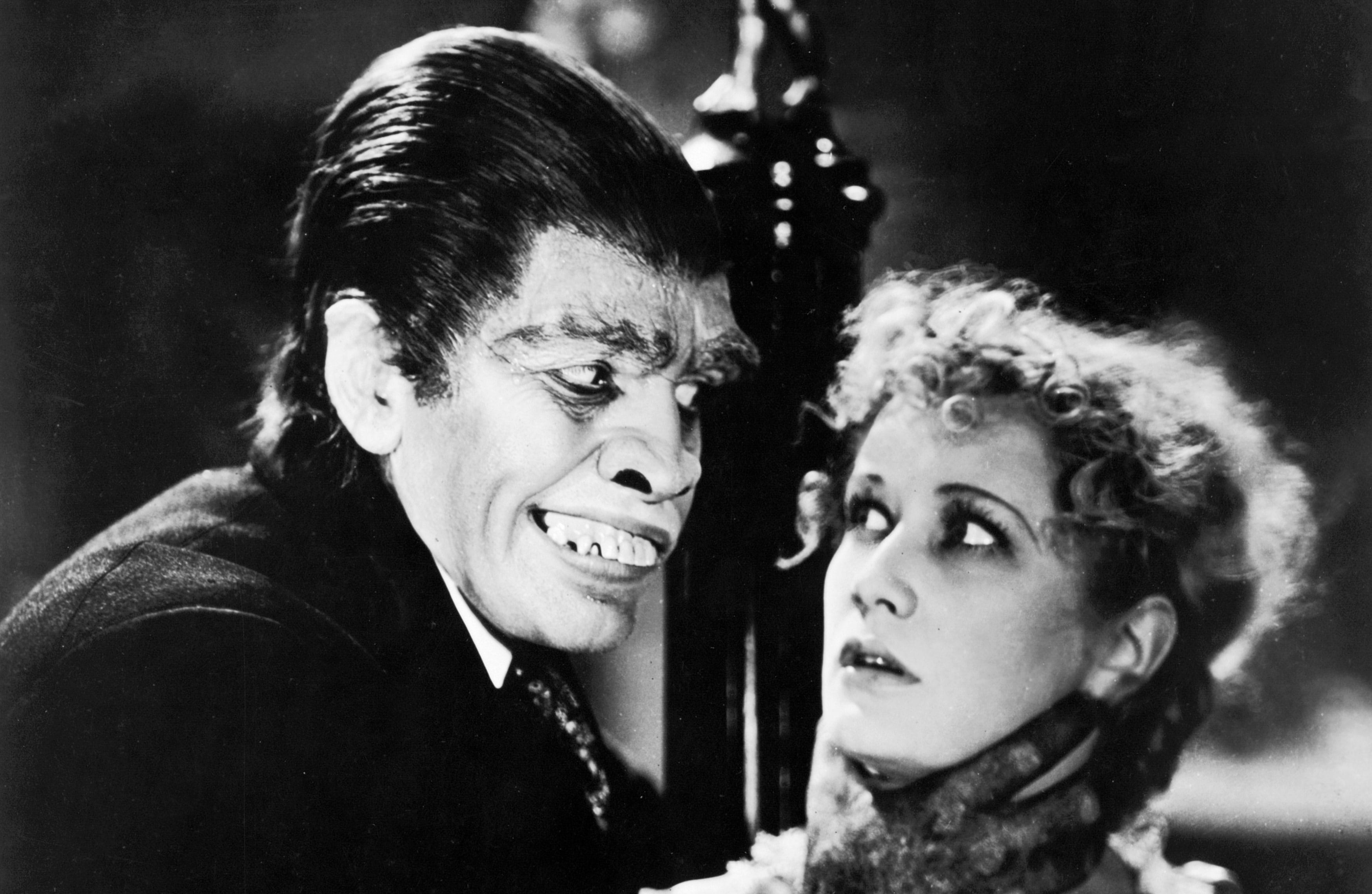
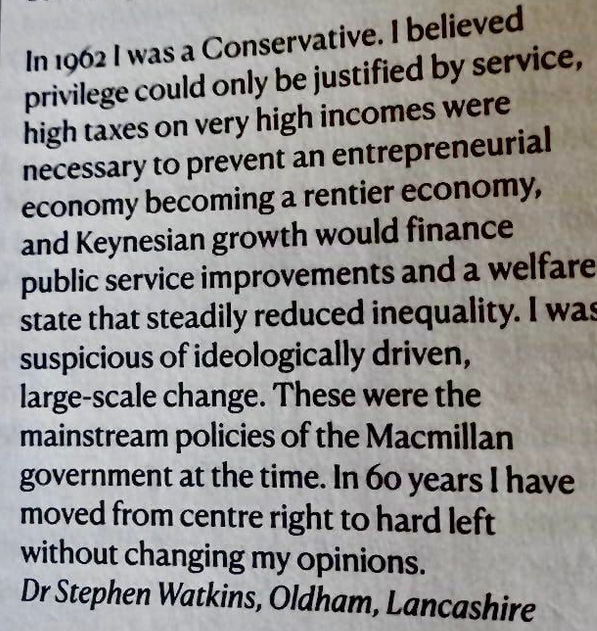


 On Genocide