

The Story Has Commenced
Thirty-two-year-old Issawi is from Issawiyeh to the north east of Jerusalem. On April 15th, 2002 while being in a tower to the north of Jerusalem, he was captured by Israeli Operation Defensive Shield. At that time, he was sentenced to thirty years on charges of owning weapons and forming military groups. Nearly 10 years after his captivity, an Egypt-brokered deal between Hamas and the Israeli regime about the captured Israeli soldier, Gilad Shalit, had been brought to the spotlight after staying under the shadow of hot arguments and meetings lingering for more than five years. Consequently, 476 Palestinian prisoners were released including Issawi.
Wondering why he has been detained only after eight months of his last release, I phoned Samir’s family to delve more in their son’s case. I could not make a call at first; I had a shaking voice and trembling hands and did not even know how…
View original post 1,398 more words
Amnesty International and Liberal Imperialism – Video, Audio, Illustrated Transcript.
StandardThe following is a commentary, meaning that it is me editorialising a lot. Some listeners or readers may find some of what is said to be opaque. I am particularly aware that my use of the term “liberal” may be unfamiliar and problematic. I won’t go into what it is exactly that I mean by “liberal”, but it is broadly consonant with the usages in political science when describing regimes, policies or ideological formations. It is a definition of liberal that doesn’t fall apart when one tries to put it in a broader context.
In contrast, Chris Hedges has recently written of The Death of the Liberal Class. Everything Hedges writes makes perfect sense and everyone knows what he means when he uses the term ‘liberal’. What Hedges would be hard-pressed to do is to reconcile this usage of the term liberal with other unavoidable usages such as as a way of describing the inescapably (if not virulently) liberal policies of “conservatives” and “neo-conservatives”. I’m sure that Hedges is aware of this. What he is doing is referring to self-identified “liberals” which roughly corresponds to what US political scientists refer to as “welfare liberals”.
I don’t believe that there is any such thing as a “welfare liberal”. It is very well understood in political science that most in the US who identify as “conservative” are actually liberals, and I would argue that anti-socialist sentiment has driven many to misidentify themselves as liberals. Most “welfare liberals” are very much at one with their fellow liberals in the “conservative” camp. The putative divide between them is much as the divide between Republican and Democrat – not really a divide at all.
If, at times, it seems that I am overstating matters out of some callow need to dramatise and you feel that my credibility is tarnished, I would urge consideration of the following. 1) It is not possible in this medium to demonstrate the evidence and reasoning behind every position I take; 2) conservatism is not neutral – it is a positive affirmation of an orthodox position; 3) in many cases the orthodox position is not even a reasoned position, but rather simply unexamined “commonsense” received ideology, in other cases it is specious; 4) thus by the avoidance of statements which cannot be demonstrated I would, of necessity, be promulgating fallacies; 5) if there really are things that you simply cannot allow to pass unremarked, please feel free to contact me with and questions and I will happily explain the basis of any such assertions on my part.
I hope that makes this talk a little clearer.
Here is a video version.
Or download audio from here:
Intro
Hello and welcome to this On Genocide audioblog commentary. Today I tackle the vexed question of whether Amnesty International are still the profoundly compassionate force for good which inspired millions like me in past times or have become a pack of mass-murdering sociopaths or are merely the pandering toadies of a pack of mass murdering sociopaths? I can reveal in advance that the answer is yes.
Part 1: The KONYism of Amnesty International
I received a phone call the other day from a telemarketer working for Amnesty International. He informed me that he was calling to raise awareness about events in Syria. He cited an urgent need for international action under the United Nations Security Council. Part of my response was to ask why Amnesty International felt a need to “raise awareness” over Syria, which is hardly absent from mainstream news reporting, while not having done so with their own reports of atrocities and ethnic cleansing in post-Gadaffi Libya.
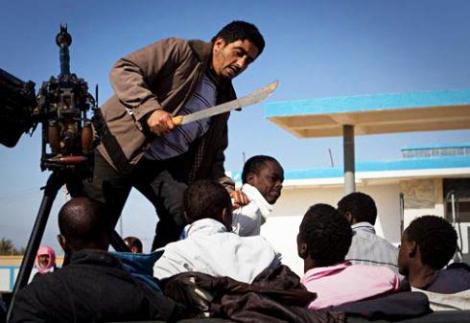
In a formal sense, Amnesty International remains politically neutral, however, Amnesty has an extremely problematic record. In October 1990 Amnesty gave crucial support to the fraudulent, and now infamous claim that Iraqi personnel had murdered premature babies by removing them from incubators. 
They would later retract that support, but less than three weeks after the incubator lies Amnesty released a report on atrocities carried out by Iraqis in Kuwait. The report contained unconfirmed as well as independently verified reports of atrocities. Atrocities were definitely taking place, but why dramatise the report with unconfirmed allegations? Amnesty’s answer: to “raise awareness”? But, the entire world was already watching. Saddam Hussein was the most vilified person on the planet (except among some Arabs). George Bush had labelled him as worse than Hitler.

And it was not as there were no atrocities taking place elsewhere such as Myanmar and Honduras, nor even that they were not occurring in military occupations such as those of Western Sahara, East Timor, Palestine and West Papua.
Amnesty produced this report as the US was trying to gain support for unleashing the greatest mass violence on the world since the invasion of Afghanistan by Soviet forces. Amnesty must have known that this was going to involve massive suffering. To be absolutely clear, bombs dropped by US warplanes (even smart bombs) do not build schools, they do not organise elections, and they do not emancipate women (except in giving the equality of the grave).

I mention this because most news and entertainment media treatment of the subject would have you believe that they do these things. What bombs actually do is kill, maim and destroy bringing the suffering of physical pain, fear, grief and material loss.
Amnesty International played a crucial role in in unleashing Desert Storm and the repercussions dwarf by far any good that Amnesty has done in this world since its inception.
Part 2: What did Amnesty enable in Mesopotamia?
It is worth understanding just how much the scale of suffering brought about with Amnesty’s crucial support outweighs the suffering they prevent in their fights against political imprisonment, torture, and capital punishment. The numbers are simply beyond a level that Amnesty could realistically dream of helping. But these victims suffered too, and their suffering is equally tragic, equally unjustified and equally obsene.
Operations Desert Shield, Desert Storm and Desert Sabre can now be seen as the inauguration of a two decades long genocide which took hundreds of thousands of Iraqi lives – probably in excess of 2 million.(1)
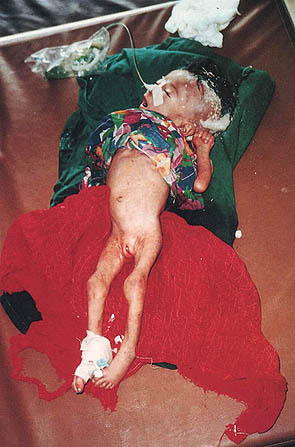
The US was never interested in any human rights as their betrayal of anti-Baathist rebels revealed. Famously, General Norman Schwartzkopf gratuitously allowed the rather surprised Iraqi military to use helicopter gunships against the uprisings that President Bush had personally and explicitly encouraged to take up arms against the Iraqi regime. Also, while US forces had allowed Iraq’s Republican Guard to withdraw intact from Kuwait, on the so called “highway of death”, they massacred hapless conscripts who, by some accounts, were mutineers.
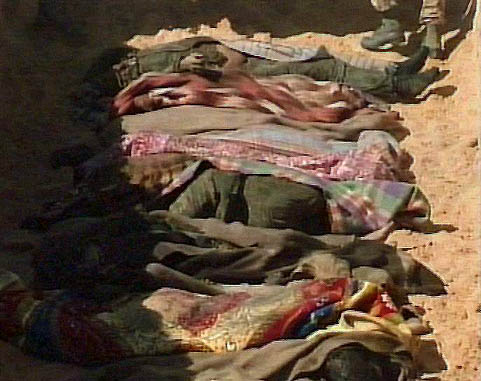
In these accounts by exiles (who had fled Iraq after the Basra uprising was brutally crushed) those killed on Highway 80’s Mutla Ridge were conscripts headed to join the anti-Saddam uprising which had grown out of the antiwar movement in and around Basra.
There is some controversy over the numbers killed by US warplanes on the Mutla ridge. Initial military eyewitnesses and journalists such as Peter Turnley described and documented a large scale of mortality (perhaps thousands).

Later arriving journalists, most notably Michael Kelly, saw less evidence of mortality but given the undenied disposal of bodies by US personnel this is hardly surprising.(2) The explanation given later was that vehicles were abandoned before being attacked. Photographs of the vehicles are widely available, although they are often from long after the event. It is clear that they were almost all attacked, whether it is conceivable that most were abandoned at this point, or indeed whether it is conceivable that they were not abandoned at this point, I leave to the reader’s judgement.

Regardless of what exact portion of vehicles were occupied when attacked hundreds or maybe thousands of human beings died. Violent death is always obscene, but the photographs and descriptions of the victims here seem sometimes beyond obscenity. Helpless, fleeing, posing no conceivable threat to Allied forces, many victims were burnt alive while trapped in their vehicles.
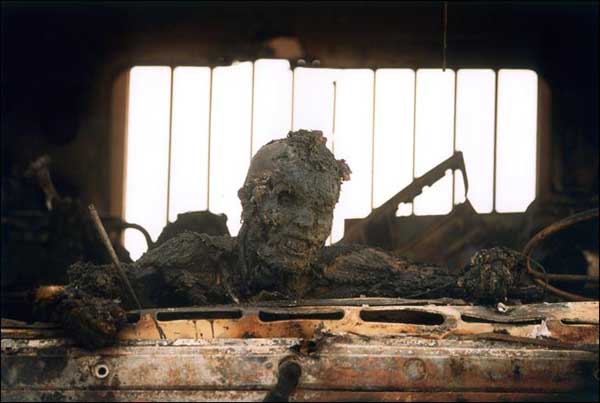
Schwarzkopf said: “This was a bunch of rapists, murderers and thugs who had raped and pillaged downtown Kuwait City and now were trying to get out of the country before they were caught.” It is exactly this sort of application of mass condemnation (in this case, given substance and verisimilitude by Amnesty itself) that often underlies massacres and other atrocities, but along with reports of a column of mutineers, there are also reports of Palestinian refugees and even Kuwaiti hostages who were among those fleeing along Highway 80.
In Desert Storm, (the bombing campaign conducted under a specious air power doctrine which, like “Shock and Awe”, invented a military significance for civilian infrastructure(3)) the US had attacked all sorts of civilian targets including power generation and water treatment and so forth. It is a war crime to attack such targets, of course, and it is difficult to see how the US could even claim some military advantage. It made no difference to the military outcome what civilians were killed and what civilian infrastructure was destroyed. The military “contest” was so uneven, the opposing forces so disparate, that even the killing of Iraqi military personnel was gratuitous as well as grotesque.
What followed thereafter was the “sanctions regime”, a cruel slow form of genocide inflicting the greatest suffering of all on children. As water-borne disease and malnutrition condemned tens of thousands of under-5’s to avoidable deaths, ironically it was Iraq’s premature infants that were forced to share incubators and were dying for lack of simple bottled oxygen.

(In another irony, Madeleine Albright, who felt that 500,000 dead infants was “worth it” as a price for Iraqi containment, would in 2012 be the keynote speaker at an Amnesty International event, but I’m getting ahead of myself.) Maybe in 1990 Amnesty was doing nothing more that to report Iraqi atrocities in that same way as any other, but the context of impending war was unmistakeable and they helped bring about one of the greatest mass atrocities of the post-WWII era.
Part 3: Unrepentant
Did Amnesty, seeing this horrifying mistake, take steps to ensure that in future it would not simply become a source of atrocity propaganda for Western warmongers? Clearly not. Instead its formal neutrality and its original central purpose are being corrupted by expedience and by the corrosive permeation of the Western discourse of humanitarian intervention.
The context is this: Since World War II the state that has committed the most war crimes is the United States; the state that has caused the most deaths of innocents (notwithstanding China’s Great Leap Forward) is likewise the US. One might use different modes and criteria of calculus, but any consistent and defensible reckoning will return the same answer. When it comes to the use of mass violence, when it comes to the use of deadly ordnance, none can even be considered in the same league as the US. Horrible atrocities such as the Soviet bombing of Herat, the Russian bombing of Grozny or the Syrian shelling of Hama are as buckets next to the swimming pools of blood from North Korea, South Korea, North Vietnam, South Vietnam, Laos, Cambodia, Afghanistan and Iraq.
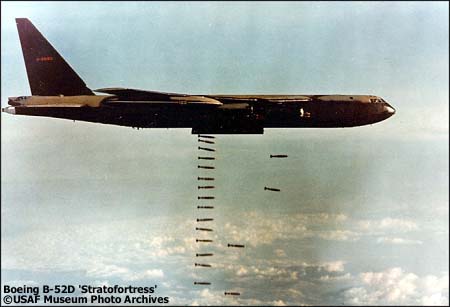
Further context: every large-scale mass atrocity and the majority of those on a smaller scale is preceded by atrocity propaganda wherein the future victim group is portrayed as perpetrators. Sometimes the atrocities are fictitious or massively exaggerated; sometimes one blames one’s own atrocities on an enemy; sometimes false-flag atrocities are actually staged; and sometimes the atrocities are real. The attribution and contextualisation, however, are fantastically important. The actual perpetrators (often impossible to distinguish in any event) become of no importance whatsoever, the perpetrators become defined instead by a group membership. They become, as Schwarzkopf put it “a bunch”.

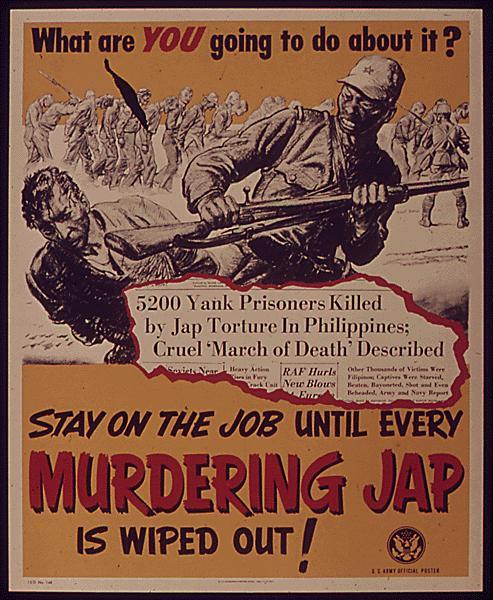
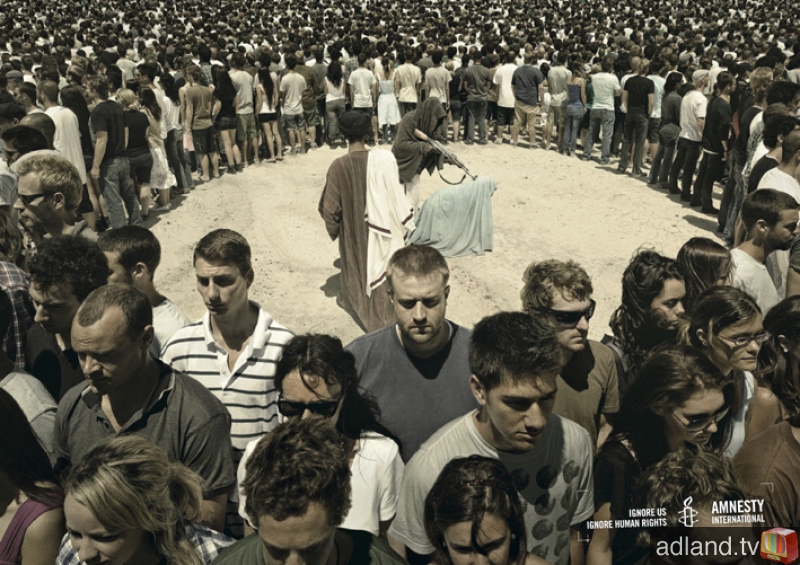
But, instead of learning the lesson of 1990, instead of taking steps to avoid becoming a source of atrocity propaganda which facilitates massive suffering and death, Amnesty has more often acted to embrace the very same US imperialist causes which facilitate atrocities. But Amnesty and others, including some alternative news outlets, actively jump at any opportunity to join with the US State Dept. and White House in condemnation of human rights abuses. It is as if they wish to ensure that everyone knows that they aren’t really anti-American, or anti-government, they do have haircuts, they do have jobs. It is as if the tension of having to oppose authority is suddenly released and they can get on with their job of righteous opposition to wrongdoing without fear of being criticised, misapprehended, scorned or argued with. Like the dissidents who, after years of hopeless opposition to Bush Jr’s crimes of aggression, so passionately embraced the slogan “Out of Iraq, into Darfur”, they themselves embrace the advocacy and support of war crimes.

By not rejecting outright the discourse of humanitarian intervention and of “R2P” Amnesty may become a party to war crimes while its history of refusing to determine the legality of military actions as a whole (for example, the Iraq Invasion or Operation Cast Lead) means that only selected suffering and death is worthy of protest. This is an extremely dangerous mixture. It means that as long as the conduct of the war is in accordance with International Humanitarian Law they are not going to comment on “lawful” killings, even in cases of aggression wherein these “lawful” killings are actually unlawful murders. They deal with “human rights” and apparently there is no right not to be maimed or painfully killed, or to have your family killed, or your children killed by a foreign military power.
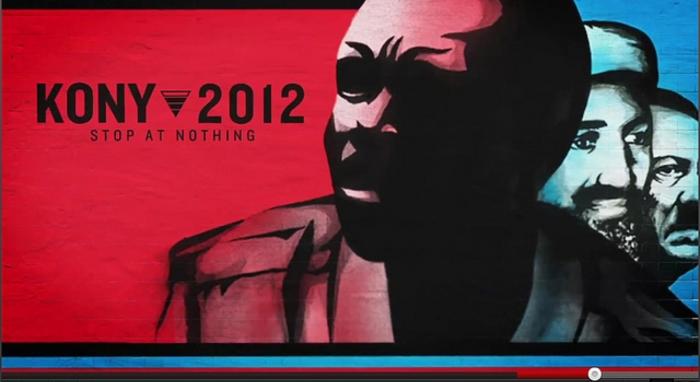
In addition, Amnesty International has of late, like so many others, been embracing what might be described as KONYism. By this term I mean the enthusiastic and rigid insistence on criminal proceedings be taken against official villains who are generally not powerful (often spent forces and no longer a threat); are generally non-Caucasian and certainly not Westerners; and, ipso facto, are from the poorer countries in the world.
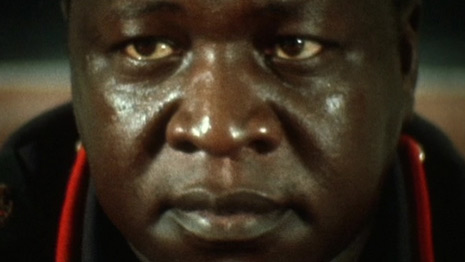
This functions to put a black face in people’s minds when thinking of atrocities, the face of savagery – a twisted uncivilised creature of personal violence and sadism. But the greatest culpable mass-murderers sit in offices, no matter what their skin colour, and usually don’t personally torture maim and kill. Amnesty has become a keen proponent of prosecutions in the International Criminal Tribunals for the former Yugoslavia and for Rwanda as well as the International Criminal Court.
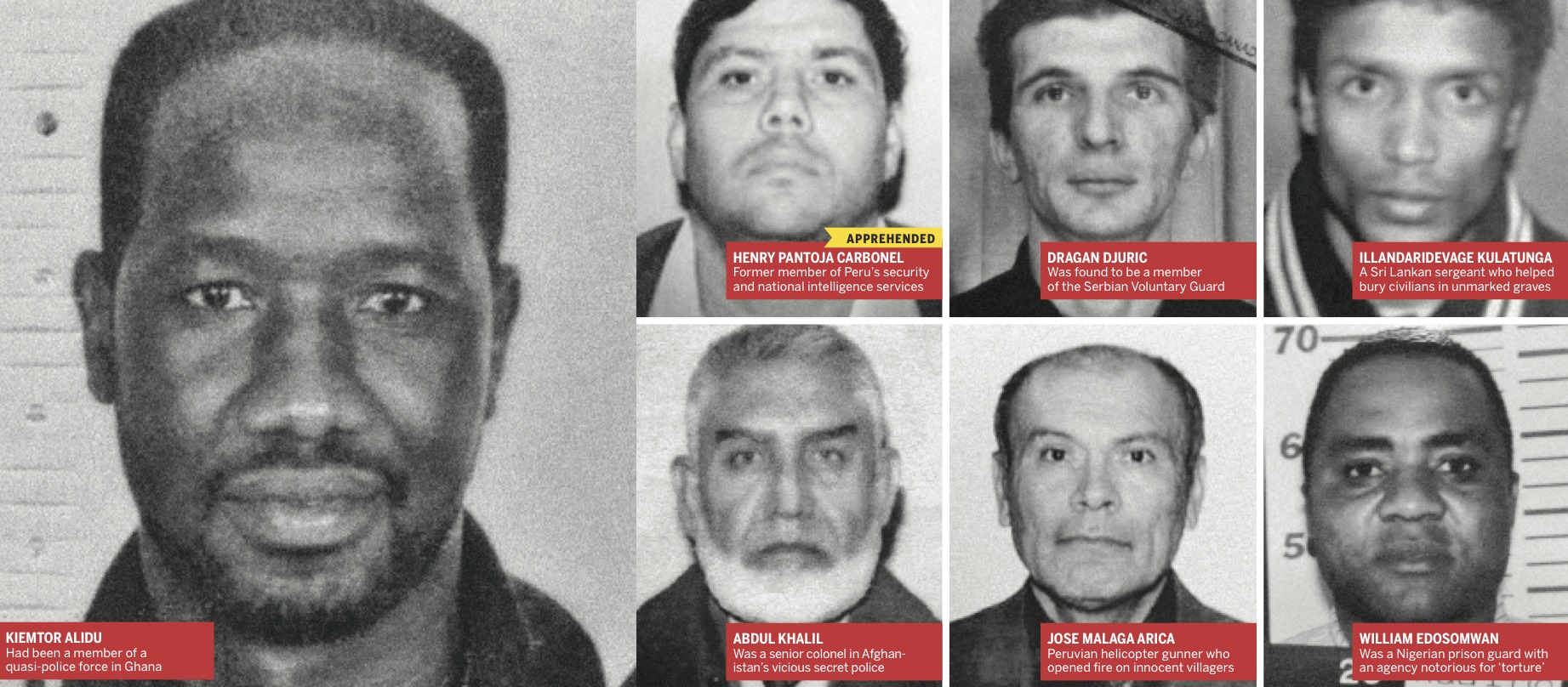
Both the ICTY and ICTR are seen by critics as overly politicised at the expense of justice. As ad hoctribunals they are unavoidably selective, while the ICC seems merely to be avoidably selective but selective nonetheless. Its indictments are, without exception, against the enemies and defiers of the US, a state which itself refuses to allow its own personnel to be subject to ICC prosecution. By analogy, it is as if the Mafia controlled a criminal court and used it against small-time rivals – sure those prosecuted may be guilty of heinous crimes, but there is still a massive injustice in that their very indictment advances the purposes of even greater criminals.
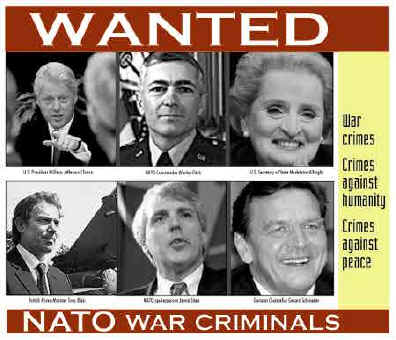
Supporters of such courts claim that we cannot allow impunity. Indeed, there are many times when impunity is tantamount to incitement. Some claim that the culture of tit-for-tat atrocities in some civil conflicts stems in part from impunity. So Amnesty International, set up to oppose political imprisonment, is a big proponent of this system which arguably creates political prisoners and inarguably creates selective impunity along strict and consistent lines of privileging the most powerful state actors and their leaders, who, not coincidentally, are quantifiably the greatest abusers of human rights. But its actually even worse than that because the current ‘international justice’ regime has become a massive impediment to conflict resolution. Evincing at all times self-righteous condemnation for the irredeemable evil malefactors, it is made increasingly clear to the enemies of the West that they will not escape Western vengeance. What, for example, can Bashar al-Assad glean about Western intentions? Should he look to Saddam Hussein’s fate?
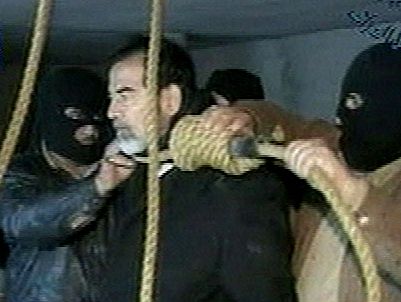

Or maybe Gaddaffi’s? In the latter instance the ICC was so prompt in announcing an intent to prosecute and issuing an arrest warrant that Gaddaffi knew from very very early in the piece that his fate, at best, would be to end his days in prison. Not a great incentive to find a peaceful solution. What about Charles Taylor? His immunity under peace accords which had ended conflict and killingwas immediately undermined by the US Congress inducement of $2 million for his capture. The precedents all send a very clear message. Or how about Sudan’s OmarHassan al-Bashir, a man who now knows that his safety and freedom requires that he cling to power no matter what the cost?
Amnesty would claim, no doubt, that its stance stems from principles – they don’t change whether the perpetrator state is China or the US, Iran or Israel, Syria or Turkey. Is this true? In reality they exclude from their remit the most serious crimes committed by the US. Moreover, they clearly have decided, in the cases of Syria or Joseph Kony for example, to emphasise those instances where they are in accord with Western governments. Without shame they refer to this as “awareness raising” when it is clear that these are the instances of very heightened public awareness in the West. In these instances groups like Amnesty International and Human Rights Watch are massive force multipliers in propaganda wars waged by Western institutions and leaders who might otherwise have fragile credibility on the subject of human rights and be vulnerable to countercharges.
If Amnesty wanted to base itself on principle, it would base itself around opposition to the suffering caused by state violence. In conflict it can’t simply choose only to oppose jus in bello infringements (those relating to the conduct of war) as if jus ad bellum matters (the legality of the war itself) were of no relevance. Firstly, one cannot simply treat something as presumed legal because one does not wish to determine its legality. Secondly, Amnesty can’t ethically justify ignoring suffering simply because it may be legal – much of their energies are spent opposing the use of the death penalty which in most relevant jurisdictions is completely legal.

Consider the implications of Amnesty’s stance. Amnesty strongly condemned Israel’s use of white phosphorous in Gaza on the ground that it was indiscriminate, hence illegal. But that immediately means that Amnesty’s area of concern is not whether Israel inflicted horrible suffering and death, but whether this was lawful. Consider a child – it could be in Fallujah, it could be in Gaza, it could be in the next place – a victim of white phosphorous (WP). WP wounds and fatalities are particularly horrific in all instances. Fragments of WP can burn right through flesh and bone – they may continue burning until surgically removed. The remnants may still cause problems through toxicity and the very nature of the burns may cause crippling and agonising complications that last a lifetime. More horrifying than that, however, is that fine partially oxidised particles of WP can form a cloud where in both oxygen and moisture are depleted, a cloud that is forced downwards by airbursts as practiced in Fallujah and Gaza.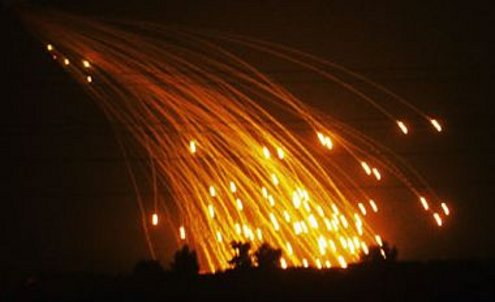
We know that in Fallujah this property must have been deliberately exploited because “shake ‘n bake” fire missions were described in a US military journal as being used against positions immune to high explosive artillery. Such a cloud might penetrate, for example, into the shelter of a family. Imagine this hypothetical child, cowering fearfully in a shelter, whose eyes start to burn as the phosphorous particles ignite on the eyeball itself. The child draws breath to scream and the child is as good as dead, because now the particles are in the lungs themselves. Many square meters of surface area are burning, a child is actually dying from being burnt from the inside out. This is not completely speculative. There are photographs from Fallujah of children who seem to have died in this manner.
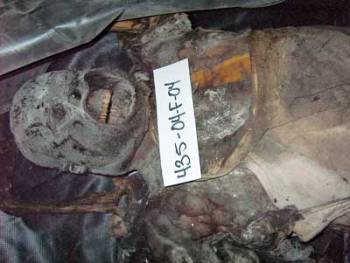
Amnesty’s stance is to oppose the illegal use of white phosphorous, but this death could have resulted from the legal use of WP (except of course that it is not legal if the war isn’t legal, but that’s no concern of Amnesty’s). So you can see why I believe that the only possible stance of principle is to oppose the suffering caused by state violence. How can anyone say that its sometimes OK to inflict agonising death on a child as long as it is “lawful”? Yes, I do inevitably mean that Amnesty must oppose all war casualties, but remember that under international law (including the UN Charter) war is actually illegal. All casualties of war are crimes, and rightly so since these are actual human beings and there is no morally justifiable reason for saying its OK to kill some of them. Even if they are military personnel they still feel pain and fear, their passing still leaves grief. If a party is forced to take life out of a need for national self-defence, then the aggressor, under a precedent established at Nuremburg, is culpable for that loss of life.
So what should Amnesty do? Well, the fact is that there are more limits on doing good than there are on doing harm. On Syria they need to revert to marshaling intelligence and moral force and eschew alignment with state actors and advocacy of any form of “international action” based on a UNSC resolution. In general, advocacy of an international governmental response should be confined to cases of international aggression, Amnesty should harness citizen activism, not lobby states or international bodies. The whole world should, in addition, move away from the self-righteous demonisation of the ICC and strengthen the International Court of Justice or other mechanisms for holding states (not individuals) accountable and for putting an end to ongoing crimes such as occupations, blockades or aggressive sanctions regimes which inflict mass suffering.
Part 4: Or are Amnesty Really Evil Lizards Psychopaths After All?

The vast majority of people are in one of two camps – either Amnesty is a bunch of misguided bleeding heart lefties unintentionally helping the terrorists of this world, or they are unimpeachable fighters for justice, human rights and dignity. If one reads the Global Research website, however, it is replete with admirable writers and thinkers, such as Francis Boyle and Felicity Arbuthnot, for whom Amnesty is more of less The Enemy, whether they like it or not. Of course such critics understand that Amnesty members and activists try to live up to Amnesty’s founding principles, but in practical terms they have to deal with an organisation that is far more effective in promoting injustice, indignity and human suffering. It is probably worth contemplating this vast disparity between the commonplace perceptions of of Amnesty and those of what, in the final analysis, are a small subset of radical dissidents. Nevertheless it is these few dissidents who tend to have fact and logic on their side. In the final analysis Amnesty might as well be run by the evil alien lizards, and I think the explanation for this state of affairs lies in the nature of liberalism.
John Pilger recently described liberalism as “the world’s most powerful and violent ‘ism’” in an article linking liberal ideology to imperial state policies. At a later date I will doubtless be detailing all of the evils which can be ascribed to liberalism (always a fun topic) but here I will confine myself to saying that any ideology which claims to have tenets which are “good” in moral terms and by extension whose adherents are “good” as adherents (and inescapably better morally than non-adherents) is prone to violent hypocrisy and cognitive dissonance. A liberal can enthusiastically endorse condemnations of liberal atrocities, because those atrocities aren’t really liberal because liberal means good. You could ascribe the same behaviour to a Communist, a Muslim, or a Christian. The more predominant and self-satisfied an ideology is, the more violent and schizophrenic it becomes. There are two differences between liberalism and and other such ideologies. The first is that liberalism has made a quantum leap in its ability to subsume and subvert its own critics and their condemnations. The second is that liberal schizophrenia is being deliberately harnessed by the most massive imperial military in human history.
Imagine liberal interventionismn as being a call to enforce liberal political and economic governance within which is a “bundle”. The liberal “bundle” includes humanitarian aspects, or at least it seems to. Take women’s rights, liberals believe that imposing liberal governance and norms improves women’s rights. If women actually suffer under the imposition of liberalism, then things aren’t liberal enough. Either that or the liberal will trot out racist or cryptoracist rationalisations which either blame the victim directly or blame their, often equally suffering, male compatriots. In the final analysis, the imposition of liberal governance has not been a great boon for women and girls in places such as Southeast Asia and Latin America. In fact, compared with advances for women’s rights under socialist regimes of various types, liberal feminism has been beyond pathetic. Even in the West the women’s rights for which liberals claim credit have mostly come through grassroots left-wing agitation, like many other progressive changes.
So the liberal “bundle” is really kind of agnostic when it comes to humanitarian matters. Their ideology says that they have the cure, but they don’t care if the cure actually works. Likewise the economic aspects of the bundle are supposed to do all sorts of wonderful things, but they don’t and when liberals bother to concern themselves with that inconvenient fact, they tend to say that more drastic liberalisation is the answer.

Liberal interventionism is now often expressed as humanitarian interventionism. This is one of several Newspeak terms which attend the liberal interventionist discourse. “Intervention” being understood to be military in nature, it means that causing destruction and death is “humanitarian”. Here is where the creepy post-Orwellian brilliance of it comes, through: out of two sets of strident fanatics for explicitly liberal intervention in the US, one bunch deliberately positions itself as being right-wing and calls itself neoconservative and another lot characterises itself as being left-wing and calls itself liberal. They use exactly the same tropes, evince exactly the same motives and call for exactly the same interventions. There is only one significant difference, and I’ll get to that shortly. Perhaps the epitome of the latter variety, the liberals, is Samantha Power, the very image of a bleeding heart who wants to drop humanitarian bombs.
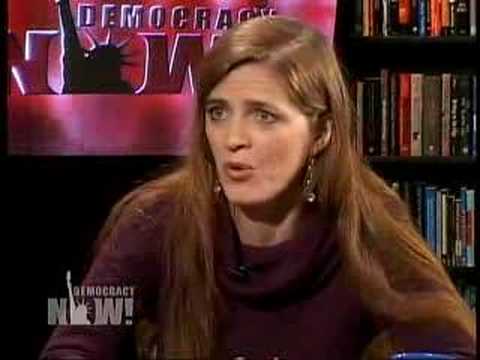
Journalist David Reiff tells of her response to his suggestion that “her reasoning on foreign policy was similar to that of neoconservatives who supported the Iraq War. “She said, jokingly, ‘I am not Paul Wolfowitz,’ and I said, ‘Yeah, actually, I think you are,’”
Power, along with Clinton and Obama, thrives by taking the moral high ground and harnessing opposition to the liberal imperialism of neocons and others who identify themselves as more right-wing (and may or may not take more socially and culturally conservative positions). The take the very energy of outrage at US imperialism and channel into support for… US imperialism. Pretty nifty, huh?
There is another of that ilk named Susanne Nossel – a former State Department employee who “would have worked for and with Hillary Clinton, Madeleine Albright, Samantha Power and Susan Rice, and undoubtedly helped them successfully implement their “Right to Protect (R2P)” – otherwise known as “humanitarian intervention” – as well as the newly created “Atrocities Prevention Board.”
 She credits herself with having come up with the term “Smart Power” which is so often now on Clinton’s lips.(4) I won’t go into the complicated process of paring away the meaningless rhetoric around the term “smart power”. What it means, put simply, is exactly the same liberal imperialism pursued by Bush and his neocon allies, dressed up a bit differently. One can already detect that a key differentiation is in the way these costumes are gendered – smart power is sly and feminine whereas Bush era cowboy style is masculine and muscular. Thus, one could summarise the Obama vs. Romney foreign policy debate in two short lines (saving us a great deal of time). Romney calls Obama a wimp. Obama calls Romney an idiot. Then we all go home.
It is all just making a virtue of necessity. Bush era unilateralism isn’t practicable, nor realistically desirable for current imperial geostrategic wants. If, for example, they wished to repeat their actions against Iraq on Iran they would be looking at a decade or so of genocidal sanctions that isolate the Iranian people and increase an inescapable dependency on their increasingly oppressive regime. Only then, when international public revulsion and regional disobedience among client states threaten to destroy the genocide regime – would it be desirable to unleash the gung ho bulldozer of a Bush/neocon style war machine.
So that’s what Nossel is about, and guess what her job is now? That’s right, she’s the CEO of Amnesty International USA. That’s why people are referring to Amnesty as a “shill” or the “propaganda arm” of NATO or as an “imperialist tool”. Consternation has particularly been fueled by Amnesty USA’s crucial support for NATO’s ongoing occupation of Afghanistan. In an excellent article Ann Wright and Colleen Rowley write of “announcements posted online as well as billboard advertisements on Chicago bus stops, telling ‘NATO: Keep the Progress Going!‘” these “beckoned us to find out more on Sunday, May 20, 2012, the day thousands of activists marched in Chicago in protest of NATO’s wars.” 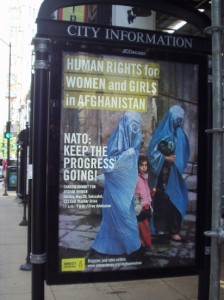
Another article is worth quoting at length where it takes up the same story of what Amnesty was doing on the very day that people were mobilising to oppose war:
…Amnesty USA put on a “shadow summit” of its own during the NATO meeting, featuring Madeleine Albright, Bill Clinton’s notorious secretary of state, who will be forever remembered for her chilling response to a question on 60 Minutes about sanctions imposed on Iraq in the 1990s. Correspondent Lesley Stahl asked, “We have heard that a half million children have died. I mean that’s more children than died in Hiroshima. And, you know, is the price worth it?” Albright responded, “I think this is a very hard choice, but the price–we think the price is worth it.”
With a veritable war criminal as one of its star speakers, Amnesty USA’s shadow summit launched a campaign that, for all intents and purposes, called for the extension of NATO’s “good works” in Afghanistan. Its speakers and promotional materials recycled George Bush’s “feminist” justification of the invasion and occupation–that NATO would liberate women from Taliban rule.

The article then examines the realities of womens lives in occupied Afghanistan, finding claims of progress “laughable” – “As Sonali Kolhatkar, founder of the Afghan Women’s Mission, and Mariam Rawi, of the Revolutionary Association of Women of Afghanistan, wrote:
Under the Taliban, women were confined to their homes. They were not allowed to work or attend school. They were poor and without rights. They had no access to clean water or medical care, and they were forced into marriages, often as children. Today, women in the vast majority of Afghanistan live in precisely the same conditions, with one notable difference: they are surrounded by war.”
Part 5: Conclusions
- Yes to mass-murdering sociopaths. People like Nossels are mass murderers. OK she may not be a sociopath, but then again she might be. We don’t know, and why would we care. Some mass murders believe deeply that they will make the world a better place; others are driven by hatred, fear or insanity; and others still are monstrously callous and simply don’t care for the suffering they cause. In this I agree with the biblical sentiments – know people from their actions, but leave the judging to some hypothesised supernatural omniscient being because we aren’t in a position to judge.
- Yes to toadies enabling mass-murder. Amnesty members want to do good, but self-satisfaction is unreflexive and causes complacency. Amnesty members need to discriminate more in terms of what they support and what they don’t. It might sound complicated, but it isn’t. When Amnesty is calling for petition writing and pressure to be put on a government which is commiting abuses it’s all good. When they are calling for petitions and pressure to be put on a government to “intervene” in another state, it is not good at all, it is the opposite of good, which some of us like to refer to as “bad”.
- Yes to compassionate voice for good. Of course most Amnesty members, volunteers and staff are fundamentally committed to alleviating human suffering. Perhaps it should be no surprise then, that there is a movement to reform Amnesty International from within. Staff and members have expressed disquiet and there is also a Code Pink petition campaign.
I would argue that reform of Amnesty is worth pursuing. It might be too much to expect deep principled reform, but even at worst a curtailing of pro-imperialist efforts in order to regain lost credibility and avoid critical scrutiny deprives the empire of a very significant tool, albeit temporarily. A more confrontational approach, aiming to publicise Amnesty’s “true nature” and reveal it for what it effectively is might seem attractive and understandable, but most people are never really going to understand the premise that this renowned humanitarian organisation is engaged in warmongering with postmodern jingoism. That makes Amnesty and suchlike a bit of a tarbaby, which is also quite handy for the US empire as a form of distraction. If you want to attack something just attack the policies and the false justifications behind them. People will work out for themselves that Amnesty is behaving inappropriately from that context.
I would like to thank you for listening to this commentary. A transcript, complete with photographs, hyperlinks and even a few good old fashioned endnote citations is available at the On Genocide blog, which is at ongenocide.wordpress.com. There is also a facebook page called – you guessed it – On Genocide. If you like the facebook page I promise to post no more than 3 or 4 items a day, including, of course, updates to the blog.
(1) Kieran Kelly, Context of the Iraq Genocide (https://ongenocide.com/wp-content/uploads/2012/02/context-of-iraq-genocide.pdf), pp 176-9.
(2) Michael Kelly, Martyr’s Day: Chronicle of a Small War, New York: Random House, 1993.
(3) Michael R. Gordon and Bernard E. Trainor, The Generals’ War, Boston: Little, Brown and Company, 1995, p 80.
(4) Wright and Rowley, op cit.
Other links:
In photos: Gaza buries its children as Israeli attacks intensify
StandardIn photos: Gaza buries its children as Israeli attacks intensify.
In photos: Gaza buries its children as Israeli attacks intensify
20 November 2012

Mourners gather around the bodies of the al-Dalu family during their funeral in Gaza City, 19 November.
(Majdi Fathi / APA images)
Israeli attacks on Gaza killed 33 on the sixth day of an ongoing military campaign that has so far claimed 117 lives, according to the Ma’an News Agency. At least two dozen of the dead are children.
In the latest attack, four-year-old twin boys Suhaib and Muhammad were killed instantly when their home in the northern Gaza Strip town of Beit Lahiya was hit by an Israeli airstrike. Their parents Fuad Hijazi and Amna Hijazi died in hospital. Eighteen people were reported injured in the attack (“Family killed in new Israeli airstrike,” Ma’an News Agency).
No ceasefire has yet been reached as Israel continued to pound Gaza overnight Monday; three Israeli civilians were killed when a rocket fired from Gaza hit an apartment building in Kiryat Malachi last week, the only deaths in Israel.
Israel has amassed ground forces along its boundary with Gaza and has threatened to invade.
Israeli forces targeted buildings housing journalists both on Sunday and Monday; Islamic Jihad operative Ramiz Harb and 53-year-old civilian Salem Bulus Swelim were killed in today’s attack. Eight were injured yesterday when an Israeli missile hit another Gaza City building, including a cameraman whose leg was amputated; an Israeli spokesperson admitted that the military was aware that the building housed journalists.
On Sunday, 12 Palestinian civilians, including 10 members of the al-Dalu family, were killed in an Israeli strike that totally leveled a three-story home in Gaza City. The victims include four children; rescue crews searched for the remains of two eenagers from the al-Dalu family on Monday (“Israel ‘still investigation’ al-Dalou family killing,” Reuters).
Meanwhile in the West Bank, hundreds of injuries, several of them critical, have been reported as Israel violently represses protests against the Gaza attacks. Today 28-year-old Rushdi Tamimi died in a Ramallah hospital after he was shot by the Israeli army two days ago during a protest in the village of Nabi Saleh.

A Palestinian policeman bids farewell to 28-year-old Palestinian Rushdi Tamimi, a fellow officer, who died at a Ramallah hospital two days after Israeli forces shot him during a Gaza solidarity protest in the West Bank village of Nabi Saleh, 19 November.
(Issam Rimawi / APA images)

Palestinians carry the bodies of Jumana and Tamer Eseifan, both under the age of four, who were killed when an Israeli warplane fired a missile at an agricultural plot near their home in the Tal al-Zatar area of Jabaliya town, 18 November.
(Majdi Fathi / APA images)

A Palestinian man sits next to the body of his one-year-old son Iyad Abu Khoussa during the baby’s funeral in Bureij refugee camp, central Gaza Strip, 18 November. The child was killed when an Israeli warplane fired a missile at the fence of his family’s home; two other small children were wounded in the strike.
(Ashraf Amra / APA images)

Smoke rises after an Israeli airstrike in Rafah in the southern Gaza Strip, 19 November.
(Eyad Al Baba / APA images)

Palestinians search through the debris of the destroyed home of the al-Dalu family following an Israeli air strike in Gaza City, 18 November.
(Yasser Qudih / APA images)

Palestinians rescuers carry out the body of Nawal Faraj Abdul Aal, 53, who was found under the ruins of her home which was destroyed when Israeli warplanes fired a missile at a nearby police station in the al-Tuffah neighborhood of Gaza City, 18 November.
(Anne Paq / ActiveStills)

The daughters and mother of Nawal Faraj Abdul Aal, 53, mourn after the woman was asphyxiated under the rubble of her home. The home was destroyed when Israeli warplanes fired a missile at a nearby police station in the al-Tuffah neighborhood of Gaza City, 18 November.
(Anne Paq / ActiveStills)

Al-Quds TV cameraman Khader al-Zahhar at the intensive care unit of al-Shifa hospital after he was seriously injured in an Israeli air strike on a media building.
(Anne Paq / ActiveStills)

Smoke rises as an Israeli air strike hits a media center in Gaza, 18 November.
(Majdi Fathi / APA images)

A Palestinian firefighter tries to extinguish a fire after an Israeli air strike on a Gaza City building that houses media offices, 19 November.
(Yasser Qudih / APA images)

Palestinians survey the remains of a destroyed a house after an Israeli air strike in al-Shojaiya neighborhood in the east of Gaza City, 18 November.
(Ashraf Amra / APA images)

Palestinians survey the remains of a destroyed a house after Israeli air strike in Beit Lahiya town in the northern Gaza Strip, 18 November.
(Majdi Fathi / APA images)

A Palestinian inspects the damage to a football stadium after an Israeli air strike in Gaza City, 19 November.
(Ahmed Zakot / Reuters)

Palestinian medics wheel a wounded boy on a stretcher to al-Shifa hospital in Gaza City, 18 November.
(Ashraf Amra / APA images)

A Palestinian woman looks at her destroyed home following Israeli air strikes on the southern Gaza Strip town of Rafah, 18 November.
(Eyad Al Baba / APA images)

Smoke rises after an Israeli air strike on a Palestinian house in al-Shojaya in the east of Gaza City, 18 November.
(Ashraf Amra / APA images)

Palestinians walk amongst the debris of destroyed homes following an Israeli air strike in Gaza City, 19 November.
(Ashraf Amra / APA images)

Palestinians gather around a destroyed house after an Israeli air strike in Khan Younis in the southern Gaza Strip, 19 November.
(Ibraheem Abu Mustafa / Reuters)

Israeli soldiers take part in a drill simulating a possible ground invasion into the Gaza Strip at a base south of the occupied West Bank city of Hebron, 17 November.
(Amir Cohen / Reuters)

An Israeli border policeman shoots a tear gas canister at Palestinian protesters during clashes outside Ofer prison near the West Bank city of Ramallah, 18 November. The clashes broke out following a protest against Israel’s military attacks on the Gaza Strip.
(Issam Rimawi / APA images)

A Palestinian protester throws stones at Israeli soldiers at Huwwara checkpoint near the occupied West Bank city of Nablus during clashes following a protest against Israel’s attacks on the Gaza Strip, 18 November.
(Nedal Eshtayah / APA images)

Israeli soldiers arrest a Palestinian protester at Huwwara checkpoint near the occupied West Bank city of Nablus during clashes following a protest against Israel’s attacks on the Gaza Strip, 18 November.
(Nedal Eshtayah / APA images)

Abdallah Abu Rahmeh lies in the road after he was purposefully hit by a car driven by an Israeli settler (pictured) during a peaceful protest against Israel’s attacks on Gaza on Route 60 outside Ofra settlement, 19 November.
(Issam Rimawi / APA images)

Bishop William Shomali leads a mass to pray for the children of Gaza in the Church of the Annunciation in the occupied West Bank city of Beit Jala, 18 November.
(Mamoun Wazwaz / APA images)

A girl holds a candle next to a photo of three-year-old Ranan Yousef Arafat, who was killed by Israeli airstrikes in Gaza, as Palestinians gathered in the West Bank city of Bethlehem’s Manger Square to mourn the victims of Israeli military strikes and to call for an end to the escalation of violence, 17 November.
(Ryan Rodrick Beiler / ActiveStills)
“Flatten” Gaza like Hiroshima and “mow” the population, Israeli public figures urge
Standard“Flatten” Gaza like Hiroshima and “mow” the population, Israeli public figures urge.
On 15 November, the second day of an Israeli assault, Ben-Ari addressed a hate rally in Tel Aviv, calling for more bloodshed in Gaza. New video of that rally, which this blog [Ali Abunimah’s EI blog] reported on previously, shows Ben-Ari in action.
“Flatten” Gaza like Hiroshima and “mow” the population, Israeli public figures urge
Submitted by Ali Abunimah on Sun, 11/18/2012 – 23:20

Palestinian doctors gather to pray around the bodies of four children from the al-Dallu family killed along with 7 other people when an Israeli missile struck a family home in Gaza City, on 18 November 2012.
In the latest horrifying examples of incitement to mass murder by Israeli public figures, Gilad Sharon, the son of former prime minister and notorious war criminal Ariel Sharon, has called for the Israeli army to “flatten” Gaza as the US flattened the Japanese city of Hiroshima in 1945 with an atomic bomb.
“The residents of Gaza are not innocent, they elected Hamas. The Gazans aren’t hostages; they chose this freely, and must live with the consequences,” wrote Sharon in the extremist publication The Jerusalem Post. Sharon elaborated:
We need to flatten entire neighborhoods in Gaza. Flatten all of Gaza. The Americans didn’t stop with Hiroshima – the Japanese weren’t surrendering fast enough, so they hit Nagasaki, too.
There should be no electricity in Gaza, no gasoline or moving vehicles, nothing. Then they’d really call for a ceasefire.
Were this to happen, the images from Gaza might be unpleasant – but victory would be swift, and the lives of our soldiers and civilians spared.
Sharon added that “There is no middle path here – either the Gazans and their infrastructure are made to pay the price, or we reoccupy the entire Gaza Strip.”
Irsrael’s rocket propaganda
Link
 This incredibly well researched article by Phan Nguyen at Mondoweiss is very useful for understanding and also helpful for explaining the one-sided nature of the current Israeli assault
How Israel shattered Gaza truce leading to escalating death and tragedy: a timeline
StandardHow Israel shattered Gaza truce leading to escalating death and tragedy: a timeline.
How Israel shattered Gaza truce leading to escalating death and tragedy: a timeline
Submitted by Ali Abunimah on Thu, 11/15/2012 – 14:29

A wounded Palestinian boy at a hospital after an Israeli air strike in Khan Younis in the southern Gaza Strip on 15 November 2012.
Today, 3 Israelis were killed as a result of rocket fire from Gaza.
This came after Israel had killed 13 Palestinians, including 3 children and a woman, and injured 115, including 26 children and 25 women since yesterday, 14 November.
This will be presented by Israel – and sympathetic or careless world media – as another justification for Israel’s attacks on Gaza to stop rocket fire. But this narrative is false.
Where there was calm and an effective truce, Israel chose to shatter it, bringing about the current deadly escalation.
In general, Palestinians fired rockets, or attacked the Israeli army, as a response to Israeli attacks, seeking to avoid escalation and publicly embracing a truce. Take a look at the sequence: Read more.
Dead Enough: The Reality of the “Lesser Evil”
StandardIs this child dead enough for you?

This little boy was named Naeemullah. He was in his house — maybe playing, maybe sleeping, maybe having a meal — when an American drone missile was fired into the residential area where he lived and blew up the house next door.
Read futher at Chris Floyd’s Empire Burlesque: Dead Enough: The Reality of the “Lesser Evil”.
A terrorist organisation now officially delisted as terrorists by State Dept. because it isn’t “terrorism” if the victims are Iranians.

by Kourosh Ziabari, source
In an act of hostility towards Iran, the United States removed the name of Mujahedin-e-Khalq Organization (MKO) from its list of foreign terrorist organizations on Friday, September 28, showing its unconditional support to the sworn enemies of the Iranian nation.
The U.S. government announced the decision a few days after the Secretary of State Hillary Clinton submitted a file of classified information about the terrorist cult to the Congress.
The decision was made under the pretext that MKO has not carried out any terrorist operation over the past 10 years. This controversial announcement, which bespeaks of the United States’ undeniable animosity with the Iranian people, comes while there are several reliable documents confirming that the MKO is responsible for the killing of more than 40,000 Iranians during the 1980s war between Iran and Iraq. It also assassinated Iran’s former President Mohammad Ali Rajaei, Prime Minister Mohammad…
View original post 1,271 more words
“Saddam was not an innocent victim here. He was not a victim at all.”
 On Genocide