…[T]hat insurgent horror was knit to him closer than a wife, closer than an eye; lay caged in his flesh, where he heard it mutter and felt it struggle to be born….” ― Robert Louis Stevenson, The Strange Case of Dr Jekyll and Mr Hyde
It is hard not to feel a bit optimistic watching Chris “Chippy” Hipkins present as a pragmatic but determinedly progressive leader on Big Hairy News, but we have been here before. NZ Labour are like Lucy in Peanuts repeatedly pulling away the football at the last minute, with the proviso that in this analogy NZ Labour are also Charlie Brown. They believe their own lies more than the electorate does. Like other “centre-left” parties in the Western “democracies”, they are a collective human embodiment of the fallacy called an “argument to moderation”. For decades the right have been pushing extremist policies with no concern for public opinion, and the tepid “centre-left” response actually normalises the right-wing shift. Worse still that right-wing is often a faction within the supposedly leftist party. Our own neoliberal turn in the 1984-90 Labour government is an anti-democratic case in point, as is Clintonism, Blairism and Starmerism.
Currently the UK is finding that the Labour Party it voted for is extremely right-wing. Can we be headed the same way? All things being equal we might be quite relieved to have Chippy back as PM with his ability to come across as something other than a sociopath, a fascist, and a grifter – a skill which Luxon, Seymour, and Peters all seem to lack. All things being equal we might be slightly reassured that on BHN he rejected neoliberalism and claimed to more inclined towards Keynesianism. But things aren’t equal. They never have been and they are even less so now. The golden age of Keynesianism wasn’t just an outcome of Keynesianism. It occurred when parties like NZ Labour (Te Rōpū Reipa o Aotearoa) were full of socialists pushing for socialist policies. Now we face a massive international turn to the extreme right which is playing out in our own country.
Many people foresaw the direction which UK Labour was taking after Jeremy Corbyn’s ouster and it became common for critics to refer to the new leader as “Keith” Starmer. This jeering (for example this parody song Pasokeithication) turned out to be far more insightful and prescient than any of the paid political commentators could manage. Now that Starmer is in Downing St. it is striking that the people who best predicted his policies were those who loathed and mocked him. It is a measure of the current state of politics.
The rules of the game are changing, and short of a massive shift in Labour Party politics the best we can hope for is Dr Chippy adding the odd bandaid and sending a few more ambulances to the bottom of the cliff. At worst though Hipkins (or his replacement) will be the thuggish Mr Keith rather than the boyishly ebullient Dr Chippy so beloved by middle New Zealand. Mr Keith will exploit the accelerating shitshow and clusterfuck that this coalition is becoming to empower a continued swing rightward. There is also a threat to Te Pāti Māori and the Greens (Te Rōpū Kākāriki) as there is also a move to solidify duopoly politics as a form of bifurcated fascism. Already Mr Keith has reared his ugly head in response to Green MP Tamatha Paul stating that she had been told by some constituents that a police presence makes them feel less safe.
Mr Keith’s response was to say: “Tamatha Paul’s comments were ill-informed, were unwise, and in fact were stupid. I don’t think responsible Members of Parliament should be undermining the police in that way.” This betrays a lot about his instincts and whom he identifies with. He is both punching left and punching down. It is not a straightforward political calculation either as there was a huge opportunity to score from the Coalition’s outraged spittle-flecked gammon responses while appearing to be the voice of reason. Luxon called her “insane” for reporting the words of her constituents and there is ample room to attack him profitably for this without being seen as an enemy of the police. Hipkins instead chose to give a free-pass to his political enemies and attacked his allies. It shows his authoritarian instincts and shows that his idea of the “public” is an ideological construct that excludes vast swathes of the public who have to live in a different world than he will acknowledge. By rejecting criticism as “undermining” he betrays the childish magical thinking of the elite who believe that dysfunction doesn’t exist if you don’t talk about it. He evinces an increasingly decadent form of groupthink (which I discuss below) that is international in scope.
The Global Context
Politics in the Western world (particularly in the Anglosphere) has clearly become co-ordinated. This emanates from a cluster of think-tanks, astroturfing organisations and para-governmental lobby groups (such as ALEC in the US that has drafted much legislations). The most evident symptom is the transnational political communications industry with its migratory talking points such as the millennial’s smashed avocado canard (which became a right-wing politician’s favourite despite originally being used ironically as a satire on boomer conservatism). Increasingly “communications” has become a key concern in policy decisions. This mimics the existing situation in the US where each high level politician is effectively a product to be marketedi and thus must put such considerations foremost in all propositions.
One of the symptoms of the creeping fascism that has taken hold in the West is that the techniques of political campaigning have become a perennial tool of governance.ii In the old days a politician only had to lie to the plebs for a month or so to secure years of tenure where they answered to no one but the civil service. Ideally the public would barely know what the ruler did in that time, let alone need to be brainwashediii into violently demanding that the ruler do it harder.
The reason our politics have turned fascist rather than merely authoritarian is precisely because of the need to maintain a pretence of democracy under the guise of an imposed form of populism. The techniques of mass manipulation have been refined to a science which I will refer to here as “shitfuckery”. In the 1950s national security states were built on bipartisan anti-communist shitfuckery. In the 1980s neoliberal states were built on bipartisan anti-socialist anti-worker shitfuckery. Now we are facing a market-fascist technofeudal state being built on bipartisan socailly reactionary shitfuckery. Previous bouts of shitfuckery acted to constrain the state against unwanted democratic influence, but this bout is evidently the beginning of a process intended to dismantle much of the state in favour of more direct oligarchic control not dissimilar to that seen in dystopian cyberpunk narratives.
This may feel very distant from Aotearoa or may feel very close depending on what you are focussing on at any given moment. On the one hand we have Blackrock, and Marc Andreessen’s a16z, and Citizen Thiel, and Brookfield, and a “bipartisan” push for more Public-Private Partnerships, and concern about a billionaire remaking NZMe into an even more right-wing organisation, and the Regulatory Standards Bill, mass public sector layoffs, Atlas Network apparatchik David Seymour’s unexplained power and impunity despite being an incredibly unpopular politician whose party won only 8% of the party vote, and the push for a “NZ DOGE”. On the other hand someone could argue that adding all of these things together comes far short of adding up to revolutionary change. The question is, just how much should we be concerned?
There are four things that we can tell from the foregoing list. The first is that this country is clearly hooked into a global movement. The second is that there is a clear direction of travel to the right. The third is that this is not constrained to an ideology of conservatism or anything that might be considered centre-right. There are multiple strains in this global movement but they are all extreme right teleologies sharing a fascist ethos. The fourth thing is that people are not taking this even remotely seriously enough. At the electoral level politics is governed by a paradigm that has been subverted because the political right are consciously acting to change the parameters of the Overton window while the political “left” are led by mostly right-wing individuals.
Paris Marx featured Aotearoa as an early adopter in the recent spate of global DOGE-style politics:
After the election, Musk congratulated National leader Christopher Luxon, writing on Twitter/X, “Congratulations and thank goodness!”
Luxon’s government is the most conservative to run New Zealand in decades, in part because of the outsized influence ACT leader David Seymour has played, despite his party holding only 11 seats. In February, Seymour was asked whether New Zealand needed a DOGE of its own. “We do have a Ministry for Regulation that is doing what some people in America are talking about,” he responded.
After taking power, Seymour formed the Ministry for Regulation with the goal of cutting regulations across government. He said that would be necessary to increase economic growth and productivity, and more recently scolded his fellow citizens to “get past their squeamishness about privatization.” But Seymour’s Ministry wasn’t just about pushing right-wing economic policy; it was also a power grab to ensure his goals can be realized.
The Rat-shit Parties and the Ratchet System
There is a calculated move by multiple actors to change the political landscape. If they make radical change then only radical repeal can counter. Hence one of the greatest dangers we face is not from those who identify as being on the right, but from those who pose as the left, but are incapable of being genuinely of the left. Throughout the Anglosphere and beyond there is a co-ordinated ongoing project to ban all genuine left-wing thought from electoral politics. The right-wing ratchet of politics is rapidly approaching a market fascist apotheosis that will unleash genuine nightmares if we cannot break this cycle. In Aotearoa we should currently be most on guard for a complete right-wing takeover of the Labour Party in the mould of Starmer in the UK. Rather than being moderated by Te Pāti Māori and the Green Party, the resulting coalition would be a trap designed to destroy the coalition partners by forcing them to alienate their electoral base.
The very concept of the left is being subsumed in a new paradigm wherein the moderate arm of an increasingly kleptocratic anti-democratic elitist oligarchy is labelled “left”. The basis of the thinking is that if your proposals for general welfare are not Swiftian solutions based on your belief that unsuccessful people are better off being humanely converted into fertiliser, you must be a bleeding-heart lefty with a weird soft-spot for the peons. In this discourse Thatcher and Reagan become moderates, if not centrists, and such historically disparate conservative German chancellors as Merkel and Bismark are recast as being centre-leftists. This creates a system in which people are trapped into supporting the right against both their interests and their will.
A political duopoly is of the utmost importance in such systems. The US is the exemplary model where two parties with ever more right-wing politics maintain an artificially balanced political landscape by actively avoiding any organically popular policies. One party foments populist fascist fervour, while the other (the rat-shit party) takes the principled stance of tutting while creeping fascism takes over the country. A shocking insight into the profundity of the problem can be gained by watching Jamaal Bowman (who was primaried and ousted by the Dems for being against genocide) talking to Briahna Joy Gray. Taken with other materiali it becomes clear that at that level of politics there is an interlocking multiply-redundant system of control that works as both direct coercion and as effective mind control. Bowman, a victim of this system, defends it and indeed seems to have internalised it as a dominant part of his self-identification. Like Winston Smith he has come to love his torturer and exult in his own persecution.
The Democrats offer no alternative to creeping fascism – only occasions of partial and temporary respite. Their leadership consciously undermines progressive reforms on which they base their appeal, such as Biden cynically normalising relations with Cuba just hours before leaving office, or putting forward progressive legislation and then applying no pressure to the “rotating villain” who is predictably able to block the legislation.ii It is the overtly hateful and hurtful rhetoric and policies of the Republican Party that generates votes for both sides. Meanwhile some element of the Democrat leadership seems always to persuade the Party that the only response must be to also embrace hate, but slightly less enthusiastically.
The duopoly system works by one party openly campaigning as right-wing while another campaigns as “centre-left”, but is controlled by people who knowingly or unknowingly have very right-wing politics. Hipkins is be just such a creature.
I was inspired to write this article in response to a recent piece published by 1/200 is entitled “Chris Hipkins is a Pathetic Loser”. The anonymous author of this piece doesn’t tell us if she thinks being a “pathetic loser” is a bad thing in a Labour leader, but the article is actually quite critical of Hipkins. The acerbic wit and lines such as that suggesting that Hipkins might be a “piece of white bread made sentient by a witch” reveal the identity of the unnamed author, who can be none other than a grudge-laden Jacinda Ardern. Clearly Ardern has finally seen through this sausage-roll eating everyman bullshit which is just a persona to hide a man whose ambition makes him a slave to established power.
I may possibly be mistaken about Jacinda Ardern embracing communism and submitting articles to such a disreputable site as 1/200, but it is almost certainly true that she, like Hipkins, would not have thought of herself as right-wing in any sense. Ardern seemed to want to be a democratic leader, and I think that says something about our political culture that her understanding of actual democracy was reminiscent of Marie Antoinette’s understanding of actual hunger.iii Her response to right-wing flak and reactionary opposition to reform was to try to use executive power to push reforms through without trying to develop a popular mandate. As a “communications” graduate it probably seemed totally natural to separate her paternalistic policy decisions from the opinions of the unwashed masses. For Ardern campaigning seemed to be an instrument to gain power by seeming slightly more credible when making almost exactly the same promises as the opponent. It makes sense in the same way that if in a quiz tiebreaker your opponent has guessed that Mt Everest is 858 metres high, you will win by saying it its 859 metres high. The lesser evil is still evil, and being very slightly less shit means you are still shit. After Obama’s 2008 presidential campaign, Western “democracy” has become ever more lost in a politics of marketing sentiments with little pretence of having a coherent political ideology.
Keith Hipkins is at best an inheritor of Ardern’s narrow and manipulative elitism. The Chippy persona might be in some sense real, but I don’t think it means anything in the rooms where decisions are made. The wishes of the electorate are to be assuaged, not obeyed – not even heeded. Instead Hipkins will reliably turn to the high priesthood of late-stage capitalism and piously obey their instructions on whom to throw into a volcano to avert the wrath of the Almighty and Vengeful Economy. (After all, why would anyone question the orthodox authorities when the entire planet and everyone on it is doing so incredibly fucking well?)
The danger that Keith Hipkins poses comes from the intensification in recent years of the ratchet mechanism. In the past the right side of politics has shifted the goalposts, while the rat-shit side simply failed to undo right-wing policies and has slow-walked progressive reform. When Ardern was not attempting reform by decree she was burying other reforms in Byzantine processes that were doomed to a slow fizzling death. This despite gaining the unprecedented mandate of an outright majority of the party vote in the 2020 election. Hipkins then made a bold point of his “bonfire of the policies” which drastically reduced the already negligible progressive impact of what could and should have been a transformative government.
Events in the UK, though, have shown that a new game is afoot. It is a pokemonesque evolution of the neoliberal turns of Rogernomics, Blairism, and Clintonism.iv For a long time the abysmal policy failures of the right and the centre-right have been used to discredit a governing party implementing those policies in such a way that the opposing “centre-left” can move to the right. Both the tribal partisanship and the focus on individual personalities create space for successor governments to adopt the same ideological and policy positions as their vanquished political enemies with a few token changes. The most obvious example of this is the Tony Blair-led Labour government that came to power in 1997. That government’s neoliberal governance is often seen as the greatest victory of Margaret Thatcher in establishing the neoliberal dictum of TINA (There Is No Alternative) as a bipartisan orthodoxy. The electorate has different ideas, but as the events of Jeremy Corbyn’s Labour leadership show there is a powerful establishment consciousness that TINA must be enforced and that only a safe pair of hands can be allowed to steer the ship of state.
Starmer is just such a safe pair of hands, but his government is taking things far further than someone like Blair. His government has embraced the ridiculous under-regulated profiteering in the privatised water and energy sectors; they have cut benefits including a massive cut in funding for the disabled; and they are now contemplating a DOGE-like attack on public sector jobs which they are referring to as “Project Chainsaw” in reference to market fascists Javier Milei and Elon Musk.
Squawkbox examined the moment in Westminster when Wes Streeting taunted the opposition:
‘We’re doing things Tories only talked about’, says red Tory health secretary – before going on to list cuts and warmongering.
Right-wing Labour Health Secretary Wes Streeting has ‘said the quiet part out loud’ and admitted that Starmer’s Labour is worse than the Tories and mounting an assault on the state and social security that British people depend on – and going further than the Tories ever dared.
And, in a sign of how removed the red Tories are from the real lives and experience of ordinary people, he didn’t seem even to realise what he was giving away, instead boasting about it and claiming this was ‘change’ that people had voted for:
The UK Labour government is pursuing many policies that are to the right of its hated Conservative predecessors while chucking a bone of overdue tax-reform to the electorate, and that should worry us in Aotearoa. This only happens because of a long-term programme of elite-capture of the “centre-left” that bears some examination.
Keir Starmer was groomed to play as a Labour politician despite having the thinnest of left-wing credentials. Part of the way political leaders are retrofitted to appeal to the plebs is a process of salting the mine. This term comes from the olden days when people would use shotguns and other methods to embed gold pellets into the walls of unproductive gold mines to convince credulous would-be buyers to part with their money. For a future politician you salt the mine with union, human rights, community and antiwar work. Thus people like Starmer, Obama and John Kerry are not fallen lefties (of whom there are plenty), but right-wing authoritarians for whom left-ish rhetoric is merely the means to the end of gaining power.
Western centre-left parties are following in the footsteps of the US Democratic Party by becoming more “broad church” and “big tent” ideologically. This is not a new phenomenon (as students of British Labour history well know) but now such parties no longer have the skeletal structure of an espoused social democrat ideology. They avoid referring to themselves as socialists and they would never think of socialism as an answer to problems. They have become amorphous blobs, like political slime moulds, without any defining shape or character apart from “in” or “out”. In these parties it is very easy for moneyed and/or security state interests to implant or co-opt those who they consider to be the best leadership for a potential governing party.
Like the most brainless of little birds, the party faithful will accept the cuckoos in their midst even as they savagely attack and evict the genuine offspring of the original movement. Some of these cuckoos probably don’t even realise what they are. They are part of the generalised fascist drift of our age. They don’t understand the concept of having principles. They come through backgrounds such as student politics where they learn to lock away and cut the blood-flow to those human traits that might cause one to lose a debate or a grade. Principles are just another dead weight like self-doubt, indiscreet honesty, and intellectual curiosity. The trick is not to lie, but to learn to believe whatever fits the format in question. The answer is that Mt Everest is 859 metres in height and giving it even one more metre is an unprofessional extravagance.
Moral, ideological and intellectual flexibility are ideal traits for success in a political party hierarchy. A party representative must represent the party. To do so without losing votes for the party they must unhesitatingly represent the views of the party as their own views. The shortest distance between two points is a straight line and thus in time the candidate in question comes to simply believe what the party tells them to believe. Any matters of principle will tend to arise from residual convictions held before joining the party. Those may or may not be profound and devout among those with an activist or union background, but those who come through student politics tend to have ideological flexibility and to see this flexibility as a moderating virtue. In other circumstances this flexibility might be a desirable trait, but it is destroying democracy because such amenable people are primed to be pushed by vested interests, by stultifying orthodoxies, and by incremental corruption.
Those parties that grew from working-class activism are very distant from their roots. Institutional and cultural changes have almost destroyed the educated working class that once provided a significant voice in politics. Party faithful for Aotearoa’s Labour Party are firmly in the middle class, including a large number of socially-conscious business owners. They are not a great bulwark against elite-capture of the party leadership. Without the direct personal stake in the welfare of the poor they don’t have the same instinctive aversion for shills in the same way that hippos don’t have an instinctive aversion for snakes. They are used to a world made benevolent for their ilk and will proudly look for the best in people, especially if they are on the same team.
The shills are not all elected officials, they can be advisors (such as those who are apparently the real power in the UK Labour government), or they can be external “experts” who incant the nostrums that fill and fatten the fatuous brains of the politicians. By nature, as non-experts, our elected representatives are giant vessels for received wisdom which they get from the extremely biased sources that they gravitate to. The result is a form of extreme collective stupidity sometimes referred to as “groupthink”. The main characteristic of groupthink is that it creates a safe space for irrational and baseless beliefs, if not extreme idiocy. Groupthink makes wisdom out of blatant fallacies, and it is the reason that the uneducated public has so often proven in polls to have better policy instincts than their leaders.
The concept of groupthink is only half of the story. The concept was first applied to politics as a form of apologism that assumes the best of intentions among decision makers. It was embraced by architects of the “tragedy” and “blunder” of the American War in Viet Nam to excuse their own brutal actions. On one hand this is a sickening response to a decade of brutal genocide that saw millions die in acts of horrific violence, and on the other hand it is an arrogantly privileged view from an elite that could never imagine that they might not really have been in charge. They created a myth of a scam with no scammer. In reality such “leaders” were and are easy marks for ruthless manipulators. Worse still they are impervious to any experts who question orthodoxy or suggest radical reform (however desperately it is needed). Being so replete with received wisdom and faith in the tenets of leadershipping (and, to be fair, generally overworked and overstretched) elected leaders are not at home to deep critical inquiry. As Jamaal Bowman exemplifies, they cocoon themselves in beliefs and pseudo-knowledge that is needed for them to function within the system in which they are embedded.
The Litmus Test
Do you think I am overstating things? Because I am not. Consider the example of reactions to the Gaza Holocaust. Admittedly NZ Labour has been a mixed bag, but they are not in power and who knows how they would run things if they were. Perhaps we could get some clue from the example of Australia’s Labor government. Their Prime Minister Anthony Albanese is not just a namesake of the redoubtable Francesca Albanese, but is himself a former pro-Palestine stalwart. As Crikey tells it: “Albanese was once one of Labor’s most outspoken MPs on the situation in the Middle East and arguably one of Labor’s most prominent pro-Palestine advocates.” Yet his centre-left government has been more anti-Palestine than our National-led coalition government (which includes David Seymour who is a pro-genocide fascist maniac). Aotearoa voted for a ceasefire at the UN in September while Australia abstained.
We have witnessed the inaction of Western officialdom to the urgent need to act to stop the slaughter in Palestine despite clear public sentiment against Israel’s actions. For most normal people it is quite achievable to condemn and oppose Israel’s violence without qualification regardless of where they stand on Hamas or any other issues. Not so with the our social betters. Political, non-governmental and corporate leadershippers have been obtuse, callous, arrogant, cowardly and sometimes brutal in service of ignorance and death. Corporate leaders chose genocide over profits. Bureaucrats choose genocide over following the law. Academic administrators choose genocide over learning. NGO leaders choose genocide over reputation. Politicians choose genocide over winning elections.
The unanimity is striking and worth taking a moment to contemplate. It is as if they are part of a CABAL or cult with a secret oath. It is as if no one is allowed to run an organisation if the security state doesn’t have material to blackmail them with.
There may be some truth to notions of global kompromat given what we know about the US approach to getting support for its genocide in Iraq, but the scale and scope of this compliance betrays a much broader disciplinary mechanism: a shared global but largely exclusive worldview. An elite groupthink. This is why I make snide references to “leadershipping”. I am referring to an ideology from the world of CEO-worship that has slipped into our political culture. It suggests that there is a discipline of leadership that is a form of expertise superior to that of people who actually understand the particulars of an issue. It is often wrapped up in the language of do-gooding NGO jargon, but it is at heart an elitist, authoritarian, anti-intellectual discourse. It is quite literally a fascist trait that has wrapped itself in a skin of paternal/maternal benevolence. It is also as ridiculous as it is dangerous. It has all of the flaws of technocracy but instead of giving power to narrow-minded nerds who vastly over-estimate their own competence, it gives the same power to baby-kissing buffoons and pillocks of the community who have perfected the art of failing upwards.
I could go into much more detail about the extraordinary failure to act appropriately displayed with frightening unanimity by our leadershippers. My expectations of these people have slipped lower than ever. It is hard to even believe their willingness to apologise for mass murder; their willingness to crush those who give so much of themselves in this heartbreaking helpless effort to force an end to this horror; their willingness to twist and ignore the words of experts and even the orders of the highest court on the fucking planet.
People have been trying to point out for decades that lesser-evilism in US politics leads to pre-destined endpoint of pure evil. The same is true of incremental compromise on an individual level. Compromise is compounding and it makes governments very dangerous. If you want to know how evil comes out of banality, it is through those habits of minor compromise that add up. A process of eliminating the uncompromising and conditioning the compromised ensures that in time institutions are populated with potential monsters. They await the time that they are asked to aid in the slaughter of innocents and they will click their heels and shout “Jawohl, mein Führer!”
A key mechanism behind the creation of groupthink is an incremental intellectual compromise that is conjoined with the more obvious moral compromise. The reason that I emphasised received wisdom earlier is that there is an intellectual authoritarianism common to political leaders. High status individuals are, unsurprisingly, prone to the belief that status is an indication of merit. They have this pious faith despite some fairly obvious signs that our civilisation is decadent and incapable of even addressing existential threats of it own making. Worse still, expertise in our times is decreasingly determined by the problematic academic hierarchy and more influenced by late-stage capitalist institutions. Editors and publishers push certain individuals and even create “rockstar” intellectuals. Conjoined with the desires of the security state and the influence of plutocrat dominated think-tanks, it should surprise no one that the “authorities” thus promoted are usually bigoted and reactionary and often childish and highly emotional people whose ideas come from places of personal resentment. The ethos of merit is also a self-reinforcing dysfunction because these “intellectuals” have often succeeded in some area of scholarship but are promoted as experts on totally unrelated areas on the basis that they have big IQs.
Having myself studied the acknowledged intellectual dysfunction of the US political leaders waging genocide in Indochina, it has long been clear to me that the problem did not end in 1975. Instead the very institutions that produced that dysfunction have proliferated and are clearly deployed consciously to shape the collective mind of leaders. Politicians, journalists, academics and bureaucrats are exposed to the “real world” in curated experiences such as ride-alongs or embedding. They become psychologically reliant on and subordinate to the professional who is given direct control over them, especially if there are safety concerns. For them the world is thus turned into a Potemkin village. We now have a system where all manner of interests are incentivised to control the beliefs and perceptions of leaders and have developed a lot of ways of doing so.
The cliché is “those who can make you believe absurdities can make you commit atrocities.” There is no shortage of absurdity in the world of supposed expertise. The discipline of economics has supplied a string of ideologues (stretching back to Malthus) who leverage relatively narrow empirical work to create massive sweeping constructions of dramatically bad political theory. Economics has came to function with massive over-reach, influencing policy in ways that have no valid basis. Moreover the neoliberal diktat is of late only plausibly linked (if that) to economic orthodoxy, yet it is treated by political leaders as some immutable Law that cannot be traduced: Thou mayst be tempted by the wailing of the children that hunger, but thou must gird thine loins and stuff parsley in thine ears. If thou dost feed the children The Economy will become wroth and He will smite one thousand and thirty-three for each one child that is fed by thine hand.
The atrocity is that real avoidable suffering on a very large scale comes from following policy prescriptions that come from specious and often ludicrous claims of necessity. Harry Robson published an article in Watchdog reminding us that the government of Aotearoa used to work hard to ensure that there was full employment. They weren’t all leftists, they just did their job according to the actual mandate given to them. Comparing Aotearoa with Finland Gary Payinda asks “why can’t we have nice things too?” “You can’t really call it socialism because they are a very market-based capitalist society.” In reality their government still has a residual belief in the public good, while ours are either hostile to the public good or credulously allow fake economic arguments to persuade them to continue a project of immiseration and vast inequality that worsens the material conditions of all but a fraction of a percent of the population.vi
ITSE: It’s the Stupid Economics!
Neoliberalism will not be undone by NZ Labour. Dr Chippy might claim to be more Keynesian than neoliberal but he doesn’t really grasp what that would mean. He would not, for example, contemplate fundamentally changing the Reserve Bank Act. The NZ Labour Party is not a home for free-thinkers. Hipkins is not the only potential Keith. Keithness is endemic. Take Barbara Edmonds talking about PPPs. On Big Hairy News she defended PPPs as sometimes desirable even though they are inherently more expensive. Her reasoning is that the country must maintain “fiscal headroom” which is doubly fallacious because she takes a strong stance against using PPPs for critical infrastructure, so she is saying we have to spend extra on non-critical infrastructure adding an unnecessary fiscal commitment for the future (i.e. a self-perpetuating “fiscal headroom” problem) rather than simply raise the revenue.
“Headroom” is the word of the day in the UK. Chancellor Rachel Reeves thrice boasted of her headroom creating plan in her spring statement. The Shadow Chancellor’s response to the statement invoked no less than 4 headrooms. Reeves replied with, “What the markets should see is that, when I have been tested with a deterioration in the headroom, we have restored that headroom in full. That is one of the choices that I made. He says that it is a sliver of a headroom. Well, it is 50% more headroom than I inherited from the Conservative party. When I was left with a sliver of headroom, I rebuilt it after the last Government eroded it.” All of this took me back to the grimmest days of the 1980’s, not because of the impending austerity, but because Reeves’s answer has clearly exceeded Max Headroom. I am not going to apologise for that last sentence, so let’s just move on to the fact that the UK news media are also pretty keen on the word “headroom” at the moment. The sudden rise and apparently crucial status of a word indicates that it is employed as a “thought-terminating cliché”. Edmonds use of the term is not reassuring and it is worth noting that the very concept of “headroom” is absolutely antithetical to the Keynesianism that her Party leader pretended to espouse.
“Headroom” is just another in a 50 year-tradition of economic concepts being used selectively to reject governing according to the will of the public. We live in a completely Freidmanite world – conquered by stealth and perfidy – where the government cannot act in favour of the poor because that is deemed to contravene market forces, but it can favour the rich because it is supposed that market forces will correct any economically harmful activities. Apparently that means that we don’t have to worry about politics being totally corrupt because the market will always stop it from being corrupt. It is all just a scam being made credible by economists. In reality no economic theory can provide policy prescriptions or prohibitions without context. Governance is bigger than economics. In fact, as I suggested earlier, economics is bigger than economics. Sermonising about economistic pieties such as “fiscal headroom” is merely a thought-control technique to justify unjustifiable schemes against the public interest, of which PPPs are a mere sub-category.
Edmonds’s other PPP defence was a dismal response to Pat Brittendon questioning whether it is possible for PPPs to provide cheaper outcomes when they always add the expense of a profit margin. She answered, “Some would say it is possible and because PPPs are actually found quite commonly around the world, but also it comes down to that risk threshold and that affordability threshold which is agreed to a negotiate at right at the beginning. So if the risk is low enough then yes it will be cheaper for the private sector because they won’t have the risk of basically having to pay out more at a later date. So I’m assuming that’s where it would be cheaper however the major thing for us again get it right from the start and when the negotiations have to be really really good.” I do not know about you, dear reader, but that sort of answer makes me utterly furious, not least because people like Edmonds actually seem to think that this sort of nonsense makes them the adults in the room.
Economist Craig Renney has a sobering “bluffer’s guide” to PPPs and concludes “There might at the very edges be a good case for a PPP, but it would be very rare. Great financial cases for PPPs would be even rarer.” What he implies, but does not state outright, is that there is an inherently antagonistic relationship here. The transfer of risk, which is a major justification for PPPs given by both Labour and National Parties, is something that the private corporations will do everything they can to avoid. It doesn’t take a genius to work out that private companies take government contracts to avoid risk, not take it on. It is worse than that because PPPs create a whole new level of risk because there is the intrinsic risk that the private enterprise will succeed in creating unearned income from the deal. Renney emphasises the Byzantine complexity of these arrangements and it is worth remembering that you cannot rely on good faith from these actors. While a hypothetical case can be made for that unique alignment of the planets that makes a PPP worthwhile, the practical history of PPPs reveals a litany of disaster for governments. Their Private Partners in this (for example the Compass Group) do not suffer the reputational damage that one should expect after profiting handsomely from failure.
There are three reasons why private enterprises are repeatedly allowed to effectively steal from the public with support from elected officials. The first is corruption, which includes perfectly legal acts done to show donation-worthiness to the “business community”. The second is an ideological project to increase inequality, destroy public services, and create a plutocratic feudal society with social-Darwinist pretensions. The third is the stupidity displayed perfectly by Edmonds when she said “PPPs are actually found quite commonly around the world….” This is groupthink. She is responding to a plain argument against PPPs with an argument from moderation. It may seem arrogant to go against the conventional “wisdom” of Western governments, the IMF, the World Bank, The Economist, ad very much nauseum; but the real arrogance is to fob people off with half-arsed defences of this bullshit.
Mr Keith is a Liberal Zionist
The Keithness of NZ Labour is most easily seen in the party’s liberal Zionism. Liberal Zionistsi support a project of injustice by selectively opposing the most obvious injustices and artificially separating those offences from the very enterprise that brings them about. There are two very important aspects of liberal Zionism that are apposite. One is that liberal Zionists will never devote serious energy to stopping the things they decry that are done in the name of Zionism. Every salient atrocity instead brings them to a fervour of #NotAllZionists hand-wringing and an Olympic-speed sprint to distance themselves from Netanyahu and his right-wing buddies. The second thing to note is that they constantly shift ever more into endorsing the very things they claim to oppose. At times of crisis they become full-throated pro-genocide cheerleaders. For example, every single person the world over who has endorsed Israel’s “right to defend itself” by unleashing violence on Gaza knew that masses of innocents would die or were already dying. Israel has no such right. It is this combination of ignorance, incurious stupidity, and the sheer evil of choosing to make apologies for the massacre of innocents that typifies the actual fascism of Western governments.
Israel has been doing things that liberal Zionists claim to abhor from its inception. The situation since 1967 has grown increasingly stark. If liberal Zionists were what they pretend to be every joule of their energy would be devoted to ending the genocidal creeping annexation of East Jerusalem and the West Bank, and the genocidal siege and slaughter inflicted on Gaza. Instead they contend that the features of the Zionist project are bugs. Every liberal Zionist the world over now supports the illegal settler movement in some form when they used to play at opposing it. Aotearoa is no exception. In 2015 Dr Vacy Vlazna discussed our much vaunted draft UNSC resolution on illegal settlements:
NZ normalises Israeli atrocities by falsely presenting Israel and Palestine as equal perpetrators and equal victims and by pushing the demand that Palestine gives up its endeavour for justice in the International Criminal Court thus letting Israel off scot-free for its monstrous war crimes and crimes against humanity.
While NZ demands that Israel freezes its rapacious settlement expansion…, it absurdly promotes the farce of negotiations that expand settlements. There is no demand by NZ that the zionist infiltrators leave the present settlements that have illegally expropriated half of the remaining Palestinian West Bank.
NZ obediently keeps up the pretence of a two state solution when Netanyahu has repeatedly ruled out Palestinian sovereignty.
The reaction to the injustice is not to act to prohibit the act, it is an attempt to regulate it. This is the equivalent of abolishing prosecutions for murder and replacing them with a regulatory framework seeking to place a limit on how many murders a perpetrator commits and to ensure that murders are hygienic. While not enforced by any material means, if these regulations are not obeyed the murderers could face the tepid prospect of additional unenforced regulations being imposed. Regulating something like this normalises it, and since the limitations are ignored such moves only benefit the genocidal project.
The neoliberal state is another abomination that has been embedded and strengthened by pseudo-opposition. The rat-shit “centre-left” equivocates between those who would crush the poor, exploit them for obscene gains, and send them broken to an early grave; and those who suggest that we not do those things. Since there is a power imbalance between exploiter and exploited that equivocation is effective endorsement. The welfare of the people is seen as a luxury to be attended when propitious circumstances allow, while more generally the rat-shit leaders act according to the dictates of the market fascism (because that is what The Economy needs).
Liberal Zionists showed their true colours in October of 2023. It wasn’t the first time. Every time that a pretext is there to do so liberal Zionists endorse Israeli violence and at some discretionary time later decry the inevitable results of the thing they endorsed. So too of neoliberalism. Economic shocks have been used to push radical destructive reforms. However on both counts there is now a sense that what once had to be sold as abnormal is now to be cemented in place as the permanent state of things. We know that even as mass-murder and ethnic cleansing accelerates in Palestine no major party in most Western countries is going to break with liberal Zionism and the pompous pseudo-humanitarian performance of pushing a “two-state solution” (as if that was not an effective endorsement for genocide). There are worrying signs that a similar uniformity is taking hold in the face of radical attacks on the public good.
“Welfare liberals” are falling in line with market-fascist thinking. The distinction between a “welfare” and “classical” liberals has always been a falsehood. From the outset the ideology that came to be known as “liberalism” was freighted with two hideous incurable tumours – the primacy of property rights and a religious belief in The Economy as an entity. I have made reference already to human sacrifice and this is no exaggeration. When the Great Famine broke out in Ireland the Tories liberalised the grain trade, but it did not help. When the Whigs gained power in Westminster in 1846 they decided to go much harder and cancelled government relief efforts to help starving Irish people altogether, relying on the market completely. A measure of just how successful the approach was is the fact that Ireland still has a lower population than it did in 1841. This is because they sacrificed hundreds of thousands of lives to save the economy but this actually left the economy completely wrecked.
Far from The Great Famine being an occasion for ideological reform, the British government shifted this brutal form of genocide to India, where on multiple occasions they banned the provision of relief to people suffering famine caused largely by the British Empire’s commodity-hungry and resource-extracting economic policies. Tens of millions died slow painful helpless deaths in a series of events spanning decades. The same people who murdered these millions cited free-trade for the sake of the economy but had no hesitation in preventing Indian commerce from competing fairly with British rivals.
While privileged liberal ideologues indulge themselves by rejoicing in the moral superiority of their negative liberty, it has always been the case that liberalism is selective in offering its bounty of freedom. The British and US empires have been prolific in incarcerating, torturing and killing those who exercise their freedom of speech if it threatens imperial “interests”. We see in such instances that the enemies of Western benevolence are “militants” and “terrorists”, whose “terrorism” may in fact be such dire acts as pamphleting, teaching children, organising a strike, or wearing glasses. Freedom of speech exists so long as your speech doesn’t threaten the existing power structure, and now that the Western hegemony has become ideologically fragile we see that the news media have lost their sense of flexible loyalty and have become rigid regime propaganda. Speech is becoming more openly policed. This may currently seem like a Palestine exception, but will clearly be applied to other issues immanently. “Antisemitism” has been a very useful and powerful tool to overcome residual human rights sentiments, but other pretexts are available including “grooming”, “woke”, “radicalism”, and the old faithful “terrorism”.
Liberalism has always offered freedom for me and an agonising death of starvation for thee. Friedrich Hayek even made a point in The Road to Serfdom of arguing that freedom necessarily includes the freedom to starve to death in a gutter. This book is beyond problematic and anyone who looks beyond its reductionist premise will find that every page drips with evil. It is a work of fanatical utopianism that airily espouses a system of suffering imposed by state coercion of actual people in defence of abstract “freedom”.
Welfare liberals have been lured though decades of indoctrination to view left-wing causes as indulgences and products of their own superior benevolence. They have no intellectual equipment to oppose market fascists if times of crisis are invoked. They are voting again and again to cause excess deaths and suffering by cutting welfare and public health services. The effects of this on the marginalised are real. The libs are opposed to “austerity” as such, but their argument from moderation is that we must have “fiscal prudence” (aka austerity) so that we can heal our poor wounded and bleeding economy. Once the economy recovers then the poor will once more benefit from their bounteous welfare charity (as long as we have headroom, naturally).
There are numerous problems with the idea that you have to restrict government services at times of crisis. We are always in times of crisis or recovery from crisis. Part of the manner in which economic governance has been hijacked from serving the public good is the sense of a permanent state of exception. Historically successful progressive reform has taken place without regard for the economic problems of the time. It happens when people decide that a more just world is necessary. Despite orthodox wisdom, these changes have massively benefited the economy while the belt-tightening impulses of liberals simply feed a vicious circle of dysfunction and inefficiency in the state and community sectors.
The Road to Terfdom
Where welfare liberals have succeeded is in extending the selective privileges of negative liberty to people who aren’t straight white men or able to pass as such. Identity politics is by no means unimportant and is not secondary, but liberal identity politics tends to favour the interests of those who are already comparatively privileged in terms of wealth and social capital. Another big problem that people have found in recent years is elite capture of identity politics.ii That said, even this top-down beneficence can have a profound effect in changing the day-to-day lives of marginalised people, giving them breathing room to be who they are and for their voices to be heard. Elite capture aside, the liberal rhetoric on this subject is actually true. The real problem is that these freedoms are not based on solidarity and genuine empowerment and thus they are all too easily reversed.
Any student of history who has thought about the topic will know that years of liberal progress can be undone in months or weeks. When it suits the state or the ruling class a given group will quickly become targets. Communal violence or persecution based on ethnic, religious, sectarian, caste or class identity arises almost instantly when desired. Examples include the persecution of Chinese in numerous Western settler colonies when their labour was made undesirable by economic factors; the drastic loss in status and material wealth of women after the Great War; and innumerable examples of selective or general anti-migrant sentiments arising just at the exact right time to provide a populist pretext for the state’s economically motivated crack-down on certain types of migrants. All of these things can happen without needing so much as a change in government, let alone regime, and they are starting to happen now.
The clouds of reaction loom darkly on the near horizon. The sudden reversal in women’s reproductive rights in the US is an opening shot. The global attack on trans rights is rapidly and predictably expanding into a broader fascist attack all forms of gender diversity including cis-people’s wrights to reject narrow gender norms. The powerful voices for “libertarian” ideals all seem by coincidence to be white supremacists and their “libertarian” ideals don’t seem to be any impediment to their open espousal imposing a form of serfdom on the vast majority of the population. The Venn diagram of market fascists, Christo-fascists, race fascists, male-supremacist fascists grows ever closer to a circle. The diversity that exists in their ranks is only one Night of the Long Knives away from extinction. Even if some bloody consolidation doesn’t happen, it is inevitable that the white male father will be crowned once again to stand alongside the bourgeoisie as assumed norms and assumed authority figures. This elevation, however, is a divide-and-rule strategy by a narrow elite who actually thinks of the average bourgeois white male as an insignificant bug. In late-stage capitalism the rulers are not bourgeois, they are an aristocracy cos-playing as self-made.
There is no need for a coup to bring about this fascist transformation. The so-called centre-left is happy to institute policies that further marginalise minorities and women by following economic policy prescriptions that deepen existing inequalities. The enthusiasm with which the UK Labour government is pursuing the same sort of policies as our ACT-led coalition, Javier Milei, and Musk’s DOGE shows that the centre-left is not to be trusted, or at least not their leadership. The main threat to the UK government’s massive attack on the poor, the vulnerable, and the state sector is opposition from their own party.
Starmer and his ilk were never a credible electoral force. They won by default due to a string of ostentatiously terrible Tory governments making dramatically bad decisions. There has been a trend of this sort of thing. Our ridiculous ferry and school lunch incompetence stories are tepid versions of the grandiose incompetence displayed by the likes of Trump, Bolsonaro and Milei. Despite everything the UK electorate clearly didn’t trust Starmer. Labour won a massive landslide in seats taking two-thirds of the parliament, but they only had 34% of the popular votes. Given the poor turnout they won this huge landslide with only one out of every five registered voters casting a vote for them – and many of those votes would be for anti-Starmer Labour candidates. Labour did much much better under the “unelectable” Jeremy Corbyn.
Like Biden’s victory it is only the antipathy towards the other option that has led to these unpopular leaders gaining their position. In the case of UK Labour it is clear that this fact is overtly being used as an opportunity to inflict a massive programme of neoliberal attacks against the public interest. Elected or not, this is deeply undemocratic. The risible landslide ensures that the UK government can largely ignore the public and the left-wing within their own ranks. They may concede the odd fight, but by the time the electorate get to choose another government these decisions will be well entrenched (and electors might not have much else to choose from anyway). On Double Down News George Monbiot makes many of the same points I have made, adding that Labour are running to the right of every Tory government except Liz Truss, and that by doing so they are paving the way for the rise of an openly far-right political movement under Nigel Farage’s Reform Party.
It is clear that there is a new phenomenon abroad, a new variant on the duopoly that supercharges the anti-democratic politics created by culture war which makes people choose the unpalatable rat-shit “centre-left” option because the alternative is a monster who only appeals to the delusional and the hateful. An interesting test case may be Canada’s Mark Carney. Despite his dubious establishment background Carney has progressive rhetoric, but this may just be the salting of a worked-out neoliberal mine. Carney ended a corporate carbon tax as soon as he became PM and cancelled slow-walked plans to increase Capital Gains Tax. It all seems depressingly familiar. In this case, the monster who differentiates Carney and gives him room to move right is Trump more than his actual opponent Pierre Poilievre. It will be interesting to see, assuming Carney wins, whether Trump’s hostility will create space for further neoliberal attacks on, say, Canada’s health system. I would be a lot less surprised by that than by a former reserve bank governor actually following through on his espoused progressive ideals.
So far, the more the Coalition here in Aotearoa reveals itself to be a collection of idiots, lunatics, charlatans and fanatics the more Hipkins shows his Mr Keith side. His endorsement of the attack on Tamatha Paul should be put in the context of a long relentless dirty politics campaign against left-wing Green Party parliamentarians. In an MMP environment it may seem counterproductive on the surface to allow, let alone endorse, attacks on the caucus members of such a close ally. On another level there is a clear (if totally disgusting) rationale in that Labour’s leadership knows that a sizeable chunk of National voters will vote for them in the right circumstances, such as a disastrous pandemic or calamitous coalition government. But even if that is strictly true it is only a pretextual rationale because Labour could run as a left-wing party rather than trying to be the more credible and less cruel conservative alternative. Their electoral calculus is not neutral, it is bound by neoliberal TINA assumptions.
How to Tell Four Lies in Only Two Assertions
On the “NZ Leftist Collective” podcast Samah Huriwai-Seger let it be known that she did not consider the Labour Party to be on the left. This provoked both disbelief and indignation from fellow panellists. Eventually the spluttering died down and some arguments were made around ways in which Labour policies have benefited people (including the “working for families” tax credit, which was fantastic apart from the tiny detail that it deliberately excluded the poorest children in the country).
There were two reactions to Huriwai-Seger that were very telling. One was that all four other panellists (one being Labour MP Kieran McAnulty) made a point of saying that Labour wasn’t National. ACT or NZ First. This sounds very much like the political style of US Democrats and UK Labour, a fact which should send chills down the spine. Another was Craig Renney’s answer to Huriwai-Seger’s contention that Hipkins gave a “green light” to Israel’s genocide in Gaza. Renney pointed out that he had been in rooms full of Labour Party faithful who were unanimously opposed to the genocide. This is a completely fallacious understanding of the way party politics works. After all, if you were in a room full of UK Labour members 6 months ago you would have been very hard-pressed to find any who supported benefit cuts to disabled people let alone the entire package of right-wing measures that is at the very core of the current government. Renney’s thinking has no allowance for the elite capture of political leadership when that is perhaps the most important thing shaping policy, governance, and even ideology in our time.
The question of Hipkins giving a “green light” to genocide when he was Prime Minister is beautifully illustrative. On the surface Huriwai-Seger might seem to have been reading a lot into Hipkins making the blandest of prevarications. In reality the conventionality of Hipkins response shows the power of groupthink to be violently immoral and deceptive in an offhand way. Asked directly about a “cutting of food, fuel, water and electricity” Hipkins answers that Israel “has a right to defend itself” but “there are international norms” of proportionality and “I’m not going to make a judgement on the specifics”. In a few short words he manages an incredible amount of lying.
The first lie is that Israel has a “right to defend itself”. It cannot claim self-defence against resistance forces as an occupying power. I covered this fully when the Gaza Holocaust first began.
The second lie is that this is a question of “norms” rather than laws. Sieges for a legitimate military purpose are legal, but it is illegal to trap civilians or blockade food. This sort of blockade is also prohibited under clause (c) of Article ii of the United Nations Convention on the Prevention and Punishment of the Crime of Genocide.
The third lie is the implication that this is not also a blatant violation of the Fourth Geneva Convention which obliges the occupant to ensure the welfare of the occupied. This is where a simple negation can hide Byzantine doublethink. Hipkins must have been given official advice on more than one occasion that Israel is the occupying power, yet it doesn’t seem to penetrate his smug-shrouded skull to think what this means in moral and legal terms. Huriwai-Seger references the fact that for people “who see themselves in Palestinians” this is a “green light for explicit genocidal intent”. I raise this here because even though Hipkins is clearly aware that Israel has an ongoing control over the movement of people and goods in and out of Gaza (including on the border with Egypt), Hipkins acts as if they are not committing blatantly cruel immoral and illegal act against a helpless population of non-combatants. The implications are that Hipkins doesn’t really think of Palestinians as being worthy of the same moral calculus that he would use for Westerners (including Israelis) and that he believes that International Humanitarian Law is actually just a bunch of fuzzy “norms” that for some reason makes no provision to prohibit this form of mass atrocity.
The fourth lie is the old complexity canard hidden in hidden in Hipkins’ refusal to judge “specifics”. We have seen a lot of this during the last 18 months. No matter how blatant and clear-cut the situation becomes people trot out old clichés of a complicated and intractable age-old conflict. In fact, there are no possible “specifics” that can justify inaction when someone announces that they are about to commit a crime. Hipkins had a clear moral and legaliii obligation to denounce Israel’s genocidal rhetoric and the actions taken to enact those threats. To plead that this is premature judgement is the same as saying that one cannot consider an obvious crime to be a crime until someone has been convicted of it. This is the equivalent of saying that no one can ever be an accessory to a crime because the perpetrator enjoys the presumption of innocence so it is impossible to be an accessory until a conviction has been entered.
The fact that Hipkins is so egregiously deceptive and immoral in so few words shows the power of orthodoxy. His groupthink-captured mind is so immersed in a world of political compromise and politically-compromised intelligence that there is no actual bottom line. For anyone who is capable of putting aside racially-informed prefigurations, what he was confronted with when was a stark and alarming intent to inflict suffering and death on defenceless people. It had none of the usual camouflage. It was right there and people were already suffering and dying as it was put to him, and yet he found room to prevaricate.
One of the dangers is that “centre-left” political leaders see themselves as the adults in the room, but this prejudices them against understanding what is really going on. They are conservative and authoritarian in their choice of who to trust as sources of information. For example, Kieran McAnulty, on the same podcast I have mentioned, found out for the very first time that “defund the police” is not a call for abolishing the police. The slogan actually cohered after more than a decade of growing and uncontroversial awareness that the police have increasingly been used inappropriately to deal with problems arising from the underfunding of needed social services. It might be a bit of a stretch to go from that one piece of data, but it was noticeable that he was the only one on the panel of 5 to whom this was news. With exceptions for some specific causes, most Labour parliamentarians are not activists. As such they take the nonsense that is spread in mainstream circles as authoritative while tending to view those who have more knowledge and clarity as being emotional and overly partial. Increasingly on many topics they live in an information bubble that is controlled by fascist billionaires and, whatever their personal inclinations, that means they will default to fascist positions and then defend them against those they see as extremists.
As things stand, the rise of Mister Keith in this country seems like an inevitability. The economic mismanagement of the coalition and the terrible situation they are creating will be the ready excuse for continued austerity and continued attacks on the coherence of the public sector. The thing that might stop Chippy from going full Keith is the power of the Greens and Te Pāti Māori.
Through no fault of their own Te Pāti Māori are less of a threat to the right simply because in our media and political ecosystem every move they make that energises progress also creates and equal and opposite reactionary excitement. On the other hand the campaign against the Greens is a clear fixation. The dirty politics that has long festered in this country has evolved into a more establishment-wide attack on the party that is becoming akin to the anti-Corbyn campaign. It is the fact that left-wing ideals have won control of the leadership of the party (rather than merely its members and voters) that has made it a target. In the past the party has been reliably neoliberal, with the party’s left-wing always disadvantaged by the politics of working with neoliberal-dominated Labour.
Two-Faced Fascism
The new fascism that we face does not require a single Party nor a single Leader, but it must be able to exert the same level of control in its ability to foreclose on genuine democratic left-wing politics. As I have mentioned there is an existing international model of duopoly that exploits the ostensible diversity of a having a “liberal” and a “conservative” wing fighting like Lilliputians over egg prices as camouflage for actual uniformity.
On 1/200 podcast recently Oliver reiterated a point made some time ago that this fascist shift is in response to a crisis in imperial hegemony and late-stage capitalism. As he points out, it is an alternative to a New Deal style reform or (I would add) the mollifying reforms that ended the uprisings of 1967-68. I believe that this time of crisis has been long foreseen and this fascist response has been in the pipeline for around 30 years. There is a neo-Malthusian, neo-feudal, neo-aristocratic, racist, market-fascist synthesis that is currently directing world events with a power vastly disproportionate to the political appeal to sane people. Because people are fixated with the rise of far-right populism they have been slow to recognise the hegemony of far-right ideas among the most elevated Western circles. As such many powerful, but not ultra-elite, people are adherents to and servants of a project that they do not understand.
All of the problems that face us have clear socialist solutions, but they can only be undertaken by rejection of the tumours of liberalism – economism and the selective fetishisation of property rights. From an ultra-elite perspective the problem with this is that it is democratising. Once people take control of economic functions to avert crisis, then they will have a very clear and compelling path forward to use that same control to create justice. They are clearly determined to allow crises to continue accelerating to the point of no return. It is no exaggeration to state that these people are pressing towards a future in which they are overlords in a world of slaves.
The danger that the leftist Greens present is that the public is increasingly hungry for radical answers because the status quo is looking more and more frightening. Right-wing radicalism is embraced by the establishment proudly. Yet another important point raised by Samah Huriwai-Seger was that despite a long relationship the Greens have never had a cabinet position in a Labour-led government. In contrast Winston Peters has been Deputy PM and foreign minister under both Labour and National. In the current Coalition the minor parties both have 3 cabinet posts. In both cases they have pushed radical measures and have created massive headaches for the government. Labour’s leaders may or may not believe the rationales they use to explain keeping the Greens out of government, but the reality is that the establishment simply doesn’t trust people who are not ideologically captured. For example, who could imagine Chlöe Swarbrick answering a question about PPP in the way that Barbara Edmonds did?iv
As business-as-usual answers become ever less credible, the power of socialist ideas becomes hard to suppress with the normal bullying superiority of privileged rhetoric. The ideological divide is becoming ever more clear. The centre cannot hold. The right are racing to end all possible expressions of democratic politics while rapidly creating a mass-movement of violent fascists from the discontents that they themselves are creating. The left has only truth and clarity on its side. Socialist answers are not abstractions. A socialist answer to a problem is to fix the problem, not to leave the problem because of a superstitious notion that acting directly to fix the problem will actually somehow make the problem worse.
The establishment has been playing a game of whack-a-mole for decades in which it attacks any potentially transformative democratic politics with increasingly tired economic nostrums and irrelevant anti-communist screeching. None of it ever made sense, but as long as bad times could be relied on to be followed by better times it was a saleable bad-deal – like a high-interest car loan for an overpriced vehicle that you are buying for status rather than utility. Now we are starting to realise that a decent bus service is actually more important in the grand scheme of things. The establishment reaction is that if we don’t want to work our lives away to pay for a late model Ford Ranger, then we should die in a gutter as a salutary economic lesson. The crisis we face is not one of limits to growth it is one of limits to excess. Human productive power is so great that it far exceeds that required to maximise health and happiness. Once we start solving crises through direct socialised means we will inevitably address the injustices of inequality, and that will mean the end of the current world order.
The centre is collapsing on multiple fronts. The death/unmasking of liberal Zionism is the paradigm of our political moment. I highly recommend the bookPalestine Hijacked by Thomas Suarez which shows that fascism became the driving ideology of Zionism in the 1920s and has secretly remained so since. If you go back a decade or two, right-wing expansionary settlers were considered a fringe of Israel’s political landscape and yet their project was underwritten by the state. Now Ben Gvir and Smotrich are at the centre of power, but also their “left-wing” opponents will never go back to the pretence of seeking peace with Palestinians under a two-state solution. The liberal Zionists have embraced ethnic cleansing and annexation and the smattering who can’t swallow that reality have had to turn against Zionism altogether. The same is true of liberals in the rest of the world. They have supported oligarchic capitalism on delusory grounds for so long that now the fascist pivot has come they are simply embracing it. They are establishment loyalists who believe that following the rules of “liberal democracy” must be safeguarded against the any socialist notions that might take hold amongst the credulous public. Liberal democracy, as Walter Lippmann wrote over 100 years ago, must be safeguarded against the will of the public by an elite who employ the “manufacture of consent”.
For all of these reasons duopoly politics is essential. The duopoly is the new Fascist Party. The UK experience shows us that the only impediment to a “centre-left” party leading a radically far-right government is a genuine alternative with a parliamentary voice to strengthen the remnants of the left within the governing party. It may be that the end of this fascist turn only comes when polities like the UK and Canada end first-past-the-post voting and the US either stops being insane or stops being so relevant.
In Australia, where the duopoly is constrained by minor parties and independents, the duopoly have passed bipartisan (actually tripartisanv) legislation vastly increasing political spending limits so that they can flood selected seats with money to get rid of such roadblocks. The tolerance for extreme right-wing minor party politics and the intolerance for any real left-wing politics is the same on both sides of the Tasman.
Certain people in NZ Labour will be looking to take down the Greens and TPM wherever possible. By undermining the ability of their partners to achieve position themselves on the left, they also weaken their electoral support. Right-wing politics is fed by two things: rich people’s money and poor people’s sense of futility. Clearly we need to grow support for the left-wing of both of Labour’s potential coalition partners.
Things Change
Samah Huriwai-Seger suggests that we might need a new left-wing worker’s party, but I think that the history of New Labour and the Alliance in this country shows hard limits in this approach. Without the extra constituency that a “green” or Māori party have to differentiate them they are easily smothered by Labour. Moreover we don’t need to follow the failed tactics of the past because we are not necessarily caught in the same trap that existed then.
A few years ago I would have considered NZ Labour to be an irredeemable shitlib smugfest of people madly in love with repeating the mistakes of the past. I would have considered an Aotearoan Jeremy Corbyn an impossibility because no sensible left-wing person would be part of NZ Labour. But things change. Labour voters, Labour members, and even most of the Labour caucus is not going to be wildly enthusiastic about repeating what is going on in the UK under Starmer’s Labour.
Under Jeremy Corbyn the Labour Party became the largest party in Europe by membership. When the Labour leadership started using the undemocratic constitution of the party to over-ride the membership there was a mass exodus. This is understandable, but it was very frustrating to watch. Once the right-wing had showed its hand it was the perfect opportunity for a movement to organise the rank-and-file against the takeover of the party. It might seem hard when the putative left-wing Momentum movement in Labour had been subverted, but doing something that might have seemed futile at the time may have paid off. Starmer is unmasked for what he is. The antisemitism ruse is played out. Ordinary people abhor the Israel’s genocide and want action from their government. The US empire and its bullshit capitalism looks ever more alarming as Trump and his collection of fascists attack friends and enemies alike. If there had been a co-ordinated leftist movement to contest the heart of British Labour it might be looking well-positioned right now to change the government.
I don’t know whether Chris Hipkins is redeemable, but I believe that people like McAnulty and Edmonds genuinely want to be of the left. I think that people in NZ Labour can understand the need for genuine transformational politics. More importantly, though, I think that they can finally be brought to understand that the reason the Clark and Ardern governments were not transformational was that they never tried to be transformational. Loyalists can point to various things they did that benefitted people greatly, but the figures on things like housing and inequality show the underlying malaise. Labour members are as hungry for change as anyone else, the trick is to persuade them to stop deferring to failed leadershippers and to start relying on knowledge rather than authority.
A lot of people are starting to see an emergence of fascism in response to crisis, but another way of looking at it is that an extant fascism is unmasking itself because its liberal capitalist outer shell is cracked. It may be a terrible time, but it is a time of clarity and a time when there is greater hope for change than there has been for years.
For better or worse there can be no armed revolution, our only choice is to use the institutions of liberal governance and make them into the democratic instruments that they purport to be. That must be a movement fighting on a thousand different fronts. Amongst many other things that means that Labour Party members have to end the elite capture of their party. They need to purge the establishment leaders and those creepy fucks who are linked to the security state. They can’t allow rule by advisors and they can’t keep accepting pragmatism as an excuse for right-wing governance. They need to stop worshipping Chippy. If he is not replaced or forced to change then he will be the next Starmer. If he is prevented from instituting austerity by coalition partners then his job will be to destroy those partners. Does he even know this himself? I doubt he does, but we do and that is more important. We shouldn’t continue letting the elite perspective persuade us that what we see isn’t real.
Can this happen before the next election? Maybe not. But every moment that passes makes our choice clearer. It is a choice of socialism or fascism (and there is no appetite for authoritarian “socialism”). This moment of clarity means that the disagreements of the left begin to look less important at exactly the same time that establishment liberal solutions reach a low point in public credibility. That means that there is a potential to penetrate through the media miasma. People don’t want Mr Keith and they do not need to accept him.
TIFA.
There is a fucking alternative.
iI want to note here that I am using this language as a familiar framework, but I do think that strictly speaking there can be forms of Zionism in the broadest sense that do not support or seek to justify any offences against Palestinians. When I use “liberal Zionism” I include Zionists of the left (if they can be called that), but I do want to acknowledge that there are a few radically pro-Palestinian Zionists out there who want a democratic homeland with no exclusive rights for Jews. I believe we should emphasise being pro-Palestinian over being anti-Zionist. I understand it makes little difference at this time, hence my adoption of standard anti-Zionist terminology, but there may come a time when having the clarity to remember that the fight is for Palestinian justice, safety and human rights, not against an abstract.
iiPlease readElite Capture: How the Powerful Took Over Identity Politics (And Everything Else) by Olúfẹ́mi O. Táíwò.
iiiUnder the Genocide Convention. This is putatively not enforceable because it is not in our genocide legislation, but I would argue that an obligation does not have to be judicially enforceable to be an obligation and that our growing tendency to believe otherwise (such as with UNSC resolutions that do not authorise force being labelled “non-binding”) is a sign of the metastasis of fascism in global politics. Moreover, as Craig Mokhiber has pointed out with regard to Yemen’s attacks on shipping, the obligation to act against genocide is jus cogens and thus is legally binding without specific legislation.
ivI feel like I am tempting fate here, but it really isn’t about individuals. In a different political culture with different expectations Edmonds would not have answered the way she did either.
vThe “centre-right” party in Australia is a coalition of Liberal and National parties, with the latter being very right-wing indeed.
iThere are two follow-up pieces first with a very frank Kshama Sawant, then a lengthy but sometimes revealing livestream in which Bowman and Cori Bush’s new podcast on Zeteo.
iiThis is discussed in the livestream referenced in note iii.
iiiI know it’s actually apocryphal. Fuck off please.
ivYou are allowed to take a moment here to imagine political leaders as battling Pokemon. It is therapeutic.
vOut of 57 British Prime Ministers Starmer is the 30th to be Oxford educated.
viAlong with the economic losses created by straitjacketing the government and by the economic effects of inequality, even the rich lose access to public services. Where they exist, the private replacements such as private healthcare, are plagued by antagonistic incentives to make profit where possible. The rich also lose freedoms and quality of life as these criminogenic policies create safety issues. They do not even save in taxes because the long-term costs generated by poverty are greater than the savings.
iIn other countries party structures place their emphasis on balancing appeal to local party members, local voters, and the party hierarchy. In the US the appeal is to party leadership, to donors, and to voters, but the major parties do not have a party membership so the representational mandate element is already reduced making the process far more of a sales pitch for the individual rather than a selected individual chosen to sell the party.
iiIn this, like many other things, fascism is a distorted mirror of the left. True left-wing governance involves a constant discourse with a thinking and involved public, a burden which “left-wing” governments have often proven to be disinclined to bear. Fascism, on the other had, seeks to empower its policies by a continual mobilisation of the public through brainwashing, by which I mean propaganda, by which I mean “public relations”, by which I mean “communications”.
iiiI use the term brainwashing advisedly having myself studied Brainwashing 101 at a journalism school. That said, I did fail the first hurdle of brainwashing school, to wit the very first lesson in which we were meant to be brainwashed into believing that our brainwashing was not brainwashing and was in fact a crucial yet trivial service called “communications”. The reasoning was that the brainwashing techniques we were to be taught would not be used for brainwashing due to our professional ethics. These ethics were taken to be universal for absolutely everyone and backed by a rigid ethos sufficiently strong to survive in a world which runs on [checks notes] massive near universal corruption. Many of the successful brainwashing graduates probably went into harmless communications roles, but lets face it, people like Christopher Luxon do not get elected without the help of expert brainwashers.
On the 15 of August 2015 Dr Vacy Vlazna published an article detailing an event that had happened exactly one year earlier during a protest at the offices of the NZ Superfund (a public retirement fund):
“…[C]oncerned young protesters [had] chained themselves in the NZSF office (Auckland) demanding that the NZSF immediately divest from Israel Chemicals (ICL) – a supplier of lethal white phosphorus to the US army for the manufacture of munitions sold back to Israel to barrage fire and death on Gaza.
In response to spokesperson Nadia Abu-Shanab’s passionate urging for divestment, Adrian Orr’s smug retort was,
‘Do you brush your teeth? ( Nadia: ‘Sorry?’) ‘Do you brush your teeth? White phosphorus is used in many places.’”
The speaker, Adrian Orr, is a very well paid executive. His smarmy attitude became even more apparent later: “Nadia then goes on to say, ‘Palestinians have actually identified the company’ and Orr butts in with appalling callous flippancy, ‘I can identify lots of companies that annoy me in life.’”
The article ended with a call to action:
“Ask folk to write to NZ SuperFund CEO Adrian Orr at enquiries@nzsuperfund.co.nz and Cc john.key@national.org.nz
with just two sentences: Adrian Orr CEO, NZ Superfund Brush your teeth with white phosphorus or divest from Israel Chemicals! No war crimes investment in my name.
…and click resend every morning to maintain the rage and principle.”
Everyone who reads this wherever you are in the world should do exactly that. I set out to do exactly that, but my restless fingers decided to do something a bit more elaborate.
By the request of a reader I have decided to gather together all of my love letters to Adrian Orr. Please respect the fact that I am opening my innermost intimate naked self to your probing gaze.
Re: Humble Apologies
To Adrian Orr,
In my email yesterday I fear that I may have implied that you were a fatuous overpaid moral midget. On reflection, however, I think I see your point. You were highlighting the “dual use” of chemicals that can have beneficial effects. It has made me reassess my whole stance on the people who made Zyklon-B. People forget that although more than a million died slow agonising deaths in giant gas chambers poisoned with Zyklon-B, it was also used to delouse clothing. By ridding the clothing of these pests, many people will have be saved from irritation. That is the thing about something like white phosphorus, we get on our moral high horse about people dying in terror and agony or being maimed, yet life is never just a matter of black-and-white like that.
Thank you for opening my eyes.
Yours gratefully,
Kieran Kelly
Re: I am Hurt
To Adrian Orr,
I must say that I am a little hurt and upset that you haven’t acknowledged the sincere apology that I addressed to you yesterday. It hurts because I look up to people like you. Some might say that you are a vacuous apparatchik who will say any old moronic thing – such as implying that white phosphorous is used in toothpaste – in order to justify the unjustifiable. But I know that is not the real you at all. I mean, what sort of world would it be if we paid $800,000 per annum to an utter imbecile? That would be completely unthinkable.
Anyway, I just wanted you to know that your disregard is hurtful, but I can rise above that. I actually have some news. This news involves you, but I’m not quite ready to divulge all just yet. Hopefully I can let the cat out of the bag tomorrow, and I assure you that you will be the first to know all about it.
Yours Sadly but with a Hint of Optimistic Anticipation,
Kieran Kelly.
Re: Exciting New Project
To Adrian Orr,
I notice that you still haven’t responded to my emails. Was it something I said? I really would appreciate it if you contacted me. I have something very important to discuss and it may be to your advantage.
In fact, I am struggling to contain my excitement here, because you have given me a gift more precious than you could ever hope to understand – the gift of inspiration. You see, it is entirely thanks to you that I have nailed it. I have come up with a concept for a new product that will take the world by storm – Willy Pete Toothpaste®!!!
This product will literally set the world alight one bathroom at a time, and I owe all of the credit to you.
I think I should point out here that when I said that this news would be to your advantage I didn’t want to suggest that my gratitude would extend to sharing profits, but I thought you might get a spiritual boost from knowing how inspiring you are and that is worth more than mere money.
What I am prepared to give you, though, is a complementary sample tube. All I need to do is find a material that can contain the white phosphorous paste and still be flexible enough to squeeze. As it stands the product has a tendency to ignite and burn right through flesh and into the bone itself. It also produces a cloud of fine particles that stays in a type of dehydrated gaseous suspension that will sear people’s eyeballs and burn people from the inside out when inhaled. It’s a real bummer, actually.
Yours in Excitation,
Kieran Kelly
Re: Please Help Me
To Adrian Orr,
I wouldn’t normally dare to ask this, but I am desperate. I really really really need your help.
As you know I have begun work on my exciting new product Willy Pete Toothpaste® but I keep hitting roadblocks. I know that being an entrepreneur means that I must take the good with the bad, but I am getting near breaking point. No matter how hard I try to make a nice sanitary product out of white phosphorous it still remains a chemical that kills, maims and poisons. The fact that it also brightens and whitens just seems a little insignificant to someone dying in fear and agony.
I realise that you are not a chemist but it would be a real help to me to just know how you mentally sanitise white phosphorous. For you, it is apparently easy to ignore all of that whole killing side of things. If we could just harness that sort of attitude – if only for marketing and quality control – it might just save the enterprise.
I am desperate here. I have always thought of you as the Jedi Master, while I am your humble Padawan. In that vein I know you will not mind if I beg you: Help me Obi Wan, you’re my only hope.
Yours Anxiously,
Kieran Kelly.
Re: Responses to Mr Orr’s Questions
To Adrian Orr,
I have not yet heard back from you and I am aware that you are probably very busy. I really would appreciate your input, but I know you must have questions of your own. I cannot promise to address all of your concerns but I think that these responses might answer your most urgent needs.
1. Yes, but not for religious reasons. At the time the procedure was often performed as a hygiene measure.
2. No Police record – just a solo album by Sting.
3. World peace and an end to all hunger – JK, ;-) No, really I would ensure greater stability and a single lasting final solution to the problem of overpopulation.
4. The death penalty, with no exceptions of coming from “broken homes” or any of that boohoo poor crim nonsense.
5. Some of my best friends are Maoris.
6. It is a business like any other and it is not appropriate for government to interfere with the market for alleged “moral” reasons.
You can see that I really am on the same page as you. You can trust me, so please write back!
Yours Transparently,
Kieran Kelly.
Re: Some Clarifications
To Adrian Orr,
I must apologise if my last email left you somewhat perplexed. If you are wondering why I wrote JK, it was not in reference to John Key, as in “FJK”. Not that I don’t want to mention John Key. He is a wonderful role model – a humble Kiwi who made it big at Merrill Lynch but rather than just looking after himself and his money he came back to give something back to our country by being our Prime Minister. But, though John Key is seldom far from my mind, or heart, in this instance JK stands for “just kidding”. And the punctuation that followed “;-)” is meant to represent a wink – letting you know that I didn’t actually mean what I said, in fact quite the opposite.
I have also been told that my choice of words was somewhat unfortunate. Apparently suggesting that there should be a “final solution” to global overpopulation sounds potentially harsh. I know from the way you responded to protesters concerned about the issues of horrific weaponry being used on our fellow human beings that you are like me. People like us could never suggest that harsh measures will be necessary to deal with excess population ;-) I am not one of those that believes that it is inevitable that the weaker members of our species must die for the greater good of all ;-) I am sure that overpopulation on a planet of finite resources will be solved by a coming together of all peoples in multicultural harmony ;-) And I definitely don’t think that poor people, who all seem to insist on breeding like rabbits, have only themselves to blame if they end up starving to death after they have poached all the game animals ;-)
I think you can appreciate the depth of my feelings about this.
Yours Resolutely,
Kieran Kelly
Re: Bloody Hippies!
To Adrian Orr,
I know that you were once like me – burning to make the world a better place and earn lots of money doing it. And what better place to do that than in the finance sector where the most ethical and the most productive activities of the entire human species are conducted. Yet, despite the fact that banks are more beneficent than any charity, they pay extremely high salaries.
But apparently all of these ridiculous hippie do-gooders are just too stupid to know that they can do more good in the finance sector than they can do with silly sit-ins (which only stop smarter and better people from doing the real work of making the world a better place) and they could earn a bloody good living at the same time. Not that any of them could handle a real job anyway, but I think we can agree that they should just bugger off and die somewhere.
These idiots don’t understand that you do the real work of making the world a better place and, quite frankly, it makes me wild that they have the gall to imply otherwise. Who do they think they are? That is why it was such a classic moment when you shot down that stupid blathering on about white phosphorous. That protester was lucky to get away with just being made a fool of. The day will come soon when you won’t have to put up with that protest nonsense. It will be like America and you, in your position, won’t even have to say a word. You can even pretend to be all supportive and say “let them speak,” but a big guard will say “sorry sir, I have my orders”. Then the hippie will be freaking out saying “Don’t tase me bro.” And then it’s ZAP! and you can go back to work doing real good.
What amazes me is that nobody makes these people protest, and they know it doesn’t do any good. They must want to get hurt, otherwise they’d just stay home and watch X-Factor like the normal plebs.
Yours Irately,
Kieran Kelly.
Re: From Far Beneath You
To Adrian Orr
I am very hurt by your continued refusal to respond to my emails, but I admire you for it. I know that if you acknowledged the time and effort I put into writing to you it would only be doing me harm. It would make me complacent and self-satisfied and it would destroy ambition and aspiration. I understand. For someone like you to stoop down to my level would be mollycoddling condescension. That is why, despite the frustration and pain, I revel in the fact that you respect me enough to ignore me.
To you my communications must be like those of a puny ant squeaking up at you. But your neglect drives me on, and one day I will be worthy of your attention. You see, I am still working on the Willy Pete Toothpaste®. I know that when I last wrote I had struck some obstacles, but the inspiration of knowing that you yourself embrace the idea of a toothpaste made from a chemical weapon gave me the faith required to continue. I know I am close to a breakthrough. I feel it in my bones. One day I will be able to hold my head up and look you in the eye. Perhaps we could play golf together, or maybe get some cocaine and hire some prostitutes.
Yours in Happy Anticipation,
Kieran Kelly.
Re: Do Not Forsake Me, Oh My Darling!
To Adrian Orr,
Once again I must humbly beg you forgiveness. I realise that I have been less than forthcoming recently with details of this product development phase for Willy Pete Toothpaste®. I have simply been snowed under. But the results, I hope, will speak for themselves. Sadly, those results will have to wait for another day. For now it is hush-hush.
You will recall that I was having difficulty with product development. Having taken the inspiration from your tacit suggestion that white phosphorous can be used in toothpaste, I was having real difficulties with the fact that any product that contains white phosphorous as an ingredient is toxic. Then there was the additional volatility problem, which meant we couldn’t even get the stuff in tubes without it igniting. That brings me to the third problem, the tendency for the product to sear, maim and kill consumers.
Obviously in the case of a company like Israel Chemicals they actually want the end consumer to be maimed or killed, but that is quite a different business model. At this stage we envisage that our marketing and distribution would focus on the major supermarkets rather than shooting the product at screaming fleeing consumers. I don’t think that New Zealand is quite ready for that level of guerrilla marketing. Mind you, if you hear anything from JK (as in FJK, not “just kidding”) then just give us the nod. I don’t want to say too much, but just think “dual use” and I’ll leave it at that.
Yours Ready to Face All Contingencies,
Kieran Kelly
Re: Utopia is Just Around the Corner
To Adrian Orr
You will be glad to know that I have been working hard. You fired me up. You light the way. You are the wind beneath my wings. But as they say, a project like turning a cruel and obscene weapon into a trusted household product is 10% inspiration and 90% perspiration and I am dripping wet now.
I know that you’ll think I’m being a tease, but I’m going to save the best news until later. I want to see if I can’t just string you on a little longer before the big pay-off. Suffice it to say that things are now progressing nicely. What I am prepared to let you in on is our brand new slogan for Willy Pete Toothpaste®.
Are you ready?
Wait for it…
The slogan is… Feel the Burn!
Isn’t that great? The thing I love best about that slogan is that it has that Idiocracy factor. Rather than working on different levels, it doesn’t work on any level but it doesn’t matter. You know that film Idiocracy? There’s a great scene where everyone is starving because because the crops are dying. The crops are dying because they are being watered with sports drink. They are being watered with sports drink because it has electrolytes and the people know electrolytes are good because TV tells them so. Electrolytes are a selling point so they must always be good. It is like Newspeak in George Orwell’s 1984 where words are replaced with just “good” or “bad” so you don’t need to bother with context or nuance.
I don’t mind telling you that when Idiocracy came out some of my friends in marketing said we would never end up like that. I told them at the time that they were being negative, and I think it is safe to say that I was right. Look at Donald Trump.
Idiocracy is just round the corner and that is the inspiration for Willy Pete Toothpaste® and that is the inspiration for the slogan – Feel the Burn!
Once again I have you to thank, because when I saw you trying to confuse and humiliate a protester by this left-field out-of-the-box notion that white phosphorous could be used in toothpaste I was immediately reminded of O’Brien from 1984. If you recall, there is a point where Winston Smith is struggling with the way that O’Brien combines a great facility of mind at one point and a subhuman stupidity and obtuseness at others. Of course, by the end Smith understands the truth. When you are truly powerful there is no such thing as being stupid; there is no such thing as being wrong.
Hail to Thee, Oh Mighty One,
Kieran Kelly
Re: Why Do I Love You So?
To Adrian Orr,
I think that I have made it absolutely clear how much I admire you, but if I was to be honest I also hate you. I hate the fact that you came from a humble background. I can’t help it if my parents were intelligent. I would love to have been raised by a junkie single-mum sucking at the government teat just so I could prove that I was made for better things.
What makes me most jealous, though, is the fact that you can say things that I can’t. People like you don’t have to mince words about society’s losers. You are the Novus Homo – the New Man – like the renowned Cicero. He was the greatest defender of a system that was basically a meritocracy – well, it was certainly better than letting the stinking mob spread chaos and destroy all that was great about Rome. I see you in that light, as a type of neo-Optimate, but instead of defending Patrician power you are defending something even more noble – the power of the market.
When you finally lost your cool with the pro-Palestine protesters and sneered. “I can identify lots of companies that annoy me in life”, you were actually making a very principled point. I know it came across a bit like you were just being an arrogant arsehole, but the fact is that we can’t attack successful companies just because we don’t like them. Everything that is great and good about our society comes from the success of companies whose very success comes from supplying demand. We can’t pick and choose what we personally like instead of heeding market demand because, as Friedrich Hayek points out, that is the Road to Serfdom. Some people might have some sort of political view about creating munitions that incinerate people, but if there is a market demand we can’t ignore it. If people are willing to spend real money to burn other people, then denying them would be very distorting and dangerous. In fact, Hayek says that if we do that we will all end up as slaves living in a Totalitarian nightmare eating algae and wearing unisex overalls. I can’t quite remember his exact argument, but he was a respected economist and Thatcher loved his book so it is definitely real economics and not a lunatic tract for moronic ideologues.
Peace. Out.
Kieran Kelly
P.S. Of course, our own JK is another Novus Homo, isn’t he? However, I must admit I don’t really see him as being in the mold of the great Cicero. He has the passion, but not the diction. It does make me think of another Roman orator though – Cato the Elder. He is still remembered today for earnestly crying out “Carthago delenda est!” whenever he could get away with it. I reckon that if the Right Honourable Member himself is concerned with his legacy he should take a page from Cato. Instead of fussing around with this flag nonsense he should make it his unerring habit to end his every utterance in parliament by yelling “Get some guts!” That way, he would definitely be assured of a place in the history books. He would probably get on John Oliver’s show again too, and that exposure is great for brand “New Zealand”.
Re: And another thing…
To Adrian Orr
And the other thing about you bootstrapped peasants is that you have a lot of privileges that are not available to people like me. As I said, I can’t help the fact that my parents were not stupid losers working as toilet cleaners, or stablehands, or whatever it is that feeble-minded plebs can manage without chopping their own hands off. (Incidentally why do we have to pay ACC levies to compensate those who are too stupid to do menial tasks without mutilating themselves? Why do people seem unable to grasp the fact that this creates incentives for people to maim themselves? Has this world gone completely mad?)
I give you full credit for pulling yourself from the festering swamp of drooling inbreds that we know fondly as the “Great Unwashed”. Bravo, and all that, but now that you have scaled to the heights of fully-evolved sapience (and hopefully kicked the habit of grooming your relatives looking for juicy lice to eat); now that you are arrivé, as it were, you have that great privilege that I mentioned in my earlier missive. Your lowly origins mean that you can speak your mind where I can not.
For me life is a minefield. There are so many things on which I cannot voice an honest opinion without being accused of being worse than Hitler, and that is only the half of it! I cannot even point out simple matters of fact without being accused of being a privileged rich white man. Talk about ad hominem albus!
That is why I was frustrated watching you talk to those screeching busybodies that were trespassing in your office building. We both know that they don’t really give a toss about the Hamas-loving hummous-eaters they claim to care about. They are just doing this to pad their resumés with “activism” so they can get into lefty politics and then hop aboard the UN gravy train like Aunty Helen. But these Arabs, these so-called “Palestinians”, in Gaza are not like Giant Pandas or Sirocco the Kakapo. People want to save cuddly nice charismatic deserving creatures, but you could have completely queered their sales pitch by telling some home truths about the so-called human beings whom they paint as being victims.
Did you know, for example, that 40% of the Gazans who can work don’t even have a job! Even most of those who do have a job take handouts from UN and NGO “benefactors”. Imagine that: a whole cramped little territory of hundreds of thousands of bludgers sticking their hands out. (That is what we will have here in our own country if we keep rewarding people for sitting on their arses and being poor). And half of the houses in Gaza are rubble, but even though they don’t have any jobs they still don’t rebuild them! They just sit around waiting for someone else to build everything for them. And with your humble background you can say this sort of thing. You can say, and it is just a simple fact, that we cannot support these people forever. The kindest thing is to just let nature take its course, or even to act to shorten the suffering of these miserable souls. It is pure undeniable fact, but when I say it, people call me a monster. I don’t think they understand how much that hurts my feelings.
Live Long and Prosper,
Kieran Kelly.
After 10 years as a business reporter, Anthony Reuben is now the BBC News inaugural “Head of Statistics”. True to the spirit of 1984 he seems to take his role as being to remind people of such numerical truths as “2 + 2 = 5 fanatical Islamist terrorist Hamas militants”. In a report on what the statistics tell us about the recent fatalities in Gaza, he highlights the fact that a disproportionate number of young men are being killed. Another BBC report on Gaza casualties is quite shocking, but its impact is diminished by a link to Reuben’s article with the words “If the Israeli attacks have been ‘indiscriminate’, as the UN Human Rights Council says, it is hard to work out why they have killed so many more civilian men than women”
Someone else has already written an email to Reuben which is posted at the Media Lens message board. It covers some of the territory that I have, but I felt that I needed to add a few things in a missive of my own. I got a little bit carried away, but the result is heartfelt…
To Anthony Reuben,
I have to ask, just what sort of statistician are you? Surely one of the fundamental tenets in statistical thought is that correlation does not imply causation, yet without the implicit unsupported claim that a gender imbalance in fatalities indicates IDF discrimination, your article has no purpose.
When I write “no purpose” I really mean “no legitimate purpose”. It is a great propaganda point for Israel to use the deaths of “military aged males” to imply military legitimacy in their violence. Your work certainly goes a long way to helping the IDF promote its narrative. This means that you are helping them, and I hope you realise that you are therefore complicit in their actions.
Need I remind you that Srebrenica was primarily a massacre of “military-aged males” and that those who committed that genocidal act used the same excuse as the IDF? By itself that destroys the tacit premise of your article unless you also consider Srebrenica to be a legitimate military action. The fact is that it is normal that adult male civilians are targeted and murdered at far higher rates than women and children. There are a number of reasons why this is the case, including the psychology of those committing the murders. Military personnel find it easier to kill adult male civilians than others. Additionally, apologists such as yourself find it easier to muddy the waters over war crimes.
You breezily dismiss the issue of gender disparity in war casualties from other conflicts: “There has been some research suggesting that men in general are more likely to die in conflict than women, although no typical ratio is given.” With a flourish of misdirection, which seems to come naturally to the hack and the junk-merchant, you induce the reader to think that nothing of relevance is contained in the paper which you link to. You let people know that you have read it, but it really has nothing to illuminate the issue. However, the paper does establish that although there is a great deal of variation between conflicts, there is undeniable precedent for far greater numbers of male than female civilians being killed directly in conflicts. In other words, if you were half the statistician you claim, you would recognise that a disproportionate death rate amongst Gazan men is no evidence that more armed militants have been killed than Hamas claims, is not evidence that the IDF is practicing discrimination, and is not evidence that the IDF does not target civilians.
Moreover, the paper you cite is in itself too narrow in scope for the purposes of your article. There is relevant historical evidence which is denied by no one. Not one person who knows anything about the subject denies that there is a long standing practice of killing adult male civilians. It seems to be as old as human mass violence, and it is certainly as old as the phenomena we understand as war and genocide. It is a practice which falls under the category now given as “gendercide”. Like mass rape, the tactic of the mass killing of men is not merely aimed at the immediate victims, but is a genocidal tactic aimed at social cohesion. In a patriarchal society and/or one with high numbers of dependent children, the impact of killing a “military age male” – which is to say a “working age male” – is multiplied.
But perhaps the most important propaganda role you are playing is to access that moral and emotional numbness with which we have all been induced to view violence against young men. I have read many accounts of violence, and I will admit that the images that haunt me are those of violence against children. Yet I can also say that those who are close to the violent deaths of men do not view it with the equanimity that our public discourse accords the subject. These are human beings who love and are loved. They feel as much fear, pain, grief and guilt as anyone other human being in their last moments, whether they carry a gun or not. We project on to these dying men a sense that they are agents in their own deaths, as if war were some sort of shoot-out at high noon where every male carries a sixgun. The emphasis on “women and children” is an impulse of armchair humanitarianism by the insipid and the self-righteous.
Perhaps, to understand my point, you could watch and rewatch the video posted here of a young man being murdered by an Israeli sniper. Watch it and ask yourself, “what does my article say about this man’s death”? This is the death of a 20-29 year-old male, so if your article isn’t about this, then what on Earth is it about? I mean that seriously. Your holier-than-thou detached statistical conceits actually say nothing at all about the horrible death of this man except to suggest that somehow it doesn’t really count.
You are also making a big straw man out of the UN accusation of indiscriminate and disproportionate use of force. The real question is the systematic targeting of non-combatants. To date, Israel has targeted 7 UN schools being used as shelters. Fleeing civilians have also been targeted, as have rescue workers and UN personnel. This is based on 3rd party evidence and, quite frankly, only an idiot would give any credence to the IDF’s response to these accusations unless they were subject to cross-examination or were able to provide substantive evidence to back their claims.
But not only do you give unwarranted credence to IDF distortions, you are too lazy, stupid or evil to even check on the veracity of blatant lies. You quote an IDF spokesperson on the subject of Operation Cast Lead: “Hamas and Gaza-based organisations claimed that only 50 combatants were killed, admitting years later the number was between 600-700, a figure nearly identical to the figure claimed by the IDF.” This is a double lie. Firstly, I wouldn’t think it would be too much to expect a BBC reporter to look up what the BBC itself reported about claimed casualties after OCL: “Hamas has said 48 of its fighters were killed. The Popular Resistance Committee says 34 died and Islamic Jihad said it lost 38 men.” Hamas not claiming only 50 combatants killed, it is claiming that only 50 of its combatants were killed. Lie number two, just as easy to sort out by an internet search, is that Hamas or “Gaza-based organisations” have “admitted” to a figure of 600-700. No they haven’t. You are either wilfully being played for a fool, or you are deliberately deceiving your readers.
You also repeat that Israeli claim given exposure by your colleague back in 2009 – that “when militants are brought to hospitals, they are brought in civilian clothing, obscuring terrorist affiliations”. I love this one because you have to be a moron to believe it, but also at least a bit of a racist. There are really two options here, one is that when combat breaks out Gazan militants change into civvies on the rather Pythonesque logic that they will make the evil Zionists pay by seeking matyrdom in mufti [sic]. The other possibility is that these hate-filled fanatic terrorists are so rabid, so irrationally rational, so innately cunning and conniving, that when their comrades are wounded or killed their first response is to give them a change of clothing – presumably remembering to tear, incise and or burn the clothing so that it matches the flesh beneath. Hamas probably has special units of crack combat-tailors giving makeovers to the dead and dying. While they are working I imagine that the legions of Pallywood specialists are digitally altering stock footage and stills so that every rabid mass-murdering terrorist arrives at the morgue with pictures and video of their tender family life of caring for young children and sickly elders.
Your fatuous hypothesis is that the disproportionate fatalities of young males suggests that Israel is only accidentally killing civilians in the legitimate pursuit of “terrorists”, and that the IDF, in fact, is practicing discrimination. This is based on four things – ignorance, stupidity, self-satisfied arrogance and the blatant lies of an IDF spokesperson. By privileging statistical evidence as being of a higher order than mere anecdote you manage to suggest that the evidence of our eyes themselves is somehow suspect. This is vulgar scientism. The fact is that a single anecdote can sometimes destroy a statistical hypothesis. The different sorts of evidence provide different sorts of information, one is not inherently better at revealing an objective truth. Statistical methods are frequently abused to create distorted pictures. Statistics provided by belligerents about their own actions are more or less worthless anyway, but sometimes it is perfectly valid to dismiss a statistical account on the basis that it diverges far too much from the collected reliable anecdotes. For example, US figures on civilian deaths in the second assault on Fallujah are risible. Anyone who actually followed the eyewitness accounts of what was occurring at the time knows that these “statistics” are worthless. We know from accounts of US personnel that dead civilians were simply labelled “insurgents”. It is an old practice, perhaps best known from Indochina where it was referred to as the “mere gook rule”.
The “mere gook rule” was elucidated as being “if it’s Vietnamese and dead, then its VC”. The reasons for this were many and varied. People often cleave to the cliché vision of ambitious officers trying to outdo each other by claiming everything conceivable as a kill. Behind that, however, were far more important systemic causes. We do not talk about such things in polite society, but the fact is that the US war machine systematically targeted civilians on the basis that being in a certain location made you a legitimate target deserving of death. They overtly wanted to attack the civilian population in NLF controlled areas on the basis that they were VC “infrastructure”. But to do so they actually redefined them as being combatants. Hence William Westmoreland, that charming man, was able to confidently proclaim that no civilian had ever been killed in a free-fire zone, because he had defined free-fire zones as places where no people were civilians. So when William Calley described his reason for killing women as being because they had “about a thousand little VC” in them, he was actually just expressing official US doctrine.
I feel that I must point out here, in case there is any confusion, that contrary to what seems to be broadly taken as true at the BBC, powerful officials do not actually define reality. I know that this is hard for you to understand, but just because a US General says that the victims of bombing and shelling were all combatants, including the children, it does not make it true. There is a legal definition of “combatant” and international humanitarian law doesn’t actually rely on an honour system where the perpetrator owns up for any acts of naughtiness (and that includes Israel’s activities in Gaza). The Nuremburg Trials, for example, did not consist of a series of cleverly posed questions designed to trap German leaders into admitting that they had started a war and killed civilians. But while we are on that subject, it is always important to remember that every act of mass violence by the Germans was defined by them as an act of war against the “enemy” who were sometimes defined as being a “terrorist population”.
If a normal conscientious human being wrote an article about the gender and age characteristics of fatalities in Gaza, they might at least mention the very prominent fact that the US is now applying a gender and age specific version of the “mere gook rule”. Perhaps you have been sequestered under a rock for the last few years, but there has been significant mention in the news that the US automatically defines anyone killed in their targeted killings who is a military age male as being a “militant” until proven otherwise. “Militant” is such a great word as well because it gives people the impression of legitimacy, but it does not actually specify that the targets were combatants. A study of Israeli targeted killings some years ago found not only that they killed four times as many bystanders as targets, but also that 50% of the “militants” they targeted weren’t actually part of any armed activities. These militants were community organisers, political organisers and union organisers – you know, “infrastructure”.
To recap, then: a military aged male is not necessarily a combatant, but they are frequently targeted as such. This is known as gendercide. Targeting civilians in this way is often accompanied with official semantic approaches which seek to legitimate the targeting of civilians, but by nature any repudiation of legal definitions is in itself a war crime constituted necessarily of the systematic targeting of civilians.
Given everything we see of IDF personnel murdering helpless civilians, what seem to be targeted attacks on medical and aid workers – including UN personnel – and what seem to be deliberate attacks on UN facilities being used as shelters by displaced people, only an Orwellian freak could possibly go along with the idea that the UNHRC’s accusation of indiscriminate use of force is the real issue. Nor is the systematic targeting of civilians even the worst crime on evidence here. Israel is quite blatantly committing genocide as it is defined in law in the United Nations Convention on the Prevention and Punishment of the Crime of Genocide (UNCG), and under the UN Charter it is guilty of criminal aggression. Genocide is considered an “aggravated crime against humanity” which parties to the UNCG are obliged to act to end, whilst aggression was defined at Nuremburg as the “supreme crime”.
I bet you think you know what the word “genocide” means. I bet that deep down in your guts you know that it was never meant to describe the way Israel treats Palestinians. You probably can’t exactly say what genocide means, but you understand its essence and you know that it is offensive and obscene to cheapen the memory of the dead by debasing the coinage with such politicised accusations. Save your indignant spluttering. The legal definition of genocide is quite clear and taking actions aimed at destroying “in whole or in part” the Palestinian people is genocide by definition. The expectation that genocide should always be manifested as a discreet orgy of violence is a vulgar misapprehension. Genocide is frequently a long process of sporadic, chronic violence in the midst of ongoing persecution. In fact, the slow nature of the Israeli genocide is what makes it so much less ambiguous or uncertain than most other genocides. The rhetoric, the strategic imperatives, the tactic, the doctrines and the policies in this case all align to make this an open-and-shut case with none of the usual difficult issues of intentionality. The Kuala Lumpur War Crimes Tribunal not only found Israel guilty of the crime of genocide, but also found several named living Israeli officials guilty of genocide.
I know what you are thinking – you are thinking that the KLWCT is “political” and is motivated by “politics”. Let’s deconstruct that, shall we? In your twisted little world there is nothing “political” about the ICC which is an official body that just happens to spend almost all of its time prosecuting sub-Saharan African leaders who have angered the the US. Are these the worst war criminals in the world? No. Are they the worst war criminals in sub-Saharan Africa? No, not that either, certainly not on the basis of the numbers of victims killed. Apart from one token M-23 guy thrown to the dogs for the sake of appearances, the real crime of these people was that of defying Washington. The ICC, however, is “official”. In your grubby little corner of Oceania this means that it is not “political”. In the same idiom the US is an “honest broker” and John Kerry is a “credible authority”. In the real world, however, despite the involvement of Malaysian political figures, the KLWCT is constituted of independent scholarly and legal experts whose collective interest in the matter of Palestine is purely that of human beings who seek an end to injustice and suffering.
(Have you ever wondered about that? The way in which the pompous organs of the media reverse reality to say that the people who don’t have a vested interest are the suspect “political” voices, but the people who have immense power and money riding on the outcomes of events are considered at least respectable if not authoritative?)
The law may not be perfect, but often the fact that it is a codified standard which can be applied equally to each party is highly illuminating. Admittedly, by the time it reaches a court, international law is generally a selective disproportionate application of what amounts to victor’s justice. But we can independently examine issues in a legal light to get a good view of ethical dimensions of a situation. The question is this, in this instance who is the aggressor and who has the right of self-defence?
Israel claims the right of self-defence but what does Article 51 of the UN Charter actually authorise? “Nothing in the present Charter shall impair the inherent right of individual or collective self-defence if an armed attack occurs against a Member of the United Nations, until the Security Council has taken measures necessary to maintain international peace and security. Measures taken by Members in the exercise of this right of self-defence shall be immediately reported to the Security Council and shall not in any way affect the authority and responsibility of the Security Council under the present Charter to take at any time such action as it deems necessary in order to maintain or restore international peace and security.” Well, the UNSC has indeed been apprised of this situation and has passed resolutions to restore international peace and security, but Israel will not comply with those resolutions. In order to claim the right of self-defence Israel would first have to relinquish all occupied territories, among other things. And that is a normal established understanding. An occupying force does not have a right to self-defence. Nor is it permissible to blockade a country and then “defend” against their armed resistance to that blockade. If these things were not true then you would have a situation where both sides can claim self-defence with each supposedly defending against the other’s defence.
I know that it is heretical to even think such thoughts, but what if we spent as much time talking about Palestinian rights to self-defence as we do about the non-existent Israeli right to self-defence? When you actually apply international law, Palestinians have every right to use the arms that are available to them in resistance. They are the ones subject to occupation. Israel and its allies have used the statelessness of Palestinians to obfuscate their right to self-defence, but in law you cannot deny rights to individuals on the basis of statelessness which means that they have “the inherent right of individual or collective self-defence” until such time as the UNSC restores peace.
That brings me to something that I find almost as upsetting as seeing the bodies of children killed by “the most moral army in the world”. Those who take up arms against Israel are not legally or morally deserving of death. Most of them will have lost loved ones to Israeli violence. Every one of them suffers under the illegal oppression of the occupation. Deciding to fight back with arms is not some irrational fanatical decision. Yet in our media these men are treated as violent irrational ciphers in a way which both draws on and perpetuates a racist conception of Arab men. Nobody ever puts a human face on these fighters. They are tarred with the brush of Islamism, with its heavy freight of misogynistic savagery, but many of them aren’t even Islamists and those that are have not committed the sort of atrocities which Westerners claim come naturally to Islamists. We should at least remember who is and who isn’t killing babies here – that is not too much to ask is it? It is the IDF who are committing atrocities, and those who take up arms against them have the legal right to do so. They also have the right to life. They don’t enjoy dying, as the British used to claim about Arab tribesmen. They don’t eagerly seek martyrdom. Like isn’t “cheap” to them, as Westmoreland said of “Asiatics”. Those tropes are the worst kind of vicious racism. These fighters are human beings, and their deaths are legally and morally acts of murder.
Surely this doesn’t mean that Hamas can just fire thousands of rockets into Israel killing civilians, does it? Well, actually it does. Killing civilians is illegal, but the responsibility and culpability belongs with Israel’s leadership under the current circumstances. At Nuremburg it was adjudicated that Russian partisans could not be criminally responsible for atrocities carried out because they were in turn responding to the war crimes of the aggressor. Some argue that this Nuremburg precedent seems to give carte blanche to members of any attacked group. Perhaps jus in bello law must be equally applied to all parties no matter what, as a principle of equality under the law. But even if you take that position, was Kenneth Roth of HRW right to assiduously condemn Hamas’s indiscriminate rocket fire when he recently discussed war crimes in Gaza? No. Roth is just being a scumbag. He is either acting as a propaganda agent to deliberately build a false equivalence, or he cares more about pandering and sounding “credible” than he cares for truth and justice.
Let me put this into some sort of perspective. It is, quite frankly ridiculous and wildly disproportionate to even suggest that we need to take steps over the supposed illegality of using insufficiently discriminating arms by factions in a besieged population when the harm to civilians is so much less that that caused to the civilians of the besieged population. Gaza’s rockets and mortars have killed 28 civilians in the last 13 years. [And don’t give me any crap about the wondrous “Iron Dome” – it didn’t even exist for most of that time and Theodor Postol has calculated that it does not work. It is a horrendously expensive PR ploy to maintain the deception that there is some sort of parity between Israeli and Palestinian violence.] Not only would it be a de facto abrogation of the Palestinian right to self-defence to restrict the weapons allowed to those that can only reach the enemy when the enemy chooses to come within range. Moreover, it is another point of law that you cannot accuse someone of a crime when you are also guilty of that crime. If Palestinian rockets and mortars are illegal then so are Israeli rockets and mortars – which kill more people. They share exactly the same properties of being inherently indiscriminate, as do air and ground artillery munitions. There is no qualitative difference between these inaccurate primitive rockets and any other explosives used around civilian populations except that they are a lot less deadly than most. This twisted and sick idea shared between Israel an the US that they can effectively exculpate themselves by saying – “yes, we kill more civilians, but we do it more accurately” is appalling.
The point is, though, not to say that Israel can’t accuse militants in Gaza of war crimes, but to say that none of us can. How can we, in countries that have shelled and bombed and killed so many, accuse Palestinian militants of anything? How could anyone from the US claim that Palestinian munitions are insufficiently precise and discriminating when their own government uses depleted uranium, cluster munitions, napalm, fuel-air bombs, white phosphorous, etc., etc., etc., ad nauseam. The very idea that any Westerner can level war crimes accusations at an desperately poor and ill-armed besieged people for using the only primitive weapons with which they can reach their attacker is sickening and obscene.
I don’t like the rocket attacks. I don’t think Israeli civilians deserve death. But as Osama Hamdan pointed out, when they stop firing rockets, it doesn’t stop Israel from killing and blockading their people. How long do you sit doing nothing while people are killed and while the land, the little strip of a prison, gets ever closer to becoming irreversibly uninhabitable. (There is the Zionist genocidal intent – a realist’s Eretz Israel with a non-citizen Palestinian helots living in controlled West Bank enclaves, while Gaza is a post-apocalyptic pile of polluted rubble.)
If you have actually read this far, you might be marshalling answers with your little weasel brain. Please don’t bother. To put it politely, this letter is in the spirit of a condemnatory open letter. To put it more honestly, I don’t care what a toxic freak like you has to say in his defence. For forty years the dissident voices of our society have taken on this crippling notion that we should “engage” people in “dialogue”, as if our goal is to show people like you the error of your ways. But even engaging someone like you is to give validity to your insane world-view. What sort of callous freak actually goes out of their way to throw condemnations of IDF actions in Gaza into question? Do you wake up in the morning and think, “I know what the world needs, it needs more geeky smug reasons for not having to feel compassion and the desire to end suffering”?
So, frankly, I don’t care what you have to say for yourself. I just want you to know that you are hated. A person half a world away, who is very well educated about the issues involved, hates you for the simple reason that you are the enemy of humanity and your work promotes the suffering of innocents.
All the best for you and your hack friends in your future self-congratulatory endeavours,
[Warning: this is satire. I apologise for any confusion. If I offend anyone I want to make absolutely certain that they are the right people.]
In 2006 The Lancet published the second of two ideologically driven mortality “surveys” which claimed that the US had caused over 600,000 deaths in Iraq. This was followed by other such “research” conducted by those who made no effort to conceal their own political bias against George W. Bush’s decision to invade Iraq. Some of these organizations claimed to have found astronomical numbers of fatalities, even over a million. One of those who has led the fight to correct these subjective and biased studies is Jim Slobberdrib. For eight years Slobberdrib headed Applied Research Science Enterprises prestigious Iraq Death List project. More recently Slobberdrib has overseen a new study which, by applying newer and even less biased techniques and standards, has found that US actions actually saved many thousands of Iraqis who would otherwise have perished. Since the release of these explosive findings Slobberdrib has been very busy promoting the work by granting interviews to the media. Fortunately, however, he was able to take time out from all of that in order to grant me an interview:
KK: If I could turn first to your work with the respected Iraq Death List project – how exactly did you get the inspiration to start the project, and what were its aims?
JS: Well, it is funny how inspiration can strike at any moment. I was working for Blush, McLieberger and Koch, the PR firm, and, I don’t know, I… I must have been quite dissatisfied with the meaninglessness of it. So much so, I think, that my boss could actually tell even before I really knew myself. He told me that I needed something more meaningful in my life, a chance to give back. As it happened, he said, our firm had a relationship Applied Research Science Enterprises…
KK: A relationship?
JS: Yes, I think they shared office space in Kuala Lumpur or something. And they shared other things – you know, photocopying costs, long-arm staplers and so forth. They also had the same Human Resources department, funnily enough. It worked out quite well for me in the end, because it meant that I could just stay on the payroll despite suddenly and drastically and ummm…
KK: Boldly?
JS: Yes, yes, boldly. Boldly changing my career completely. Of course, there was a significant pay rise and I think that this shows that being daring and taking risks can be quite rewarding in that sense. The rewards are more than merely material, they are also monetary.
Anyway, I am getting ahead of myself. Basically, I came up with the idea of doing a truly definitive body count in Iraq which would ensure that the Bush and Blair regimes were absolutely accountable for every single death of every single innocent but only if we could truly verify their innocence and their deadness. I believed utterly, then as now, that it would be wrong to hold someone accountable for abstract statistics, it is only when we can absolutely verify absolute innocence and absolute death that we can think of holding those in power accountable.
KK: So it was a sudden inspiration born out of an urgent humanitarian impulse?
JS: Exactly. They sent me along to meet the people at Applied Research Science Enterprises. They could also tell that I was stricken with a Humanitarian Impulse. They said it made me look troubled and intriguing. They mentioned that the main humanitarian concern in the world was probably the impact of the US invasion of Iraq and that people desperately needed reliable information to make judgements on the moral dimensions of the US action. I said something like: “Hey, wait a minute. If you guys are a research company, why not do some research about the effects of the invasion?” They were really impressed with my idea.
KK: So you didn’t have any directly training or experience as a statistician or epidemiologist or researcher of any sort did you?
JS: Yes, well, I think that this was the greatest strength that I brought to the job. I was an outsider, with a fresh perspective, not some stale old bean-crunching maths person. I wasn’t like The Count from Sesame Street being all mathematical about everything but losing sight of the human picture. I was there because of my Humanitarian Impulse and I could feel it getting stronger all of the time. Some people said I was becoming quite Bohemian. I even thought about writing a poem. I was the ideas man – the humanitarian ideas man. I could do the numbers too, if I wanted. I was used to it. In PR and marketing, we live by the numbers. I was never one of those people who actually makes the numbers, but I was around lots of numbers. Some of these numbers were really big numbers. I mean really big numbers, but they didn’t scare me. I can talk about infinity without getting scared.
KK: Walk us through what Iraq Death List actually did?
JS: Well, we collated reports of fatalities, but we would only actually include a reported fatality if it was independently verified by two Western media sources who had access to eyewitnesses of unimpeachable character. After that it was necessary for us to conduct our own independent verification to absolutely ensure that the eyewitnesses could be relied on.
KK: And then the first Lancet study came out in 2004. According to one of the researchers, they had initially expected that they might see an increase in mortality due to increased rates of disease or disruption to health and sanitation services, but instead they found that tens of thousands of people had been violently killed.
JS: Well, it just goes to show how political and unscientific they were. How are you going to show that someone died of disease because of the invasion? Did George W. Bush come up to them with a syringe full of dysentery or thyphus and inject them? A disease isn’t like a bullet. No one shoots someone with a disease. They were just going to count up some dead people and use some fancy number trick to say if was America’s fault. It’s like If I said that 78 percent of people who died of cancer died because they listened to rap music.
KK: But that wasn’t their main finding.
JS: Sure, but what they did was just as bad. They went around just asking Iraqis if anyone they knew had died and they just took their word for it that. These are Iraqis. They’re the ones who, I mean they’re practically the same people as… well, you know, they hate America. Of course they’re just going to say that the Americans killed my habeebi, or whatever. Hey, that reminds me of a joke a Marine told me: What did the Haji taxi driver say when he saw his child’s severed foot in the middle of the road?
KK: Umm, maybe just tell me later.
JS: Anyway, that wasn’t even the worst of it. They took those claims and then said that if these people said that their loved ones had died it must mean lots of other people had died well. They just made up all of these fictitious dead people. Completely made up. I don’t know how they thought they’d get away with this nonsense, but luckily we had our own definitive Iraq Death List and we could categorically refute their findings.
KK: So this is when you first began to clash with people like Gilbert Burnham and Les Roberts?
JS: Yeah.
KK: So, to set the scene, by this stage it is the end of 2004. A year and a half has passed since the invasion. What confirmed mortality figures did Iraq Death List have at this stage?
JS: That’s the amazing thing, these jokers were claiming that 100,000 people had died but our confirmed fatalities were zero.
KK: Zero?
JS: Yeah.
KK: That’s quite conservative.
JS: Thanks. Well, anyway you can imagine how ridiculous these people looked, claiming that these nameless 100,000 people had died when we could show that there were no confirmed deaths at all.
KK: But surely some people must have died by this stage.
JS: People die all the time, but none of these deaths could be properly confirmed as being the result of US actions and confirmed as being real.
KK: Being real?
JS: Yeah. I guess one of the greatest challenges we faced at that point was the security situation. Our confirmation protocol is rigorous and we often found it impossible to deploy the hologram team to the areas in which fatalities were witnessed.
KK: Hologram team?
JS: It was vital that we assured ourselves that eyewitnesses had in fact witnessed real events, in those cases where eyewitnesses were considered sufficiently credible. We had to eliminate the most obvious possibility – that eyewitnesses had in fact witnessed only a clever projection made with hologram technology. But, there were often unacceptable risks in deploying the team.
KK: You mean that these alleged fatalities tended to occur in violent hotspots, in neighborhoods that were too dangerous to send a team into?
JS: I mean in deploying the team to Iraq. It was a very violent place…
KK: Despite having no actual confirmed fatalities?
JS: I know what I’m saying. Let’s not forget that American heroes were dying there every day. If we’d actually had a hologram team, we could never have risked sending them to the country.
KK: You didn’t even have a hologram team?
JS: Apparently it is difficult to find personnel who are appropriately trained and qualified to analyze this sort of technology.
KK: Because it doesn’t exist?
JS: Well, it is definitely cutting edge technology, maybe a bit beyond cutting edge. Anyway, one of our interns proposed a workaround and the “powers that be” decided that this was the way to go. It was decided that a quick trip to the morgue would serve to confirm that the dead were not holograms but in fact corporeal. I was against the decision. You know, I could understand the public relations aspect to it. People were thinking that zero fatalities was too low a figure. Edward Bernays understood this sort of thing. He invented public relations and he knew that ordinary people were very stupid. He called the average man “Dumb Jack” and he would have understood that “Dumb Jack” would never accept that the most scientific and objective measure of fatalities in Iraq was no fatalities at all. I understood the PR aspect of it, but by this time I had my scientist hat firmly on my head and my scientist hat told me it was all wrong.
KK: This was quite a dark time for you, wasn’t it?
JS: Yes, I did suffer from this sense of being conflicted. I was haunted by a recurrent nightmare. I would see “Dumb Jack” who looked just like my dad in his work coveralls. Then “Dumb Tariq” the suicide bomber would come along and decapitate my dad while singing “I Got You Under My Skin” in Frank Sinatra’s voice. Then me and “Dumb Tariq” would kick the head around like a soccer ball. Suddenly I’d realize that all along, every time I opened my mouth a stream of foul brown liquid would gush out, as if I was literally spouting liquid diarrhea. My therapist told me that it meant that when confronting trauma I became fecund with insight.
KK: “Fecund with insight”?
JS: Yeah, full of it apparently.
KK: But eventually you adjusted?
JS: Things got worse before they got better. My proposal that we initiate a capture and release program where Arabs would be banded and, if feasible, microchipped did not go down well. Detractors said that having such a program in the continental US would be of little use in determining death levels in Iraq. I tried to point out that this very same technique had been invaluable in studying declining numbers among Whooping Cranes and that the Arabs in question must themselves be migratory, otherwise they would not be in the continental US if the first place. I was widely pilloried for these ideas. I guess, in hindsight, that I should have talked them through with someone before calling a press conference.
KK: So if we move forward to 2006, and the release of the second Lancet study, widely referred to as “L2”. They estimated a very high mortality at this stage. In fact they estimated around 650,000 excess deaths, with 600,000 due to violence. What was the death toll according to IDL at this time?
JS: In approximate terms it was roughly around 3.
KK: Could you be more precise?
JS: It was 3.
KK: So there was an even bigger difference between your figures than there had been in 2004?
JS: In absolute terms, perhaps, but in percentage terms the gap had narrowed and I…
KK: Sorry, you say the gap had narrowed? What to?
JS: Well, a little over 20 million percent. That sounds a lot, but remember that in 2004 the percentage difference between our estimates was infinity. Infinity is much much larger than 20 million. 20 million is nothing compared to infinity. It’s like comparing, say, the size of a tennis ball with, umm, I don’t know, something infinitely bigger than a tennis ball.
KK: The universe?
JS: OK, maybe not that much bigger, but you get the point. I was very alarmed by the way politics had interfered with our science as if we should just compromise our methods in order to fit in with some antiwar malcontents and their made-up death study. Still, a difference of 20 million percent was just enough to show people once again that the Lancet study was dangerous nonsense.
KK: And now the Democrats in Washington started to take notice?
JS: Yes, they realized that our confirmed and undisputed body count was an invaluable weapon against the President. Of course, Republicans were not happy with me at that point. Senator Oren Stretchy (R-KY) physically threatened me with a yoghurt at a breakfast meeting. Bill O’Reilly said he wanted to chop me to pieces with his hedge-trimmer and feed me to his neighbor’s dachshund, but I think he might have mistaken me for Bernie Sanders’ cousin.
KK: And then, of course, that all changed when Bush actually admitted that your figures were correct.
JS: It was a great moment. Not just for me. Not just for IDL. But for the entire country. The President himself came out and admitted three innocent people had been killed due to his actions. He had saved us from Saddam’s weapons of mass destruction and from the smoking gun that could come in the form of a mushroom cloud. He had finally brought the justice that would give peace to the restless souls of those lost on 9/11, in the Maine and at the Alamo. He had saved the lives of millions of Americans and the price he paid was to carry the burden of guilt forever for those innocent lives lost because of his actions. It was a great moment from a great leader.
You know, people like to compare Bush to Reagan or to Teddy Roosevelt, but to me his greatness transcends the parochial confines of US politics. If the great Winston Churchill and the beloved Mahatma Gandhi had through some miracle conceived a love child, that love child would be George W. Bush.
KK: This was, indeed, a great moment. Bush showed a humble and saintly side to himself that clearly moved people. But there were still those who questioned the actual figure of 3 killed, suggesting that it was on the low side. Perhaps if you gave more detail about IDL‘s methods. I mean, surely there must have been a lot more than 3 people confirmed killed in nearly 4 years of occupation.
JS: More “people” maybe. If you could call them that. But “people” could mean anything. “People” could be insurgents, or terrorists, or militant Islamic extremist fundamentalist Muslim militants. If you think those people are actual “people” then you go ahead and call them that. But you’ll excuse us if we don’t take the same stance. IDL was created out of a Humanitarian Impulse to definitively document the deaths of innocents so that the powerful can be held to account. You can’t treat the good killing, where we kill the bad guys, as being like the bad killing. In fact it should really be set up so that each good killing is subtracted from the number of bad killings.
KK: That would be another reason for saying that the US has killed a negative number of people. Sorry, I guess that is getting a bit ahead of your narrative.
JS: No, you are right though. The US has probably negatively killed much higher numbers of people than we outlined in our latest study. We should maybe revise our findings to take into account the negative killing aspect of killing bad guys. Sorry, where was I?
KK: I think you were about to outline the methods you used to make sure that you only counted the bad killing and not the good killing that we want our politicians to carry out.
JS: Oh, yeah. Right, you see the way I saw it was that we needed unimpeachable character witnesses who could testify to the goodness and innocence of the stiff. You see, one of the problems America faces is that its enemies don’t fight fair. They don’t wear uniforms. They don’t carry weapons. And they aren’t all military age males. You can’t even trust the kids and the babies. These people are so fanatical and so full of hatred that they sew explosives up into their own babies and then fire them out of modified mortar tubes. It was just the same in Vietnam. As one soldier said: “The old men, the women, the children – the babies – were all VC or would be VC in about three years. And inside of VC women, I guess there were about a thousand little VC now.”
KK: Who was that?
JS: That was Lieutenant William Calley. He had a breakdown, like combat fatigue, and then they just persecuted him because they needed some sort of scapegoat. Luckily President Nixon knew a thing or two about being the victim of a witch hunt, and he gave him a pardon.
Anyway, so we needed a way to tell who were the fanatic insurgent terrorist Islamists. In a real country we would ask the priest or the preacher, but obviously we couldn’t ask Muslim priests. We couldn’t say that they needed the testimony of a Christian priest either, because that might seem insensitive. I still thought that a respected religious figure was the right sort of person to give this testimony. It finally came to me that the ideal religious personage, who was not objectionable and who commanded very wide respect, was an ordained Tibetan Buddhist monk.
KK: So you would accept that someone who had been killed was, in fact, innocent if in life they had been known to an ordained Tibetan Buddhist monk who was prepared to vouch for their character?
JS: Obviously there is a fine balance that must be achieved here, but we thought that our approach was very reasonable.
KK: And do you still think it was a reasonable approach?
JS: Of course.
KK: Despite what occurred near Kut al-Farraj in mid-2008?
JS: I’m not sure what you are referring to.
KK: Perhaps I can refresh your memory. August the second? A village near Kut al-Farraj? An airstrike using multiple 500lb J-DAM against farm buildings which US personnel described as “hardened”? Surely you must remember that the official IDL mortality count jumped overnight from 4 to 179? Does it ring a bell yet? The airstrike at the village where the Venerable Abdallah al-Bakr happened to live?
JS: Yeah. I’ll never really get that. How can someone called Abdallah be ordained as a Tibetan Buddhist monk? Don’t you need to be Tibetan?
KK: No. Tibetan is also a type of Buddhism. Allen Ginsberg was an ordained Tibetan Buddhist monk.
JS: Wasn’t he some sort of Nazi or Communist or something?
KK: You’re thinking of someone else.
JS: Look, our results were sound and the Kut al-Farraj incident only strengthened the validity of our results. It showed that our method was flexible and responsive.
KK: “Strengthened the validity”? Are you really still defending this now? You had assured people for such a long time that the definitive and absolutely reliable death toll was 4 and suddenly almost in an instant it jumped by over 4000 per cent! How can you possibly justify that?
JS: Look, as a layman you might not understand that the best and most definitive figure isn’t some sort of happy medium that corresponds with common sense and accords with a full holistic picture of the context in which the events occur, it comes from taking the most narrow, restrictive and conservative approach possible. For a layman that might seem outwardly to throw up anomalies, like overnight jumps in the figures, but that is exactly how we ensure that our figures are utterly sound and definitive.
And anyway, a 4000 percent jump is tiny compared to a jump of infinity.
KK: This isn’t even particularly relevant because the percentage jump is actually the least of the problems with the new tally.
JS: I know where you are going with this. I just want to say that we had been using a set statistical method for years. We produced the definitive mortality data using that method and as I said before just because the method throws up results which, to a layman might seem really stupid, that does not invalidate the method.
KK: You know what I’m going to ask. The 175 killed Kut al-Farraj in 2008 – were they people?
JS: Look these were 175 certified innocent lives lost. I mean, the word “people” could, you know…
KK: Were they human?
JS: Not as such.
KK: They were…?
JS: OK, they were ducks.
KK: They were ducks. Innocent ducks maybe, but they weren’t people.
JS: Well, from the perspective of an ordained Tibetan Buddhist monk they actually are people.
KK: Alright, fine, they were innocent dead duck people. But that doesn’t alter the fact that after more than 5 years of brutal war, your official respected mortality figure was that 179 innocents had been killed of whom the vast majority, 175 out of 179, were, in fact, innocent ducks! 175 out of 179!
JS: Could you express that as a percentage?
KK: No.
JS: But you would agree that it is quite a lot less than infinity percent?
KK: If you keep this up, I am going to terminate this interview.
JS: Okay, alright. But you are really missing the most important aspect of this whole thing. The Venerable Abdallah al-Bakr had given names to every single one of the sadly departed innocent ducks, and we knew the names of the four humans. It is only because we know these names that we can honor these innocent lost lives. It is only because they are named and documented that we can give them a measure of justice. It is only because we know exactly who they are and the exact circumstances of their deaths that we can seek accountability or, at the very least, acknowledgement of wrongdoing. Those who die without us documenting and naming them died pointless deaths that made their whole lives totally futile and meaningless. They are nothings and nobodies.
KK: What about those people who have lost loved ones that you have not named? Aren’t they liable to think that you are a self-satisfied insensitive shithead who should have his face smashed in?
JS: Well, people do post that comment on my Facebook wall a lot, but really, I believe that in circumstances like these violence is not the answer.
KK: The whole “innocent ducks of Kut al-Farraj” incident caused quite a loss of confidence in IDL, didn’t it?
JS: We lost a lot of institutional support including that of some of the most prominent US lawmakers and congressional representatives.
KK: Isn’t that the same thing?
JS: No, I’m sure the lawmakers are the ones who write the laws, mostly lobbyists I think. Anyway, then they give the laws to the congress people who, I don’t know, I think they give it to the President to sign or something. Maybe they have to, you know, fight each other to get to the President with their favorite law. They must do something.
Anyway, the real loss, and it was a bitter blow, was the loss of support from some of the most respected foundations. Those guys have got real deep pockets. And do they know how to give a guy a good time? I did a dinner with Ford Foundation once – man, I was seeing double for a week afterwards. Oh God, yeah, I remember now – I had to go on a 4 week course of antibiotics and I had this discharge that I swear to God actually glowed in the dark. It really did!
KK: Right, umm, OK. I think we get the picture, although I am trying very hard not to get an actual mental picture. To get back to the loss of credibility, it must have caused a loss of confidence in the public also.
JS: I never had any confidence in the public.
KK: I mean, the other way around. The public lost confidence in you.
JS: Yeah, like we really cared. Look, I don’t think the public ever really supported our efforts. We took that as a good sign. Our work was clearly too scientifically valid for the layperson to grasp, but people in power could immediately see how useful it was. I think that this is the true test of rigor and validity. This is the way things are heading now. This is the future of science and research because it is usefulness to power that ultimately is the true measure of what is valid and true.
KK: OK. But regardless of that the “innocent ducks of Kut al-Farraj” did spell the end of the IDL project.
JS: Well, that was the foundations, like I said. Our parent company realized that the profits from IDL were on a death spiral downwards and decided to pull the plug before the rot set in. They told me that I felt like I needed a change and funnily enough they had this relationship with a publishing firm.
KK: And the resultant memoir was Slobberdrib: Saint or Savior? It did well?
JS: Yes it did extremely well. Incredibly well really. It was really really successful. Not so much in terms of sales. But it was an incredibly rewarding experience. It was really about the whole process, you know, like writing things and that sort of process stuff.
KK: There were also financial rewards. I believe that despite never having published a book before you were given a 2.8 million US dollar advance. How much of that advance have the publisher made back from sales of the book?
JS: As a percentage it would be about, umm…. Can you think of something that is 176 times as big as a tennis ball?
KK: And then things changed for you once again?
JS: Well I was in Jordan on location with the cast and crew of the new biopic Slobberdrib: Shake Hands with Satan – actually that’s coming out in the fall and it’s got George Clooney playing yours truly and that black guy from Homeland (did you know that he’s actually British?) Anyway, it’s got him playing my best buddy in military intelligence. It’s gonna be a hit movie. Anyway, so there’s me in Jordan, consulting for the film – telling Clooney how to be more, you know, like me, and I get this call…
KK: No, wait, wait, wait… I’m sorry to interrupt, but I need to clarify. You said Jordan, but you never actually went to the Middle East before?
JS: No this was my first visit. It’s pretty amazing, especially in the desert. It’s like, really sandy just like it is in the movies.
KK: The point I was trying to make, or ask maybe, is, why are they filming your life story in the Middle East when you were never in the Middle East?
JS: Oh yeah, I mean no. Yeah, no they decided that to make the story more accessible they would have my character as some sort of maverick humanitarian who struggles against the powers that be to save his buddies and to do the right thing. That’s basically me, but they gave me a slightly different back-story. In the movie I’m a bomb disposal expert who dedicates his life to protecting the innocent after the trauma of seeing a duck killed due to the callous indifference of a French rival bomb disposal guy. I kill the baddies and win the girl from the French baddy (who actually turns out to be Muqtada al-Sadr in a rubber mask – so I kill him too).
KK: So it’s more like some sort of fantasy version, not the humdrum reality of a guy working from an office in DC?
JS: I wouldn’t call it fantasy. There’s no dragons or orcs or whatever. They didn’t even use my idea about finding Aladdin’s lamp and rescuing the sexy Princess in those see-through culottes or whatever they’re called.
KK: OK, can we get back to the call you got in Jordan? Could I just guess that your employer had suddenly realized that you needed a drastic change in career?
JS: There’s no need to be facetious. It was actually the old crew from Applied Research Science Enterprises. New techniques and new approaches had been developed that virtually threw the whole issue of mortality in Iraq on its head. They needed me to come back to head a new study. This one would be far less restrictive than the last. It would be more of a totally inclusive survey of excess mortality.
KK: Like the Lancet surveys?
JS: No, not like those, obviously. They were political, we wanted to to do a survey that was purely scientific without all that politics. A recent study found that there were nearly 500,000 excess deaths in Iraq. As every reputable newspaper pointed out, this totally destroyed the findings of the Lancet studies. It absolutely blew those bastards out of the water.
KK: But surely these figures were much closer to the Lancet results than, say, your own results?
JS: Read the papers man! Don’t take my word for it. It just blew those bastards away. Totally discredited the washed up hacks. But we were still worried that there was some sort of political antiwar bias. Like I said, I don’t care if your politics are antiwar, but if you’re going to do science then, Brother, you gotta leave that shit at the door. You know what I’m saying? You can do science and say that lots of Iraqis died, but it becomes political when you say Americans killed them. That is just projecting your antiwar anti-America bias onto the figures. So even though some of the latest work to be done on Iraq suggests that lots of people died, over time we are seeing that less and less political bias is included in the figures.
KK: So it’s not political to say that Iraqis were killed by other Iraqis?
JS: No of course not. I like to explain it this way; back home we have a big problem with what we call black-on-black violence in the inner cities. Now, if you say a black man killed another black man that’s just saying something because it happened. It happens all the time. But if you say that a white cop killed a black man that’s political. You’re not describing a fact, you’re making a political statement. Now maybe if you’re wanting to run for mayor of, oh I don’t know, some black city, you might say a white cop killed a black guy. You might get lots of votes for saying that. But science isn’t about winning votes and there’s no room in science for politics like that.
KK: Reporters Without Borders put out a report about journalists killed in Iraq and it basically said that 83% of the killers of journalists were unidentified, but were enemies of the United States. Someone, someone who I actually know personally, criticized them for blithely characterizing unknown murderers this way without evidence. I think she even used the word “political”.
JS: Well, obviously that’s not political is it? Enemies of the USA hate our freedoms and hate our free press. My God, its the First Amendment – the First! Obviously our enemies kill journalists. Its dog-bites-man stuff. Perfectly non-political. Absolutely scientific. As for your friend – you know I think some people are so politicized they don’t even know what the word political actually means. Really, I could say some stuff myself about that Reporters Without Borders outfit and their so-called “report”. You know how they said that 9% of reporters were killed by US forces? Well, it turns out that two of those so-called “reporters” were insurgents on that film they put out with the helicopter shooting.
KK: You mean the Reuters employees whose deaths were shown in the Collateral Murder video?
JS: Buddy, they might have taken a paycheck from Reuters and done some journalism on the side, but those guys were fully-fledged one thousand percent insurgents. The Army even said they were insurgents. I’m pretty sure I saw that Collateral Damage thing and those guys were shooting rockets at our boys in the Apaches and then these reinforcements drive up using their own kids as human shields, and then they were just shooting off their AKs, a total killer frenzy. They were even shooting themselves just to make our boys look bad.
KK: Are you sure you actually watched Collateral Murder?
JS: I’m 98 percent certain. All I’m going to say is that if Reporters Without Borders researched those alleged Reuters employees they wouldn’t have found a single ordained Tibetan Buddhist monk who would testify that they definitely weren’t insurgents, and I bet the same is true of every one of those guys that our boys killed.
But going back to our new project, we saw our job as being to produce research a product that reflected a high mortality expectation, which we find a lot of the audience demands, but doesn’t have this distorted political component of US forces killing Iraqis. Our focus groups found that the best way to present the most credible results that the public would actually believe in (but were actually really really scientific and in no way political) was to have a very high mortality rate but to say that it was all brought about by Iraqi on Iraqi violence.
Things have changed a bit since the early days of IDL and that sort of approach wasn’t possible back then.
KK: Why is that, exactly?
JS: Well, you know, the whole invasion and occupation of Iraq was a very sensitive issue. There was a lot of misunderstanding. The President did his best to enlighten people. But even after Donald Rumsfeld explained all about “unknown unknowns”, a lot of people thought that Saddam’s WMD’s would either be found, or they didn’t exist. It’s just one of those “unknown unknowns”. He could have developed weaponized sand for all we know, and just left it in the desert to degrade into inert form. We will never ever know.
So the whole situation was very political, and I guess that is why the reporting was political too. For the first few years it was all about Coalition forces fighting against Iraqis. There was hardly anything about Iraqi-on-Iraqi violence. Maybe it’s not the journalists’ fault. They would wander along and than see a bunch of dead Iraqis and think: OK the US is fighting a war here, and war is hell, so they must have killed these guys. We now know, of course, that these Iraqis were almost certainly killed by other Iraqis. Iraqis kill each other all of the time, and the great irony of the situation was that it was only the mass-murdering genocidal maniac tyrant Saddam who, like Tito in Yugoslavia, stopped them from their traditional fratricidal violence. It’s like that British guy said a century ago, Iraqis “love fighting for fighting’s sake” and “they have no objection to being killed”.
I guess after that, you know from 2006 onwards, the news started to cover more and more Iraqi-on-Iraqi violence until that was all they covered. All of that political stuff about Americans killing Iraqis kind of faded away and we saw that it was all really about the same thing its always about – the same thing we see in movies and on TV – it was all about fanatical Islamists, terrorists, suicide bombers and cruel barbarians who chop people’s heads off.
KK: So the predictive programming of the entertainment media which unrelentingly pounds people with notions of Eastern barbarity and Western superiority made it natural for people to gravitate to this new narrative of incomprehensibly violent Iraqis who just kill each other for no reason that a civilized Westerner could ever really understand?
JS: Did you mean to say that?
KK: No, it just kind of slipped out. Do continue.
JS: Well, I guess I really have to confess now that I’d really got it all wrong earlier with the IDL. You see, you remember how I told you that there was good killing and bad killing? Well, that’s a perfectly good scientific way of understanding the difference between, well you know, the difference between good killing and bad killing. Anyway, it might be great science, but it’s not actually very mathematical. After talking it over with my people I came up with this great inspiration. Instead of good and bad killing, we should be talking about positive and negative killing in the mathematical sense. So when you positively kill someone there’s one less person in the world but when you negatively kill someone then there is one more person in the world. Now so there is no confusion let me make it absolutely clear that this is not about procreation. These are processes which we refer to as dekilling, or unkilling, or enlifing. This might be confusing initially, but when you enlife someone it means, well it doesn’t usually mean that there’s this person that you actually see that you’ve actually somehow enlifed. It’s more like say if there was a unit and at the end of a tour we calculated that they have killed negative 100 people, that means that by their actions there are 100 more people alive today than there would have been otherwise.
KK: Is that an indicative example. Would, say, a company have that sort of negative kill rate in a one year tour?
JS: Look, this is all new science and we really haven’t gone through the individual outfits completely yet, but our initial findings are phenomenal. We have some outfits that racked up huge negative kill rates. I even joked with a Sergeant from a mortar battalion that they should change their motto to “Life from Above”.
KK: Just so our audience understands, negative killing isn’t the same as killing bad guys? It’s not just another name for “good killing” is it?
JS: Oh no. Nothing could be further from the truth. No, negative killing is the sum total of all of those actions which are, in fact, life giving or life preserving. I need to emphasize again that this is not about procreation. The Pentagon would never countenance that sort of thing, not with Iraqi’s anyway. Like a lot of military outfits around the world they do have a long and proud tradition of having a “don’t ask, don’t tell” approach to sexual violence, but they really draw the line at fraternization. And they especially draw the line at there being a bunch of half-Iraqi half-White-Christian-American babies. I think you can see how that would not be in the interests of national security.
Negative killing is more about those things that save people from short or long term mortal threats. So, say, you might go into a house and in the confusion shoot dead one of the members of a family, but if by way of compensation you give the remaining family members a lifetime supply of chlorine tablets and that saves all eleven survivors from a deadly cholera outbreak, that means you’ve actually got a net negative kill rate of 10 people.
KK: So the negative killings come mainly from, say, civic action programs? From those outfits who build the wells and vaccinate the kids and have slogans like “we care, so you don’t have to”?
JS: Well, obviously that is a major part of the US military’s negative killing capacity. But our research has shown that often it in those activities that attract the most criticism from the bleeding-heart antiwar douchebags that actually have the greatest capacity to give life. Often people say our boys are trigger happy to the point of being a rampaging murdering horde. You have GIs just shooting up Iraqi cars just because they’re on the road, more or less, and people get wasted for almost any dumb reason. I mean, in 2005 we shot over one billion bullets during a period when our best estimates were that there were only 30,000 insurgents. That means we shot over 30,000 bullets for every insurgent in the whole country. That’s a lot of bullets, and those things are dangerous. It’s almost like you’d think that those guys who did the Lancet studies were on to something after all.
KK: Okay. I’m sure this is leading somewhere.
JS: Just hang on a sec, I’m getting there, but first you’ve got to think about the kind of firepower our grunts are packing these days. I mean a platoon of these guys could just about take out a city block as long as there weren’t any enemy soldiers or anything. Imagine you’ve got a mounted patrol. Every fourth GI has an M249 light machine gun. Every vehicle is mounted with maybe a .50 caliber machine gun or a Mk 19 grenade launcher which is like a sort of machine gun which fires 40mm grenades at a rate of about one every second. So, when this patrol hits an IED what they do is that they all just open up with all their weapons. Sounds like a recipe for a lot of dead civilians, right?
KK: If you say so.
JS: Well it’s true. Doing things like that does actually generate a positive kill rate, but have you thought about how much of a negative kill rate this could generate?
KK: Err…?
JS: Picture this: A cute little baby girl at home with mom. Mom’s proud of her beautiful first-born. Daddy’s out working his job at the office. It’s Friday, he’s planning on doing some renovations on the weekend and he’s going to drop by the Haji Home Depot after work. Mom’s feeding her beautiful baby girl from her firm young breast, little knowing that outside there creeps the dirty swarthy misshapen figure of an Islamic fundamentalist terrorist insurgent laying his filthy coward IED bomb. Mom puts baby down for an afternoon nap. Feeling good about herself she glances out through the window and waves to the friendly and handsome GI’s who wave back and make playful boyish remarks to each other about the beautiful young Haji woman. Then wham! The explosion throws mom back against the wall and she slumps unconscious. But oh no! What’s happened to baby girl? Unfortunately, Haji homes are flimsy, and Daddy hasn’t had the chance to fix up that sagging detached wall. The wall has fallen on baby’s crib! She has no air, and Mommy’s lying unconscious! Just then, like the ferocious thunder of freedom, the sound rings out of a couple of dozen really heavily armed red-blooded American boys letting loose with all they have. Just in the nick of time a .50 cal round punches a hole through the flimsy Haji wall and the baby is saved. What do ya think of that?
KK: It sounds a little umm… specific or, I don’t know, maybe a little unlikely.
LS: You might well think that. But remember just how many bullets we fired in Iraq – about a billion each year, right? Well if each bullet was the size of a tennis ball, then a billion bullets would be like infinity or even bigger.
KK: So, if you fire enough bullets at inhabited buildings you will save lots of lives by punching air holes in collapsed masonry?
LS: Well, were not completely stupid, you know. We do realize that there is a limited number of people who actually end up in the situation of being trapped under rubble without air, even during a US-led occupation. (We did actually offer an infantry regiment to China to shoot up the city where they had that last quake, but they declined due to security concerns.) Anyway, it’s not just about that, there are many other ways in which stray bullets can save lives. Picture now 36 year old Mohammed al-Derpderp. He’s just got that promotion he’s been after for years. He’s regional sales manager for the Haji vacuum-cleaner company. Finally, after all of those years of hard work he has his feet on the ladder. The only way is up. But, uh-oh! What is that on his neck? Could it be a pre-cancerous mole that is destined in ten years time to bring about poor Mohammed’s death in the most painful, degrading and lingeringly awful way possible? Why yes it is. Luckily he’s walking down the street one day and he’s coming up to where his uncouth Haji neighbours have left a pile of their shitty junk lying blocking a side road. Now, the nearby friendly US dismounted patrol heard AK’s firing earlier that day, so they know that the bad guys are around. They see the junk and they know it could have been put there by the bad guys. The leader decides that it’s time for some reconnaissance by fire. He tells his men to open up and they let loose steel hail like the volley of the titans! A round hits the wall near our friend Mohammed, it shatters and a searing fragment zips through the air slicing off the offending mole and cauterizing the wound to boot. Hey-presto and Allahu-fucking-akbar – 53 years later Mohammed al-Derpderp dies in bed surrounded by weeping relatives while from outside he can hear his great-grandkids laughing as they chase the Haji chickens around the dusty yard. Now that’s a happy ending.
KK: I see. So US forces have “enlifed” (if I have the terminology right) lots of Iraqis with stray bullets. Anything else?
JS: You bet there is. The list is as long as your arm. Airstrikes taking out dangerously substandard housing. White phosphorus sterilizing contaminated chicken. Fuel-air bombs taking out colonies of plague-bearing rats. We’ve found that people who have been exposed to toxins from our burn pits are significantly more likely to quit smoking, for example.
KK: So what does this all add up to, in terms of numbers of negative kills?
JS: Well, I haven’t even got to the best part yet. You see, we started thinking about what was the greatest threat to Iraqis, and you know what we came up with don’t you?
KK: Ummm.
JS: You’ll kick yourself. … Give up? Alright I’ll tell you – the biggest mortal threat to the life of an Iraqi is another Iraqi. You see now? That’s right, it’s just what we were talking about before. So we sat down and we calculated just how much risk Iraqis posed to other Iraqis. Are you ready for this? Yes? Alright. We calculated that over the average lifespan, taking all possible deadly acts and working out, conservatively, the likelihood that they would undertake such acts, we calculated that over the average lifespan the average Iraqi kills approximately 2.8 other Iraqis. You know what that means, don’t you?
KK: That means that every time you kill an Iraqi, you actually save Iraqi lives. Extraordinary.
JS: Well, once we realized that, it was a whole new ball game. We started looking way further back, right back to 1990. Do you know what we found? This will blow your freaking mind. We found that if you look at all the demographic data and look at the overall increased mortality form all causes there have been an excess of 4.6 million deaths. Because of our bombing and sanctions before our invasion and occupation, the good old US of A can take credit for nearly every single damn one of those Iraqi deaths! Conservatively, we can claim at least for at least 4 million of those deaths, which translates to us saving 11.2 million Iraqi lives. That means that we have saved the life of nearly half of every single Iraqi alive today by killing their neighbors and loved ones.
KK: Amazing. Well that seems as good a point as any to wrap this up. It just remains for me to thank my guest Jim Slobberdrib…
JS: My pleasure.
KK: …and I’d also like to thank the National Security Agency for allowing us to publish their transcript of our conversation. Next week I will be discussing the issue of Palestine with a woman who sounds caring, but advocates genocide. Be sure to tune in. Kieran Kellyblogs at On Genocide.
(In Part 2 of this post I detailed the US propensity for installing and maintaining corrupt and brutal clients as leaders, and their preference for those with a limited popular base of support amongst their own countrymen. I showed that south of the 38th parallel on the Korean peninsula, whilst under US military occupation, this immediately unfolded as a combination economic, political and military repression. The inevitable resistance prompted massacres at the hands of US or US-led proxy forces. I now continue with the subject of the outbreak of “major hostilities” on the 23rd or 25th of June 1950. I think the thing that will interest readers most in this is the significant circumstantial evidence which indicates the real possibility of a tacit or explicit agreement to foment war by US and USSR leaders.)
We now come to the vexed issue of the events of 25 June 1950, or as the North Koreans would have it the 23rd of June when, according to them, the ROK initiated major hostilities.1 This is when “major hostilities” broke out – the start of “The Korean War”.
However, one defensible stance is that it is a nonsense to state that the war broke out on that day. Not only had guerrilla conflict and mass-murder already claimed over 100,000 lives south of the 38th parallel, but there was ongoing extensive border fighting which was particularly intense in 1949. It was mostly, but not solely by any means, the ROK which was the initiator of hostilities.2 As Stueck writes: “Who started the firing in the predawn hours of this dreary morning remains in doubt. The Ongjin region had long been the setting for border skirmishes between North and South Korean troops, and often the South had initiated the combat. The evidence for this day in June is ambiguous, even contradictory.”3 Peter Lowe concludes that it is “impossible to determine” who attacked first.4
The conundrum of the outbreak of major hostilities tends to suggest that simple
solutions of either a “South attacks North” or “North attacks South” scenario do not fit the unusual circumstances. To begin with, as Cumings points out with regard to the question of aggression this amounts to “Korea invades Korea”.5 Yes, there were two different armies with two different associated territories, but his was not anything like the German invasion of Poland. It wasn’t even like a normal civil war. The only reason that there were two armies in the first place was the US decision to unilaterally divide the country and the subsequent US and USSR actions which destroyed the normal intercourse between the two parts. There is no historical precedent to this, but as unusual a background as this provides to June 1950, it is only the tip of the iceberg. There are what Stueck terms “ambiguous, even contradictory” factors. As will be described, both sides had plans for military unification and were building forces towards that end, but neither was actually prepared for the sudden outbreak of a major war when it did happen. I would go so far as to suggest that the unusual circumstances themselves tend to necessitate a more complex answer than simply one side attacked the other.
In this work, of course, the point of interest is the US role in the outbreak major
hostilities. Those who concern themselves with this question often characterise US
actions as a “failure of deterrence” or “failing to deter” or virtually invariant phrases.6
One writer in The Journal of Conflict Resolution, (not where one would normally expect
the advocacy of more robust militarism) wrote: “By strongly implying that it would not defend Korea… the United States had invited attack”’7 It is also in the canon of failed deterrence as standing alongside the “failure to deter” Saddam Hussein’s invasion of Kuwait.8 The problem with this is that it relies on an assumption which seems to be contradicted by the evidence, the assumption that an entity called the US actually did not want a war. One can compare this thesis with a counter-thesis thus: 1) the “failed deterrence” thesis in which a monolithic US undertook insufficient actions to prevent war; 2) the “successful provocation” thesis in which individuals from the US (including those in the Rhee regime) successfully caused the outbreak of major hostilities at a time which was entirely propitious for the US in strategic terms. An intriguing potential corollary to the latter is that, whether through coordinated collusion or merely coincident interests, this seems to have occurred with crucial support from the USSR.
It is interesting to note here that if the US failed to deter the DPRK, then the logical
implication is that it must have been the DPRK which attacked first on 25 June 1950.
Thus Stueck, who is unable to directly confirm DPRK initiation of hostilities, is able to write at great length about a “failure of deterrence” which constantly reinforces this nonfact as being factual in the reader’s mind. When dealing with only the “failure of deterrence” DPRK initiation is assumed9 and never is the possibility of deterring the ROK discussed, except to suggest that success in deterring the ROK was partly behind the failure to deter the DPRK.10 If evidence comes to light that the ROK did launch an offensive on 23 June then all of this “failed deterrence” discourse will be revealed as rather silly propaganda akin to the Germans suggesting that they had failed to deter Polish aggression in 1939, and since we can’t actually discount that possibility – it is silly propaganda. There are those who claim that we can in fact conclude that it was the DPRK which initiated major hostilities, and I will weigh such claims shortly. But before I do, I should emphasise that the only evidence we have is circumstantial, and
furthermore is violently contradictory.
Former secretary of state Dean Acheson in 1965. (Lyndon Baines Johnson Library and Museum)
In 1981 and 1990 Bruce Cumings released the two seminal volumes of his work The Origins of the Korean War. I have been unable to acquire this work, however some have
interpreted it as pointing to a US/ROK initiation or deliberate provocation of the Korean War.11 Another viewpoint is that: “In contrast to many historians… who maintained that by his remarks, Acheson unintentionally gave North Korea the green light to invade South Korea, Cumings argues that Acheson knew precisely what he was doing and that the speech had little to do with why North Korea invaded South Korea. ‘The Press Club Speech,’ he remarks, ‘was … consistent with his conception of Korean containment in 1947, and with his world view: and so was the intervention in June 1950’ (p. 423).”12
Marilyn Young writes that Cumings largely rejects the relevance of “who started it” but outlines three hypotheses in what seem to be roughly ordered as least to most likely: an unprovoked ROK attack; an unprovoked DPRK attack; or a successfully provoked
DPRK attack which young describes as “the preferred Achesonian stance: the offence demonstrably defensive.”13
I mention this work of Cumings at this point because the traction that this work might have gained was interrupted to some extent in 1993 (not long in academic terms after the publication of the more relevant second volume of The Origins of the Korean War) by the publication of a book seized on by many as the definitive proof of an unprovoked DPRK attack. Uncertain Partners: Stalin, Mao and the Korean War14 is a diplomatic history of Sino-Soviet relations and, despite its name, only the final two chapters (about 35% of the main body) deal with the Korean war directly. One deals with the DPRK build-up to military reunification, the last with China’s entry into the war.
It is difficult to decide how much space to devote to a critique of Uncertain Partners,
but I think I must confine myself to a symptomatic exemplar. For reasons which are not at all apparent to me, several pages are devoted to describing two meetings that never occurred. The reason given?
We do so partly to suggest the kinds of information that appear to have been exchanged between Moscow and Pyongyang in these months (on which the archives do have significant documents) and partly to indicate how pseudohistory can become widely implicated in efforts to explain the origins of one of history’s tragedies.15
Their actual interest in the role of “pseudohistory” ends right there never to be
mentioned again. Instead the narrative of these meetings is simply incorporated (with a couple of reminders that these were fictional meetings) into the general flow of the chapter. One might wonder why they did not instead utilise the “significant documents” as their sources, but these are neither cited here, nor are they to be found among the 82 documents appended. In fact none of these documents deals with the subject of Korea before one dated 28 June 1950.16 Indeed throughout the chapter there was only one point made which seemed at first to support the conclusion that the DPRK attacked on 25 June, mention made of the “fact” that Mao was “in no doubt” that Kim Il Sung had launched the war.17 The supporting citation, however, merely quotes a Chinese official noting the Korean Workers Party’s determination to “wage a revolutionary war of liberation”.18 Intent, however, is not the issue, as will be shown.
The gist of this chapter of Uncertain Partners (either with or without the inclusion of
clearly unreliable sources) is that Stalin, Mao and Kim Il Sung had developed a coordinated plan of attack. This proves little, however, because Rhee also planned a
military reunification, and made no secret of the fact. He seems to have originally
envisioned invading at some time early in 1950, saying on 7 October 1949 that it would be only “3 days to Pyonyang”, while defence minister Shin Sung-Mo, after 25 October meeting with MacArthur, stated that the ROKA was “ready to drive into North Korea, If we had had our own way we would have started already….”19 Dean Acheson’s Press Club speech on 12 January 1950 explicitly rejected an US force being used to protect the ROK, putting Rhee’s plans on hold, but invasion plans were revived after Rhee met with MacArthur in February.20
Truman and Acheson had both effectively stated early in 1950 that the US would not
defend Korea militarily (even MacArthur had said as much in March 1949),21 and, on 2 May 1950, Senator Tom Connally, chairman of Committee on Foreign Relations, said that a communist take-over of Korea and Taiwan was inevitable: “the US would not go to fight for Korea”.22 However, Rhee must have either been given contrary assurances in private or have correctly read between the lines of these statements which were shown by subsequent events to be complete falsehoods. On 11 January the ROK ambassador to the US sent the following to Rhee:
I give you some encouraging news which I have received confidentially from a top level, reliable source in the Pentagon. I am informed that the State Department and the Pentagon are planning a firm stand with respect to the U.S. Oriental policy. In this anti-Communist plan, Korea will occupy an important position…President Truman will sign, very soon, authorization which will grant permission for armament for Korean ships and planes.23
Around March 1950 the DPRK achieved military superiority over the ROK24 and thus
US involvement became essential. Aware that the US could not support an attack north, the focus in the ROK became an effort to “provoke an ‘unprovoked assault’”.25
In the DPRK, meanwhile, preparations for military unification had begun in earnest in late April with major arms shipments from the USSR.26 This followed Stalin’s assent to conduct an offensive.27 Here’s where things get a little contradictory, because the Soviets sent a group of advisers to Pyongyang, supposedly as a response to Kim Il Sung’s determination to conquer the whole peninsula, but it seems that it was the Soviet advisers who took the initiative in making this happen. In Uncertain Partners a lengthy testimony from KPA Operations Director Yu Sung Chul states that the Soviet advisers took an operations plan (“[e]very army, of course, has an operations plan”) and unilaterally rewrote it entirely. The Soviets considered it too “defensive”. The original
operations plan was for a counteroffensive, but the new Soviet plan was entitled the
“Preemptive Strike Operations Plan”, though the DPRK leadership insisted immediately that it only be referred to as the “counterattack” plan.28 Goncharov et al. maintain that Kim Il Sung was the driving force behind the offensive, suggesting effectively that Kim was the tail wagging the Soviet dog29 despite also claiming that the DPRK was a “wholly dependent… Soviet satellite”.30 The story of the operations plan, however, suggests instead that this was Stalin’s war, not Kim’s, just as was claimed by the US government at the time.31
Kathryn Weathersby deals with this issue and this is how she concludes:
From 1945 to early 1950, Moscow’s aim was not to gain control over the Korean peninsula. Instead, the Soviet Union sought to protect its strategic and economic interests through the traditional Tsarist approach of maintaining a balance of power in Korea. However, in the context of the postwar Soviet-American involvement on the peninsula, such a balance could only be maintained by prolonging the division of the country, retaining effective control over the northern half.
The North Korean attempt to reunify the country through a military campaign clearly represented a sharp departure from the basic Soviet policy toward Korea. The initiative for this departure came from Pyongyang, not Moscow. In the spring of 1950 Stalin approved Kim’s reunification plan and provided the necessary military support, but only after repeated appeals from Kim and only after having been persuaded that the United States would not intervene in the conflict. Conclusive evidence of Stalin’s reasons for finally supporting the North Korean reunification plan has not yet been released, but it appears that Stalin’s motive may well have been to tie the Chinese communists more firmly to the USSR, to prevent a rapprochement between the PRC and the United States. If this interpretation is correct, it means that it was Soviet weakness that drove Stalin to support the attack on South Korea, not the unrestrained expansionism imagined by the authors of NSC-68.32
Indeed, Weathersby reveals that from the latter stages of World War II the Soviet Union was utterly consistent in recognising that it was best served by a divided Korea and that unification would risk that advent of a hostile entity in a threatening position: “Given the impossibility of establishing a ‘friendly’ government for the entire country, Moscow sought to protect Soviet security by maintaining a compliant government in power in the northern half of the country and shoring up the military strength of that client state.”33
The situation was mirrored on the US side, as has been suggested.
The obvious question here is why, if the USSR considered its interests best served by a divided Korea, did it force an aggressive “preemptive strike” plan on the DPRK and
begin immediately making substantial arms shipments beyond those required for
defence? In the situation there was ample scope for temporising and prevarication. But Soviet concerns also seem to have revolved around the situation of China and Taiwan, and here too the interests coincided to a great degree with those of the US. Here, I am sad to say, the picture gets even more confused.
I return again to the narrative of Uncertain Partners wherein the contradictions of the
circumstances are unwittingly laid bare by the authors. Their understanding is that Kim Il Sung was single-mindedly driven to unify Korea by force, and that the plan was assented to by Stalin and Mao. The Chinese were focussed on finishing their civil war by eliminating the final GMD stronghold in Taiwan, but at the same time faced an urgent need to improve the desperate domestic economic situation which they believed necessitated massive demobilisations of troops. The Chinese were convinced that a DPRK offensive would bring about the direct involvement of the US and allow the US to prevent their final offensive against the GMD, while many feared that it would allow the US to attack the PRC itself.34 According to the authors “a race had begun between Kim and Mao. Each rushed to fire the first volley, an act that could doom the other’s plans.”35 The problem here is that it is difficult to see how a PRC conquest of Taiwan would have negatively affected DPRK plans. There was no claim on any side that there was such a state as Taiwan, this was a civil conflict between two formations which each claimed to be the legitimate government of China. On 5 January 1950, Truman had acknowledged Taiwan as being part of China and pledged not to intervene in the civil war, while Acheson’s 12 January Press Club speech omitted not just Korea but Taiwan from the perimeter which the US claimed as its right to defend.36 The US people, by and large, viewed the Taiwan issue as part of a civil war, not any business of the US.37
Moreover, the PRC did not act very much like it was in a “race”. To be certain it wished to take Taiwan as soon as possible, but it had every reason to do so without any consideration of possible events in Korea. The other major offshore island, Hainan, had been taken in April 195038 and in that month PLA forces began to amass for the invasion of Taiwan, but demobilisations were also an ongoing priority. Early in June the invasion of Taiwan was postponed until the summer of 1951. On June 15 Mao ordered a previously planned demobilisation of 1,500,000 troops to commence.39 On June 23, less than 48 hours from the putative outbreak of the Korean War, orders were made out to transfer 3-4 corps out of the northeast sector.40 It is true that the Chinese had transferred 40,000 Koreans from the PLA to the KPA beginning at the end of 1949, and these battlehardened troops probably gave the KPA more of an advantage over the ROKA by June 25 than the increased arms supply from the USSR, which had commenced only two months prior.41 But, the Chinese may have expected these personnel to be used defensively or to create a deterrent, after all it makes little sense for them to have knowingly provided crucial support for an offensive which they quite correctly predicted would be a disastrous setback for themselves.
From the US and USSR perspective, however, the defeat of the GMD in Taiwan was not a pleasing prospect. Stalin appears to have firstly hoped that the US would prevent the PRC conquest of Taiwan42 and secondly he hoped that China and the US would be drawn further into enmity. Weathersby recounts: “A Russian scholar who has seen the relevant documents has recounted to me that Stalin calculated that even though the United States might not defend the ROK, once it lost South Korea it would not then allow itself to suffer the additional loss of Taiwan. The United States would move in to protect Jiang Jieshi (Chiang Kai-shek), thereby preventing a rapprochement between the US and the PRC. Mao would thus be forced to continue to turn to the Soviet Union for economic and military aid.”43
So the US and USSR interests regarding the dispositions of Korea and Taiwan were identical. Additionally one might argue that it was in the US interest that China remain for the time being a comparatively weak state tied to the USSR, rather than an independent left-wing non-aligned state. What then would be the optimal outcome for both imperial powers? That somehow, against all odds, Korea would be overcome by a major war but not unified, leaving two weakened dependencies divided much as they were in 1945; that the US be given a serviceable pretext/distraction allowing it to intercede in the final stages of China’s civil war; and, perhaps more than anything else, that China, so ripe with potential, be prevented from demobilisation and an end to nearly a century of destruction and instead be drawn into even greater enfeebling conflict. No outside observer would have picked this as the likely outcome, but this is exactly what happened.
All accounts agree that 3 a.m. 25 June 1950 Kim Il Sung announced to his cabinet that the ROKA had launched an offensive and that in 1 hour the KPA would launch its planned counterattack. Whether there was or was not an ROKA provocation, the one thing that can be said with certainty is that either Kim was fooled, or he fooled himself.
The planned campaign to unify Korea is widely understood to have been intended to have been enacted at a later date, possibly in early August when it was expected that Rhee would refuse to comply with a DPRK proposal of nationwide elections.44 Gye-Dong Kim points to the following indications of unpreparedness: 1) the mobilisation plan was not put in place, only 6 full divisions were ready when plans called for 13 to 15; 2) “the North Koreans were not sufficiently well equipped at the time” having mostly Japanese weapons of pre-1945 manufacture.45 I would add that given that the DPRK’s military build-up was proceeding faster than that of the ROK, premature action, whether offensive or counter-offensive, must have been powerfully motivated.
The explanation given by Gye-Dong Kim is that the offensive/counter-offensive was launched at this unpropitious time because Kim sought to take advantage of the unpopularity and instability of the Rhee regime.46 The Soviet, Chinese and defector sources used by the likes of Goncharov et al., are consistent in claiming that when touting his plans for a military unification Kim would evince a conviction that 200,000 guerrillas would rise up to defeat the Rhee regime.47 In the most widely known account, given by Khrushchev, Kim claimed that he wished to “touch the south with the tip of a bayonet” which would spark internal explosion.48 One way of looking at things, therefore, is that Kim, an autocrat with unquestioned authority, was possessed of a longstanding idée fixe, an obsessive and (in the circumstances) irrational belief that demonstrative military action on the part of the KPA would spark a southern revolution.
But, another way of looking at things, one which throws very serious doubts on the “tip of the bayonet” hypothesis, is that Kim was an experienced and successful guerrilla leader who was surrounded by and incredible wealth of knowledge gained by fighting the Japanese and the GMD for decades. Along with those of Moscow faction, the Yenan faction and Kim Il Sung’s faction, these included indigenous fighters such as the the southerner Pak Hon-yong,49 who was the foreign minister.50 The leaders of Cumings’s “guerrilla state” also had some experience, in China, of conventional and mixed warfare and were advised by Soviets from an army which had fought its way from Stalingrad to Berlin. These were hard-nosed experienced leaders who had won very hard fought desperate wars, and they had not done so by being prone to wishful thinking.
Guerrilla activity in the south was at this time hugely diminished. According to US intelligence “small bands of fifteen to thirty still operated in various areas but were generally quiet.”51 The political situation in the south may have provided the opportunity for reconstituting a more formidable guerrilla movement, but such things take time.52 It seems very unlikely that the DPRK leadership really believed that 200,000 guerrillas would arise spontaneously which is what a defector claimed to have been stated by Pak Hon-yong to a secret conference on 11 May 1950.53 In fact, Goncharov et al. claim that it was the failure of the guerrilla movement which prompted the DPRK to begin planning a major military effort,54 as do Stueck,55 and Kim.56 If the DPRK really was pinning its hopes on a southern uprising, it also seems rather odd that those guerrillas that remained were not informed or prepared in any way.57
A salient matter which I have not yet mentioned is an aspect of the “counterattack” plan.
This plan, which, as will be recalled, was written by Soviet advisers without consultation, stopped at Seoul. That is to say that the planning did not extend any further than the capture of Seoul which lies only about 50 kilometres from the 38th parallel.58 The war was supposed to “only last a few days” according to Yu Sung Chul and others. Continuing after the capture of Seoul required a completely new offensive plan (again authored by the Soviets) and a complete reorganisation of the KPA into two distinct corps which were lacking in communications leaving, according to one defector, “divisions, corps and armies… disconnected” to the extent that “[e]ach unit moved on its own and each had its own plan.”59 Gye-Dong Kim’s explanation is that the actual plan was to seize Seoul as a prelude to opening negotiations. He cites a 20 June 1950 decree by the Presidium of the Supreme People’s Assembly in the DPRK which contained demands which could be read as a basis for negotiations.60 Given that the “counterattack” plan was drafted in early April, and that it replaced another that was too “defensive”, this must in fact have been the basis of planning from the beginning. This contradicts a great deal of the tenor and detail of the narrative of the planning phase constructed from various sources by Kim himself (along with Stueck, Weathersby, Goncharov et al.). The fact is that whether attack or counter-attack, there are many questions arising about the KPA’s actions on 25 June, but to even attempt answers I must first turn to the events occurring on the other side of the 38th parallel, and in Taiwan, Japan and the US.
Direct evidence is slim that the ROKA launched an attack somewhere between 10 pm on 23 June (the time claimed by the DPRK and PRC to this day)61 and 4 am on 25 June (when all parties agree the KPA guns opened fire, though not in any account along the whole front). The ROKA 17th regiment claimed to have captured Haeju by 11 am of 26 June.62 As William Blum points out, this feat would have been impossible if the KPA really were launching a co-ordinated all-out attack.63 This unit was commanded by a committed right-wing ideologue,64 and its actions may have fitted a scenario of a unilateral attack without a broader mobilisation designed to “provoke an unprovoked” response from the DPRK. This may or may not have been accompanied by over 24 hours of preliminary artillery barrage as claimed by the DPRK. There is also the possibility, however, that the capture of Haeju was simply a lie. The ROK government later retracted its claim to have captured Haeju and claimed that it was all an exaggeration by a military officer.65
Rhee, Hodge and Kim Koo
One town south of the 38th parallel was prepared for fighting to break out on the 25th.66
However, in more general terms, the ROKA was even less prepared than was the KPA for the outbreak of major hostilities. A UN inspection on 23 June found the ROKA unprepared for war and they began writing a report detailing as much on the 24th which, by the 26th, had become a report claiming an unprovoked attack by the DPRK. Of course, this is rather astonishingly suspicious timing and, as Halliday and Cumings point out, their sources were purely ROK and US officials,67 but subsequent events show that the ROKA really was unprepared for the KPA onslaught even though we can quite confidently say that the KPA itself was not bringing its full potential force to bear.
What does this all mean? Well, if the thesis tested with regard to DPRK, USSR and PRC actions was that of a co-ordinated unprovoked attack at a time of USSR and/or DPRK choosing, then the thesis I will test with regard to ROK, US and GMD actions is one of a successful provocation taking place at a time of ROK and/or US choosing. Of necessity this would mean that the Rhee regime and/or the US deliberately left their own forces unprepared for an offensive which was both expected and desired. In fact, there would have to be posited a cultivated unpreparedness, both as an alibi and as a means of luring the DPRK into attacking.
I will set the tone here with a lengthy quote, with lengthier subquotes, from Peter Dale Scott. This is what he culls from Cumings’s Origins of the Korean War:
The historian Bruce Cumings, in a volume of 957 pages, has recalled the curious behavior in previous weeks of high levels in Washington: The CIA predicts, on June 14, a capability for invasion [of South Korea] at any time. No one disputes that. Five days later, it predicts an impending invasion. . . . Now, Corson … says that the June 14 report leaked out to “informed circles,” and thus “it was feared that administration critics in Congress might publicly raise the issue. In consequence, a White House decision of sorts was made to brief Congress that all was well in Korea.” . . . Would it not be the expectation that Congress would be told that all was not well in Korea? That is, unless a surprised and outraged Congress is one’s goal.
In his exhaustive analysis of the war’s origins, Cumings sees this U.S. deception by high level officials as a response to manipulated events, which in turn were the response to the threat of an imminent expulsion of the Chinese Nationalist KMT68 from Taiwan, together with a peaceful reunification of Korea. …. By late June, [U.S. Secretary of State Dean] Acheson and Truman were the only high officials still balking at a defense of the ROC [the “Republic of China,” the KMT Chinese Nationalist remnant on Taiwan]….Sir John Pratt, an Englishman with four decades of experience in the China consular service and the Far Eastern Office, wrote the following in 1951: “The Peking Government planned to liberate Formosa on July 15 and, in the middle of June, news reached the State Department that the Syngman Rhee government in South Korea was disintegrating. The politicians on both sides of the thirty-eighth parallel were preparing a plan to throw Syngman Rhee out of office and set up a unified government for all Korea.”….Thus the only way out, for Chiang [Kai-shek, the KMT leader], was for Rhee to attack the North, which ultimately made Acheson yield and defend Nationalist China [on Taiwan].
Meanwhile, in South Korea, an Australian embassy representative sent in daily reports in late June, saying that “patrols were going in from the South to the North, endeavouring to attract the North back in pursuit. Plimsoll warned that this could lead to war and it was clear that there was some degree of American involvement as well.” [According to former Australian prime minister Gough Whitlam,] “The evidence was sufficiently strong for the Australian Prime Minister to authorize a cable to Washington urging that no encouragement be given to the South Korean government.”
Cumings also notes the warning in late April from an American diplomat, Robert Strong, that “desperate measures may be attempted by [the Chinese] Nationalist Government to involve [U.S.] in [a] shooting war as [a] means of saving its own skin.” In chapters too complex to summarize here, he chronicles the intrigues of a number of Chiang’s backers, including the China Lobby in Washington, General Claire Chennault and his then nearly defunct airline CAT (later Air America), former OSS chief General William Donovan, and in Japan General MacArthur and his intelligence chief Charles Willoughby. He notes the visit of two of Chiang’s generals to Seoul, one of them on a U.S. military plane from MacArthur’s headquarters. And he concludes that “Chiang may have found …on the Korean peninsula, the provocation of a war that saved his regime [on Taiwan] for two more decades:”
Anyone who has read this text closely to this point, and does not believe that Willoughby, Chiang, [Chiang’s emissary to Seoul, General] Wu Tieh Cheng, Yi Pōm-sōk, [Syngman] Rhee, Kim Sōkwon, Tiger Kim, and their ilk were capable of a conspiracy to provoke a war, cannot be convinced by any evidence.
He adds that anti-conspiratorialist Americans “are prey to what might be called the fallacy of insufficient cynicism”69
(Yi Pom-sok, Kim Sok-won and Tiger Kim were all involved in the 17th regiment which may, or may not, have captured Haeju on or before 26 June.)70
Police Chief Chang Taek-sang with a man who may be Tiger Kim (left)
Indeed, there was a flurry of diplomatic activity centred around the ROK which seems very suspiciously timed in retrospect. I can add one more prominent diplomatic event to those mentioned above. The event that looms (and loomed) large in DPRK propaganda was the visit of John Foster Dulles in mid-June 1950. In particular, a photograph of Dulles with the ROK defence minister and military officers peering across the 38th parallel has been used as the iconic visual signifier of aggressive intent.71 Lowe writes that the “murky” talks leave room for “legitimate speculation”,72 adding later that:
“Mystery surrounds the precise motives for Dulles’s visit to Seoul”73 On 6 April 1950, John Foster Dulles was reappointed as an adviser to the State Department. The Republican hard-liner had been chosen reluctantly by Democrat Truman administration as a salve to “the explosion of McCarthyism”. In a broadcast dated 14 May 1950 he suggested that the US needed to “develop better techniques’ because the Soviets ‘could win everything by the Cold War they could win in a hot war.’”74John Foster Dulles peers across the 38th parallel.
I. F. Stone in his 1952 classic The Hidden History of the Korean War wrote:
Chiang Kai-shek and Rhee…feared that peace would be the end of them. Dulles feared that peace would fatally interfere with the plan to rebuild the old Axis powers for a new anti-Soviet crusade…the dominant trend in American political, economic and military thinking was fear of peace. General Van Fleet summed it all up in speaking to a visiting Filipino delegation in January, 1952: ‘Korea has been a blessing. There had to be a Korea either here or someplace in the world.’ In this simple-minded confession lies the key to the hidden history of the Korean War.75
Generalissimo Jiang Jieshi (Chang Kai-Shek)
On the 18th Dulles addressed the ROK national assembly, pledging US support “both moral and material”.76 The next morning Rhee requested an unscheduled interview with Dulles. According to the official US State Department history:
Mr Dulles went to considerable lengths to explain that formal pacts, allegiences or treaties were not necessary prerequisites to common action against a common foe and that the important thing was for a government to prove by its actions that it was in fact a loyal [my emph.] member of the free world in which case it could count on the support of other members of the free world against the forces of communism.77
This is, of course, quite a testament in itself to the power that the not-as-yet fully realised Cold War paradigm, Dulles, a mere adviser to the Secretary of State, felt he could openly demand loyalty (and one may pause here to think what it could mean to be “a loyal member of the free world”) in exchange for protection.
Dulles was in Tokyo on 25 June, able to communicate directly with MacArthur as events unfolded. He was thus able to advocate an immediate aggressive response.78
What evidence, then, exists that the US actively sought to bring about war? If one hypothesises that the desirable way to bring about war would be to make the ROK an attractive target for a DPRK offensive, there are certainly considerable factors which accord with such a course of action.
To begin with, there are the “failures of deterrence” embodied in US officials’ declarations that they would not intervene militarily if either the ROK or Taiwan were attacked. On 5 January 1950, at a press conference, Truman stated: “The United States has no predatory designs on Formosa, or on any other Chinese territory. The United States has no desire to obtain special rights or privileges, or to establish military bases on Formosa at this time. Nor does it have any intention of utilizing its Armed Forces to interfere in the present situation. The United States Government will not pursue a course which will lead to involvement in the civil conflict in China.”79
On 12 January Dean Acheson gave his speech to the Press Club: “Beyond Japan, the Ryukyus, and the Philippines, the United States could not guarantee areas in the Western Pacific ‘against military attack.’ The people in such areas must rely initially on their own efforts to defend themselves, but then on ‘the United Nations which so far has not proved a weak read to lean on by . . . [those] who are determined to protect their independence against outside aggression.’”80 Mention of the United Nations is interesting because the USSR had a veto over UNSC resolutions and yet, as will be seen, failed to use it under rather strange circumstances, thus allowing the US to intervene directly but under a UN mandate.
As has already been mentioned, in May Senator Tom Connally was even more explicit that “the US would not go to fight for Korea”. Yet the US committed forces to fight in Korea and to intervene to save Taiwan with extreme alacrity. In fact, in Japan the response seems to have started some days before 25 June when “many vehicles were taken out of store facilities and… American military activities increased.”81 After less than 48 hours the US had decided on committing troops. Halliday and Cumings state that the “United Nations was used to ratify American decisions,” quoting an official JCS study: “Having resolved upon armed intervention for itself, the US government the next day sought the approval and the assistance of the United Nations.”82 On 27 June, Truman announced that the US 7th Fleet was in the Taiwan strait.83 On that same day the US began aerial and naval bombardments which included targets above the 38th parallel. On 28 June the 24th US Infantry Division had landed and took command of all ground forces in Korea.84
A threat is when party a informs party b that if b undertakes action set x then a will undertake action set y which will cause a negative impact on b. If a does not actually intend to undertake action set y then this is commonly referred to as a bluff. It is intended to deter b from doing x. If a leads b to believe that it will not undertake y and then does so this, is the opposite of a bluff. In practical terms it is a form of inducement.
Most commentators suggest that probably neither Stalin nor Kim Il Sung took US implications of non-intervention seriously, but it is absolutely clear that if the DPRK had anticipated the actual US reaction that eventuated they would not have ventured in force below the 38th parallel.
There is another manner by which the ROK was made a more tempting target than might have otherwise been the case, and that is the restrictions placed on its military build-up. The ROKA was even more poorly equipped than the KPA on 25 June 1950. The following table is taken from a Russian history of the war:85
TypeofUnit
KPAForces
ROKforces
ForceRatio
Battalions
51
39
1.3:1
GunsandMortars
787
699
1.1:1
TanksandSPGuns
185
31
5.9:1
Aircraft
32
25
1.2:1
Ships
19
43
1:2.2
(The KPA had 172 combat aircraft, but only 32 trained pilots,86 another factor suggesting a mysteriously premature action on 25 June.)
The failure to provide tanks, aircraft and self-propelled artillery is entirely consistent with deterring any ROK offensives, but the ROKA lacked more defensive armaments also. The most noted factor is the lack of usable anti-tank weapons, something which must assuredly be of more use in deterring KPA offensive action than it would be in facilitating ROKA offensive action.87
There are hints then that the DPRK may have been deceived into thinking that the time was ripe for a push south when in fact this was most advantageous to their enemies.
I have already mentioned the ways in which the USSR, US, GMD (Guomindang) and Rhee regime benefited from an outbreak of war at this time, but it is worth elaborating further on the benefits to the US. To begin with, there is the matter of NSC-68 and the rearmament of the US. The outbreak of the Korean War is held to have been crucial in bringing about the implementation of NSC-68. The importance of this document is amply demonstrated by the fact that its fundamental structuring of the US political economy has lasted now for over 60 years, more than 2 decades longer than the
“Communist threat” it was putatively created to address. Chris Floyd describes it as “the document that more than any other engineered the militarisation of America”.88 David
Fautua writes: “Truman finally approved NSC 68 as a national security policy on 30 September 1950. By 31 May 1951, the military budget swelled to $48,000,000,000,
nearly quadrupling the prewar authorization [of $13.5 billion].”89 Winston Churchill considered that the entire importance of the Korean War was that it led to US
rearmament.90 Not only that, but the outbreak of the Korean War prompted the rearmament of NATO turning it into “an effective alliance”,91 and prompting an increase
of 3 million personnel.92 By 1953 the US had achieved and enormous “strategic asymmetry” in its favour over the Soviet Union to an extent “approaching absolute
strategic dominance”.93
Nor was it only the Rhee regime that was looking unsustainable on 25 June. Jiang Jieshi’s grip on power had become so tenuous that the US covert officers were themselves planning a coup against him. This, however, was a move of desperation, the GMD were widely considered to be a lost cause.94 The US had led the effort to prevent the PRC from being recognised the legitimate Chinese state in the UN,95 but the sheer ridiculousness of leaving the GMD in place as “China” while the PRC constituted the entire mainland had brought about a tide of international opinion which was getting hard to resist.96 If the PRC gained UN membership there would be absolutely no way that the US could intervene in its civil war without attracting condemnation as an aggressor. It should be noted too that, unlike Korea, Taiwan was considered to have considerable military strategic significance: “’An unsinkable aircraft carrier’ positioned 100 miles off the China coast, as General MacArthur characterized it, Taiwan was regarded by military leaders as more important than South Korea.”97 Of course, it would be inconsistent of me not to point out that such strictly military strategic matters are less significant than broader economic, geographical and demographic strategic concerns of imperial hegemony, but nevertheless this sort of “power projection” asset has a key role such considerations as well as in its own right .
UNSC Resolutions 82 to 85 are all titled “Complaint of aggression upon the Republic of Korea”. UNSCR 82, which was passed on the 25 June no less, “notes with grave concern the armed attack on the Republic of Korea by forces from North Korea” and “determines that this action constitutes a breach of the peace.”98 Two days later UNSCR 83 recommended that “members of the United Nations furnish such assistance to the Republic of Korea as may be necessary to repel the armed attack….”99 UNSCR 84 (7 July) arrogated unified command of UN forces to the US.100 There was no hurry, of course, because no other troops would arrive for a month or so, and at all stages of the war US troop numbers far outnumbered the combined numbers of other UN forces.101 In all practical senses this was a unilateral US intervention, but one occurring under a UN banner, an interesting eventuality when one reflects on Acheson’s words of January the 12th.
In fact the US was only able to obtain such timely UN facilitation due to a couple of rather felicitously timed events. The aforementioned UN report revealing, largely on the say-so of US and ROK personnel, that the ROK was not engaging in offensive actions, had actually been commenced on the 24th and a draft was available by the 26th. Halliday and Cumings summarise the circumstances of the writing process:
UNCOK members woke up in Seoul on Sunday morning to a war, wrote a report based on the limited observations of two people and whatever the Koreans and Americans chose to tell them, and then were in the care of the American military for the next three days. They left all their archives behind in Seoul, making it impossible to verify the information that UNCOK had at its disposal.102
The other fortuitous circumstance is the absence of the USSR from the UNSC. “In mid-January the Soviets walked out of the UN Security Council, allegedly to protest its failure to seat Communist China but probably actually to freeze the Mao regime out of the international organization….”103 Had the USSR been sitting it would have seemed very odd had it not vetoed UNSCRs 82 to 85. As it is, the Soviet ambassador was perfectly capable of attending just the sessions in question to exercise a veto but did not do so on direct instructions from Stalin himself, against objections from Andrei Gromyko.104 Goncharov et al. speculate that allowing UN cover obviated the risk that a subsequent formal declaration of war between the US and China would draw the USSR into World War III due to its treaty obligations.105 The US did not need to start such a war, but whether Stalin feared that they wished to or not, he was once again going above-and-beyond the call of prudent enmity and providing crucial support for the US in its attacks on those who were the Soviet Union’s supposed allies by dint of ideology, and (in this case) formal ties.
The question still remains then, why did the KPA advance south of the 38th in force at a time so propitious to the US, so seemingly crucial to the survival of Rhee and Jiang, so disadvantageous to the PRC, and so premature with regard to its own preparations? The anomaly does not disappear if one assumes that there was in fact an ROKA offensive against Haeju, or anywhere else. It would seem that some unknown factor caused the DPRK to send its forces south. A logical suspicion would be that the DPRK leadership were victims of a ruse, and exploring this option may clarify matters. Imagine, for example, that the USSR had fed false intelligence to the DPRK suggesting that the ROKA was on the verge of mutiny or ready to disintegrate with only the slightest push.
This is almost exactly what the US did with its unruly quasi-client Saddam Hussein when it supplied false intelligence to his regime in 1980, as Barry Lando explains:
To encourage Saddam to attack, the United States passed on intelligence reports exaggerating the political turmoil in Iran. All Saddam had to do was to dispatch his troops across the border and the regime would collapse. According to Howard Teicher, who served on the White House National Security Council, ‘the reports passed on to Baghdad depicted Iran’s military in chaos, riven by purges and lack of replacement parts for its American-made weapons. The inference was that Iran could be speedily overcome.’
‘We were clearly stuffing his head with nonsense, to make conditions look better than they were,’ commented Richard Sale, who covered the intelligence community for United Press International at the time. ‘The information was deliberately fabricated to encourage him to go in.’106
Such a deception would resolve the enigma of the DPRK attack, and an equivalent ruse would not be beyond the capabilities of the US. Another matter that is both suggestive and offers a shard of illumination is the sudden change of plan by the KPA on reaching Seoul. Whatever they had originally planned to do on reaching Seoul, by its fall on the 28th it was apparently obsolete and, as outlined above, a new plan to take the entire peninsula had to be hastily created. This would suggest that whatever misapprehension the DPRK laboured under was belied very rapidly after the 25th. Given what we understand of the DPRK plan it seems to me most likely that it was the sudden intervention of the US which was the unwelcome surprise. The weight of evidence suggests that the DPRK sought to seize the pretext of some ROKA action to launch a quick offensive with the optimal aim of seizing Seoul. This is how Bruce Cumings describes what some documents related to such planning reveal:
Kim Il Sung’s basic conception of a Korean War, originated at least by August 1949: namely, attack the cul de sac of Ongjin (which no sane blitzkreig commander would do precisely because it is a cul de sac), move eastward and grab Kaesong, and then see what happens. At a minimum this would establish a much more secure defense of P’yôngyang, which was quite vulnerable from Ongjin and Kaesong. At maximum, it might open Seoul to his forces. That is, if the southern army collapses, move on to Seoul and occupy it in a few days.107
In other words the plan to attack Ongjin reinforces that fact that this was intended to be a short offensive leading to negotiations from a position of superiority or, at worst, consolidated territorial gains. This would explain why full preparation and mobilisation was considered less important than seizing a pretext. The DPRK, in this case, must have been very confident that the US would not intervene. The ROK, abandoned by the US and riven by internal discontent and political instability, could be forced to negotiate terms which would lead to eventual political union. If negotiations fail to bring this about, or even while they are ongoing, the DPRK would retain its territorial gains and facilitate the relaunch of a revolutionary guerrilla war in the south which would assure eventual victory. Instead, once it was clear that the US was going to bring as much force to bear as it could as quickly as it could, the DPRK had no choice but to commit the KPA to a blitzkrieg assault, a race to the tip of the peninsula before the US could commit enough forces to prevent such a conquest. This would also explain why, following the sudden change of plan, the KPA was forced, despite being well aware of the dangers posed, to stretch its improvised communications and its supply lines in an attempt to decide the issue before it was too late.
This is all somewhat speculative, but bear in mind that it is the only way of resolving the contradictions and anomalies that appear in our current understanding of these events.
The reader may wonder why I have devoted so much effort to exploring the events culminating on 25 June 1950 when I cannot provide absolute answers as to what happened. What the reader is required to understand is that the balance of probability is firmly on the side of US foreknowledge of these events and, indeed, that it acted in some manner to bring them about. There are far too many putatively coincidental circumstances which favoured the US, and they are far too closely timed to avoid serious suspicion. The means, motive and opportunity are there. The surprise evinced by the US is belied by that haste of its commitment of forces and such postures end by looking more like conscious efforts at establishing alibis. Consider this passage from Cumings:
With all this bubbling activity, the last weekend in June 1950 nonetheless dawned on a torpid, somnolent, and very empty Washington. Harry Truman was back home in Independence. Acheson was at his Sandy Spring country farm, Rusk was in New York, Kennan had disappeared to a remote summer cottage without so much as a telephone, Paul Nitze was salmon fishing, the Joint Chiefs of Staff were occupied elsewhere, and even the United Nations representative, Warren Austin, was not at his post.108
Knowing that there is a strong likelihood of a US role in instigating the “Korean War” is
important in what follows.
1 Halliday and Cumings, Korea, p 71.
2 Ibid, p 54.
3 Stueck, The Korean War, p 10.
4 Lowe, The Origins of the Korean War, p 178.
5 Cumings, The Korean War, p 22.
6 William Stueck, for example, is the leading proponent of this view. See: Stueck and Yi, ‘An Alliance Forged in
Blood….’, p 204; Stueck; The Korean War, p 29; Stueck, Rethinking The Korean War, p 78; Stueck, “The United
States and the Origins of the Korean War: The Failure of Deterrence”, in International Journal of Korean Studies,
24:2, Fall 2010, pp 1-18; for others who echo this see Kim, ‘Who Initiated…’, p 42, and below.
7 Robert Jervis, “The Impact of the Korean War on the Cold War”, The Journal of Conflict Resolution, 24:4,
December 1980, p 581.
8 Austin Long, Deterrence: From Cold War to Long War: Lessons from Six decades of Rand Deterrence Research,
Santa Monica, Arlington, Pittsburg: RAND, 2008, p 9.
9 Stueck, “The United States and the Origins of the Korean War…”, pp 1-2 et passim.
10 Kim, ‘Who Initiated…’, pp 42-3.
11 Peter Dale Scott, “9/11, Deep State Violence and the Hope of Internet Politics”, Global Research, 22 June 2008.
Retrieved 25 June 2008 from http://www.globalresearch.ca/index.php?context=va&aid=9289.
12 Burton I. Kaufman, “Review: Decision-Making and the Korean War”, in Reviews in American History, 20:4,
December 1992, p 564.
13 Young, “Sights of and Unseen War”, p 500.
14 Sergei Goncharov, Lewis, and Xue Litai, Uncertain Partners: Stalin, Mao, and the Korean War, Stanford: Stanford
University Press, 1993.
15 Ibid, p 137.
16 Ibid, p 270.
17 Ibid, p 159.
18 Ibid, p 334, n 140.
19 Kim, ‘Who Initiated…’, p 39.
20 Ibid, p 40.
21 Stueck, The Korean War, p 30.
22 Kim, ‘Who Initiated…’, p 42.
23 Quoted in Appendix to S. Brian Willson, “Korea, Like Viet Nam: A War Originated and Maintained by Deceit”, 1
December 1999. Retrieved 3 November 2011 from http://www.brianwillson.com/korea-like-Viet Nam-a-waroriginated-
and-maintained-by-deceit/.
24 Ibid, p 41.
25 Cumings, The Korean War, p 144.
26 Goncharov et al., Uncertain Partners, p 147.
27 Ibid, p 144.
28 Ibid, p 150.
29 Ibid, pp 132-3 et passim.
30 Ibid, p 131.
31 Kathryn Weathersby, “Soviet Aims in Korea and the Origins of the Korean War, 1945-50: New Evidence
From Russian Archives”, Cold War International History Project, Working Paper No. 8, p 7.
32 Ibid, p 36.
33 Ibid, p 27.
34 Goncharov et al., Uncertain Partners, p 154.
35 Ibid, p 147.
36 Kim, ‘Who Initiated…’, p 35.
37 Stueck, The Korean War, p 75.
38 Anthony Farrar-Hockley, “The China Factor in the Korean War”, in James Cotton and Ian Neary (eds), The Korean
War in History, Manchester: Manchester University Press, 1989, p 5.
39 Goncharov et al., Uncertain Partners, p 152.
40 Ibid, p 153.
41 Farrar-Hockley, “The China Factor”, p 5.
42 Stueck, The Korean War, p 36.
43Weathersby, “Soviet Aims in Korea….”, p 35.
44 Kim, ‘Who Initiated…’, p 35.
45 Ibid, pp 37-8.
46 Ibid, p 38.
47 Goncharov et al., Uncertain Partners, p 144.
48 Ibid, p 138.
49 Lowe, The Origins of the Korean War, p 12.
50 Ibid, p 58.
51 Halliday and Cumings, Korea, p 50.
52 Mao can be used as an authority on the ‘gradual’ nature of the process in which critical developments are said to
occur ‘eventually’ (Mao Tse-tung, Guerrilla Warfare, (Brigadier General Samuel B. Griffith, trans) Fleet Marine
Force Reference Publication (FMFRP) 12-18, Washington D.C.: United States Marine Corps, Department of the
Navy, 1989, passim).
53 Kim, ‘Who Initiated…’, p 37.
54 Goncharov et al., Uncertain Partners, p 136.
55 Stueck, The Korean War, p 31.
56 Kim, ‘Who Initiated…’, p 36.
57 Goncharov et al., Uncertain Partners, p 155.
58 Kim, ‘Who Initiated…’, p 38.
59Goncharov et al., Uncertain Partners, p 155.
60 Kim, ‘Who Initiated…’, p 38.
61 Halliday and Cumings, Korea, p 71.
62 Ibid.
63 Blum, Killing Hope, p 46.
64 Korea, p 71.
65 Blum, Killing Hope, p 46.
66 Korea, p 73.
67 Ibid, p 76.
68 KMT, deriving from Kuomintang, is an alternative acronym to GMD, which derives from the differing
transliteration Guomindang.
69 Scott, “9/11 and Deep State Politics….”
70 Halliday and Cumings, Korea, pp 76-7.
71 Ibid, p 66.
72 Lowe, The Origins of the Korean War, p 174.
73 Ibid, p 183.
74 Kim, ‘Who Initiated…’, p 49, n 57.
75 Quoted in S. Brian Willson, “Korea, Like Viet Nam: A War Originated and Maintained by Deceit”.
76 Kim, ‘Who Initiated…’, p 43.
77 FRUS (1950) Vol. 7, pp 107-8.
78 Ibid, p 186.
79 Harry S. Truman, The President’s News Conference, 5 January 1950. Retrieved 6 November 2011 from http://www.presidency.ucsb.edu/ws/index.php?pid=13678#ixzz1csnKlJI8.
80 Stueck, The Korean War, p 30.
81 Drifte, “Japan’s Involvement in the Korean War”, p 121.
82 Halliday and Cumings, Korea, pp 74-5.
83 Farrar-Hockley, “The China Factor…”, p 6.
84 I. V. Petrova, The War in Korea 1950-1953, Saint Petersburg: Izdatel’stvo Poligon, 2000, p 65.
85 Ibid, p 59.
86 Ibid.
87 See for example Bong Lee, The Unfinished War: Korea, New York: Algora, 2003, p 67; Norman Friedman, The
Fifty-Year War: Conflict and Strategy in the Cold War, Annapolis: Naval Institute Press, 2000, p 152; Gordon
Tullock, Open Secrets of American Foreign Policy, Singapore: World Scientific, 2007, p 30.
88 Floyd, “The Slander that Launched….”
89 David T. Fautua, “The ‘Long Pull’ Army: NSC-68, the Korean War, and the Creation of the Cold War U.S. Army,”
Journal of Military History, Vol. 61, no. 1 (January 1997).
90 M. L. Dockrill, “The Foreign Office, Anglo-American Relations and the Korean Truce Negotiations July 1951 –
July 1953”, in James Cotton and Ian Neary (eds), The Korean War in History, Manchester: Manchester University
Press, 1989, p 114.
91 Jeremy Black, War Since 1945, London: Reaktion Books, 2004, p 32.
92 Stueck, The Korean War, p 5.
93 Porter, Perils of Dominance, p 5.
94 Halliday and Cumings, Korea, p 67.
95 Stueck, The Korean War, p 45.
96 Kim, “Who Initiated…’, p 34.
97 Stueck, “The United States and the Origins…”, p 9.
98 UNSCR 82: Complaint of aggression upon the Republic of Korea, 25 June 1950. Retrieved 3 November 2011 from http://daccess-dds-ny.un.org/doc/RESOLUTION/GEN/NR0/064/95/IMG/NR006495.pdf?OpenElement.
99 UNSCR 83: Complaint of aggression upon the Republic of Korea, 27 June 1950. Retrieved 3 November 2011 from http://daccess-dds-ny.un.org/doc/RESOLUTION/GEN/NR0/064/95/IMG/NR006495.pdf?OpenElement.
100UNSCR 84: Complaint of aggression upon the Republic of Korea, 7 July 1950. Retrieved 3 November 2011 from http://daccess-dds-ny.un.org/doc/RESOLUTION/GEN/NR0/064/97/IMG/NR006497.pdf?OpenElement.
101Malkasian, The Korean War, p 17.
102Halliday and Cumings, Korea, p 76.
103Stueck, The Korean War, pp 34-5.
104Goncharov et al., Uncertain Partners, p 161.
105Ibid, pp 161-2.
106Lando, Web of Deceit, pp 52-3.
107Bruce Cumings, “Cumings and Weatherby – An Exchange”, Cold War International History Bulletin, 6/7, 7 July
2011, p 121.
108Cumings, Korea’s Place in the Sun, p 260.
For those of you who are unfamiliar with the issue, some people claim that the “Israel Lobby” shapes US foreign policy in the Middle East. I disagree, and the reasons why I disagree are explained in the following commentary. There are two accompanying written pieces which are cited. The first, here, is an orphan fragment from an abandoned draught dealing with attributes of US imperialism. Grafted on to the end is another orphan fragment about the qualities which made Iraq a natural target for US genocide in the imperial context. And here is a second piece which deals with US neocolonialism with the most relevant part (at the start) describing the reasons behind the US tendency to align with kleptocratic and violently authoritarian client regimes. A few other interesting links can be found in the transcript below.
The audio can be downloaded or streamed at A-Infos and comes in 32Kbps or 128Kbps.
UPDATE 20130116:
I have already received a comment that it seems as if I am accusing all users of terms like “Jewish Lobby” and “Jewish Money” of being hateful racists in this commentary. I don’t mean too, but I do stand by my use of the term “bigotry”. This form of usage (e.g. “Jewish Money”) marries a prejudicial negative connotation to a particular group of people – hence it is bigotry. But I don’t mean to suggest that everyone who employs such language is a bigot. They may quite innocently be partaking in a discourse of bigotry without actually thinking through the implications of what is being said or written. The hazard is in letting that sort of thing stand unchallenged, which is how deep-seated bigotry can often take root.
What I wanted to suggest in my commentary is not that you have to hate Jews to believe the W&M thesis, but rather that people who do hate Jews find it really, really attractive. I was genuinely shaken by how quickly my online disputants back in 2006 turned to racism. I think that Israeli policy is creating a whole new generation of anti-Jewish racists in many countries around the world, and I think that in the US the Walt and Mearsheimer thesis gives them a very sharp and dangerous focus in providing a discourse of treason against the United States. Zunes is absolutely correct to point out the parallels between this and that scapegoating of Jews that has occurred historically.
Zunes articles on the Israel lobby issue can be found here and here and here.
I know that this is going to confuse people, but here is where I stand: I support a one state-solution in Palestine; I support the BDS movement; I believe that the Israel lobby has a ridiculously disproportionate influence over US domestic politics at the congressional level and, more importantly, at the street level, but I firmly believe that the idea that the Israel lobby determines in any manner or degree US foreign policy is utterly stupid. I admire Jeff Blankfort and Noam Chomsky; Stephen Zunes and Stephen Gowans, but see ways in which every single one of them is guilty of inadvertantly (though sometimes rather wilfully) becoming apologists for and ideological supporters of US imperialism. On the other hand I see nothing admirable, nor even excusable in Stephen Walt and John Mearsheimer who are not only more fatuous than the aforementioned, but also, given their Professorial positions as political scientists and so-called “neo-Realists”, do not have any excuse for being such idiots.
So, how did I get to be this “neither fish nor fowl” creature? And how can I persuade you to join me in this annoying world where weighty matters are not reducible to sound bites? Firstly I can point out that there is a simple way of looking at these things. The idea that a tiny state such as Israel, a virtual dependency of the US, dictates US foreign policy is silly. It is that simple. It is the very same far-fetched excuse as those who suggest that the US was drawn into the Korean War by the machinations of Syngman Rhee, and drawn into Indochina by systemic inertia. This is blatant apologism for repeated acts of genocide whose fundamental similarities alone are enough to indicate intentionality. But I am aware they my simply stating this stuff leaves much to be desired and much to be answered, particularly “what are the drivers of US foreign policy?”, and why do I so confidently discount the role of the Israel lobby in this when it is demonstrably powerful in US politics?
Before I start however, I want to have a bit of a self-pitying whinge. I’m aware that I’m probably making no friends by taking a stance which contradicts everyone else’s stance. But instead of getting angry at me for taking much the same line as Zunes and Chomsky, remember that I am also alienating those people who agree with Chomsky on the subject of Palestine (a dying breed, admittedly). Before you write to gainsay my claims I would ask that the following matters be of consideration: One, that you ask yourself, can your stance be reconciled with the pattern of historical events (including analogous situations) such that you are not claiming some peculiar exceptionalism for US society that you would find unreasonable in other societies? Two, is there a theoretical consistency to what you are claiming, or does the attempt to translate into theoretical terms expose contradictions which once again are suggestive of an insupportable claim of exceptionalism. You might ask yourself, “what theory? What is this guy on about?” The fact is, however, that each time you link a cause with an effect, you are doing so in theoretical terms. What I am concerned about is those who have a world view wherein theories contradict themselves.
On last thing remains with regard to the fact that I chose to comment on matters where I disagree with everyone. I could do otherwise, I could choose a more agreeable path of greater agreement, but the result might be a little bit like – “so I hear that the Earth actually circles the Sun, I reckon that’s probably true, so that’s maybe something we can agree on. They tell me that the majority of dogs have four legs and, well its only anecdotal, I know, but almost every single dog I’ve seen has four legs, and I’ve seen quite a few dogs. They also say that Hitler wasn’t a very nice person. I’d more or less agree with that proposition. They didn’t give him a Nobel Peace prize, which is probably a good thing I think we can agree. I mean, they must have been tempted, if they’re like they are now. You know, that whole non-aggression pact with the Soviet Union, I reckon that nowadays that’d probably have netted Hitler and Stalin a peace prize each. Hitler, instead of killing himself, could have simply pointed out that he was sincere, that he sincerely believed that Jews were a form of demographic Weapon of Mass Destruction and that Poland was in possession of millions of Weapons of Mass Destruction with the potential to reach as far as New York city, if they weren’t denied entry. He could have become a peace envoy just like Tony Blair, trying to find common ground in decolonising struggles such as in Indonesia or Indochina. Ahh, if only they were as civilised then as we are now….” Sorry, got a bit off-track there, but hopefully you get my point, which is that if I talked about what I agreed with, it would be boring and pointless and then I’d just start making stupid jokes just to relieve the tedium.
At this point I was going to introduce matters with a brief summary of what I had written in another context about the US empire, but it is too complicated and it can’t be presented in theoretical terms because existing theory, as we shall see, is woefully inadequate. So I have created a pdf from the exerpt with a grafted on bit about why there was a strategic imperative for the US empire to commit genocide in Iraq. OK, it’s massive, but at least look through it and I will summarise the pertinent bits for you here and, hopefully, you can see that my reasoning is based on solid evidence.
The US empire is based on power structures which are now often referred to, not unreasonably, as corporatist. Corporatism is as good a word as any, but it should not be linked explicitly with Fascism per se. Structurally it is akin to feudalism in that it accords so-called “regnal rights” to entities which are not theoretically sovereign. Indeed US “corporatism” is the continuity of that form of regime which has persisted through transitions from feudal, to early modern mercantilist, to liberal. In the year 1900 its highest expression was in the liberal British Empire. There was no “revolving door” at this time, government and private interests only separated when circumstances dictated that they must. The supposedly sovereign governmental structure constituted far, far less than half of the state power wielded in the imperial polity. In 1902 John Hobson noted that the British Empire was a drain on the wealth of the majority of the people of Britain and the majority of the capitalist enterprises of Britain. He wrote: “Seeing that the Imperialism of the last three decades is clearly condemned as a business policy, in that at enormous expense it has procured a small, bad, unsafe increase of markets, and has jeopardised the entire wealth of the nation in rousing the strong resentment of other nations, we may ask, “How is the British nation induced to embark upon such unsound business”; The only possible answer is that the business interests of the nation as a whole are subordinated to those of certain sectional interests that usurp control of the national resources and use them for their private gain.”
But the nature of these “certain sectional interests” was far from random: shipping, coal, arms, finance, and military contracting. These were the beneficiaries of empire, but they were also the tools. These are strategic industries. They were the British military-industrial complex – the empire complex if you will. None of these interests were separable from the Crown, nor, more to the point, was the reverse the case. The English had transitioned from feudalism by transforming it into mercantile terms (awarding charters and patents and so-forth) and into liberal Locke-ian terms by allowing enclosure and outright ownership to effectively deepen privilege, rather than challenge it. It is true that they instituted direct rule in India and ended private imperialism through the East India company, but this was occuring at a time of the expansion of scope, depth and complexity of state power and much of it was in non-governmental hands (The Bank of England serves as a good example here). After this British corporate rule was part of the “informal” empire which included more-or-less the entirety of South America, and semi-formal possessions like Egypt. These places were run by private British finance interests, interpenetrated with other empire complex interests which were of course interpenetrated with Her Majesty’s Government and could rely on military incursions and other interstate actions when required.
If there were strategic sectional interests making up the empire complex, there were also strategic resources. Mainly this meant coaling stations at this level, and the British were able to use their naval supremacy to ensure their naval supremacy. Gold, however, was also a form of strategic resource, and it is important to note that the British view of gold was that strategic denial was a good as possession. If they couldn’t have it then they would make sure no one else would get it, thus bolstering the value of their own reserves. Then the British discovered the potential of oil, a strategic resource like no other. While the French were bled white on the Western Front the British used the cover of the Great War to grab oil. By 1920 they had virtually cornered the entire world supply outside of the United States, but they had ceded financial hegemony to New York and Washington thanks to war costs.
An Anglo-US petroleum condominium later formed and became the basis of a shared empire complex in which the UK is the junior partner. Domination of oil meant the ability to deny all hard power (economic or military) to those reliant on those petrochemical resources. For complicated reasons (which you can read about if you want) the US also chose to tie its financial hegemony directly to its ability to militarily dominate oil resources. Nowadays the empire complex is far more expanded than that of the British empire. It includes a large array of “sectional interests” which are all of direct strategic relevance. Many are directly related to matters of life-and-death – arms and military; water; energy; pharmaceuticals and food – others are similarly fundamental to societal funtioning such as finance and media. It is not just about an “iron triangle” these are interlocking iron triangles and profit is both central and incidental at the same time. That is how it works. The “sectional interests” are the imperial state, but they cannot dominate the imperial state for some hypothetical private ends that are separate from imperial ends.
The other thing to note is that imperial elites are not tied to the interests of the mother state, nor the people thereof, nor the people of subjugated regions. They are almost entirely independent of the welfare of nations and their peoples and almost entirely dependent on the massive unrelenting centripetal coercive power which holds empires together. That is why they kill so many people and ravage whole societies and economies. That is, in very simple terms, why empires are as inherently genocidal as settler-colonial enterprises. This is also why many empires all but destroy their home economies. The Romans did, the Spanish did, the British did and now the US does with deindustrialisation, outsourcing and so forth. (There is also the need to maintain stratification domestically, which you may also read about at some length if you wish).
In theory terms what I am proposing here is a form of Realism, in that it doesn’t have anything to do with national character or ethics or specific ideologies and so forth. The power relations determine the behaviours. Traditionally Realism is often distrusted as being inherently amoral and for being a kind of apologism because it implies that horrendous behaviour is the result of inevitable laws. There is a logical fallacy in this, however, in that Realists might recognise potential ways of diminishing the capacity to inflict mass violence and the possible advantages to be gained through mass violence. What they tend to emphasise, however, is the continuity of strategic interests that are not altered by idealism or ideology; the personality of rulers or the theology of governments. Realism is about power relations.
One result of this is that it may have a “normative” aspect, which is the term used by academics to describe their own prescriptiveness. Thus a Realist might proclaim that it was a horrible mistake by France to alienate and attack the newly formed Soviet Union when they had inevitable shared interests. It is quite a strong Realist current that includes progenitors such as Hobbes and Machiavelli, but in modern self-professed “Realists” it does tend to beg the question of why (if reality is failing to live up to allegedly “Realist” norms) the term Realism is applied to what, in the final analysis, is the promotion of an ideal of amoral power relations. The fact is that if you are going to call yourself a “Realist” then more than a tiny bit of normative content indicates a broken model. Realism, by its very nature, should be able to accommodate actuality within its analytical framework and, to be quite honest, it could only be academics that might seriously take real political actors to task for not acting “real” enough.
So proper Realism requires a model which reflects actuality. Realism evolved in a fairly empirical manner, as a counter to mythologised anthropomorphism and idealism. It was clear that changes in regime and ruler did not prevent repeated patterns of behaviour. I planned to say more on this, but I’m going to have to cut it short. Suffice it to say that Realism evolved from being centred on the nation-state to neo-realism (or structural realism) which posits constraints on nation-state behaviour through international structure, which has been built upon and challenged in various ways.
Standing apart from this are a bunch of lowercase realists – people who are basically realistic, but not aligned to a given dogma. The most obvious one of these in Noam Chomsky, who takes a clearly realist stance, but one that emphasises elite interests and elite power over the nation-state and its security. Others are similarly realistic in outlook, but unattached to a school of thought – they are agnostic realists and tend to look for confluences of imperatives and powers rather than impose a prior framework.
So here is where my stance fits in with all of that. And I apologise for any jargon and over-simplification, but this is all taking too long to explain as it is. 1) Nation-states belong in the classical Realist model to a large extent. 2) Empires do not. 3) The world and its people do not function under a paradigm of relative gains (except in some immediate circumstances), but imperial power does. 4) Nation-state elites are tied to the welfare of the nation-state and its people; imperial elites are less so, or not so, or even benefit in relative gains terms from immiseration. I’m using “nation-state” here to stand for any unitary polity which, in some degree, might even include some historical empires, but if you squint your eyes, you’ll see what I’m getting at.
You can see a good example of this in Mike Davis’s Late Victorian Holocausts wherein the British Empire destroyed communal economic resources and famine protections causing many millions to die, when neighbouring princely states, though much weaker and poorer, saw no famine despite a devastating drought.
So, I am saying in realist terms that empires are run by imperialists who cannot but serve the imperial interest, such as it is. The US empire has committed genocides in Korea, Indochina and Iraq and each time Pollyanna’ish opponents have squealed that such things are not in the “national interest”. Well, maybe not, but as the US continues its rollout of new regimes in the Middle East and bullies most of the states of the world most of the time into doing its bidding, it is very difficult to see how so much power was accrued through so many “mistakes”.
“Security” is often fetish for political analysts, and not just Realists, which I believe has more to do with a desire for vicarious drama and a sense of self-importance than with actual issues of security. There is a whole bunch of academics who I tend to think of as the “security geeks”. They style themselves as latterday players of the “Great Game” on the “Grand Chessboard”, living out peurile fantasies of power and relevance. Most of them are uppercase Realists, and they tend to be in think tanks or University departments with “Strategic” in the title. These people believe that US, UK and NATO actions are undertaken for genuine security reasons. If not security reasons they are inclined to accept humanitarian intervention or reject it, but they don’t question its sincerity. In other words, these people are hopelessly naïve and easy prey for ruthless political and military leaders. What makes them more to be loathed than pitied is their unbelievable arrogance. Iraq is the perfect example – a security threat that even these idiots couldn’t believe in. When faced with the plain and very clear fact that political leaders were lying about a security threat…. No, let me be very specific – when faced with the fact that political leaders were engaged in a very complex systematic attempt to deceive not only through lying but through misrepresentation, dissimulation, and the manufacture of fraudulent evidence – when faced with that, did they say “Oh my goodness! These people are lying to us. They are making huge efforts to try and deceive us. They must be covering something up”? No. Not a chance. They smugly pronounced that they were not deceived, unlike the political leaders who were so incredibly less intelligent than clever people like them that they believed their own lies.
Well done guys. You spotted that Iraq wasn’t really a security threat (even if some of you were a bit slow on it). That’s right, not a big security threat to the United States like all of those other really threatening poor countries such as Laos, Haiti, and Panama. Let’s not forget that tropical menace to world peace known as Grenada. What about Nicaragua and Reagan’s assertion that if the Sandinistas weren’t defeated there would be Soviet tanks rolling across the Rio Grande? Do you remember Jack Nicholson in that movie saying “You can’t handle the truth!”? The “truth” referred to, and embraced by the movie, was that only savage men like Nicholson could “provide freedom”. How? By occupying Guantánamo, that well known bastion of freedom. According to the movie, lives are saved by vicious thuggish frontiersmen who have to face down the iron disciplined and robotically fanatical Cubans – yes the Cubans, all of that rum and jazz and partying is just a front – in an eyeball to eyeball macho contest. But if Cuba is such a threat, why exactly do they continue to allow the US to occupy part of their country? Surely, if they were really all that, they could chuck Jack Nicholson and any number of wannabe Davy Crocketts out.
So, these Realists and assorted security geeks (all of whom probably love that movie and think that it raises substantive issues) get all tetchy at people like George W. Bush, because he’s so frustratingly stupid. Not smart like them. Imagine a weedy self-important accountant sneering at Tony Soprano because he had failed to claim on the hardhats in his construction business and thus had paid several hundred dollars more tax than required. The US has used international mass violence so many times since World War II that it really is impossible to quantify. It would be fairly impossible to point to any one of these and say with any sort of assurance that they made the US more secure, yet there are many instances when a fairly robust argument could be made that they made the US less secure. Hmmmm…, nearly 70 years of frequent interventions that don’t make the US more secure? Maybe, I know this is a bit of a weird thing to say, but maybe US security is not the goal. Let us not forget also, that despite 50 years of very clever people pointing out that the US empire is destroying itself with its hubris and over-reach, it is now quantifiably more strategically predominant and far more comfortable about acting outside of international law, defying the bulk of other nations, and enforcing its will on the majority, if not the entirety of the planet. Personally, I do believe that this is the high tide mark, and the beginning of the end, but I also know that others in the past have misinterpreted the active consolidation of imperial power as weakness, failure and loss, because of the naïve beliefs I have already mentioned.
There is another matter, in that, in the US it seems that some of those who would oppose imperial aggression feel that they must point out its wrongheaded counterproductive stupidity. Again, their ability to believe themselves so much more intellectually able to determine policy than those who actually do so is quite something to behold, but I feel too that there is an element of fear that accompanies this arrogance. The fear seems to be that any suggestion that there might be an ounce of rationality and purpose in US aggression would be to concede far too much in the battle for the hearts and minds of “Middle America”. It is always funny that the bourgeois fear the fascist instincts of the working class (who don’t tend to have any) while ignoring the growing tendency of their own kind to be goosestepping around the place.
This, to me, is where Walt and Mearsheimer come in. The first aspect of their appeal to anti-imperialists is that they tick this box, the box that says that the Iraq invasion was a horrible mistake from the perspective of maintaining US power in the international arena. But that is far from the end of it. There is an unreasonable and quite irrational tendency to give these guys far more credit than they deserve and the causes are actually quite broad.
Firstly there is their academic standing. On this, I would have to say that they are actually letting themselves down as much as anyone else. It is not their theoretical content that is at fault (though clearly insufficient) it is this silly, naïve understanding of US interventions, the basis of which is both the academic arrogance I have already discussed, and a chauvinist and ultimately exceptionalist reading of US interventions.
The next reason for cleaving to Walt and Mearsheimer is the nature of their most strident critics. Who doesn’t want to believe these guys when their critics include Dershowitz, Kissinger and Albright? That is only scratching the surface of repugnant people who criticise them and the nature of these criticisms tends to be exactly the same sort of specious bullying that is systematically used to silence real criticism of Israel and Zionism.
Then there is anti-Jewish bigotry. In 2006 I debated the Walt/Mearsheimer thesis on comment sections online, and it didn’t take very long before those I was debating tended to forget that they were supposed to be referencing Israeli policy and Zionism and started referencing “The Jews”, sometimes with supplementary epithets. I was shocked. These young educated people obviously hated “The Jews” and weren’t that reticent to show it. Two things were obvious from this: one was that Israeli policy was fueling hatred of Jews (this was obvious from the context of what was written); and also that the Walt and Mearsheimer thesis is immensely appealing to people who hate Jews. But there is another aspect of anti-Jewish bigotry which is more subtle and widespread. Perhaps it is ironic in a world where one may be accused of being a Nazi just for supporting Palestinian human rights, but a sort of anti-Jewish bigotry is widely accepted. One, it seems, can talk about individual or collective US Jews with the inextricable inference that they are supporters of Zionism and Israeli aggression and oppression. The discourse of the “Israel Lobby” over and over again references “Jewish backers”; “Jewish money” and “Jewish voters”. This is a form of prejudice generally known as bigotry. The weird thing is that US Jews are increasingly cool towards Israel, while Zionists (including non-Jewish Zionists) are very keen on suggesting that to be Jewish is to support Israel and to oppose Israel is to hate Jews.
The last thing that causes people to love Walt and Mearsheimer so much is the thing that disturbs me the most. What seems to be a desire to avoid facing up to the reality of US genocides, a need to cling on to the myths of childhood. I’m not just talking here about a need to see the US as the Good Guys, I’m talking more than that about the need to see the cartoon villain behind genocide. Genocide needs to be committed by sadistic brutal twisted Nazis; fanatically inhuman communist Asians; or brutal bestial savage Africans. I honestly think that this need to find some sort of exogenous force to explain US brutality makes people very irrational.
Let us be very clear: the Walt and Mearsheimer thesis is that the US national interest was harmed by the 2003 invasion of Iraq and that it happened because of the pernicious and powerful Israel lobby. Listen to these excerpts from the 2006 Working Paper:
Most recently, the Bush Administration’s attempt to transform the region into a community of democracies has helped produce a resilient insurgency in Iraq, a sharp rise in world oil prices, and terrorist bombings in Madrid, London, and Amman. With so much at stake for so many, all countries need to understand the forces that drive U.S. Middle East policy.
The U.S. national interest should be the primary object of American foreign policy. For the past several decades, however, and especially since the Six Day War in 1967, the centerpiece of U.S. Middle East policy has been its relationship with Israel. The combination of unwavering U.S. support for Israel and the related effort to spread democracy throughout the region has inflamed Arab and Islamic opinion and jeopardized U.S. security.
….
…[T]the overall thrust of U.S. policy in the region is due almost entirely to U.S. domestic politics, and especially to the activities of the “Israel Lobby.” Other special interest groups have managed to skew U.S. foreign policy in directions they favored, but no lobby has managed to divert U.S. foreign policy as far from what the American national interest would otherwise suggest, while simultaneously convincing Americans that U.S. and Israeli interests are essentially identical.
So the US was trying to turn the Middle East into a “community of democracies” was it? Does that sound sensible to you guys? I don’t know whether I need to refute Walt and Mearsheimer or whether, in the cold light of day it is obvious to anyone listening or reading that they are talking utter crap. I also love the way they slipped in a racist swipe at the democracy hating Arabs and Muslims.
The problem with the Walt/Mearsheimer paper is its depiction of the United States. Israel is described in realistic and accurately cynical terms, its myths debunked fearlessly, but the US is in no way analysed in such terms. The vision is instead of a Disney version of the US, benevolent not because it tries to be, but because it is inherently so. Doing bad things is abberrant, not natural to the US. Israeli apartheid is against US “core values” and so forth.
W&M actually use the term “tail wagging the dog” to explain US Middle East policy, but what do they think real US national interest is? In some matters, there’s room for debate that their simple-minded approach just does not acknowledge. So, for example, they decry the antagonism generated amongst the Arab populace when, in fact, an inimical “Arab street” is probably of more use to US empire than a friendly one. In other matters they just simply have it back-to-front. For example, they condemn US policies which drive up oil prices, but not only have these high oil prices brought about an extraordinary run of record profits for giant oil companies (in which Bush administration members had very strong interests) but the high prices and continued control of oil resources (including options for strategic denial) has maintained US dollar hegemony and ensured the continued interdependence of China with the US.
So let me once more emphasise that “The Israel Lobby and US Foreign Policy” is not serious analysis. Call it silly, call it fatuous, call it fantasy – it is junk, just like junk science or junk economics. O.K. these guys probably weren’t paid to come up with this, but junk humanities like this are often paid for at the bookstand. This stuff belongs alongside Huntington’s Clash of Civilisations; or The Tragedy of the Commons; or Niall Fergusson; or Max Boot; or Thomas Friedman.
Obviously I have a problem with the fact that W&M do not distinguish between national interest and imperial interest – which has been THE driving force in US foreign policy even before it was formalised when NSC-68 was adopted in 1950. More than that however, the problem is that they portray the Iraq invasion of 2003 as some sort of outgrowth of an aberrant Middle East policy – the result of the tail wagging the dog. But how abberant is it? Iraq is the third genocide committed by the US since World War II in which they have systematically killed civilians in the millions. Much of the death comes about through repeated systematic bevaviours extended over periods of years such that the orthodox denials of intentionality are simply ludicrous. In Korea, in Indochina and in Iraq the systematic mass murder of civilians has been a central policy of the US, and this is beyond dispute. (Iraq is problematic in that there was no self-evident systematic intense aerial bombardment specifically aimed at civilians, but along with the established fact of systematic killing though sanctions, mortality data from the occupation period indicate systematic, if atomised, killing by occupation forces induced to commit acts of murder by deliberately created situational, procedural, and psychological conditions). These are just the three most obvious and most deadly genocides by an imperial polity that is genocidal by inclination and whose interventions are usually somewhere along a genocidal spectrum even if the term “genocide” itself is reserved only for certain cases. Of its own accord, or through proxies, the US has an many occasions encompassed the deaths of thousands, tens of thousands or sometime hundreds of thousands of civilians. It is also a central actor in a global system of structural violence which has taken tens of millions of lives and which Nafeez Mossadeq Ahmed argues is a system of “structural genocide”.
So here is my synthetic bit. I propose that the dog wags the tail. Israel is a strategic asset to US empire and that is why the “Israel lobby” is allowed so much influence domestically. More than that, the “Israel lobby” is a strategic asset to the empire complex within the US itself, as a means of disciplining legislators and countering democratic forces. Suitably, since democratic forces are so seldom a major driver of legislators’ actions, there is a far more important accompanying movement to silence dissent at the community level, in the media, within universities, and so forth.
How then is Israel a strategic asset? There is more to this than just the MENA region, but that is as good a place to start as any. When the British first decided to give support to Zionism in Palestine, there was dissent and differences of opinion, but one of the most important strains – really a deciding one even as far back as 1916 – was the belief that a Jewish state surrounded by Arabs would be an inevitable dependency and a strategic asset against those Arabs. Remember that this came when the British had decided that they wanted to control all of the world’s oil. According to W&M Israel was of limited strategic utility during the Cold War, but now only fuels Middle East instability and Islamic extremism. But the US empire relies on Middle East instability and, for similar reasons, has quite a love affair with Islamic extremism. After all, it is getting a little difficult to sustain this line of Al Qaeda as the quintessential existential enemy when the US is so often aligned with or even providing material support for them and affiliate groups. They’ve inherited this love of fundamantalist Islam from the Brits, who used it to head off secular modernism and Islamic modernism in Egypt, first in the late nineteenth century, then in the twenties and thirties where their support was crucial in the formation of the Muslim Brotherhood. It is the same as Israel’s role in the formation of Hamas. Sure, these Islamists don’t make great clients, but they make much better enemies than secular nationalists and socialists. The US even helped steer the Iranian revolution into the hands of the theocrats, creating a fantastic enemy and one that totally hated the Soviet Union to boot. Quite a strategic coup really, and the US still reaps the benefits today.
Once again let me say that the US needs instability. It can’t intervene without instability and it can’t threaten to intervene. The US doesn’t spend loads of money “projecting power” into the region with air, naval and ground troop presences to prevent the Red Army from taking over, it does it to make sure that oil profits are spent on US military hardware or used to buy US treasury bonds or kept in Western financial institutions as US dollar reserves. Iraq, for example, is aiming to have 110 billion in US dollar reserves in 2013. Imagine that, a country torn by strife, riven by poverty and unemployment and they just put all of that money into the US treasury. Wow! I guess they learnt a lesson somewhere along the line.
US military presence is also to ensure that oil is only sold for US dollars so that an other surplus producers also maintain dollar reserves. Having Israel there, a very well-armed military dependency constantly claiming to be existentially threatened by its neighbours, is a massive strategic boon to the US. It is a classic divide-and-rule strategy in a form not dissimilar to the manner in which the US chose Christian minorities as clients in Korea and Indochina and privileged landowners as clients in Latin America. Choosing a privileged minority to form a “comprador” class is a very old imperial tactic dating back at least as far as the Han and Roman empires. I’d be very surprised not to find evidence going as far back as the Assyrians who had the first empire as we would understand it. The British practised it as a matter of course, and while their alignment with the Sunni Arab world is an exception which I am not informed enough to explain, it is both noteworthy and fateful firstly that this choice would later allow the imposition of Sunni client monarchies in areas where Shi’i happened to inhabit the oilfields; and secondly that long before any thought of Zionism in Palestine the British acted to separate Jewish populations from the other peoples of the Middle East, notably in Baghdad.
This isn’t a secret either – this is enunciated doctrine. The Nixon Doctrine, which was a doctrine of informal imperialism, was translated by Melvin Laird in its applicability to the Middle East as support for “cops on the beat” explicitly there to discipline Arab populations. But Israel’s utility is also outside of the region. Israel is the tool which the US uses for dirty tricks in many parts of the world, parts in which Israel has no discernible interest at all. These include a history of providing support for apartheid South Africa and arms and support to authoritarian Latin American regimes when the US (and other Western nations) could not allow itself to provide direct support.
Now, I would like to remind people here that what I am discussing is the Israel Lobby’s influence on US foreign policy. The influence of bullying Zionists on the political discourse within the US is not something I would seek to deny or minimise. But let me now put the decision to invade Iraq into context. Let’s start with neoconservatives. Yes, neoconservatives are vehement supporters of Israel. Yes, disproportionate numbers are Jewish. But if you actually look at the history of the neoconservative movement, it is not just about Leo Strauss and Irving Kristol. The whole public intellectual side of neoconservatism has always been married to an institutional side, which predates it, dedicated to extending US influence into global domination. Most prominently it uses organisations like the Committee for the Present Danger or the Project for a New American Century to create the illusion of threats or idealistic goals as a means of justifying brutal imperialism. Using false pretexts, such as the defence of Israel, is bread and butter for these people. Now let us look at Richard Perle. This is a guy who is a born-and-bred Usaian, who has dedicated his political career to spreading US global dominance. So what is more striking – that whilst serving in the Bush administration he is actually formally giving policy advice to Israel or that he has dual citizenship and therefore might possibly be of dubious loyalty.
But the neocons and the Israel lobby were not alone in supporting the invasion of Iraq. In fact, despite the ostentatious enthusiasm of the neocons, it is worth considering the other interests that stood to gain from the Iraq invasion and had obvious influence. Take the oil industry. The Bush administration was so tied to the oil industry it isn’t funny. In 2005 Exxon Mobil became the largest corporation by revenues on the planet and posted world record breaking annual profits 5 times. Then there is the military-industrial complex. The arms industry not only has capacious lobbying power, it has penetrated every single congressional district as an employer. It is not hard to see what effect that has on congressional voting behaviours. But that isn’t all, because really there is an empire complex bigger than the direct military-industrial aspect. During the war in Indochina, the US government inducted certain non-armaments industries into a war economy based not on the exploitation of conquest, but solely on funneling taxpayer monies to these corporations under the guise of prosecuting war. Prominent among these were Halliburton (which owned Brown and Root); Dow chemical; Monsanto; and Bechtel. Need I belabour the interconnection here with the US government in general, or the Bush administration in particular?
And then, there is the government itself. In the lovely little fantasy land that W&M infest, the US national interest is best guarded by robust, but fundamentally honourable means. Off course, sometimes you’ve got to break eggs to make an omelet, but on the whole, despite their hard-nosed pretensions, W&M are suckers for the US pretence of fundamental righteousness. Many within the bureaucratic state apparatus share that belief, but the actual tenor of US strategic behaviour is different, and it is not hard to perceive that difference. US imperial policy has quite aptly been compared to pre-WWII Japanese imperial policy. There is a putatively defensive purpose, but translated into unlimited aggression by a belief that only unchalleged dominance provides security. Global “Full Spectrum Dominance” is an official policy aim. Obama’s rhetorical shift towards multilateralism does nothing to change that underlying fact. Believing that the US can attempt to achieve “Full Spectrum Dominance” without committing genocidal mass murder is like believing that the Third Reich could achieve its desired Lebensraum without genocidal mass murder. So it is the people who are willing to take the steps which the vast majority would reject as morally unacceptable who dictate policy despite the qualms of their colleagues, and they do so by dissimulation (as with the neocon pretence of a fanatical desire to spread democracy).
So how does the Israel lobby stack up against these forces? It doesn’t. It is puny in comparison. What makes the W&M hypothesis even sillier is that they themselves claim that Israel doesn’t benefit from the the policies dictated by the Israel lobby. I’m not kidding. For Jeff Blankfort (and I should say here that despite disagreeing vehemently on this issue, I have as much respect for Blankfort as I have disdain for Walt and Mearsheimer), for Blankfort the fact that Israel does not benefit from US foreign policy supposedly dictated by the Israel Lobby justifies the label “the Jewish Lobby”. Why is that acceptable? Because the backers and lobbyists are Jewish, so forget Jewish people because only the rich scumbags actually count? If that’s the “Jewish Lobby” imagine what the “Caucasian Lobby” must be like!
So here is my synthetic contribution: the Israel Lobby is as powerful as it is because it is a dependant subsidiary of the Empire Lobby, which is the enforcement arm of the Empire Complex, the part used to ensure that any vestigial remnants of democratic governance are fully suppressed. It is not entirely an original idea. Norman Finkelstein incidentally but unavoidably showed the historical evolution of the Israel Lobby as subservient to US imperialism. He documents this in his book The Holocaust Industry which can be downloaded for free, so I suggest actually reading it rather than dismissing Finkelstein because of his wrongheadedness over the BDS movement and the idea of a one-state solution in Palestine.
This brings me to my final point, more an addendum than a conclusion. I am taking a stance which puts me in some unfortunate company. It is not that I have anything against Norman Finkelstein as a whole, he has done some fantastic work. But his BDS stance is silly. Likewise Chomsky, who is still astute on most issues at 84, sounds like he is completely senile and out of touch every time I have heard him discuss Palestine in the last few years (not least because he devotes more attention to what activists should be doing than what Israel and the US should be doing). I think that maybe they fear that a bottom-up movement will cause a sudden collapse of the Zionist apartheid state which will cause chaos and suffering. I too fear that that might be the case, but I know that the continued push for a so-called “two-state solution” through the “peace process” is nothing but camouflage for slow cruel genocide. It is a risk, but we must bet that the better aspects of human nature will win through if we empower the people, because the institutions that are currently empowered are inhuman by nature.
Then there is my closest ally on the subject of the Israel Lobby, Stephen Zunes. OK, so I’ll begin with what I think is wrong with Zunes. I’m not sure when I read his book Tinderbox but, naturally, I didn’t have a problem with him pointing to Zionism as the driving force behind US policy in the ME as being a red herring. But he had his own red herrings. He kept on about how much of a policy mistake it was to alienate the Arab Street and how they inadvertantly or through short-sighted amoral expedience keep accidently promoting Islamist terrorists. OK, I have already mentioned this stuff, but let me be quite clear – from what I think is a more rigorous theoretical position the US empire benefits from a hostile Arab mass (preferably alienated from an elite who are dependent on US support to maintain their dominance – another common imperial practice perfected by the US which you can read about at the blog if you so desire) and the US empire gains a great deal from the existence of credible Islamist terrorist organisations whose efficacy is greatly exaggerated to justify attacks on peoples in Muslim dominated countries. You can argue that my theory reads too much into US intentions and that (and this is often reported by insiders) things are much less co-ordinated and much more myopic in the actual halls of power. I would counter this by saying that my theory actually coincides with real observed events – you cannot explain decades upon decades of consistent systematic repetition as being a series of errors.
(A quick aside here to say that theoretical approaches positing some systemic cause for a systematic but unintentional and counterproductive sequence of actions and policies are completely untenable. Without directed and knowledgeable human intent, such systems would be destroyed or derailed very quickly by changing circumstances. In my honours thesis, which you can read at the On Genocide blog, I demonstrate this with regard to such theories when applied to the US genocides in Indochina. Like a Law of Large Numbers, you can be certain that within any large polity with complex power structures, someone with influence intends that an action taken have the foreseeable outcome which follows. Thus, systemic theories should explain how structures reliably empower certain agents over others, not seek to say that structures themselves cause events. That sounds obvious when I say it, but believe me it is a point that escapes political scientists regularly, and I think that this is driven by the psychological imperative to avoid at all costs the realisation that our own peers commit the inexcusable acts that we like to ascribe only to those whom we dehumanise and demonise).
So that was my problem with Zunes’s Tinderbox. It had the same sort of built in apologism as Walt and Mearsheimer (albeit to a lesser extent) because instead of acknowledging full US culpability for its most heinous and bloody acts it is constantly portraying them as errors. This isn’t a minor point, either. The idea of blundering (whether the motive is idealism, venality, or amoral realism) is THE central prop of US public diplomacy. Look at any insider exposé that criticises US policy but which does not result in the author being hounded, prosecuted, persecuted, exiled and/or bumped off. You will not find a single one of these that does not frame everything as a series of mistakes, and in most cases (to ensure the point is taken) these books are even given titles that tells the reader that without even having to open the book.
Stephen Gowans has also levelled criticisms at Zunes with which I concur. Zunes promotes US imperial interests by critiqueing Third World enemies of Western Imperialism and supporting so-called “democracy-promotion” efforts which are aimed at destabilisation and regime change. Previously, when discussing Amensty International, I dealt with the tendency of some supposed critics of US foreign policy who so bend over backwards to demonstrate an even-handed ability to critique enemies of the US that they actually become vicious interventionists promoting war crimes. The regimes targetted are not necessarily the most pleasant, but in 1939 Poland had an oppressive authoritarian government and supporting German effort to destabilise it would not have been morally justifiable. No Third World regime is so bad that the Balkanised, destabilised, neoliberal, neocolonial fake democracy that the West seeks to impose would not be far, far worse. Look at Iraq. Saddam Hussein was one of the most horrible murderous dictators of the era, yet his crimes against Iraqis pale in comparison to those committed by the US and UK. This applies to Syria and Libya, where Western inflicted suffering has only just begun. This applies to Sudan, now split into two countries with two sets of civil wars. As Gowans points out, Zunes is involved in organisations which are controlled and funded by proven scumbag imperialists.
Where Gowans goes wrong is in overegging the case. In a 2008 article he made wildly exaggerated claims which portrayed Zunes as being “tightly connected to Western governments and ruling class activist foundations” and as a systematic promoter of Western imperialism. I would invite listeners and readers to check out Zunes’s work and see whether they think that this is feasible. Listen to the recent interview on KPFA’s Flashpoints and ask yourself – is this really an imperialist?
No. Sorry. The idea is stupid. And because of the wrongheadedness of Gowans’s over-reach, Zunes wrote a very robust rebuttal of Gowans’s 2008 article, and didn’t even have to deal with the crux issue of aiding US imperialism by supporting the destabilisation of US enemies. Now Gowans, and others of a similar inclination are convinced that Zunes is “the enemy” though his stupidity or worse, and that they can respond to his contentions with ad hominem dismissals. That’s just crap. Get a grip people, and a sense of perspective. Zunes is clearly a cogent and effective critic of US imperialism, whatever mistakes he might make. Likewise, anyone who has a profile dominated by persuasive anti-imperial influence cannot be treated as being a crypto-imperialist. We all make mistakes, and most people are actually at least a little compromised by institutional affiliation, but Gowans’s attitude towards Zunes is a bit like those who claim that Noam Chomsky is actually in the pay of the Pentagon (a rumour Chomsky inadvertantly started many years ago by highlighting the irony that he worked from a building built and furnished with Defense Department money).
So that is why I don’t accept ad hominem attacks on Zunes (because they mischaracterise him) but I should remind you that ad hominem arguments are widely considered invalid in any respect. If someone is right, they are right. Stephen Zunes writings on the Israel lobby are analytically sound and have an empirical backing (in that he actually tests W&M’s contentions by looking at campaign contributions, congressional voting records, and electoral circumstances). If anyone knows of any actual contending analysis – not gainsaying Zunes on ad hominem or baseless theoretical grounds – let me know and I will read it.
The short film exposes the structure which perpetuates pro-Israel media bias in the US and then contrasts it with a more balanced reporting – ironically from the BBC which is facing serious criticism for its pro-Israel bias.
Below is a Media Lens alert. For those unfamiliar with Media Lens they, in their own words, “check the media’s version of events against credible facts and opinion provided by journalists, academics and specialist researchers. We then publish both versions, together with our commentary, in free Media Alerts and invite readers to deliver their verdict both to us and to mainstream journalists through the email addresses provided in our ’Suggested Action’ at the end of each alert. We urge correspondents to adopt a polite, rational and respectful tone at all times – we strongly oppose all abuse and personal attack.”
Media Lens are at their best when they are exposing war propaganda and in this alert they deal with an individual whom I find particularly alarming – Dr Juan Cole. I don’t know what sort of person Dr Cole is, although I could proabably hazard a few guesses as to how he comes to be the way he is. What I can say is that at crucial times he does the US government an immense service by selling war to those most likely to vociferously and actively oppose war. To prove the point I have appended clips of his debate with Vijay Prashad on Democracy Now! His efficacy as a war propagandist, even on an avowedly antiwar news outlet, is quite something to behold.
On March 30, 2011 – eleven days into Nato’s war on Libya – Professor Juan Cole wrote from his armchair at the University of Michigan:
‘The Libya intervention is legal [sic] and was necessary to prevent further massacres… and if it succeeds in getting rid of Qaddafi’s murderous regime and allowing Libyans to have a normal life, it will be worth the sacrifices in life and treasure. If NATO needs me, I’m there.’
Cole thus declared himself ready to suit up and reach for the sky with Nato’s bombers. It was an extraordinary moment.
The rationale, of course, was the alleged risk of a massacre in Benghazi by Gaddafi’s forces. Cole told Democracy Now!:
‘They mounted tanks, 30, 40, 50 tanks, sent them into the downtowns of places like Zawiyah, and they just shelled civilian crowds, protesters… And then they started rolling the tanks to the east, and they were on the verge of taking the rebel stronghold, Benghazi. And there certainly would have been a massacre there in the same way that there was in Zawiyah, if it hadn’t been stopped at the last moment by United Nations allies.’
This was mostly a product of the fevered atmosphere generated every time state-corporate propaganda targets a ‘New Hitler’ for destruction (Gaddafi, Milosevic, Saddam Hussein, Assad, et al). Two or three weeks of sustained moral outrage from Washington, London and Paris, echoed across the media, are more than sufficient to generate the required hysteria. Almost anything can then be claimed, with even rational questioning denounced as ‘apologetics for tyranny’. In The Politics of Genocide, Edward Herman and David Peterson wrote:
‘The vulgar politicisation of the concept of genocide, and the “emerging international norm” of humanitarian intervention, appear to be products of the fading of the Cold War, which removed the standard pretexts for intervention while leaving intact the institutional and ideological framework for its regular practice during those years.’ (Herman and Peterson, The Politics of Genocide, Monthly Review Press, 2010, pp.10-11)
With mainstream political parties no longer exercising restraint on the war wagon, the need to ‘do something’ can be turned on and off like a tap.
By way of a rare exception, Seumas Milne noted in the Guardian of Gaddafi that ‘there is in fact no evidence – including from other rebel-held towns Gaddafi re-captured – to suggest he had either the capability or even the intention to carry out such an atrocity against an armed city of 700,000’.
But most of the press was untroubled by a lack of evidence – the West was simply right to act. A leader in The Times commented on October 21, 2011:
‘Without this early, though sensibly limited, intervention, there would have been a massacre in Benghazi on the scale of Srebrenica.’ (Leading article, ‘Death of a Dictator,’ The Times)
An Independent editorial agreed:
‘Concern was real enough that a Srebrenica-style massacre could unfold in Benghazi, and the UK Government was right to insist that we would not allow this.’ (Leading article, ‘The mission that crept,’ Independent, July 29, 2011)
‘We Must Blow Gaza Back To The Middle Ages’
With the above in mind, consider that, on November 16, on the third day of Israel’s latest assault on Gaza, with at least 18 Palestinians already killed, the BBC reported:
‘Israel’s aerial bombardment of Gaza has intensified after it authorised the call-up of 30,000 army reservists, amid reports of a possible ground offensive.’
Israel’s cabinet quickly approved the activation of 75,000 reservists, as well as hundreds of Merkava main battle tanks, armoured bulldozers and other assault vehicles, which were transported into position for attack.
Was a massacre looming? The Israeli deputy prime minister Eli Yishai appeared to promise as much on November 18:
‘We must blow Gaza back to the Middle Ages destroying all the infrastructure including roads and water.’
A prominent front-page article in the Jerusalem Post by Gilad Sharon, son of the former Israeli prime minister, Ariel Sharon, openly advocated mass killing:
‘We need to flatten entire neighborhoods in Gaza. Flatten all of Gaza. The Americans didn’t stop with Hiroshima – the Japanese weren’t surrendering fast enough, so they hit Nagasaki, too.
‘There should be no electricity in Gaza, no gasoline or moving vehicles, nothing. Then they’d really call for a ceasefire.’
Was the call to ‘Flatten all of Gaza’ beyond the pale of respectable discourse? Apparently not for the BBC, which quoted a less frenzied comment by Sharon three days later.
Recall the human cost of Operation Cast Lead, Israel’s three-week offensive waged between December 2008 and January 2009. The Israeli human rights group B’Tselem reported:
‘The magnitude of the harm to the population was unprecedented: 1,385 Palestinians were killed, 762 of whom did not take part in the hostilities. Of these, 318 were minors under age 18. More than 5,300 Palestinians were wounded, of them over 350 seriously so.’
There is no question, then, that a ‘Benghazi moment’ had arrived for Gaza around November 16 or shortly thereafter. A Cast Lead-style massacre of hundreds, perhaps thousands, of civilians was a very real possibility. If Hamas rockets had killed more civilians, for example in Tel Aviv, it might well have happened.
Whereas Benghazi was being torn apart by a Western-fuelled insurgency, Gaza is under decades of military occupation and years of siege, greatly strengthening the moral case for external intervention. Escape from a ground assault would have been completely impossible for Gaza’s 1.6 million people, about half of them children. And whereas Benghazi was up against Gaddafi’s tin pot army, Gaza was targeted by the most advanced weaponry US taxpayers’ money can buy. Gaza, certainly, was facing a cataclysm beyond anything Gaddafi could have inflicted on his own people.
By any reasonable accounting, then, the case for a no-fly zone, indeed a no-drive zone – some kind of humanitarian intervention – was far more compelling for Gaza than it had ever been for Libya. And yet our search of the Lexis media database found no mention in any UK newspaper of even the possibility of setting up a no-fly zone over Gaza. There was no reference to Gaza’s ‘Benghazi moment’.
By contrast, many ‘Benghazi moments’ have been identified in Syria. A leader in the Independent commented in July:
‘It was the imminent threat to civilians in Libya’s second city, Benghazi, that clinched the argument at the UN for outside intervention. But with multiplying reports that the fight is on for Syria’s second city, Aleppo, the signs are that even government air strikes will not spur a similar Western and Arab alliance into action. Morally, that has to be deplored.’
We saw no commentary suggesting that Western military action might have been justified to prevent a massacre of civilians in Gaza.
Moral ME – The Armchair Warriors Doze Off
In 1999, David Aaronovitch (then of the Independent) made an announcement on Nato’s war to ‘defend’ Kosovo that equally stunned and inspired readers (Juan Cole among them, perhaps):
‘What would I myself be prepared to sacrifice in order to stop the massacres and to strike an immense blow against the politics of racial and ethnic nationalism? Would I fight, or (more realistically) would I countenance the possibility that members of my family might die?’
His answer:
‘I think so… So yes, for this cause, if the government asked me to, I’d do what was necessary without complaining a lot.’ (Aaronovitch, ‘My country needs me,’ The Independent, April 6, 1999)
Presumably, with Gaza facing another massacre this month, Aaronovitch must again have been eager to swap his armchair for a cockpit to ‘strike an immense blow’ against racial and ethnic nationalism. Not quite:
‘Thinking about how to write about Gaza without just repeating laments of last decade. Sometimes seems little that is both true and useful to say.’
No fighting to be done, it seems, and not even much to be said – it was just all very sad. As Edward Herman and Noam Chomsky commented in Manufacturing Consent of a similar case:
‘While the coverage of the worthy victim was generous with gory details and quoted expressions of outrage and demands for justice, the coverage of the unworthy victims was low-keyed, designed to keep the lid on emotions and evoking regretful and philosophical generalities on the omnipresence of violence and the inherent tragedy of human life.’ (Herman and Chomsky, Manufacturing Consent, Pantheon Books, 1988, p.39)
Leading Guardian columnist Jonathan Freedland also shook his head sadly and wondered whether Israelis and Palestinians would be ‘locked in a battle that drags on and on, perhaps till the end of time?’ Freedland focused on ‘the weariness’: ‘I feel it myself, a deep fatigue with this struggle, with the actions of both sides’. ‘So yes, I’m weary’, ‘weary of it’, ‘I’m tired’, ‘I’m tired’, ‘I’m tired’, ‘I’m weary’, ‘And I’m especially tired’, ‘I feel no less exhausted. For I’m weary’, ‘I’m tired, too’, ‘And I’m weary’, ‘this wearying’… and so on.
Prior to the onset of this moral ME, Freedland had been the very picture of interventionist vim and vigour. In March 2011, he wrote an energetic piece on Libya titled, ‘Though the risks are very real, the case for intervention remains strong.’ A key obstacle was that ‘Iraq poisoned the notion of “liberal interventionism” for a generation’. No matter:
‘If those nations with the power to stop these pre-announced killings had stood aside, they would have been morally culpable. Benghazi was set to become another Srebrenica – and those that did nothing would share the same shame.’
Last February, ignoring the chaos he had helped make possible in Libya, Freedland wheeled out the same arguments in response to the Syrian crisis. The article featured a picture of Syrian children holding up a cartoon of a green-headed Assad pointing a Kalashnikov at the head of a little girl holding an olive branch. Freedland wrote:
‘The 2003 invasion of Iraq has tainted for a generation the idea once known as “liberal interventionism”.’
He added: ‘We have new problems now. Fail to see that and we make the people of Homs pay the price for the mistake we made in Baghdad.’
And Tripoli! Freedland had clearly not wearied of the price paid by the victims of ‘liberal interventionism’ in Afghanistan, Iraq and Libya.
‘Terror Attack’ In Tel Aviv
One week into Israel’s Operation Pillar of Cloud, on a day when 13 Palestinians were killed – with more than 136 people in Gaza killed by that point in 1,500 attacks since the operation began on November 14 – 28 people were injured in a Tel Aviv bomb attack. ITV News’s international editor Bill Neely commented: ‘Tel Aviv bus bomb is first terror attack there in 6 years.’ And: ‘Israeli Police confirm terror attack.’
We wrote to Neely: ‘Bill, are the attacks on Gaza “terror attacks”? Have you described them as such?’
Neely replied: ‘Media Lens; Love what U try 2 do – keep us all honest – but pedantry & refusing 2 C balance hs always bn ure weakness.’
Neely wrote again to us and another tweeter: ‘U & Media Lens R absolutely right. Language is v. important. But a bomb on a bus, like a missile, is terror weapon.’
Neely clearly agreed that missiles were also weapons of terror. So we asked him: ‘Bill, agreed. Given that’s the case have you ever referred to Israel’s “terror attacks” in a TV news report?’
Neely responded: ‘Just to be clear, do you think British bombs on Afghanistan are terrorism? Or on Berlin in 44?’
We answered: ‘Very obviously. Winston Churchill thought so, too.’
We sent a comment written by Churchill to Arthur Harris, Commander-in-Chief of RAF’s Bomber Command in 1945:
‘It seems to me that the moment has come that the bombing of German cities simply for the sake of increasing the terror, though under other pretexts, should be reviewed.’ (Blitz, Bombing and Total War, Channel 4, January 15, 2005)
Neely wrote back: ‘States use terror – the UK has in war, but groups do 2 & we shd say so.’
We tried again: ‘Bill, you’re not answering. You’ve described Hamas attacks as “terror” on TV. How about Israeli, US, UK attacks?’
Neely simply wouldn’t answer our question. But how could he? The truth, of course, is that ITV would never refer to these as ‘terror attacks’. Words like ‘terror’, ‘terrorism’, ‘militant’, ‘regime’, ‘secretive’, ‘hermit’ and ‘controversial’ are used to describe the governments of official enemies, not our own government and its leading allies.
‘Is This What They Mean By The Cycle Of Violence?’
The November 21 bus bombing, injuring 28 Israelis (initially reported as ten injured), was a far bigger story for the media than the killing of 13 people in Gaza that day. The bias was reflected in the tone of coverage. The BBC reported ‘Horror in Israel’ whereas they had earlier referred to a ‘difficult night for people in Gaza’ after 450 targets had been struck with scores of people killed.
Ordinarily, the BBC loves to compare the line-up of hardware available to combatants, for example here and here. But during Operation Pillar of Cloud, the broadcaster was far more interested in comparing the ranges of Hamas’ home-made rockets. In this deceptive example of BBC ‘balance’ two maps show ‘Areas hit in Gaza by Israel’ and ‘Areas hit in Israel and the West Bank by Gaza militants’ (only the Palestinians are ‘militants’). The impression given is of two roughly equal threats.
The BBC graphic also shows the exact ‘Range of Hamas rockets.’ But there was no graphic of this kind comparing Palestinian and Israeli firepower. Perhaps the juxtaposition of home-made weapons and a long list of very powerful high-tech weapons would have been too absurd, even embarrassing.
The final death toll of the latest massacre is horrifying: 103 of the 158 people killed in Gaza were civilians. Of these, 30 were children – twelve of them under ten-years-old. More than 1,000 Palestinians were injured. Six Israelis were killed, two of them soldiers. This infographic provides a shocking comparison of numbers killed on both sides since 2000. And this excellent little animation asks: ‘Is this what they mean by the cycle of violence?’
Inevitably, president Obama said: ‘we will continue to support Israel’s right to defend itself’.
‘You can’t defend yourself when you’re militarily occupying someone else’s land. That’s not defense. Call it what you like, it’s not defense.’
Obama also said: ‘There is no country on Earth that would tolerate missiles raining down on its citizens from outside its borders.’
Try telling that to the many bereaved in Pakistan, Afghanistan and Yemen. Irony is dead, it seems – killed by drone-fire!
Suggested Action
The goal of Media Lens is to promote rationality, compassion and respect for others. If you do write to journalists, we strongly urge you to maintain a polite, non-aggressive and non-abusive tone. Write to:
So anyway, some time ago I recorded a first bumper sized audioblog/podcast/lecture thingy. I used Audacity, a free open-source audio editor. This was the first time I’d used the software, my net previous experience being a little bit of mucking around with SoundForge about 15 years ago. I recorded the lecture. It took quite a while, but I only got it into a fairly raw form. I planned to do more, but I kept having technical difficulties. Nearly 90 minutes of multi-track high bit-rate audio turned out to be a bit much for my poor wee laptop to handle. A month later I was just about to trash the whole thing, and maybe start again another time. Then I thought, bugger it, I’ve done this much, I might as well put it out there so here it is.
Yes, it is imperfect. No, I am not a fluent or eloquent lecturer, but I hope to improve. Yes, it may be difficult to understand what I’m getting at, however I’m not sure that that is even a flaw. If it was simple to follow what I was saying it would indicate that my words are already familiar in some sense, and that I was conveying nothing truly unknown to the listener. This is a long lecture, full of all sorts of stuff that may be interesting or moving. My ultimate intent is to convey an analytical idiom which will render transparent the strategies behind the most fateful and monstrous acts of our time, but it is enough at this point to understand the context of suffering, of duplicity, of callousness, of humanity, and that thing which ironically we refer to as ‘inhumanity’.
BEFORE YOU START
As yet, I don’t have a projected structure for a lecture series, however I do want these ‘podcasts’, or whatever, to have a lecturish feel and to be a way of moving towards a structured series with a central thesis. To this end I have decided to have a ‘set text’ for each lecture. I am not, of course, suggesting that you should ‘read’ a text, canonical or otherwise, and then I will explain how you should interpret it. Rather, I think that having a text which is ‘read’ in advance of a lecture immediately activates the engagement of the listener. You can’t ‘read’ a text without some implicit analysis. One makes judgements on meaning and significance. If the text is relevant to the lecture, then you enter into a heightened level of engagement wherein the lecturer’s contentions are not merely passively accepted or rejected but become subjected to the faceted multivalent impressionistic judgements which our brains are so good at, and which partially compensate the limits of language.
The text, a moving speech by S. Brian Willson, is one I chose to set a tone. It is the first 15 minutes that concern this lecture most of all – an eyewitness account of the just how bad US actions in South Vietnam could be; the consequences and the callous cruelty that lay behind them. I feel I must emphasis that there is no violent obsenity that Westerners are somehow unable or even less likely to do than other peoples. Again and again I come across instances where those who witness Western brutality, even first-hand, still must construct in their minds some sense in which the brutality is essentially un-Western. Yes we are civilised, but civilised people are just as capable of dashing a baby’s brains out against a wall as barbarians are – you may not believe that at this point, but it is true. In Vietnam a veteran of the Korean War told Philip Caputo: ‘I saw men sight their rifles in by shooting at Korean farmers. Before you leave here, sir, you’re going to learn that one of the most brutal things in the world is your average nineteen-year-old American boy.’i It is impossible to proceed properly while clinging on to old delusions. Even our treasured ‘liberal values’, on proper examination, incorporate: advocacy of mass murder; authoritarianism [yes I do mean that there is a ‘liberal authoritarianism’]; racial and ethnic hatred; and rabid fanaticism.
In this lecture I introduce mself and introduce the thesis that major US interventions in Korea, Indochina and Iraq are best considered as genocide. Leaving aside, for this lecture, a precise (or even imprecise) definition of genocide, I use, as an expedience, the deliberate systematic mass killing of civilians as being consonant with the concept of genocide. I discuss the systematic mass-killing of civilians by the US in the Phillippines; Korea; Indochina; and, perhaps most surprisingly to some, in the latter stages of World War II.
Mountaineater (opening music): Soundcloud;Facebook;MySpace. “If you thought HDU were capable of wreaking sonic destruction, this trio will leave you gasping” Real Groove
David Rovics (“Who Would Jesus Bomb”): davidrovics.com; lastFM; MySpace; Soundcloud. “If the great Phil Ochs were to rise from the dead today, he would probably be hailed as the new David Rovics.” Andy Kershaw, BBC; “David Rovics is the musical version of Democracy Now!” Amy Goodman, Pacifica.
FEEDBACK RULES
I welcome feedback. I need feedback. But allow me to clear on thing up right now:
characterising US interventions as genocide is not a political stance and is not something I just made up on a whim.
Yes, I do have political leanings and they do influence my judgement, and I would be grateful to anyone who indicated to me any instance where my political or moral stance had caused partiality in intellectual judgement by, for instance, not giving enough credence or weight to claims made by those whose politics I dislike. Politically, morally and ethically I am opposed to imperialism and military aggression and that interest was what led me first to employ genocide as an analytical characterisation (as is explained in the introductory lecture). If, however, I was writing or speaking purely in the interests of my political beliefs I would address all sorts of things, but probably just avoid the issue of genocide the way most anti-imperialists do.
I apply the term genocide because it is the appropriate term… the appropriate term… for US interventions in Korea, Iraq, and Indochina (no doubt there are other instances, such as Afghanistan, but I cannot comment with authority). If you want to disagree you had better be prepared with a knowledge of the nature of those interventions, a knowledge of the concept of genocide, and a knowledge of other instances of genocide. If you are going to deny US genocides please do not do so in exactly the same terms which others use to deny the Holocaust or other genocides. Likewise, even if you have a PhD, even if you have tenure, do not assume that you have superior knowledge on a subject you have never studied. I realise that in some people’s worldview I must be wrong a priori because my claim is so wildly opposed to the broad accepted consensus view among the intellectual classes. It is a point which makes me somewhat bitter so I will simply confine myself to stating that a trust in orthodoxy is what transforms some of the most potentially useful and incisive intellects into the greatest pack of useless idiots on the face of the planet.
iPhilip Caputo, A Rumour of War, London: Arrow, 1978, p 137.
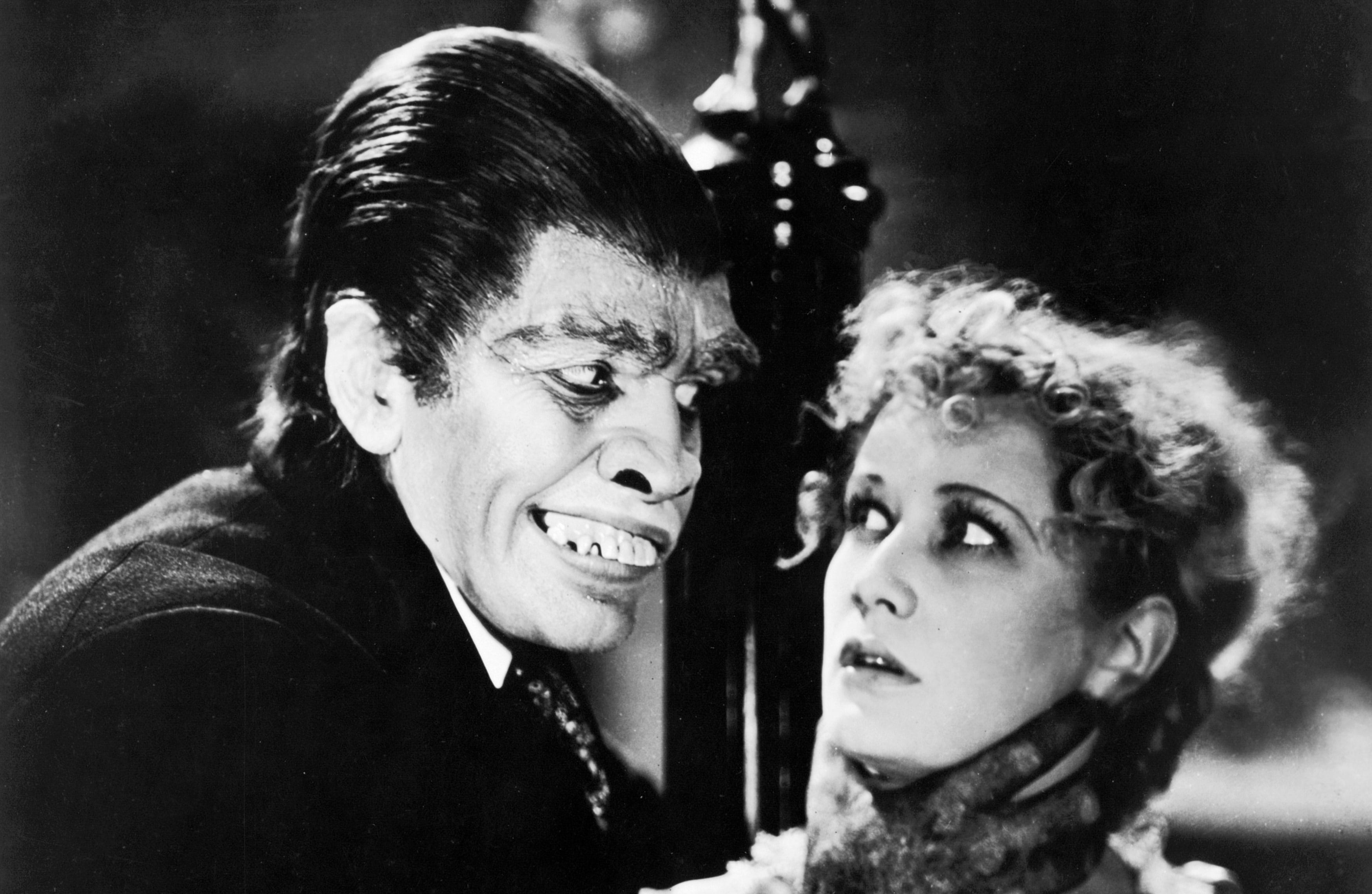
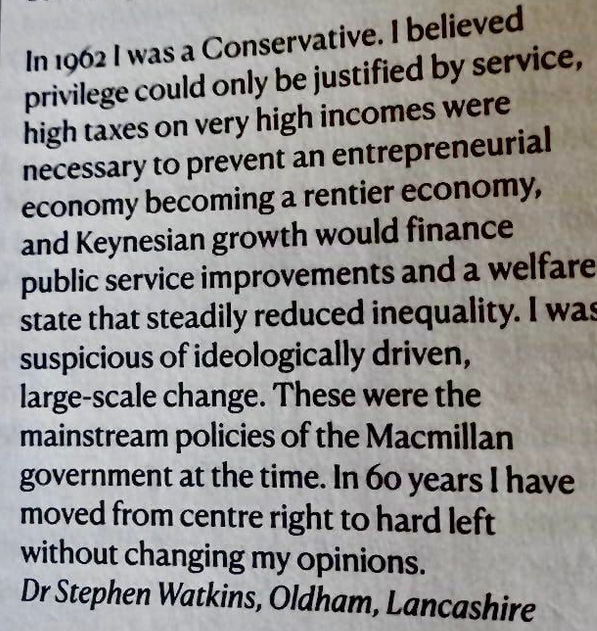


 John Foster Dulles peers across the 38th parallel.

![01israel_lobby_home_book[1][1]](https://ongenocide.com/wp-content/uploads/2013/01/01israel_lobby_home_book11.jpg)

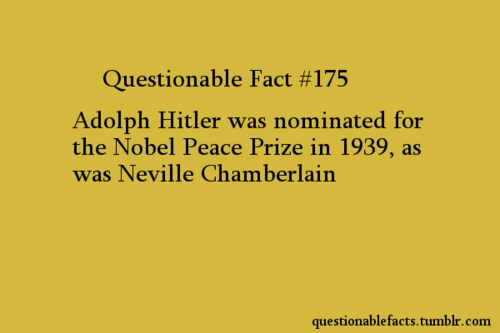
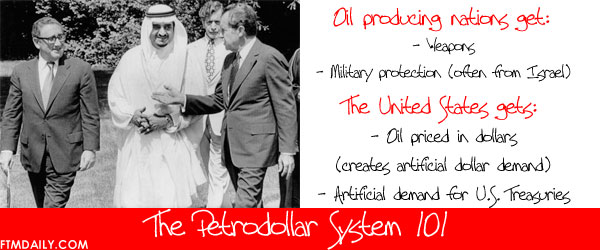



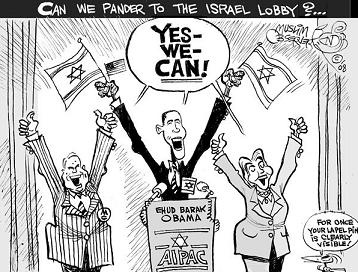

 On Genocide